-
-
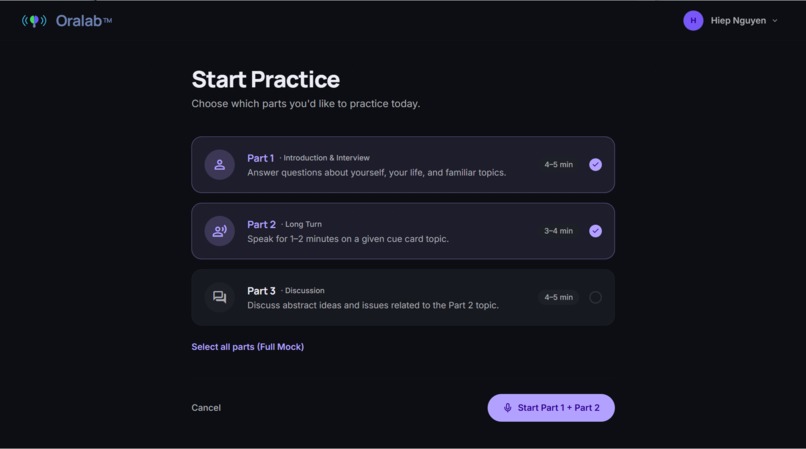
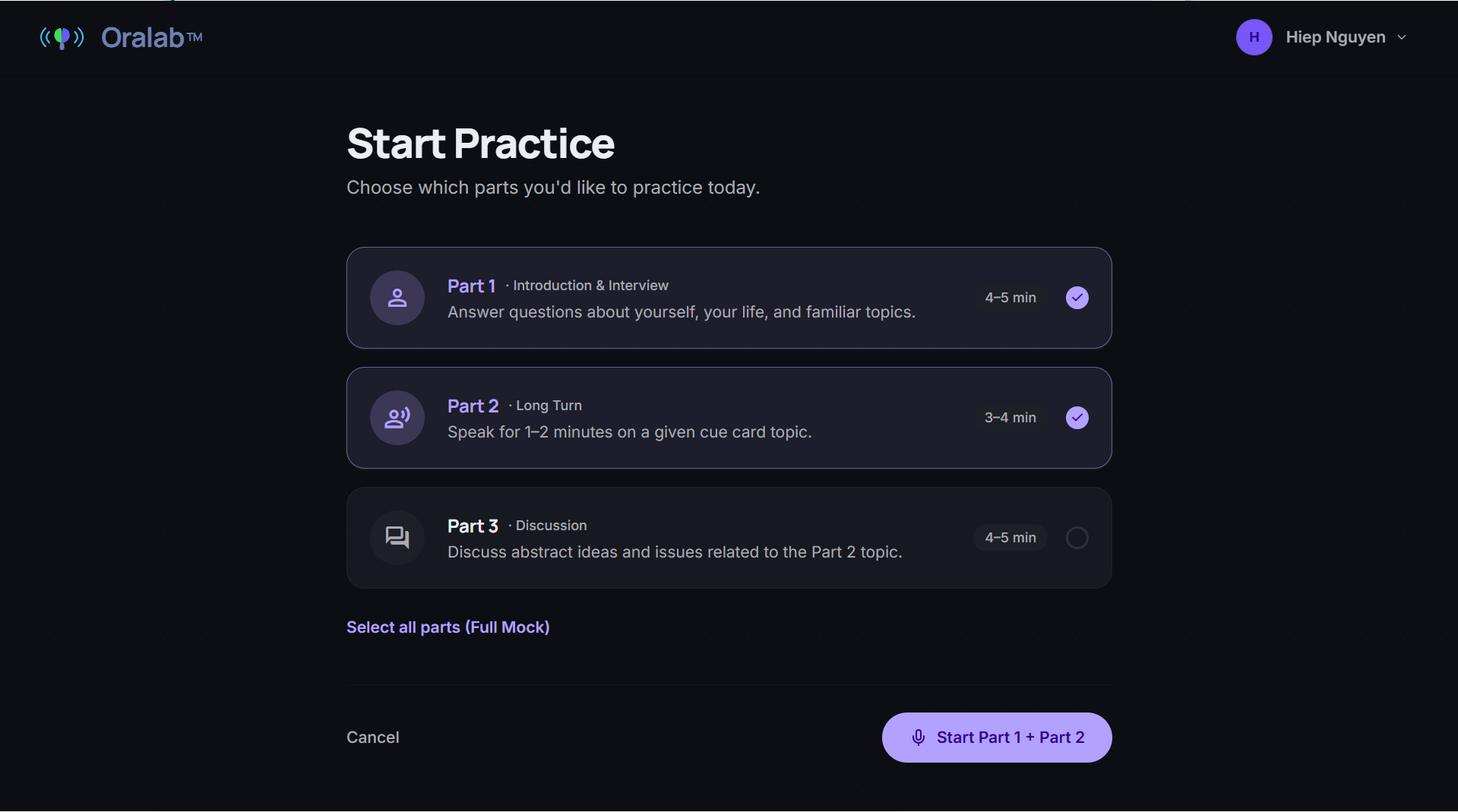
Session Setup
-
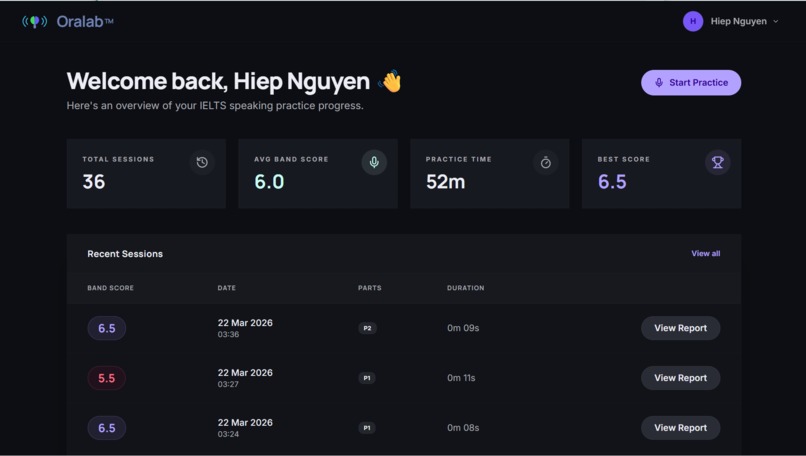
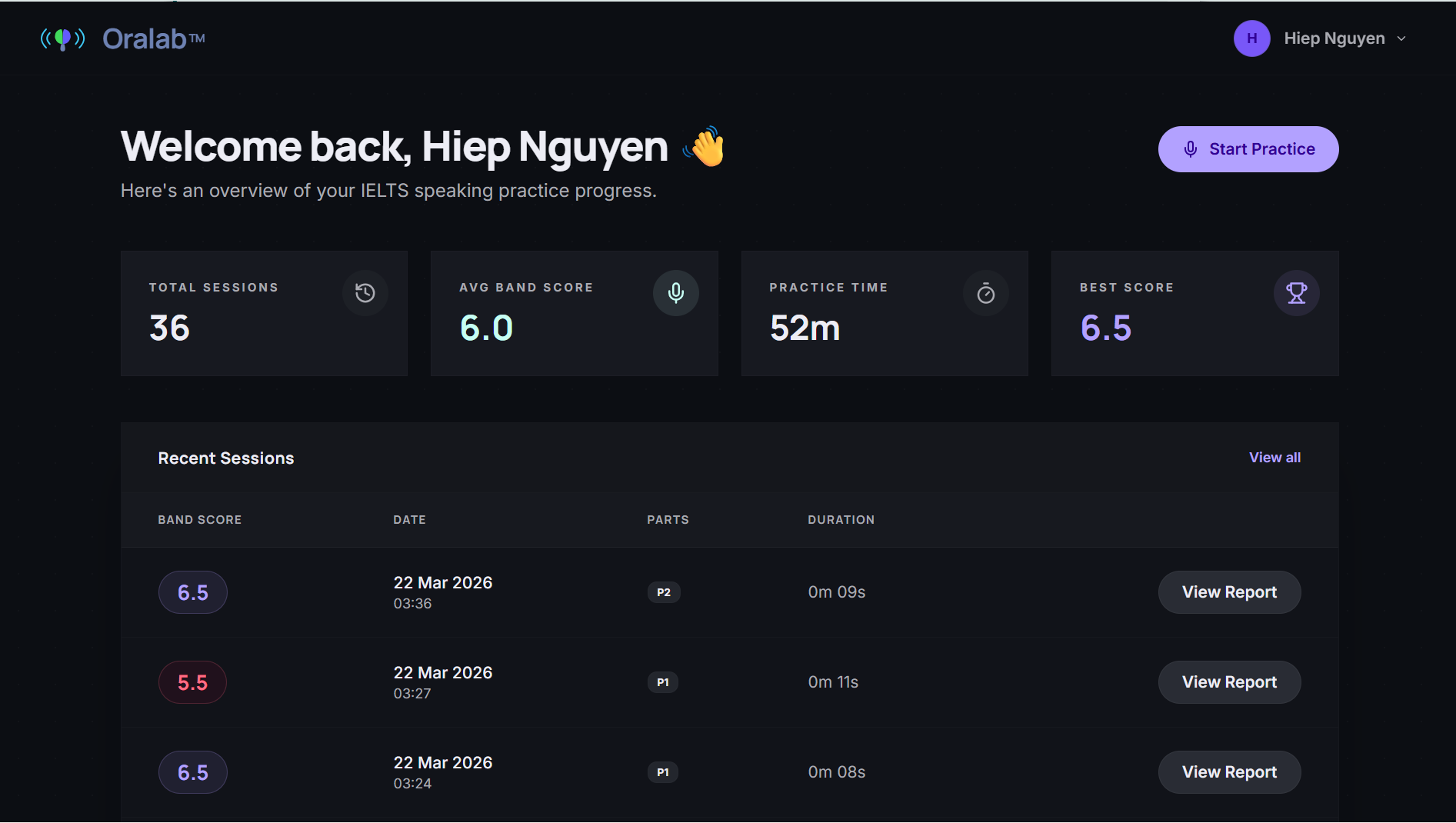
Dashboard
-
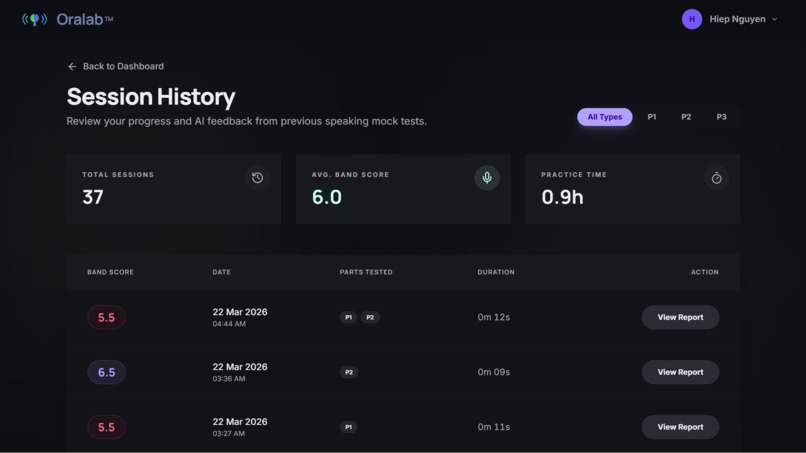
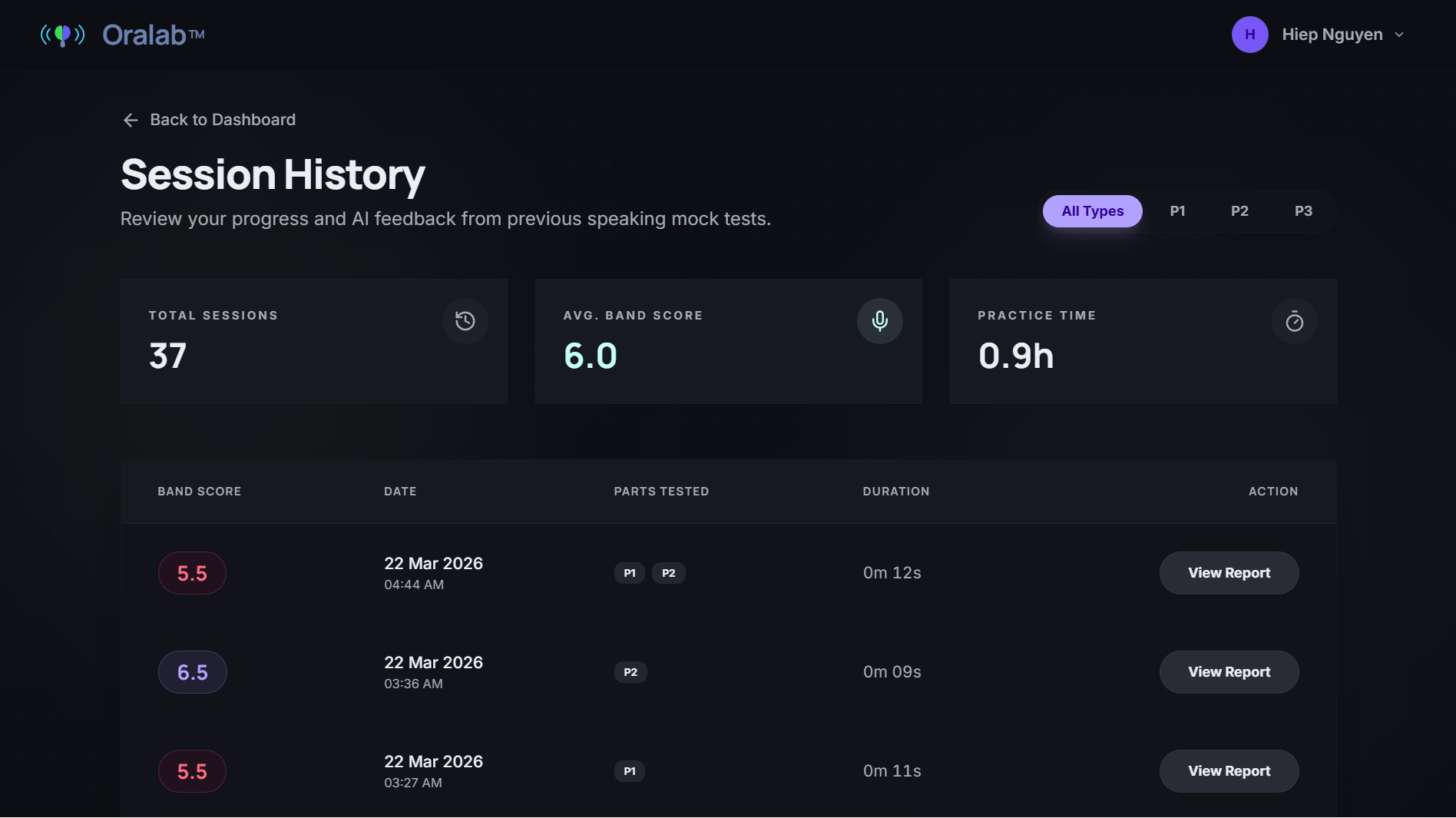
Session History
-
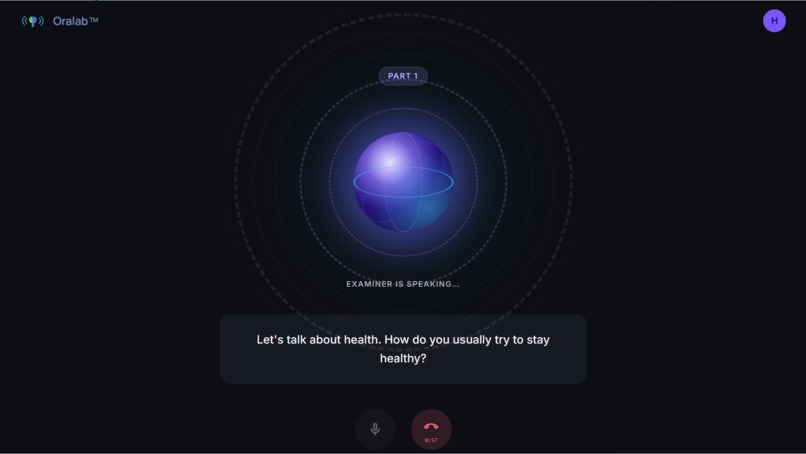
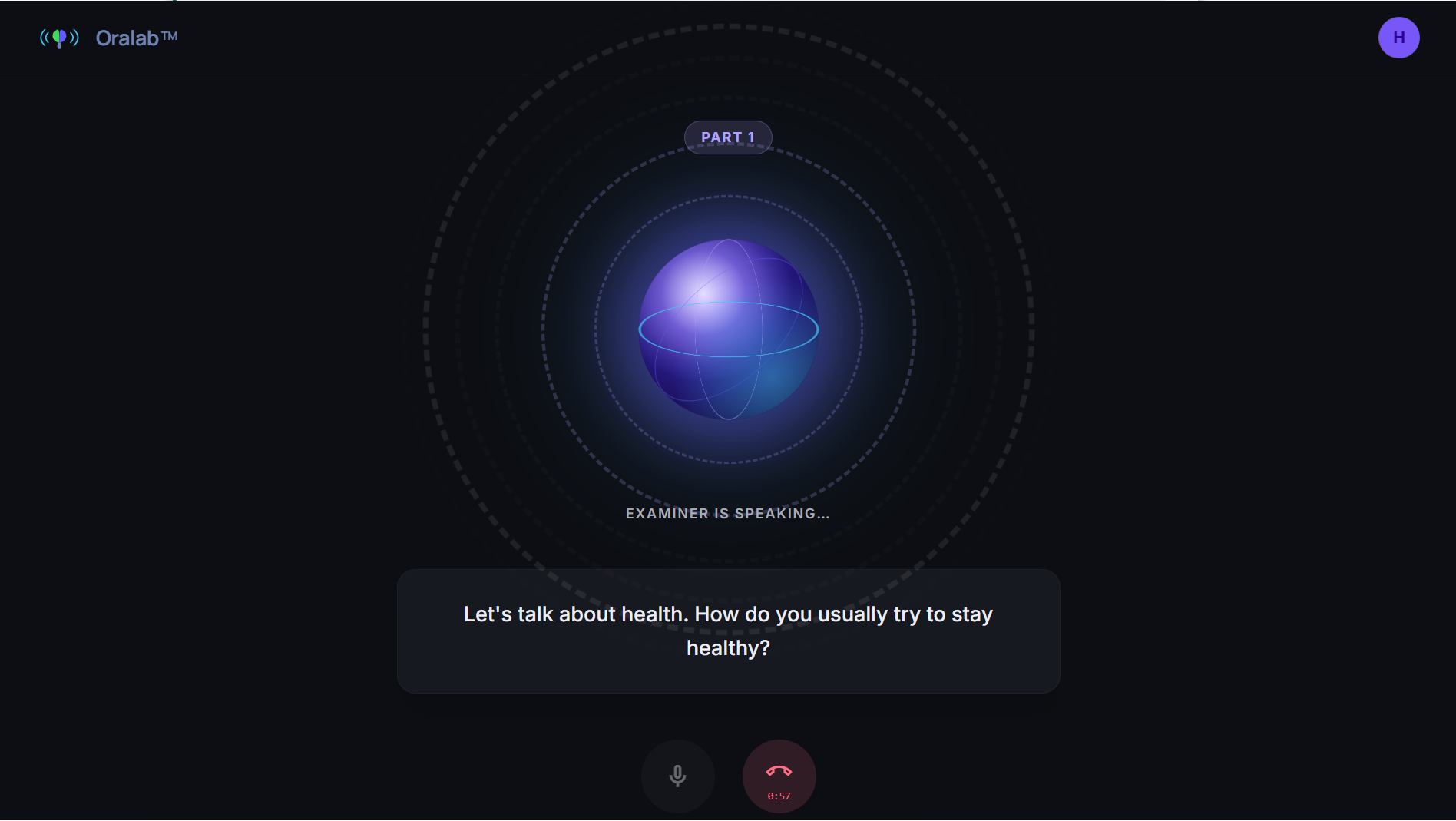
Live Speaking Room
-
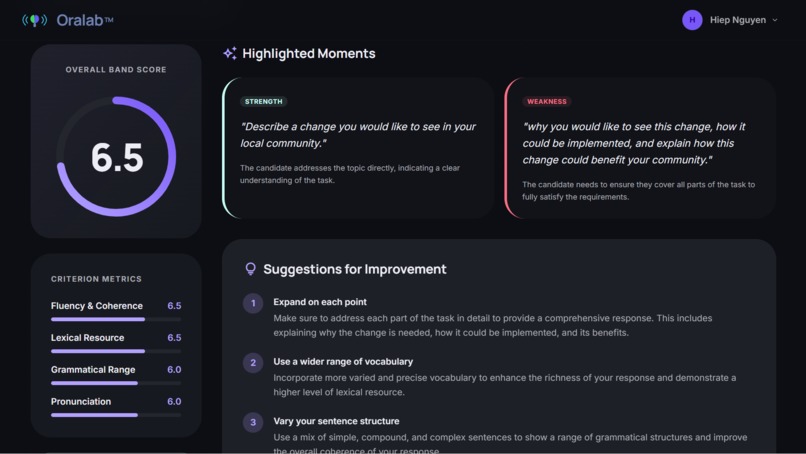
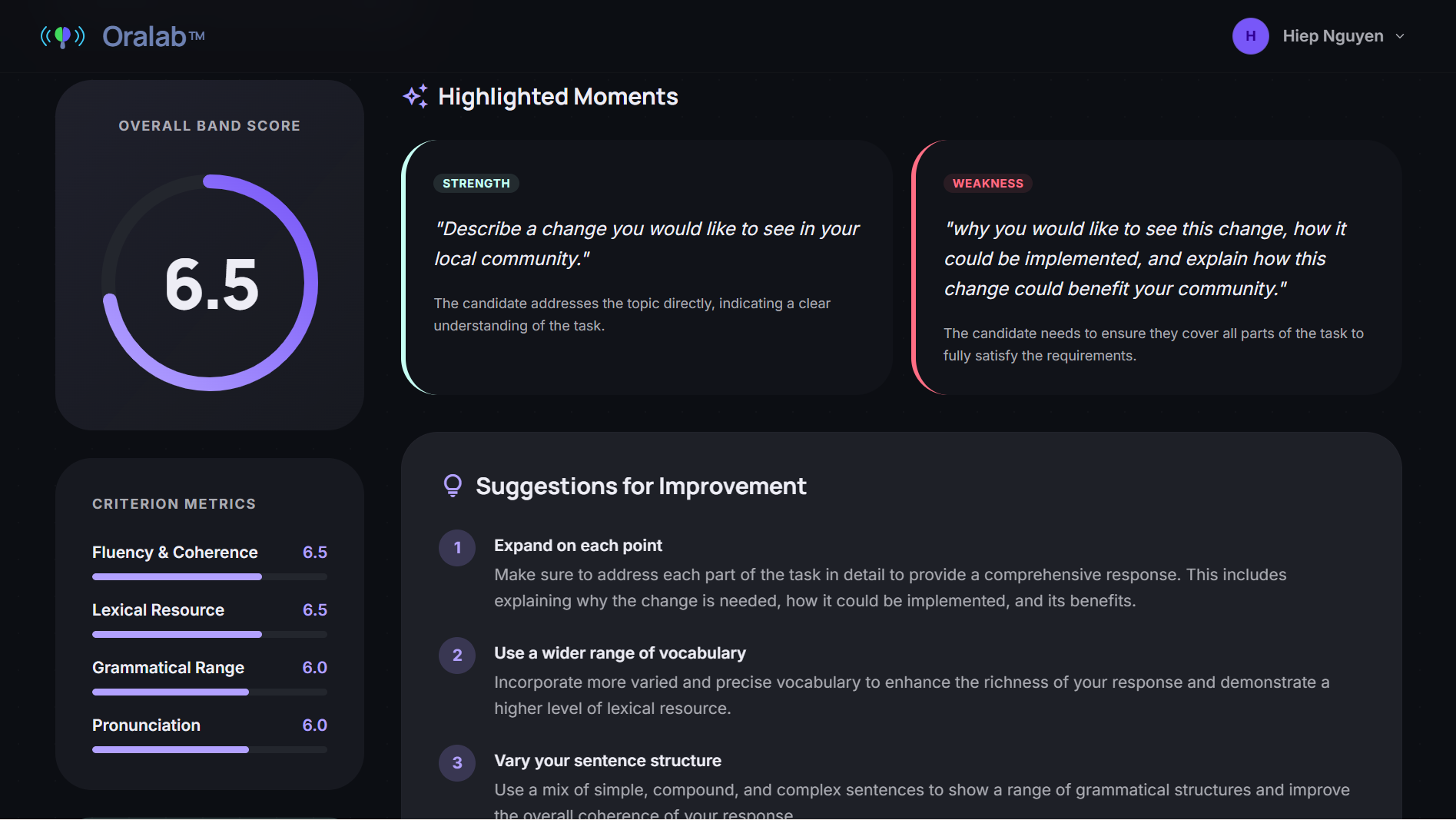
Feedback Report
-
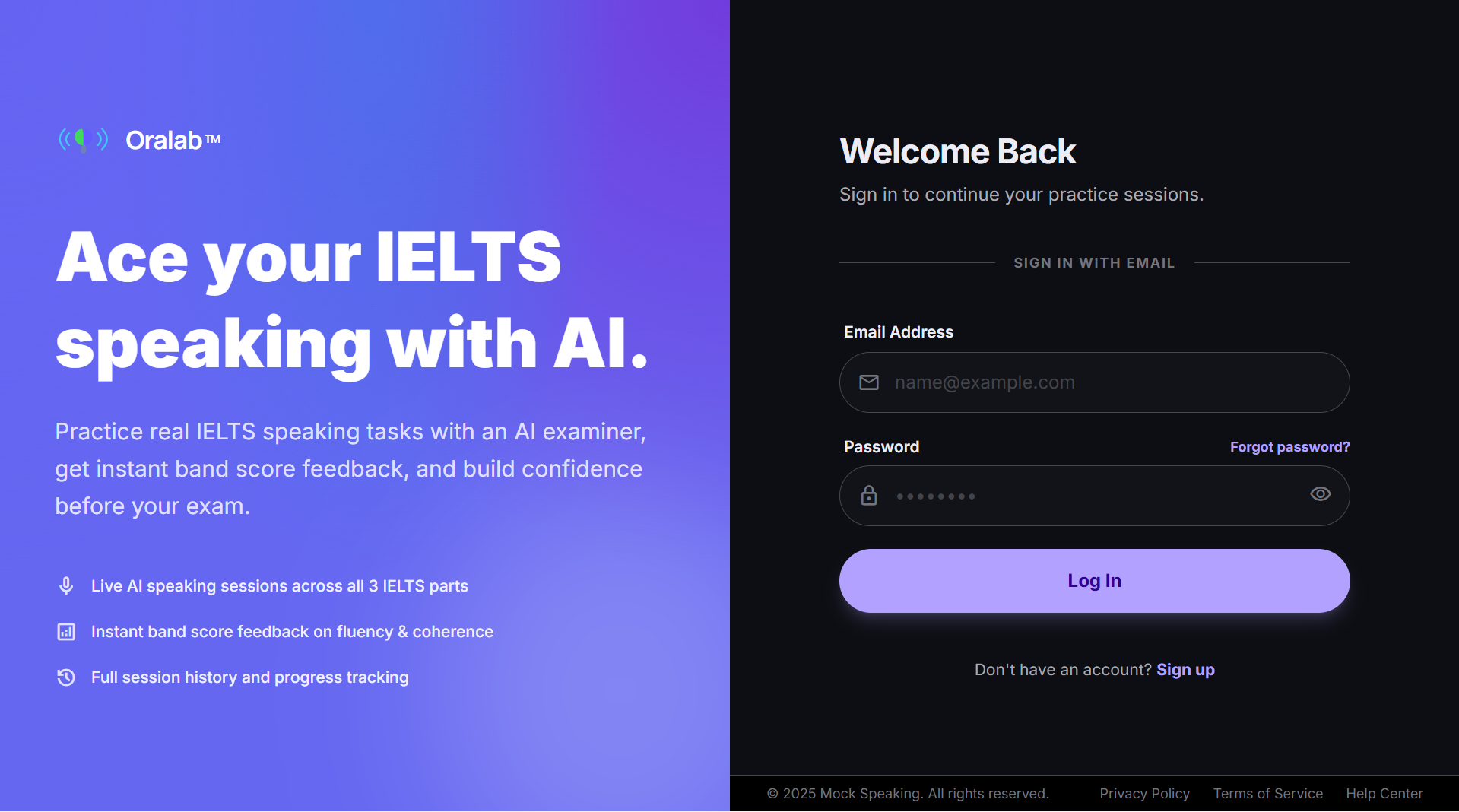
Authentication
🗣️ OraLab – Breaking the "Silent High-Scorer" Paradox
🚀 The Problem: A National Paradox
In Vietnam, IELTS has evolved from a simple English test into high-stakes "social capital." However, we noticed a recurring nightmare for most students:
- The "Fluency Gap": Data shows a stark disconnect; while Vietnamese learners achieve competitive marks in passive skills, the average Speaking score remains at 5.7, significantly lagging behind the global average of 6.3 [1]. Many are "Silent High-Scorers"—they know the rules, but cannot play the game.
- The Shadowing Dead-end: Most current tools rely on Shadowing (repetitive recording). While useful for muscle memory, this method fails to trigger "Social Gating"—the neurological spark required for deep language acquisition [2]. Without interaction, the brain stays in "safe mode."
- The Psychological Wall: Anxiety is the silent killer of fluency. Vietnamese learners often face a unique "fear of judgment" when practicing with peers [3]. They need a safe space to fail before they can succeed in front of an examiner.
- The Resource Barrier: Constant 1-on-1 mock tests with human tutors are a luxury that most students cannot afford or schedule consistently.
🎯 The OraLab Edge: Embracing the Unpredictable
We didn't just build another recording app; we built an examiner that catches you off guard.
- The "Black Box" Surprise: In OraLab, you don't pick your "safe" topics. The system randomly throws you into one of 10+ core domains. You won't know the topic or the complexity of the questions until the examiner asks them. It’s pure, unadulterated reaction training.
- Human-Calibrated Evaluation: Our feedback engine doesn't just look for "correct" words. It evaluates your Fluency & Coherence, Lexical Resource, and Grammatical Range. It analyzes how you bridge ideas and whether your speech flows naturally or feels like a memorized script.
- Real-time Interaction: Powered by GPT-4o and ElevenLabs, our AI doesn't just wait for you to finish; it listens. It prompts, probes, and follows up just like a human, providing the necessary Cognitive Demand to keep your brain alert.
⚡ Challenges We Faced
Building OraLab was a massive reality check for our team:
- The "Grandiosity" Trap: In the beginning, we wanted to build a "god-app" that did everything. We spent way too much time dreaming about complex features before realizing that solving one painful problem (Speaking fluency) deeply is worth more than ten shallow solutions.
- The Experience Gap: This was our first time orchestrating real-time WebSockets with high-stakes AI logic. Handling voice streams without lag while managing complex state changes was a steep, often frustrating, learning curve.
- The Ticking Clock: Time management was a constant struggle. We had to learn the hard way how to prioritize core loops over "fancy" UI polish as the deadline loomed.
🏅 Accomplishments That We're Proud Of
- The "Human" Feel: We are incredibly proud of how the AI responds. It doesn't sound like a robot reading from a database; it has a "pulse." It reacts to what you say in real-time with an examiner’s tone and pace.
- Actionable Feedback: Seeing the system provide nuanced critiques—like identifying a lack of cohesive devices or suggesting better collocations—made us realize we had built something that could actually help someone improve their life.
🧠 What We Learned
- Product Vision > Code: A project is 20% syntax and 80% understanding the Pain Point. If you don't hit the pain where it hurts, the best code in the world is just noise.
- Knowing When is "Enough": We learned the "Art of the MVP." We had to learn to say "no" to good ideas to make room for "essential" ones. Done is better than perfect.
- Lean Engineering: We embraced a lean approach—focusing on the core loop of Randomize -> Speak -> Evaluate. This kept us focused and prevented the project from collapsing under its own weight.
🔮 Future Improvements
- The "Zero-Tap" Evolution: We want to eliminate manual triggers entirely. The goal is a fully autonomous "Continuous Listening" mode where you just speak, and the AI handles the transitions and processing automatically.
- Pronunciation Precision: We plan to integrate deeper phonetic analysis to increase the accuracy of our pronunciation scoring, helping users pinpoint exactly which phonemes they are misarticulating.
- Personalized Roadmap: Using session history to identify recurring "weak spots" and automatically generating custom practice sessions for those specific areas.
📚 References
- [1] IELTS Test Taker Performance Statistics, 2023.
- [2] P. Kuhl, "Social Gating in Foreign Language Learning," University of Washington, 2003.
- [3] Hanoi University, "Study on Foreign Language Speaking Anxiety among Vietnamese Students," Journal of Foreign Studies, 2023.
Built With
- elevenlabs
- express.js
- node.js
- openai
- react
- supabase
- typescript

Log in or sign up for Devpost to join the conversation.