-
-
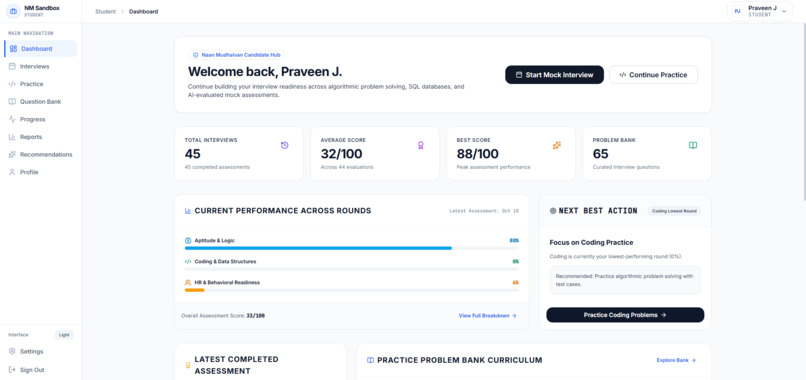
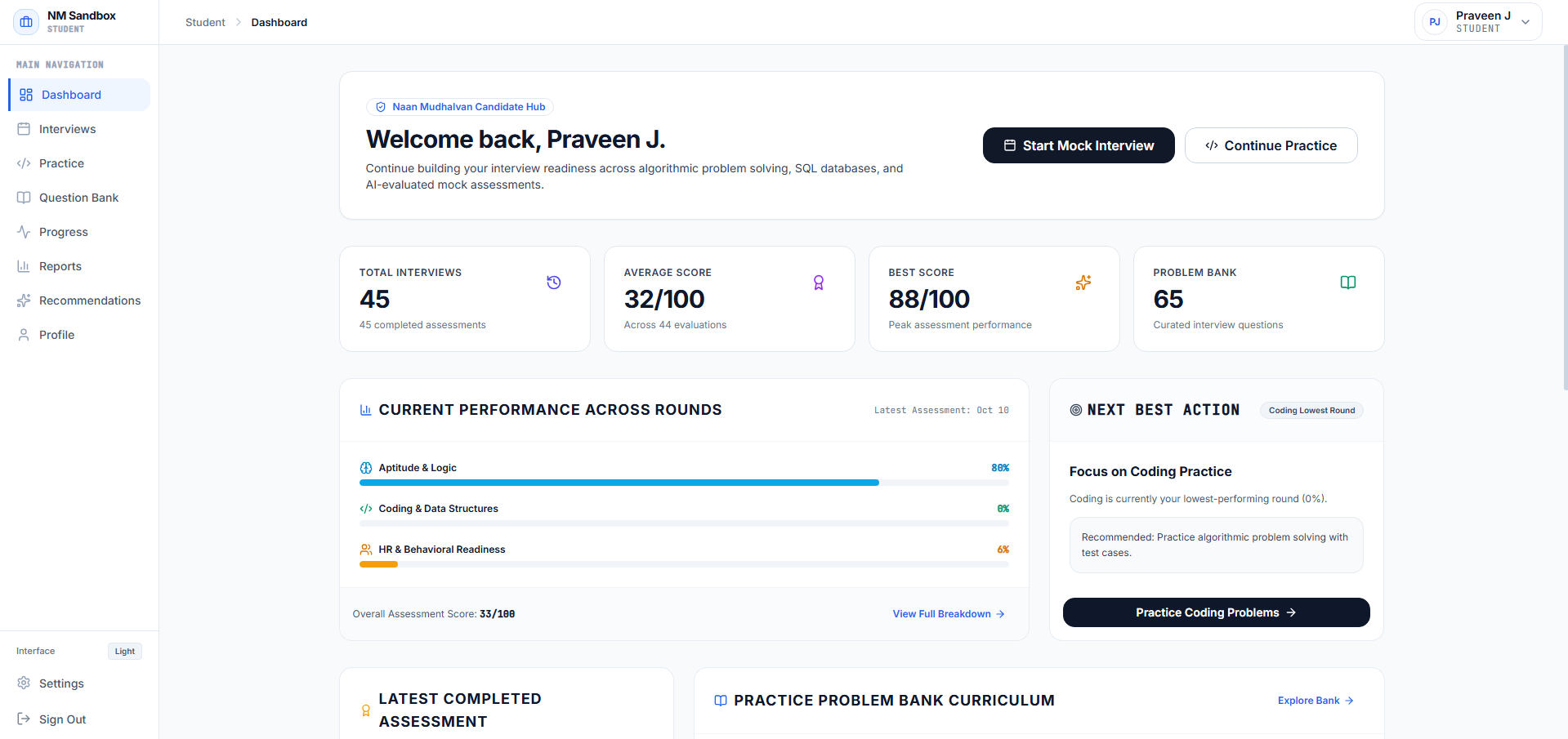
Student Dashboard: Centralized dashboard displaying assessment statistics,performance scores, and recommended next steps.
-
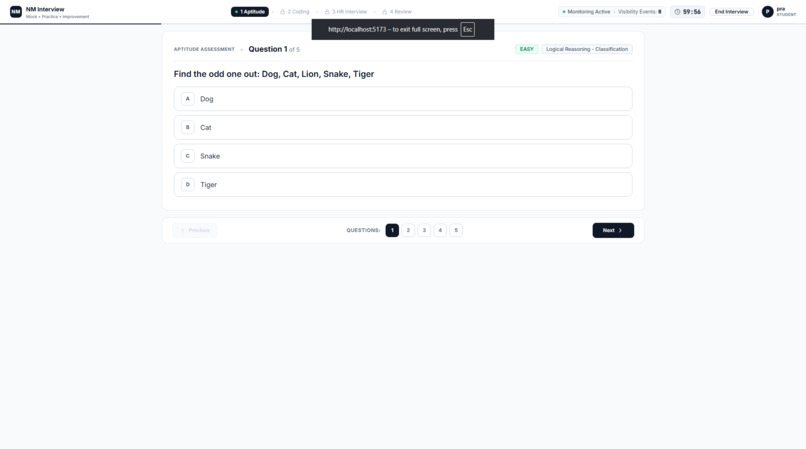
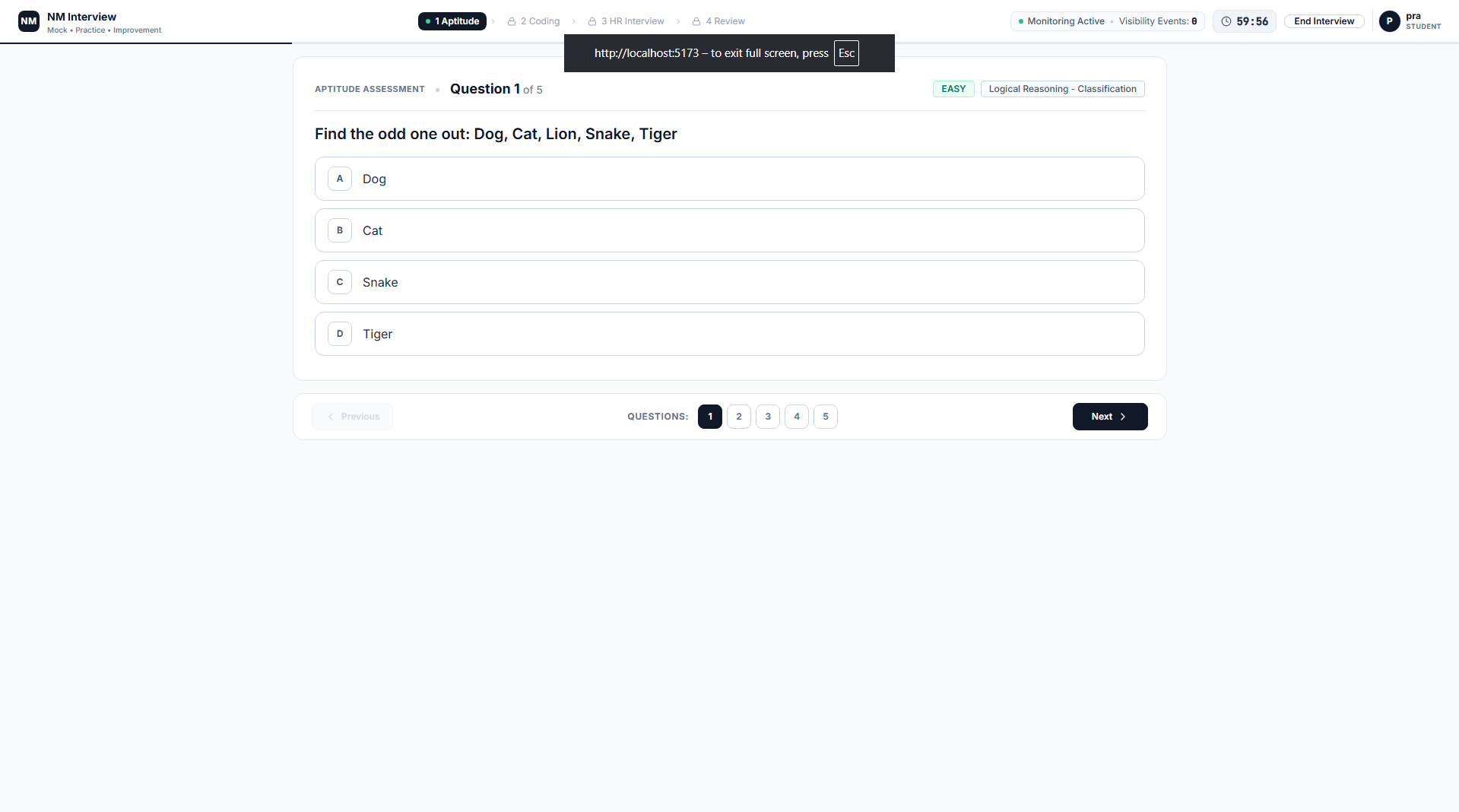
Aptitude Assessment: Interactive multiple-choice assessment with question navigation and timed interview-session tracking.
-
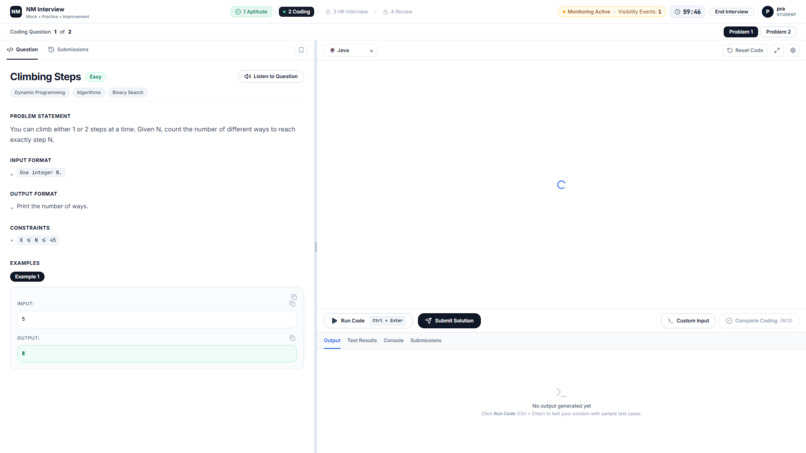
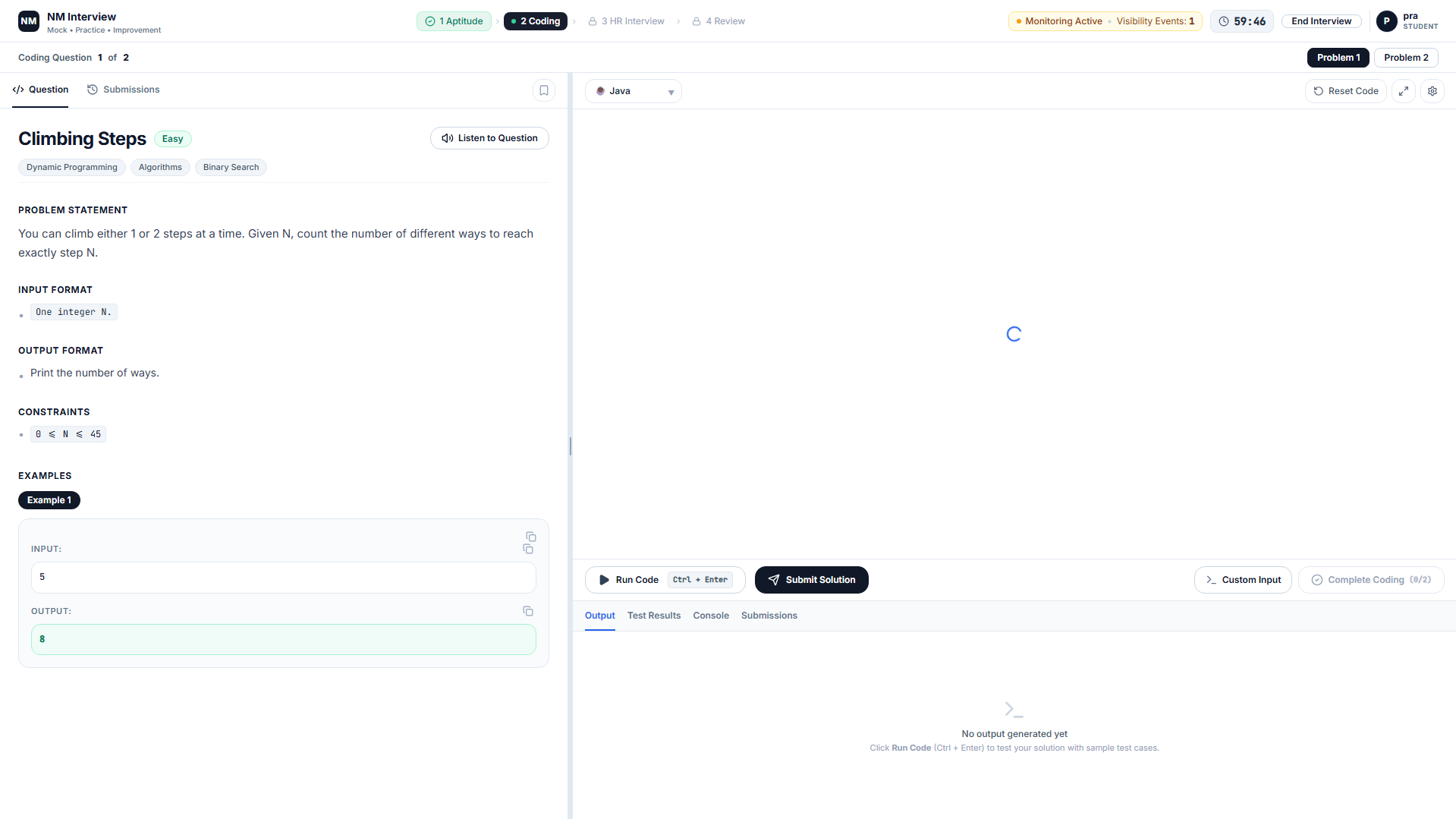
Coding Assessment: Coding workspace featuring problem statements, language selection, code execution, and submission controls.
-
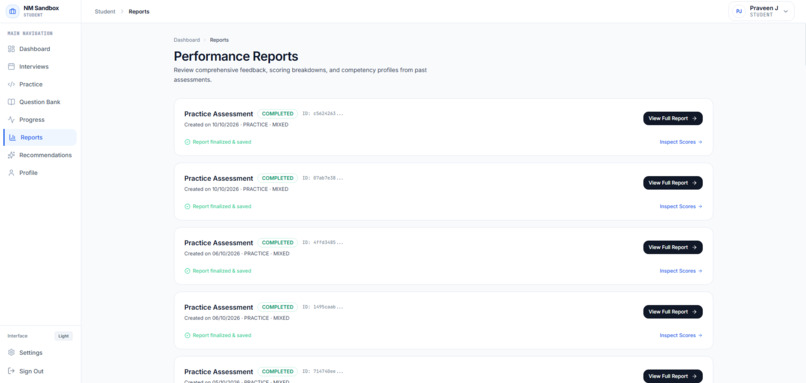
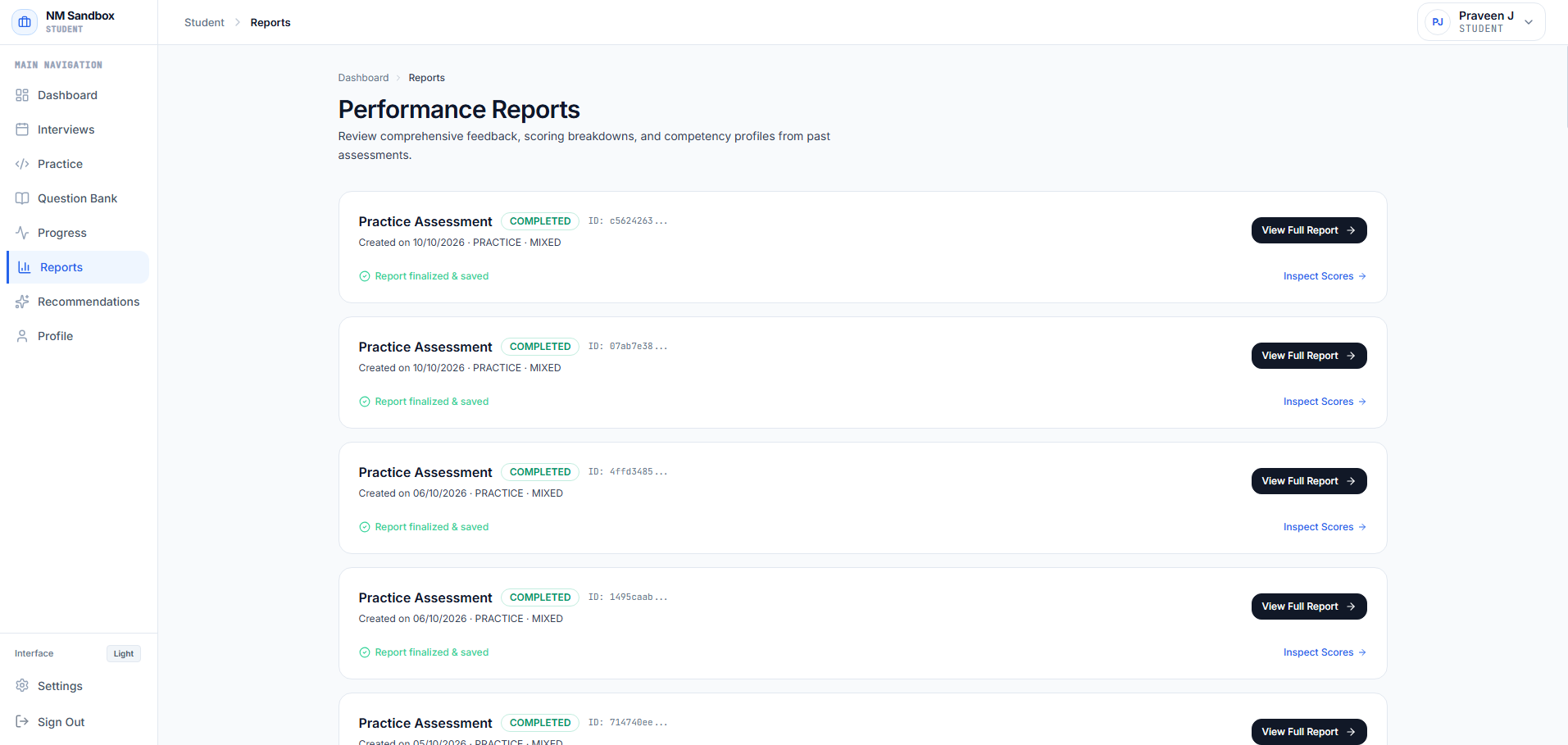
Performance Reports: Lists completed assessments and provides access to detailed evaluation reports.
-
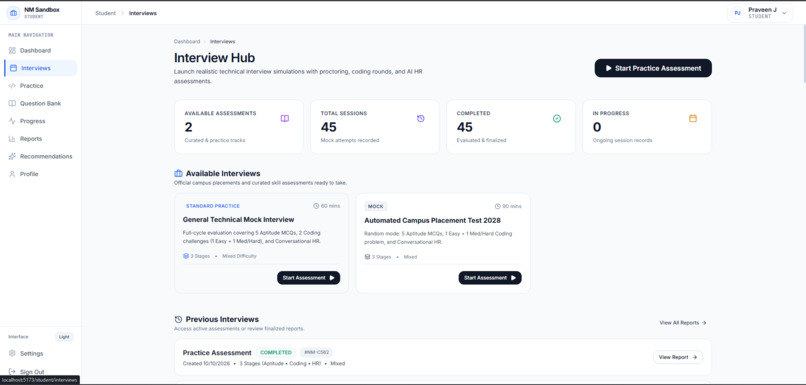
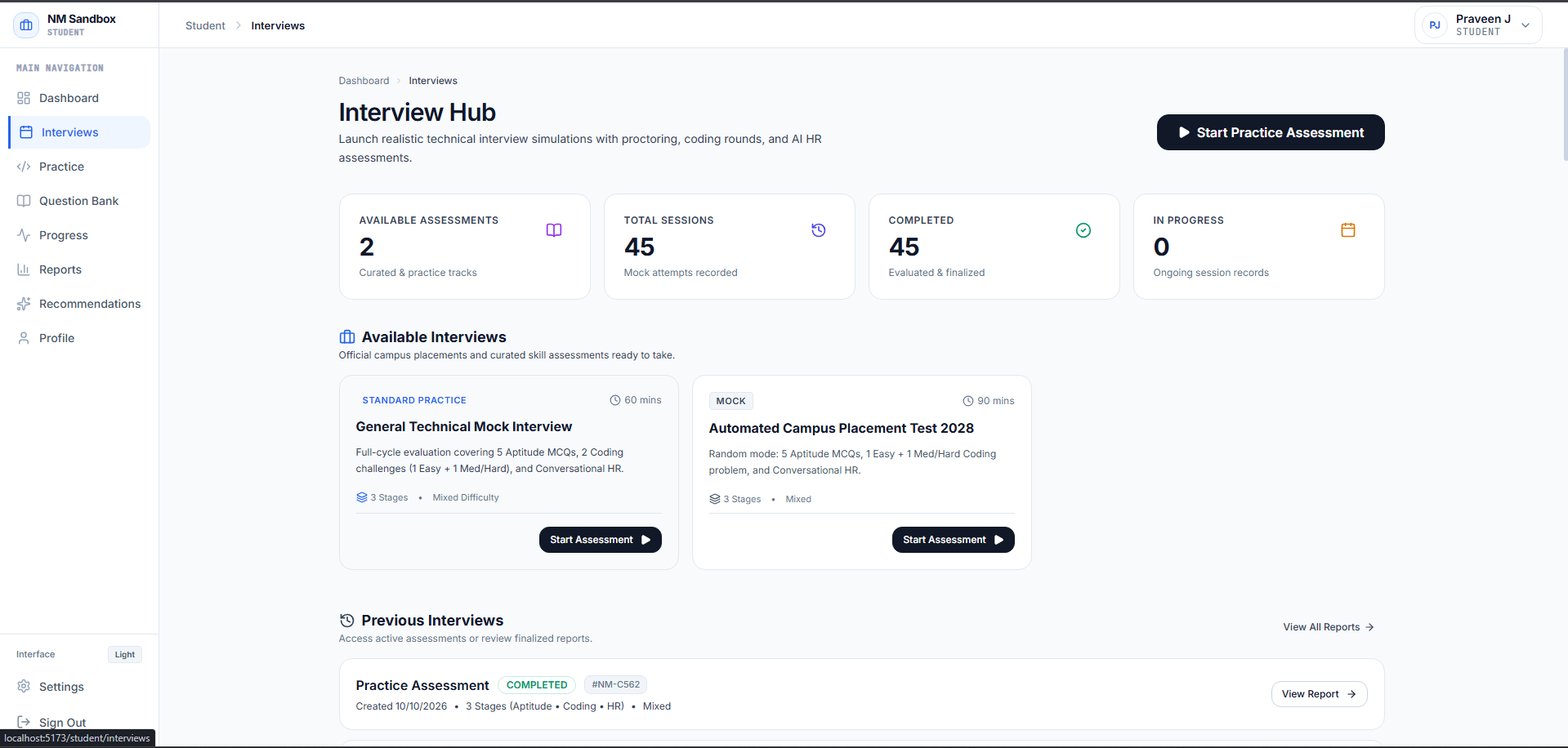
Interview Hub: Provides access to mock interviews, assessment tracks, and previous interview sessions.
-
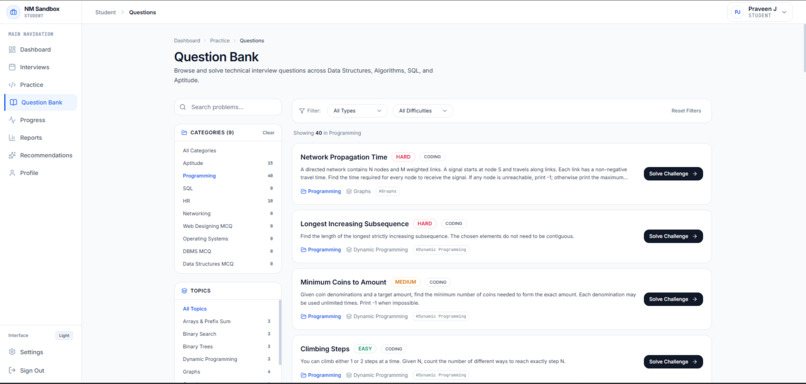
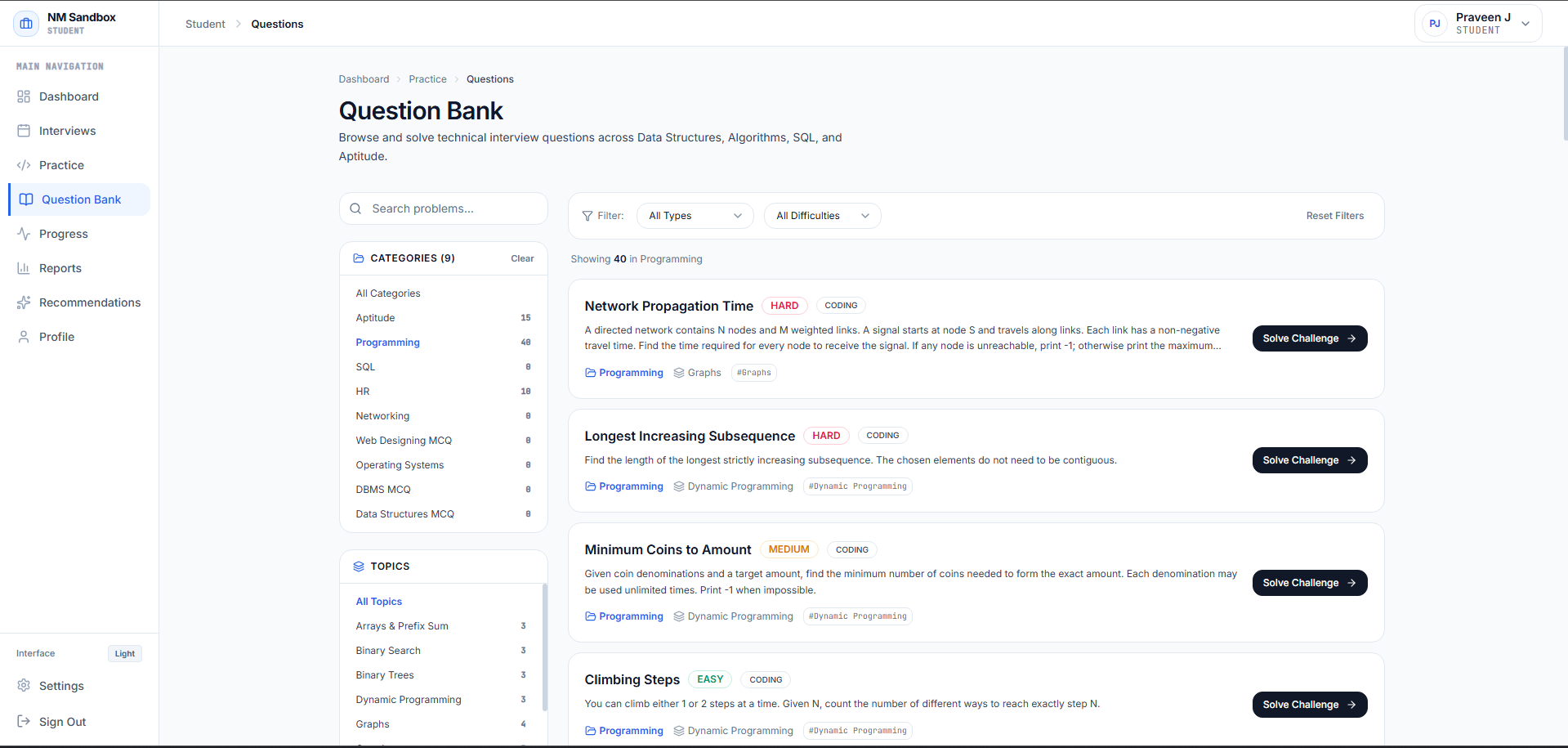
Question Bank: Browse and filter aptitude, programming, SQL, and other technical questions by category and difficulty.
-
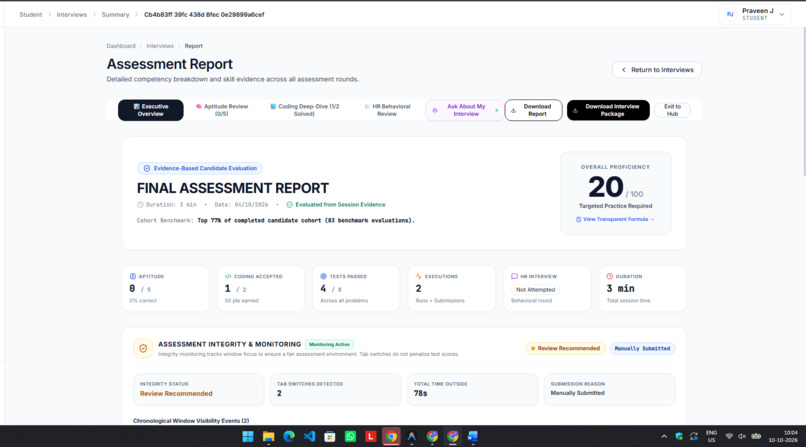
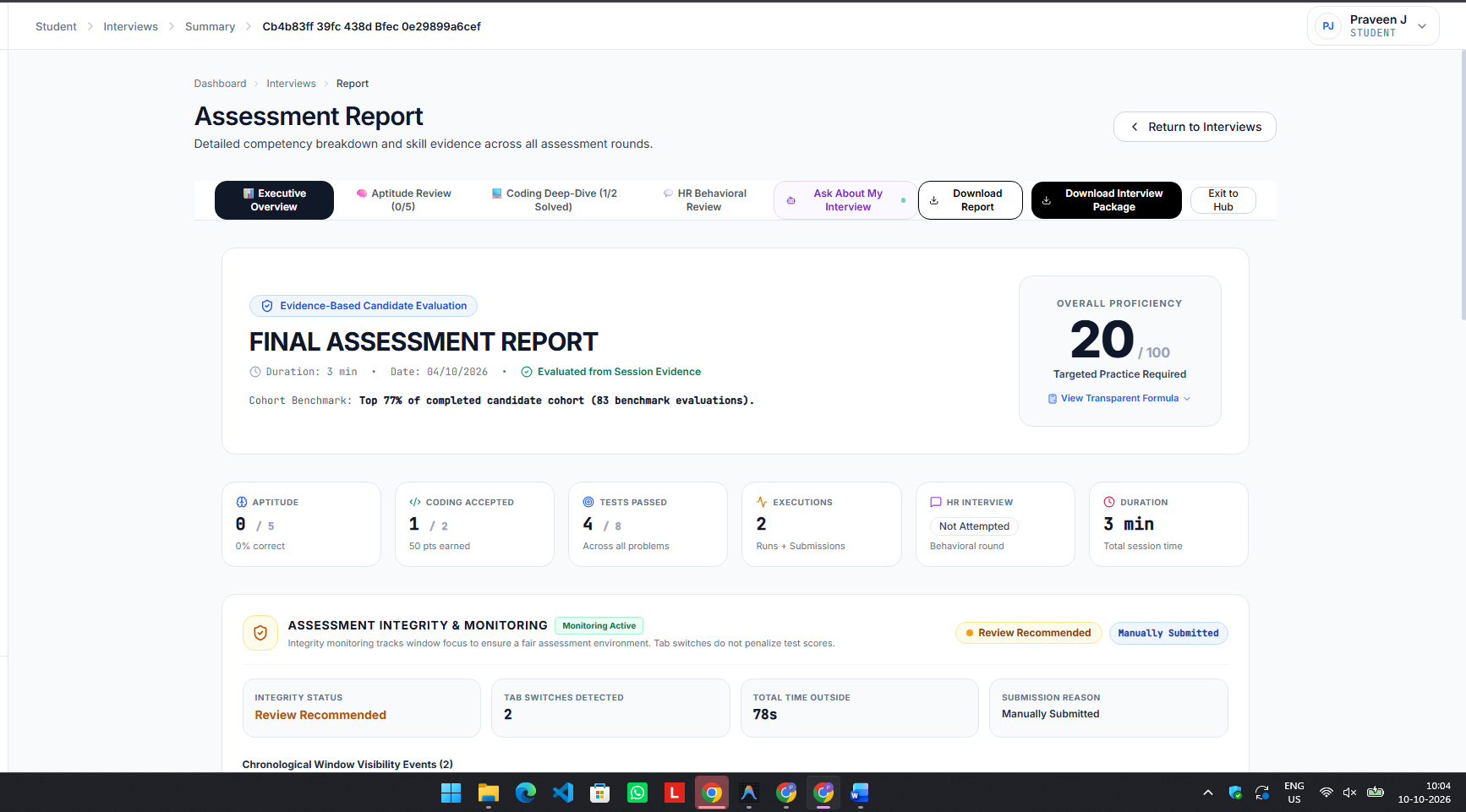
Final assessment report showing proficiency scores, round-wise results, coding performance, interview status, and integrity monitoring.
-
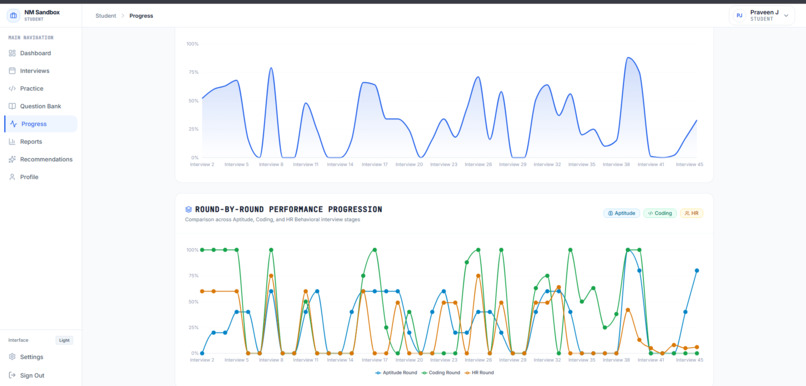
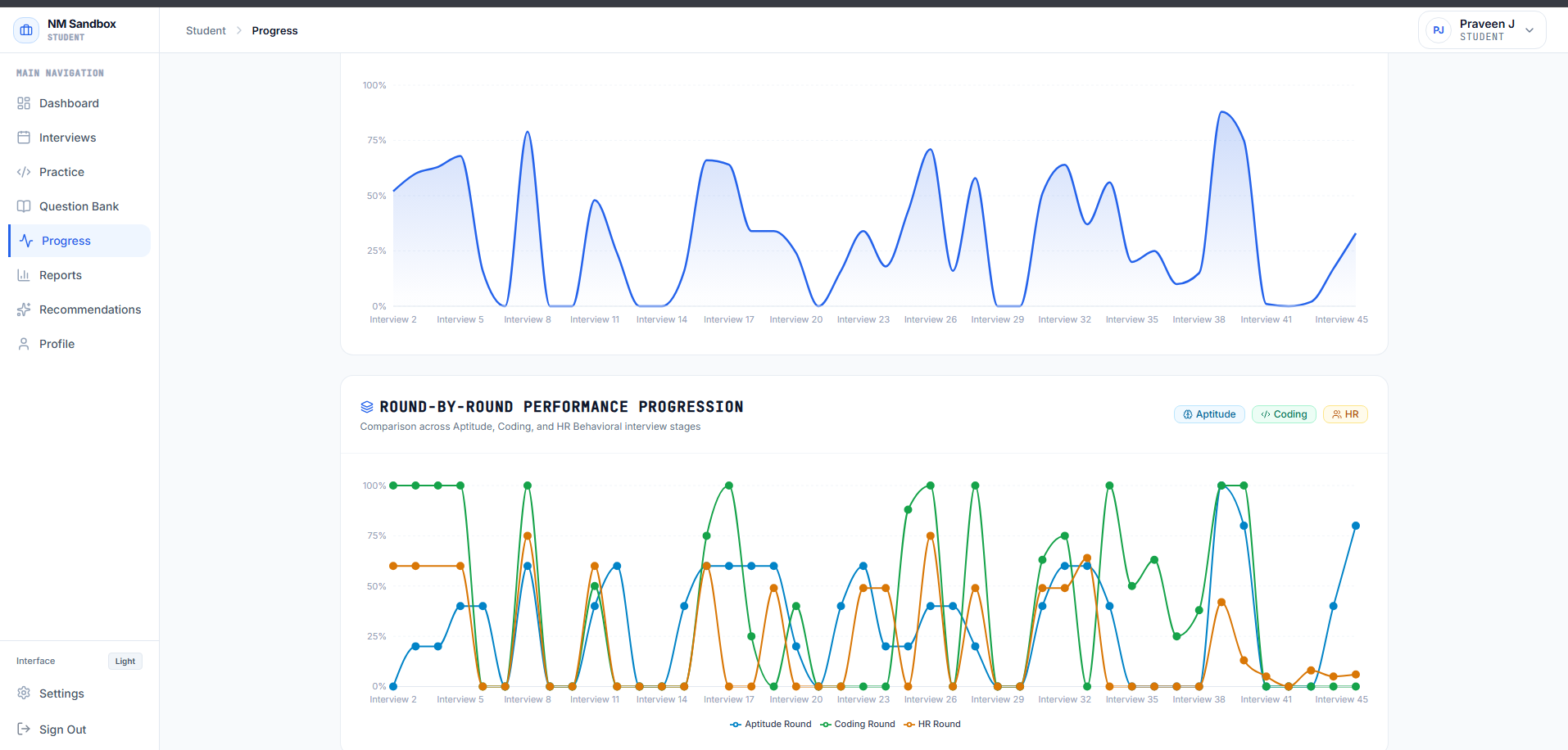
Progress Tracking: Visualizes performance trends and round-wise progress across aptitude, coding, and HR assessments.
-
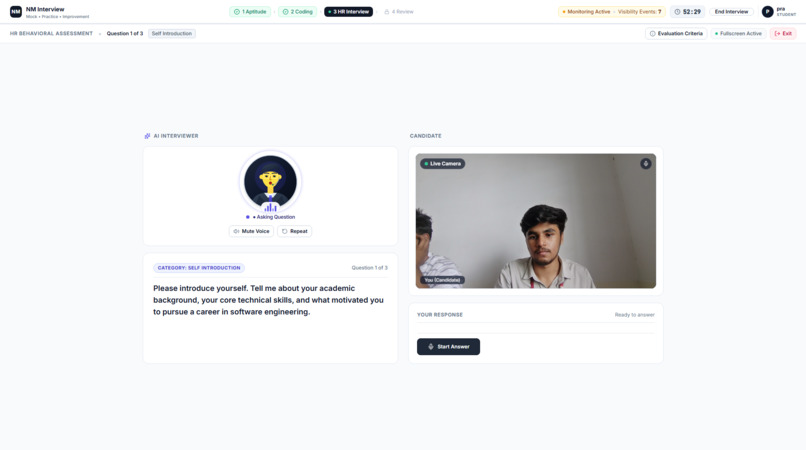
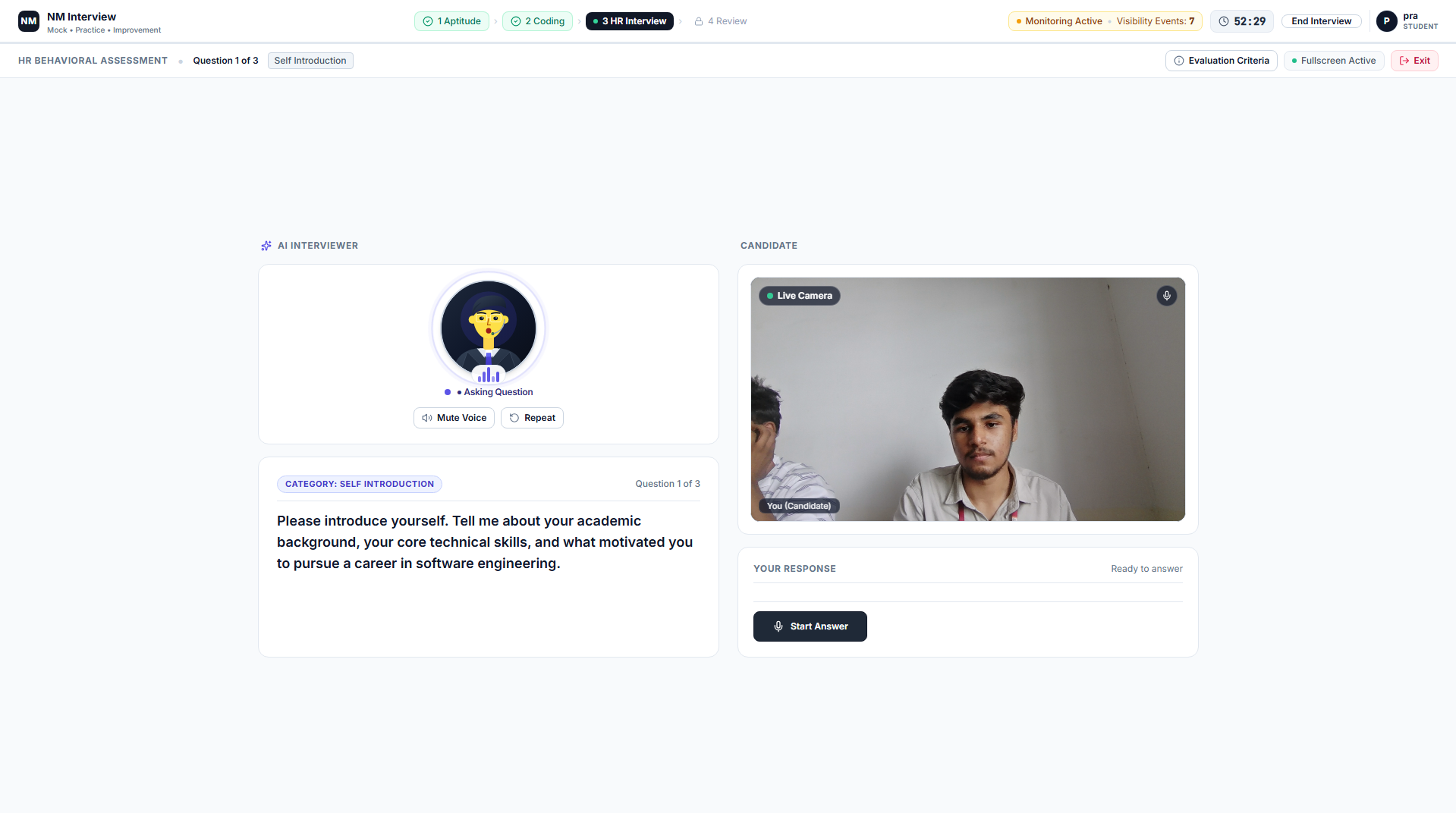
HR Interview: AI interviewer interface with a live candidate camera preview, interview questions, and voice-response controls.
-
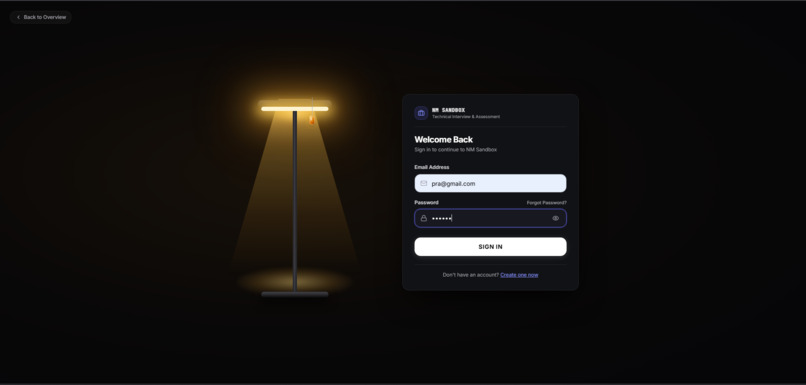
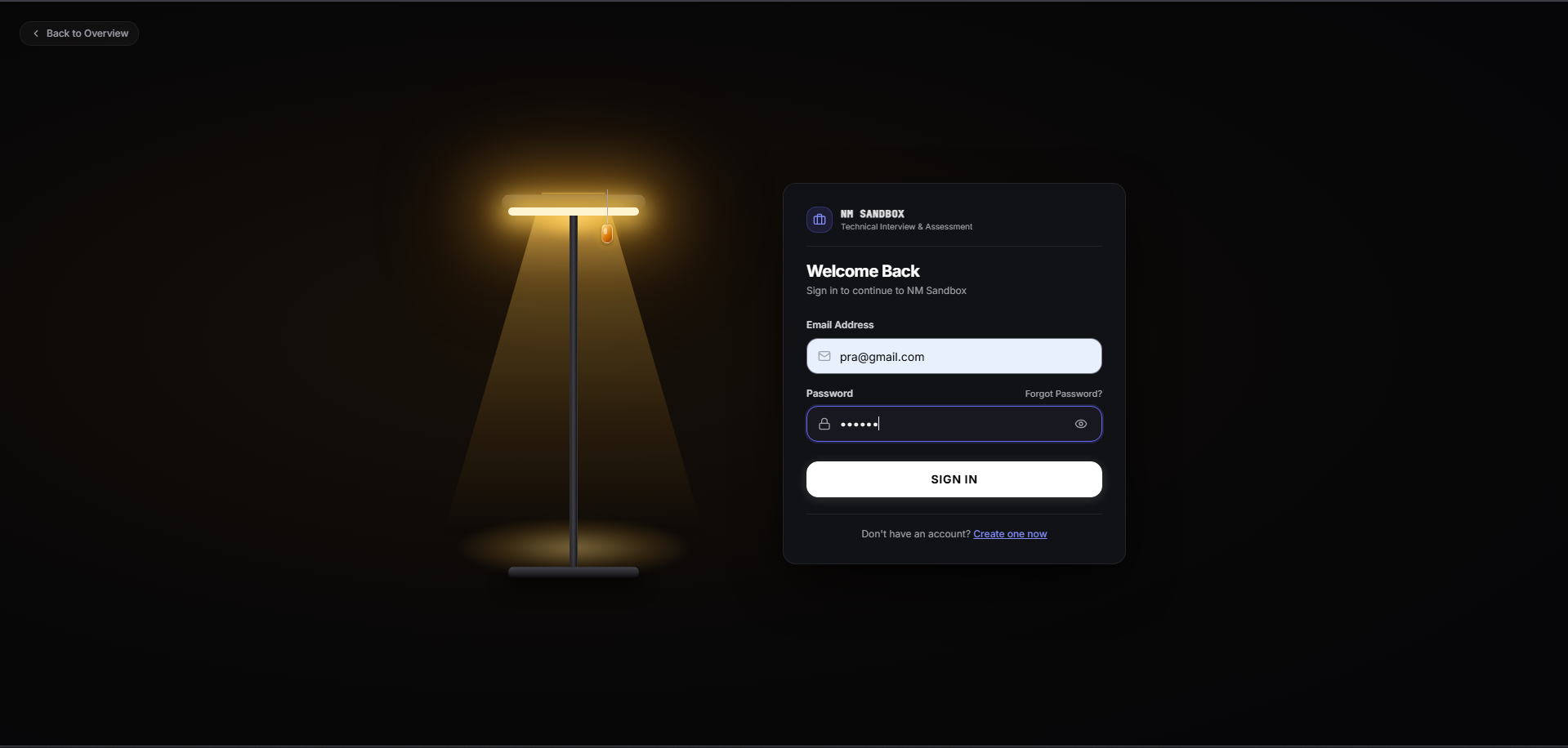
Login Page: Secure student login interface for accessing the NM Sandbox platform.
-
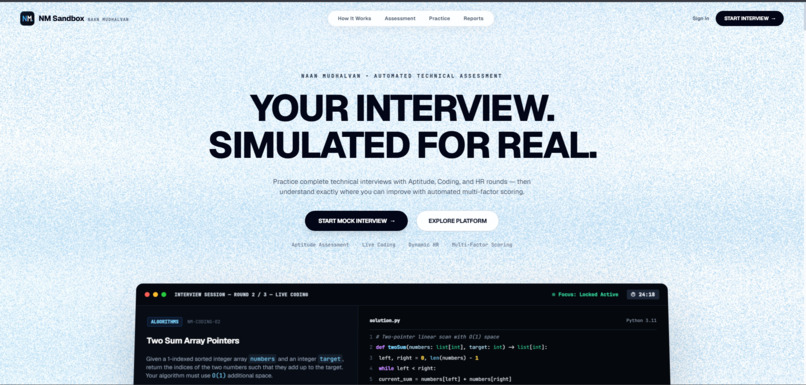
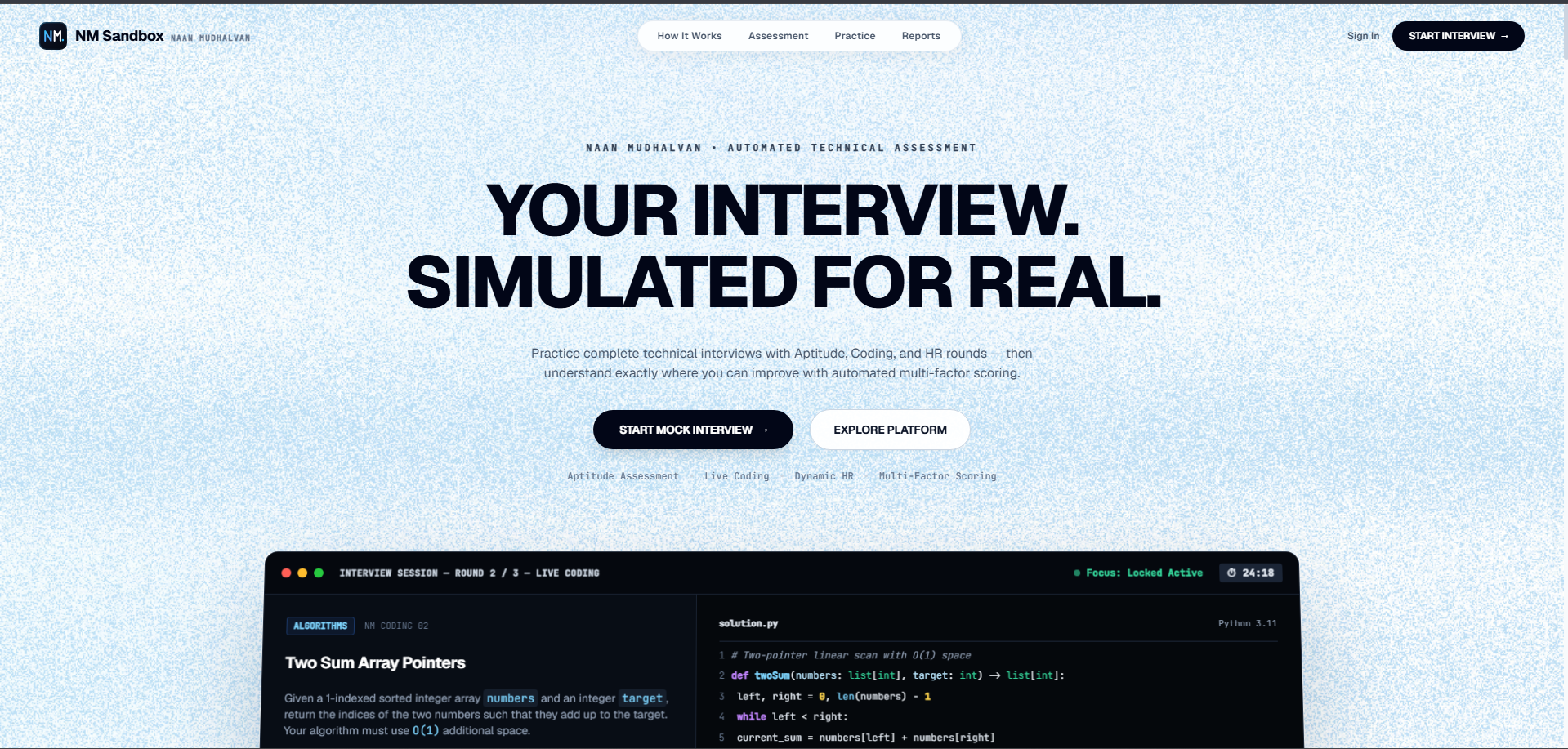
Landing Page: Modern landing page introducing the NM Sandbox platform and its automated technical interview workflow.
Inspiration
Technical interviews often test much more than whether a candidate can solve one coding problem. Candidates need to demonstrate problem-solving, communication, technical understanding, and the ability to perform under interview conditions. We wanted to build a platform that brings these parts together into a realistic, measurable mock interview experience.
What We Built
NM Mock Interview Sandbox is an AI-powered technical mock interview platform designed to simulate real interview workflows. It combines multiple interview rounds with automated evaluation and multi-factor proficiency scoring.
The platform supports interview flows such as aptitude, coding, and HR/technical assessment. Candidates can solve coding problems in an online environment, submit solutions for execution and evaluation, and receive structured feedback about their performance.
The system uses an API Gateway with independent backend services for authentication, users, interviews, question management, and code judging. PostgreSQL is used as the primary database, while Judge0 Cloud is used for code execution and Groq-powered AI capabilities are used for intelligent evaluation.
How We Built It
We built the frontend using React, TypeScript, Vite, and Tailwind CSS.
The backend follows a modular microservice architecture using Node.js and Express. An API Gateway handles routing, authentication, and communication with the backend services.
Prisma is used for PostgreSQL database access, while JWT with RS256 is used for authentication. Coding submissions are sent through the Judge Service to Judge0 Cloud for execution and test validation.
The application is deployed using Vercel for the frontend and Render for the backend services and PostgreSQL.
What We Learned
Building this project taught us how to design and connect multiple backend services, manage authentication across services, integrate external APIs, handle production environment variables, and deploy a full-stack application.
We also learned that building an AI-enabled application is not only about using an LLM. Reliable evaluation requires structured data, controlled workflows, validation, and clear scoring logic.
Challenges We Faced
One of the biggest challenges was moving the application from a local development environment to production. Localhost-based service URLs, JWT key files, Prisma database schemas, and environment variables all had to be adapted for cloud deployment.
We also had to ensure that the different backend services could communicate securely while keeping their responsibilities separated.
The final result is a platform that combines interview simulation, coding execution, AI-assisted evaluation, and performance measurement into one system.
Built With
- ai
- api
- application
- code
- css
- execution
- express.js
- gateway
- groq
- interviews
- judge0
- jwt
- llm
- microservices
- node.js
- postgresql
- prisma
- react
- rest
- tailwind
- technical
- typescript
- vercel
- vite
- web


Log in or sign up for Devpost to join the conversation.