Mobiligent
Inspiration
I built Mobiligent because choosing a car in Vietnam is about more than specs. People also care about long-term cost, fuel efficiency, resale value, environmental impact, and whether a car actually fits their daily route and city.
I wanted to turn a static car catalog into something more useful: an AI-powered decision tool for exploring, comparing, and understanding cars in a real Vietnam mobility context.
What it does
Mobiligent is an AI-powered Vietnam car intelligence platform built on a catalog of 339 car models across 40 brands.
It has three main experiences:
- AI Car Advisor for English or Vietnamese car recommendations
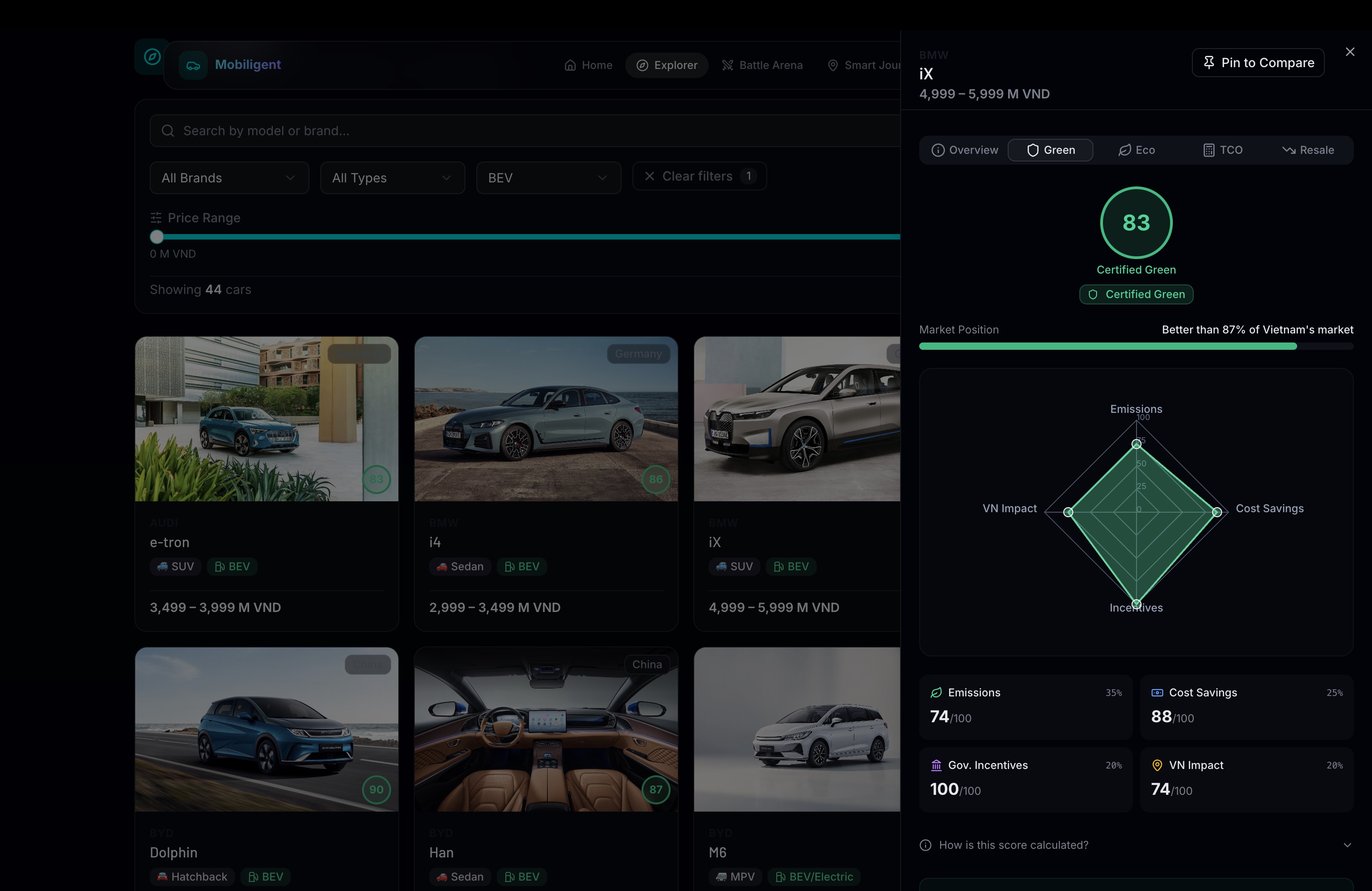
- Car Explorer for browsing, voice search, comparison, Green Score, Eco Score, TCO, and depreciation
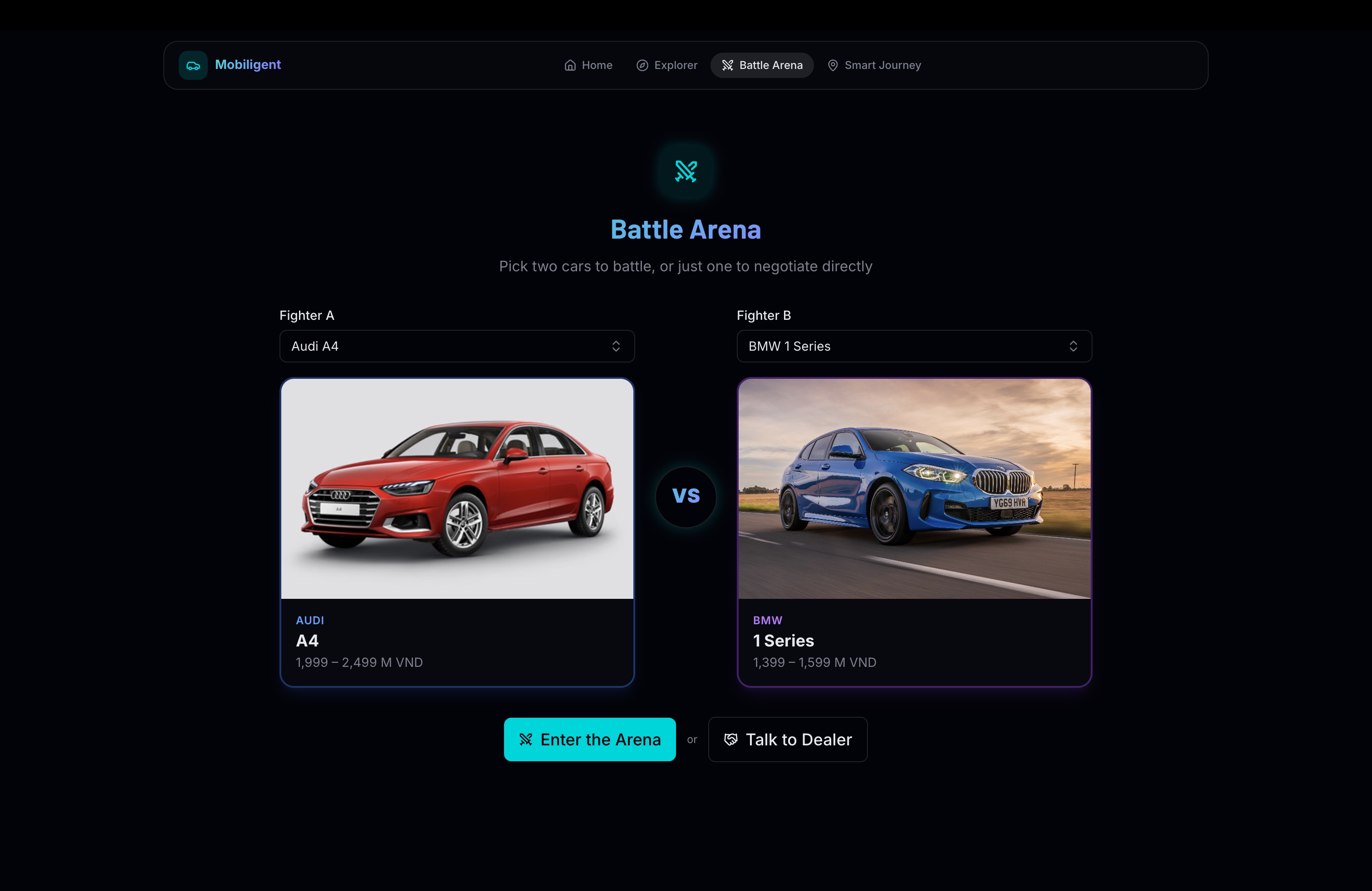
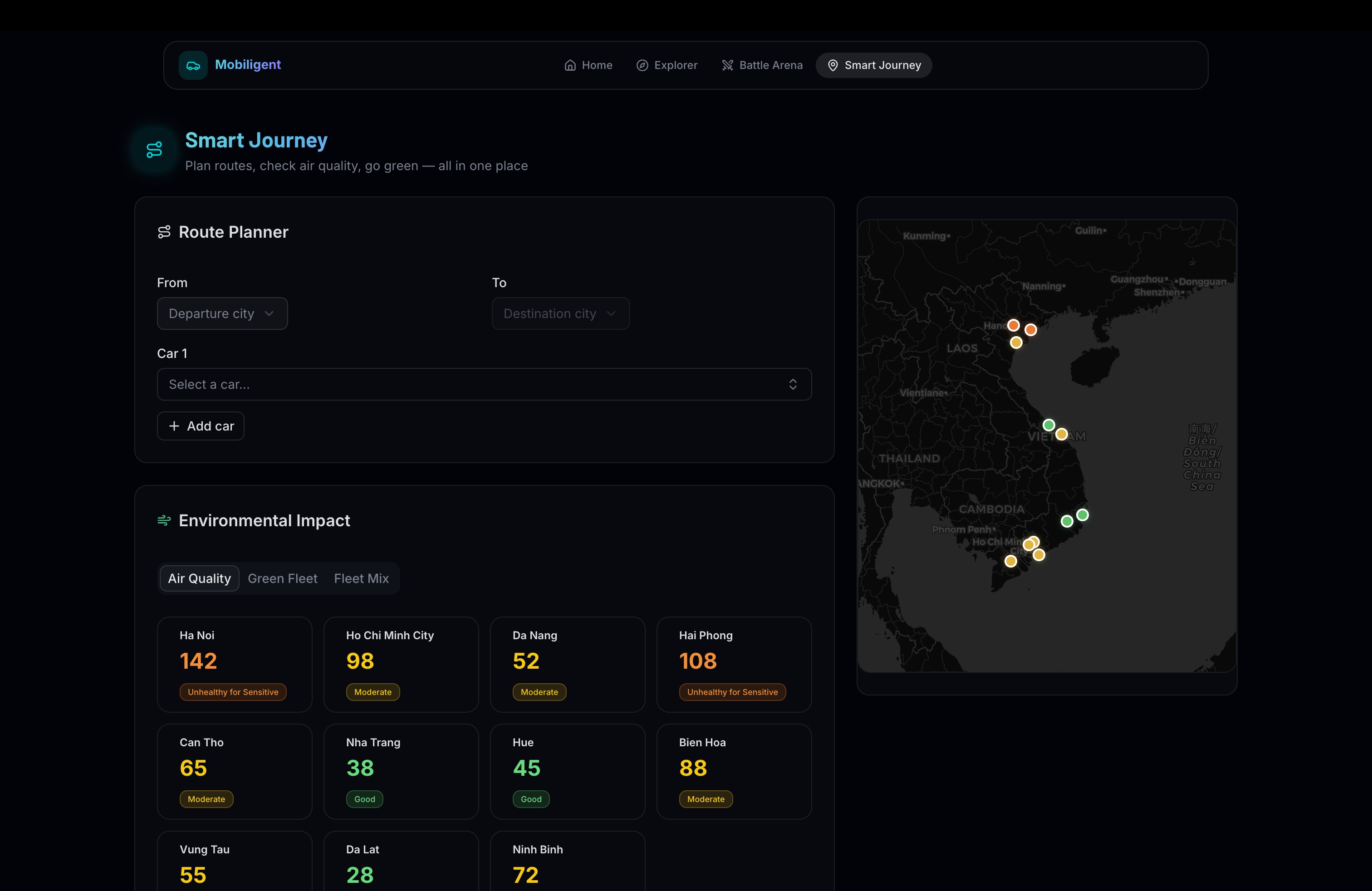
- Battle Arena + Smart Journey for AI car debates, dealer negotiation, route cost, CO2, tolls, and AQI-aware commute planning
It also includes route simulation across 7 journeys and AQI views across 11 Vietnamese cities.
How we built it
I built Mobiligent as a full-stack TypeScript app with React + Vite on the frontend and Express + tRPC on the backend. The UI uses Tailwind, Framer Motion, Recharts, and Leaflet.
The app is powered by a structured Vietnam car dataset plus custom logic for eco scoring, green scoring, total cost of ownership, depreciation, and commute simulation.
For AI, I used OpenAI-powered prompts for the advisor, commute recommendations, TCO summaries, depreciation insights, and car debates. For voice features, I integrated ElevenLabs for voice search, Vietnamese debate playback, and dealer negotiation.
I also extensively used Codex and Claude Code to design, iterate, debug, and ship the project in a short amount of time.
Challenges we ran into
The biggest challenge was keeping the AI grounded in real car data instead of letting it drift into generic answers. I had to tie prompts closely to the database, route assumptions, and cost models.
Another challenge was combining chat, voice, maps, simulations, and comparison tools into one product without making it feel disconnected.
Accomplishments that we're proud of
I’m proud that Mobiligent feels like one coherent product instead of separate demos. The explorer, debate flow, dealer simulator, and commute planner all share the same intelligence layer.
I’m also proud of the Battle Arena and Smart Journey features because they make the app more memorable than a normal car catalog. Users can hear cars debate, negotiate with an AI dealer, and compare ownership choices against real route and environmental tradeoffs.
What we learned
I learned that AI works best when it is paired with structured domain data. The strongest parts of Mobiligent come from combining model outputs with real inventory, route, and ownership context.
I also learned that sustainability becomes easier to understand when it is shown alongside everyday decisions like fuel cost, tolls, and resale value.
What's next for Mobiligent
Next, I want to make Mobiligent more production-ready by adding live traffic and AQI data, stronger personalization, better dealer coaching, saved comparisons, and richer EV ownership scenarios.
The long-term goal is to turn Mobiligent into a Vietnam-first mobility intelligence platform, not just a car browsing tool.
Built With
- elevenlabs
- manus
- openai
- sqlite
- typescript

Log in or sign up for Devpost to join the conversation.