-
-
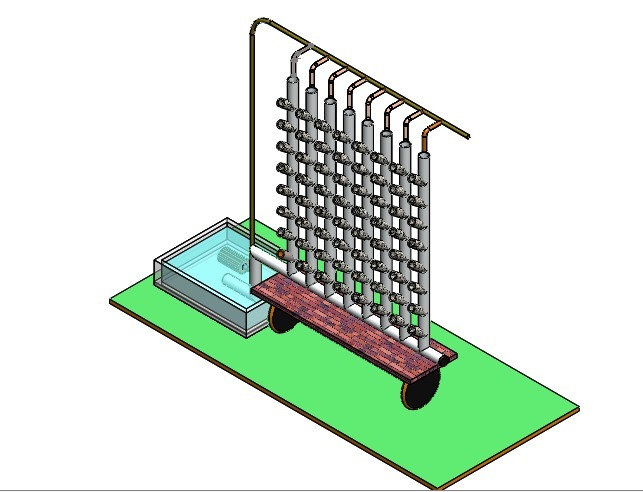
Prototype design
-
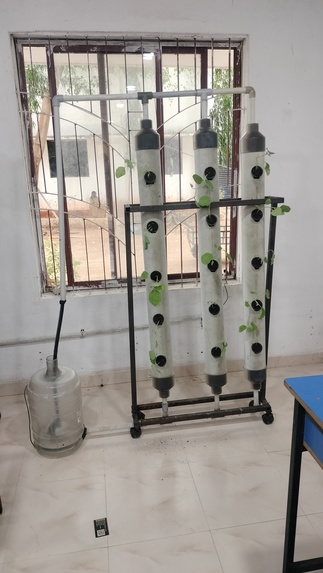
My Product
Inspiration
Fueled by curiosity and a desire to make a meaningful impact, I aim to create solutions that simplify lives and contribute to a more sustainable world. Each project I embark on is a step toward making everyday challenges easier to overcome.
What it does
The Mobile Vertical Unit is a portable, space-saving garden solution that allows urban dwellers to grow plants vertically. It features a water recycling system, solar power, and IoT integration for easy monitoring, making it an eco-friendly and efficient way to grow food in small spaces.
How we built it
We built the Mobile Vertical Unit using a lightweight frame, a water recycling system, and solar power. IoT sensors were added to monitor plant health and water levels, ensuring efficient and sustainable urban gardening.
Challenges we ran into
We faced challenges with optimizing the water recycling system for consistent performance and ensuring the solar power setup provided enough energy. Additionally, integrating the IoT sensors for accurate monitoring required fine-tuning to ensure reliable data collection in varying environmental conditions.
Accomplishments that we're proud of
We’re proud of creating a fully functional, portable garden system that combines sustainability with technology. Successfully integrating the water recycling system and solar power, while ensuring it’s energy-efficient and eco-friendly, was a key accomplishment. Additionally, the IoT monitoring feature allows users to easily track plant health, making urban gardening accessible and efficient.
What we learned
We learned the importance of balancing sustainability with functionality, especially in urban gardening. We gained valuable insights into designing efficient water recycling systems, optimizing solar energy use, and integrating IoT for real-time monitoring. We also learned how to troubleshoot and adapt our design to overcome challenges related to energy efficiency, data accuracy, and system mobility.
What's next for Mobile Vertical Home Garden Unit for Urban Areas
Next, we plan to refine the design based on user feedback, enhancing features like water efficiency and IoT connectivity. We aim to scale the project by exploring partnerships for mass production and expanding the system to support a wider variety of plants. Additionally, we’re looking into integrating smart farming techniques for even greater automation and sustainability in urban gardening.
Built With
- and-node.js-for-the-real-time-server-that-handles-the-iot-data.-to-store-and-process-the-data-efficiently
- and-python-for-processing-data-collected-from-the-sensors.-the-platform-for-hardware-development-was-arduino
- arduino
- c++
- node.js
- python
- react
- scalable
- tinkercad
- we-incorporated-apis-like-the-openweather-api-for-weather-data-to-optimize-plant-care-and-the-google-maps-api-for-location-based-services.-these-technologies-together-enabled-us-to-build-an-automated
- we-integrated-aws-or-google-cloud-to-scale-the-system-and-manage-the-collected-data.-additionally
- we-leveraged-react-(or-flutter)-for-mobile-app-development
- we-used-firebase-realtime-database-for-real-time-syncing-and-mysql-for-structured-data-storage.-for-cloud-services
- while-tinkercad-was-used-for-designing-and-simulating-the-3d-structure.-for-the-app-and-backend

Log in or sign up for Devpost to join the conversation.