-
-
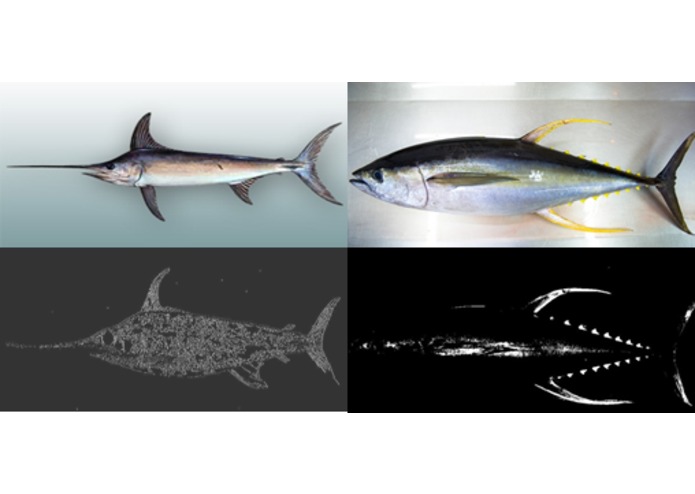
Image Classification
Inspiration
Fisheries are part of a dynamic socio-ecological system which are very sensitive to many factors, and the fishermen have to face dangerous and treacherous waters on an almost daily basis. We hope to offer a simple but powerful solution that will empower the fishermen. Towards sustainable fisheries, not only for the fish but also for the fishermen.
What it does
This is a mobile application that automatically classifies the fish, determines if it is within the legal limit, geo-tags them to the point where they were caught for analyses and future research. All these were performed with a single photo taken and zero human intervention required for data input. Furthermore, the data is cached when the boat is beyond the cellular coverage, but resumes uploading to a cloud database once the boat returns to shore.
How we built it
Our approach to the problem is to divide and conquer - break up the problem into several components and tackle each component individually. Using a combination of Computer Vision (CV) and innovation of the mind, we started with identifying the existence of the fish's bill, conduct classification according to spectrum of hue value unique to each fish species, and lastly, perform measurement of the fish based on its species type.
Challenges we ran into
The classification of the fish species is not as easy as it seems. While CV is the foundation of the solution, there is really much more than using the functions offered in the library. Due to the huge memory requirement from the computer vision algorithms, it crashed the app. We are forced to find new classes which consumes less resources on the smart phone.
With limited knowledge on the characteristics of the target species, we need to think of creative means of identifying the fish species, and come up with efficient algorithms to classify and measure the fishes, and of course make sure the algorithms really work!
Accomplishments that we're proud of
In 36 hours, we successfully developed a computer vision driven classification algorithm that could run solely on a smartphone. This is critical to the deployment of the system onto fishing vessels which usually operates beyond the cellular coverage.
What we learned
Through the Fishackathon, we learn that while computer vision has its limits, humans tend to find ways to overcome these limits and solve the problem using a combination of methods. The potential of Computer Vision is immense and we feel that it will pave the path for many other solutions to come.
What's next for Mobile Fish Management System
With the data collected (species, location, fish size etc), we hope to apply data analytic tools to generate more accurate fish stock assessment. Longer access time to fishing grounds and smaller length limit will lift our fishermen who depend on the fish for their livelihood.


Log in or sign up for Devpost to join the conversation.