-
-
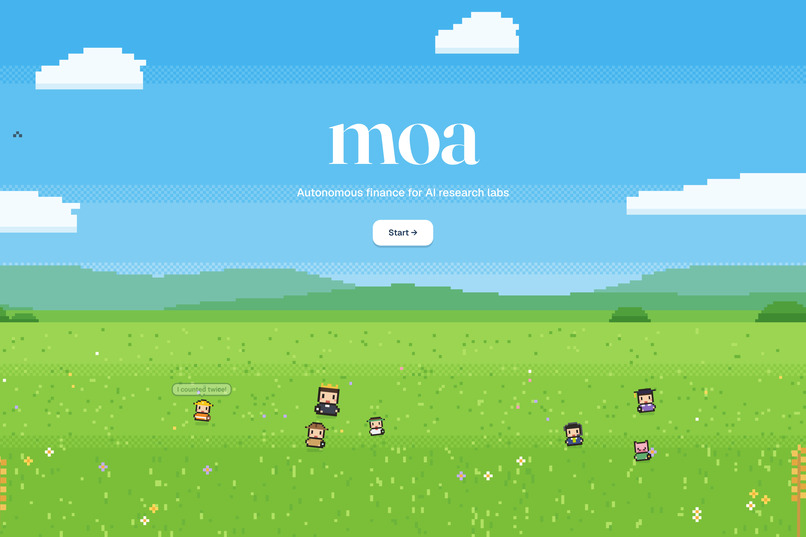
Landing Page
-
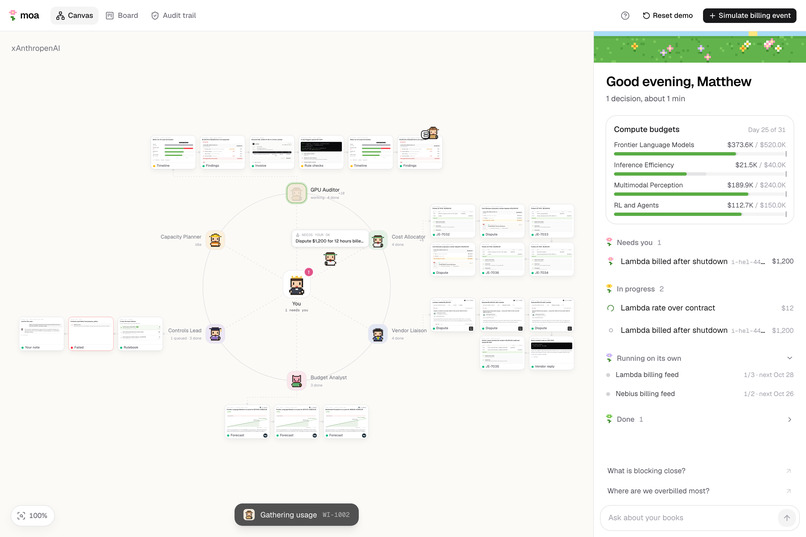
Orchestration Platform
-
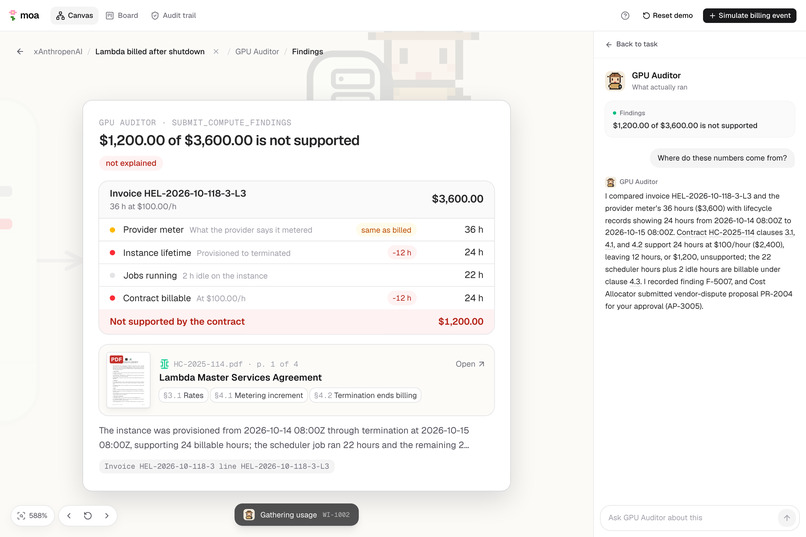
Contract Review
-
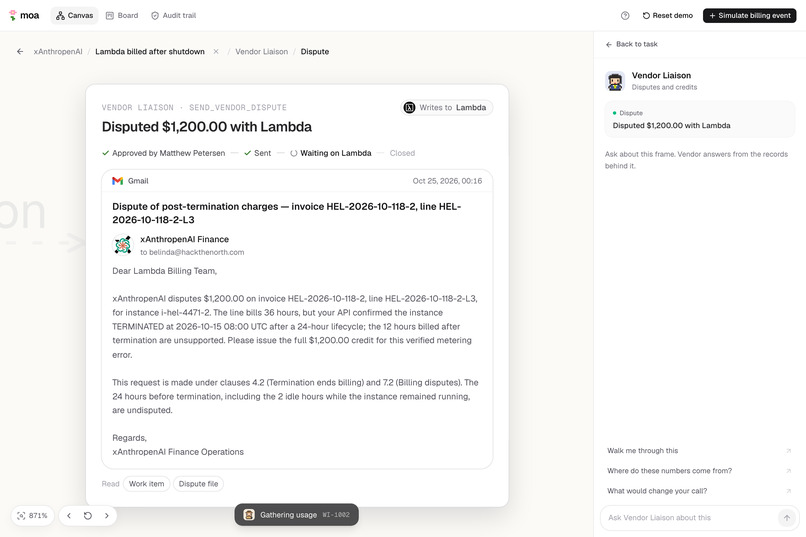
Vendor reachout
-
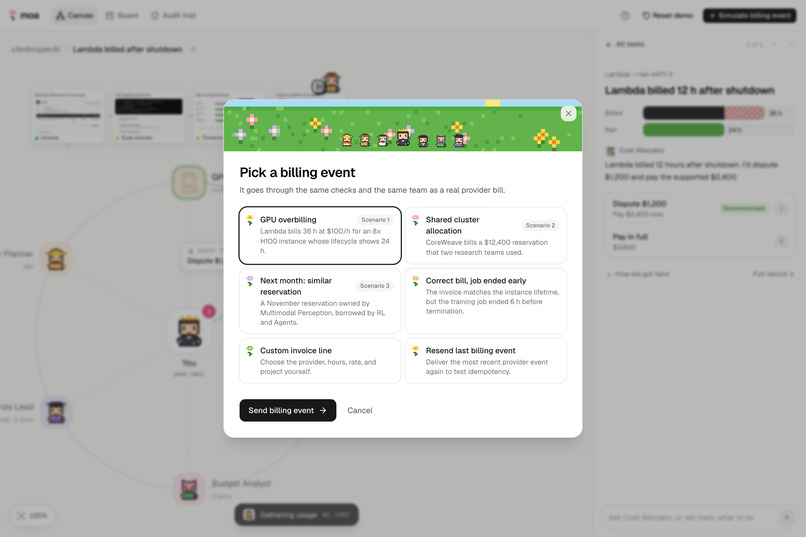
Simulatable events
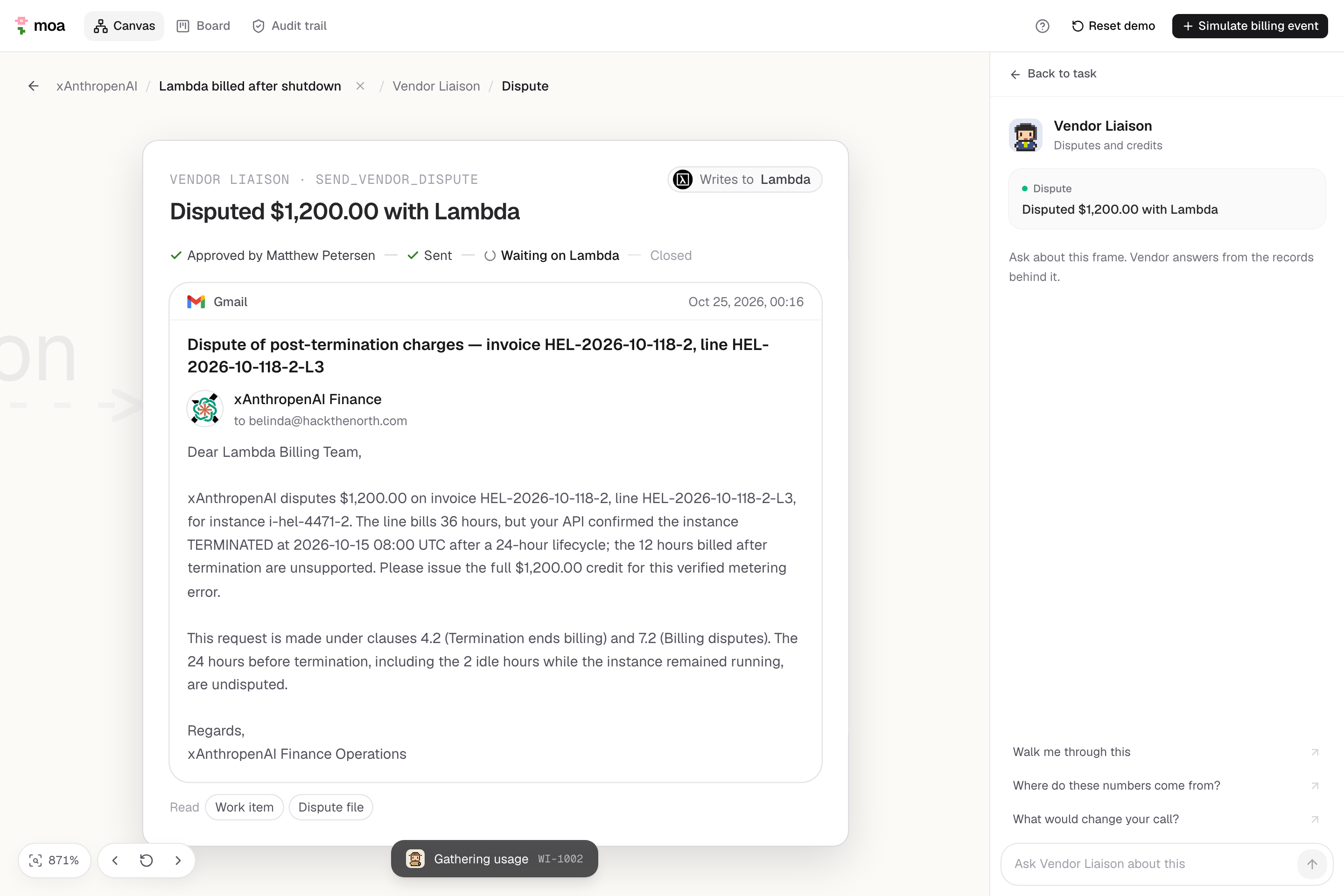
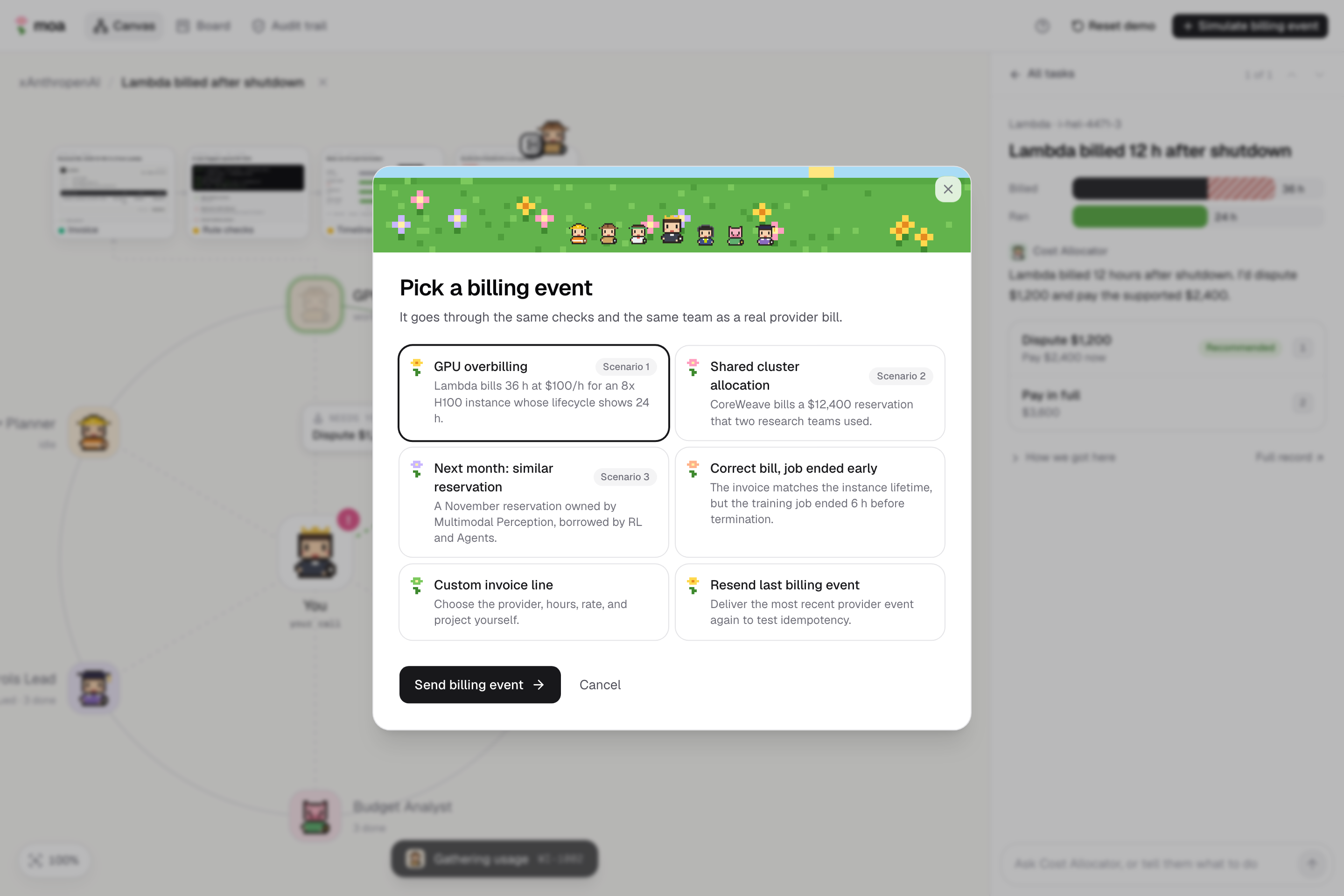
AI labs spend BILLIONS a year on GPUs, billed by the hour across several clouds. Nobody checks each invoice line against what actually ran. When a provider bills hours after an instance was shut down, the lab pays it.
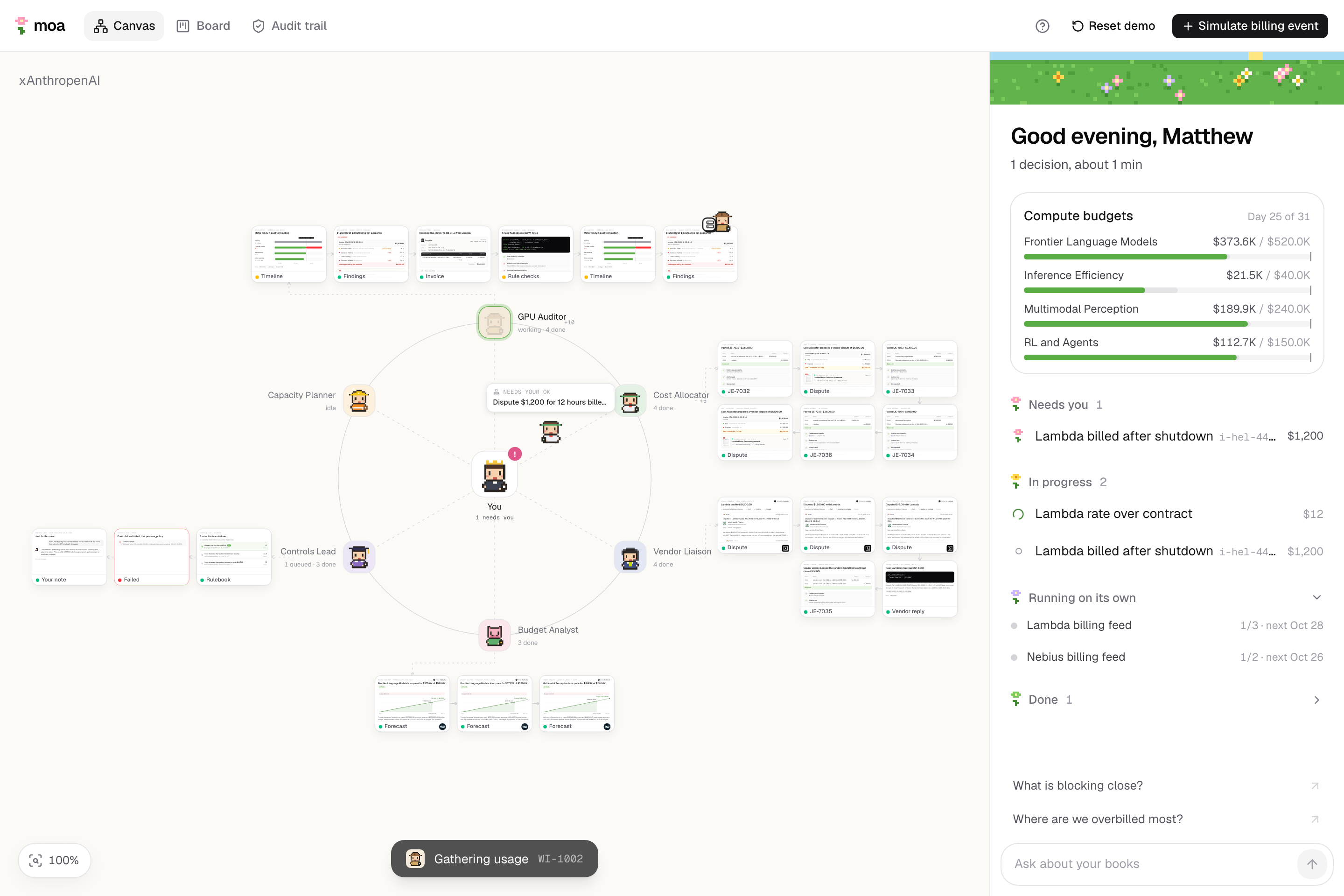
MOA (Mixture of Accountants) runs GPU payables for a fictional lab, xAnthropenAI :) Meet our pixel agents:
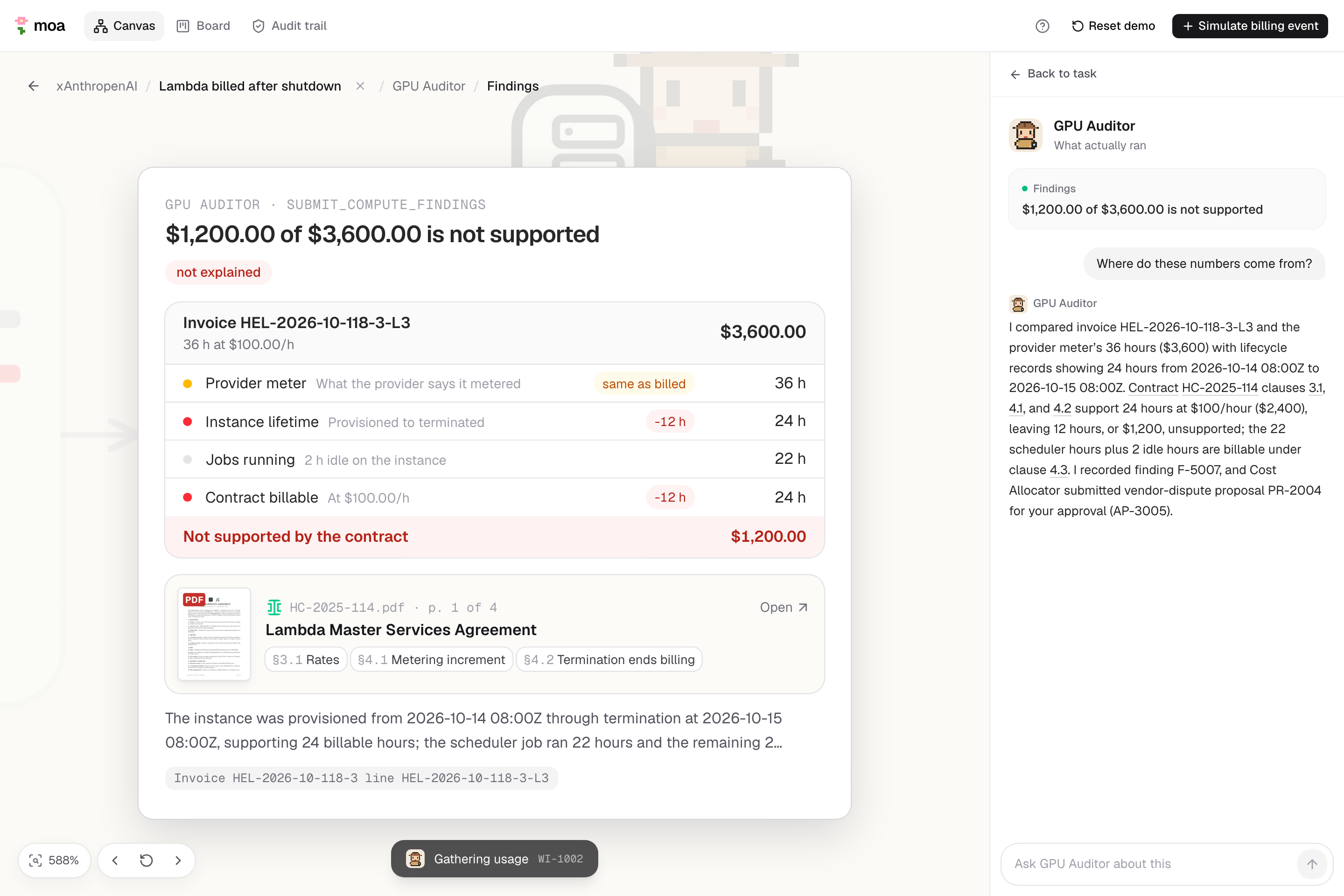
- Compute Investigator: checks each invoice line against the cluster's shutdown records, the provider's usage meter, and the training job logs.
- Cost Accountant: reads the contract, decides what's actually owed, and drafts a dispute that cites the contract sections that apply.
- Vendor Liaison: emails the dispute with an evidence file, reads the vendor's reply, handles partial offers, follows up, and closes the case when a credit memo arrives.
- Capacity Planner, Budget Analyst, Policy Analyst: split shared reservations between teams, watch each team's budget, and turn the controller's past decisions into reusable policies.
The controller makes the calls on a live canvas or in Slack. Agents never approve or pay anything themselves.
Example: Lambda bills 36 h. The job ran 22 h, and the instance was shut down at 24 h. MOA disputes 12 h, not 14, because the contract says idle time on a running instance is billable.
How we built it
- App: Next.js 16, React 19, Tailwind, SQLite with Drizzle.
- Agents: Factory Droid SDK & OpenAI. Every agent action goes through a single checkpoint that enforces that agent's permissions, does all the money math in code, and checks that cited contract sections exist.
- Records: the books can't be edited after the fact, and every step is in an audit trail.
- Integrations: Slack for approvals, with emoji reactions and threads; email out and in, so the agent reads real vendor replies.
- Deployment: Fly.io. Each visitor gets their own private copy of the demo.
Why the visualization?
- We believe, despite how abstract agent orchestration is cut out to be, there is a way to visualize the hand-offs, coordination, and many little tasks they take on.
Sponsor Prizes
Hyphenate: The Hyphenated Enterprise
moa is an autonomous AP and cost team for an AI lab's GPU spend. Six AI accountants handle audits, cost allocation, vendor disputes, budgets, controls and capacity. The code enforces each role's limits. Every action goes through one gateway and is written to an audit log. The agents check with the controller before they approve, post or pay. When the controller says "yes, but," they adjust the plan.
Factory
Each of the six finance employees runs as its own Factory Droid session. Droid only starts when work arrives, such as a new invoice, a handoff or a vendor email. Each session gets only that employee's tools. Droid's built-in shell, file and web tools are disabled, and any call outside the employee's scope is blocked and logged. Each run records its tool calls, tokens and Factory credits.
Figma: Idea to Demo
We started with a Figma prototype and kept moving between Figma and code through the Figma Agent and MCP. We built a design system, mapped flows in FigJam, made a clickable version in Figma Make, and animated our outro in Figma Motion.
Microsoft: Built for the Real World and Customer Impact
moa is built to be trusted with real money. It reads messy invoices that disagree with contracts and usage records. It catches the overbilling a busy finance team would miss. Then it disputes the charge with the vendor and closes the case. Each employee can only use its own tools, every action passes one permission gateway, and the full record goes to an audit log. Approvals, postings and payments stay with a human controller. The customer is the small finance team at a fast-growing AI lab that pays millions for GPU compute.
Accomplishments we're proud of
- A complete loop: invoice comes in, the error is caught, you approve, the vendor is disputed, the credit lands, and the books update.
- The Design! Bringing whimsy to AI labs
- For a frontier lab spending $1B a year on compute, we estimate about $5M in overbilling caught a year.
- This is our 0.5% estimate. Traditional recovery audits catch about 0.1%.
- At OpenAI's scale of about $16B, the same rate is about $80M.
What's next
- Connecting real billing APIs from Lambda, CoreWeave and AWS.
- Two-way sync with accounting systems like NetSuite.
- Measuring recovery rates on real invoices instead of estimates.
Built with: nextjs, react, typescript, tailwindcss, sqlite, drizzle, openai-agents-sdk, slack-api, gmail, fly.io
Built With
- agents
- nextjs
- typescript


Log in or sign up for Devpost to join the conversation.