-
-
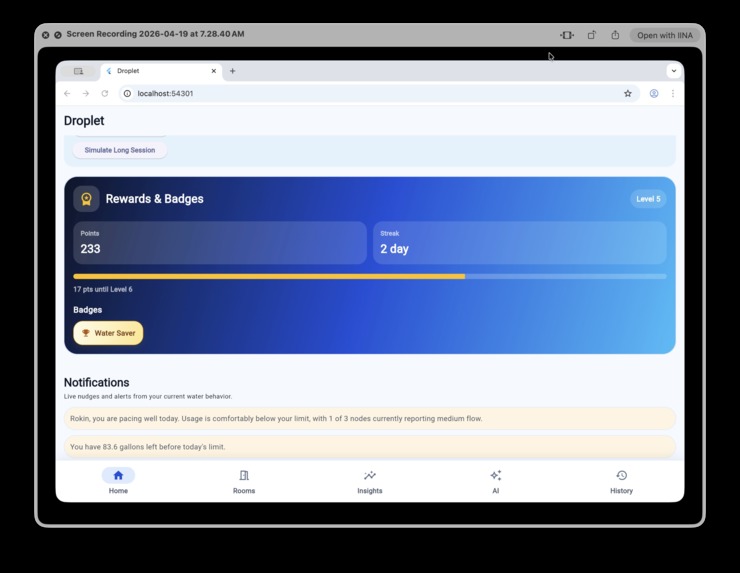
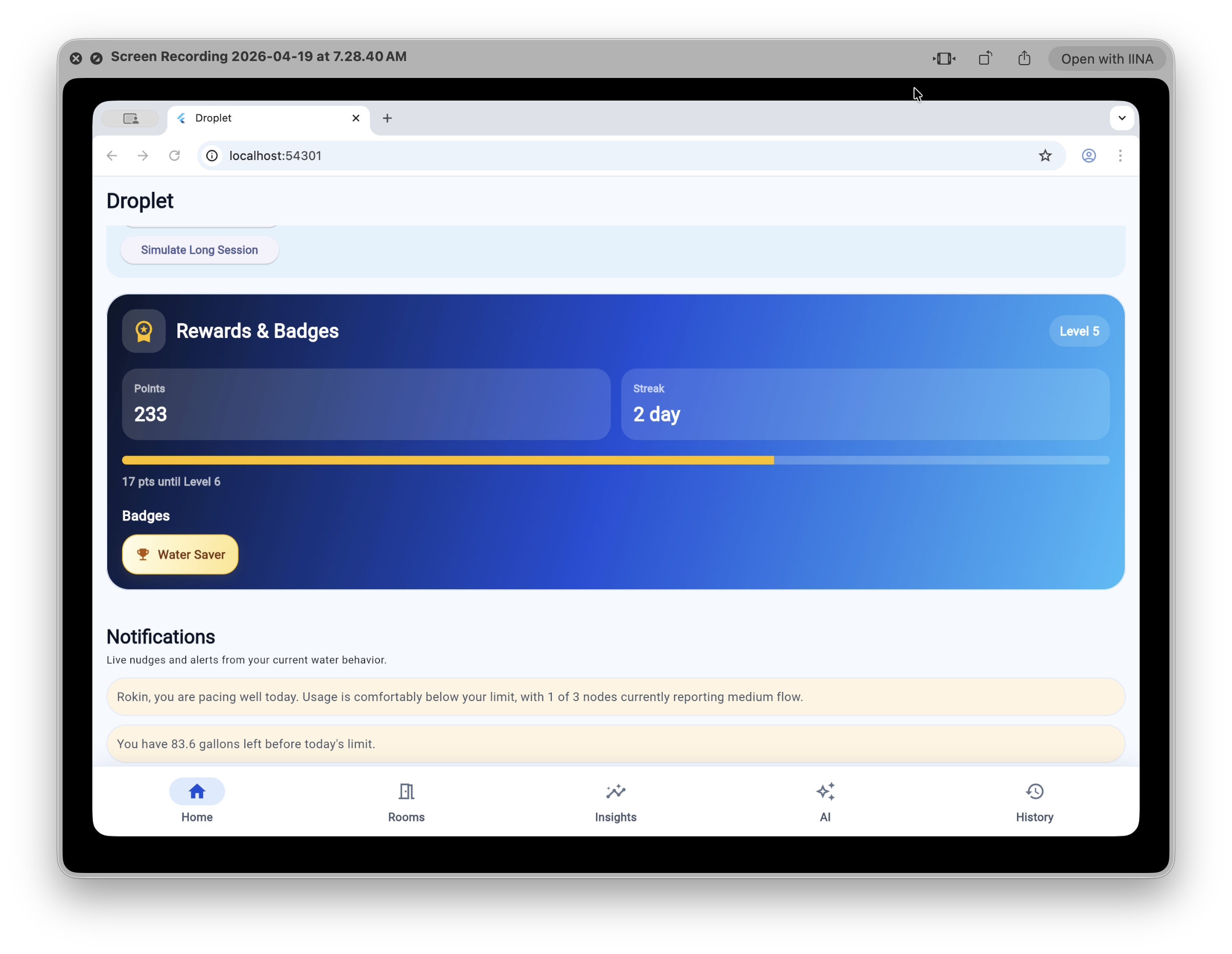
Reward page
-
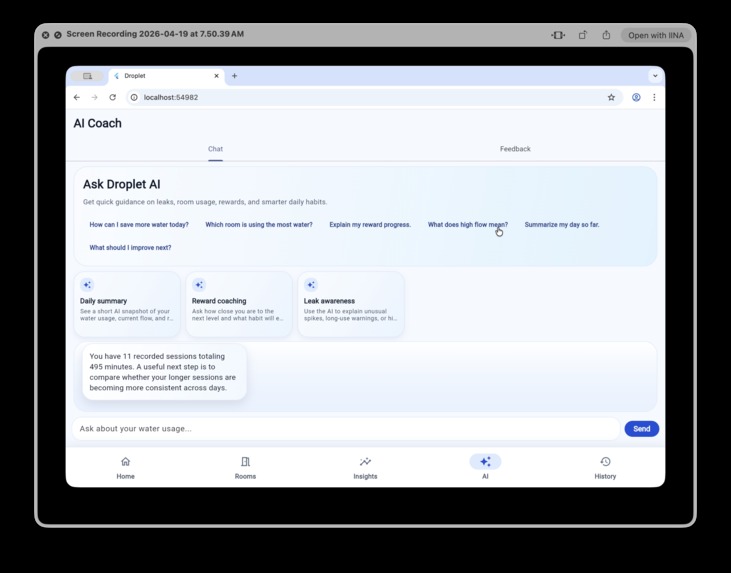
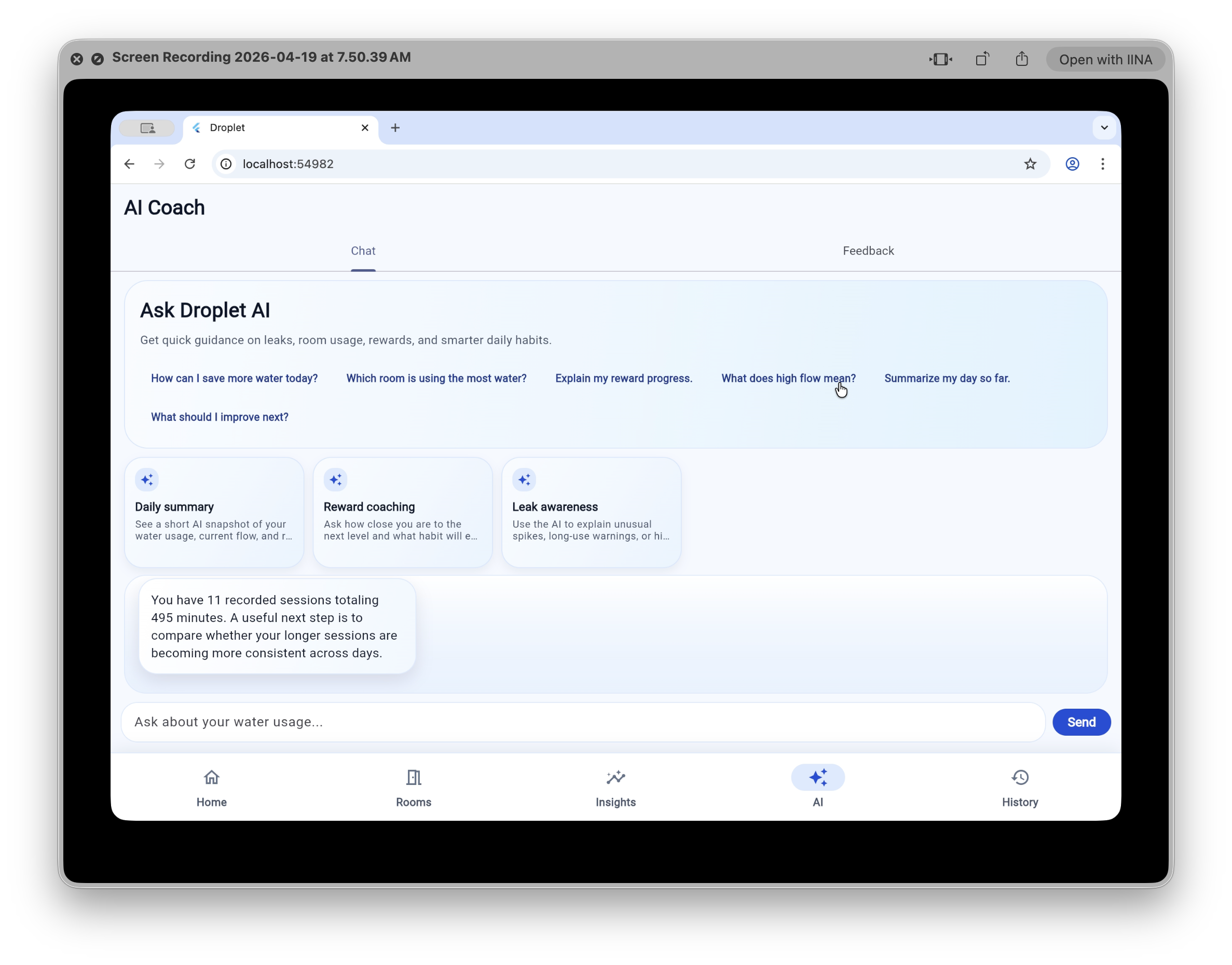
AI page
-
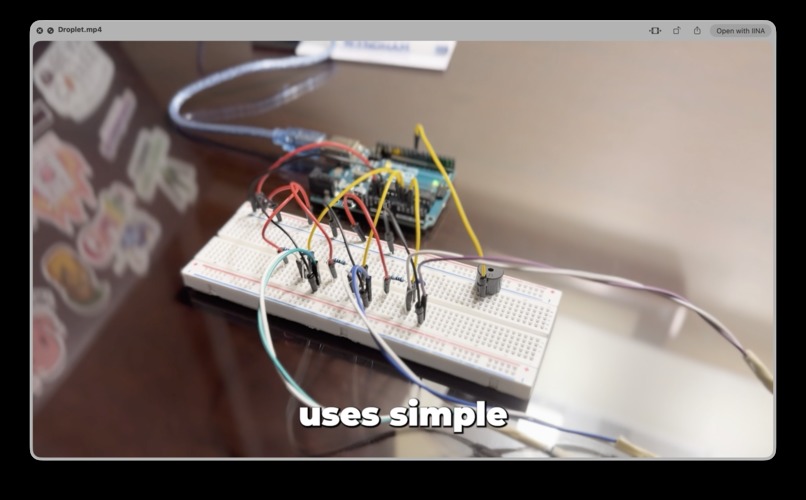
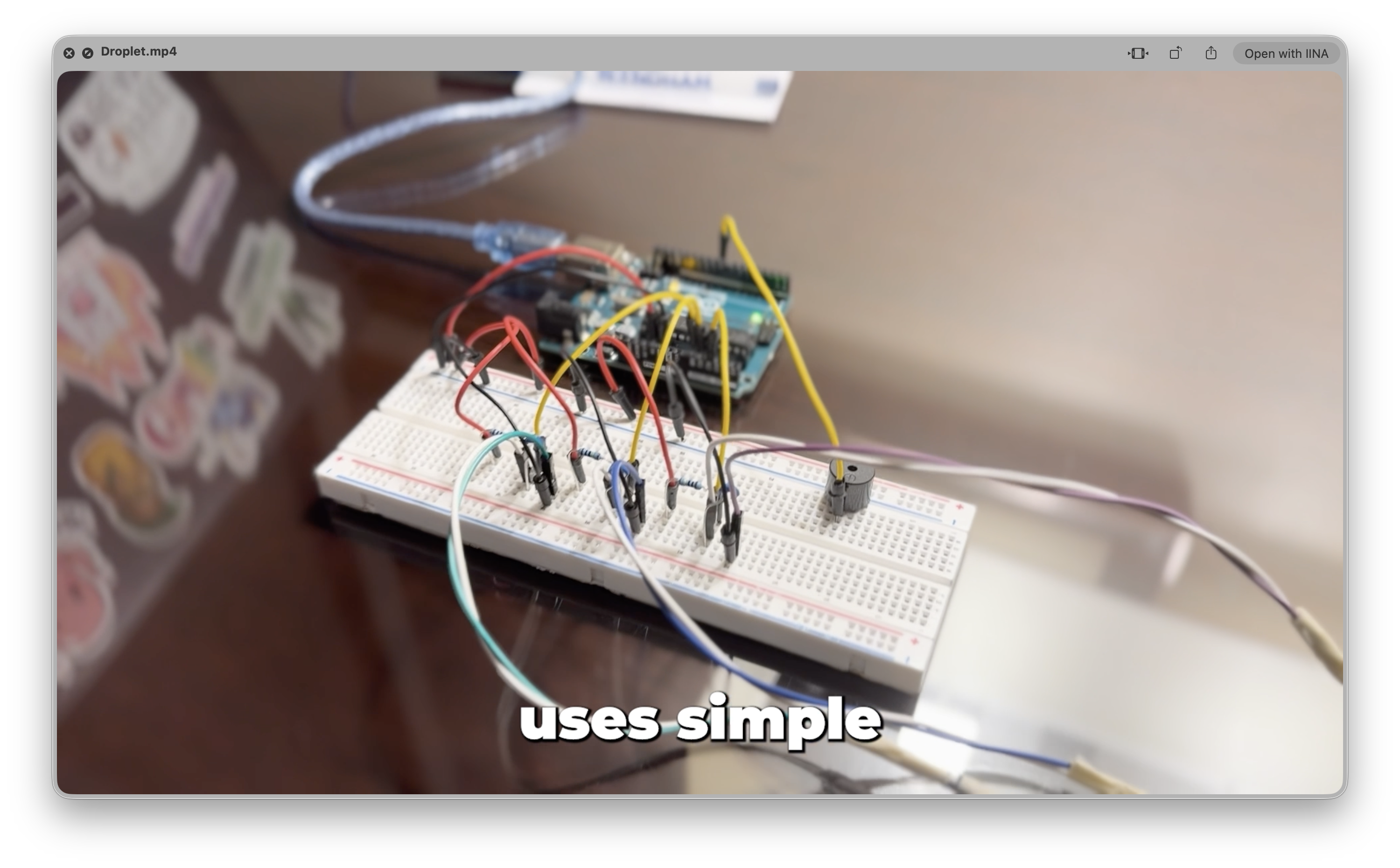
Hardware
-
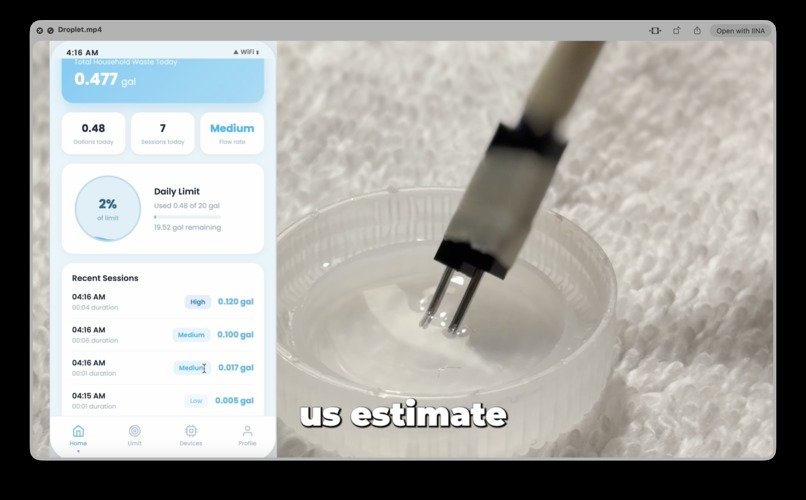
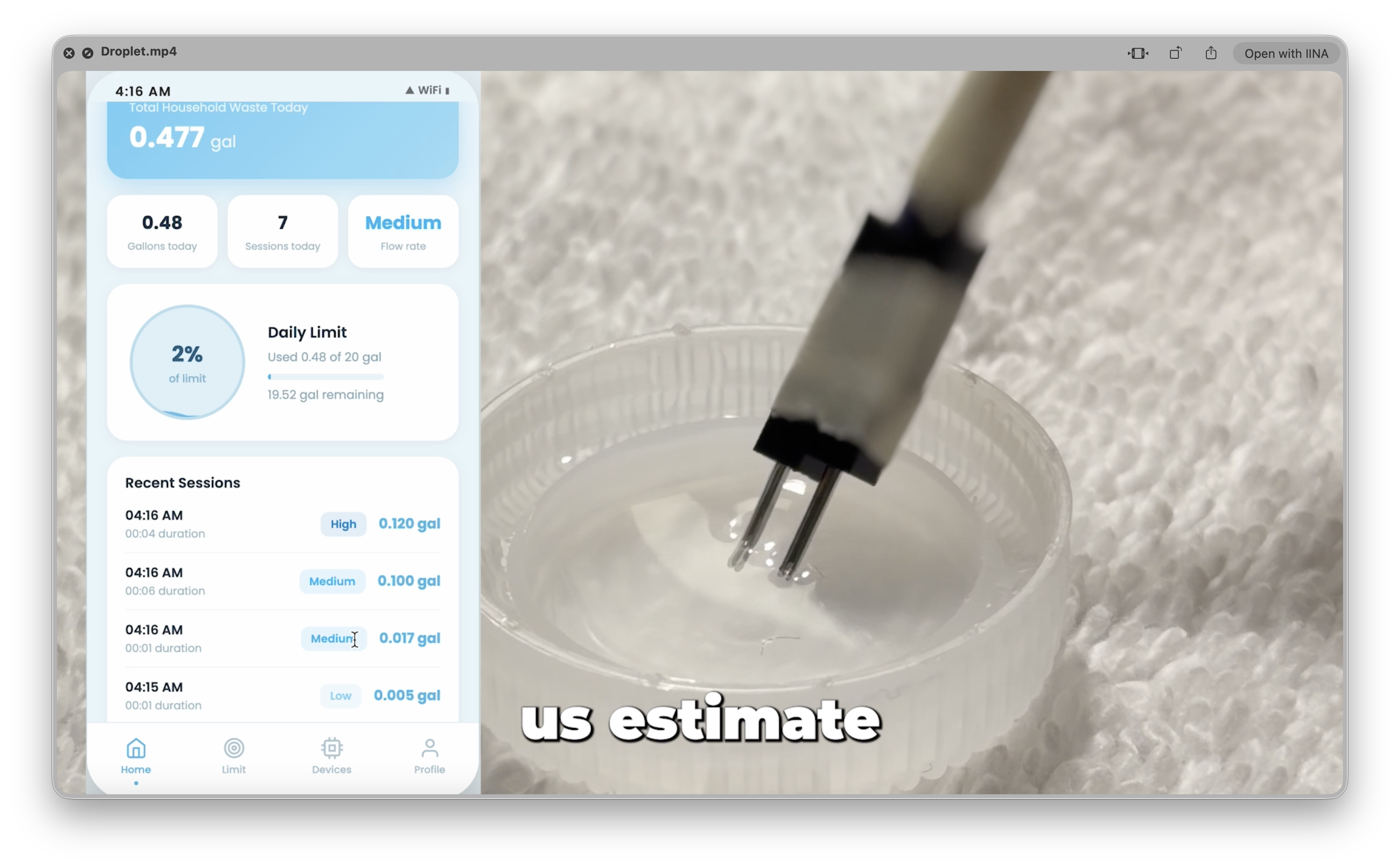
live sensor testing
-
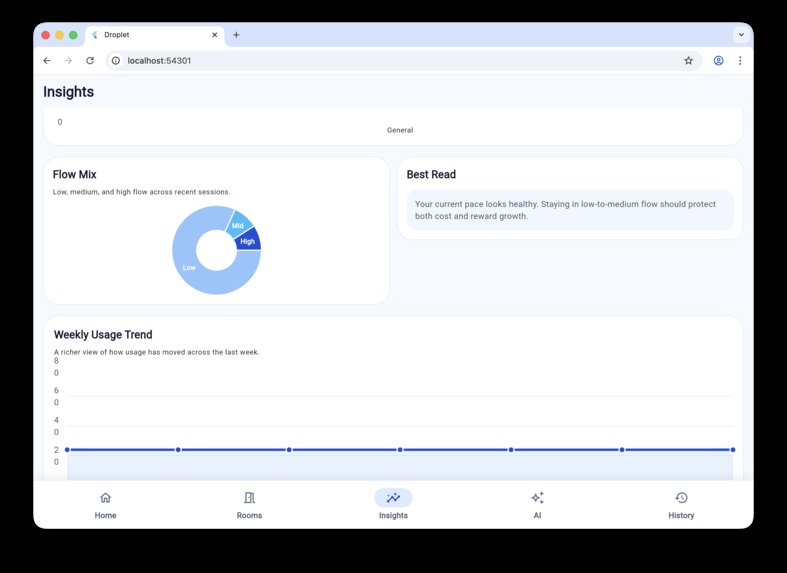
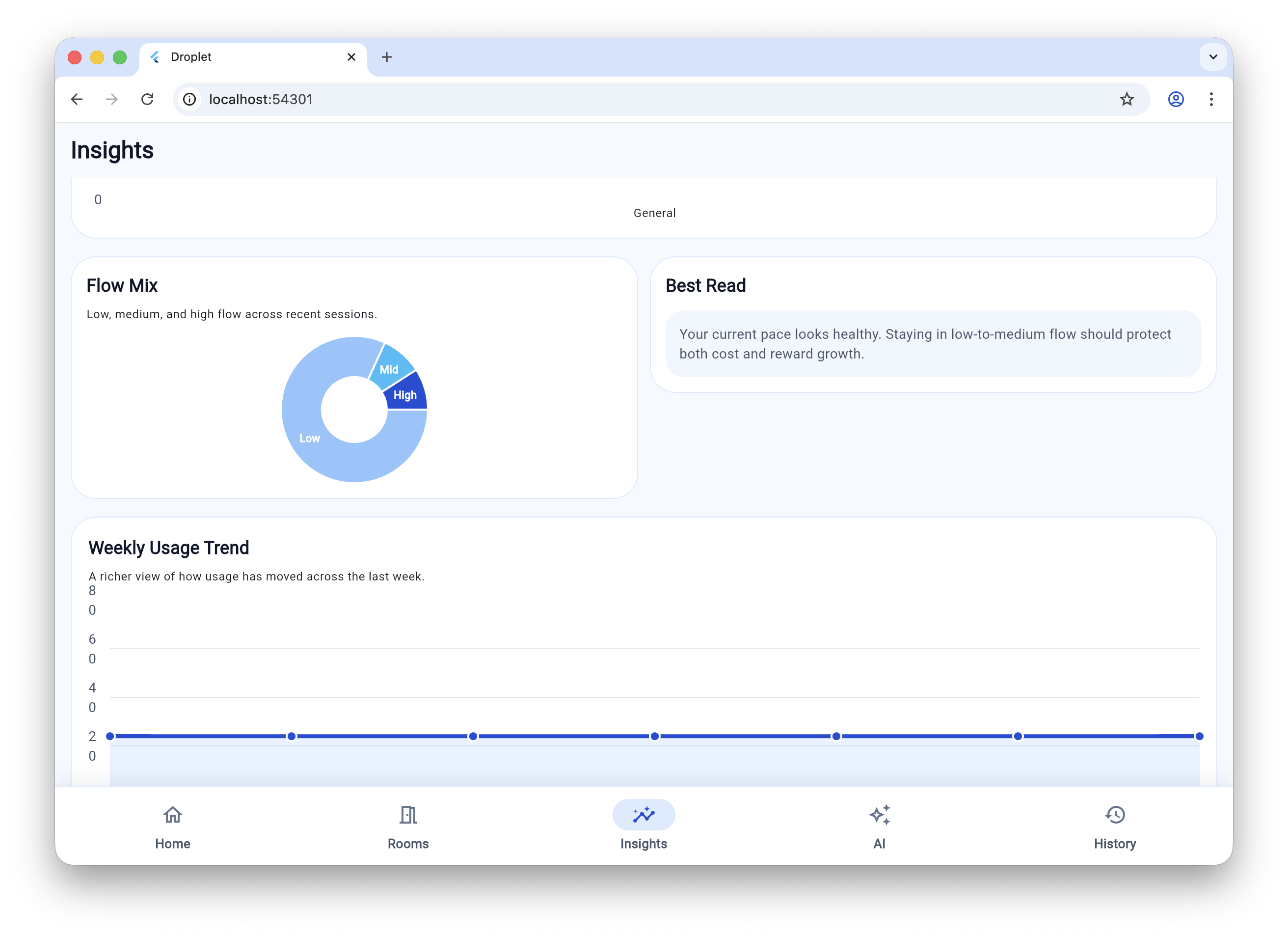
insights
Inspiration
Water waste is one of the most overlooked everyday problems. Simple actions like leaving the tap running while brushing teeth or taking slightly longer showers can waste significant amounts of water.
The key issue isn’t intention — it’s awareness.
We realized that unlike steps or electricity, people don’t get real-time feedback on water usage. That lack of visibility makes it hard to change behavior.
Droplet was inspired by a simple idea:
If people could see their water usage in real time and understand its impact, they would naturally use less.
What it does
Droplet is a smart water monitoring system that combines hardware, software, and AI to track and reduce water waste.
It provides:
- Real-time tracking of water usage using sensors
- Live session monitoring (time, flow intensity, estimated usage)
- Room-based insights (bathroom, kitchen, sink)
- Usage analytics through charts and breakdowns
- AI-powered suggestions and daily summaries
- Smart alerts for long usage or anomalies
- Gamification system with points, streaks, and rewards
The system helps users understand:
- how long they use water
- where they waste the most
- how they can improve
How we built it
Droplet is a full-stack system with three main components:
Hardware (Arduino)
- Built using an Arduino UNO R3
- Uses 3 probe sensors to detect water flow via conductivity
- Flow intensity is determined by probe activation:
- 1 probe → Low flow
- 2 probes → Medium flow
- 3 probes → High flow
- 1 probe → Low flow
Backend (Python + FastAPI)
- Processes real-time sensor data via a serial bridge
- Tracks:
- active sessions
- completed sessions
- usage metrics (duration, gallons, cost)
- active sessions
- Detects:
- long usage
- anomalies
- possible leaks
- long usage
- Generates AI-based advice and summaries
Frontend (Flutter)
- Multi-page mobile/web app with:
- Home dashboard (live session + rewards)
- Rooms page (usage by location)
- Insights page (charts and analytics)
- AI chat assistant
- History view
- Displays real-time updates and visual feedback
We also used demo seeded data alongside real sensor input to simulate a full multi-room environment.
Challenges we ran into
1. Real-time data pipeline
Arduino → Serial → Python → Backend → Flutter
Connecting was challenging. Initially, the data wasn’t reaching the app. We solved this by building a serial bridge that actively forwards events to the backend.
2. Hardware limitations
We didn’t use expensive flow meters, so we had to estimate usage using probe-based detection and timing, balancing simplicity and accuracy.
3. Data consistency issues
We faced problems with:
- timestamp mismatches (naive vs UTC)
- inconsistent JSON structures between backend and frontend
We solved this by standardizing formats and making models flexible.
4. UI felt like a demo initially
The app initially looked like a basic dashboard. We improved it by adding:
- navigation across multiple pages
- charts and visual insights
- room-based breakdown
- reward system
- AI summaries
Accomplishments that we're proud of
- Built a complete IoT system from hardware to mobile app
- Achieved real-time water tracking using low-cost sensors
- Created a clean, multi-page UI with charts and insights
- Successfully integrated AI-based feedback and summaries
- Designed a system that works even with limited hardware using demo + live hybrid data
- Made the app feel like a real product, not just a prototype
What we learned
- How to build and integrate a full-stack IoT pipeline
- Real-time data handling and synchronization
- API design using FastAPI
- Flutter UI development and state management
- Hardware-software communication via serial interfaces
- Importance of UX in behavior-changing apps
What's next for Droplet
- Support for multiple real sensors across different rooms
- More accurate flow measurement and calibration
- AI-powered predictive insights and recommendations
- Smart home integrations (Alexa, Google Home)
- Automated water shutoff system for leaks
- User accounts, cloud sync, and long-term analytics
Droplet is not just about measuring water.
It’s about changing how people think about using it.
Every drop counts.


Log in or sign up for Devpost to join the conversation.