Inspiration
MNIST dataset of handwritten digits is one of the most popular datasets used in the AI/ML field. It has led to several breakthroughs in both AI and ML. Thus, the simple goal of the project was to learn ML and integrate some GUI for better results.
What it does
Key features of the project are:
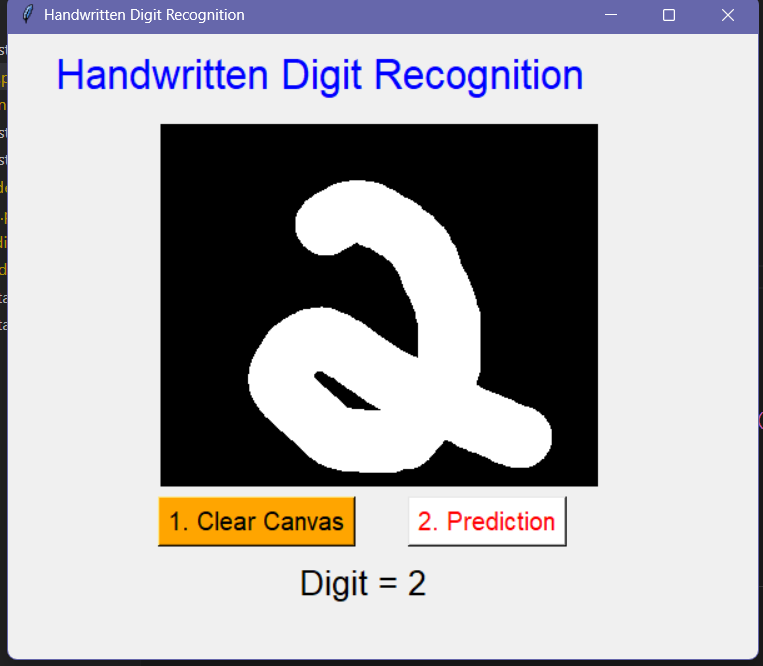
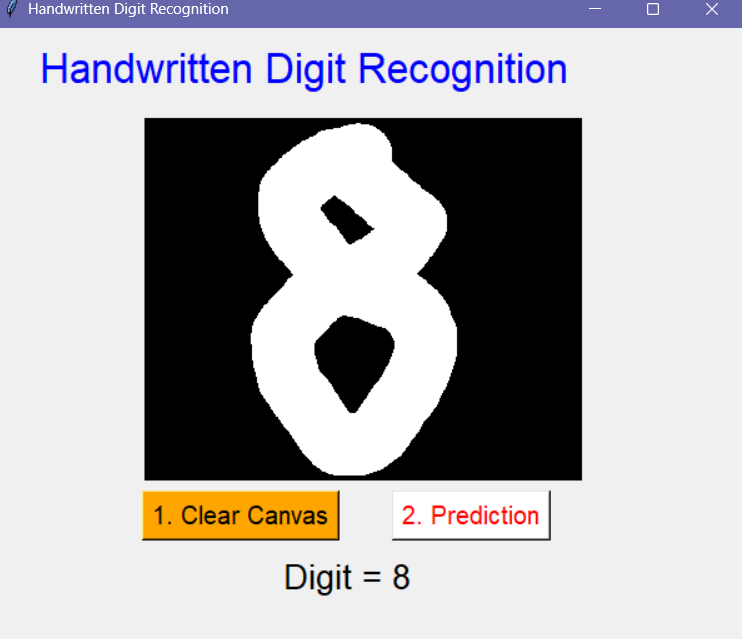
- It allows real-time predictions from raw handwritten input
- There is usage of Tkinter for integrating GUI that allows better interaction
- Neural Network is pre-trained on around 60,000 images
How we built it
It was built using:
- MNIST Dataset 2.Neural Network that was trained using SciPy's minimize function Training further had: i. Input layer : 784 neurons ii. Hidden layer: 100 neurons iii. Output layer : 10 neurons 3.GUI using Tkinter library
Challenges we ran into
-> There were some GUI input processing issues in the beginning, which were rectified later on when I learned properly about image processing. -> The GUI had low prediction accuracy but by improving image processing it was enhanced. -> Due to the manual neural network, the training process was quite slow, but with more optimization, it was increased -> Integrating GUI with the model was something I never did, but eventually learned how simple it was
Accomplishments that we're proud of
->Accuracy is significant and quite many right predictions were made ->No tensorflow or pytorch was used ->Integrated an easy GUI for real-time predictions ->Improved accuracy using image processing
What we learned
How to train a neural network using SciPy from scratch with the help of scipy.optimize.minimize() Learned how to integrate GUI with ML models Importance of image processing for better accuracy Learned about better activation functions

Log in or sign up for Devpost to join the conversation.