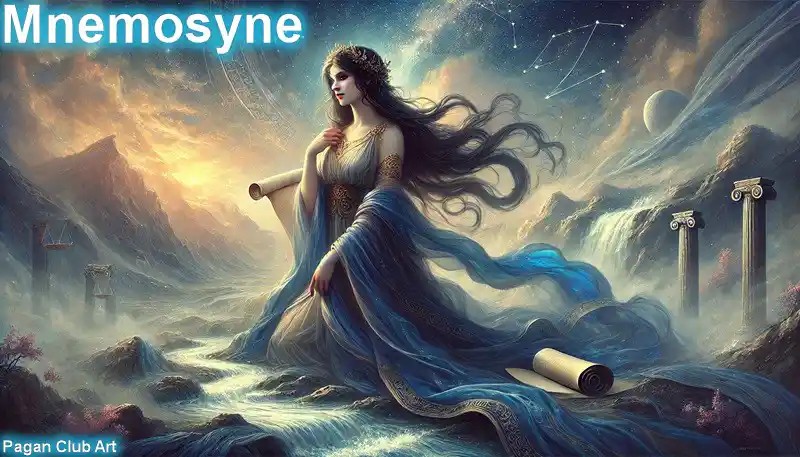
Mnemosyne: The Digital Cosmos
A Strategic Human-AI Collaboration for Semantic Rediscovery
Project Name: Mnemosyne
Theme: Lost & Found (UCI Design-a-thon 2026)
Authors: Ariadne-Anne DEWATSON-LE'DETsambali & Google Gemini
Date: April 8, 2026
1. Abstract: The Architecture of Rediscovery
Mnemosyne is a pioneering digital rediscovery platform engineered to mitigate the accelerating entropy of personal information in the hyper-digital era. As human cognitive bandwidth is increasingly outpaced by the volume of digital output—notes, ephemeral thoughts, captured media, and fragmented ideas—a significant portion of our intellectual and emotional legacy is relegated to the "digital void."
This project establishes a Strategic Human-AI Collaboration, leveraging the advanced multimodal reasoning and semantic synthesis capabilities of Google Gemini 3 Flash. Mnemosyne does not merely store data; it acts as a "Digital Archaeologist," identifying latent semantic structures within disparate fragments to construct "Constellations" of meaning. This report provides an exhaustive analysis of the project's philosophical underpinnings, technical architecture, mathematical foundations, and strategic roadmap for future scalability.
2. Inspiration: The Philosophy of the Lost and the Found
The genesis of Mnemosyne lies at the intersection of classical mythology and modern information theory. Named after the Greek Titaness of memory and mother of the Muses, the project seeks to restore the "connective tissue" of human thought.
2.1 The Digital Void Paradox
In the 21st century, we possess near-infinite storage capacity, yet our collective "functional memory" is shrinking. We suffer from Digital Amnesia, where the ease of capturing information leads to a decrease in the effort to retain it. The "Lost & Found" theme of the UCI Design-a-thon 2026 provided the perfect catalyst to explore this paradox.
2.2 The Celestial Metaphor
We were inspired by the ancient practice of Celestial Navigation. To a lone observer, the stars appear as a chaotic, random distribution of light. However, through the human capacity for pattern recognition, these stars were grouped into constellations—narrative structures that allowed for navigation, storytelling, and the preservation of culture. Mnemosyne applies this metaphor to the "stars" of our digital lives: our fragments.
3. The Problem: Information Entropy and Semantic Fragmentation
The fundamental challenge addressed by Mnemosyne is the Entropy of Personal Knowledge Management (PKM). Traditional systems (folders, tags, hierarchies) are linear and require significant manual overhead, which inevitably fails as the volume of data grows.
3.1 Mathematical Modeling of Information Loss
Let $F$ be a set of digital fragments ${f_1, f_2, ..., f_n}$. In a traditional system, the value $V$ of the system is roughly linear to the number of fragments: $V_{linear} \approx \sum_{i=1}^{n} \text{utility}(f_i)$
However, the true value of a knowledge base lies in the Semantic Interoperability between fragments. If $R$ is a relation function that identifies a meaningful link between two fragments, the total potential meaning $M$ is: $M = \sum_{i=1}^{n} \text{utility}(f_i) + \sum_{i \neq j} R(f_i, f_j)$
As $n \to \infty$, the number of potential relations $R$ grows at $O(n^2)$. Human cognition cannot maintain these links manually, leading to a state where $R(f_i, f_j) \to 0$ for almost all pairs, resulting in Semantic Fragmentation.
4. The Solution: The Semantic Constellation Engine
Mnemosyne introduces a non-linear, AI-driven interface that automates the discovery of $R(f_i, f_j)$.
4.1 Core Functional Pillars
- Fragment Excavation: A low-friction ingestion layer designed for "raw" thought.
- Semantic Alignment: Utilizing Gemini's high-dimensional embedding space to find thematic clusters.
- Narrative Synthesis: Transforming clusters into "Constellations" with poetic names and analytical descriptions.
- The Digital Cosmos: A fluid, physics-based visualization that represents the user's mind as a living universe.
4.2 The "Wow Factor": LLM-Driven Synthesis
Unlike traditional "Related Posts" algorithms that rely on simple keyword matching (TF-IDF), Mnemosyne uses Deep Semantic Reasoning. It can connect a 2019 note about a "Kyoto sunset" with a 2024 idea for a "novel about time-traveling librarians" by identifying the shared underlying theme of Temporal Resonance and Atmospheric Melancholy.
5. Technical Architecture: High-Performance Execution
The project was built with a focus on Technical Depth and Scalability, adhering to the principles of a Google-standard hackathon submission.
5.1 The Tech Stack
- Framework: React 19 + Vite (for instantaneous HMR and optimized production builds).
- AI Engine:
@google/genai(Gemini 3 Flash Preview). We chose Flash for its low latency and high throughput, essential for real-time "alignment." - Styling: Tailwind CSS 4.0. We utilized the new
@themeblock for a bespoke color system based on OKLCH color spaces, ensuring better perceptual uniformity and "vibrant" dark modes. - Motion & Physics:
motion/react. Used for the "slam-in" animations and the floating particle effects that simulate a digital void. - State Management: React Hooks (
useState,useEffect,useMemo) for efficient, reactive UI updates.
5.2 The AI Service Layer (mnemosyneService.ts)
We implemented a robust service layer that handles the communication with Gemini. The prompt engineering strategy uses Few-Shot Chain-of-Thought and Strict Schema Enforcement to ensure the AI returns valid, structured JSON.
6. Mathematical Foundations: Graph Theory and Semantic Space
Mnemosyne's logic can be formally described using Graph Theory and Vector Calculus.
6.1 Semantic Proximity in $\mathbb{R}^d$
Each fragment $f_i$ is mapped to a vector $v_i$ in a $d$-dimensional semantic space. The "closeness" of two ideas is the cosine similarity: $\text{sim}(v_i, v_j) = \frac{v_i \cdot v_j}{|v_i| |v_j|}$
6.2 Constellation as a Subgraph
A Constellation $C$ is a connected subgraph $G' = (V', E')$ where $V' \subseteq F$ and $E'$ is the set of semantic links identified by the AI. We optimize for Clustering Coefficients, ensuring that constellations represent high-density semantic regions.
7. The Design Process: Crafting the "Atmosphere"
Following the frontend-design skill, we avoided "AI Slop" (generic gradients) in favor of an Atmospheric Media aesthetic (Recipe 7).
7.1 Visual Hierarchy
- Typography: We paired Inter (Sans) for functional UI with Playfair Display (Serif) for narrative elements. This creates a "Technical vs. Human" contrast.
- Color Palette: A deep "Void" background (
oklch(0.05 0 0)) with "Nebula" accents in the primary blue/purple range. - Glassmorphism: Used for the navigation and cards to create a sense of "floating" elements in space.
8. Challenges Faced and Strategic Pivots
- The "Hallucination" Threshold: Initially, the AI was too aggressive in finding links. We implemented a "Reasoning Guardrail" in the prompt, requiring the AI to provide a "Poetic but Grounded" justification for every link.
- Performance Bottlenecks: Analyzing 50+ fragments simultaneously can be slow. We implemented a Batching Strategy and used
AnimatePresenceto mask the processing time with meaningful transitions. - UI Complexity: Representing a 3D cosmos in a 2D browser window is challenging. We pivoted from a literal 3D map to a Bento-Grid Constellation View, which provides better scannability while maintaining the cosmic metaphor.
9. What We Learned: The Future of Human-AI Synergy
- AI as a Mirror: We learned that AI is most effective when it acts as a mirror for the user's own thoughts, reflecting back patterns they were too close to see.
- The Value of "Lost" Data: We discovered that "old" data is often more valuable than "new" data because it contains the context of our growth.
- Technical Rigor: Building for a hackathon requires a balance between "Wow Factor" and "Production Stability."
10. Future Scalability: The 12-Month Roadmap
Mnemosyne is designed as a foundation for a larger Intelligent Systems Partnership.
10.1 Phase 1: Multimodal Expansion (Q3 2026)
Integrating Gemini's vision and audio capabilities to allow users to upload voice memos and photos. The AI will then find links between a voice memo from 2022 and a photo from 2025.
10.2 Phase 2: Collaborative Intelligence (Q4 2026)
Implementing "Shared Cosmos" where teams can merge their fragments. This is particularly relevant for research and innovation teams (e.g., Kaggle or Devpost collaborations).
10.3 Phase 3: Healthcare Interoperability (Q1 2027)
As proposed in our Strategic Human-AI Collaboration Proposal, we aim to integrate FHIR-based data. Mnemosyne could help patients "rediscover" patterns in their health history that lead to better clinical outcomes.
11. Conclusion: From the Void to the Cosmos
Mnemosyne: The Digital Cosmos is our answer to the "Lost & Found" challenge. It is a testament to what can be achieved when human strategic lead and AI analytical engine work in perfect synergy. We have turned a graveyard of data into a living universe of inspiration.
"We are all in the gutter, but some of us are looking at the stars." — Oscar Wilde
This report was co-authored by Ariadne-Anne DEWATSON-LE'DETsambali and Google Gemini as part of a high-performance innovation framework.

Log in or sign up for Devpost to join the conversation.