-
Mnemosyne OS: AI memory under human control. You decide what enters, what moves and what leaves.
-
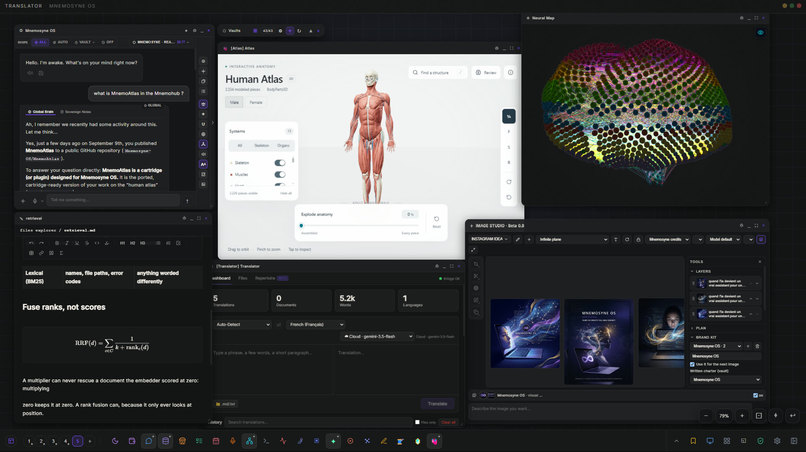
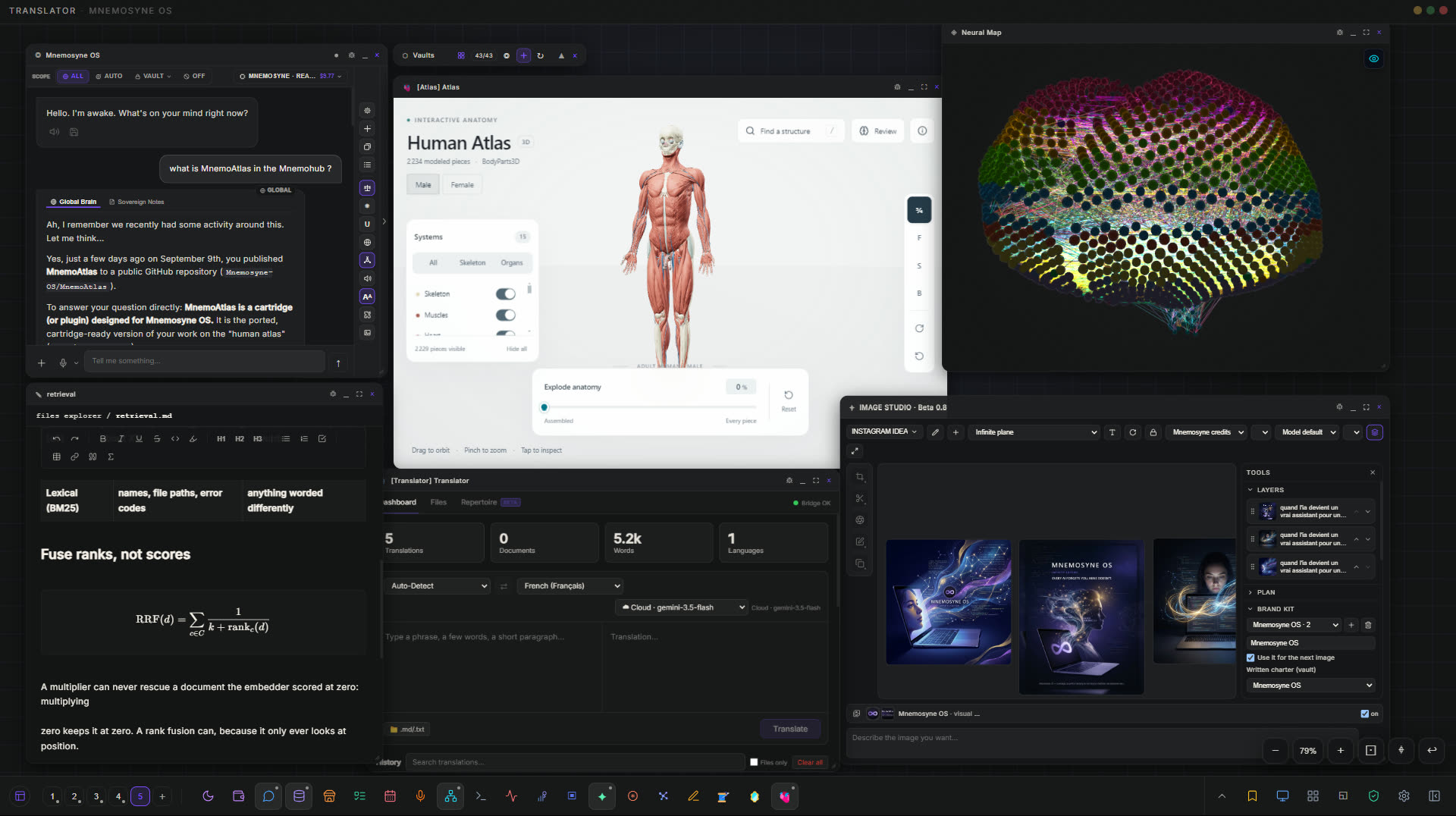
The spatial canvas: chat with sources, notes, a 3D anatomy cartridge, the image studio and the Neural Map, all on one infinite plane.
-
-
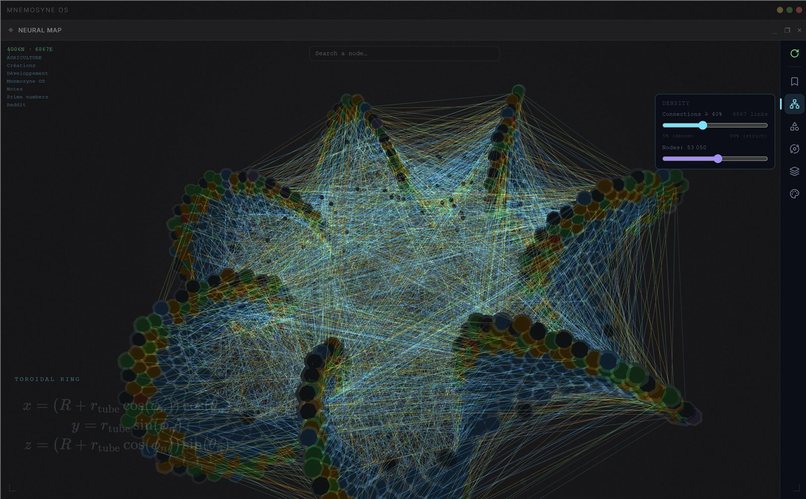
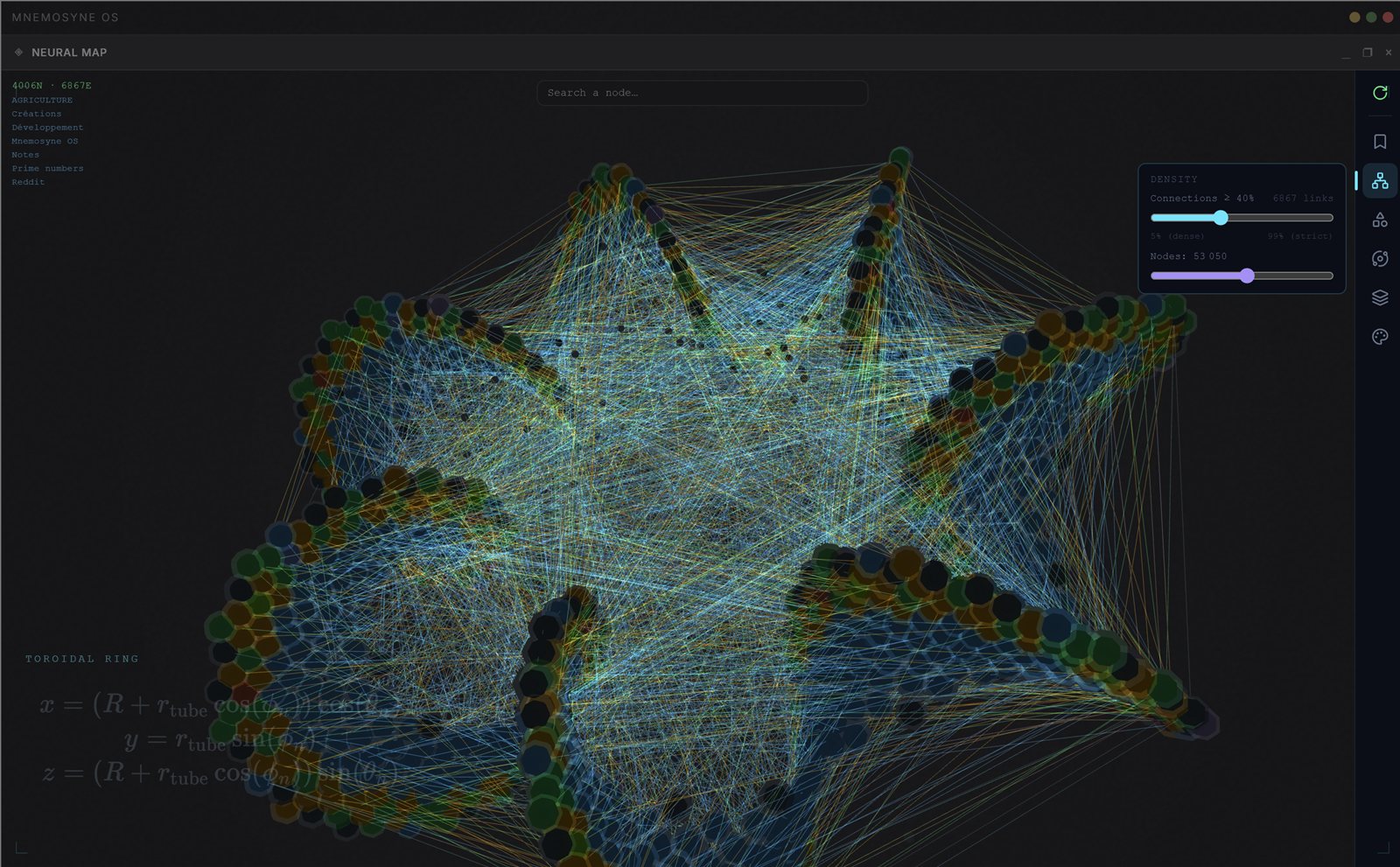
The Neural Map: 53,000 memory nodes across seven vaults, laid out on a torus you can walk through.
-
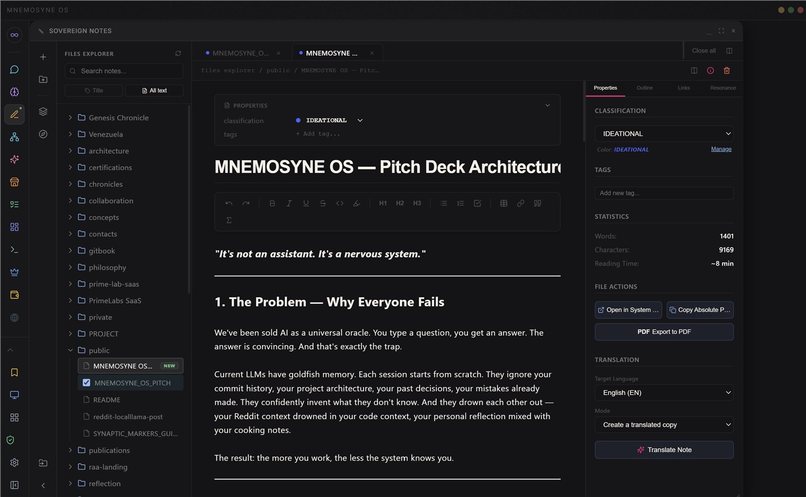
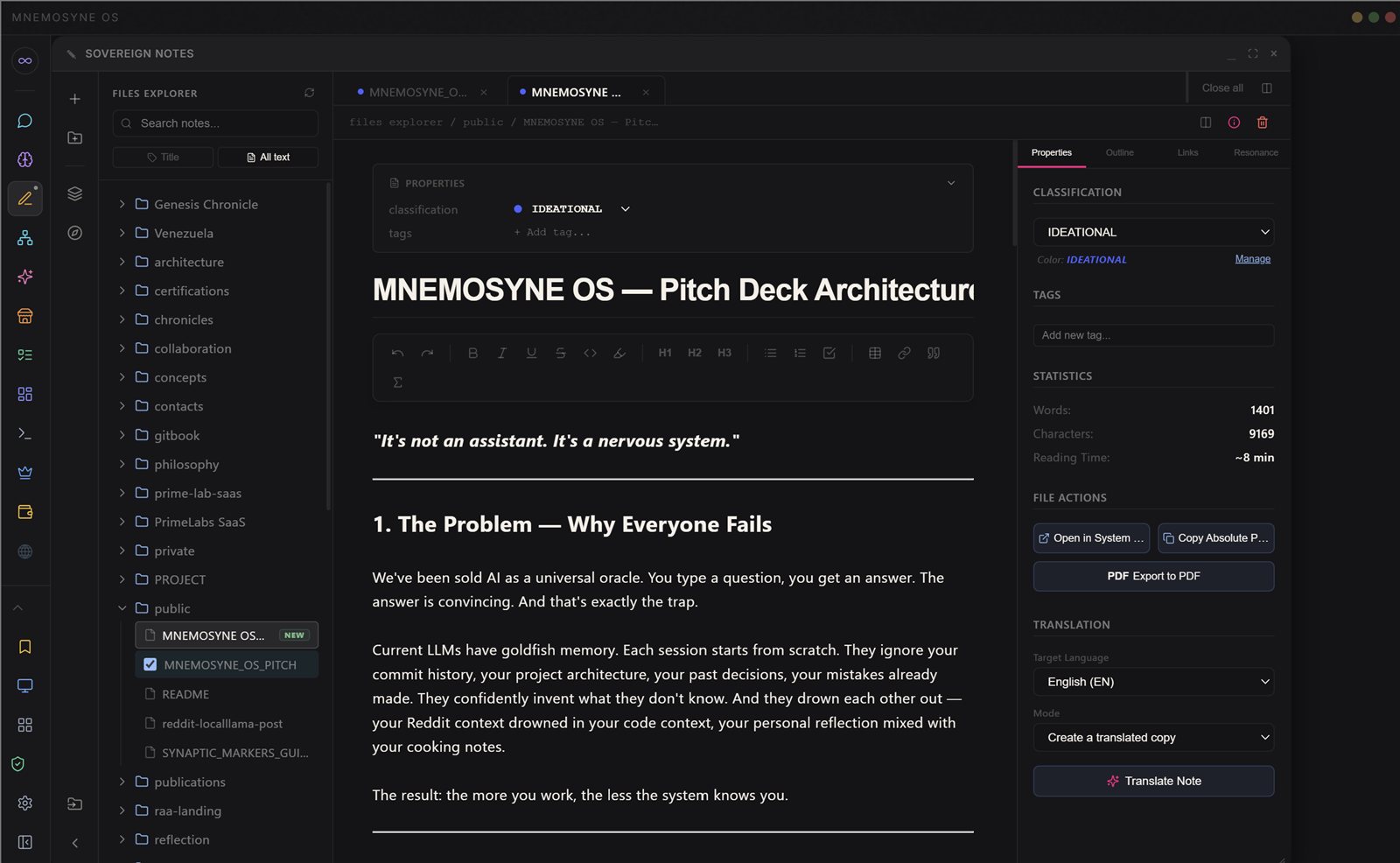
Sovereign Notes: Markdown notes indexed into a vault the moment you save them, and answered with citations back to the file.
Inspiration
Every AI product remembers you on someone else's servers, on their terms. I wanted the opposite: a memory that lives on my machine, that I can read, move, protect vault by vault, and hand to any model or any agent I choose. Twenty years ago I led offline-first software for small merchants and field sales teams. Mnemosyne OS is the same idea applied to memory: you decide what enters, what moves and what leaves.
What it does
Mnemosyne OS is a desktop application for Windows, macOS and Linux. It watches the folders you point it at and indexes what it finds into vaults, one per domain of your life: code, notes, research, journal. Then it answers questions from that memory, with citations back to the files.
- Vaults with a protection level. A vault marked MAXIMUM sends its content to a cloud model only if you confirm, each time. With a local model, nothing leaves your machine.
- Retrieval that runs locally. A local embedder plus a lexical channel (BM25 fused by rank), so recall works offline. On the LongMemEval-M full-haystack benchmark it scores 77.1% under a strict judge (37/48), with the ledgers and a verification script published so anyone can recompute it.
- A memory your agents can use. An MCP server with 23 tools: query and ask, the to-do backlog, the calendar, a status card on the canvas, and readers for the transcripts your coding agents already write. Claude Code, Cursor and any MCP client plug in.
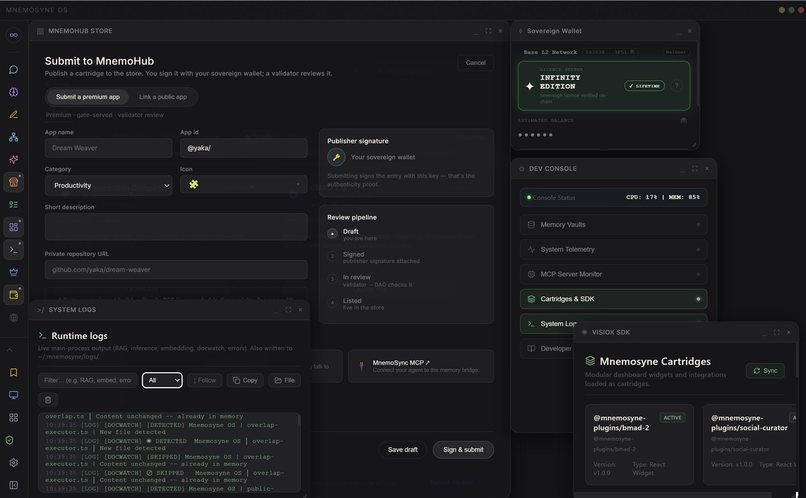
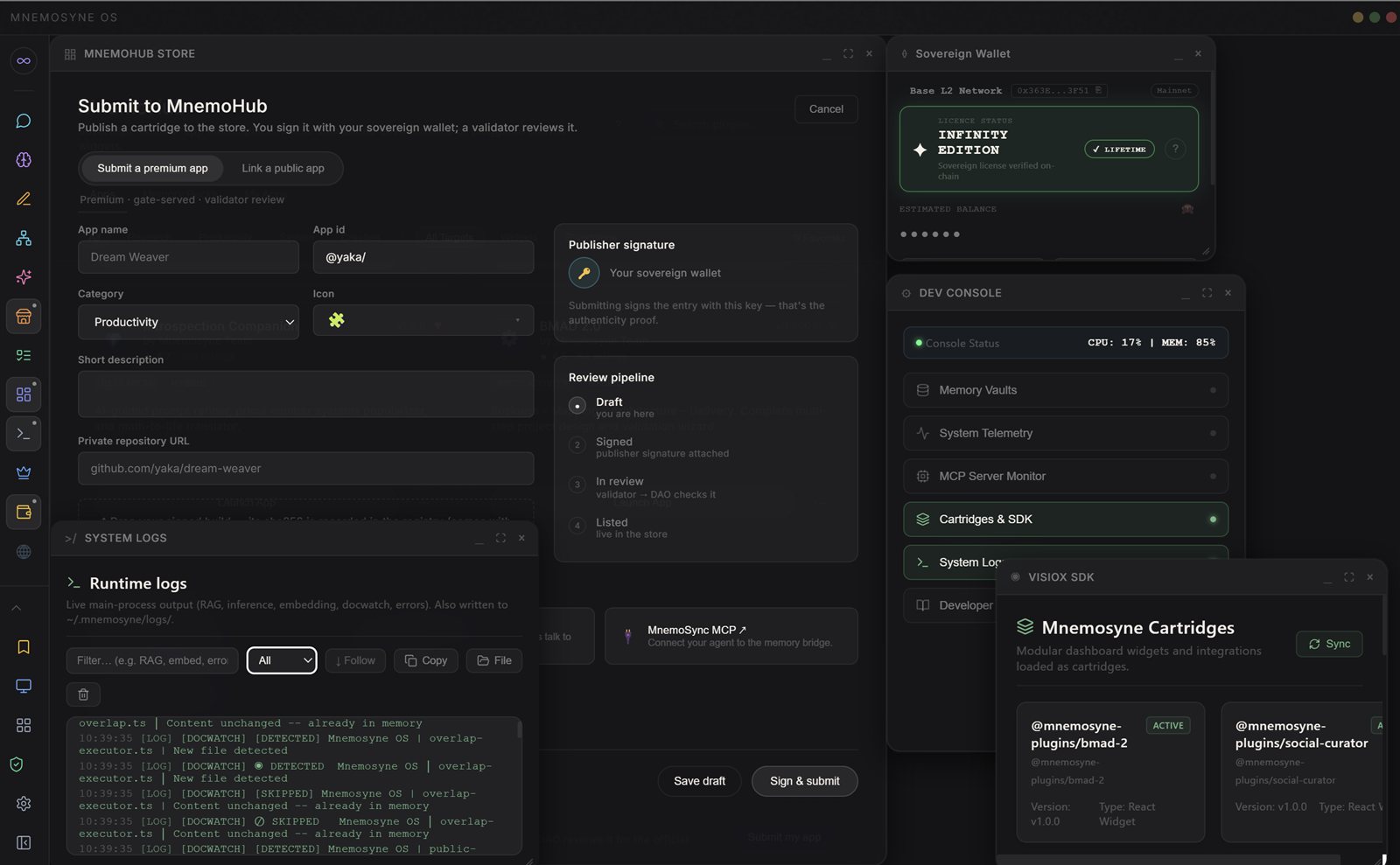
- A spatial canvas. Windows on an infinite plane, several desktops, a neural map of the memory you can walk through, cartridges from a hub (a PDF library with voice reading, an agent-transcript reader, a reputation radar, and more).
- Local voice and image. Text-to-speech engines that run on your machine, including a clone of your own voice; an image memory that finds pictures by what they show.
- Consolidation. A Dream State pass that reads the day's memory at night and builds bridges between vaults, without deleting anything. Memory perceives, situates and reveals; the human governs.
How I built it
Electron + React + TypeScript for the shell, a sealed memory core in TypeScript, Python sidecars for voice and vision, SQLite for every vault. The retrieval pipeline is measured before it is shipped: each lever (lexical channel, fusion rule, query rewriting, cross-encoder rerank) was tested on two disjoint samples of the benchmark, and the ones that did not reproduce were left out. The public pieces are MIT and on npm: the SDK, the MCP server, the cartridge kit, the agent-transcript readers. Open core: the memory core is sealed, everything around it is readable.
Challenges I ran into
Saying true things about privacy. "Nothing leaves your machine" is only true per route, so the app names the route every time (local model, cloud model, your own server). Making a benchmark number honest: 77.1% and 72.9% come from two different judges and are never chained as a progression. Keeping a large desktop application fast: the boot went from 17 s to under a second by refusing to spawn anything from the main process.
Accomplishments that I'm proud of
Public since April 2026, on three operating systems, with a signed Windows build. A verification kit anyone can run against the benchmark ledgers. An MCP server that agents use without a token or a cloud account. And the first hackathon entry built on top of it, Watcher (Agents for Humans), written in a weekend because the memory, the backlog and the calendar were already there.
What I learned
A product about memory is judged on what it refuses to do: never delete silently, never mix domains without consent, never say "working" about an agent that merely went quiet. The refusals are the feature.
What's next for Mnemosyne OS
Peer-to-peer sync between two of your machines without a server. Image memory over PDF figures. A conversational app builder that turns a sentence into a cartridge. And an enterprise mode where the model, the machine and the network are all yours.
Site: https://mnemosyne-os.io · Download: https://mnemosyne-os.io/download · Docs: https://docs.mnemosyne-os.io · Code: https://github.com/Mnemosyne-OS

Log in or sign up for Devpost to join the conversation.