-
mneme
-
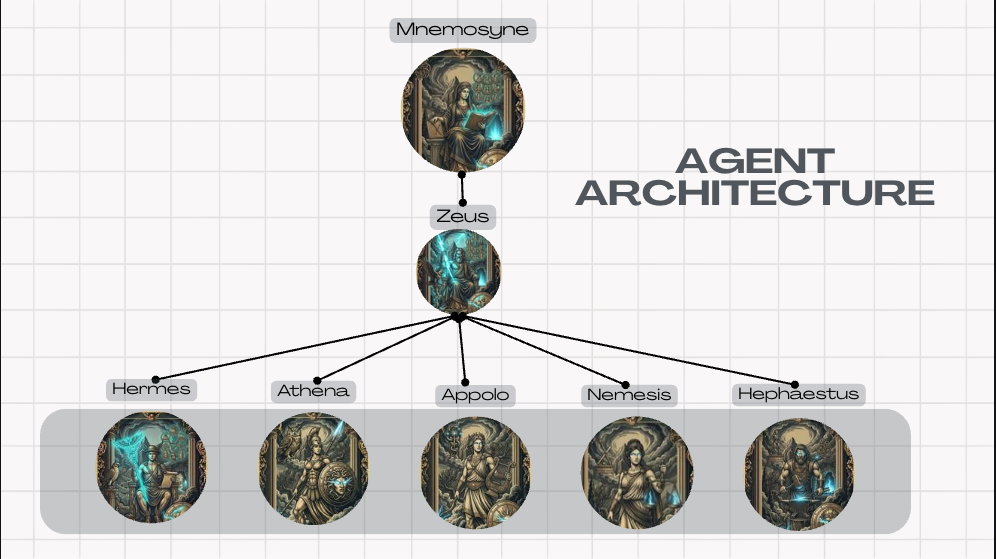
Agent Architecture
-
agents
-
agents
Inspiration
Memory is the real bottleneck in AI. Developers struggle with context windows, but in fields like healthcare or research, losing context means losing critical insight. Even with a million-token models, complex thinking needs persistent memory, not temporary context.
What it does
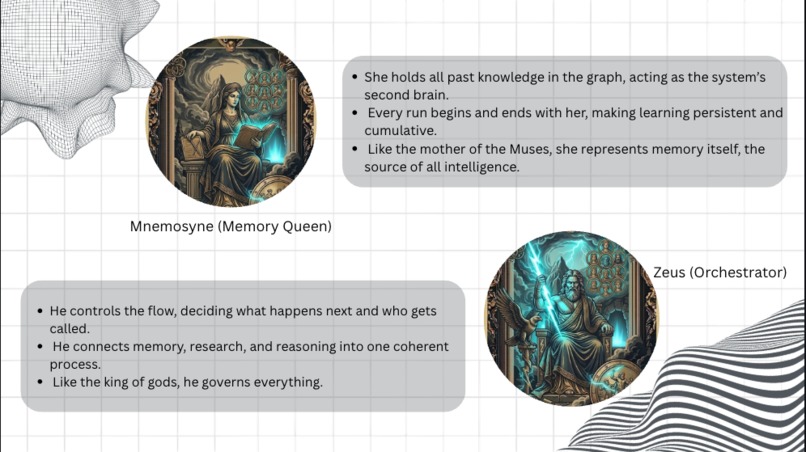
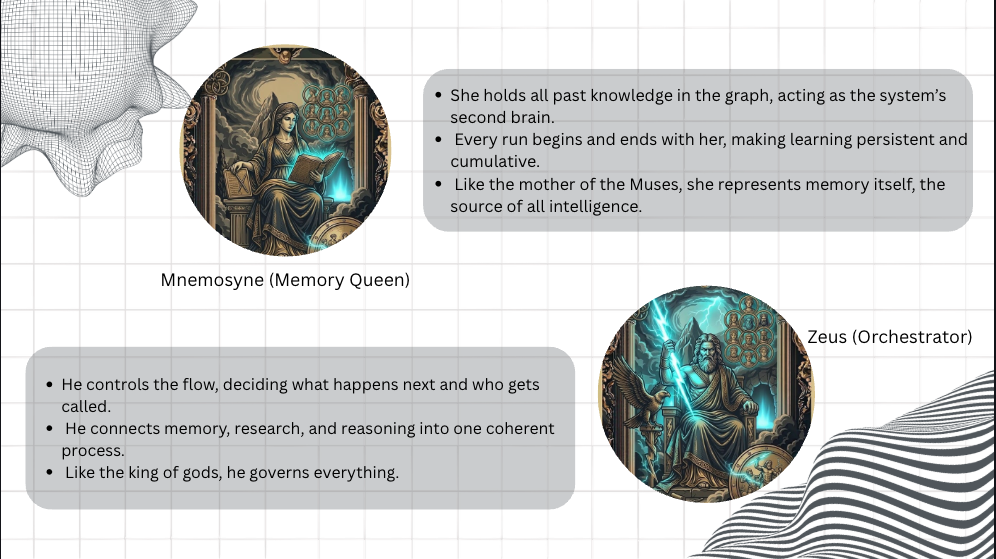
MNEME solves the context window problem by giving AI a second brain. It remembers past knowledge, combines it with live research, and produces outputs that improve over time instead of resetting every run.
How I built it
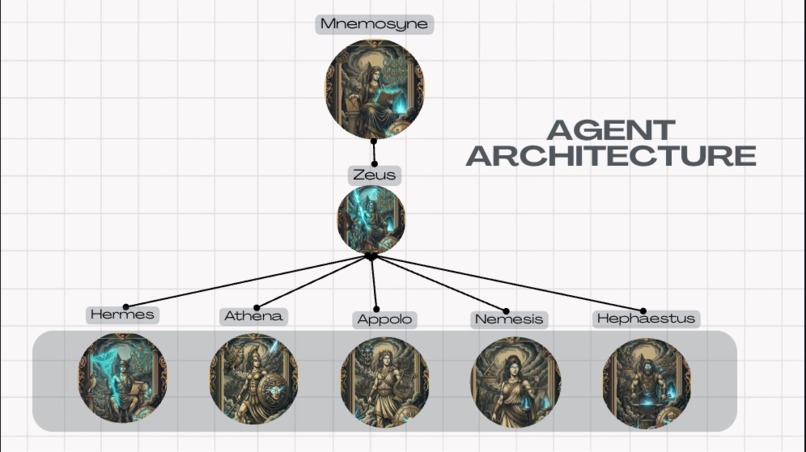
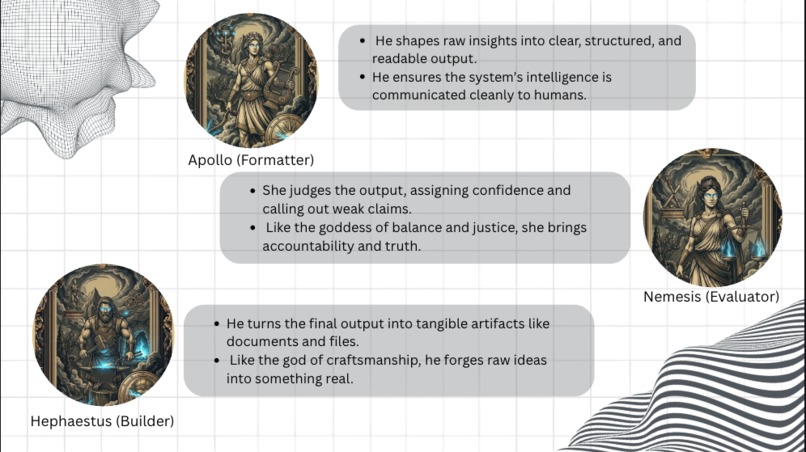
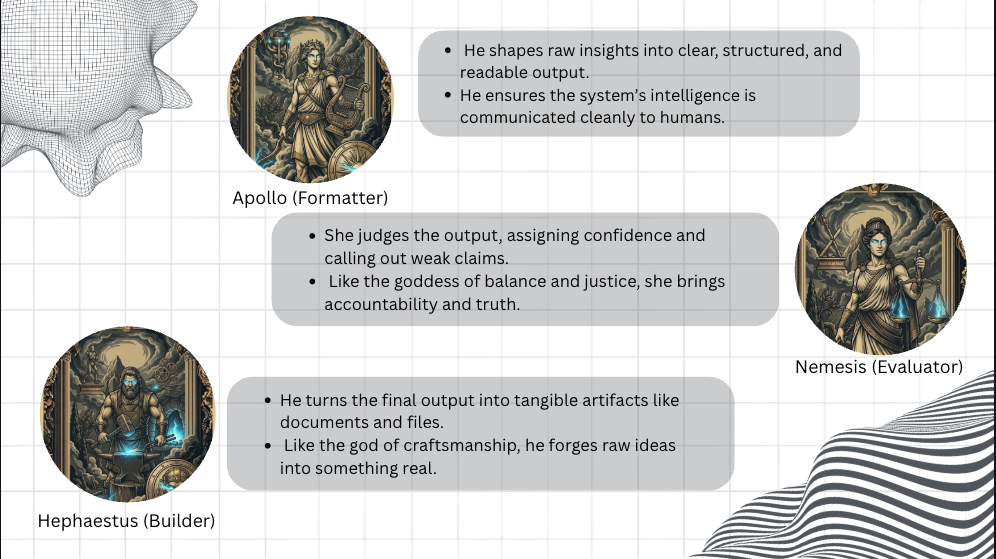
I built a multi-agent system where each agent has a single role. Neo4j stores structured memory, Gemini handles reasoning, and agents coordinate through a clean orchestration layer with real-time UI showing the full flow.
Challenges we ran into
Managing both frontend and backend alone was tough. UI stability issues slowed me down, and coordinating real-time agent updates while keeping the system consistent was harder than expected.
Accomplishments that I am proud of
A fully working system where agents visibly collaborate in real time. The UI shows each step live, making the system feel like it’s thinking instead of just responding.
What I learned
Loose coupling is everything. Treating each agent like a microservice made debugging easier and the system more scalable. Clear responsibility per agent beats one overloaded system every time.
What's next for mneme
I want to take this to production. Right now retrieval uses string matching; next step is integrating semantic retrieval or RAG to improve entity understanding and make memory truly intelligent.
Built With
- fastapi
- google-gemini-api
- google-search-grounding
- neo4j
- next.js
- python
- react
- tailwind
- typescript
- websockets

Log in or sign up for Devpost to join the conversation.