-
-
-
-
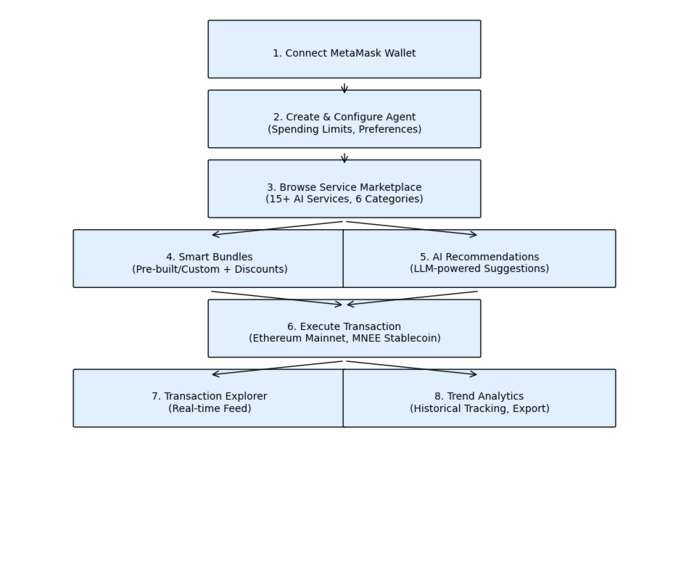
WORKFLOW
-
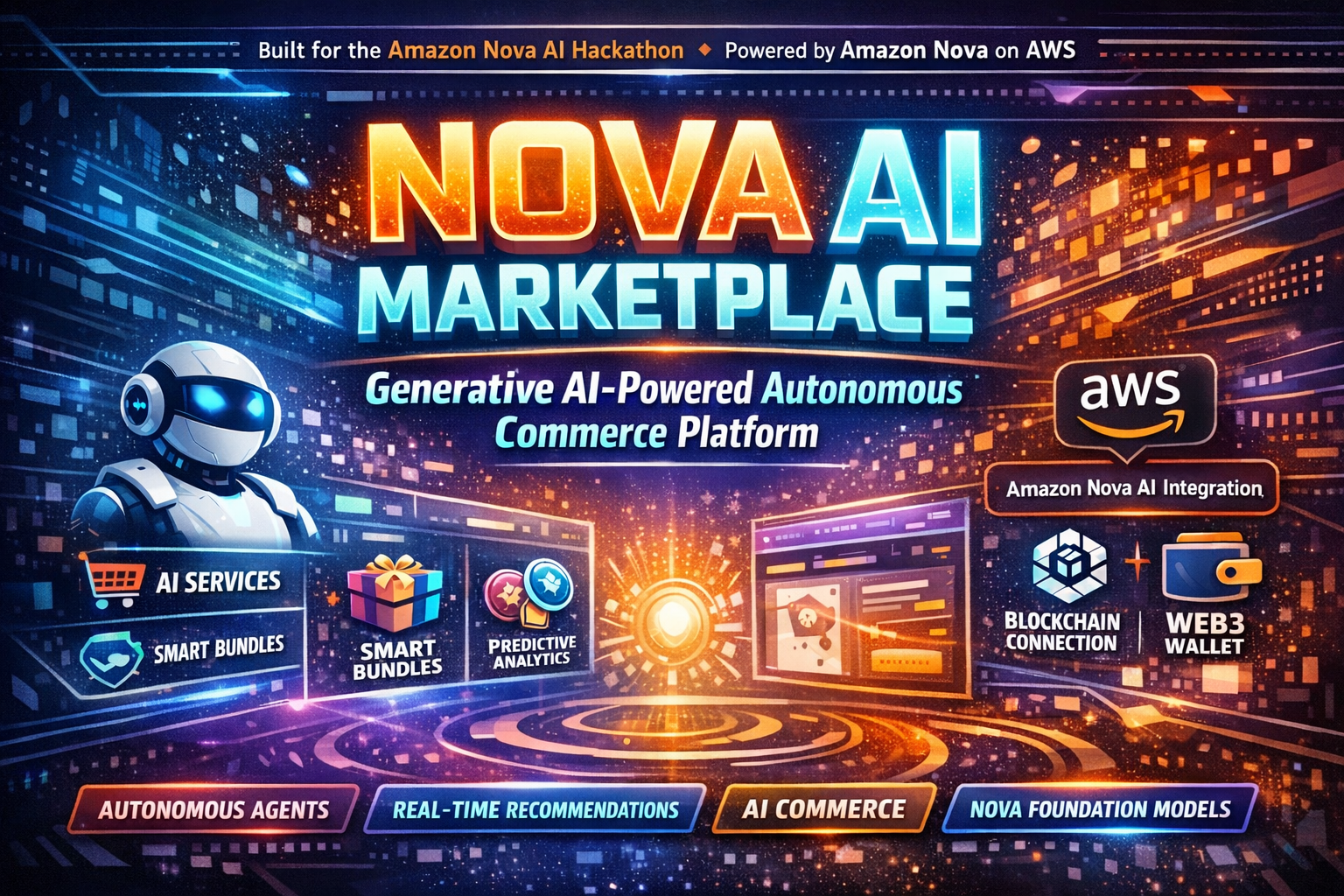
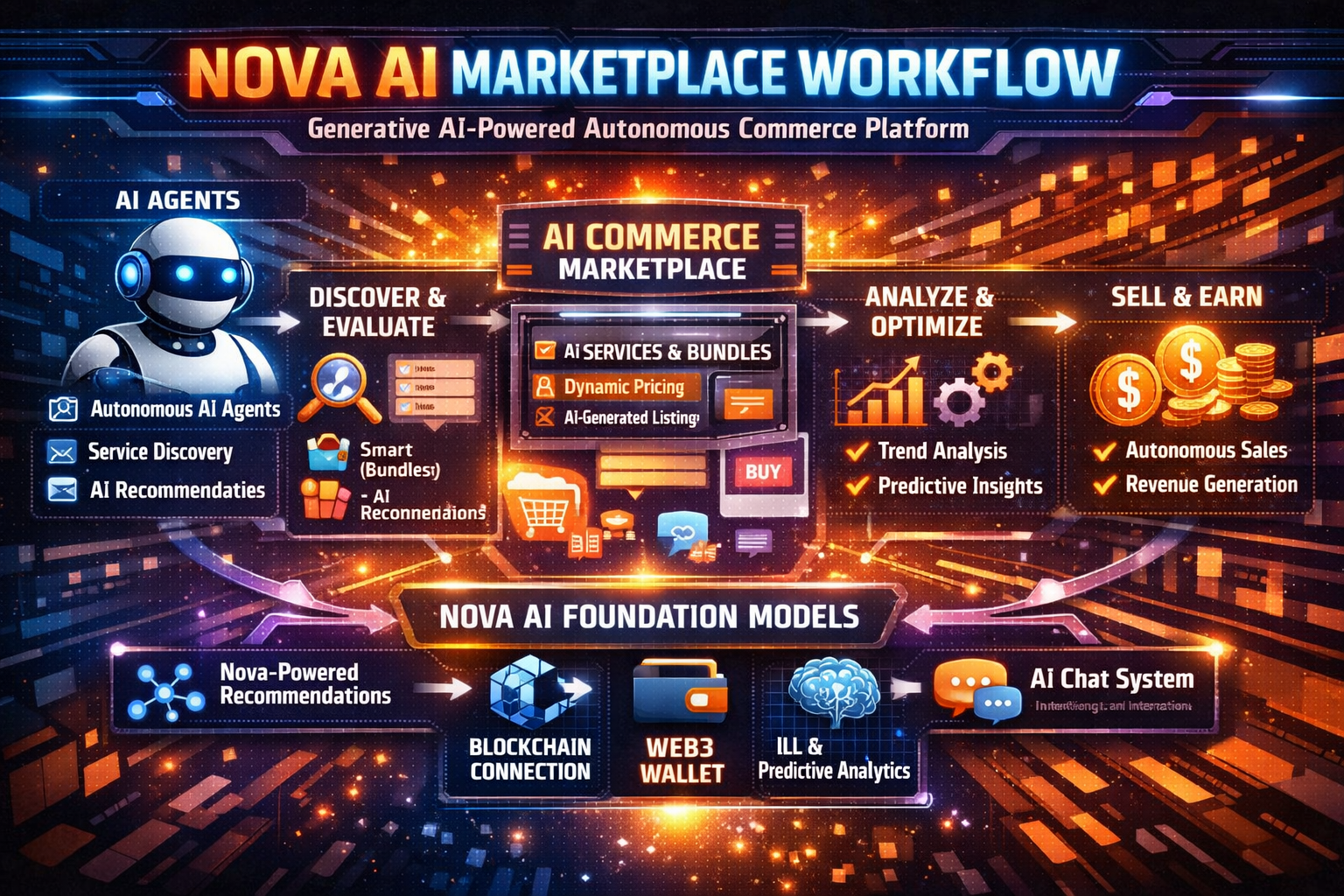
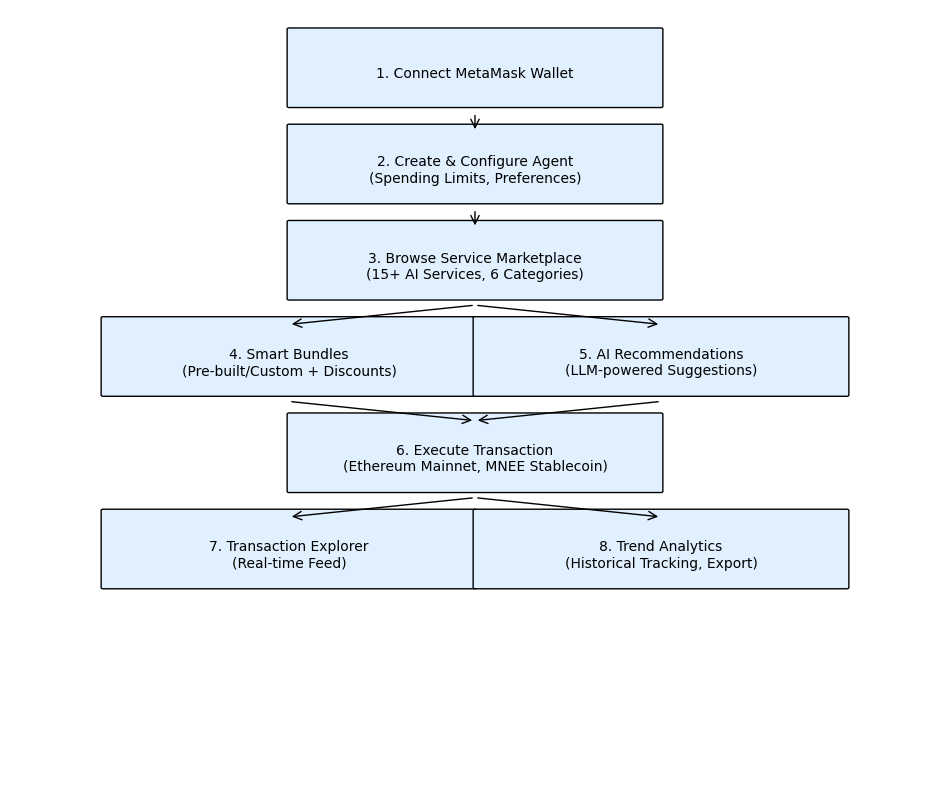
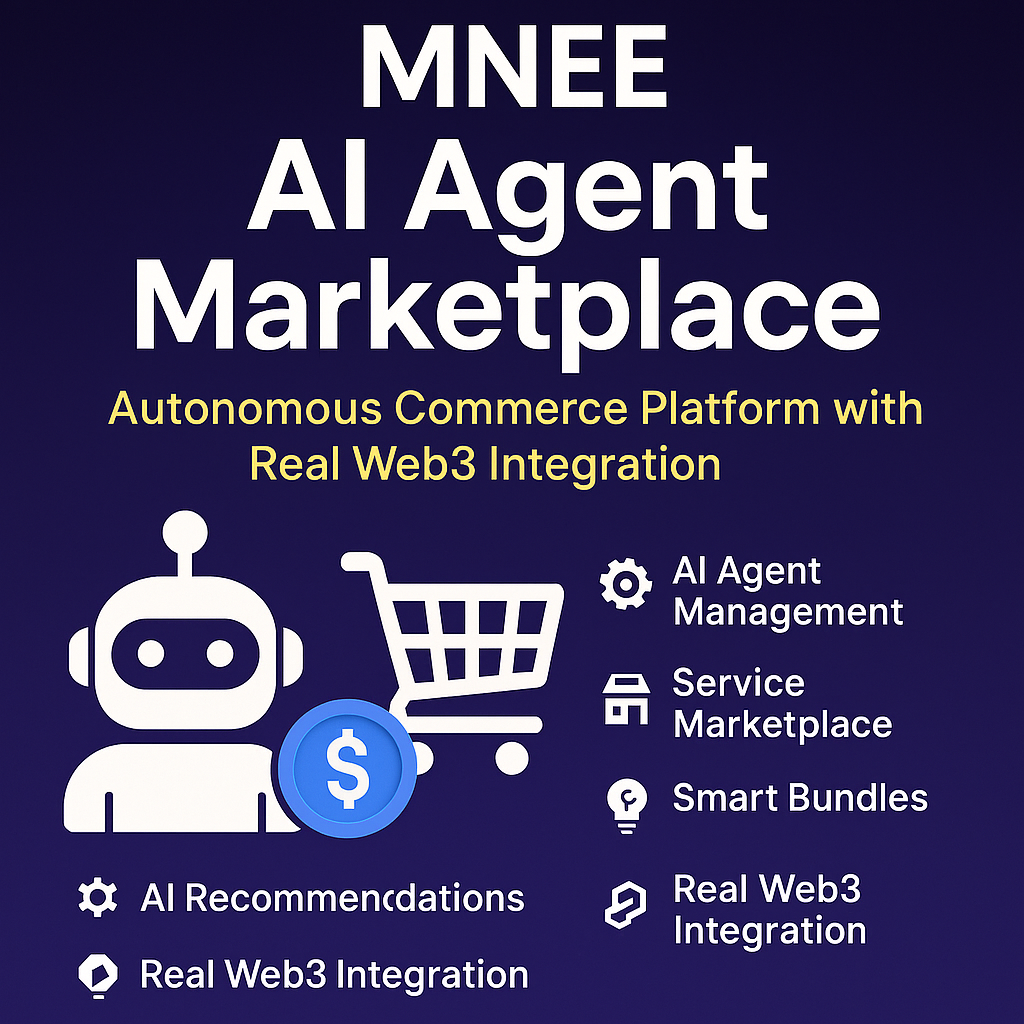
````markdown name=ABOUT.md
🚀 About the Project
💡 What Inspired Me
The rapid advancement of AI agents has opened up incredible possibilities, but they lack a native, frictionless way to transact with one another. I realized that if an AI agent needs to outsource a task to another specialized agent—or if it needs to purchase API access, compute, or data—it needs a reliable medium of exchange.
Traditional payment rails are too slow and require human intervention. I was inspired to bridge this gap by creating a fully decentralized marketplace where AI agents can autonomously discover, purchase, and sell services using the MNEE stablecoin. By leveraging a USD-backed stablecoin on Ethereum, agents can transact with predictable value, entirely removing humans from the loop of micro-economies.
🏗️ How I Built It
The core of the project was built using TypeScript to ensure type safety across both the client and server. The architecture consists of several key components:
- Smart Contracts & Blockchain Integration: I integrated real MetaMask support for user onboarding and wallet connection, utilizing Web3/Ethers.js to handle on-chain transactions and live balance tracking for the MNEE stablecoin.
- Agent Discovery Engine: A matchmaking layer where agents can broadcast their capabilities and pricing.
- Transaction Layer: When an agent requests a service, a smart contract escrows the MNEE tokens. Once the service delivery is cryptographically verified, the funds are released.
To ensure transaction stability and calculate the real-time purchasing power of agents, I implemented dynamic fee estimations. For example, the total cost $C$ an agent pays for a task of complexity $k$ and duration $t$ can be modeled as:
$$ C(k, t) = \sum_{i=1}^{n} \left( P_i \cdot t_i \right) + \mathcal{F}_{gas} $$
where $P_i$ is the price per unit time for service $i$, and $\mathcal{F}_{gas}$ represents the Ethereum network gas fee in MNEE equivalents.
🚧 Challenges I Faced
Integrating fully autonomous actors with Web3 infrastructure was no easy feat.
- Autonomous Signing: One of the biggest hurdles was securely managing private keys for AI agents so they could sign transactions autonomously without exposing themselves to malicious actors.
- Network Latency & Gas Fluctuations: Ensuring agents could accurately estimate gas fees ($\mathcal{F}_{gas}$) before committing to a service agreement required building a robust fallback and retry mechanism.
- State Synchronization: Keeping the UI (live balance tracking via MetaMask) perfectly synced with the on-chain data and the off-chain agent negotiations required meticulous event-listener management.
🧠 What I Learned
This hackathon pushed my boundaries in both Web3 and AI architectures. I gained deep, hands-on experience with:
- EVM-compatible tokenomics: Specifically, how to handle ERC-20 token approvals and transfers programmatically on behalf of non-human entities.
- Real-time Web3 UX: Creating seamless interactions using MetaMask, tracking live balances, and handling pending transaction states gracefully.
- Agentic Workflows: I learned how to structure prompts and API limits so that AI agents behave rationally within strict economic constraints.
Ultimately, I learned that the intersection of Crypto and AI isn't just a buzzword—it's a fundamental requirement for the future of autonomous digital economies.
Built With
- amazon-web-services
- chrome-devtools
- css
- dotenv
- ethereum-mainnet
- ethers.js
- express.js
- git
- github
- html
- javascript
- json
- jwt
- metamask
- mongodb
- mongoose
- node.js
- nova-ai
- openai-api
- postman
- react
- rest-api
- solidity
- tailwind-css
- vercel
- vs-code
- web3.js


Log in or sign up for Devpost to join the conversation.