-
-
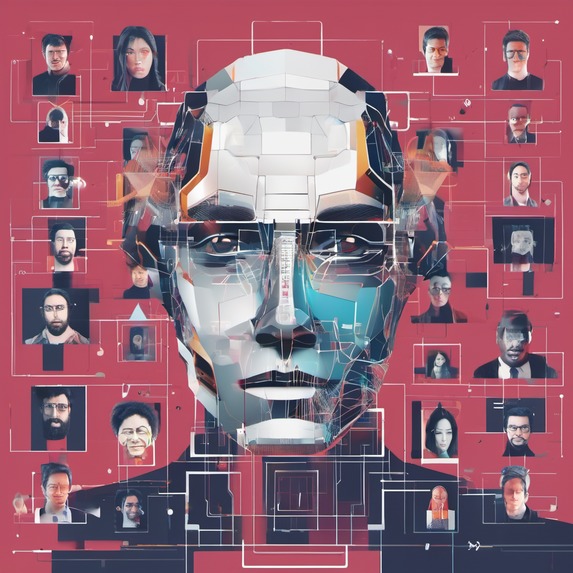
MLP Face Recognition

The Decentralized Face Recognition System using MLP and Ethereum addresses critical issues in identity verification, security, and data privacy.
Use Cases and Benefits Secure Identity Verification: Traditional face recognition systems store data on centralized servers, making them vulnerable to hacks and data breaches. Our system leverages blockchain to securely store and verify facial data, ensuring that user identities are protected against unauthorized access and tampering.
Privacy Preservation: By encrypting facial features and storing them on a decentralized blockchain, the system ensures that personal data is not exposed or misused. Users have complete control over their data, enhancing privacy.
Tamper-Proof Records: The use of blockchain technology guarantees the immutability of stored facial data. This makes it impossible to alter or delete records without detection, ensuring the integrity of the identity verification process.
Decentralized Access Control: Organizations can use this system to manage access to sensitive areas or information. The decentralized nature of blockchain ensures that no single entity can manipulate access controls.
Fraud Prevention: By providing a reliable and secure method for identity verification, this system helps prevent identity theft and fraud, making transactions and access controls safer.
Ease of Integration: The system can be integrated with existing applications and services, providing a robust and secure layer for identity verification without overhauling existing infrastructure.
Challenges I ran into Data Preprocessing:
Challenge: Ensuring consistent image preprocessing (grayscale conversion, resizing) across diverse datasets was difficult. Solution: Implemented a robust preprocessing pipeline using OpenCV to standardize image handling and enhance model accuracy. Model Training and Optimization:
Challenge: Training the MLP model with a large number of features led to slow convergence and overfitting. Solution: Used PCA for dimensionality reduction to speed up training and applied techniques like dropout and regularization to mitigate overfitting. Blockchain Integration:
Challenge: Storing large facial feature vectors directly on the Ethereum blockchain was impractical due to size and cost constraints. Solution: Employed IPFS (Inter Planetary File System) for storing encrypted facial features and saved the hash on the Ethereum blockchain for efficient and secure retrieval. Smart Contract Security:
Challenge: Ensuring the security of smart contracts to prevent vulnerabilities like reentrancy attacks. Solution: Conducted thorough testing and code reviews, implemented best practices for smart contract development, and used established libraries like Open Zeppelin. User Data Privacy:
Challenge: Balancing the need for accurate facial recognition with the requirement to protect user privacy. Solution: Encrypted all facial data before storage and utilized zero-knowledge proofs to enhance privacy during the verification process.

