-
-
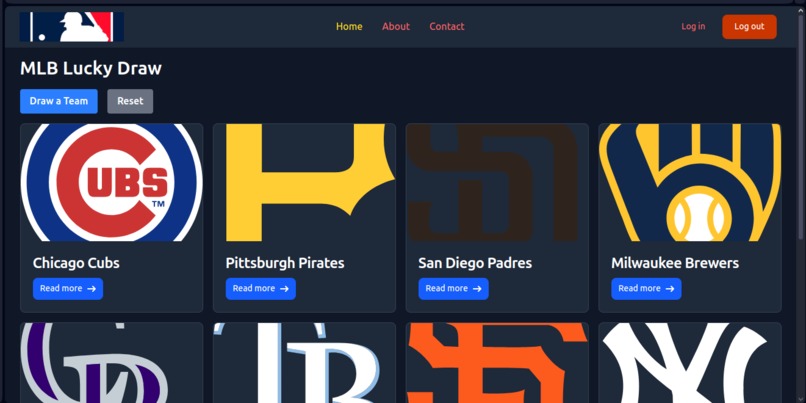
home page of MLB Hub
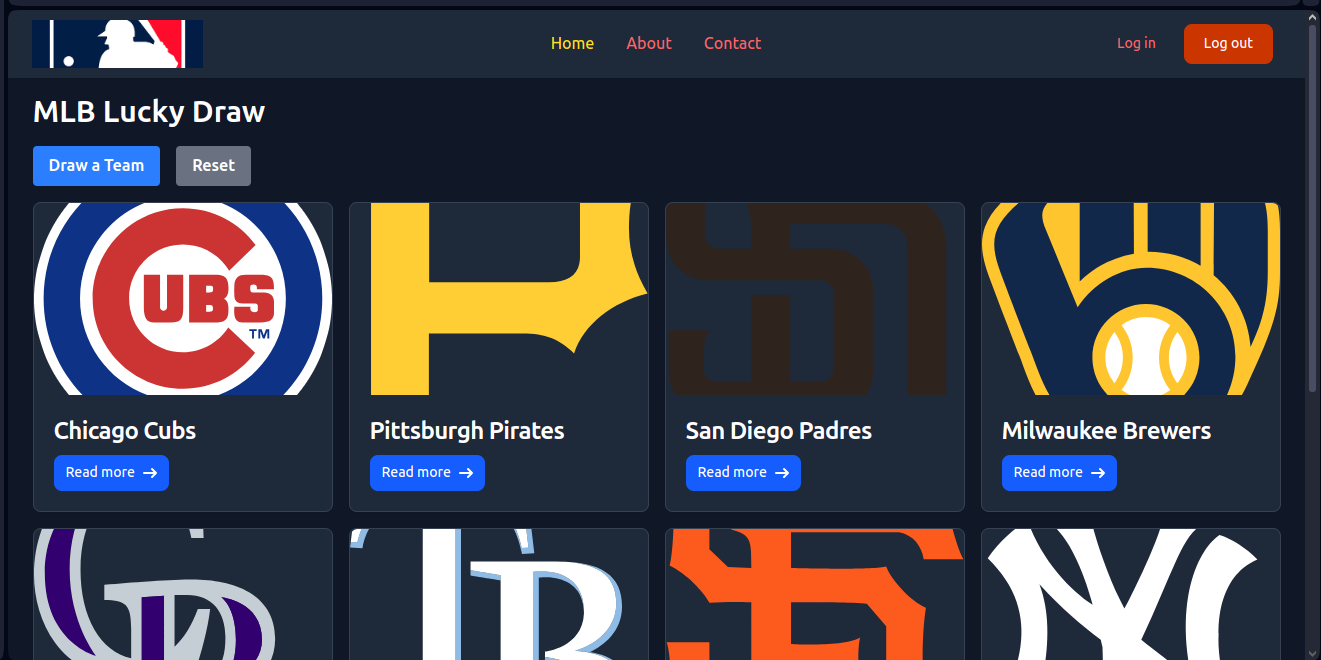
Inspiration
My inspiration for this project came from a love of baseball, particularly Major League Baseball (MLB), and a desire to create an engaging and informative experience for fellow fans. I wanted to build something that would allow users to easily explore MLB teams and learn more about them in a fun, interactive way. The element of randomness in team selection adds an element of surprise and encourages users to discover teams they might not have otherwise considered.
What it does
This ReactJS and Firebase-powered web application allows users to randomly select an MLB team. Once a team is drawn, the user can then explore details about that specific team. This could include information like team history, current roster, recent performance, stadium details, notable players (past and present), and perhaps even links to official team merchandise or news sources. The core functionality is the random team draw and subsequent team exploration.
How we built it
This project was built using:
- ReactJS: For the front-end development, creating the user interface and handling user interactions. React's component-based structure was crucial for organizing the application and making it scalable.
- Firebase: For the backend, Firebase provided the database to store MLB team data. Firebase's authentication features could be used for future enhancements (e.g., user profiles, saved teams). Firebase Hosting was likely used to deploy the application.
- (Potentially) Other Libraries: Depending on the features, other libraries might have been used. For example, a library for making API calls if team data was fetched from an external source, a routing library like React Router for navigation, or UI component libraries for pre-built elements.
The development process likely involved designing the UI, setting up the Firebase database with MLB team information, implementing the random team selection logic, and then building the components to display the team details.
Challenges we ran into
- Data Management: Gathering and organizing comprehensive data for all MLB teams could have been a significant challenge. Ensuring data accuracy and consistency was also important.
- UI/UX Design: Creating an intuitive and engaging user experience, especially for exploring team details, required careful planning and design.
- Firebase Integration: Properly integrating React with Firebase and managing data flow between the front-end and the database could have presented some challenges.
- Randomization Logic: Ensuring a truly random team selection algorithm might have required some thought.
- (Potentially) API Integration: If an external API was used for team data, handling API requests, responses, and potential errors would have been a challenge.
Accomplishments that we're proud of
- Successfully implementing the random team selection feature.
- Creating a clean and user-friendly interface for exploring team details.
- Effectively integrating React with Firebase for data management.
- Deploying the application and making it accessible online.
- (Potentially) Overcoming specific technical hurdles related to data handling, UI design, or API integration.
What we learned
- Gained experience with ReactJS and Firebase.
- Improved skills in front-end development and data management.
- Learned about UI/UX design principles and best practices.
- Developed problem-solving skills by tackling technical challenges.
- (Potentially) Learned about working with external APIs and handling data from different sources.
What's next for MLH Hub (Assuming this refers to the project name)
- Enhanced Team Details: Expanding the information available for each team, such as adding historical stats, player profiles, news feeds, or video highlights.
- User Features: Implementing user accounts to allow users to save their favorite teams, track their team draws, or even participate in fantasy leagues.
- Search Functionality: Adding a search bar to allow users to directly search for specific teams.
- Interactive Elements: Incorporating more interactive elements, such as quizzes, polls, or forums for fans to discuss their favorite teams.
- Mobile Responsiveness: Optimizing the application for mobile devices to ensure a seamless experience across different platforms.
- Improved UI/UX: Continuously improving the user interface and user experience based on user feedback and testing.


Log in or sign up for Devpost to join the conversation.