-
-
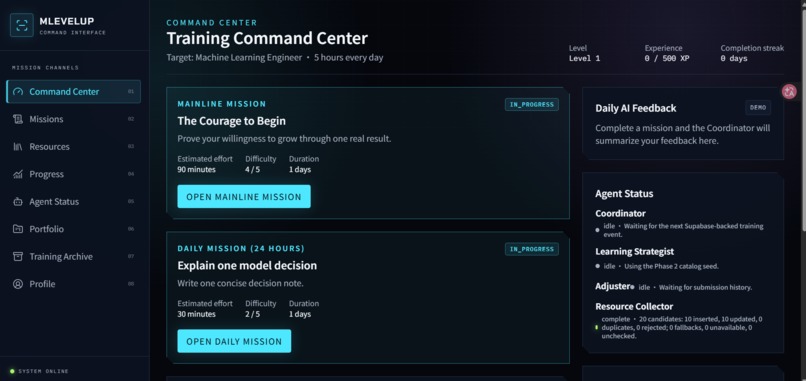
training command center
-
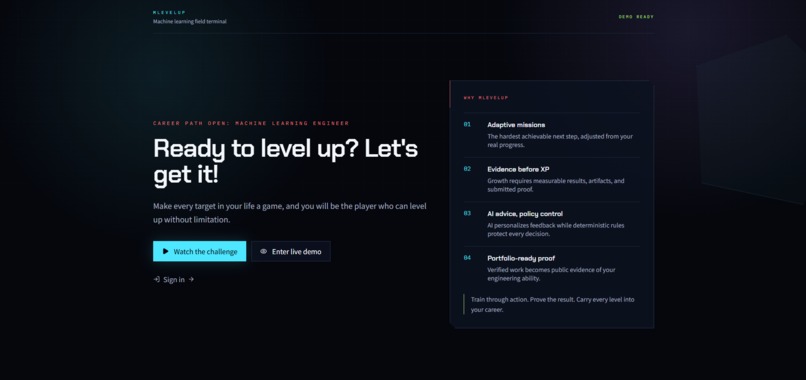
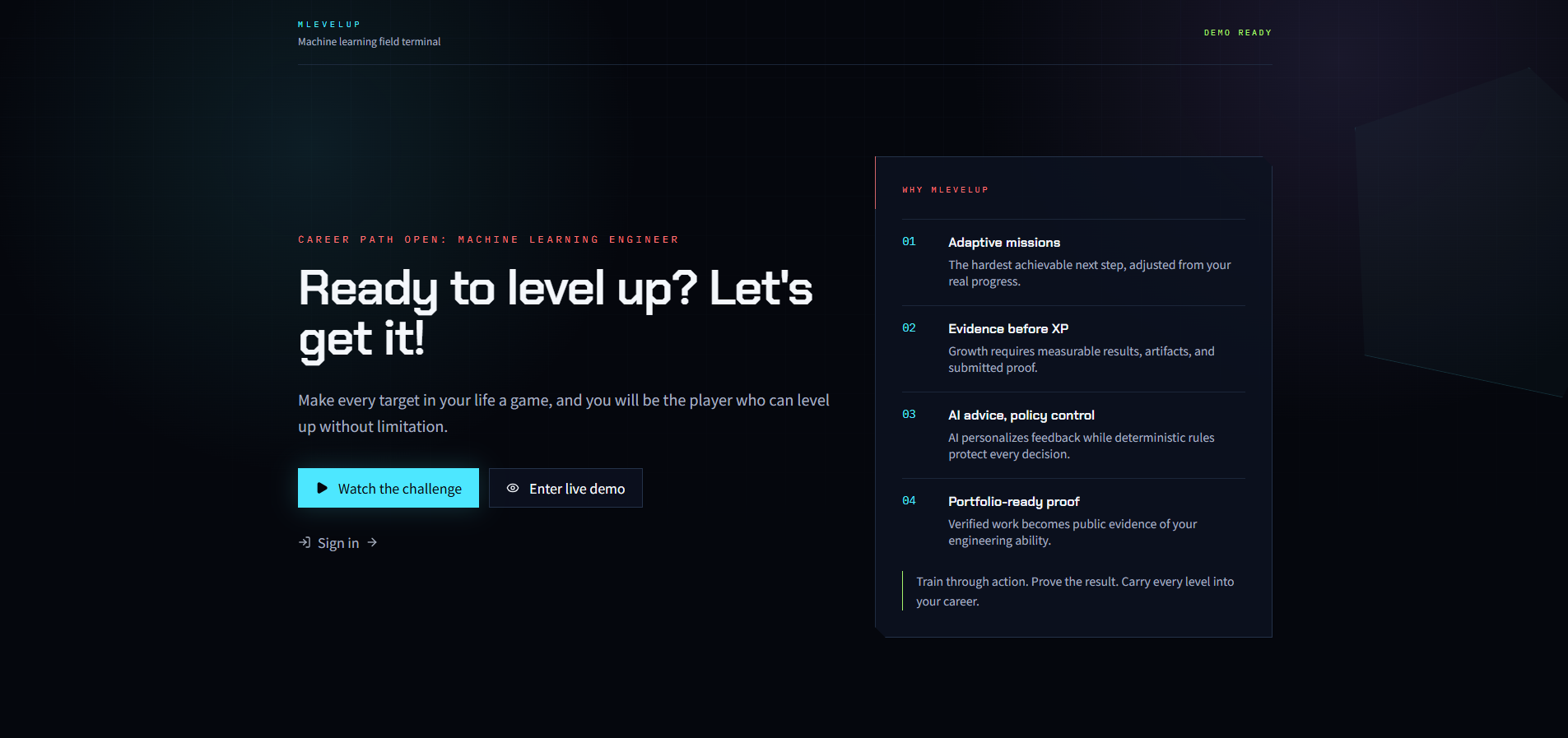
landing page
-
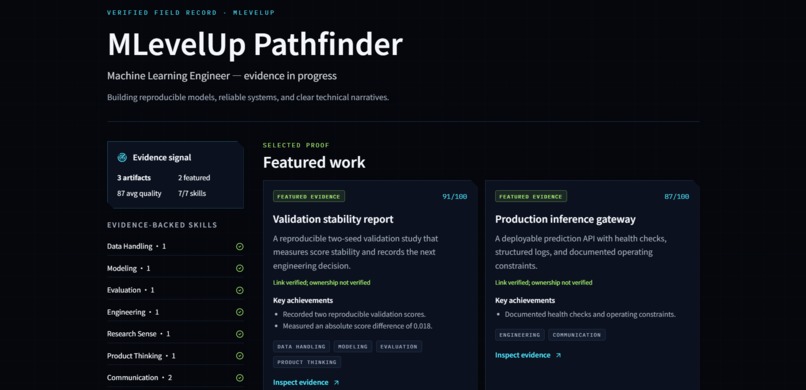
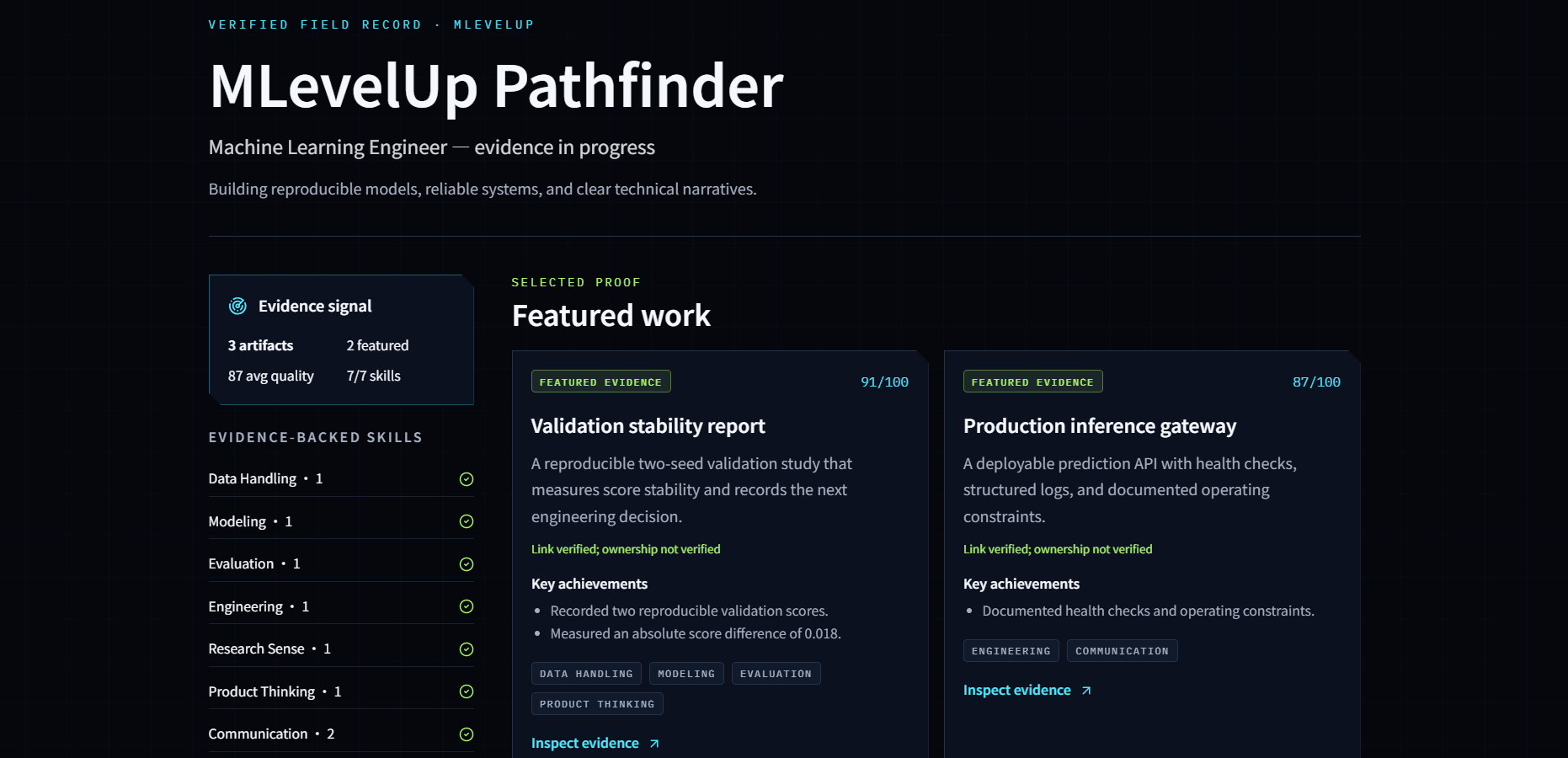
profolio page
Inspiration
MLevelUp was inspired by progression systems in games and stories, especially the feeling of watching a character grow through difficult trials with the help of a mentor.
As a lifelong game player, I noticed that games are not compelling because they are easy. They are compelling because they give us clear goals, fast feedback, visible progress, and challenges that sit just beyond our current ability.
Unlike course platforms that optimize for easier content consumption, MLevelUp optimizes for coached execution. It chooses hard but achievable missions, prioritizes real-world problems and Kaggle-style challenges, requires evidence before progress is awarded, and turns completed work into portfolio proof.
A teacher explains knowledge. A coach understands your current level, gives you the next hard but fair mission, and helps you turn effort into measurable growth. MLevelUp brings that coaching loop into career development, starting with machine learning engineering.
What it does
MLevelUp is an AI-powered progression system for career growth.
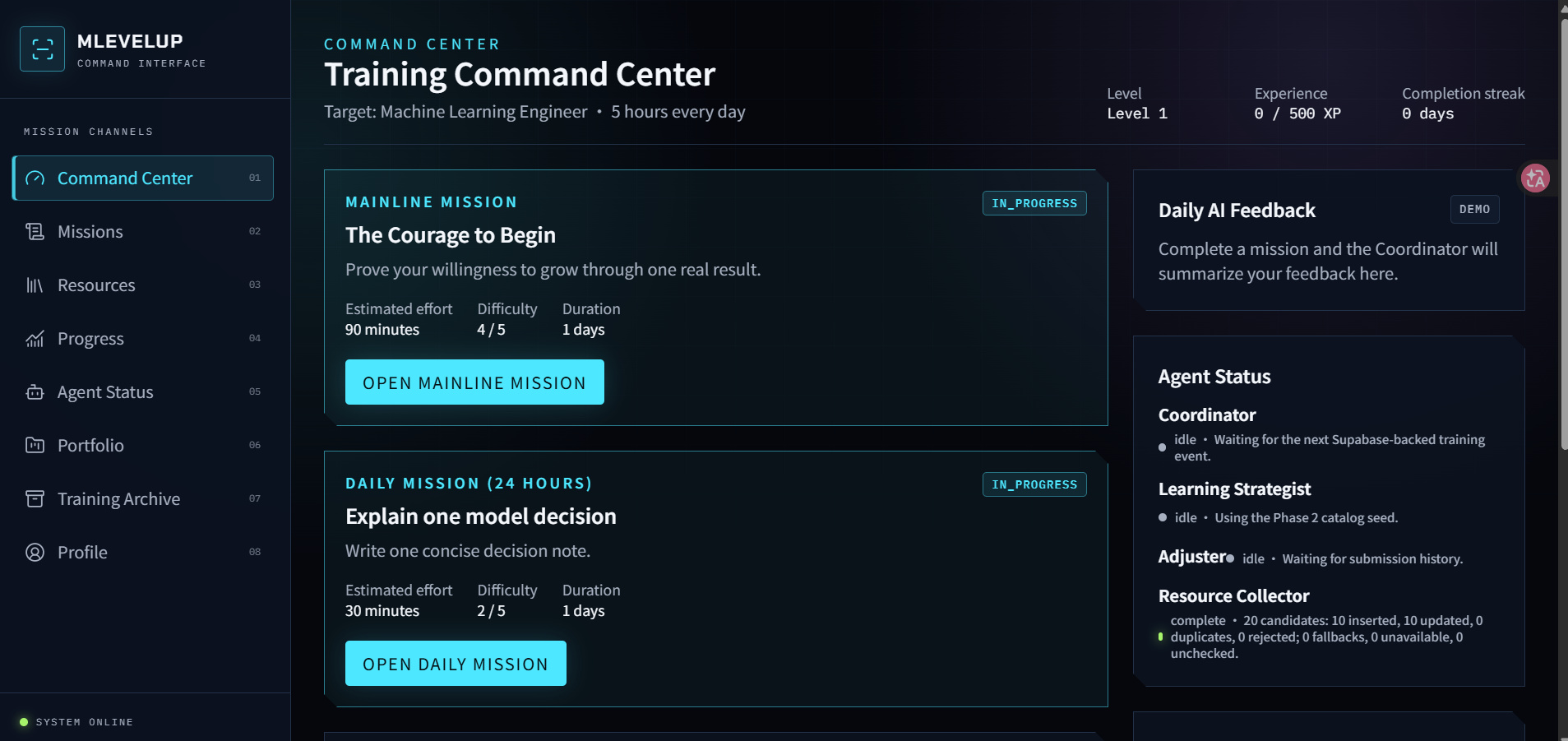
A user signs in with email and enters a command center where the system provides a daily mission. Instead of giving generic lessons, MLevelUp calibrates the mission based on the user’s target role, current skill level, available time, and previous performance.
Each mission is designed to be slightly beyond the user’s comfort zone: hard enough to create growth, but realistic enough to complete. MLevelUp prioritizes missions based on real-world problems, Kaggle competitions, and practical project scenarios, so completed work can become portfolio-ready evidence instead of disposable practice.
The system also recommends learning resources to help the user complete the mission. After finishing the work, the user submits evidence, such as a GitHub repository, Kaggle notebook, model evaluation report, project write-up, or reflection.
AI agents then review the submission, evaluate skill growth, provide feedback, and recommend the next mission. Completed missions become part of the user’s personal profile and portfolio, turning daily practice into career-ready evidence.
How we built it
I built MLevelUp with Codex, GPT-5.6, Next.js, Supabase, and Vercel.
I first described the product idea to ChatGPT and asked it to critique the concept, identify missing pieces, and help turn the idea into a clear development plan. Then I brought that plan into Codex and used Codex to explore architecture options, choose the technical structure, implement the application, write tests, and refine the product experience.
The system is built with Next.js for the web application, Supabase for authentication and database services, and Vercel for deployment.
GPT-5.6 powers the agent workflow. The agents help evaluate mission submissions, identify skill growth and gaps, recommend resources, and generate the next mission. A deterministic policy layer keeps the progression system consistent, explainable, and grounded in submitted evidence.
Challenges we ran into
The original vision was very broad: a system that could turn any life goal into a progression game. That scope was too large for one week, so I narrowed the first version to machine learning engineering, which is also one of my personal goals this year.
Another challenge was balancing AI flexibility with product safety. I wanted the agents to feel useful and adaptive, but I did not want the system to give random rewards or uncontrolled advice. To solve this, I designed the agents around structured outputs, evidence-based review, and a deterministic policy layer that controls how missions, feedback, XP, and achievements are generated.
Accomplishments that we're proud of
I am proud that MLevelUp became more than a technical prototype. It is a working full-stack product with authentication, a learner command center, daily missions, resource recommendations, evidence submission, AI feedback, skill growth, achievements, and a portfolio-oriented progression loop.
I am also proud of the product philosophy. MLevelUp does not try to remove difficulty from learning. It uses difficulty intentionally, turning hard but fair challenges into a system for long-term growth.
What's next for MLevelUp
The next step is to expand MLevelUp beyond machine learning engineering into other life goals, such as fitness, finance, language learning, and entrepreneurship.
I also want to build a real-time version that can run on AI glasses or other ambient devices, helping users track progress as they move through daily life.
Another planned feature is the Relic system. Relics are artifacts left by users for others pursuing the same goal. A relic could be a note, a resource, a mission hint, a request for help, or even a real-world reward such as a coffee coupon. The goal is to make progress feel less lonely by letting users support each other across the same path.
Built With
- next.js
- supabse
- vercel


Log in or sign up for Devpost to join the conversation.