-
-
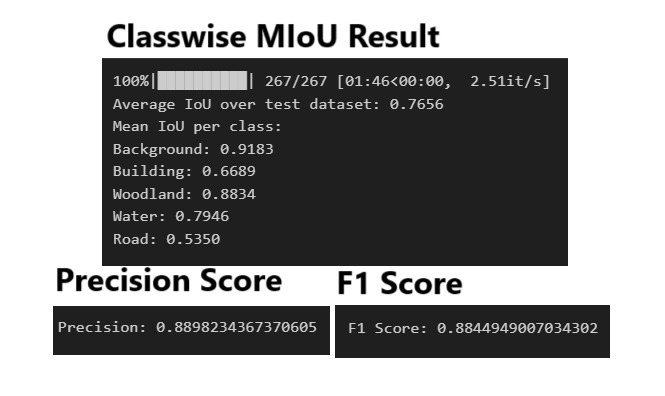
The Results of our Model.
-
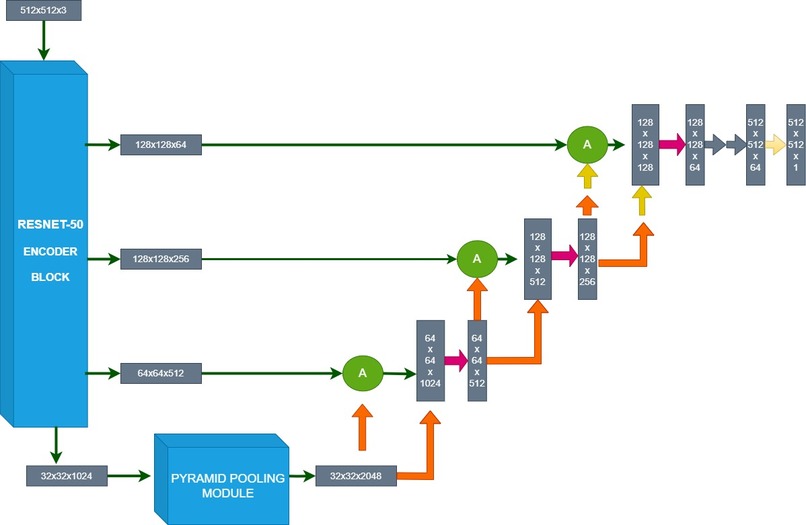
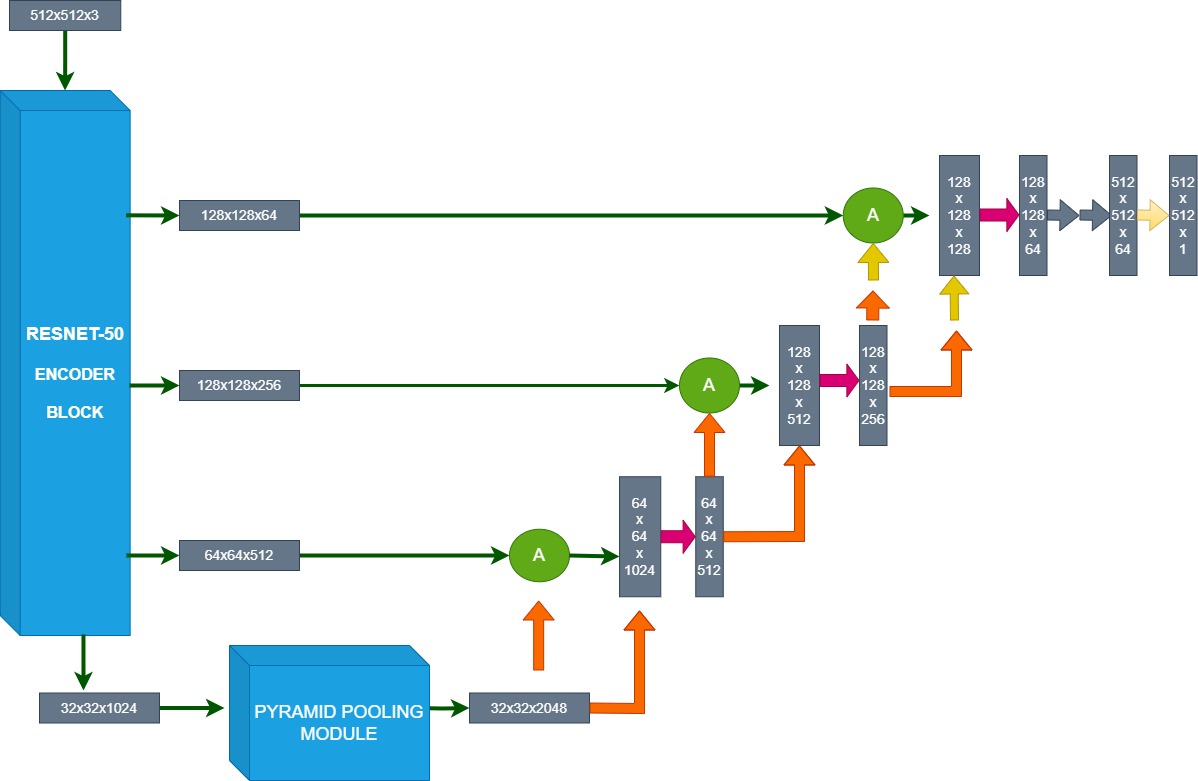
Our custom model architecture (drawn on draw.io)
-
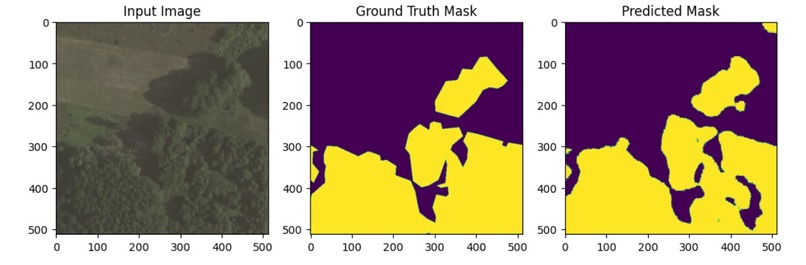
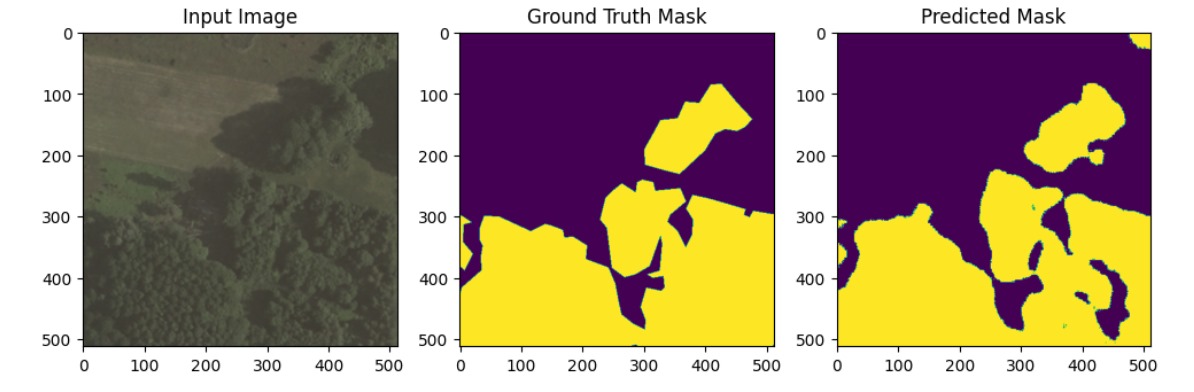
A segmented map from the test set we got after training.
Inspiration
We recently started our journey into the image segmentation domain, and we joined this hackathon to test out what we learned so far.
What it does
The model we built can segment the given maps into 5 distinct classes : Background, Buildings, Woodland, Water and Road classes. It works with a decent accuracy and gives a good idea of the segmented maps.
How we built it
To solve the problem we did the following : Applied augmentations on the data, Divided the data into loaders, Used an Attention UNet architecture and Finally calculated the mean IoU score as a result. Further details regarding these are available in our github repository.
Challenges we ran into
A fairly large limitation that we faced was that off the large imbalance in the classes in the dataset provided. The dataset also contained very high quality images, and also a large number of such images, so it took a very long time to train the models on online GPUs such as Google Colab & Kaggle.
Accomplishments that we're proud of
It is our first hackathon as a group and we a certainly proud of all we did in such a short span of time. We were able to achieve a MIoU of 0.76 and a F1 score of 0.89 with our model.
What we learned
We learned a lot from all the challenges we ran into along the way. We made sure to implement each possible fix that we could in the time frame given, and we will continue to remember these learnings in the hackathons to come.
What's next for ML4Earth - 2024
We wish to try our hands on some more cutting edge methods to counter the class imbalance problem, such as using adversary models.


Log in or sign up for Devpost to join the conversation.