-
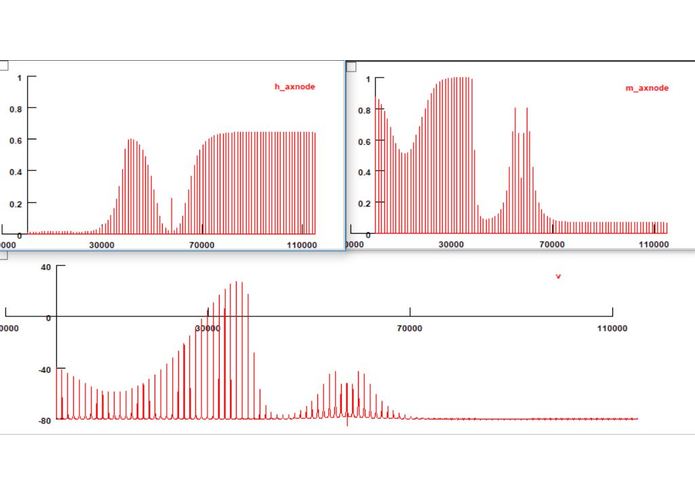
Action potential traveling toward blocking electrode
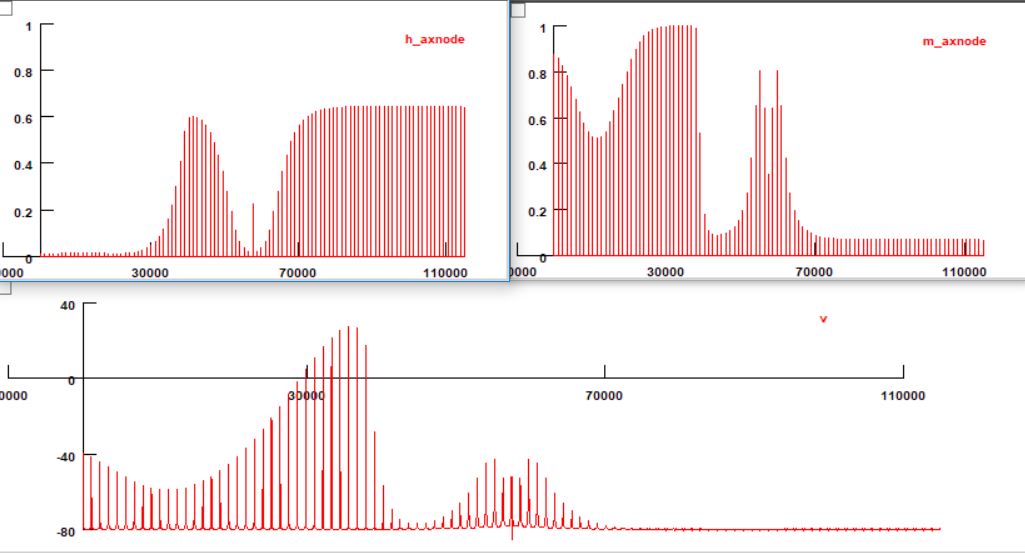
Inspiration
This project comes from combining my love for machine learning, with my actual work. Currently, I'm a researcher here, and I model neurons. I've always wanted to apply machine learning in this field, but never had time to do it at work.
What it does
It uses a reinforcement learning algorithm that attempts to use only an extracellular voltage to force the gate value(s) into a specific state.
How I built it
I built the reinforcement learning algorithm from scratch. Its a simple algorithm, but it works well enough for a demo. I chose to do this over using a known machine learning algorithm because I wanted to know what was going on under the hood. The interface between python and NEURON was something I had done before, so making it again was relatively simple. Then I used most of the code from work to run the specific simulations. I didn't remake this code simply because it is not the focus of the project.
Challenges I ran into
Having to remember how to get through all the random quirks of python.
Accomplishments that I'm proud of
I was able to create my own reinforcement learning algorithm. I was able to successfully force a gate value into a desired state.
What I learned
Even a simple reinforcement learning algorithm can still be effective in some scenarios.
What's next for ML To Help Understand Neuroscience Phenomena
- Testing more gates, and seeing if setting multiple gates into specific values is possible.
- Being able to test hypothesis that try and explain the relationship between conduction block and gating values.
- Optimization. A better reinforcement learning algorithm, and testing networks in parallel instead of serial.
Built With
- hoc
- neuron
- python

Log in or sign up for Devpost to join the conversation.