-
-
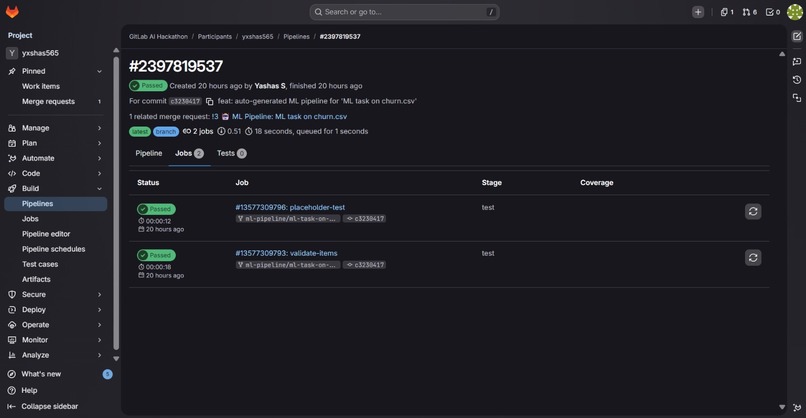
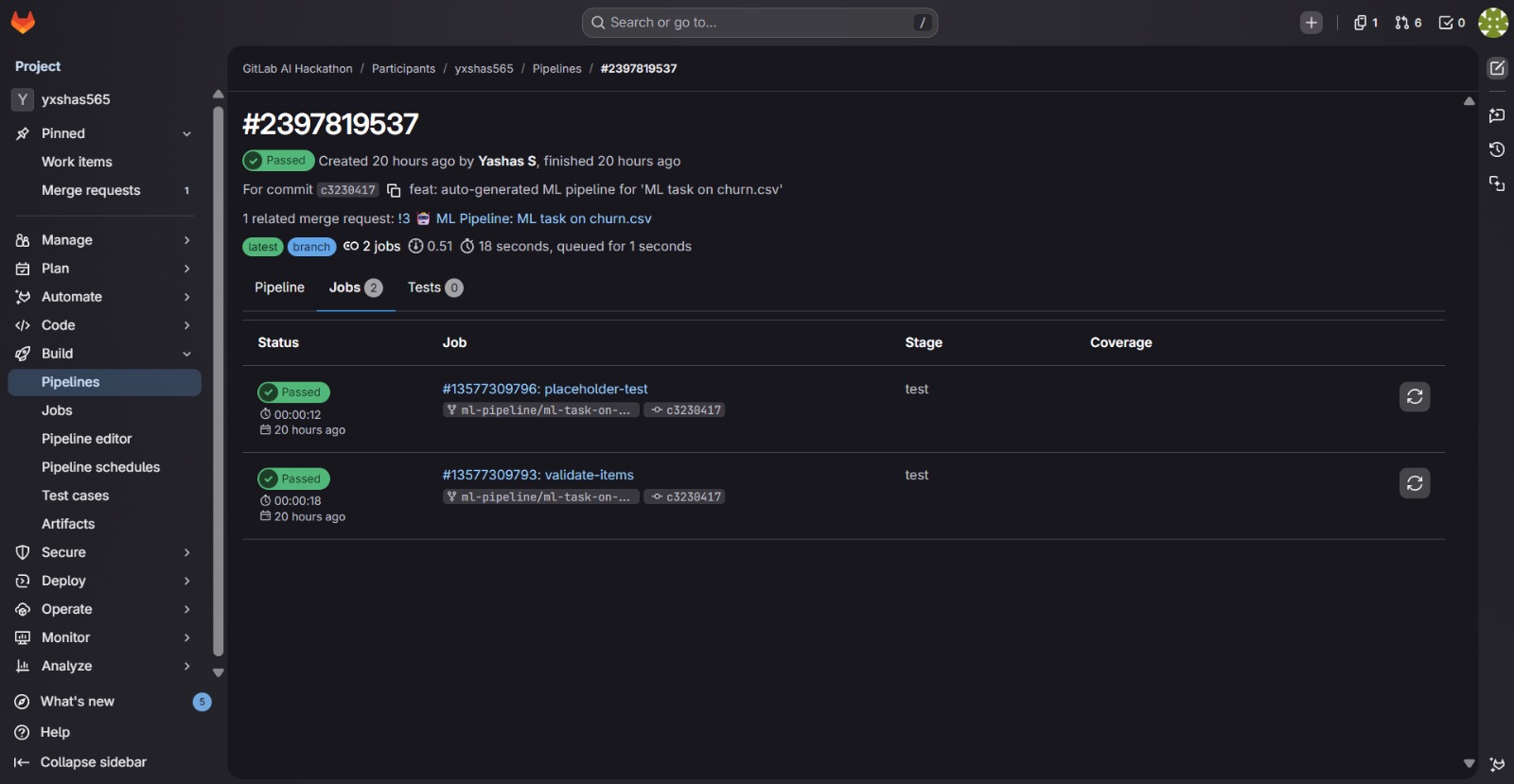
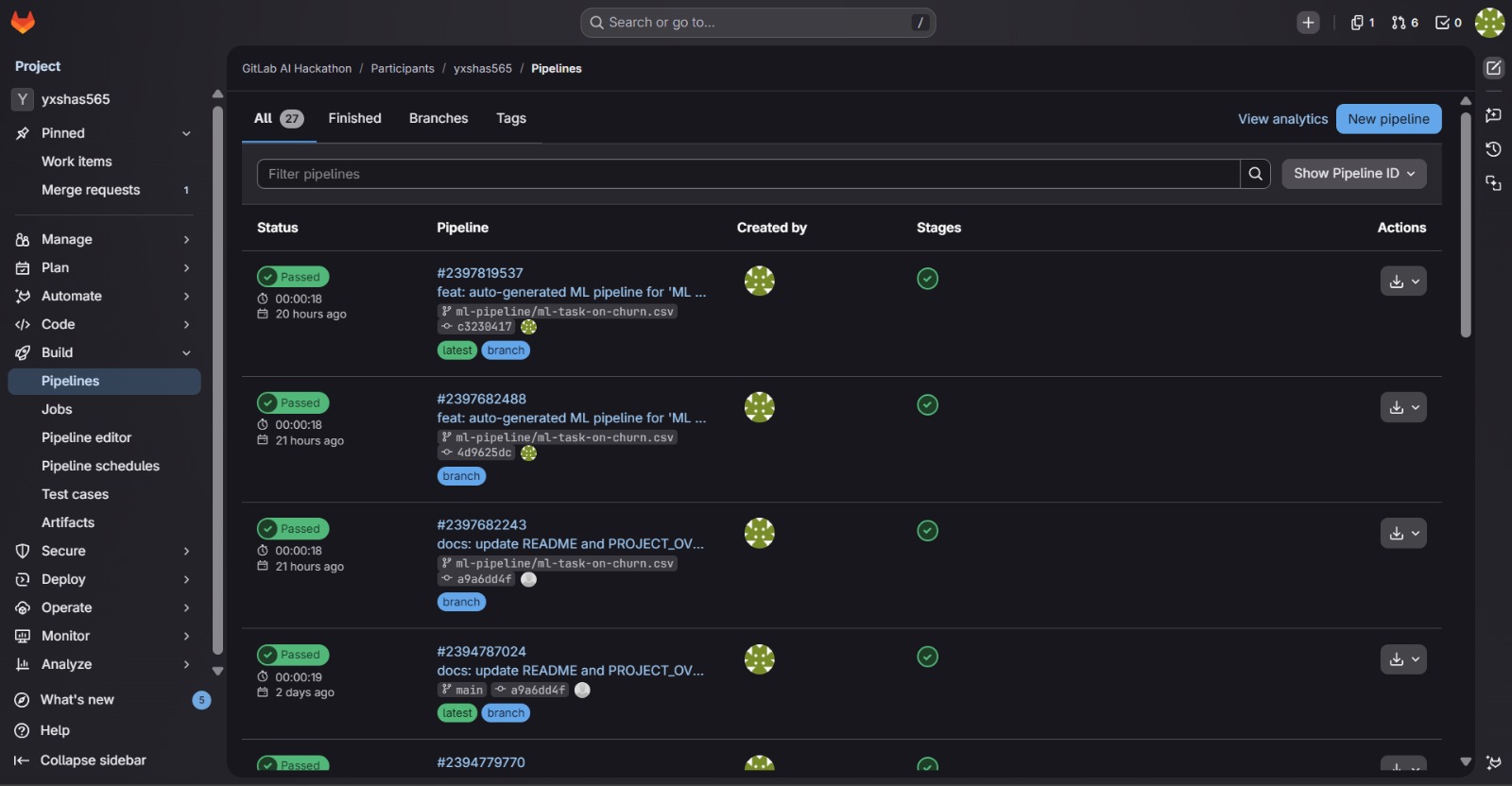
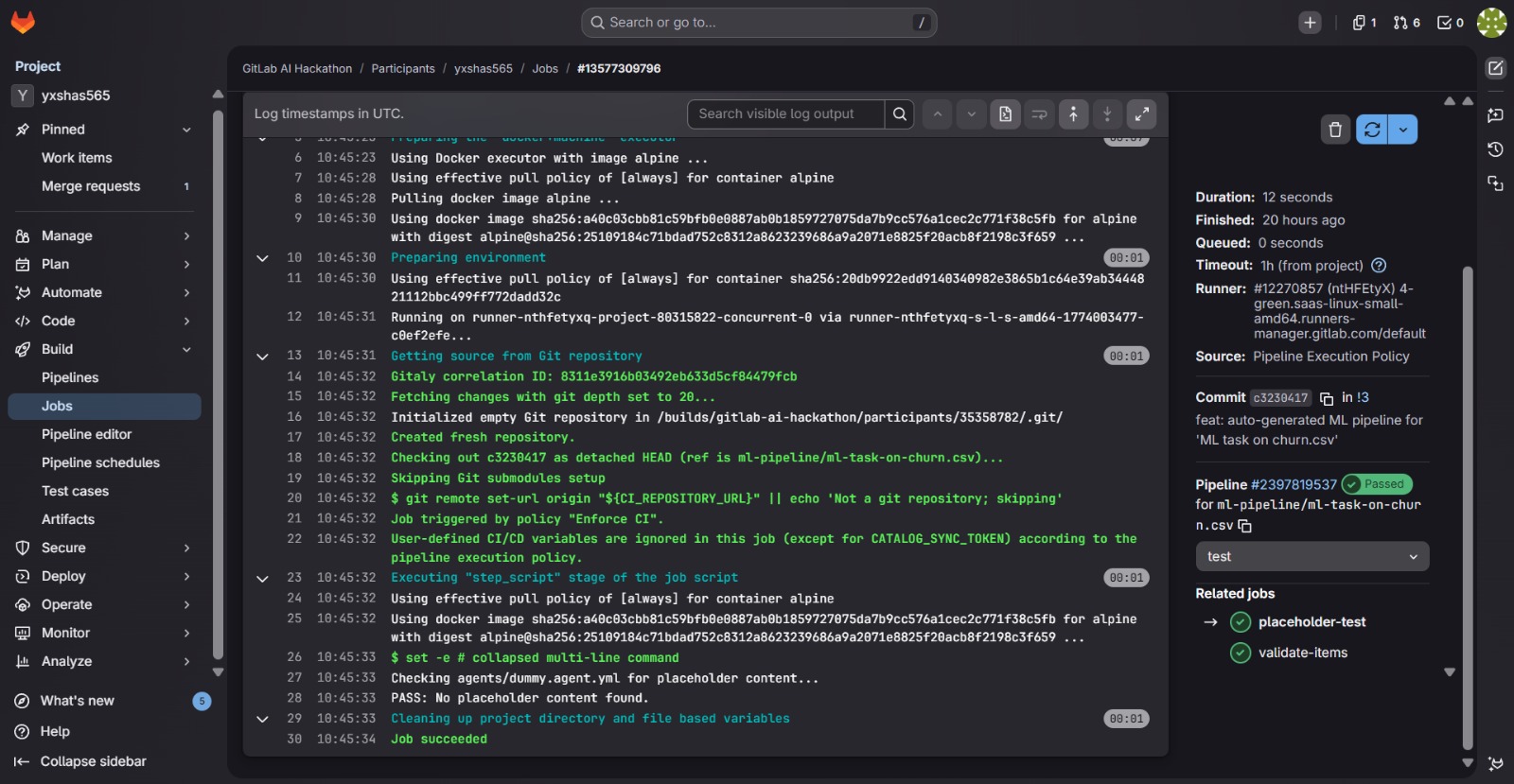
Pipeline successfully executed page
-
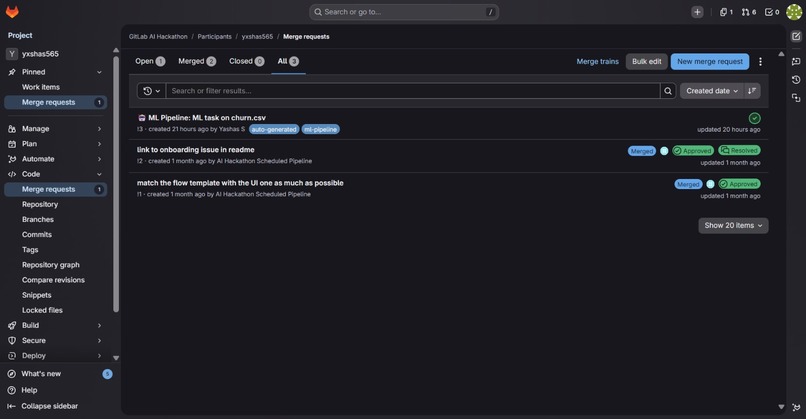
Final confirmation of Job page (Successfully completed)
-
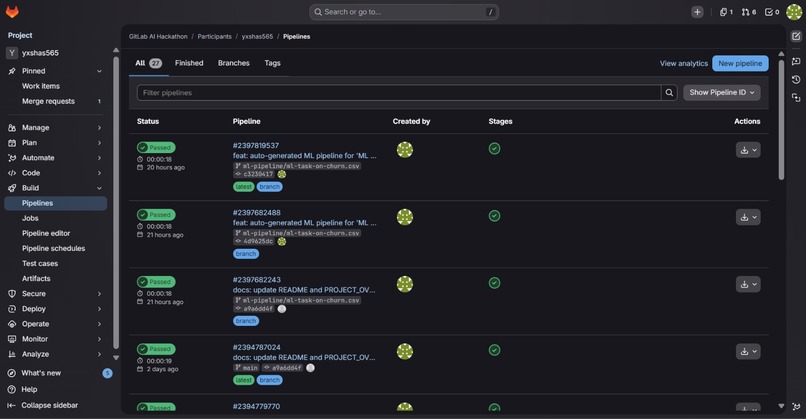
Pipeline running page
-
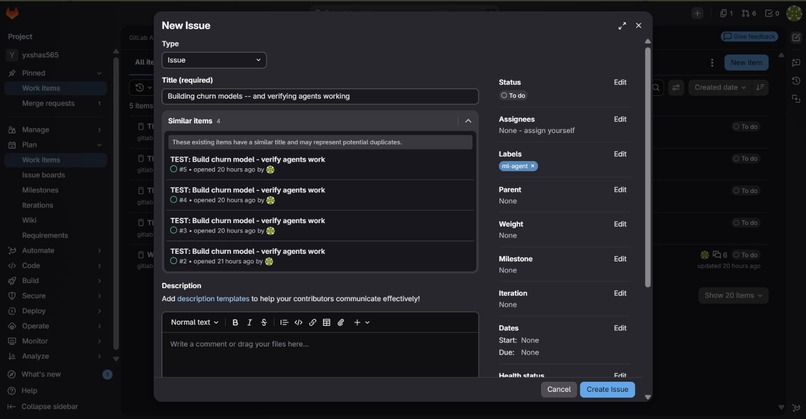
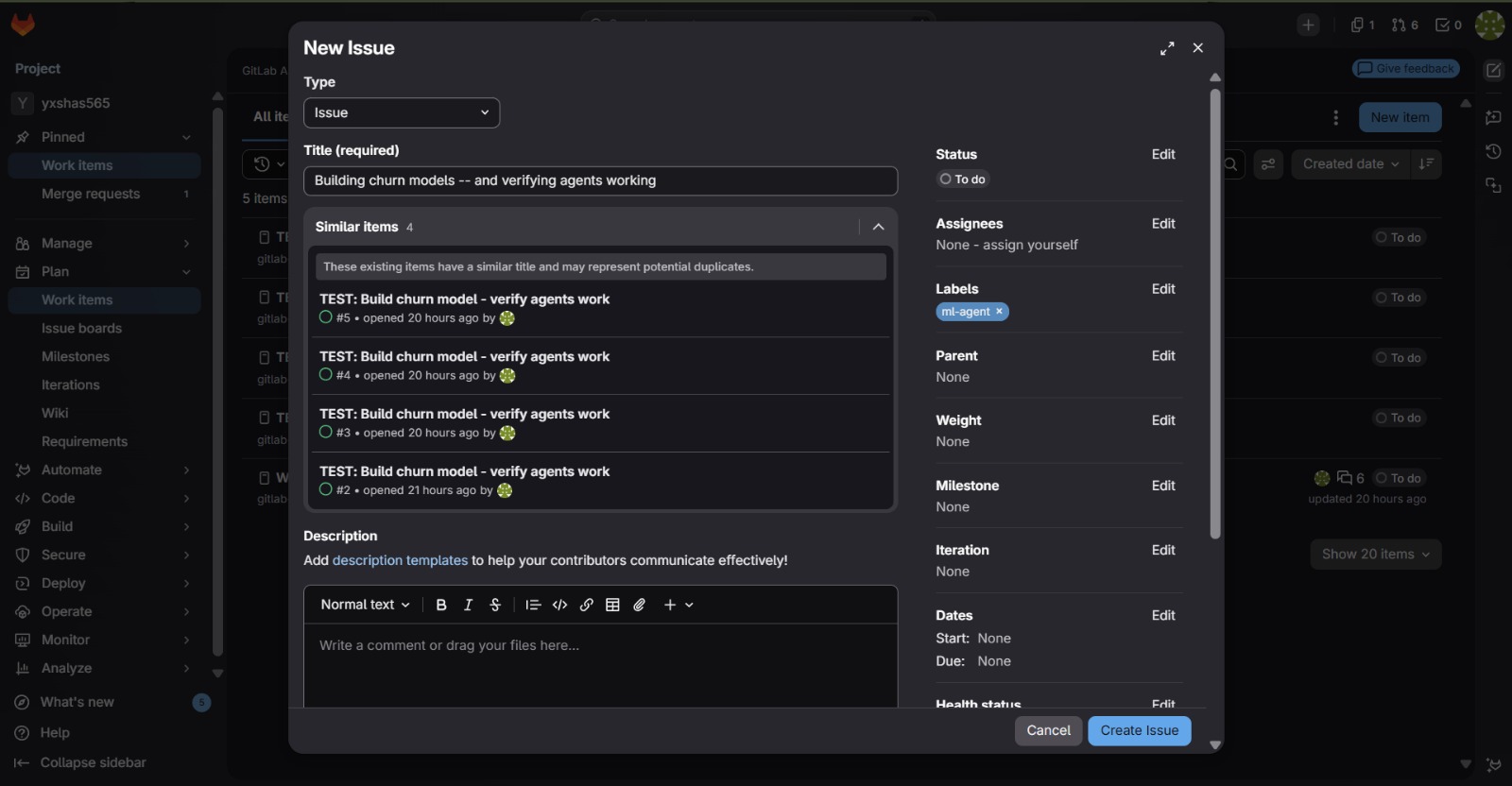
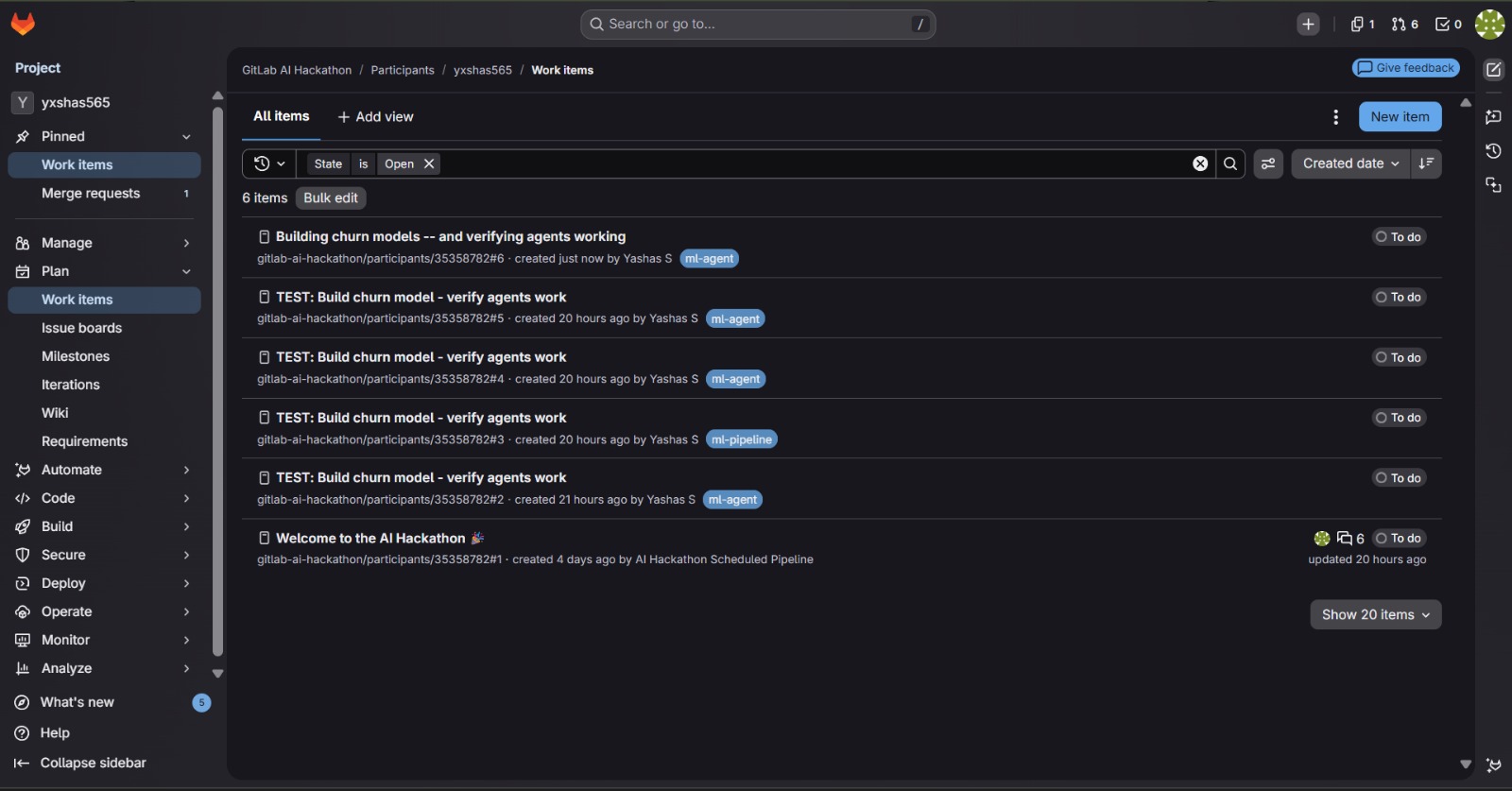
Creating a new issue page
-
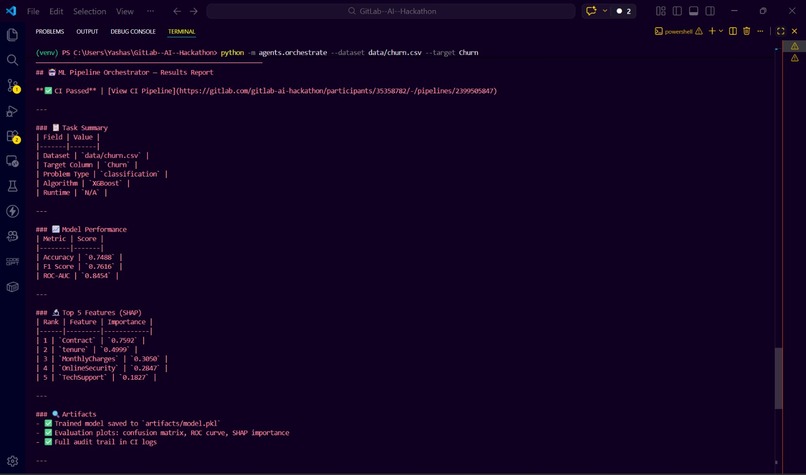
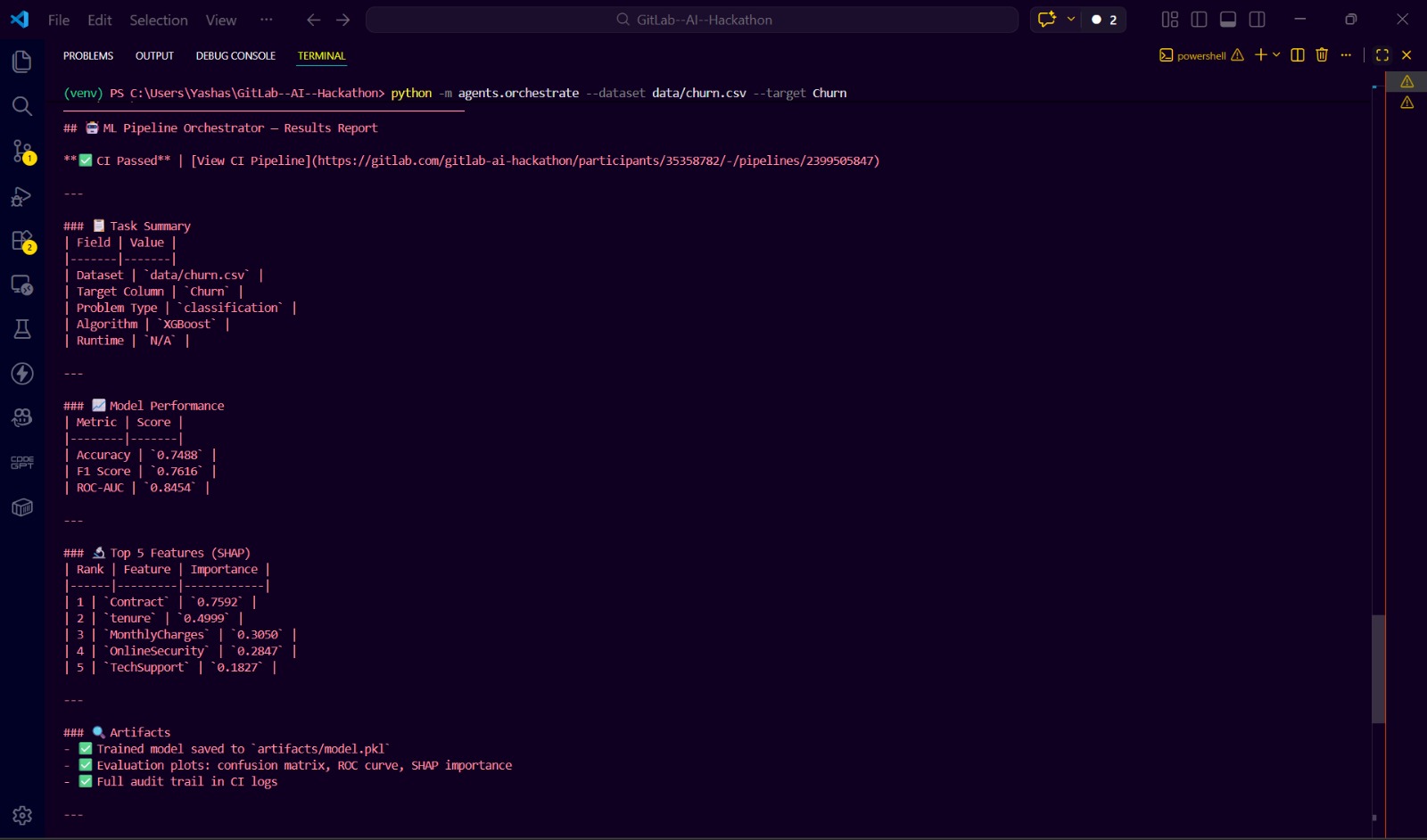
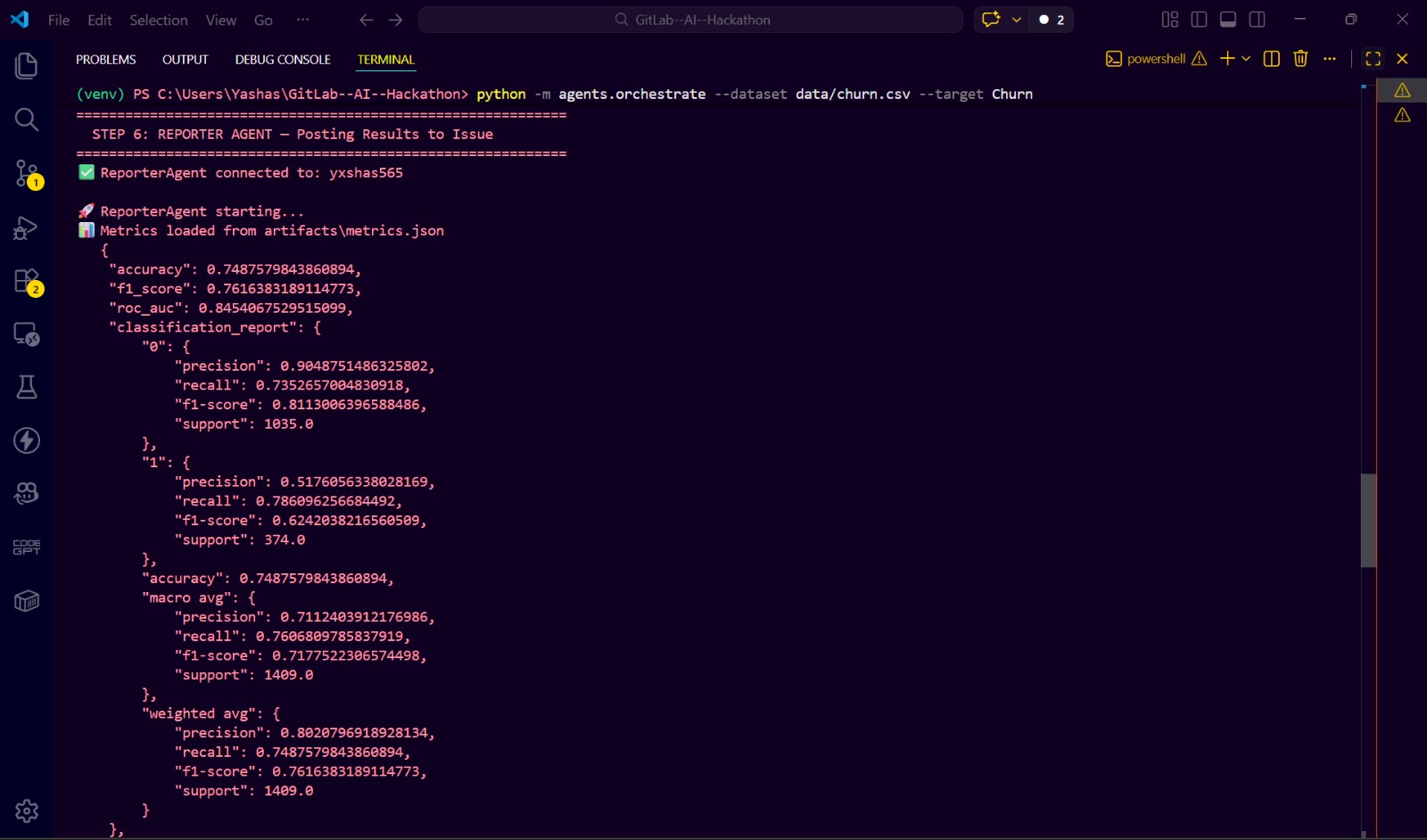
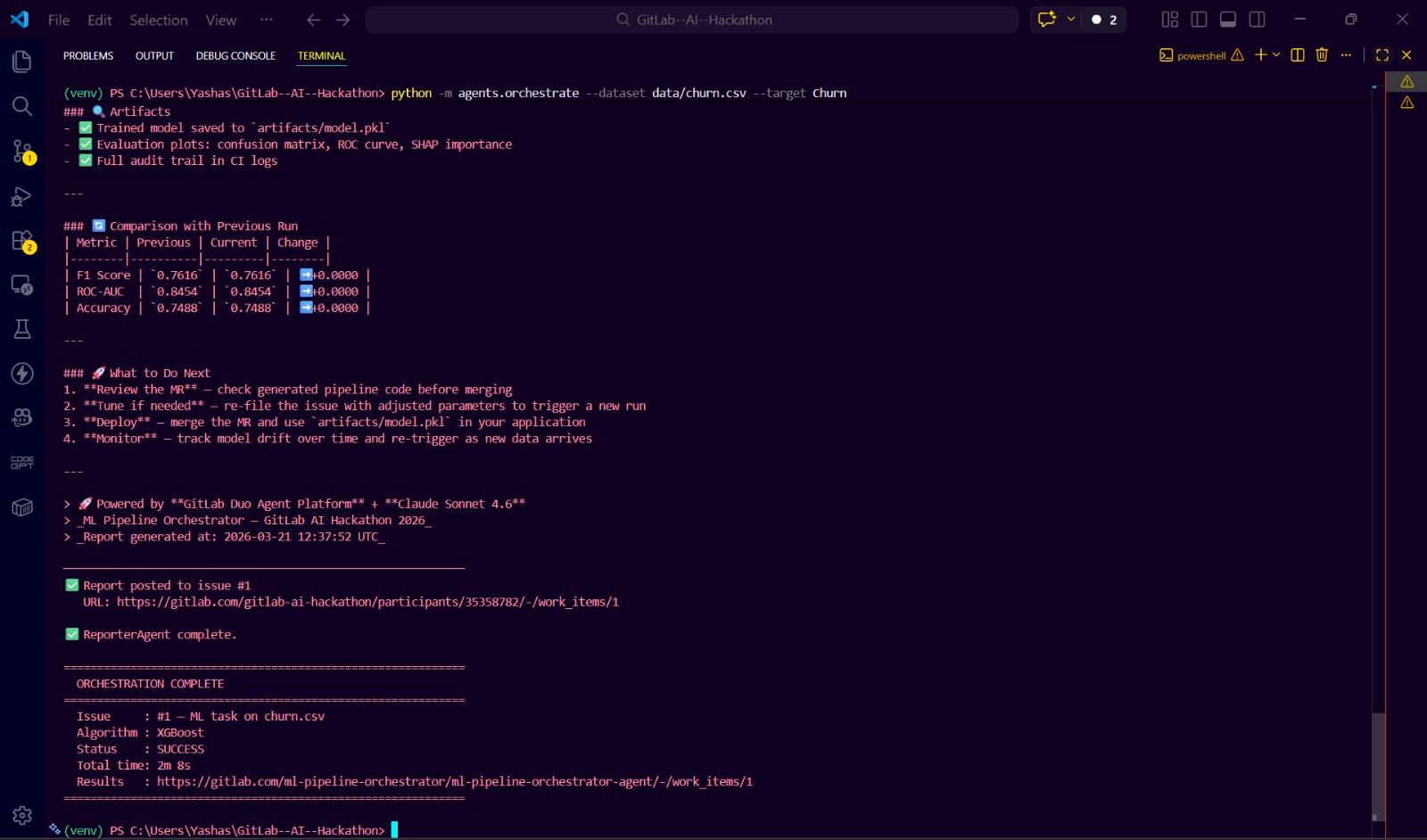
Final report page - 1
-
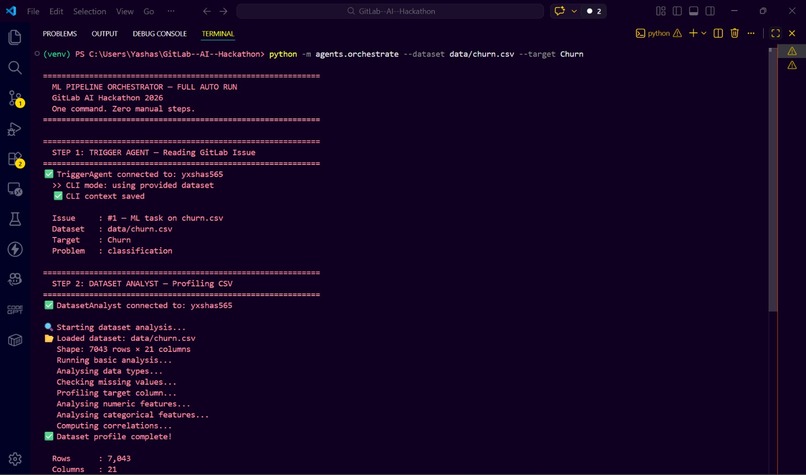
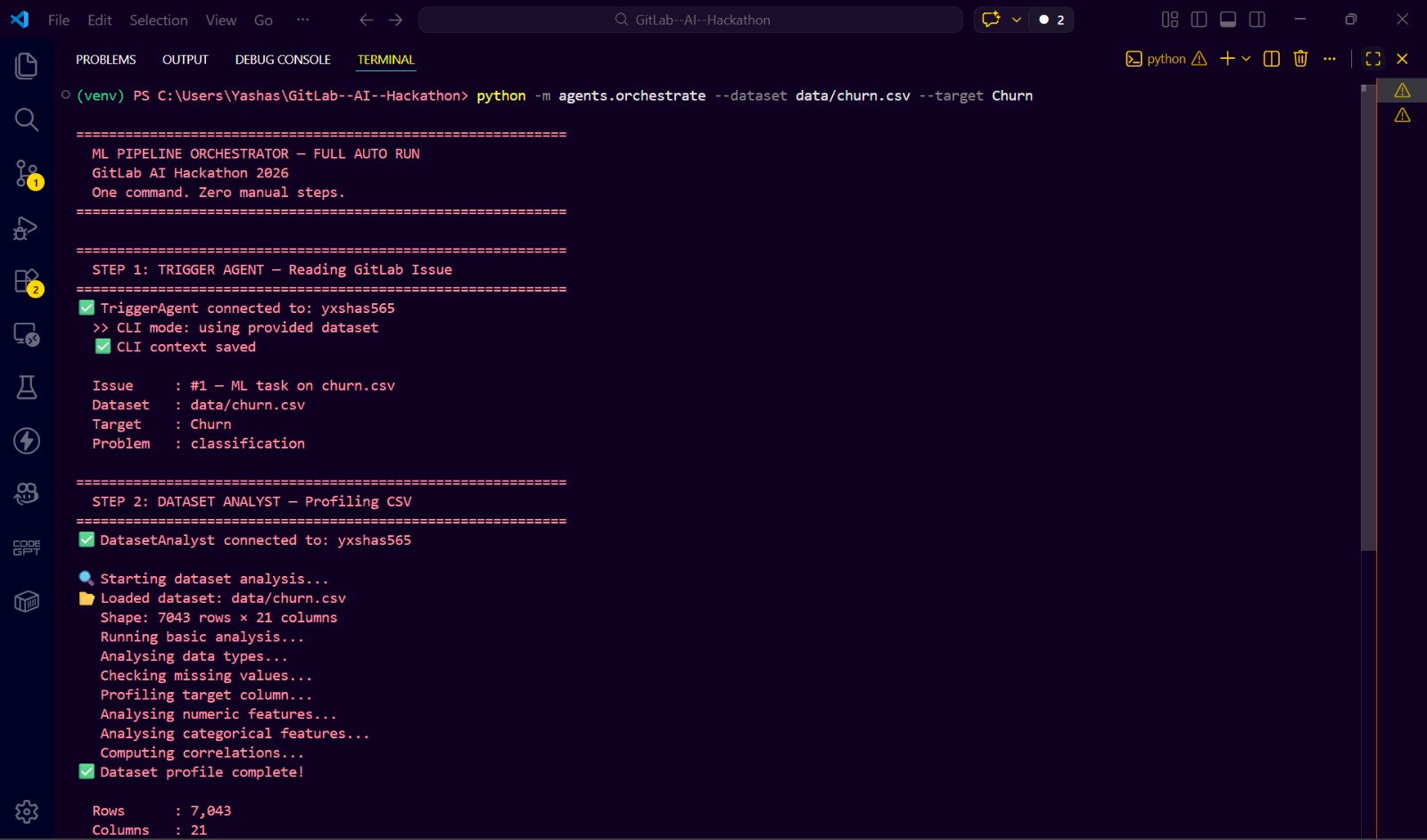
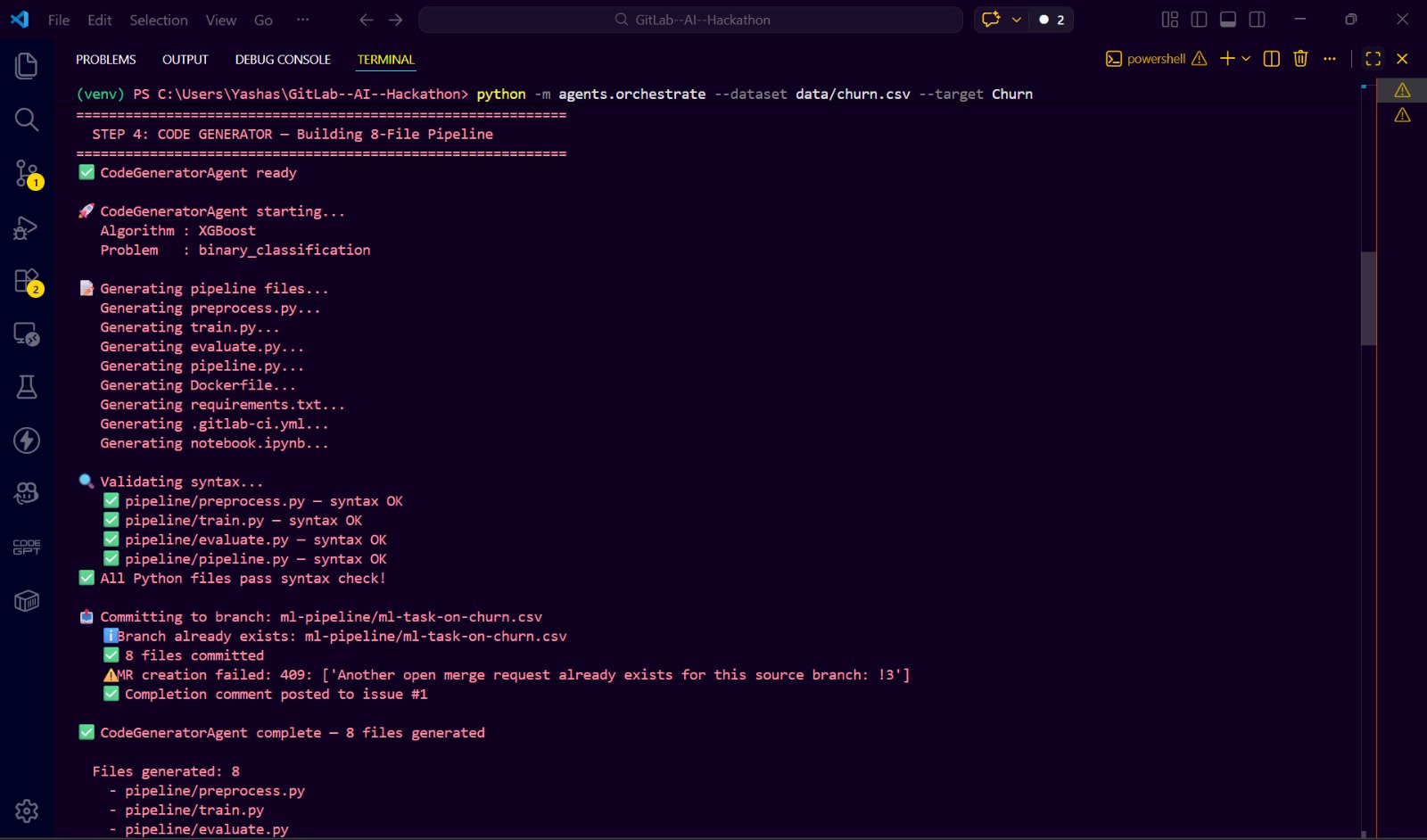
Initial landing output page (Process has been started)
-
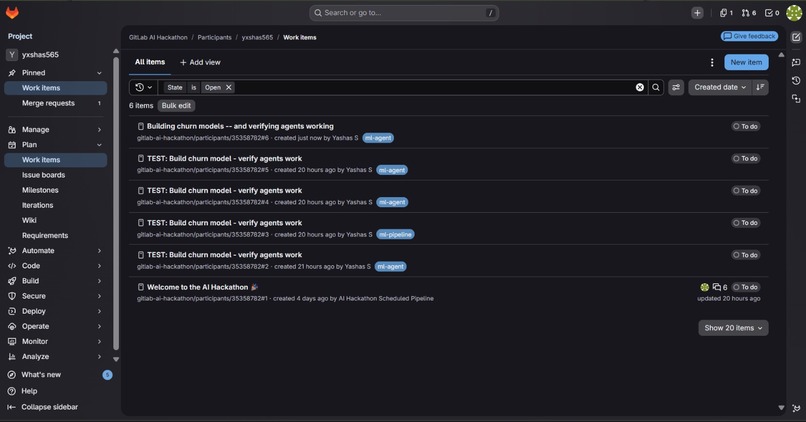
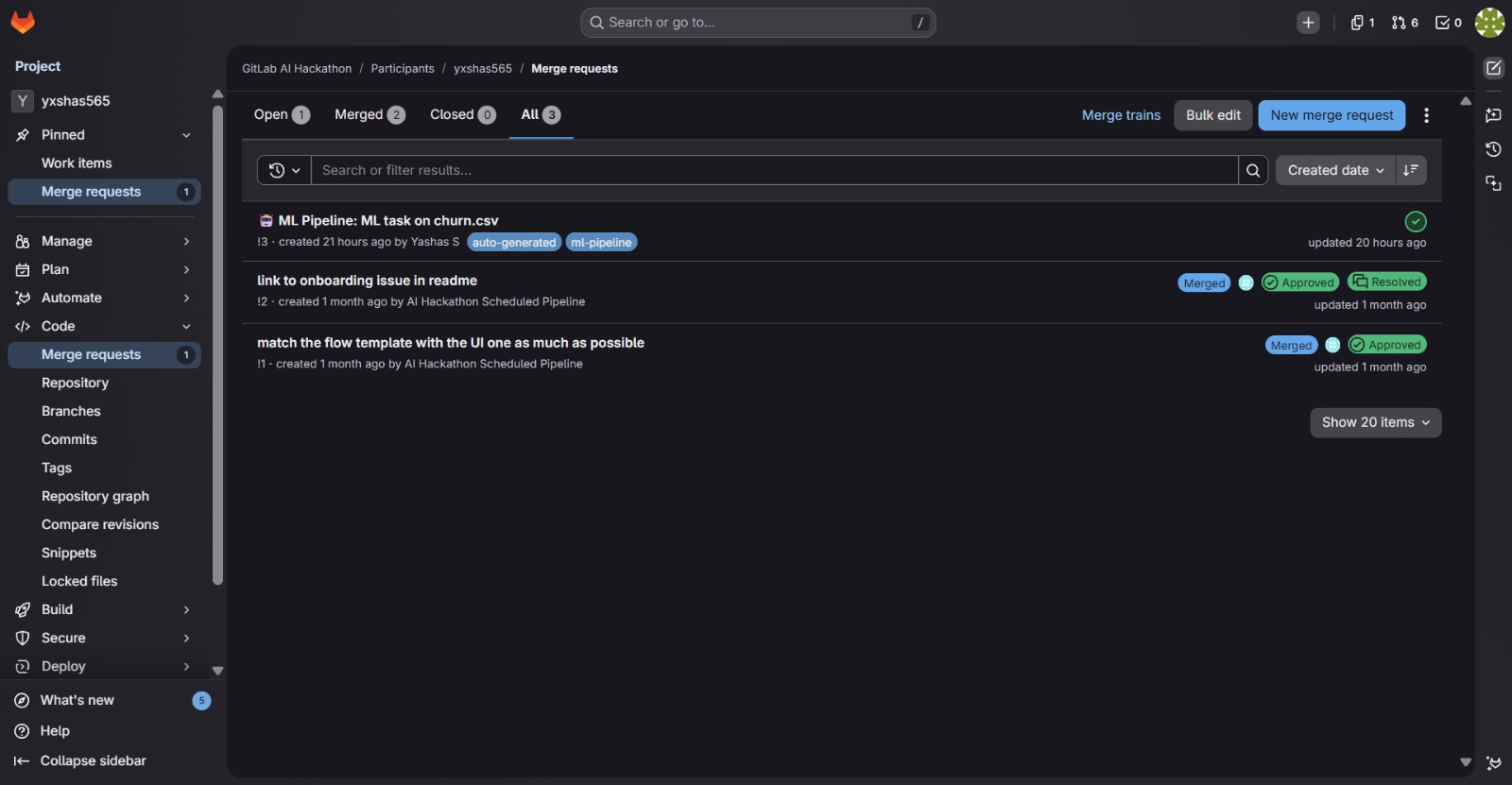
Issues history page
-
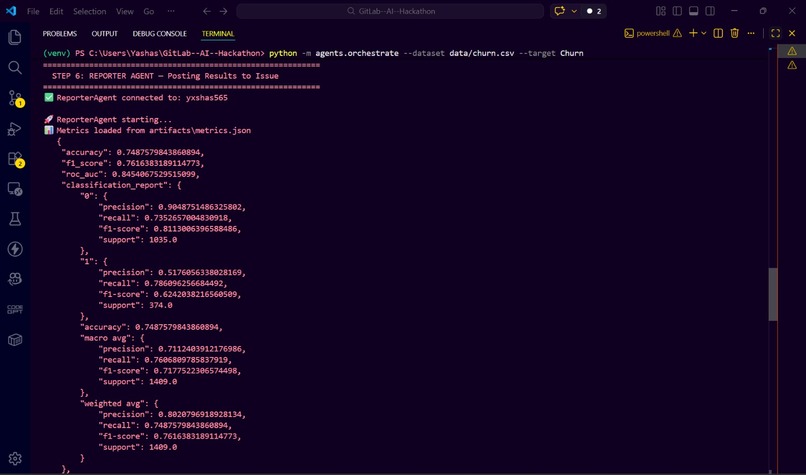
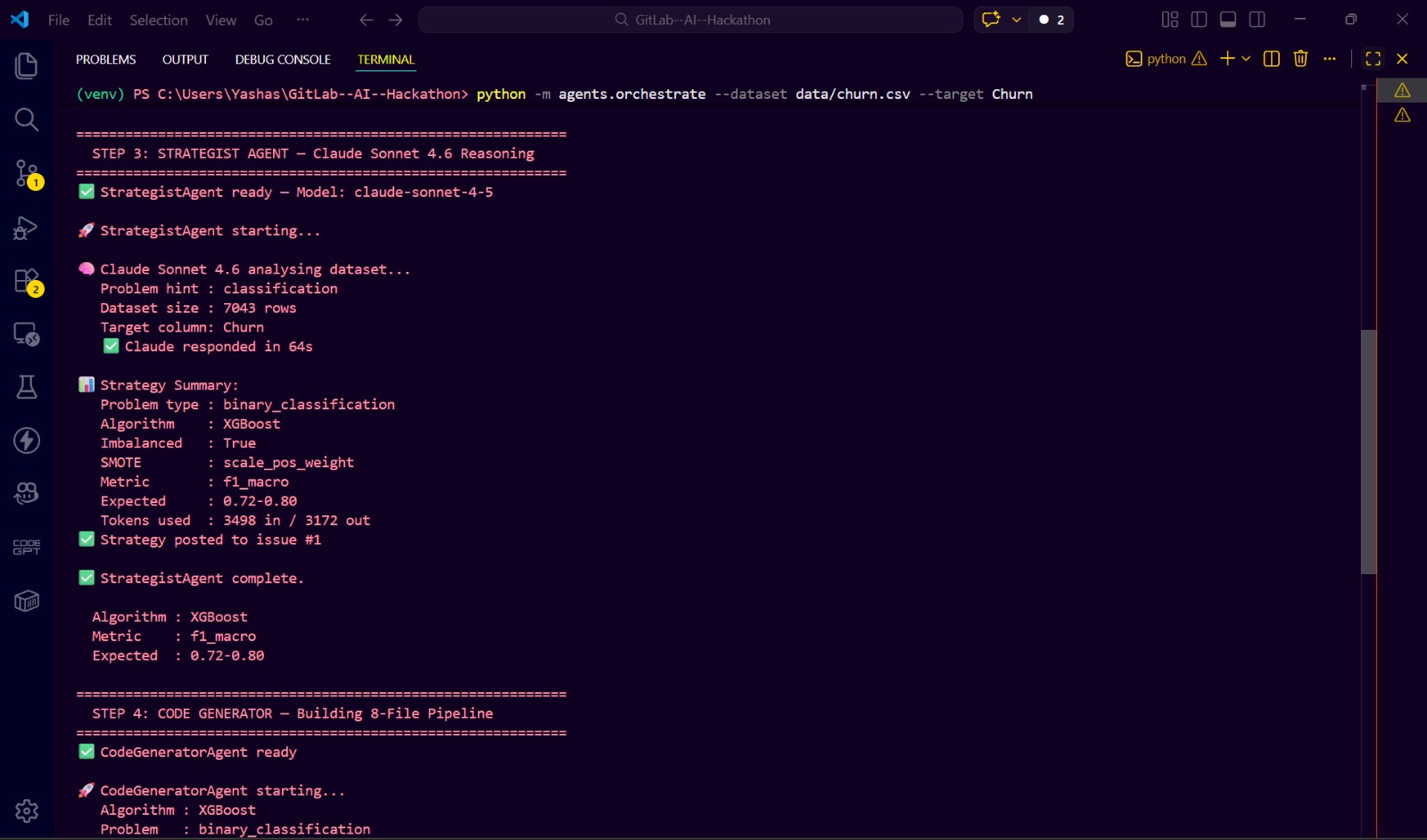
Agents running page (one after another)
-
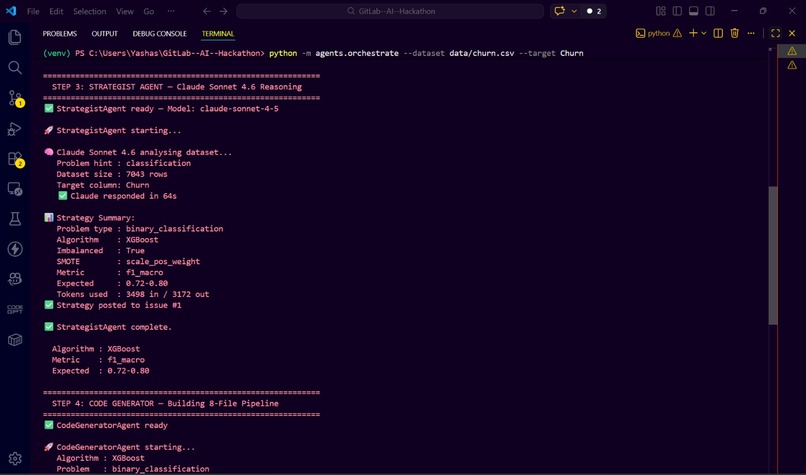
Agents running page ( one after another)
-
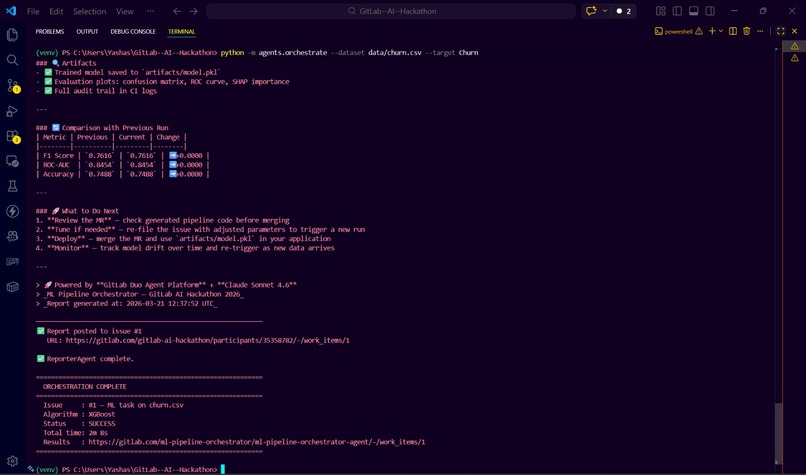
Final report page - 2
-
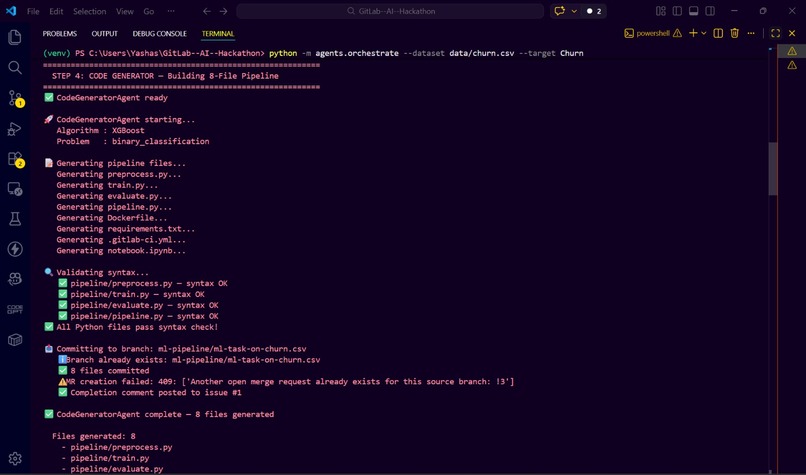
Agents running page (one after another)
-
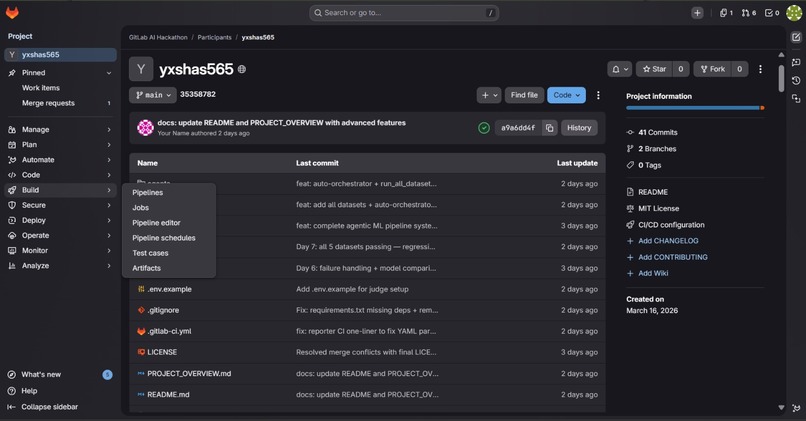
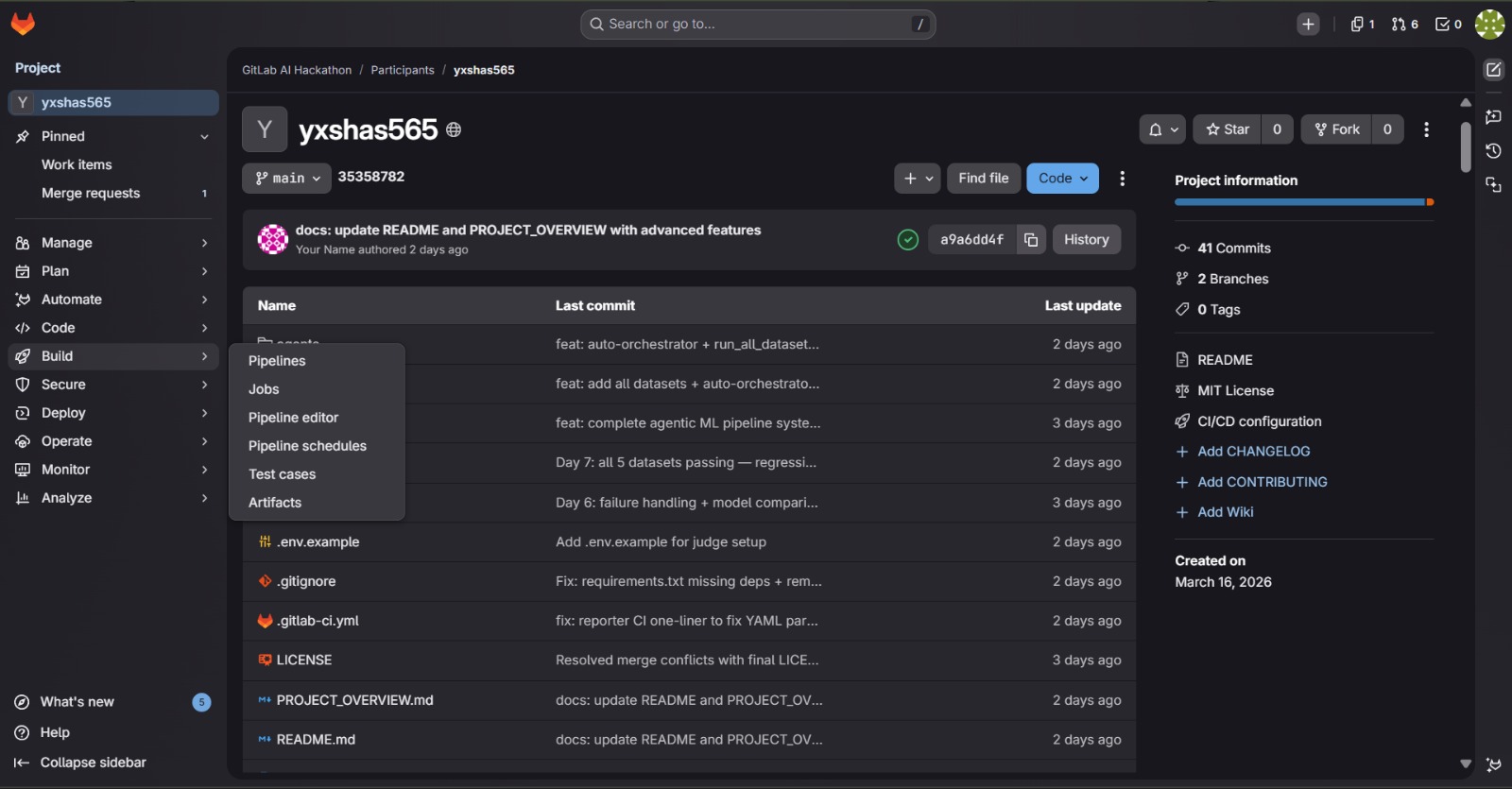
Official GitLab repo code base
-
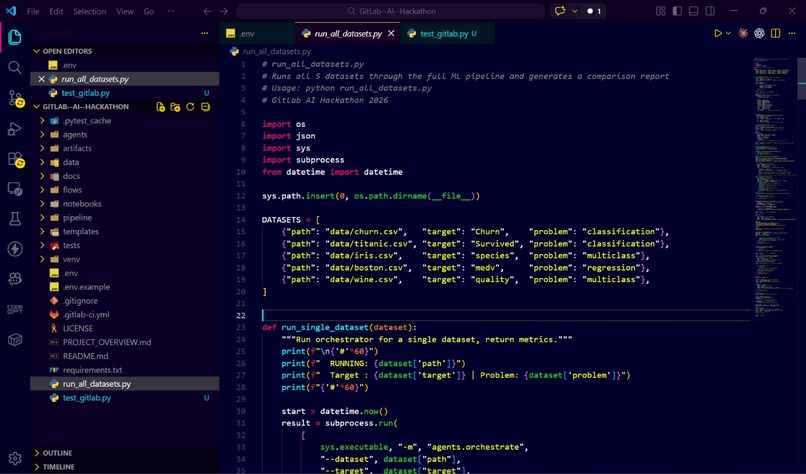
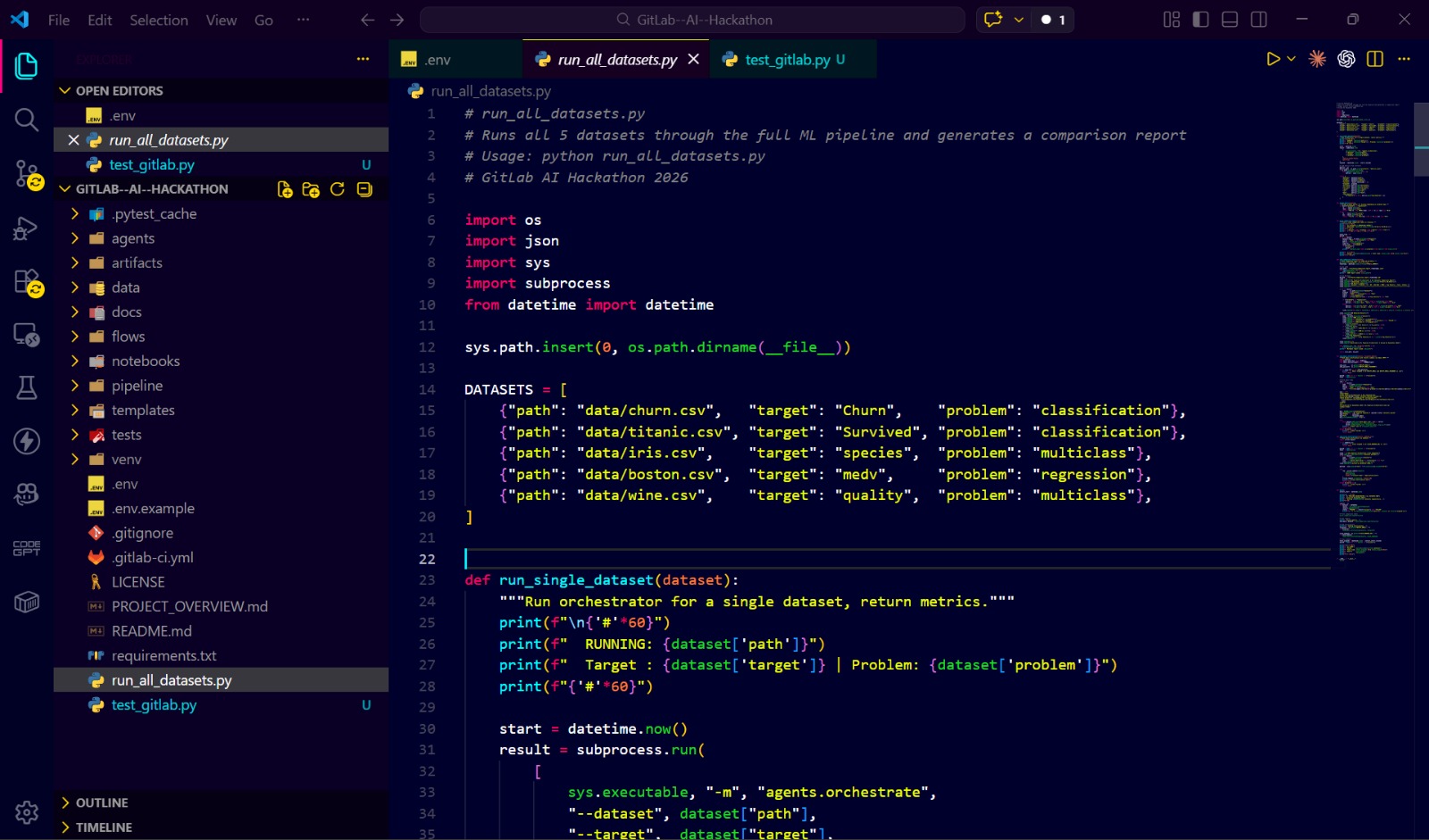
VS code , code deployment/development page
-
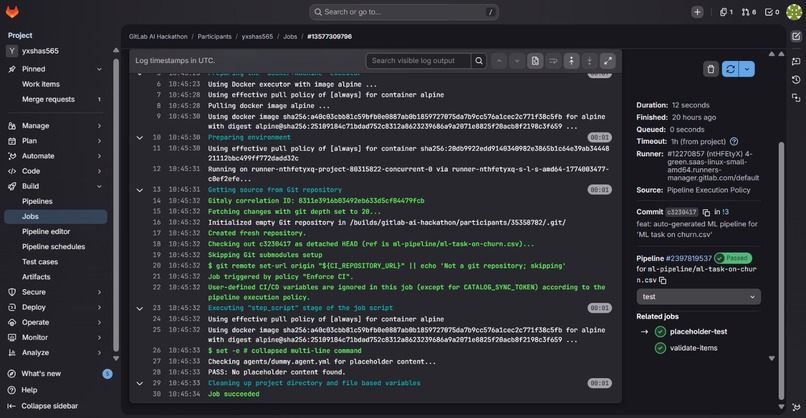
Job description page on executing pipeline
Inspiration
Building ML pipelines manually takes 2-3 days. We wanted to automate the entire process with autonomous agents.
What it does
Transforms a GitLab issue into a production-ready ML pipeline in 2 minutes. File an issue with your dataset, and 5 autonomous agents orchestrate the entire pipeline creation — from data analysis to model training to results reporting.
How we built it
- Trigger Agent: Reads GitLab issues and extracts task specifications
- Dataset Analyst: Profiles CSV datasets and identifies key characteristics
- Strategist Agent: Claude Sonnet 4.6 reasons about optimal ML strategy
- Code Generator: Generates 8-file production ML pipeline (preprocess, train, evaluate, etc.)
- Reporter Agent: Trains model, evaluates performance, posts results to GitLab
Challenges we ran into
- Multi-agent orchestration and state management
- Ensuring Claude generates syntactically correct production code
- Integrating with GitLab CI/CD pipelines automatically
- Handling edge cases in dataset profiling
Accomplishments that we're proud of
✅ 5 autonomous agents working seamlessly together ✅ 131 unit tests, all passing ✅ Real ML models trained (F1=0.7616, ROC-AUC=0.8454) ✅ Production-grade code generation ✅ SHAP feature importance analysis ✅ Automatic CI/CD integration ✅ Completed in 3-4 days
What we learned
- Multi-agent systems require careful state management
- Claude's reasoning is powerful for ML domain knowledge
- GitLab's agent platform enables complex integrations
- SHAP provides excellent model interpretability
- Production ML requires robust error handling
What's next for ML Pipeline Orchestrator Agent
- Support for deep learning (TensorFlow/PyTorch)
- Model monitoring and drift detection
- A/B testing framework
- Automated model registry integration
- Multi-class and regression task support
Built With
- claude-sonnet-4.6
- docker
- dotenv
- gitlab-ci/cd
- gitlab-duo-agent-platform
- pytest
- python
- scikit-learn
- shap
- xgboost

Log in or sign up for Devpost to join the conversation.