-
-
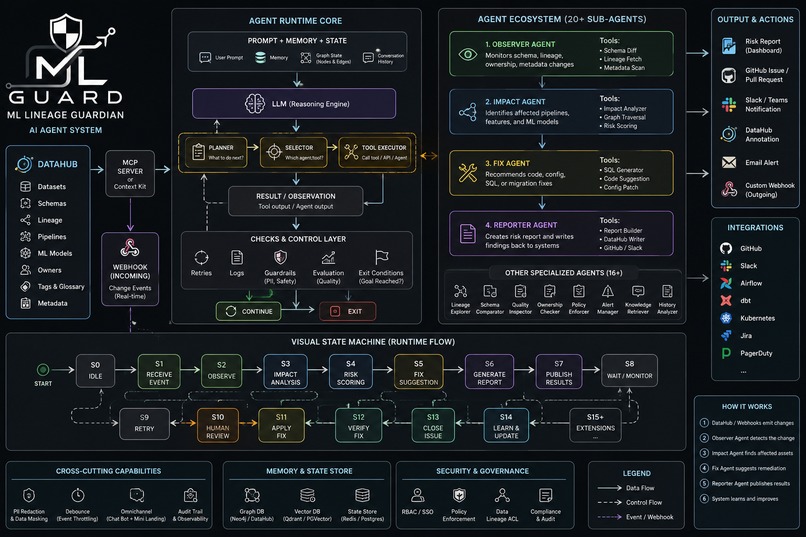
ML Lineage Guardian architecture
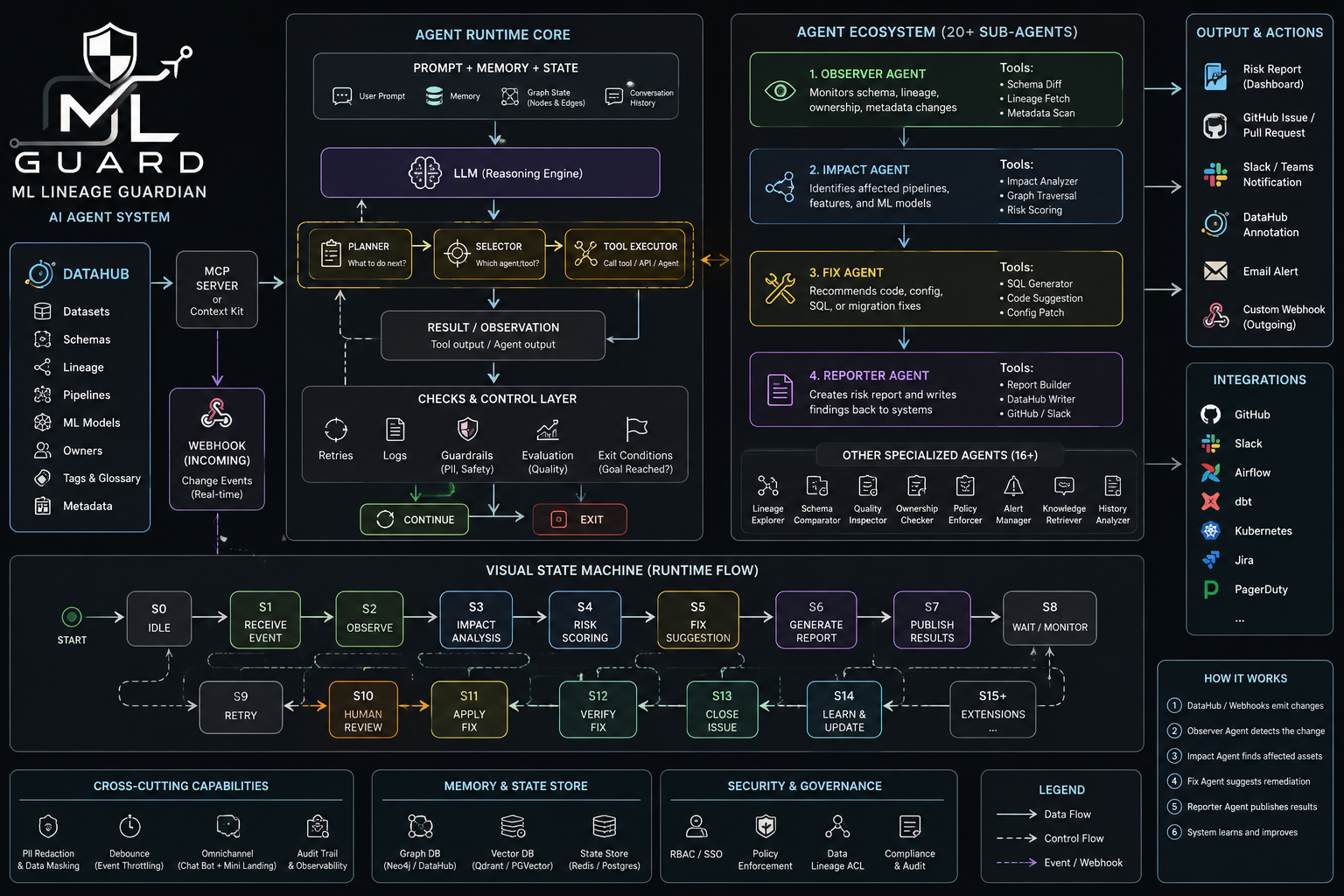
Inspiration
Production ML systems often fail because of silent schema changes, broken lineage, missing ownership, or undocumented dependencies. Teams usually discover these issues only after a pipeline or model has already failed.
What it does
ML Lineage Guardian is a multi-agent system that uses DataHub context to detect risks across the path from datasets and features to ML models and deployments.
The system includes:
- Observer Agent - monitors schema, lineage, ownership, and metadata changes
- Impact Agent - identifies affected pipelines, features, and production models
- Fix Agent - recommends code, configuration, SQL, or migration fixes
- Reporter Agent - creates a clear risk report and writes findings back to DataHub or GitHub
How we built it
The project uses DataHub as the metadata and lineage foundation. Python agents access DataHub through its MCP Server or Agent Context Kit, analyze dependencies, classify risk, and generate actionable recommendations.
Challenges
The main challenge is transforming complex metadata and lineage graphs into reliable decisions without producing false alarms. Another challenge is coordinating several agents while preserving context and auditability.
What we learned
We learned how organizational metadata can ground AI agents, reduce hallucinations, and allow them to perform useful work across real data and ML infrastructure.
What's next
Next steps include automated GitHub issues and pull requests, Slack alerts, policy checks, historical change comparison, and support for more ML and orchestration platforms.
Built With
- agent
- agents
- ai
- context
- datahub
- docker
- fastapi
- kit
- kubernetes
- llm
- mcp
- postgresql
- python
- rag
- react


Log in or sign up for Devpost to join the conversation.