-
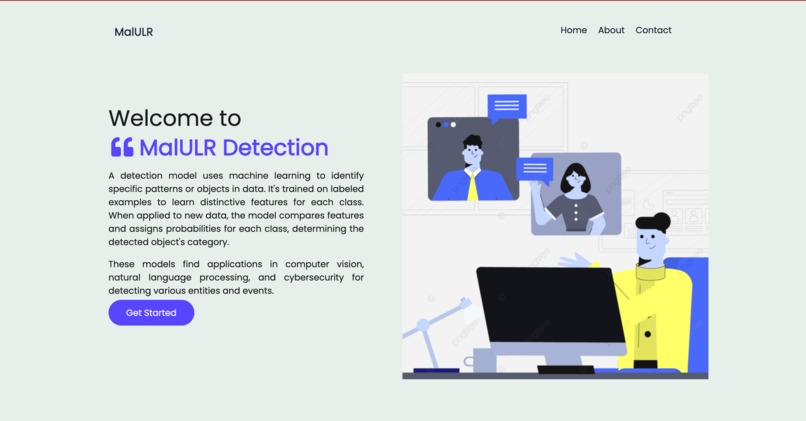
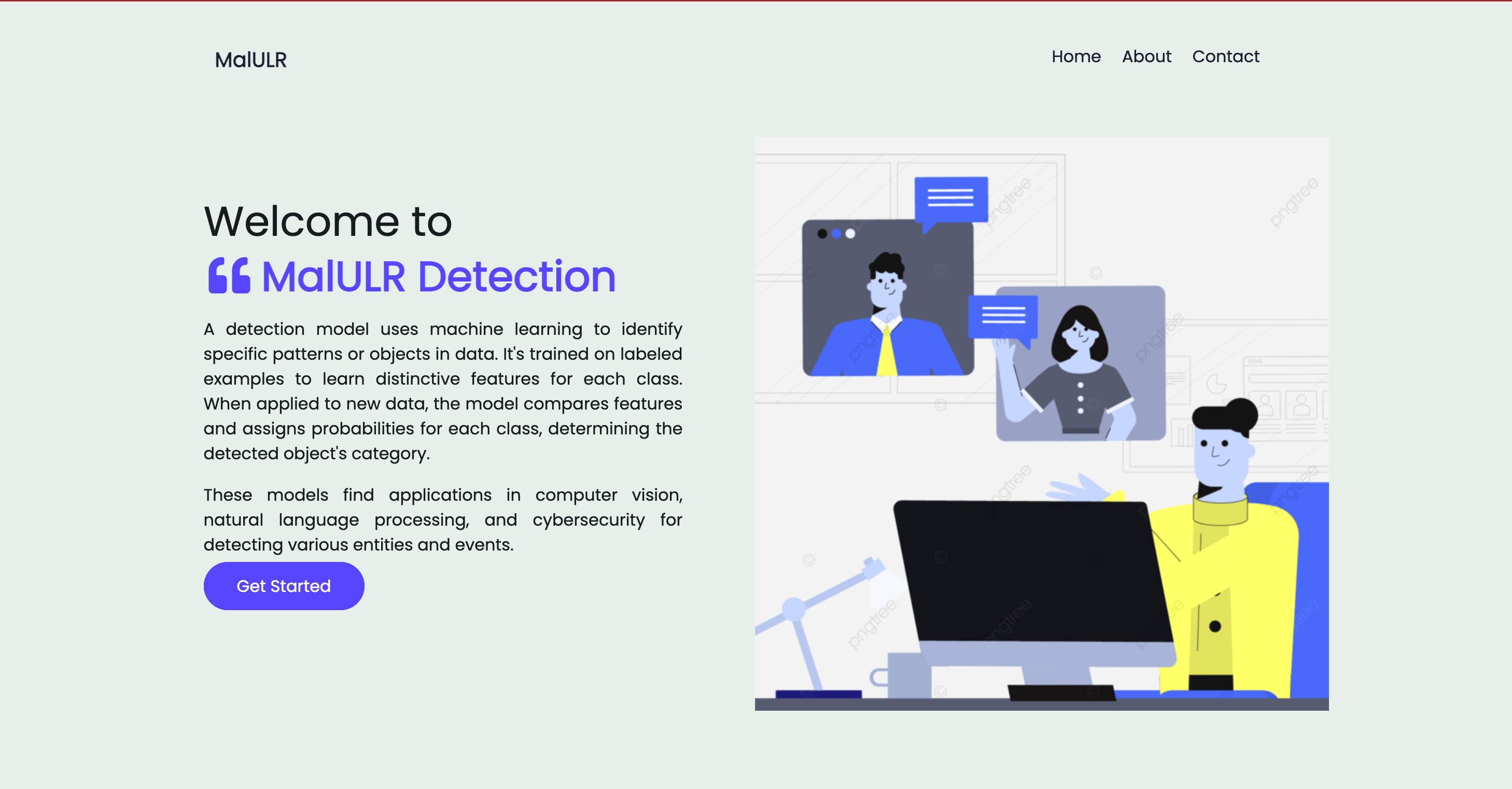
Main page for the webpage
-
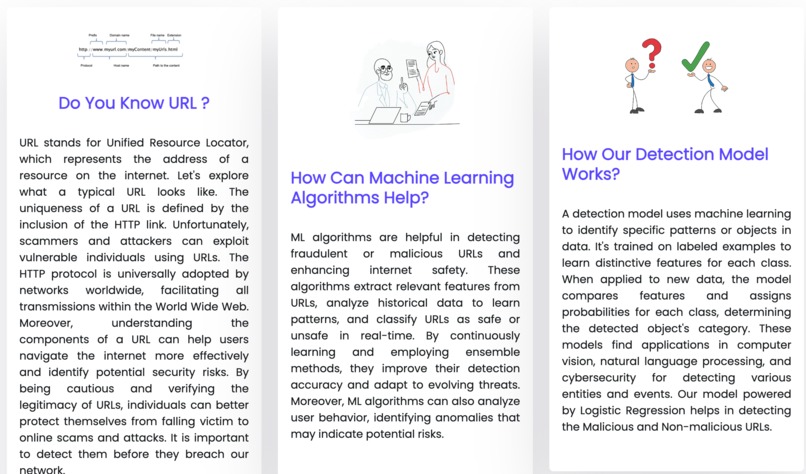
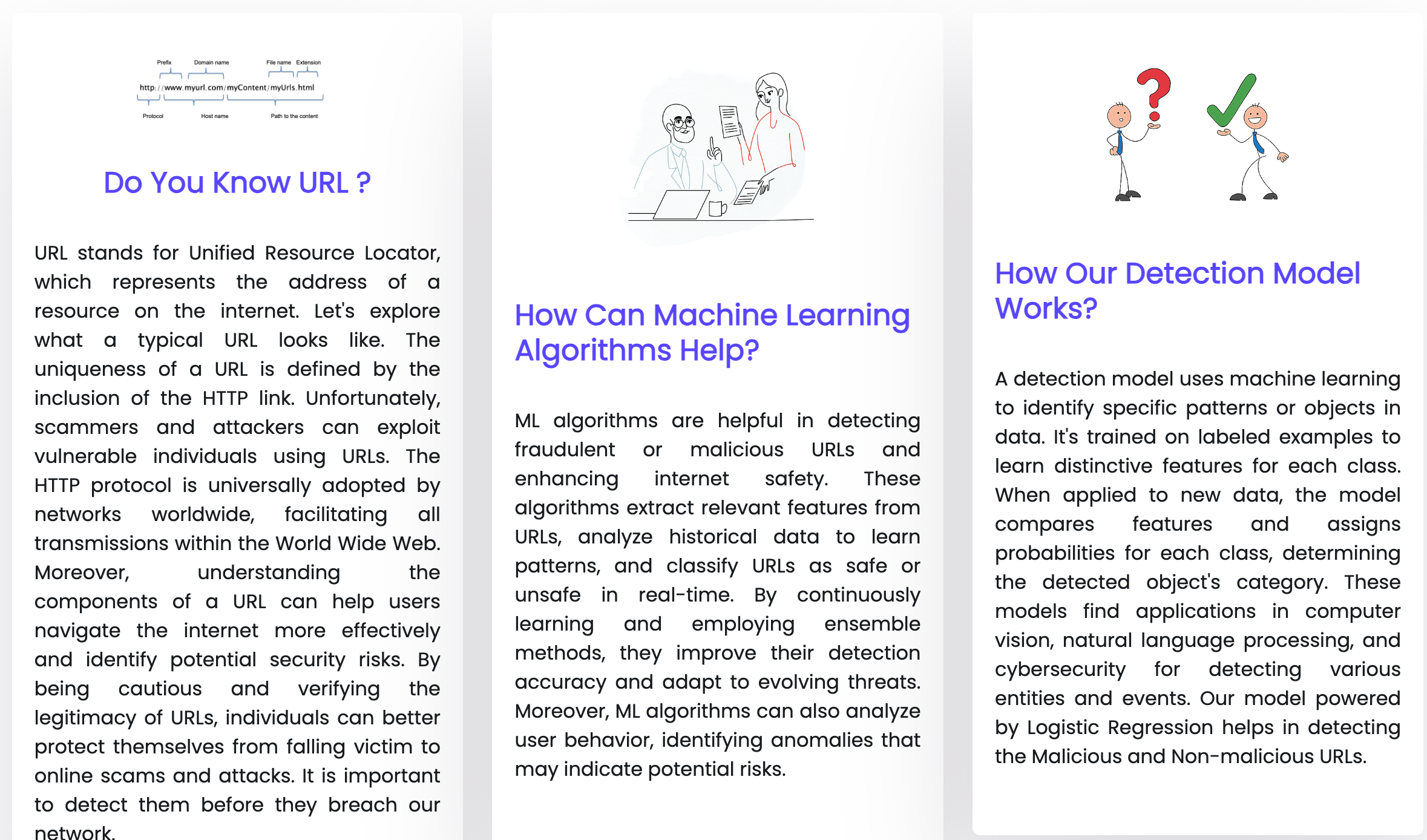
Some thoughts on the Cybersecurity and Networking
-
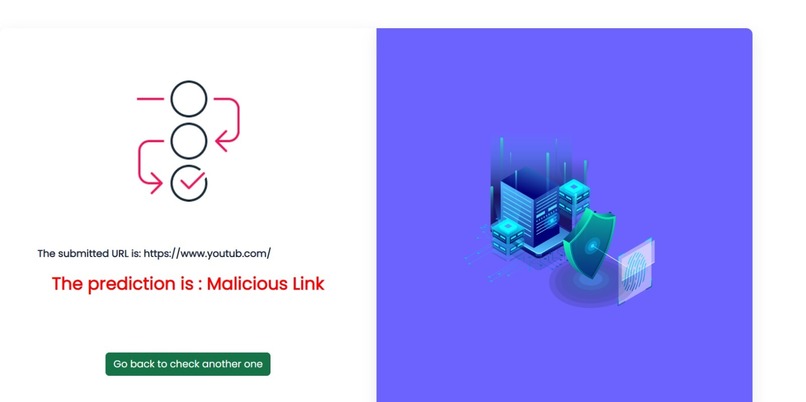
Model Predicts 'Malicious URL'
-
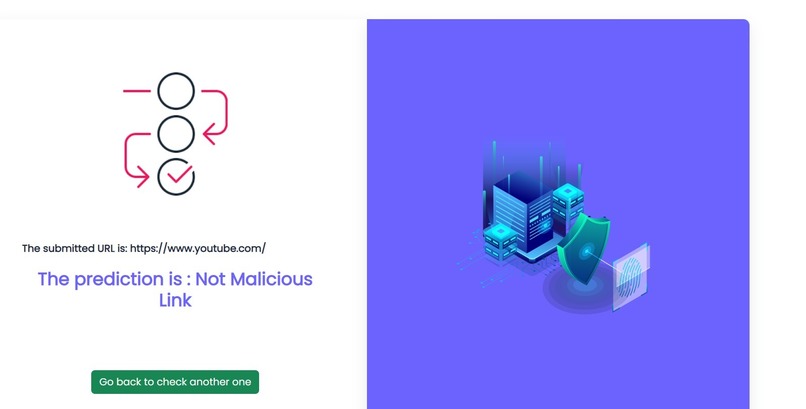
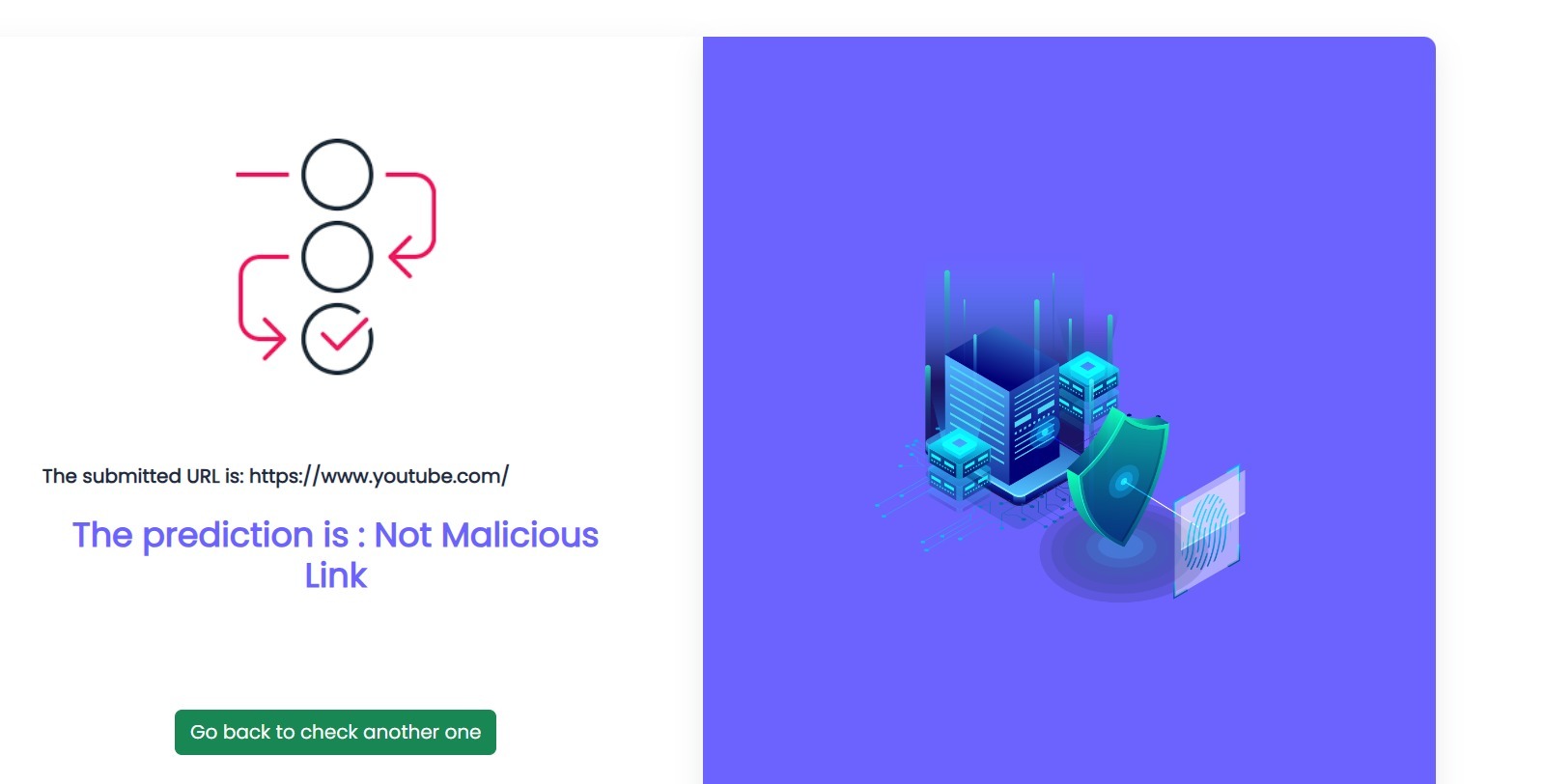
Model Predicts 'Non-Malicious URL'

Inspiration
To see the integration of ML algorithms for cybersecurity and how ML can help in having a safer cyber.
What it does
It classifies the urls into Malicious and Non-malicious urls based on a dataset with more than 65000+ datapoints. It uses Logistic Regression Model to do the classification job. Dataset link: https://www.kaggle.com/datasets/sid321axn/malicious-urls-dataset The folder data contains the dataset.
How we built it
We developed a basic UI to accept the URL from the user and then by one, the model will be able to classify the URL as either Malicious or Non-malicious.
Challenges we ran into
Training the model is always time consuming and requires much more time. Plus, datasets always contain a lot of anomalies and need to be cleaned.
Accomplishments that we're proud of
The Model can classify the urls into both Malicious and Non-malicious which is a good point.
What we learned
We learnt to spend much more time on training the model and making sure the model is precise enough and helps in proper classification.
What's next for ML for Adaptive Cybersecurity: Malicious URL Detection
To optimise it more.
![MOHAMMAD REZA [MOH] SHARIFI](https://avatars.githubusercontent.com/u/46624901?height=180&v=4&width=180 "MOHAMMAD REZA [MOH] SHARIFI")
Log in or sign up for Devpost to join the conversation.