Inspiration
In many countries and industries, you need a certification before you're allowed to do the job — financial planner, electrician, cloud engineer. AI models can now tell you the answer to almost any exam question, but an answer isn't the same as helping someone pass: staying on track for months, knowing what to study next, and having someone in your corner until exam day. When I studied for certifications myself and looked for prep apps, I struggled to find one that truly fit me, or one of genuinely high quality. So I built Passmaru: an app foundation that helps people pass certifications across many industries. For this project, as a developer in Japan, I started with my own country's certification exams, spanning a wide range of industries.
What it does
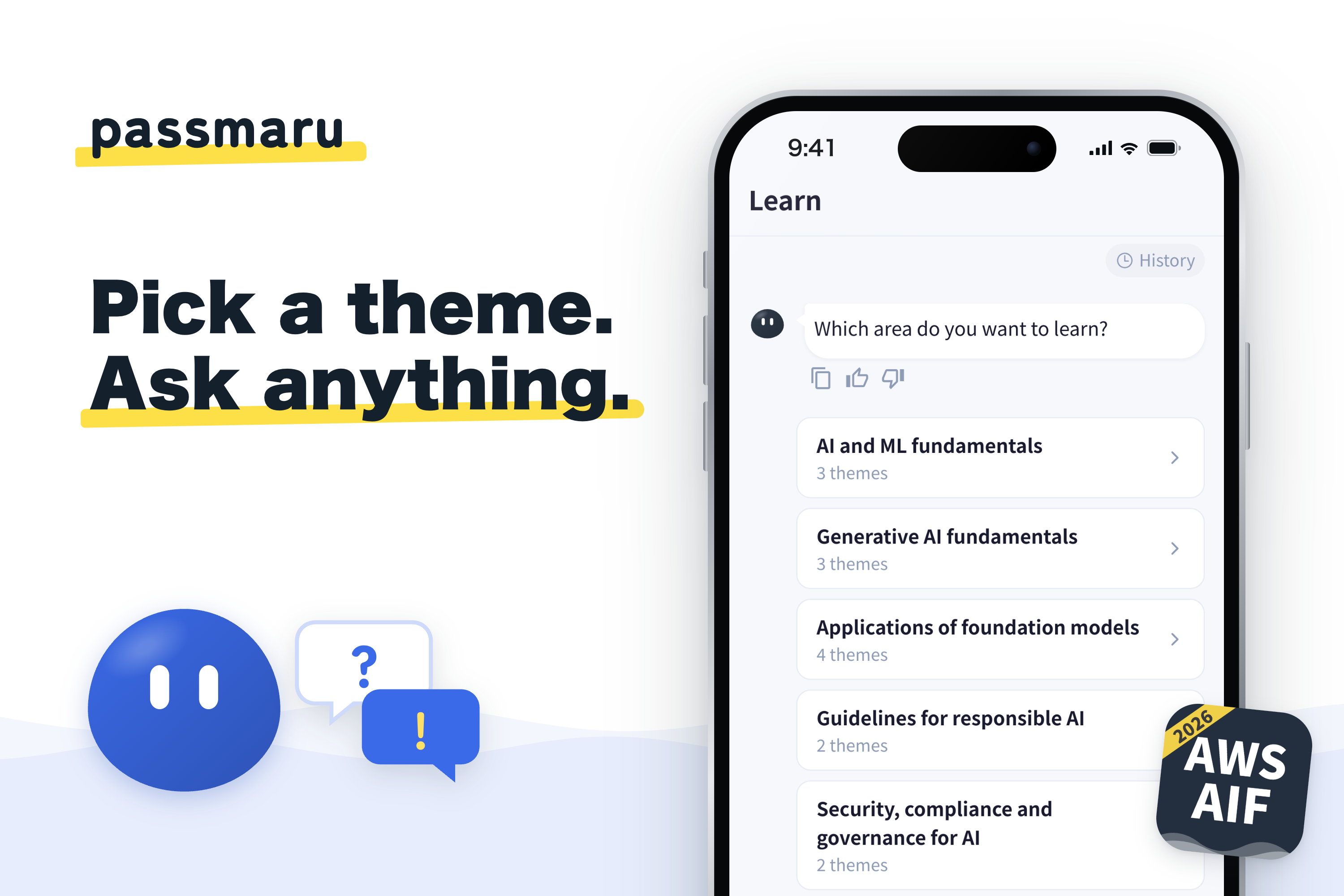
Passmaru is a certification prep app that pairs content you can trust with an AI tutor that stays with you until exam day.
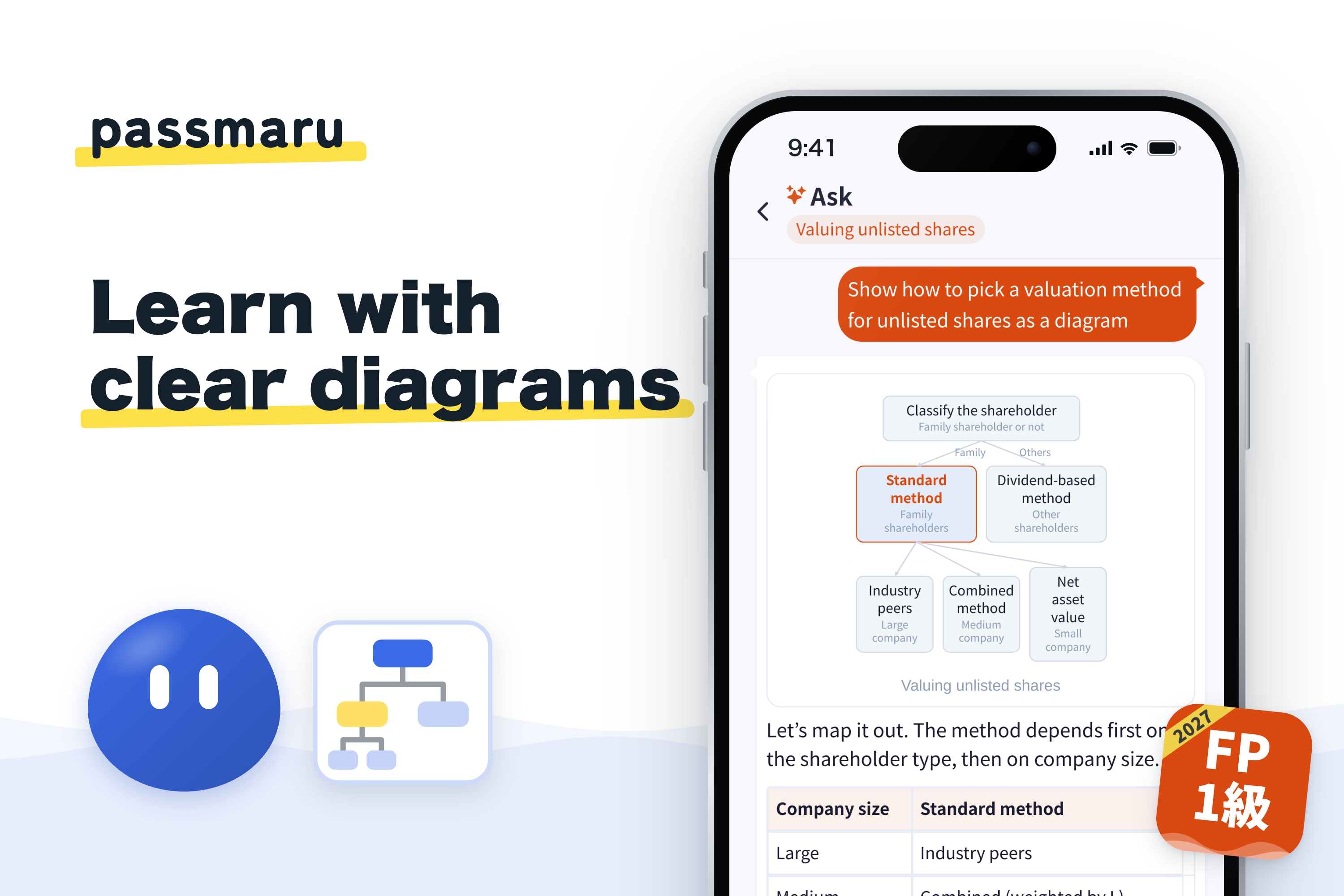
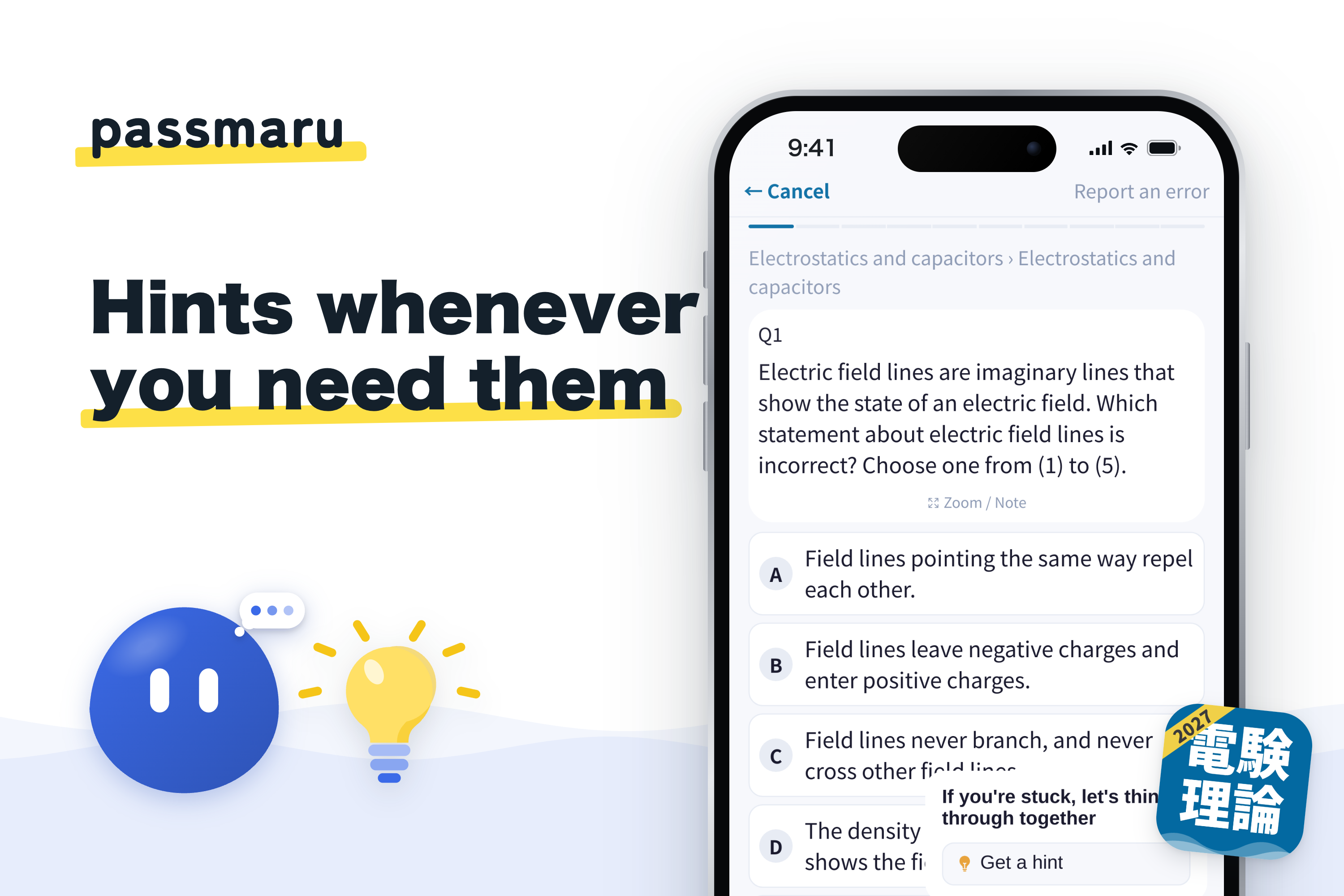
- Mochi bot. Ask Mochi, the tutor, "show me the intermediate steps" or "how is this different from the similar rule?" right on the question. It knows the question and your answer, and grounds its replies in primary sources — official texts and regulations — instead of guessing.
- Content quality first. A full explanation for every question and step-by-step math for calculation problems, checked by people who hold the certification, with diagrams and layouts that stay consistent across every exam.
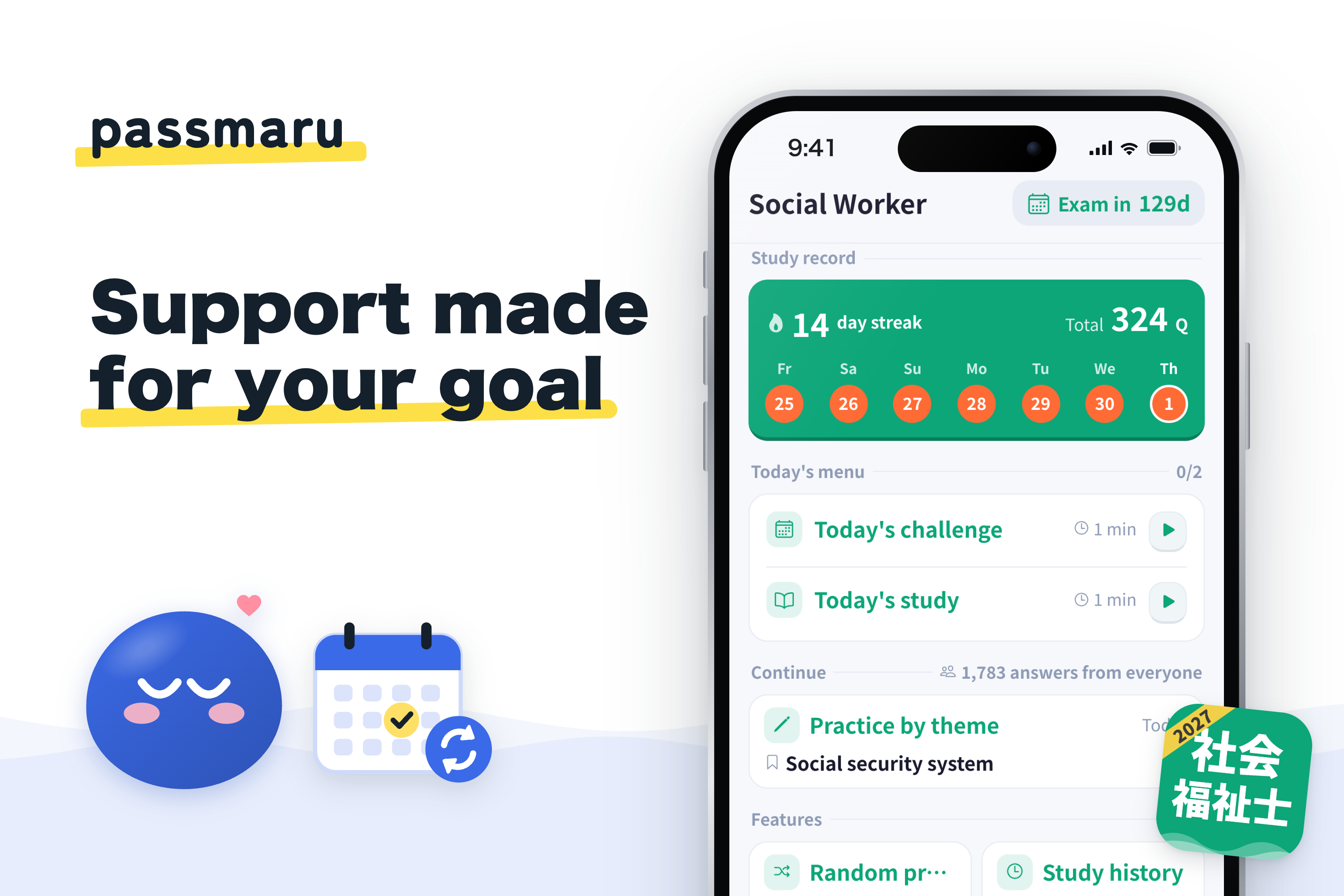
- Personalized learning for each user. Weak-spot detection and spaced repetition (FSRS) bring missed questions back first, and daily goals keep you going through a months-long study period.
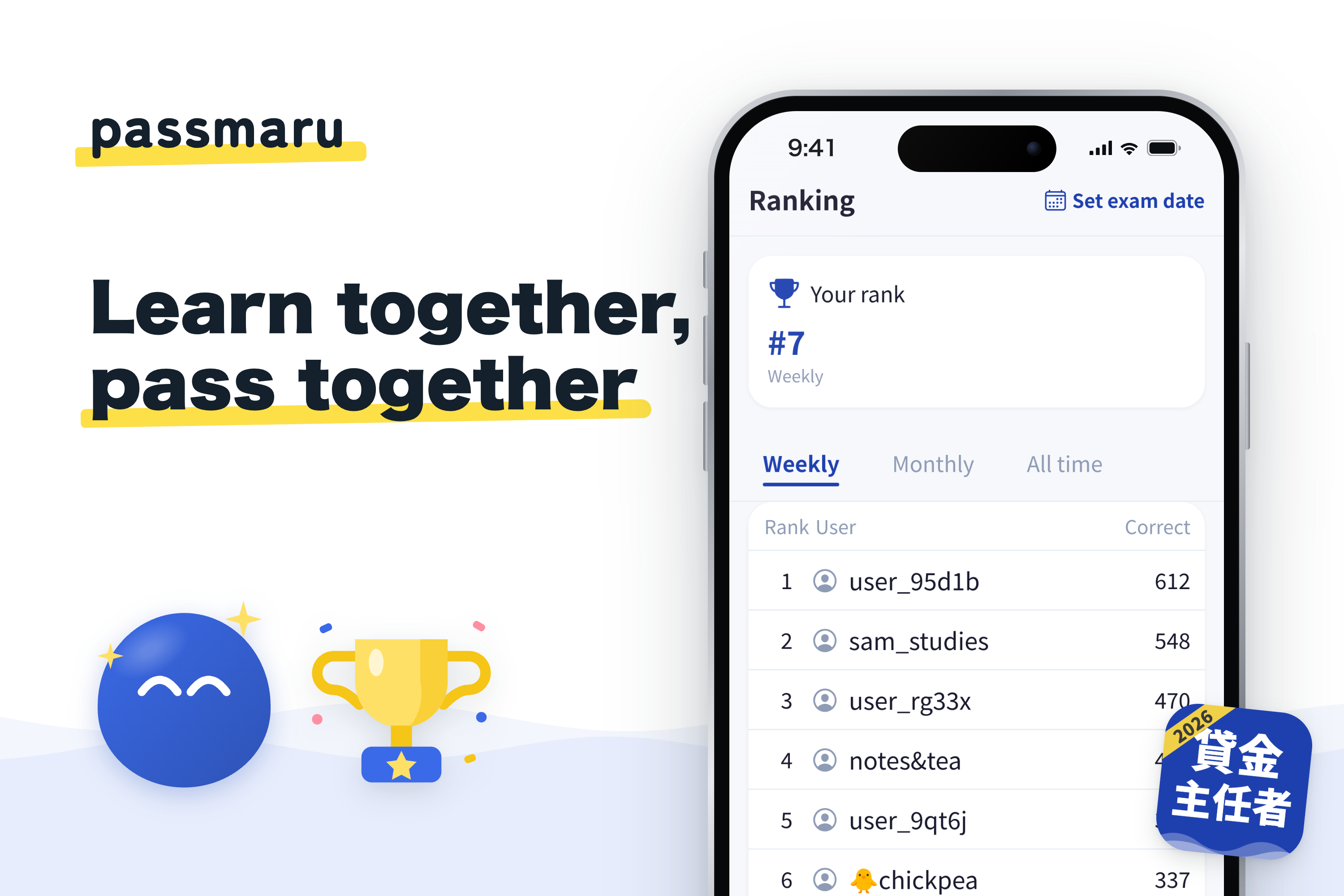
- Collective optimization. Passmaru is a study partner for certifications in every industry. It learns from you and from everyone studying with you: better questions, review packs, popular topics, community and accuracy rates.
How we built it
- React Native (Expo) / TypeScript: One codebase for iOS and Android, organized with clean architecture inside the repository. A solo developer has to ship to both stores, and TypeScript's types catch mistakes across dozens of apps generated from one catalog. Clean architecture keeps exam logic apart from UI and infrastructure, so every exam reuses the same core and AI agents work within clear boundaries. Expo's EAS builds and over-the-air updates get fixes to users quickly.
- Supabase (Postgres + Edge Functions): Progress, spaced-repetition state and the AI tutor. A relational database, auth and server functions in one managed service — a backend one person can run.
- Cloudflare R2: Explanation images and media. S3-compatible with no egress fees, so serving diagrams to every learner stays cheap.
- RevenueCat: Subscriptions across every exam app. One offering shared by every app means a new exam is monetized the moment it ships, entitlements stay in sync across iOS and Android, and Charts show pricing results before changes roll out.
- Google AdMob: Ads for free users. Rewarded ads let free users earn extra AI-tutor messages, so ads support learning instead of only interrupting it.
Challenges we ran into
- Content quality. Exam questions are only useful if they're right. I asked people who actually hold each certification to review the questions, and built my own workflow and pipeline so that review findings turn into fixes quickly and repeatedly.
- The quality of the AI model. A general-purpose AI model can sound confident and still be wrong. I added retrieval-augmented generation (RAG) so the tutor answers from the original sources — laws, regulations and the examining body's own materials — rather than from memory.
- Converting at the paywall. Showing the paywall at the wrong moment drives learners away. I used event logs to test when to show it, and began presenting the plan that fits each learner's exam and study period — which raised the share of learners who subscribe.
Accomplishments that we're proud of
- Key numbers (15 earning apps launched Aug 1 – Sep 30, 2026; iOS + Android)
- 1,540 learners
- 72 paying users
- 8.8% of users who saw the paywall bought
- 0 refunds
- No paid ads
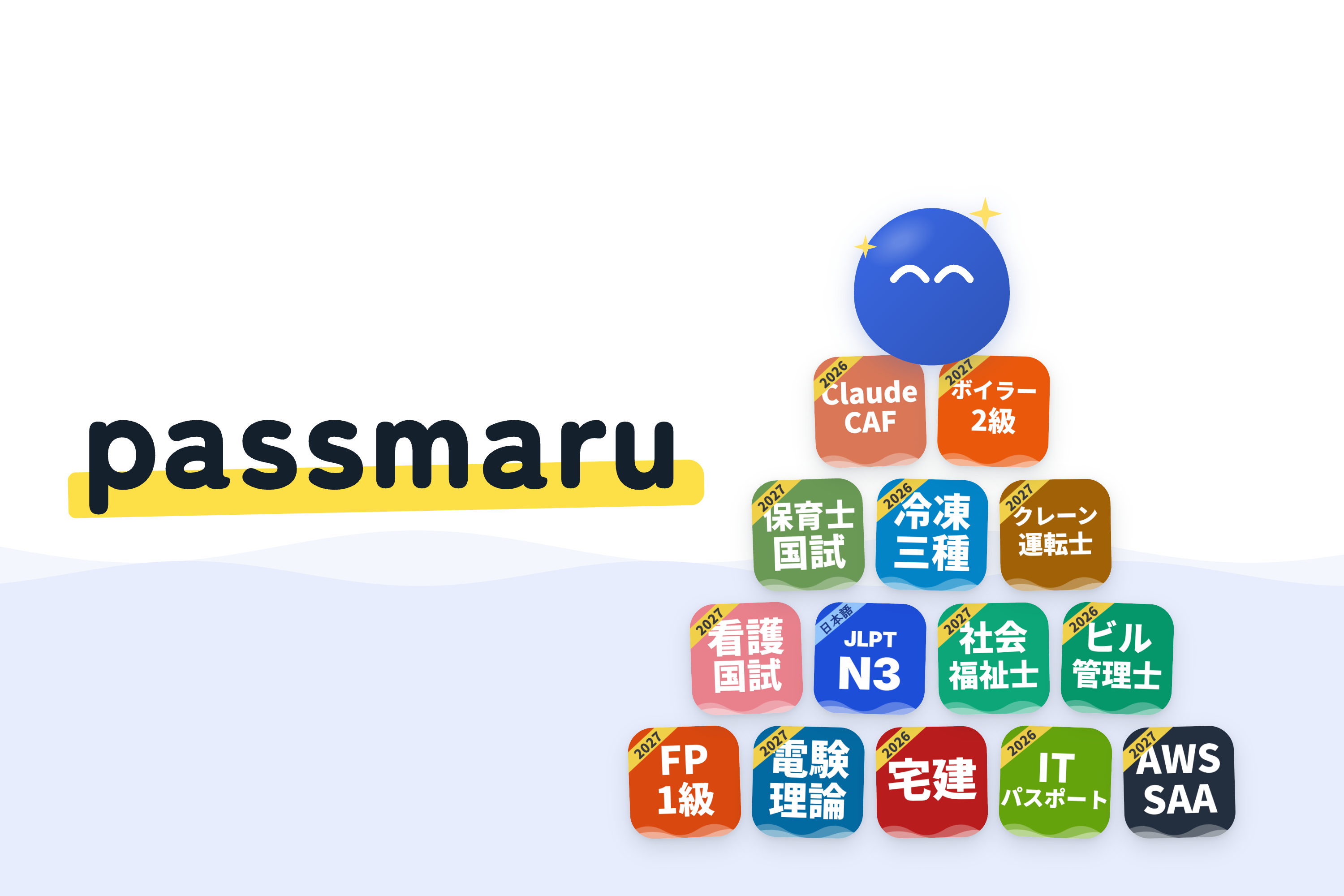
- Widened the product's surface area. 15 earning exam apps launched Aug 1 – Sep 30 on the App Store and Google Play, all from one foundation. One app per certification means examinees find us whichever exam they search for.
- An improvement loop that runs every day. Event logs and an in-app feedback box turn real usage into fixes. I've committed to the codebase every single day for 124 days straight — 8,800+ commits in total, including 800+ fixes — so feedback becomes an improvement within days, not release cycles.
What we learned
- Speed vs. quality. Agents made building fast, but balancing that speed with the quality of the UI and content is still the hard part.
- Real signals beat opinions. User feedback and usage data are the best evidence for what to improve — and as event logs accumulate, working with agents gets better too, because hypotheses get sharper.
- The Pareto principle needs volume. A small share of experiments drives most of the results, but you can't know which ones in advance. The only way to find them is to run enough of them.
What's next for Passmaru
- More reliable questions. Deeper reviews by certified professionals.
- Growing the brand. Build Passmaru into a name examinees recognize and trust.
- Content marketing. Short videos and posts on social media.
- More industries. Bring certifications from more industries onto the same foundation.
- Going global. Expand to certifications outside Japan.
Passmaru started as the study partner I wished I'd had.
This project period, August and September, was a validation phase, and Passmaru is still growing. The goal is to be that partner for anyone, in any industry and in any country, who has an exam between them and the work they want to do.
Built With
- gemini
- google-admob
- google-sign-in
- postgresql
- react-native
- revenuecat
- sign-in-with-apple
- sqlite
- supabase
- typescript

