Inspiration
Every new BMW starts as a sketch and ends as a clay model. Before a design is approved, it goes through several rounds of physical models, and a single full-size clay model costs around \$250000+ and weeks of milling. Every new idea means another model and more waiting, in a design phase that BMW wants to cut from nine to seven months.
What struck us during the BMW challenge: designers don't want to give up clay. As Ford's design director put it, designers "still end up in full-size clay", because only a physical model shows the car the way a customer sees it. So instead of replacing the clay model, we asked: what if one clay model could show any number of variants, and the whole team could review them together?
What it does
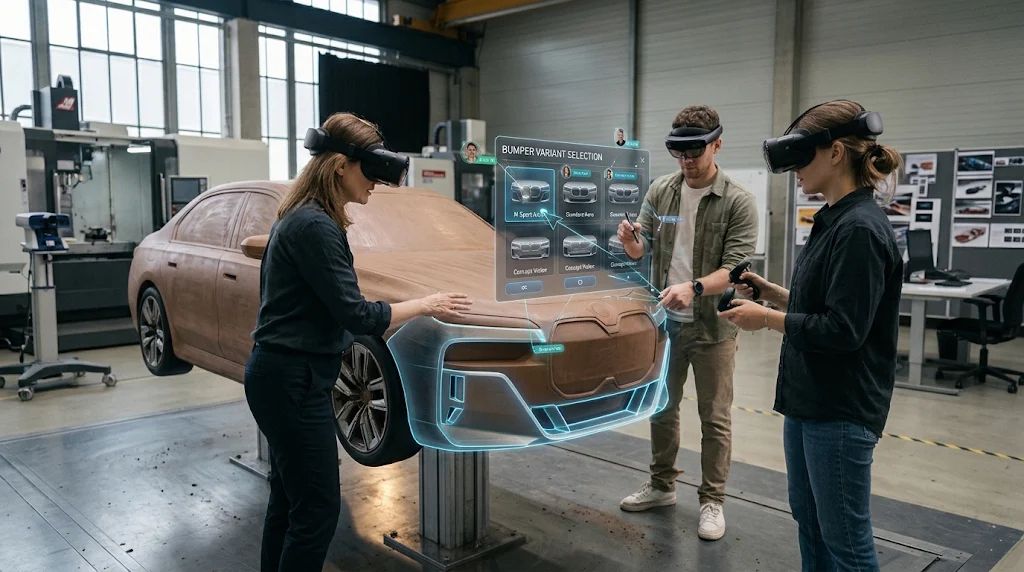
Our Application turns one physical model into a canvas for many design variants, reviewed together in mixed reality on Meta Quest 3.
Meet Anni, an exterior designer at BMW. She has a new idea for the bumper, but she doesn't want to wait three weeks for a new clay model. With our application:
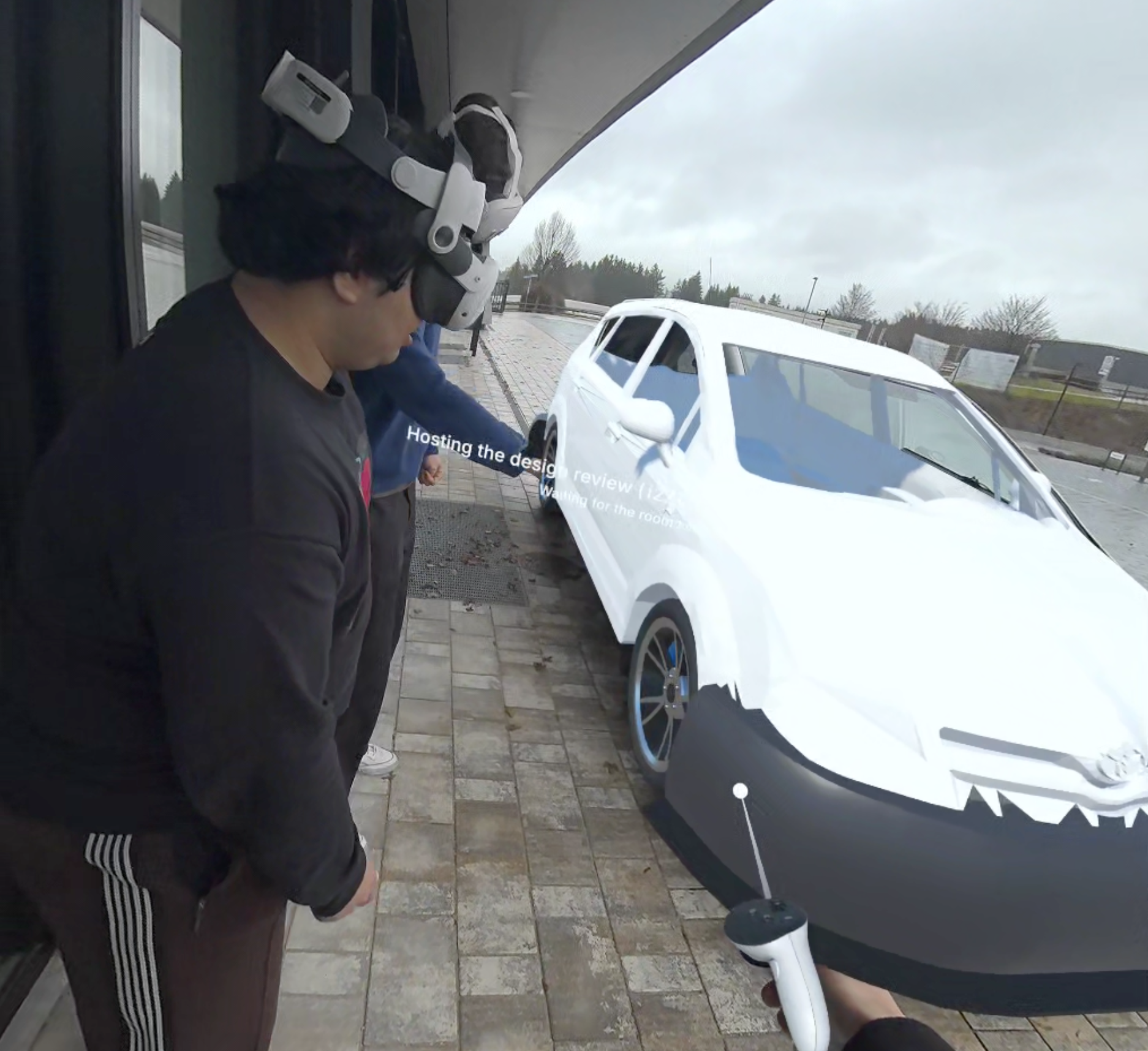
- She puts on her Quest 3 and anchors the digital twin precisely on the physical model.
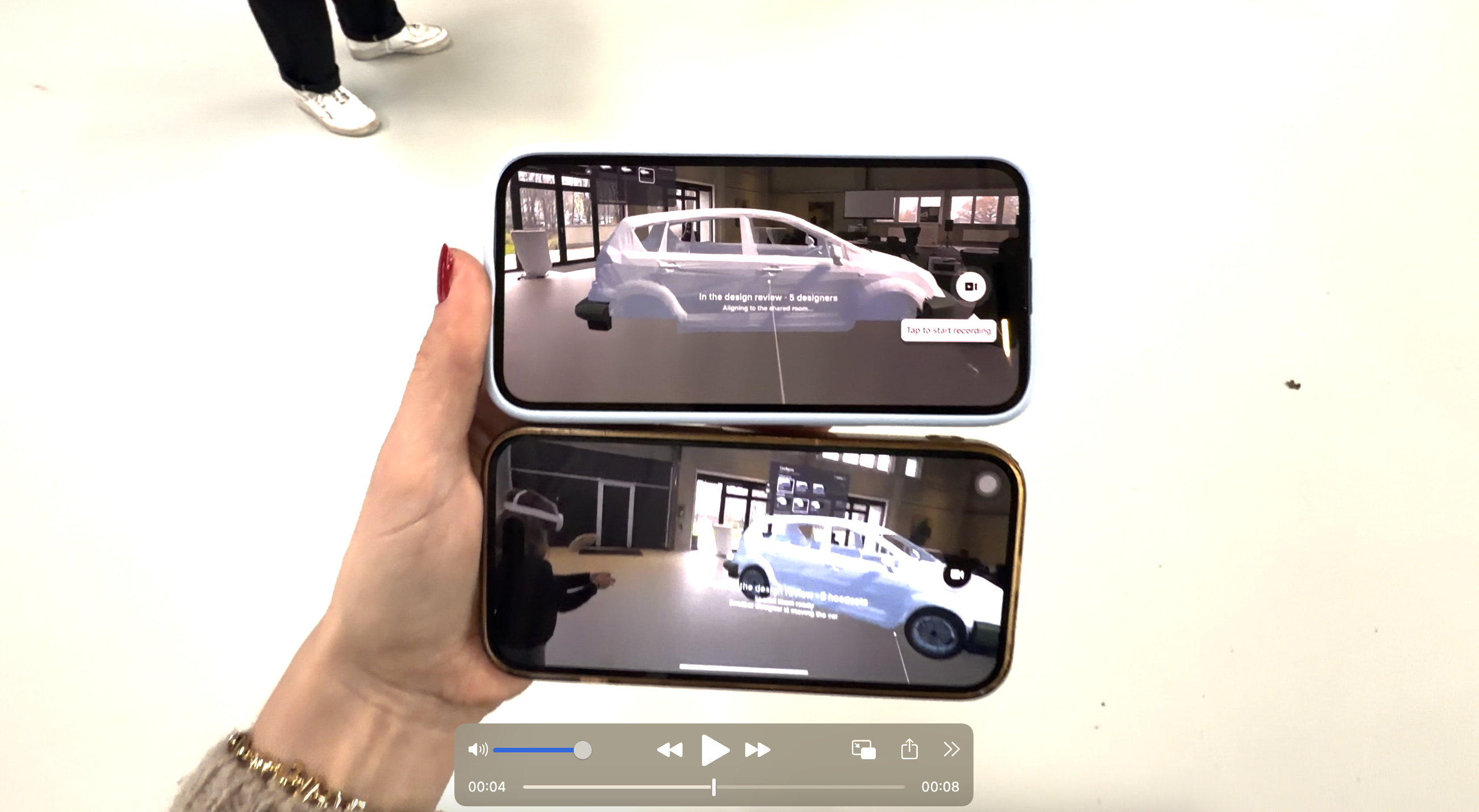
- She invites her coworkers, who join the same mixed reality space and see the model from their own position.
- She switches between bumper variants, right on the real object, while everyone walks around the car.
- The team votes, and the decision and the time it took are logged.
In our tests, teams reached a decision on three variants in minutes, instead of waiting weeks for new physical models.
How we built it
- Platform: Unity 6 on Meta Quest 3, with the Meta XR SDK's building blocks for passthrough and controller tracking.
- Digital twin: a full-size car model (glTF) aligned with the physical model and locked in place with Meta spatial anchors.
- Multi-user: headsets in the same room find each other over local Wi-Fi and connect with Unity Netcode for GameObjects.
- Shared space: a shared spatial anchor gives every headset the same coordinate frame, so everyone sees the overlay on the same physical spot.
- Review: a moderator switches part variants (bumpers, wheels, grilles, spoilers) on a shared review screen, generated from a data-driven part catalog.
- Laptop view: people without a headset can follow the review on a laptop.
- Testing: 31 manual test cases tracked by sprint on a GitHub board, plus automated Unity smoke tests before each build.
Challenges we ran into
- Multi-user setup: Getting two headsets to share the same space was the hardest part. We needed external help to make it work.
- Height of the car: Placing the virtual car at exactly the right height was tricky. Without it, the overlay does not line up with the physical model.
- User interface: At first, the text on the bumper selection was too far away to read. We moved it closer and made it readable.
Accomplishments that we're proud of
- Multi-user setup: three people can now review the same variant at the same time, in the same space, even though this was the hardest part of the project to get working.
- Anchoring virtual on physical: The digital twin lines up with the physical model, so the virtual variants appear right on the real object.
- Team spirit: We stayed focused and supported each other through three intense days, from the first idea to a working prototype on the Quest.
What we learned
- Clay isn't going away, and it shouldn't. The real value of XR is reducing the extra models, not replacing the final one.
- Good technology isn't enough: a design review needs a clear process around it, covering who moderates, who sees what and how the team decides.
- Technical learnings: how to set up a multi-user setup and how to create an MR solution
What's next for Mixed reality design review for BMW
- Use BMW assets and not David's car
- Run a Pilot project inside BMW
- enable remote collaboration
- Scale it into whole production
How we used AI
AI log
We used AI tools to support our work in the following areas:
- C# scripts for Unity: writing and debugging scripts for the interactions in our prototype
- Video footage: creating and editing material for our demo video and trailer
- PowerPoint presentations: structuring and designing the slides for the intro and final pitch
- Business case and research: cost estimates, competitor research
Tools used: [ChatGPT, Claude, Gemini]
Built With
- canva
- capcut
- claude
- gemini
- github
- miro
- powerpoint
- unity
