Inspiration
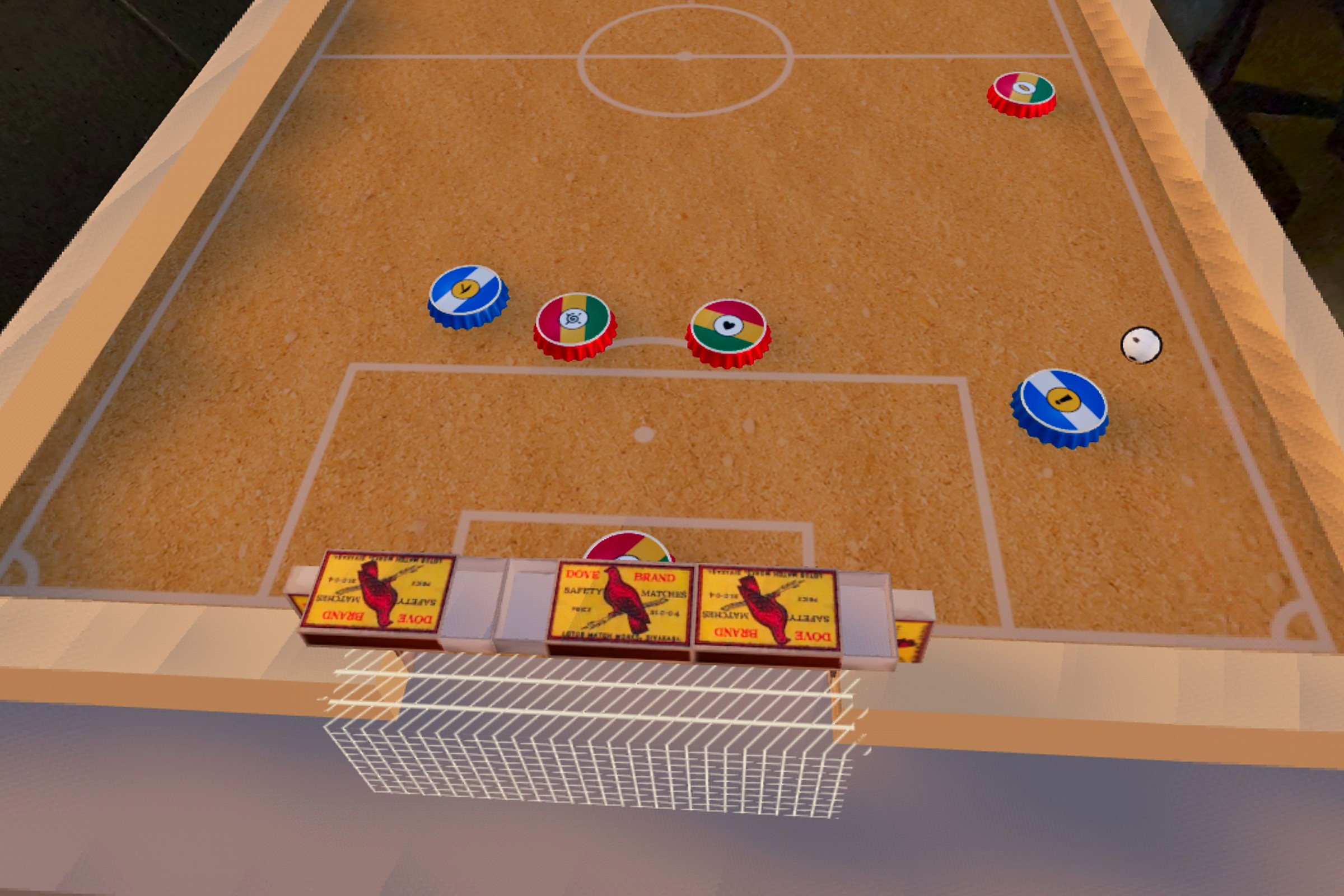
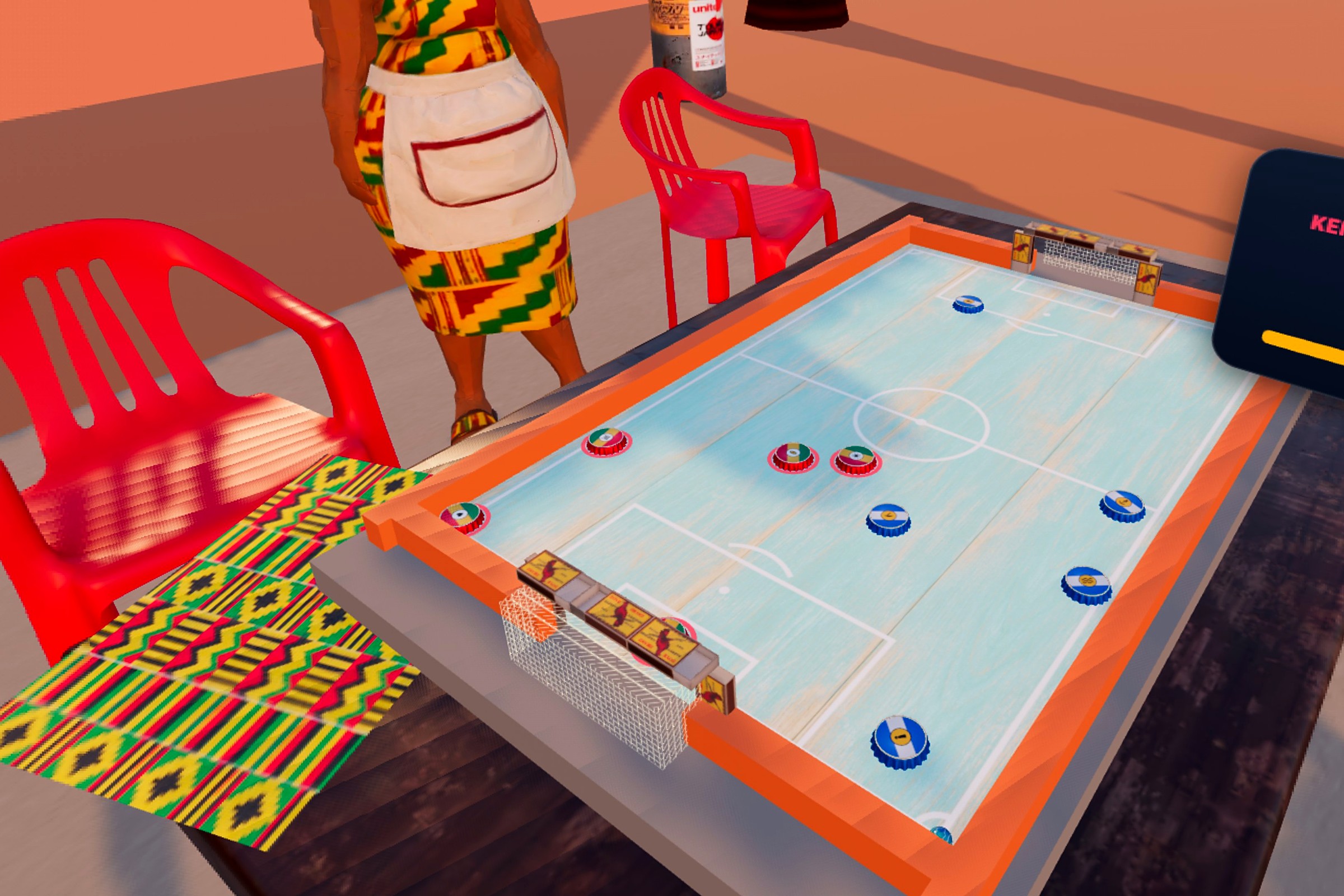
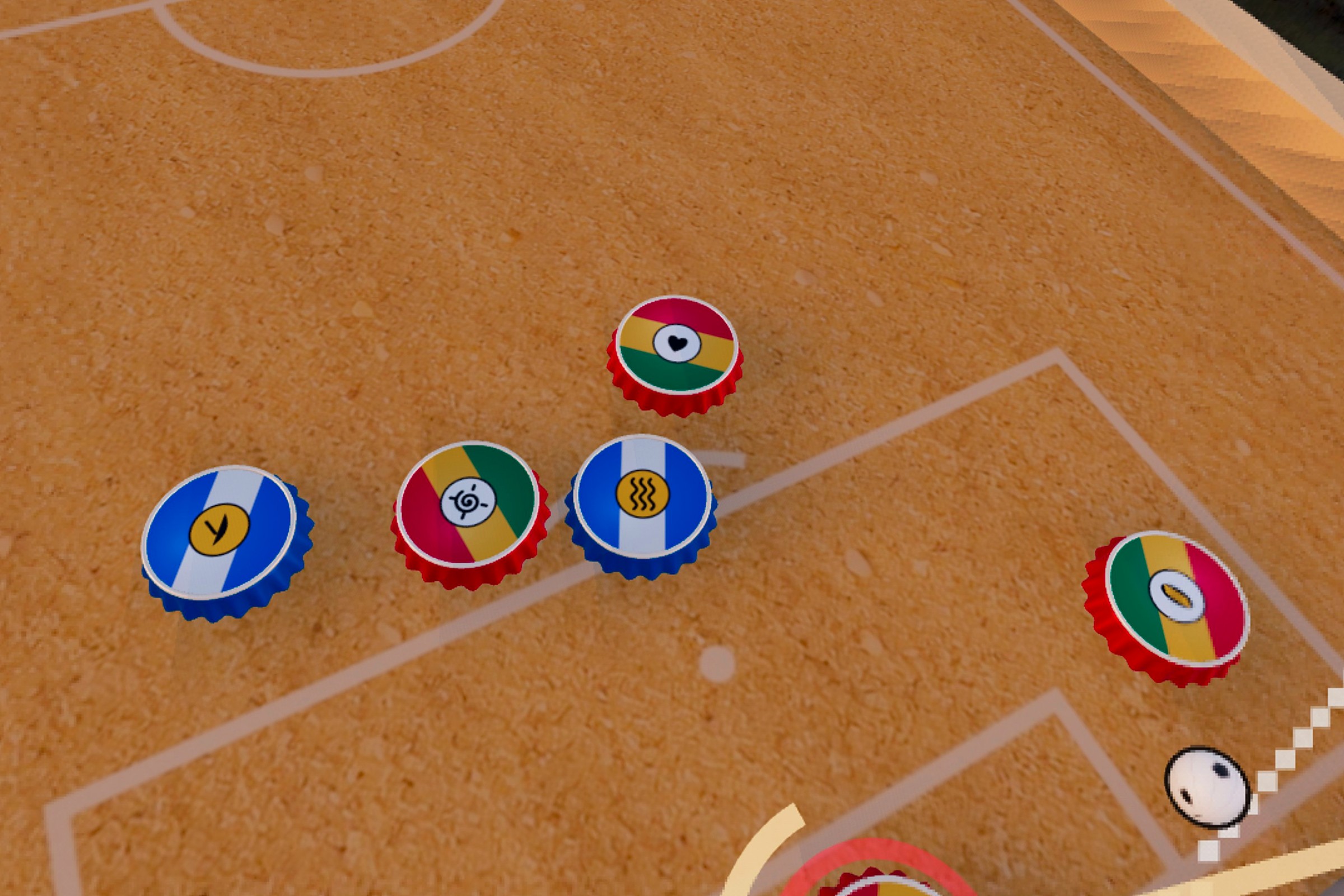
In Ghana, counters is football you play on a table. Two friends, a chalked pitch, a matchbox goal and bottle caps as players. You flick a cap, it clinks off another, the ball rolls in, and the whole street hears about it. It's one of the most social games I know, it needs nothing but your fingers, and almost nobody outside West Africa has played it.
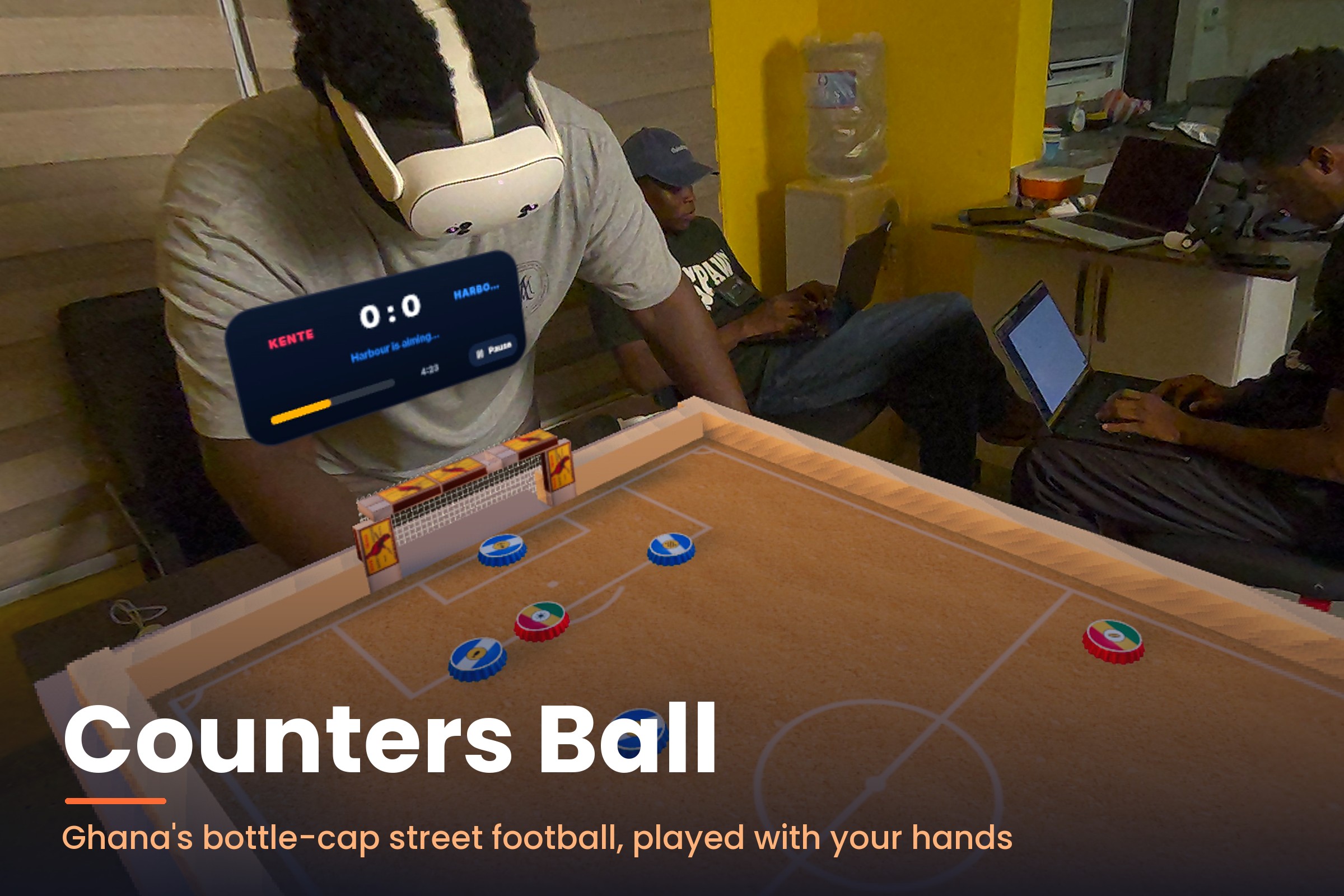
That made it a natural fit for hands-first VR. The real game is already played with a pinch and a flick, seated, in a space smaller than an airplane tray table. Mixed Reality Counters Ball brings it to Meta Quest so anyone can play it on their own table, against an AI, or with a friend across the world.
What it does
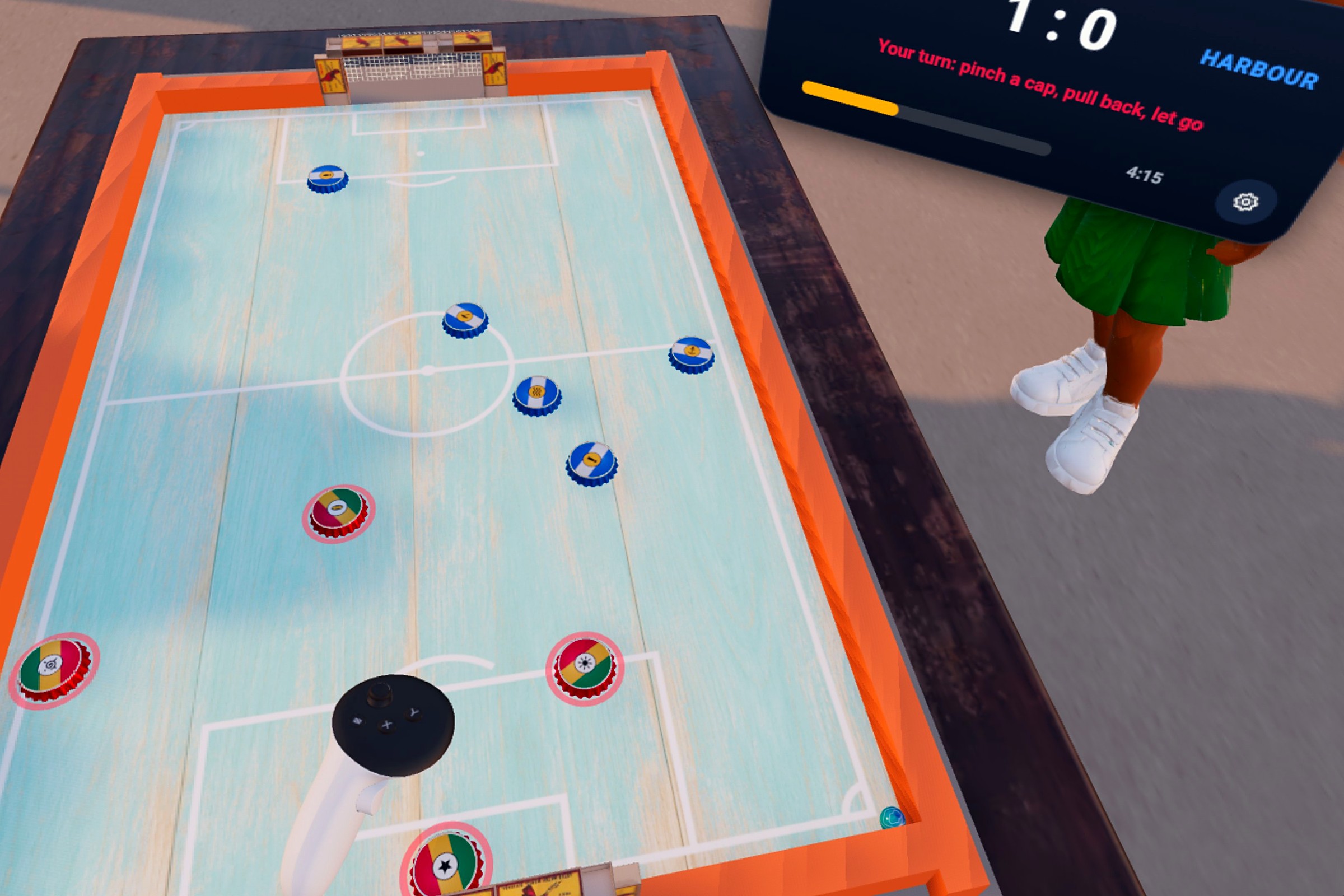
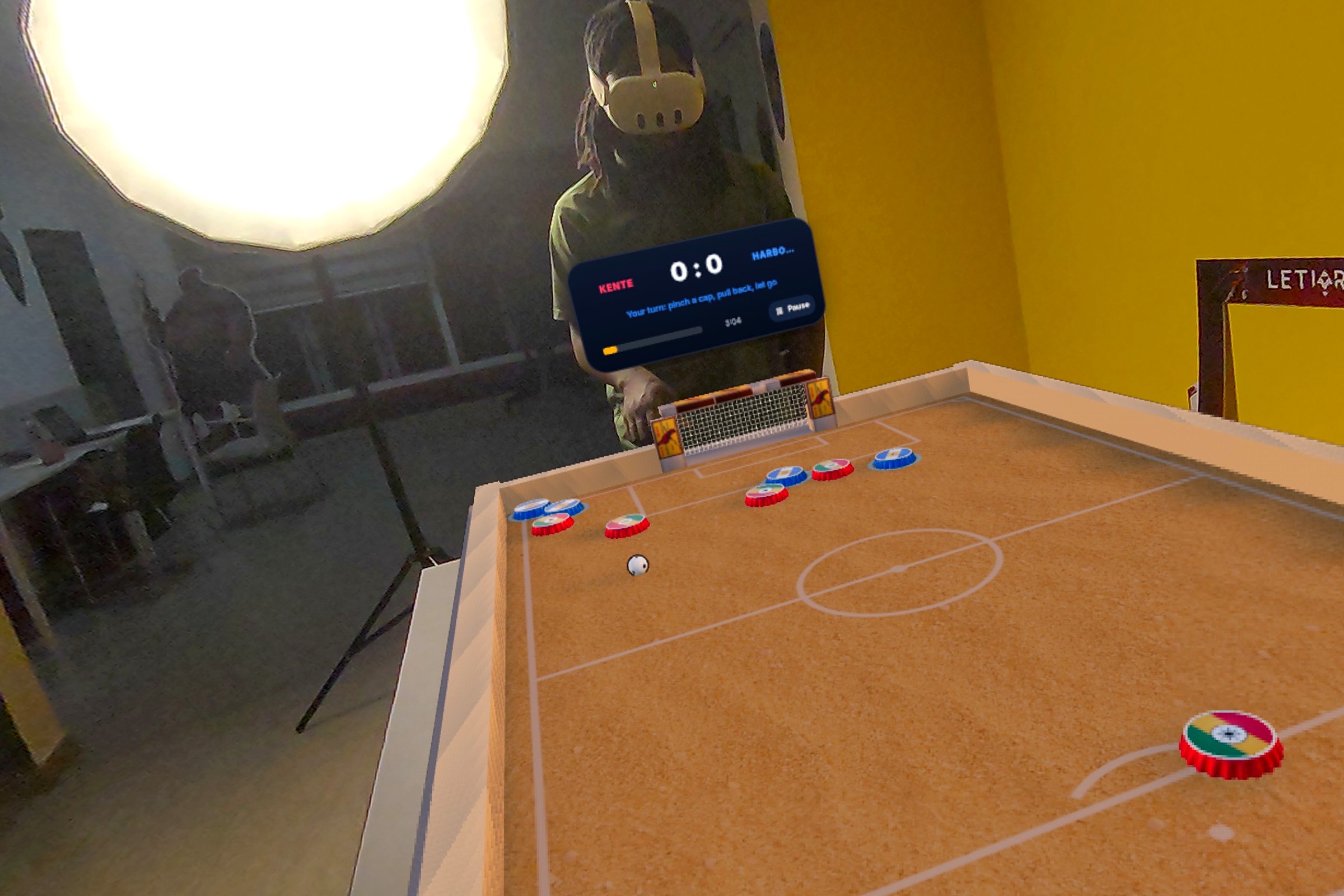
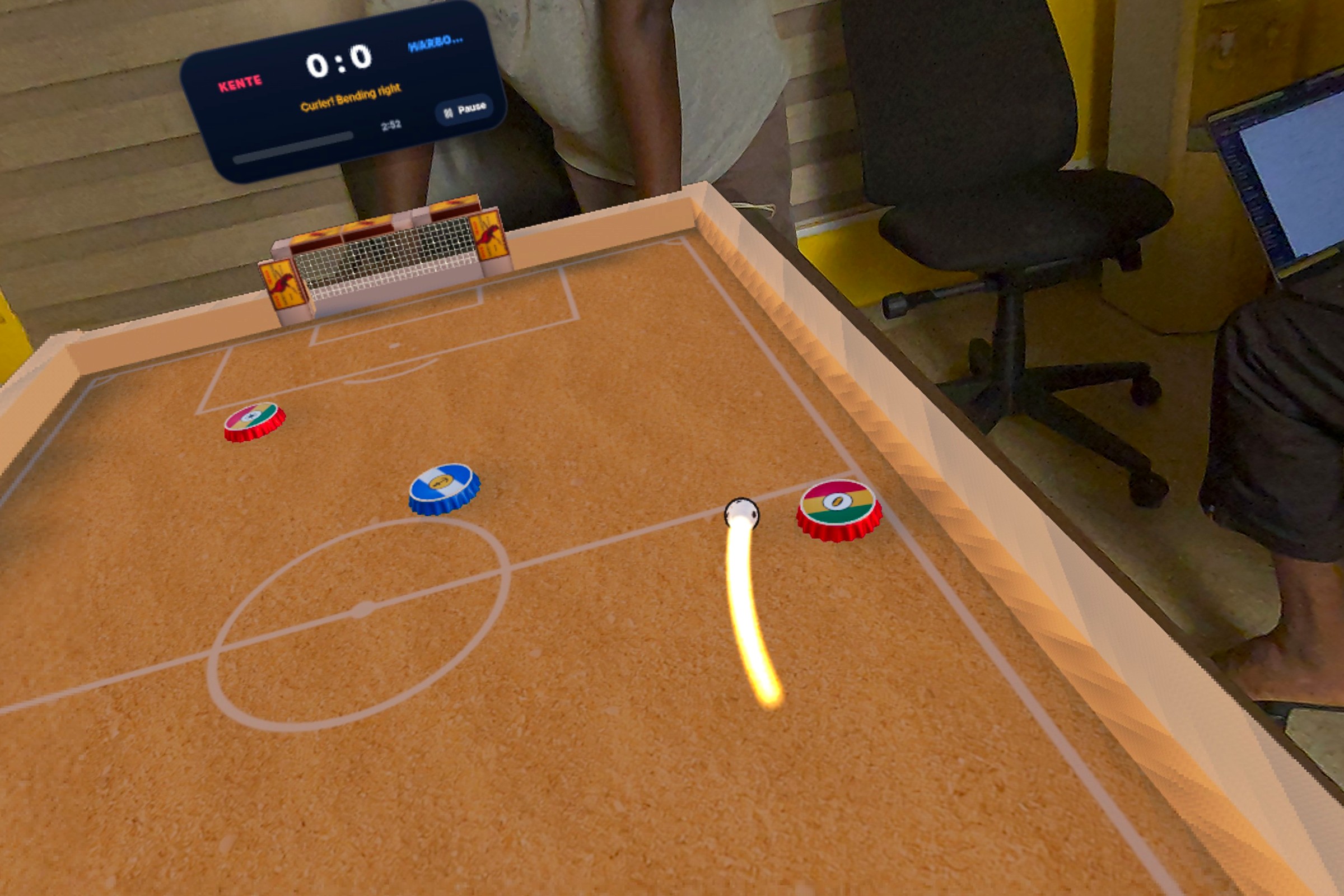
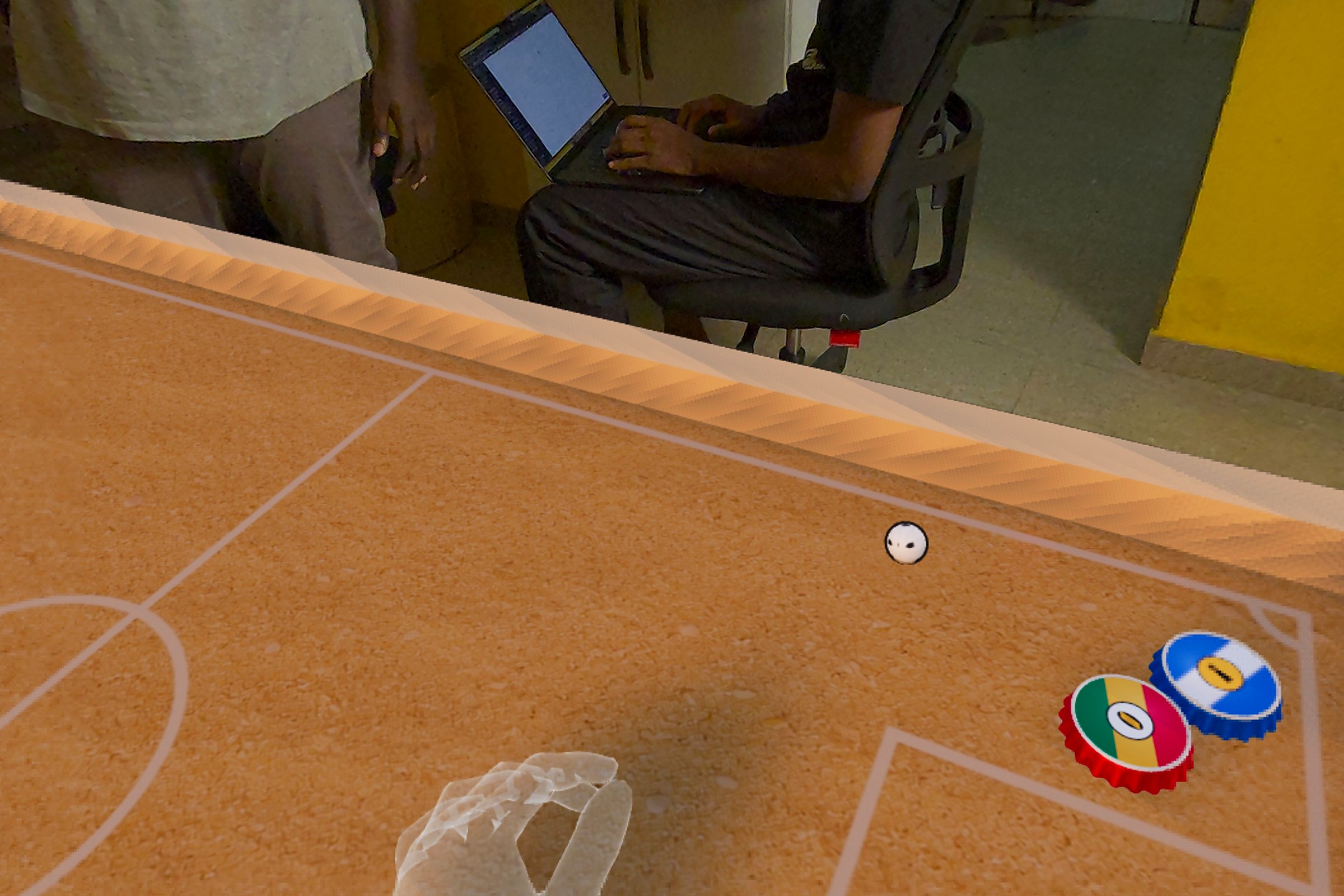
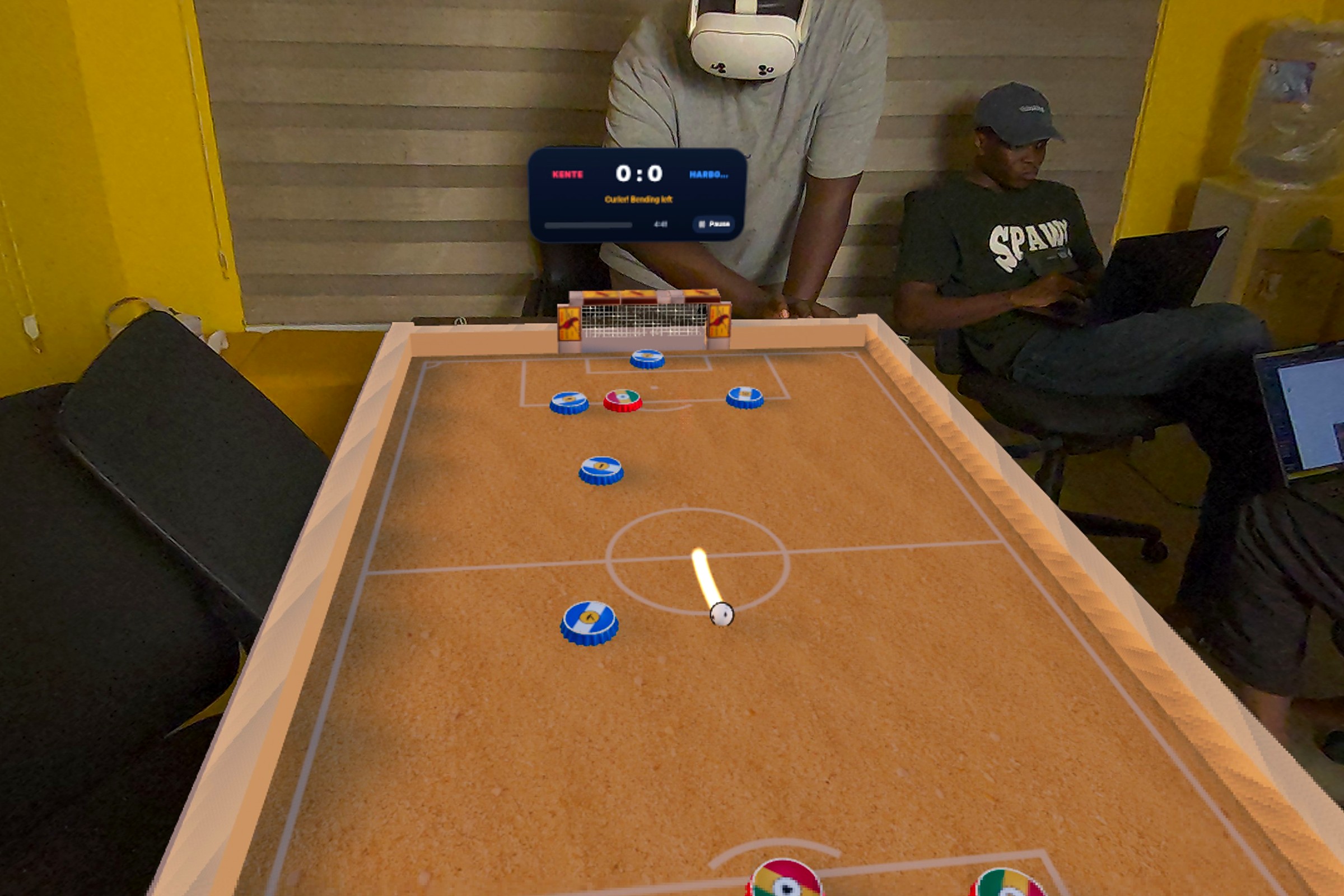
- Pinch, pull back, let go. Pinch next to one of your caps, pull your hand back to set the power, and release. An aim line shows exactly where the cap will go, bounces off the rails included.
- Curl: twist your wrist while you pull back, like turning a door handle, and the shot bends.
- Chip: lift your hand as you let go, and the ball pops over caps in the way.
- Three places to play, switched any time in one session:
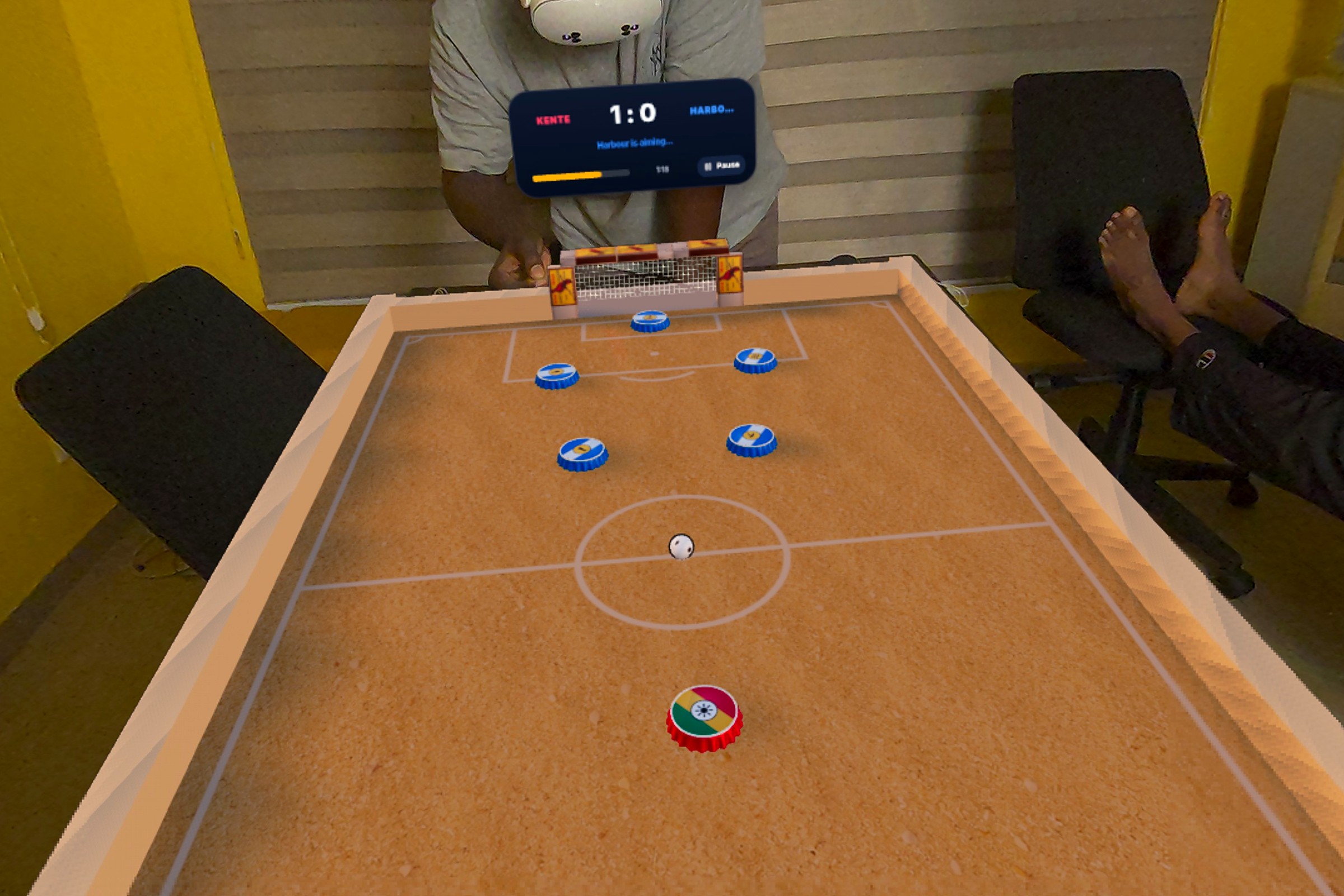
- On my table: point at your real table and pinch, and the pitch sits on it (passthrough).
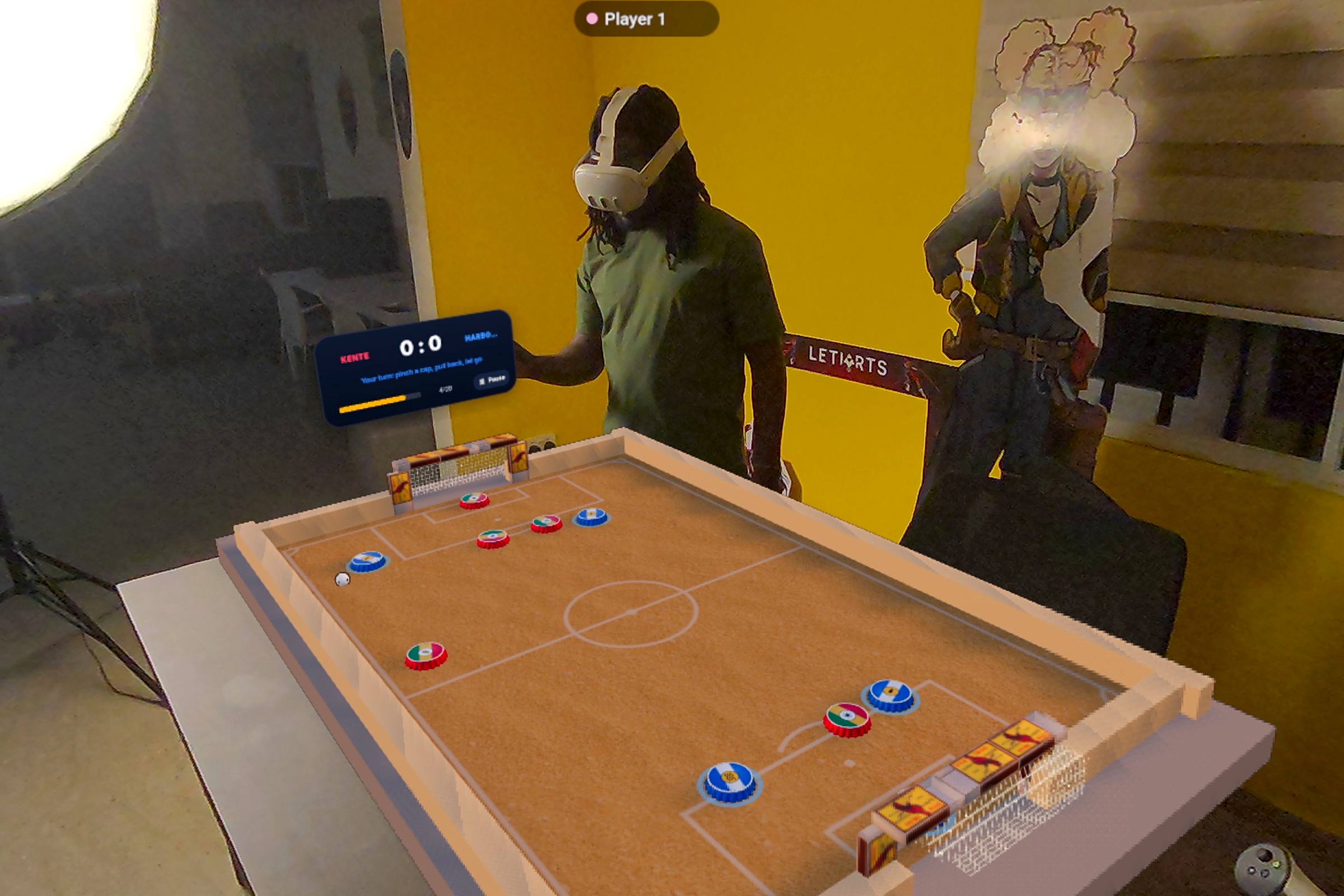
- Same room: friends in one room each touch the four corners of the same real table, and the pitch lands in the same place in every headset.
- In the street: an Accra street corner at golden hour, with a wooden table and red plastic chairs (VR).
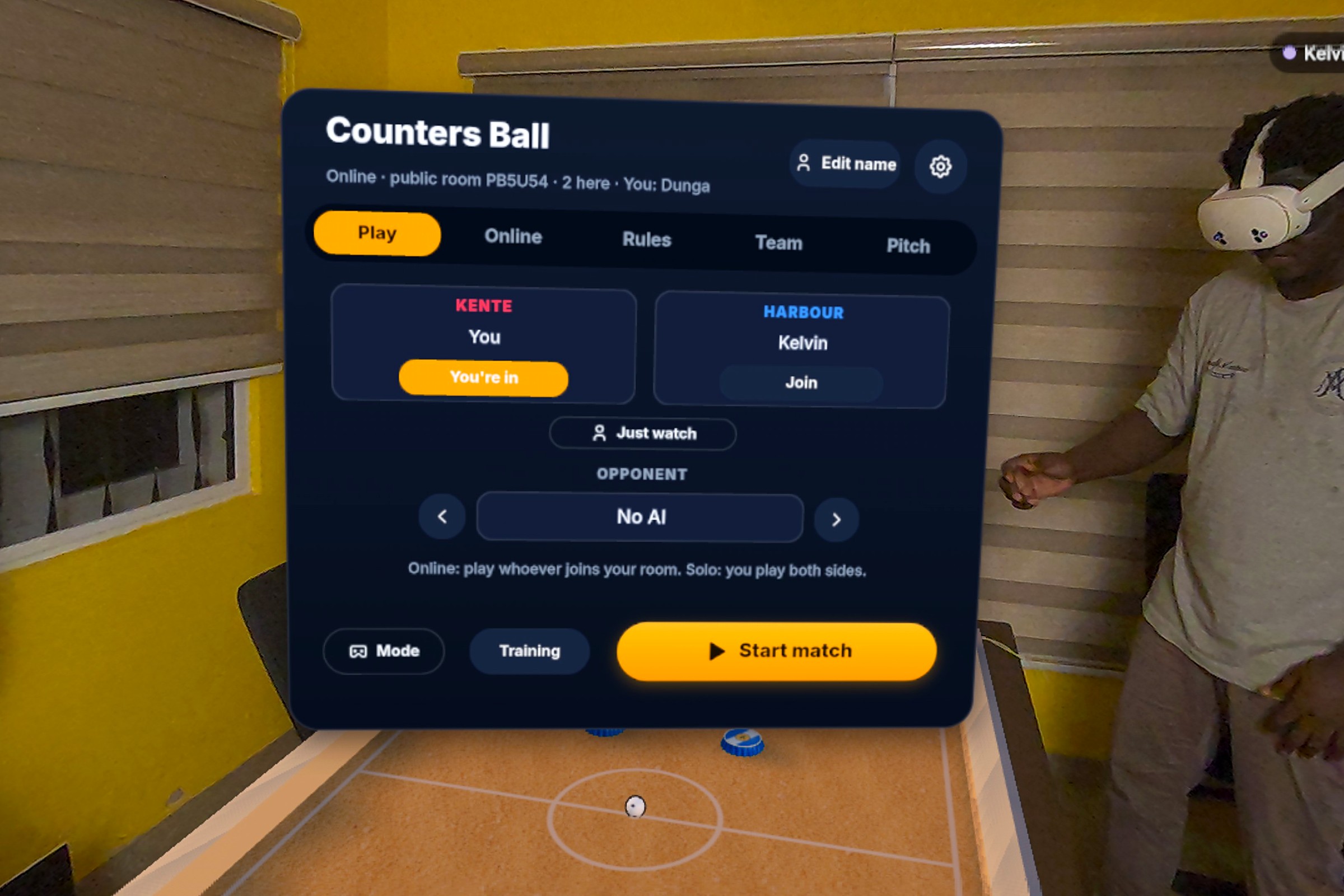
- Solo or together: AI opponents (Easy, Medium, Hard), hot-seat practice, or online Quick play and private room codes, 1v1 or 2v2, with voice chat. Other players appear with holographic hands that follow their real fingers, in their team's colours (Kente red, Harbour blue).
- A coach teaches the game in eight short lessons on a real pitch, each checked from your actual shots.
- Every goal gets a slow-motion replay on the pitch itself and a burst of confetti.
How I built it
I built Counters Ball in Relu Spatial, the WebXR game engine and editor I developed (three.js, physics, hand tracking, passthrough and multiplayer). The editor builds it as a webxr game and can package it as a Quest app as well. I started from a design document (vision, gameplay, world, art, audio and tech), then built the game as a set of scripts: the match and rules, the flick controller, the coach, online rooms, replays, effects, and how remote players' heads and hands look.
The room's host runs the physics, the rules and the AI. Everyone else sends requests and mirrors the shared state, so every headset sees the same match.
Challenges
- Making the aim line honest. If the line says the cap bounces off the rail and hits the ball, it has to. The rail bounce and the aim line now share the same rule. The speed along the rail is kept, and the speed into the rail comes back scaled by a restitution factor. Every shot goes where the line shows.
- Reading a flick from a hand. Telling a pinch from a pull, a wrist twist (curl) from a lift (chip), and a release from tracking noise took a lot of tuning on the headset.
- One real table, many headsets. In Same room, each player touches the table's corners in a set order (their end first). That order, not where they happen to stand, decides which end is theirs, so the pitch lands the same way round in every headset.
- Finding a game online without a room list. The multiplayer servers can't list rooms, so open rooms announce themselves in a shared lobby, and two Quick play players searching at once pair up instead of waiting on each other.
- Frame rate on a standalone headset. Each team's caps are drawn as one instanced mesh. The goal replay reuses the real pieces' geometry and materials, so a replay costs no more than the match.
What I learned
- Hands change the design. A gesture players already know (pinch, pull, flick) beats any button, and a coach that checks real shots teaches faster than any text.
- Mixed reality works best when the room matters. Playing on your own table, or leaning over the same real table with a friend, is the point of the game, not decoration.
- Small, honest feedback builds trust, like an aim line that never lies and a replay of the goal you just scored.
What's next
Tournaments and doubles modes, seasonal cap designs, rankings and friends lists, phone and desktop players joining the same rooms, and more street corners from across West Africa.
Built With
- colocation
- custom-game-engine
- hand-tracking
- meta-quest
- mixed-reality
- multiplayer
- passthrough
- rapier
- react
- relu-spatial-engine
- reluspatial
- three.js
- typescript
- webxr


