Inspiration
Mix & Match started from a simple observation: people often own plenty of clothes, but still feel like they have nothing to wear.
Most outfit inspiration platforms are good at showing new styles, but they do not understand what is actually inside a user's wardrobe. At the same time, wardrobe apps often focus on cataloguing clothes without helping users decide how to combine them.
We wanted to bridge that gap by creating a personal styling platform that helps users make better use of the clothes they already own, discover new combinations, and build a clearer understanding of their personal style.
What it does
Mix & Match is a personal wardrobe and outfit styling application that combines wardrobe management, fashion discovery, and intelligent outfit recommendations.
Users can:
- Build and manage a digital wardrobe.
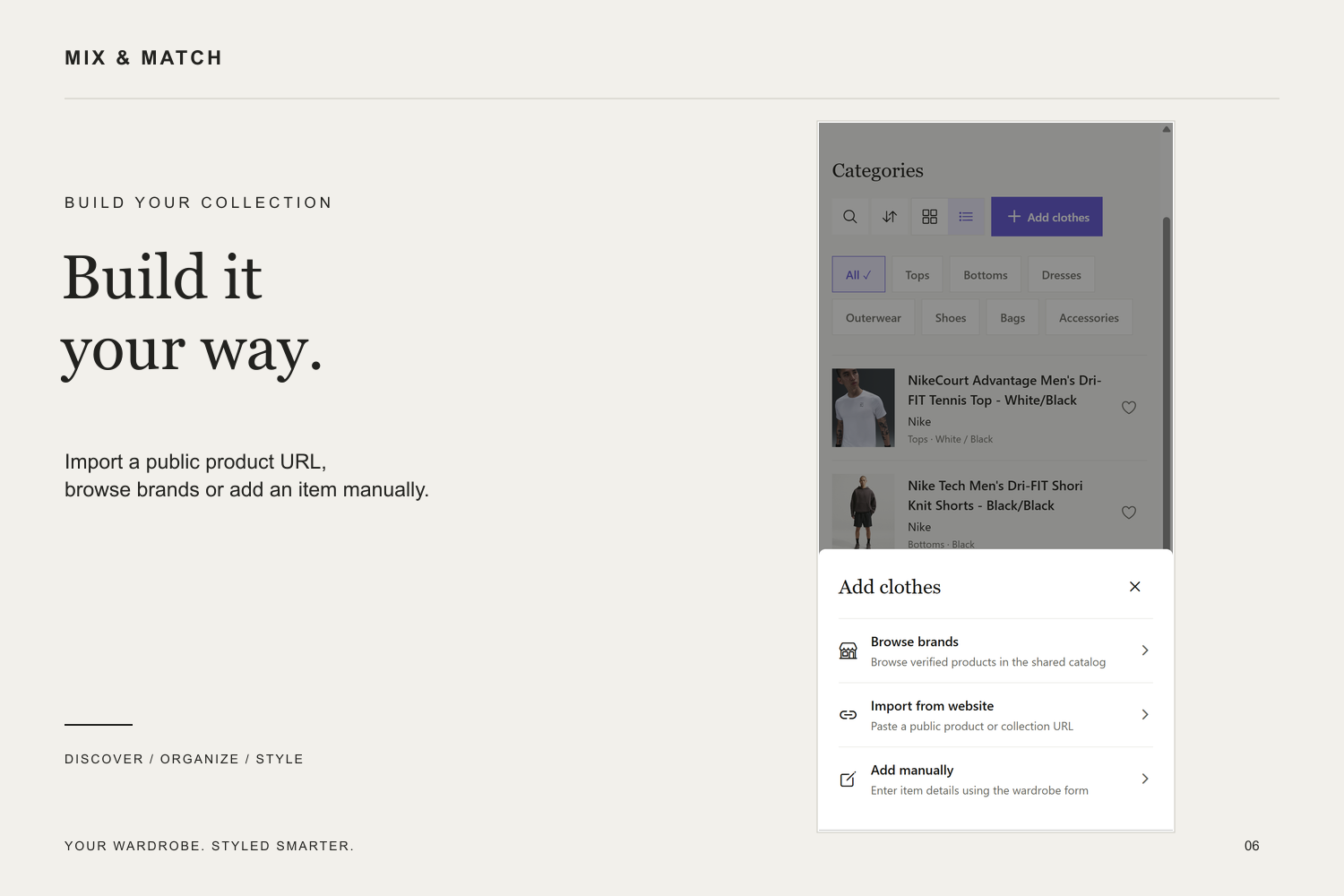
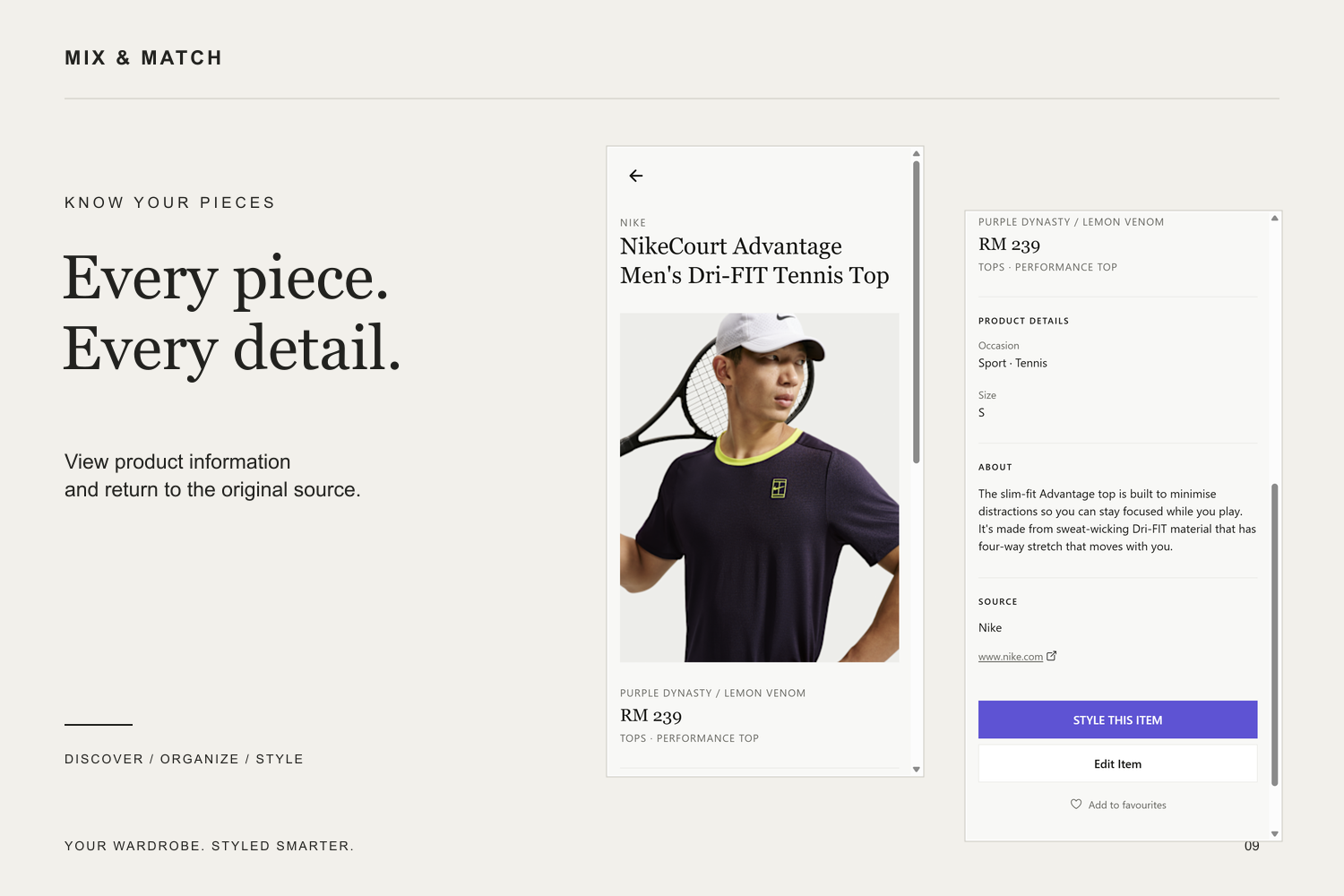
- Add clothes manually or import supported products from websites.
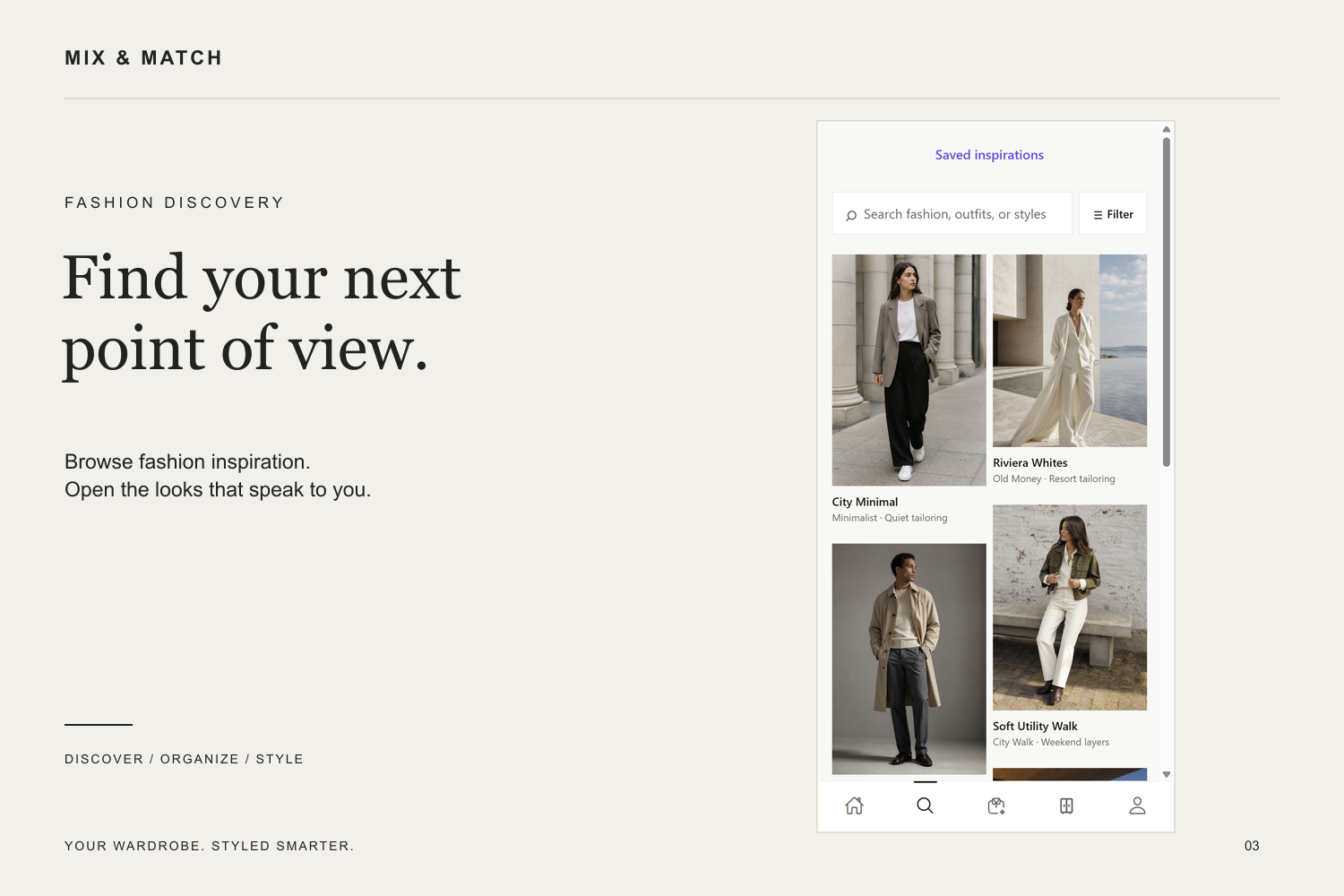
- Browse fashion inspiration through a Pinterest-style Explore experience.
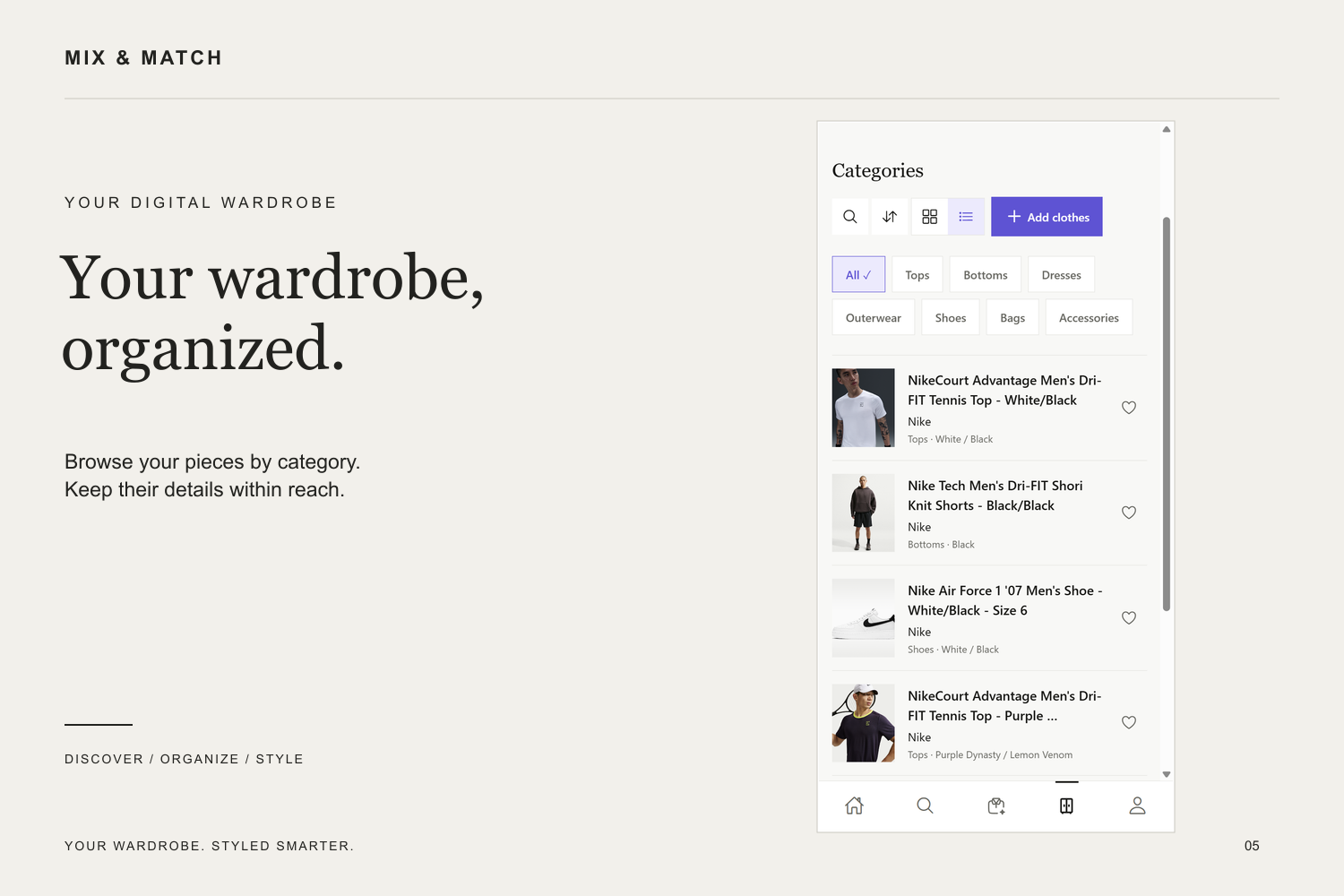
- Organize clothes by category, brand, material, season, occasion, and other attributes.
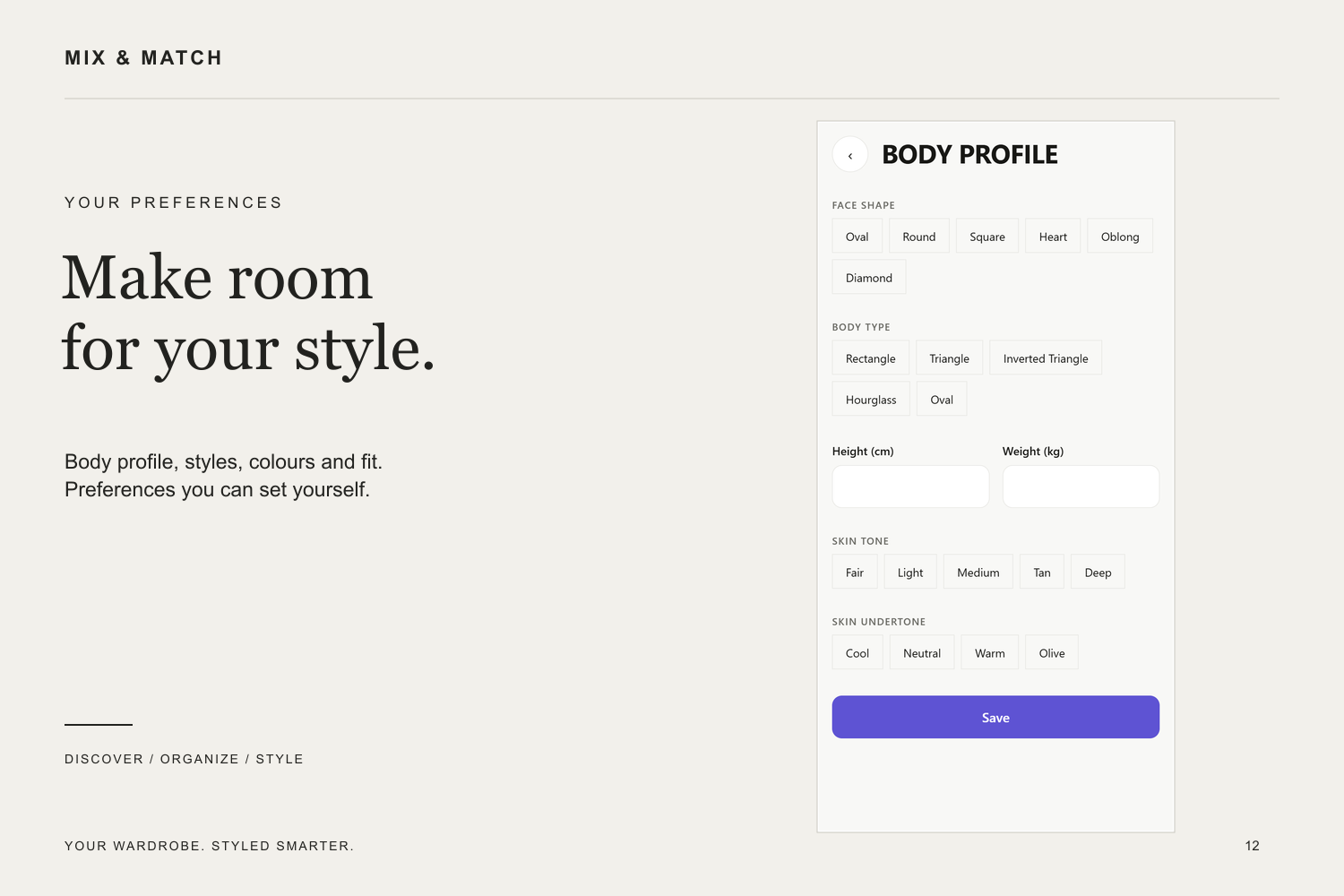
- Build a personal style profile based on preferences, body information, colors, fit, and occasions.
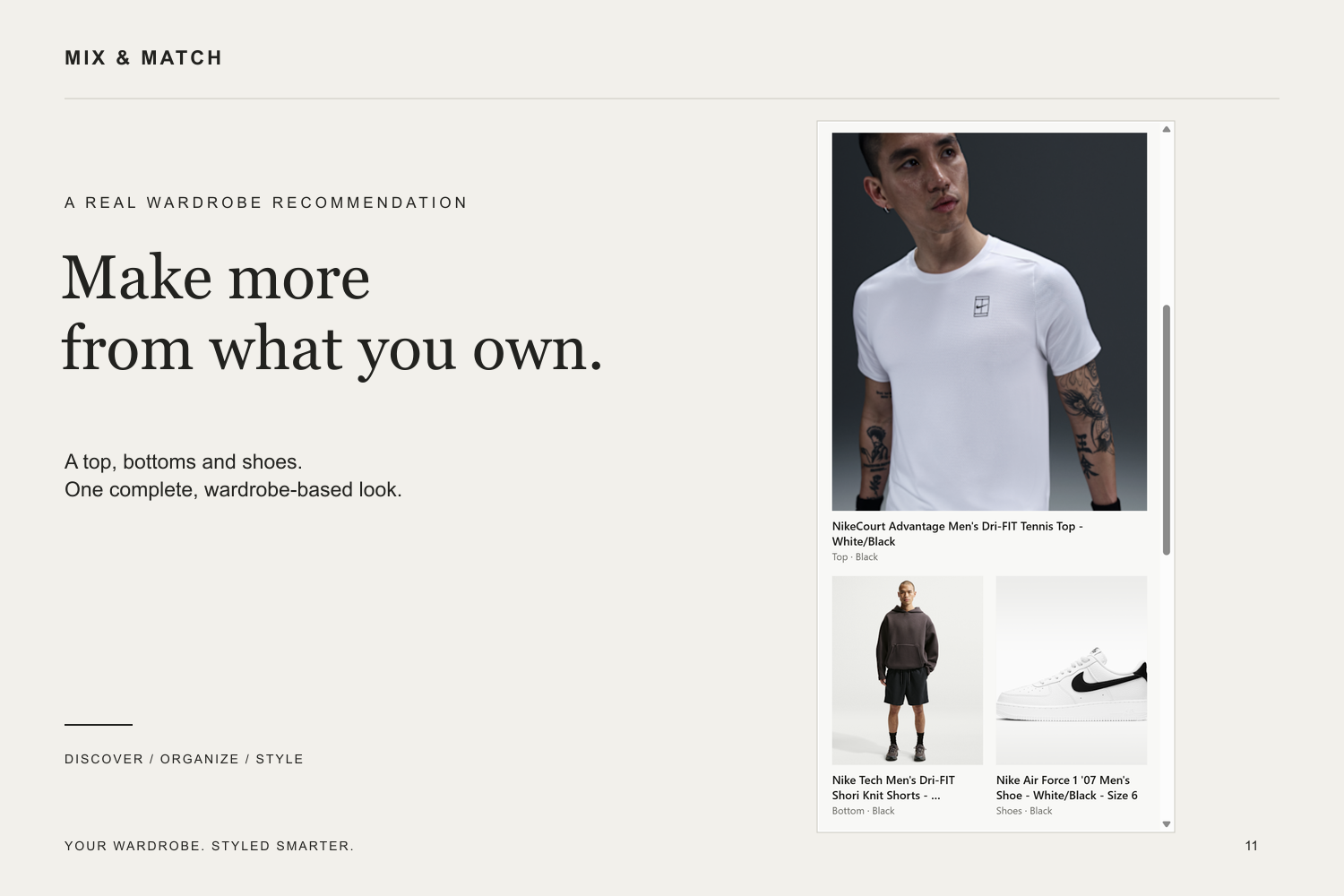
- Receive outfit recommendations using the Mix & Match Styling Engine.
- Discover combinations using clothes they already own instead of constantly buying new pieces.
- Save outfits and keep track of their styling history.
The long-term vision is for Mix & Match to become a personal fashion assistant that understands both the user's wardrobe and personal preferences well enough to answer one question: “What should I wear today?”
How we built it
Mix & Match was built primarily with React Native, Expo, and TypeScript, allowing us to develop a mobile-first application while maintaining a reusable and scalable codebase.
We use Supabase for backend services including authentication, PostgreSQL database storage, and user-related wardrobe data.
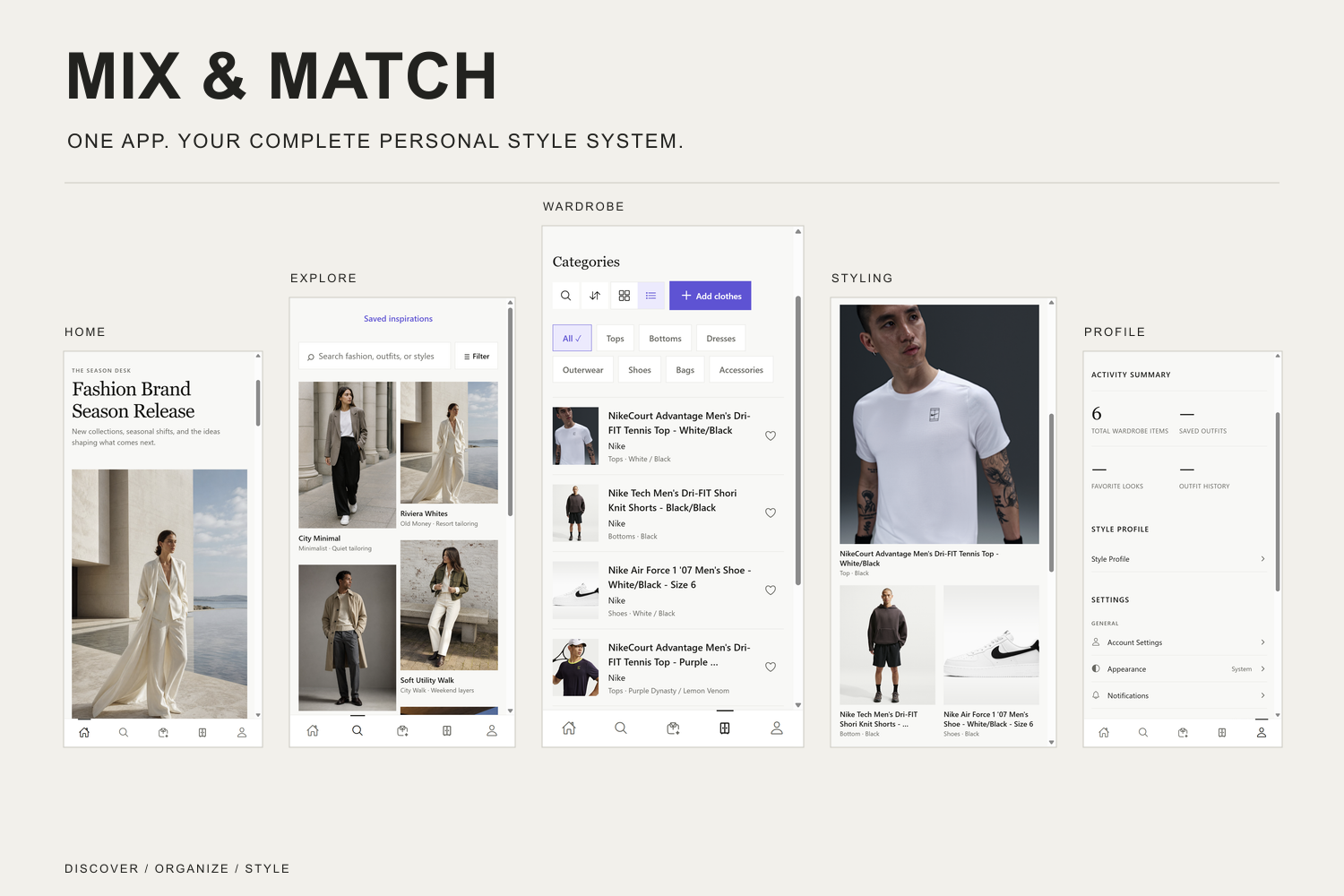
The application is structured around five main areas:
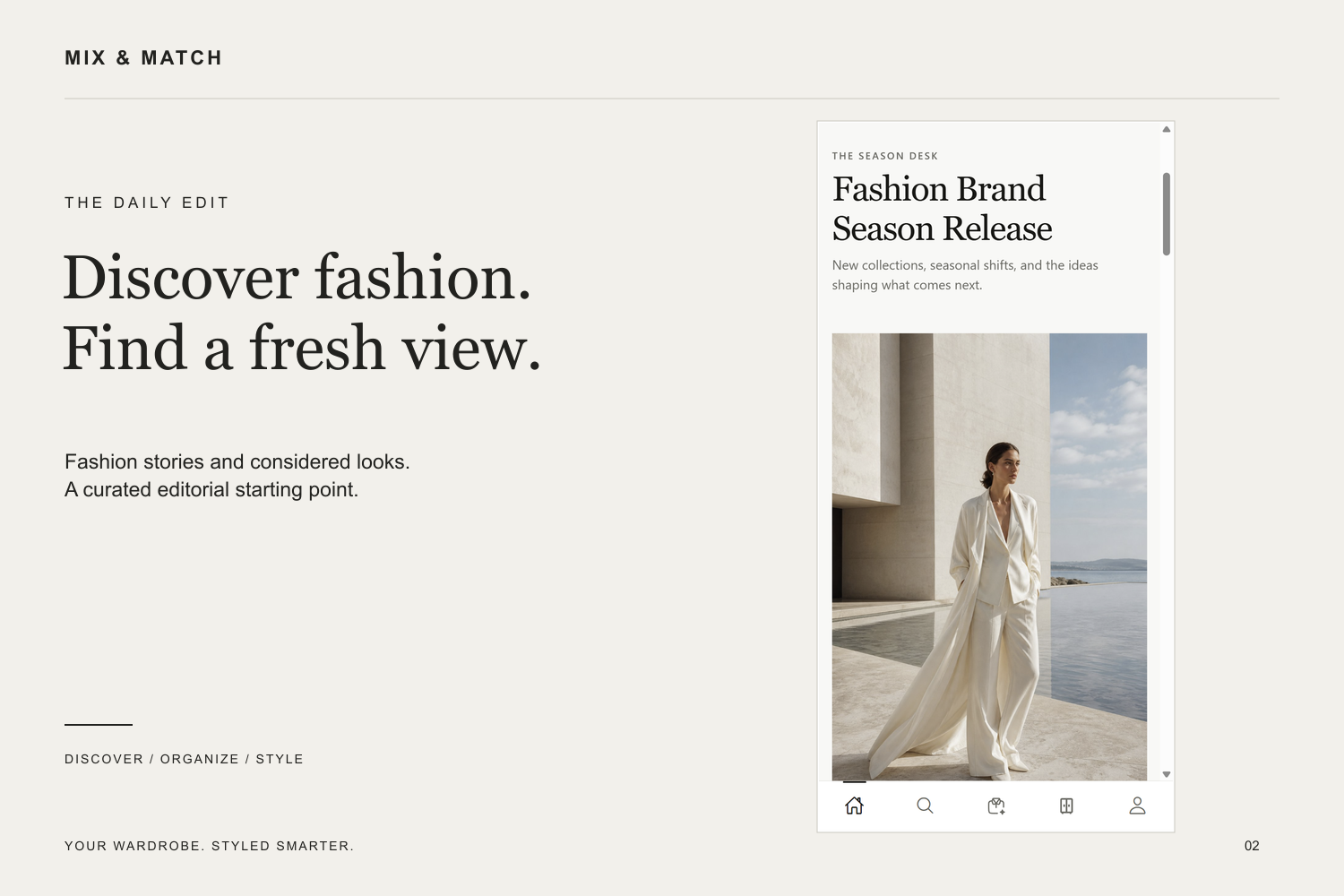
Home provides seasonal fashion content and featured outfit styling.
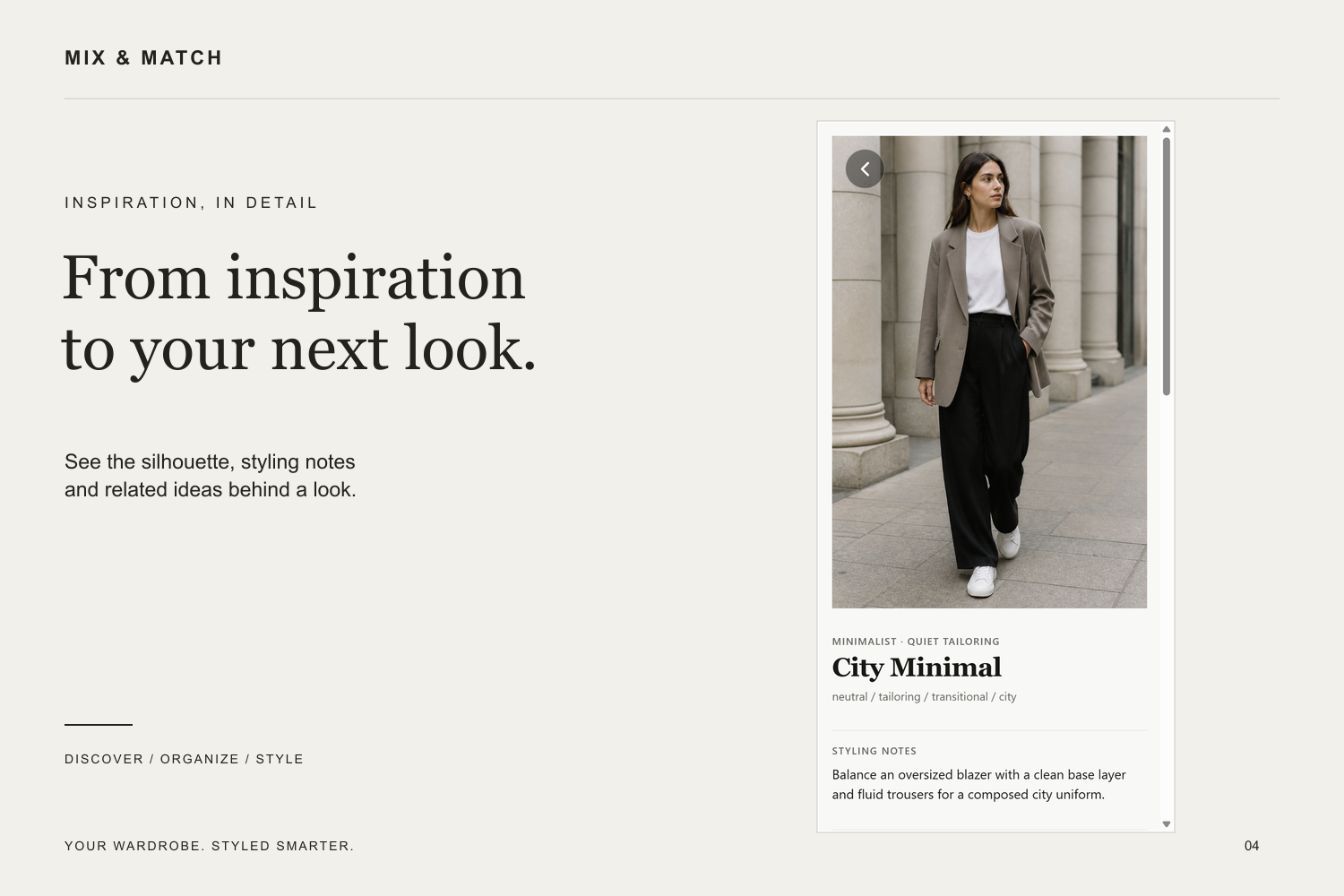
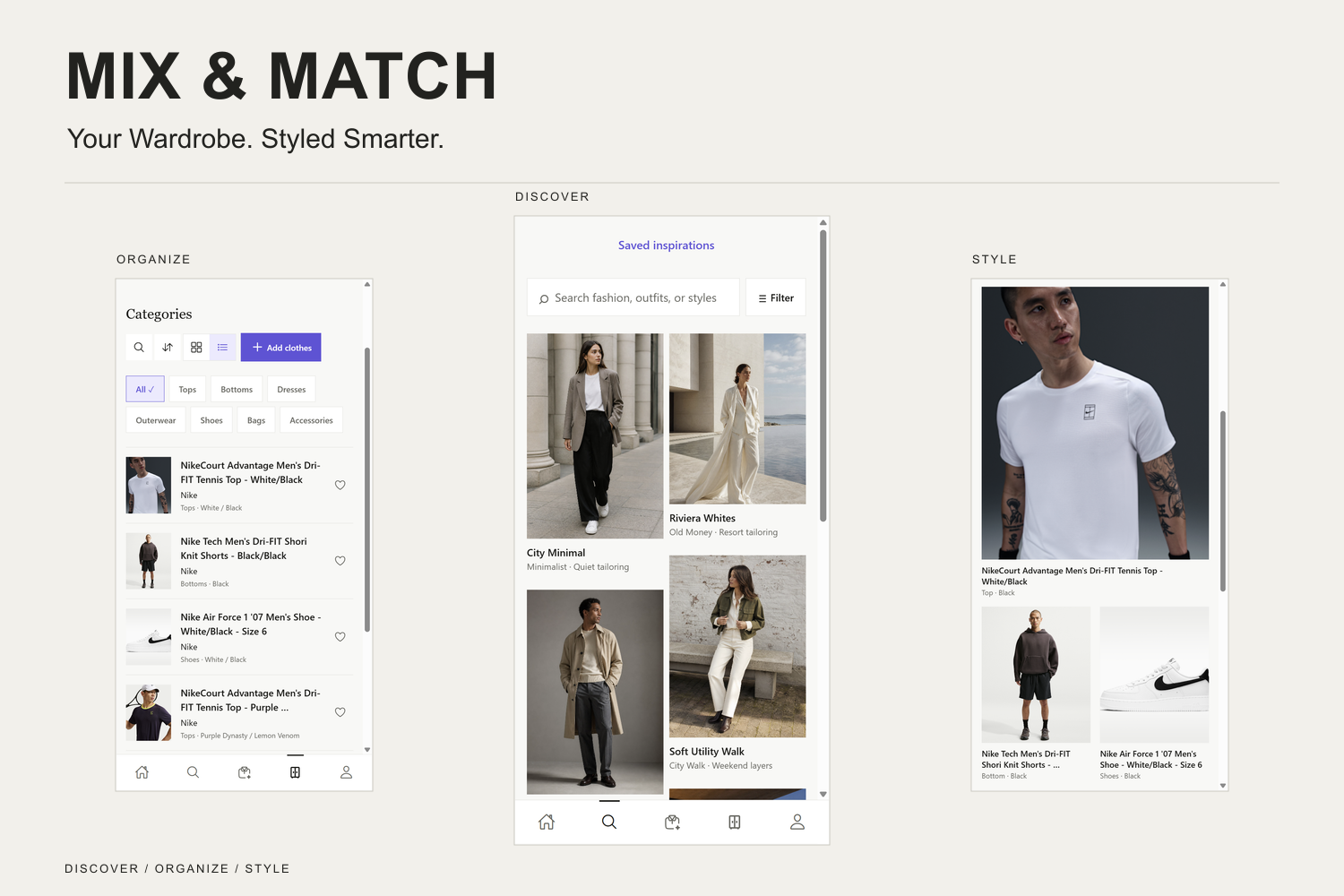
Explore allows users to search for outfits, styles, and visual inspiration through a discovery-focused interface.
Wardrobe acts as the core clothing-management system where users can add, categorize, and manage their clothes.
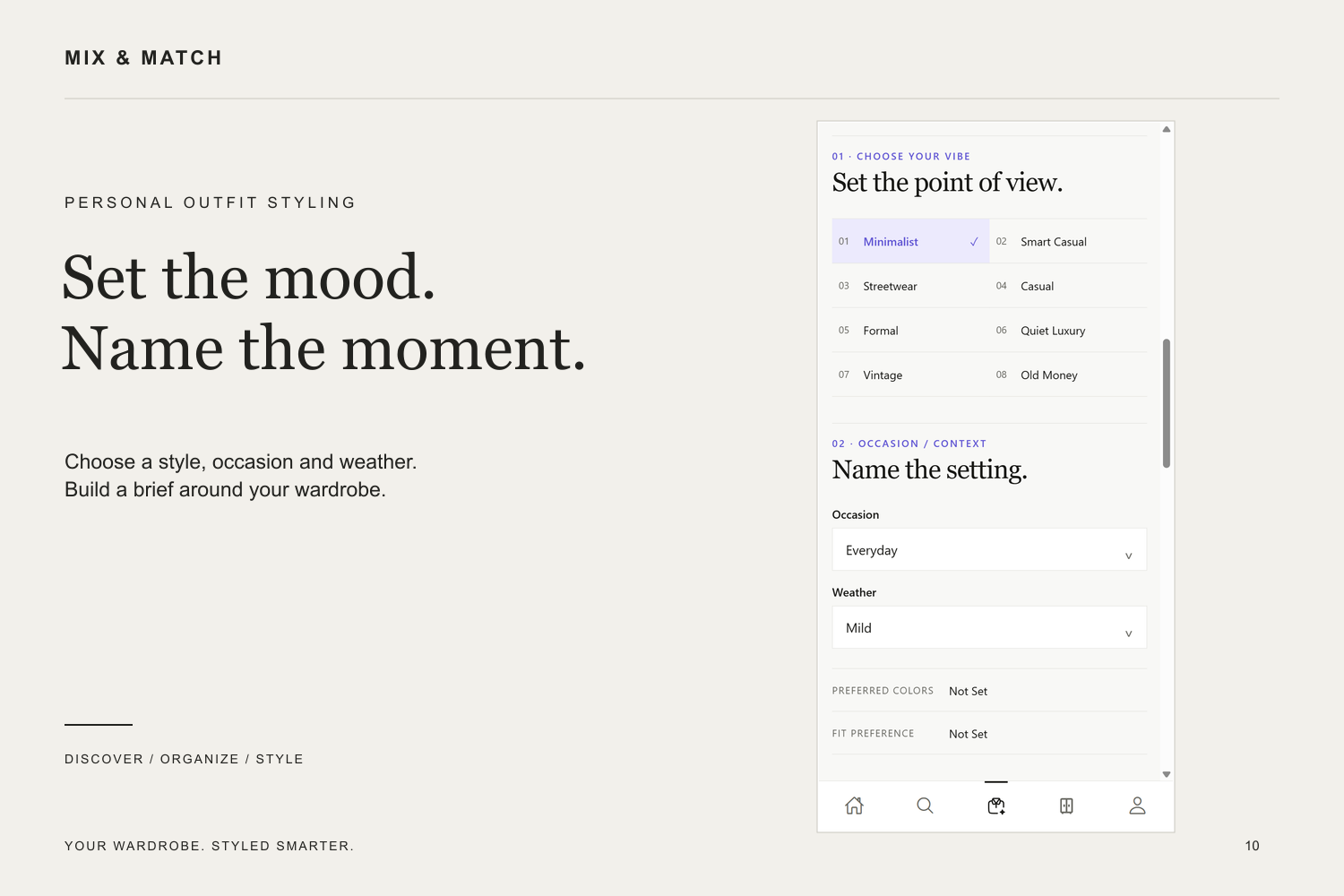
Styling contains the recommendation engine responsible for generating outfit combinations.
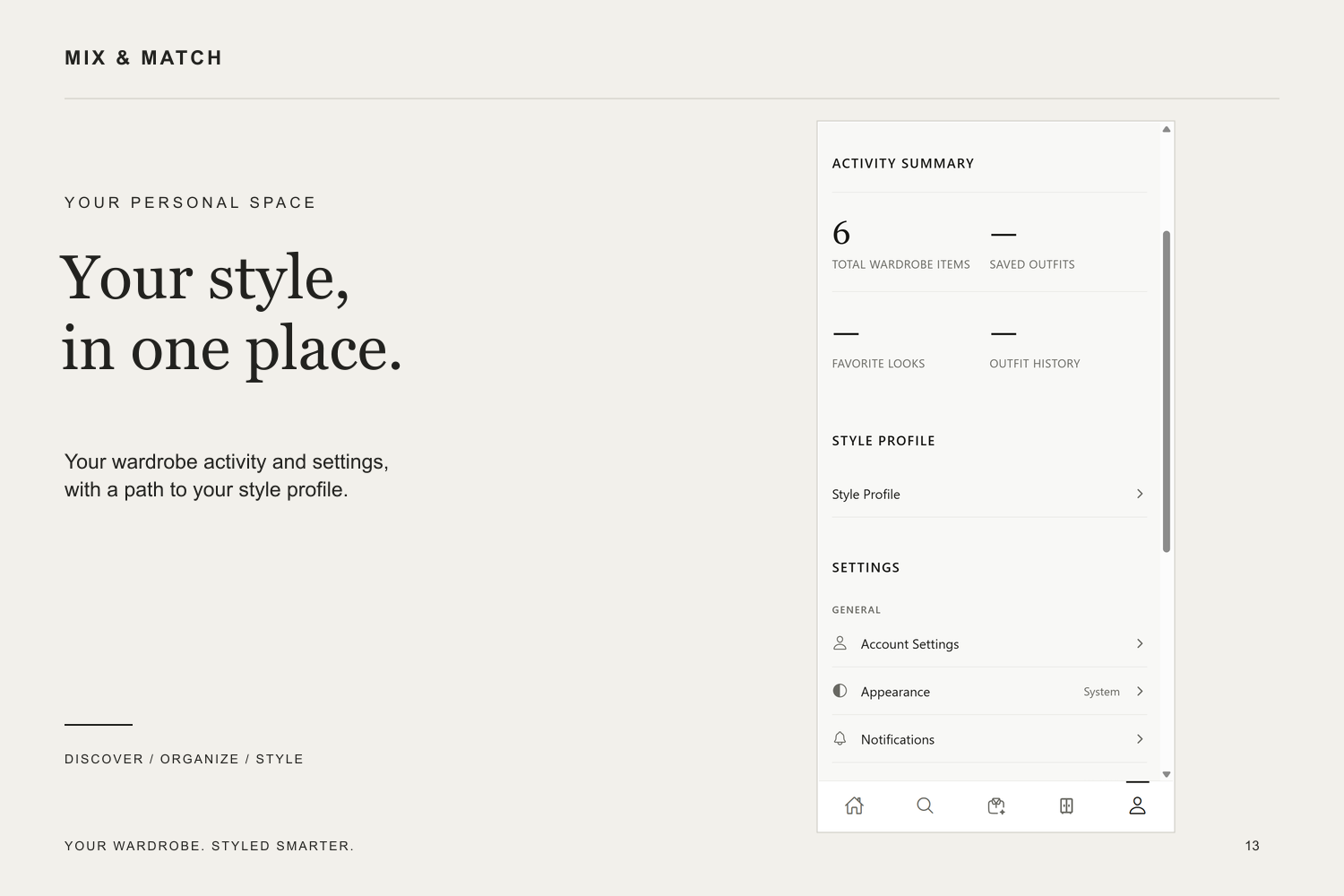
Profile stores personal information, style preferences, activity statistics, and application settings.
The interface follows a modern magazine-inspired visual system with minimal decoration, strong typography, large fashion imagery, and limited use of rounded containers.
We also designed the project so that the styling system can progressively become more intelligent without making the entire application dependent on expensive third-party AI APIs.
Challenges we ran into
One of the biggest challenges was clothing data.
Fashion brands generally do not provide open public APIs containing their full product catalogues, and many retail websites actively restrict automated product extraction. This made features such as importing clothing directly from a product URL much more complicated than initially expected.
Another challenge was designing a styling engine that could generate useful recommendations without simply relying on a large language model API for every request. We had to think about how clothing attributes such as category, color, season, occasion, fit, and user preferences could work together as a recommendation system.
Wardrobe data quality was another problem. Clothing items may be missing information such as material, subcategory, season, or occasion, so the system needs to handle incomplete metadata without producing poor recommendations.
We also spent significant time improving mobile navigation, responsive layouts, development builds, Android emulator compatibility, and the overall architecture as the project became larger.
Accomplishments that we're proud of
We are proud that Mix & Match developed beyond a simple outfit-generator concept into a much broader personal wardrobe platform.
We created a complete application structure covering fashion discovery, wardrobe management, personal style profiles, and intelligent styling.
We also designed a custom magazine-inspired interface instead of relying on a generic mobile application layout.
Another important accomplishment was designing the Styling Engine around structured wardrobe information. Rather than treating AI as a black box, the system is intended to understand why certain clothes work together based on attributes such as color compatibility, occasion, season, clothing type, and user preferences.
Most importantly, the project maintains a clear product philosophy: help users discover more value from the clothes they already own.
What we learned
Building Mix & Match taught us that recommendation systems depend heavily on structured and reliable data.
A good styling recommendation is not just about matching two visually attractive pieces. The system needs to understand context including weather, occasion, personal preferences, clothing compatibility, fit, and what is actually available inside the user's wardrobe.
We also learned that features that appear simple from the user's perspective, such as importing a product from a URL, can involve significant technical challenges involving website structures, anti-scraping measures, inconsistent metadata, and image processing.
From a product-design perspective, we learned that adding more features does not automatically make an application better. Every feature needs to contribute toward the core workflow of discovering, organizing, and styling clothes.
What's next for Mix & Match
The next stage is focused on making the styling experience significantly more intelligent.
We plan to improve the Styling Engine so it can consider more factors such as weather, occasion, color theory, clothing fit, wardrobe availability, and historical user preferences.
We also want to improve clothing recognition and product importing so users can build their digital wardrobe with significantly less manual input.
Future versions could introduce visual outfit generation, smarter wardrobe analytics, shopping recommendations based on wardrobe gaps, and potentially a 3D avatar that allows users to preview complete outfits.
Ultimately, we want Mix & Match to evolve from a wardrobe-management application into a personal fashion intelligence system that continuously learns how each user prefers to dress.
Built With
- expo.io
- magazine-ui
- react-native
- supabase
- typescript

Log in or sign up for Devpost to join the conversation.