Inspiration
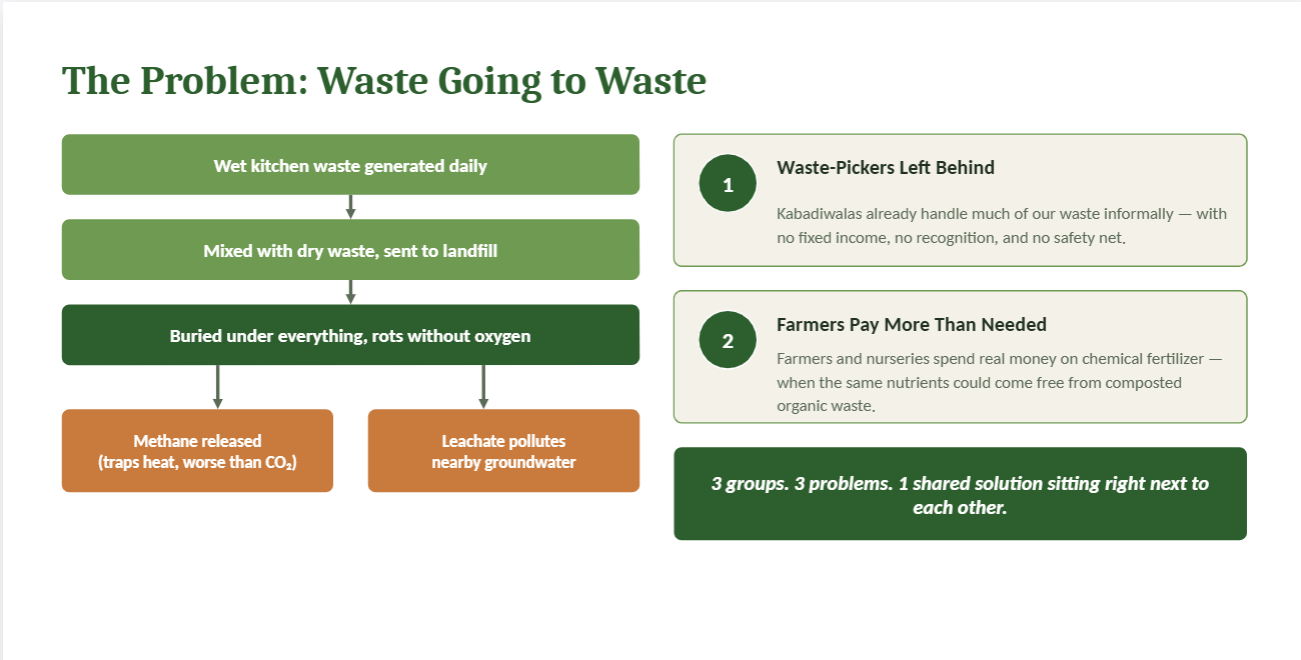
Every day, households throw wet kitchen waste — vegetable peels, leftover food — straight into mixed bins. This waste ends up in landfills, where it rots without oxygen and releases methane, a greenhouse gas far more dangerous than CO2. At the same time, informal waste-pickers (kabadiwalas) who already handle a huge share of our waste ecosystem get no respect, no fixed income, and no safety net. On the other side, farmers and nurseries spend money buying chemical fertilizer, when the same nutrients could come free from the organic waste sitting in our kitchens. We realized these three broken pieces — household waste, informal labor, and farming needs — could be looped together into one system that helps everyone.
What it does
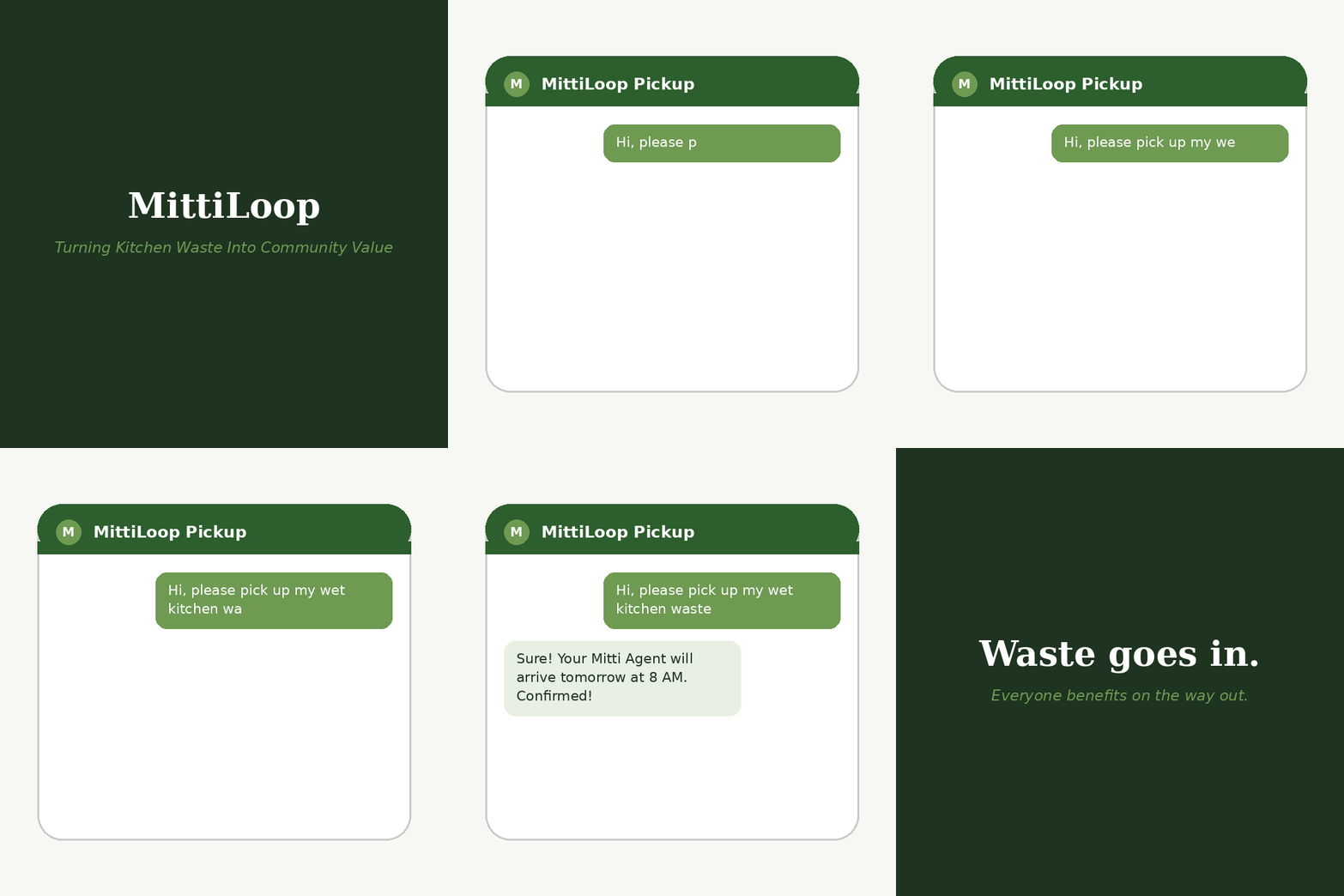
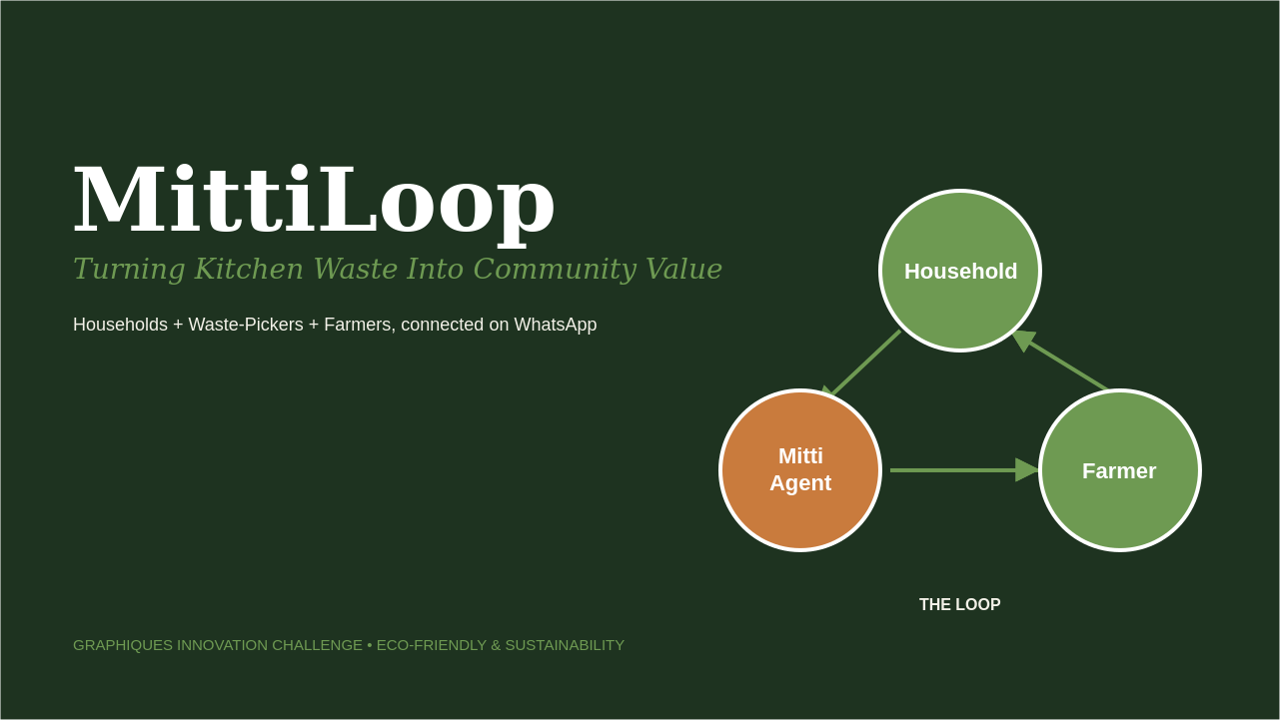
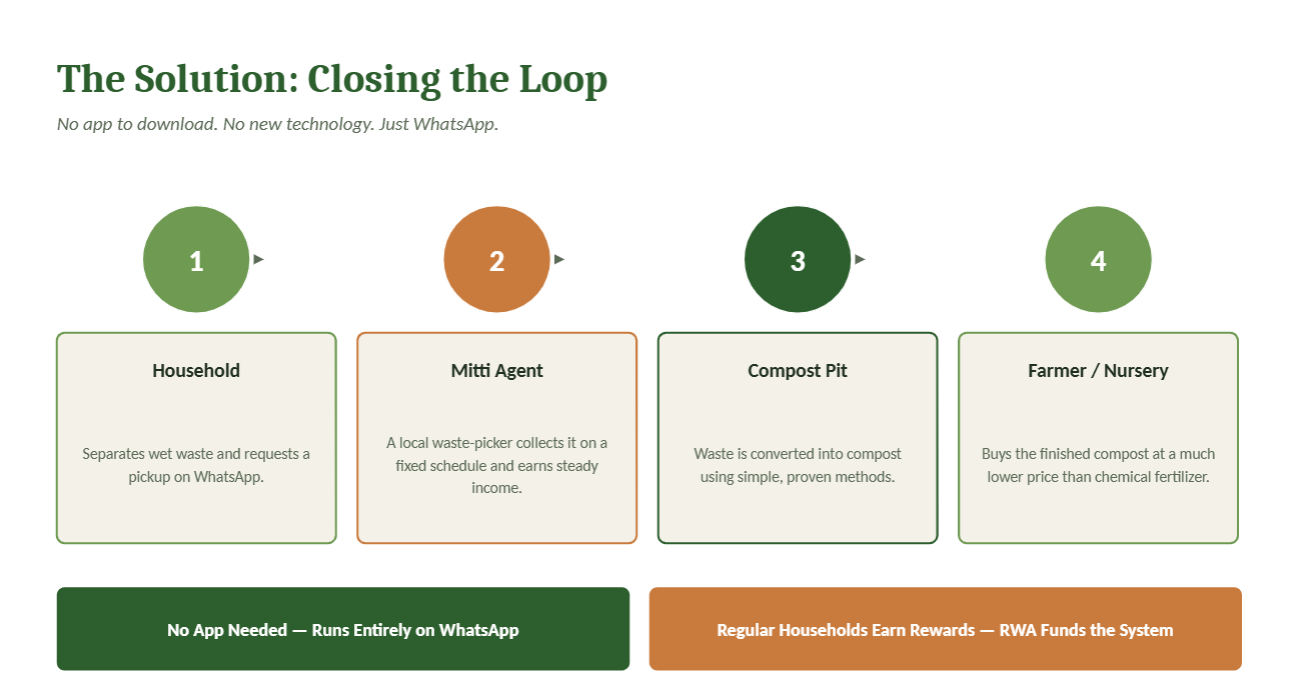
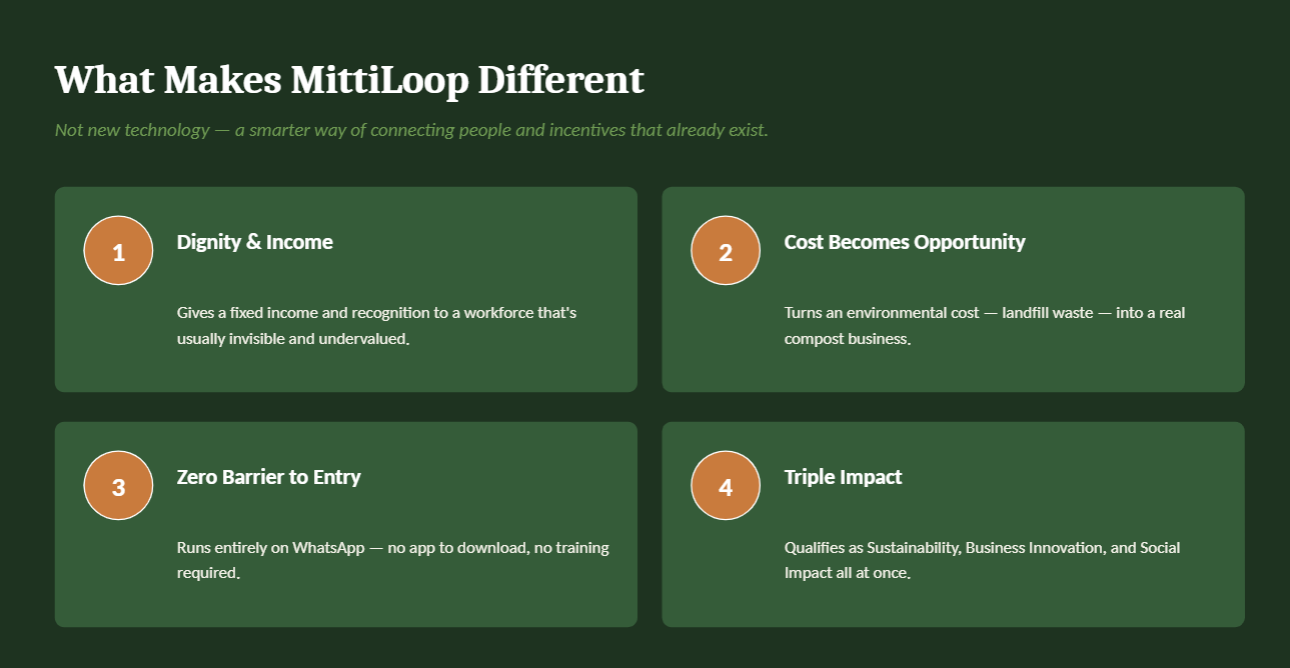
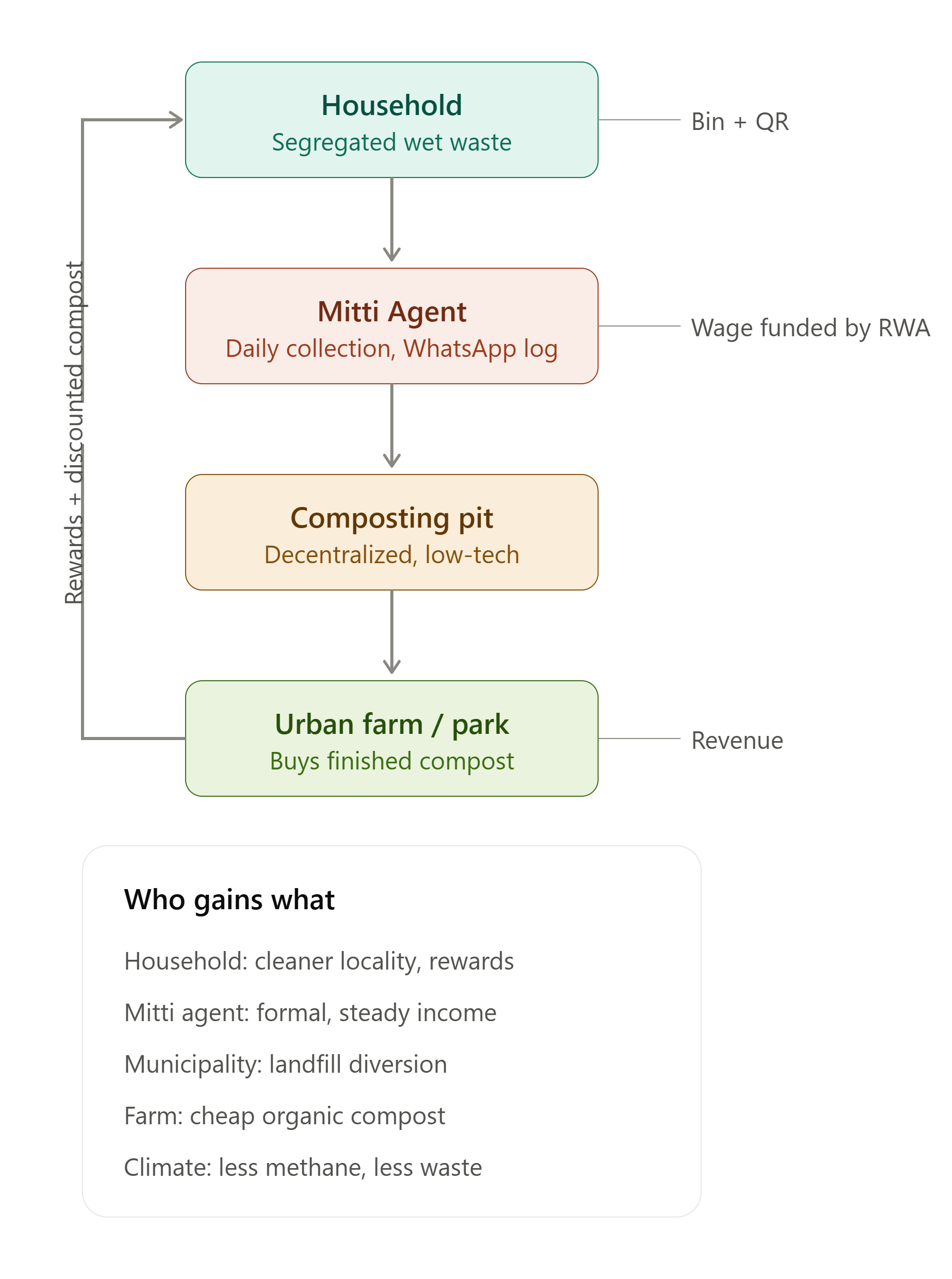
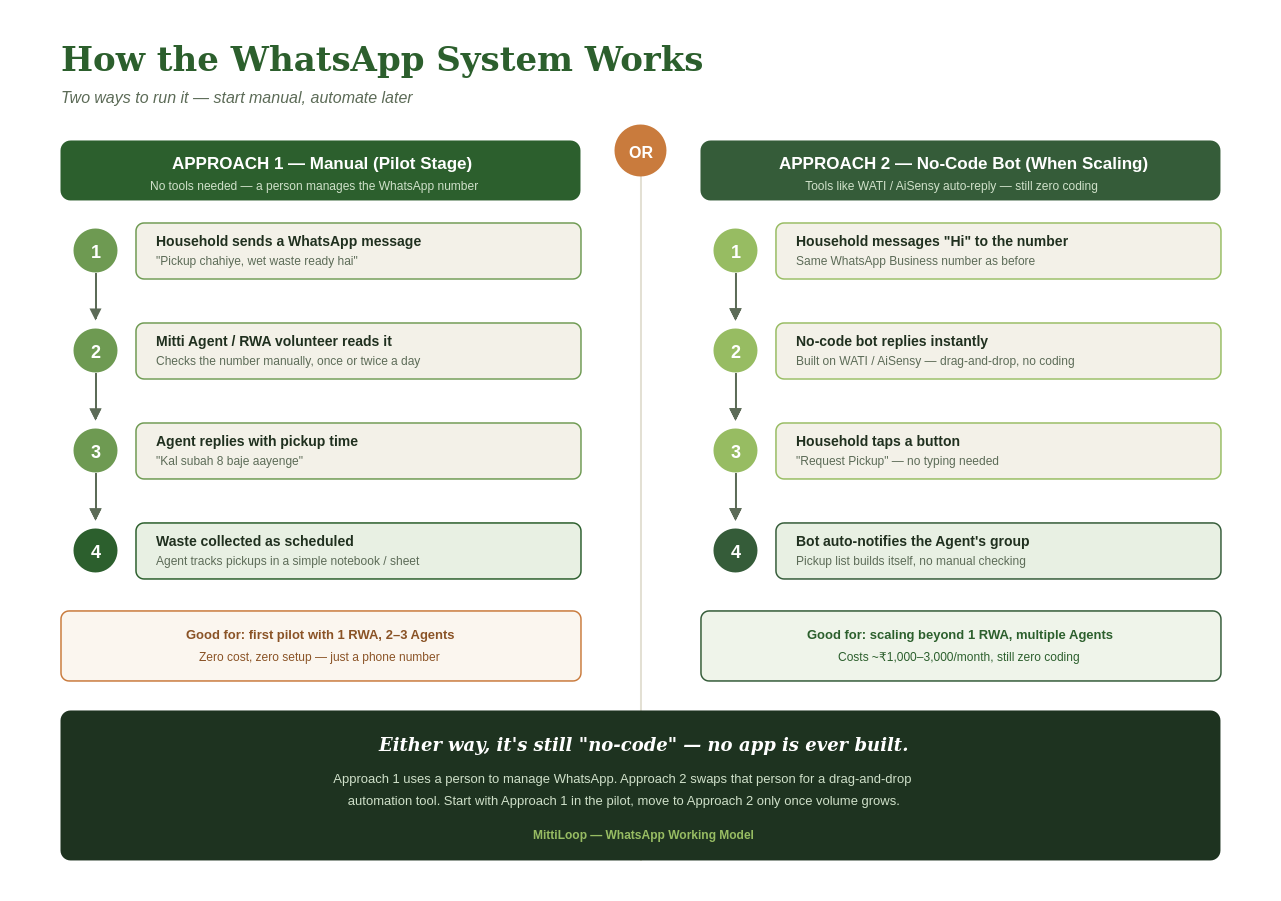
MittiLoop is a decentralized composting network that connects households, waste-pickers, and farmers through a simple WhatsApp bot — no app download needed. 1.Households separate wet kitchen waste and request pickup via WhatsApp. 2.Local waste-pickers are formalized as "Mitti Agents" — they collect the waste on a fixed schedule and get paid for it. 3.Agents convert the waste into compost at small local composting pits (park corners, unused municipal land). 4.The compost is sold to nearby farms and nurseries at a fraction of chemical fertilizer cost. 5.Households get rewards (discounts/coupons) for participating, RWAs contribute a small monthly fee to run the system.
How we built it
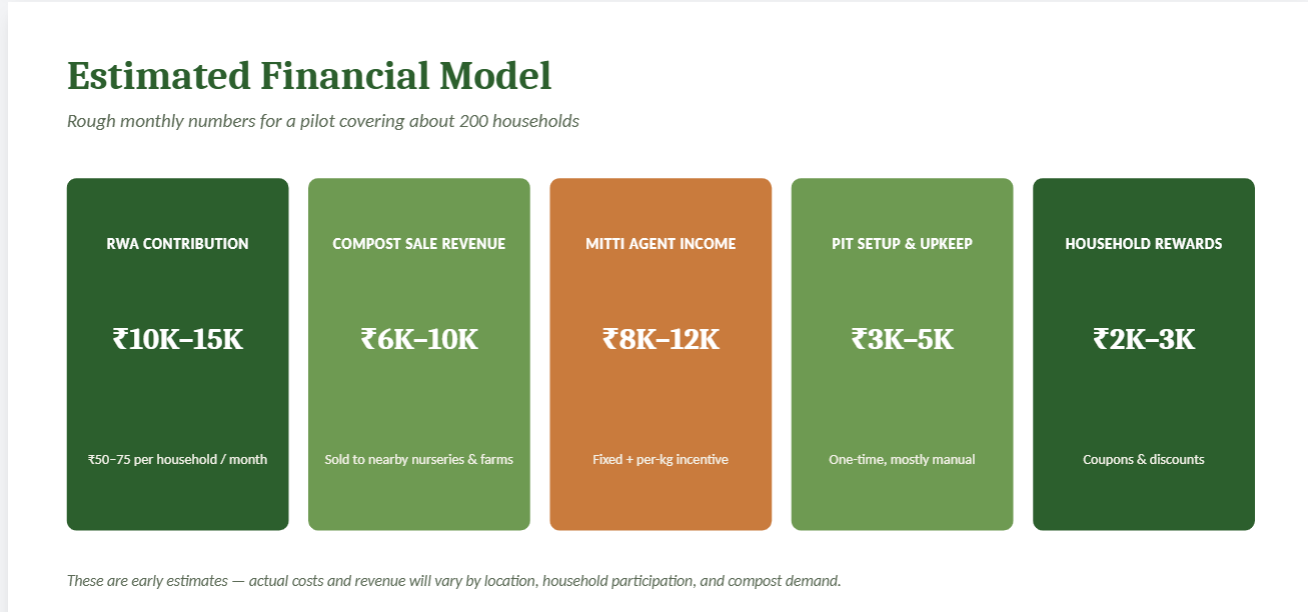
Since this is a no-code innovation challenge, we focused on designing the system architecture, operational workflow, and financial model rather than writing software:- 1.Mapped the end-to-end flow: Household → Mitti Agent → Composting Pit → Farm/Nursery → Reward loop. 2.Designed the WhatsApp-bot-based coordination system (scheduling pickups, tracking agent earnings, reward distribution) as a no-code operational blueprint. 3.Built a financial model estimating agent income, composting costs, and compost sale revenue. 4.Created a visual flow diagram to communicate the loop clearly to non-technical stakeholders (RWAs, municipal bodies, judges).
Challenges we ran into
1.Designing a system that works with zero-cost technology (WhatsApp) so it's accessible to waste-pickers who may not own smartphones with app storage. 2.Making the model financially sustainable without heavy RWA fees, so adoption isn't blocked by cost. 3.Balancing simplicity (so waste-pickers can actually use it daily) with enough structure to track collection and payments reliably.
Accomplishments that we're proud of
1.A fully thought-out, end-to-end loop that turns a civic problem into shared value for three different stakeholders at once — households, waste-pickers, and farmers. 2.Keeping the entire execution model no-code and low-cost, so it could realistically be piloted in any neighborhood. 3.A solution that doesn't just reduce waste, but also formalizes and dignifies informal labor that's usually ignored.
What we learned
1.The biggest barriers to sustainability solutions are rarely technical — they're about incentives and trust between stakeholders. 2.Involving informal sector workers as empowered participants (not just "helpers") radically changes the sustainability and social impact of a solution. 3.Small, zero-infrastructure tools like WhatsApp can power meaningful systemic change when the workflow design around them is solid.
What's next for MittiLoop
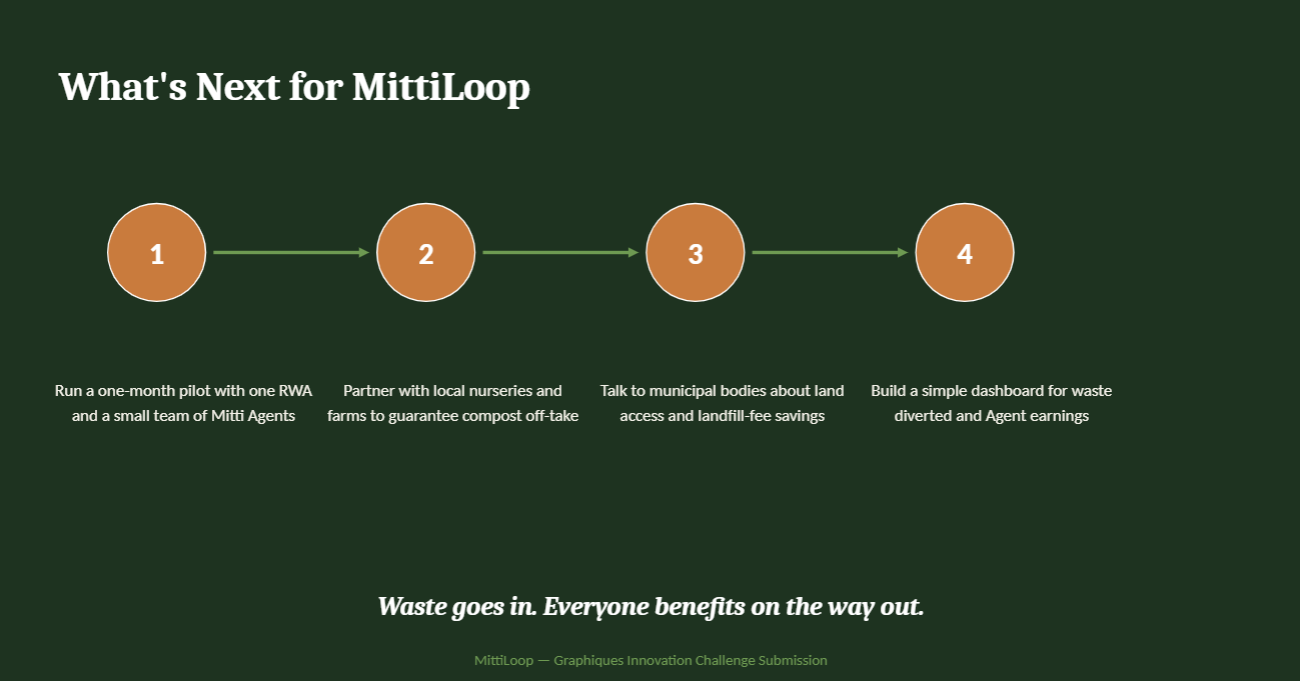
1.Pilot the model with one RWA and 2-3 Mitti Agents to validate real-world logistics and pricing. 2.Partner with local nurseries/farms for guaranteed compost off-take. 3.Explore partnerships with municipal bodies for composting-pit land access and potential landfill-fee subsidies. 4.Build a simple dashboard for RWAs to track waste diverted and agents to track earnings.
Built With
- no-code

Log in or sign up for Devpost to join the conversation.