-
-
Mitraa logo
Inspiration
My son recently picked up programming, bursting with the relentless curiosity of a young, inquisitive mind. As much as I want to support him, balancing work means I rarely have the continuous time or patience to field every question. Around the same time, a friend founded Accutai and brought on a cohort of eager interns facing similar learning curves. Being in a startup, there was no special third-party curated material for learning; he didn't have enough human resources to even train them for real project work. He sought help. I understood he needed something more natural as a guide, a companion, to be with the interns always when they needed guidance the most, and no judgment for asking something obvious or repetitive. And this is exact need for my son as well as my father. In the AI age, it is natural to find solutions from the AI ecosystem through exposure. All kinds of chatting tools are already there, but those have now become information aggregators, very easy to be distracted by, least engaging, lacks human touch. A deeper bottleneck emerged: everyone was tackling identical, recurring challenges in isolation — stuck solving problems inside personal chat silos without an ambient, autonomous system quietly connecting the dots and assisting behind the scenes. I needed a solution that could encompass all 3 requirements and ages: young inquisitive minds, grown-up technologists, and noobs of modern tech like my elderly father
As an Indian heavily influenced by Vedantic philosophies, it was natural for me to look inward and ask: how do I seek help when I need it most, and how do we connect? Brahman (ultimate consciousness) is connected to individual Atman (individual consciousness) through thoughts, inner turmoil, and struggle. From a modern perspective, James Cameron's movie ‘Avatar’ resonates the same: when in trouble, an individual Pandora resident connects to Eywa. They can only connect through a thought stream. This leads to individual and collective consciousness/resonating. Transforming these ideas into a software solution needs 2 distinct components. Mitraa/ Mitro means friend or companion in Sanskrit and most Indian languages, and Sangha means cohort or collective group. Hence Mitraa and Sangha-mitraa were envisioned. Mitraa, the atman or individual Pandora resident, and Sanghamitraa, the Brahman, the Eywa. Mitraa solves companionship; Sangha-mitraa adapts to individuals or cohorts. It does all the major categories mentioned for this hackathon a bit, but I built it for collaboration, hence submitting it in the collaborative partner category only.
What it does
It collaborates with the user, provides LONG-TERM companionship, provides a human touch to AI technology, and provides a tool to utilize the power of recent AI advancements with a conversational interface. That too in just 150-200 MB RAM, 1% of the CPU for the system, and a Gemini subscription. I personally felt changing the own code or prompt directly would be a security risk; hence, the adaptive capability is handled through developers' channels. Sangha-Mitra decides whether there are any issues in the system, and nudges developers to take care of it through triage.
How we built it
UI uses heavy agentic workflows; at this point, 100% GenAI models, it engages Live audio models to flash to Gemma-4 series models. By design, the experience prioritizes voice-to-voice interaction to encourage natural, flowing conversations over direct text or image inputs, though subtle mechanisms remain available for ingesting textual data. It is by design restricted to operate on the resident system; input and output are only from a restricted directory or folder(not customizable), designed not to read non-textual data or longer files; it can output textual and JPG images in the predefined directory. It allows long, deep technical discussion and remembers facts if asked to do so. But the most desirable mode is 3D — audio, visual, distilled information over a canvas. It can simultaneously draw, discuss, and present distilled information in sync. When I say visual, it avoids costly image-generation tokens entirely. Instead, it dynamically renders and updates structured block diagrams in real time, synchronizing seamlessly with speech and adjusting specific components with ultra-low latency. I named this TeachingMode. It can also check its own health and follow voice commands for its functionality. Most important feature: it can autonomously share its thoughts about its performance, user queries, and health with ‘Sanghmitraa’ using MCP, without asking for it. The desktop client autonomously decides what context to transmit and when. We deliberately avoided allowing the local client to dynamically rewrite its own tooling, prompts, or code in place — a conscious architectural trade-off prioritizing security and system stability. Instead, the desktop app packages distilled insights and intent into structured “thoughts,” offloading the heavy computational lifting, analysis, and adaptation to the secure cloud infrastructure of Sangha-Mitraa.
Deployed on Google Cloud Platform (GCP), Sangha-Mitraa scales its capabilities across core engineering workflows:
Deep Research: Facilitating exploration on any topic and technical discovery. Code Review: Providing thorough analysis and quality assessment. Architecture & Design: Supporting structural deliberation and system diagramming.
It can perform code vigilance over organization repos. It exposes these capabilities via stdio or remote MCP tools, which integrate with the Mitraa desktop app to extend its functionality beyond a basic companion. The main design goal of Sangha-mitraa is still the autonomous processing of all thoughts shared by the fleet of Mitraa deployed across employees' desktops or personal desktops of family members. It autonomously routes shared thoughts based on context — whether that means logging notes, diagnosing issues in Mitraa’s tooling, prompts, or code, or emailing feature requests directly to developers. If recurring queries from multiple Mitraa thoughts can be researched and made available to Mitraa desktop through MCP tools, so that next time an employee asks about a similar topic, Mitraa is equipped with curated answers.
Challenges we ran into
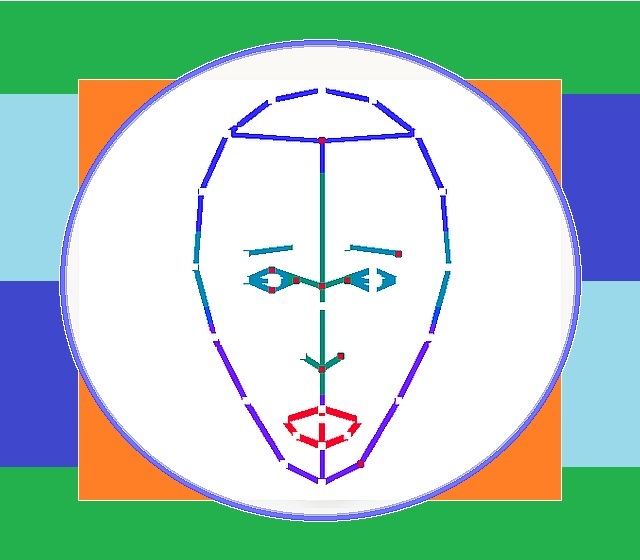
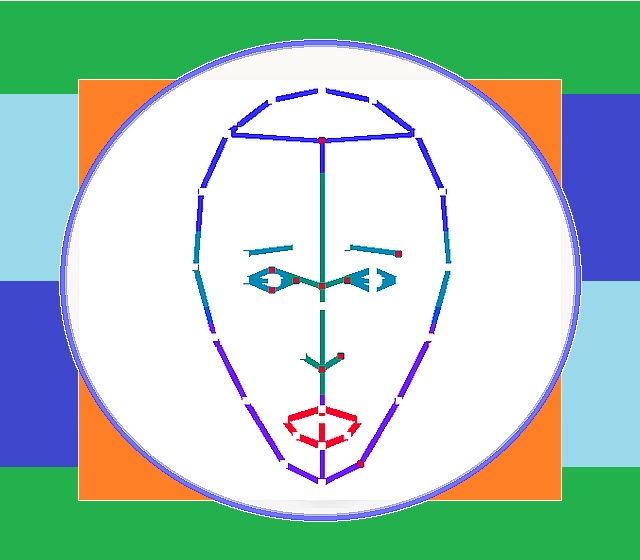
To serve as a lasting companion, it must remain effortless and lightweight rather than a drain on system resources. For Mitraa to succeed as a desktop companion, minimal resource usage was non-negotiable. Early iterations consumed nearly 2 GB of RAM across various tech stacks, prompting me to abandon those frameworks in search of a truly lightweight alternative. After 5–6 iterations and experiments, I finalized a Python-based light UI library. In its current form, it uses less than 150 MB of RAM and 0.1 to 2% of the CPU resources. Turning off the animation is a more frugal choice. Meaning, if it runs continuously on your desktop all day, it is not the reason for device heatup or reduced performance of other resident applications. We had a choice between a completely blunt UI and one with a human-like face to engage users more effectively. Started with anime-like faces, 3D avatar-like faces (My son thoroughly rejected without hesitating), and finally settled on a human-like, mildly animated face. A Happy Son makes the father happier.
Accomplishments that we're proud of
What began as an internal tool is now an everyday fixture across generations of my family and the laptops of Accutai employees. Strictly confined to internal use for now, it has delivered its greatest impact directly to me — transforming complex, overnight design discussions into seamless collaborations.
What we learned
After extensive experimentation across multiple tech stacks, a clear truth emerged: the least intrusive AI interface is often the most powerful. Simply getting out of the model’s way and enabling effortless use proved far more effective than heavy layers of orchestration. The journey forced me to confront my own enterprise instincts—realizing that architectural patterns built for massive corporate systems often lead to severe over-engineering in personal tools. True sophistication, it turns out, lies in restraint.
What's next for Mitraa & Sanghamitraa
Seeing this potential, my startup founder friend is actively productizing a variant of this system to bring it to a wider public audience.

Log in or sign up for Devpost to join the conversation.