Inspiration
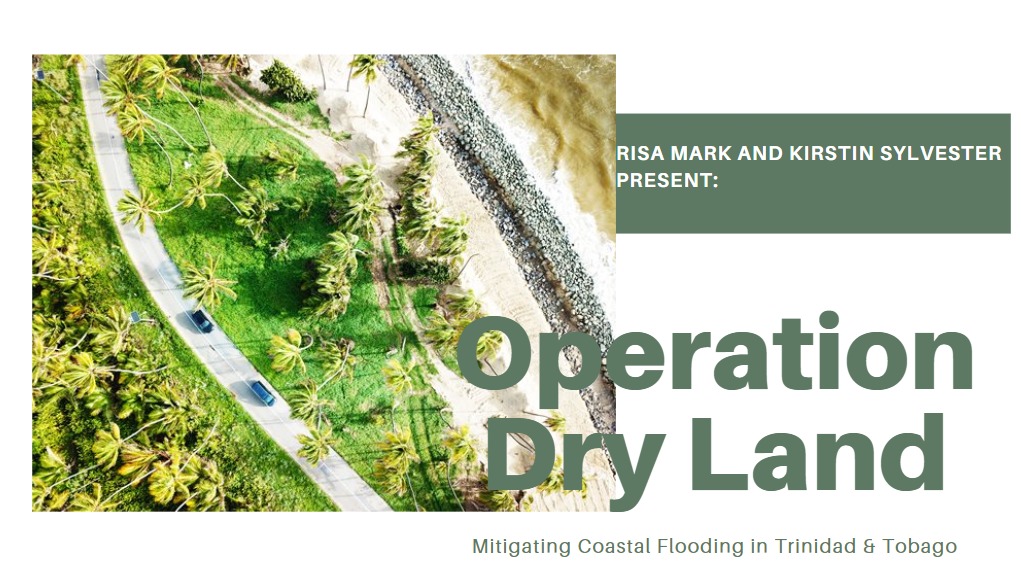
Coastal flooding has majorly affected our beautiful twin isles (Trinidad and Tobago). Coastal flooding has led to the collapse of roads and has affected rural communities and their livelihoods. Climate change, rising sea levels and temperatures has resulted in damage to coral reefs and linked to devastating flooding in coastal communities particularly Manzanilla/Mayaro and Toco. Seeing the destruction caused in these beautiful rural areas moved us to develop this project which will address tactics to mitigate coastal flooding.
What it does
We are proposing a multi-faceted/dimensional approach:
- Coastal Buffer Zones (Artificial reefs) 2. Sea walls 3. Raising coastal roadways.
Coastal Buffer Zone: Artificial Reefs can be built by using recycled, properly decommissioned public transportation buses which can be placed into the sea, to attract plant life, and eventually fish stock. Coral reefs can dissipate up to 97% of wave energy. Our artificial reefs will act as a shock absorber, thereby reducing the impact of waves which can contribute to flooding in the event of heavy rainfall or storms. This would be a novel solution for the area of Toco.
Sea Walls: Seawalls in Guayaguayare can be used to mitigate coastal flooding. Currently, incomplete structures exist. The construction of sea walls, coupled with the protection of the mangroves, can assist with the issue of coastal flooding. The sea wall must be completed expeditiously. What exists right now are rocks inside of wires holding the rocks in place as well as rocks along the way. There is evidence that a project was started by the state but it should be completed to mitigate the effects of coastal flooding. It is recommended that a proper hydrological study be undertaken to ensure a proper hydraulic system is constructed.
Raising Coastal roadways: the area experiences coastal flooding due to the sea and mangrove area - the roadway is often damaged due to the flooding. There are talks to raise the roadway to prevent the impact of flooding on the major roadway, which has a sandy base. There is sufficient demand for a coastal roadway given that the road that currently exists is the major roadway connecting areas south of Mayaro and Sangre Grande. The coastal roadway can be built between a few hundred meters above the sea to mitigate against natural hazards as is being considered in Reunion Island, France. Raising the roadway would be a unique solution given that previously, the roads were repaired on the ground.
How we built it
After observing the effects of recent flooding in the two areas with the damage of property, fallen electrical poles, residents being inundated with up to four feet of water and the damage of the main roadway (some roads have become impassable), we decided to develop solutions for this issue. We brainstormed, spoke to locals and conducted research into possible solutions. Subsequent to this we came up with our suggested approach.
Challenges we ran into
Challenges would include gaining governmental support and ensuring that minimal damage is done to the environment in executing our plans. An additional challenge would be the speed at which the plans could be executed before the next raining season starts.
Accomplishments that we're proud of
We have successfully produced a strategic plan to address the issue of coastal flooding in Trinidad & Tobago. We were able to address both the Adaptability and BioDiversity challenges. Practically, the proposed measures are feasible with the help of governmental agencies and partnership with NGO’s and private corporations, particularly oil and gas companies, to contribute to the society.
What we learned
One aspect we learned more about were the innovative and interesting mechanisms that can be used to mitigate against the issue of coastal flooding. We also learned the importance of acquiring feedback from persons within the community for the project, and maintaining continuous dialogue to mitigate coastal flooding threats.
What's next for Operation Dry Land
Proposals would be put forward to governmental organizations to adopt some of these policies. Furthermore, the team will pitch to NGOs and select corporations who want to help develop communities. It is further proposed to continue engaging with the communities to hear their views and incorporate same into proposals. It is important to note that particularly for the Manzanilla/Mayaro area, oil and gas exploration constitutes a major aspect of their economic activities, thus oil and gas companies can also be targeted for funding.
Built With
- brainstorming
- innovation

Log in or sign up for Devpost to join the conversation.