-
-
Logo
-

Shipping Mochi app icon — 1024 × 1024
-
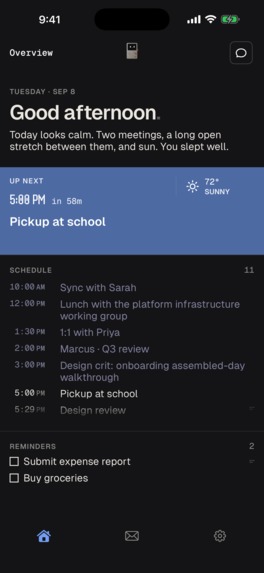
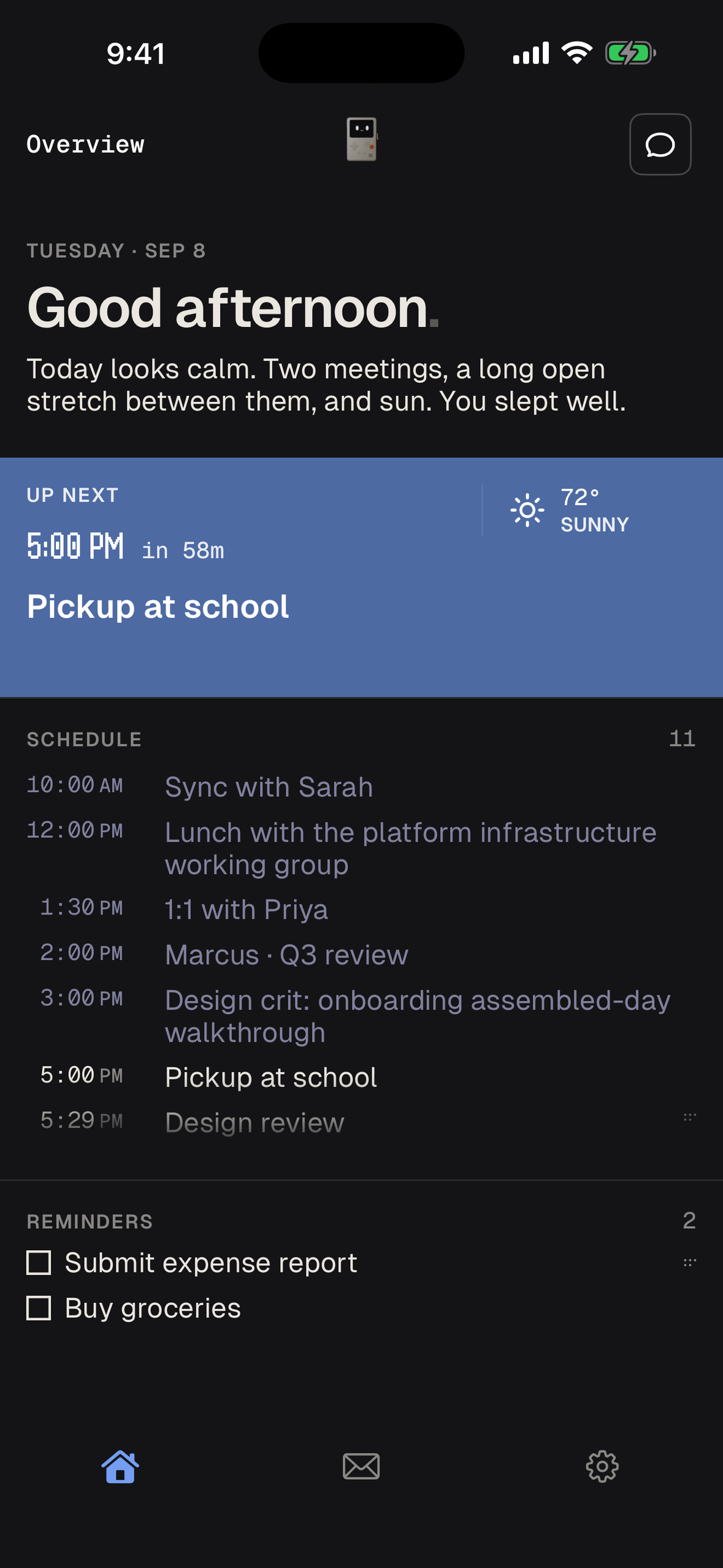
Native iPhone app with seeded example data — 1179 × 2556, no device frame
-
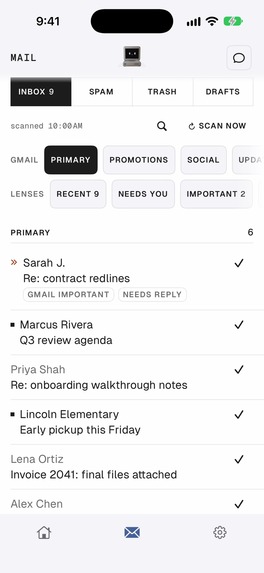
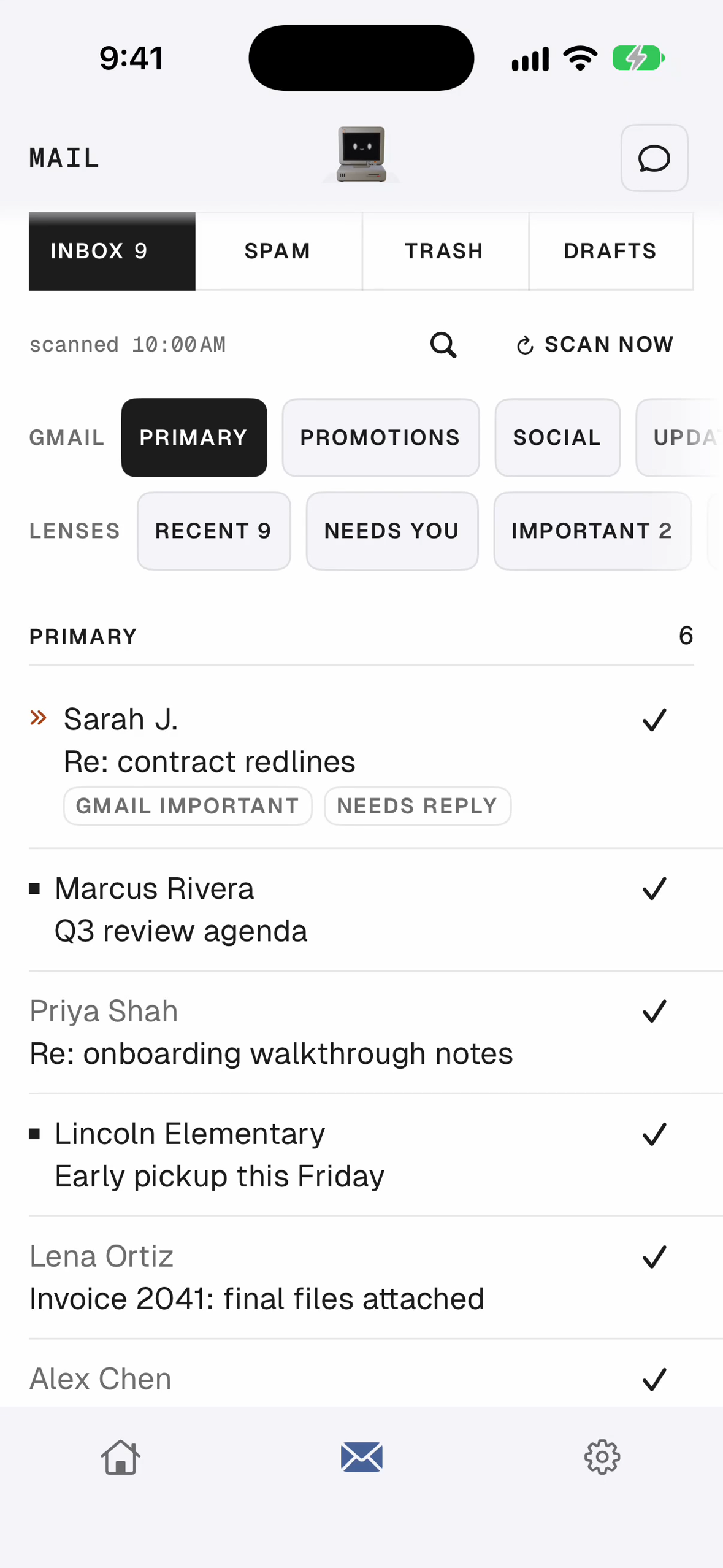
Native iPhone app with seeded example data — 1179 × 2556, no device frame

Inspiration
The people I want using Mitamaton do not want to learn how to use AI. They want to know what needs them today.
That changed the product's starting point. A blank chat box asks someone to work out what to ask. Mitamaton opens on a board: your next event, mail that needs attention, reminders, notes, and the shape of your day. Chat is there when you need it, but it is not the entrance exam.
I shared this direction publicly in August, invited beta testers, and shipped the first App Store version on September 15, 2026. Version 1.0.2 is now available for iPhone.
What it does
- Brings calendar, mail, reminders, notes, and optional Apple Health information onto one board.
- Writes a short morning brief from the context you choose to connect.
- Lets you move and resize cards, with undo for board edits.
- Lets you ask about your day in plain language and turn a conversation into useful work, such as a checklist on the board.
- Presents external changes for confirmation so you can inspect an action before it changes your connected accounts.
- Gives the app a recognizable face: Mochi, with dot-matrix expressions, swappable shells, and finishes you can choose.
The demonstration shows a real simulator recording using seeded example data: a request becomes a proposed checklist, the user confirms it, and the checklist appears on the board. Mochi's move outside the phone is an animation made for the film.
How I built it
The app is native SwiftUI for iOS 18 and later, using EventKit, HealthKit, WidgetKit, and App Intents. A Python backend runs on Fly.io; Supabase handles authentication and data; model requests go through OpenRouter. RevenueCat connects the App Store subscriptions to a single Pro entitlement associated with the signed-in account.
I build with Claude Code and Codex, using isolated Git worktrees, source reviews, automated tests, and actual simulator or device checks. That workflow lets me work across the interface, backend, and character system while keeping each change reviewable. It also makes evidence essential: a passing source check is not proof that an interaction feels right on a phone.
Challenges
Helping without taking over. An assistant that checks before every small board change gives the work back to the user. One that silently changes external accounts goes too far. I separate reversible board edits, which have undo, from changes that need explicit confirmation.
Being honest about missing information. A calendar connection that failed is different from a calendar with no events. The interface needs to preserve that distinction instead of confidently reporting an empty day.
Finding the real cause of lag. An early performance investigation traced repeated view updates to a push-registration feedback loop. Measuring the running app exposed the cause; plausible changes to the dashboard had not. That became a lasting rule for the project: instrument first, then fix the invariant.
Turning a character into a useful part of the interface. The face has to be recognizable and responsive without competing with the day's information. The same face stays consistent across shells, while motion and expression supply small moments of personality.
Accomplishments and lessons
Mitamaton is publicly downloadable, with working subscriptions, a customizable native board, connected information, and its own visual identity. The first updates addressed a first-run freeze, added the seven-day Pro trial, improved Light Mode, and expanded notes in chat.
The most useful lesson has been to judge a feature by its visible result. That applies to app interactions and to marketing: a generated video is not successful just because the render finished. The screen, action, and promise have to agree.
Monetization
Mitamaton is free to download. Pro is $8.99 per month or $89.99 per year in the US, with a seven-day trial for eligible subscribers. The free board remains useful after the trial; Pro adds the morning brief, chat, and actions. RevenueCat manages the shared Pro entitlement, purchases, and restoration.
The model is intentionally simple: pay for the ongoing service, not for individual messages or an ad-supported feed. The business is early. As of September 21, the RevenueCat overview reports zero active paid subscriptions and zero revenue; this submission does not claim proven conversion or product-market fit.
What's next
Improve first-run activation, keep refining the board and notes from real use, and test focused messages around concrete problems such as finding the email that needs a reply. Measure the path from interest to onboarding to Pro, and change one part of that path at a time.
Built With
- apns
- appintents
- blender
- claude
- eventkit
- fastapi
- figma
- fly.io
- gmail-api
- google-calendar-api
- gpt-image-2
- healthkit
- oauth2
- openrouter
- postgresql
- python
- revenuecat
- storekit
- supabase
- swift
- swiftui
- widgetkit
- xcode

Log in or sign up for Devpost to join the conversation.