-
-
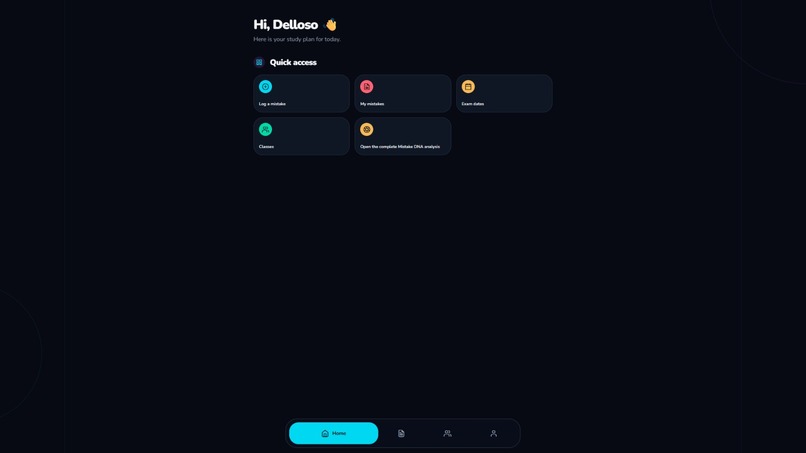
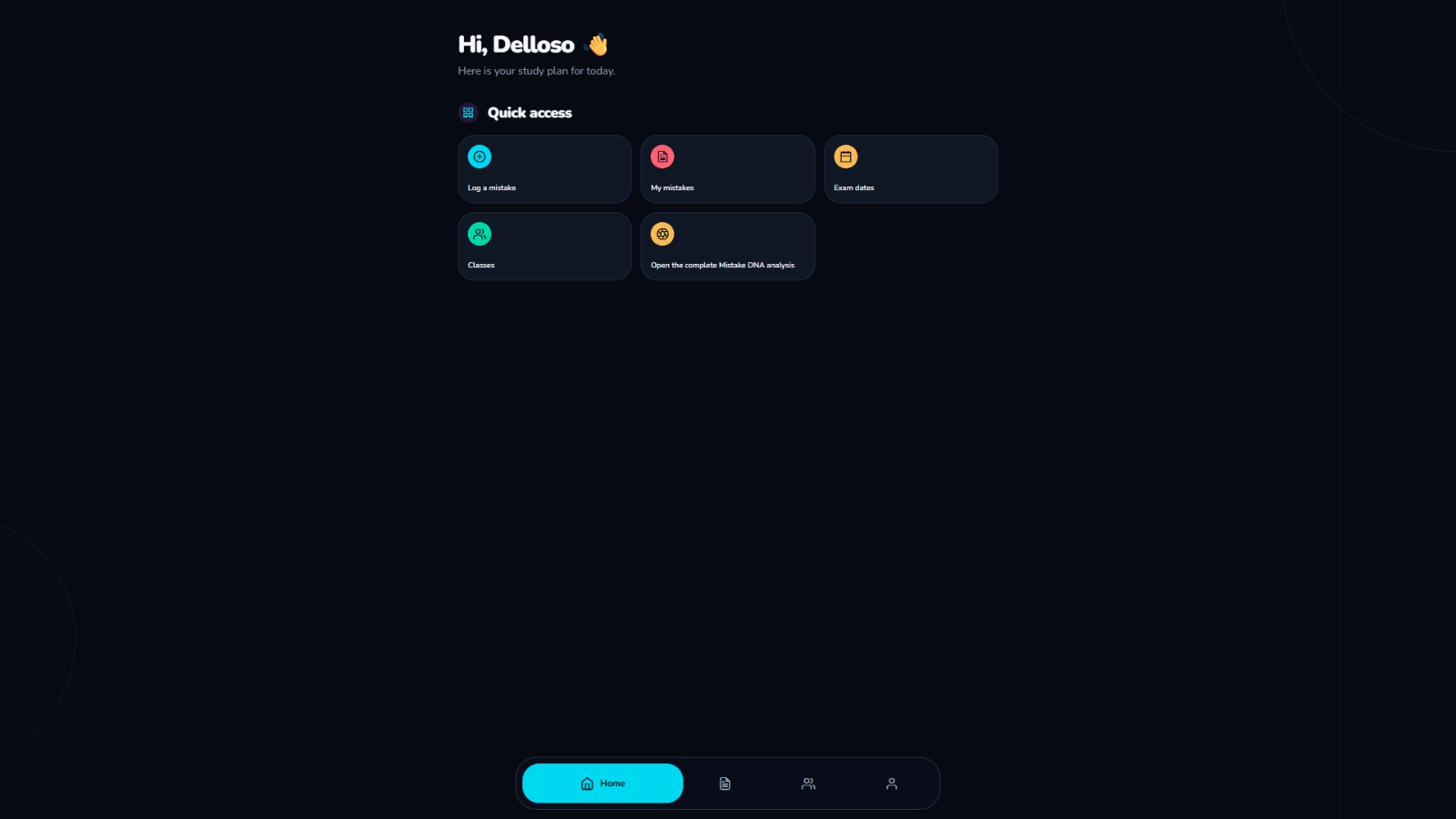
Personalized dashboard showing learning progress, weak areas, and what to review next.
-
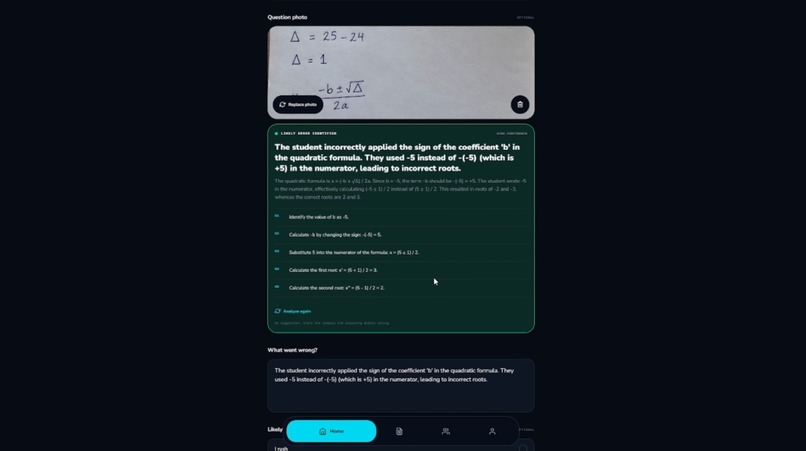
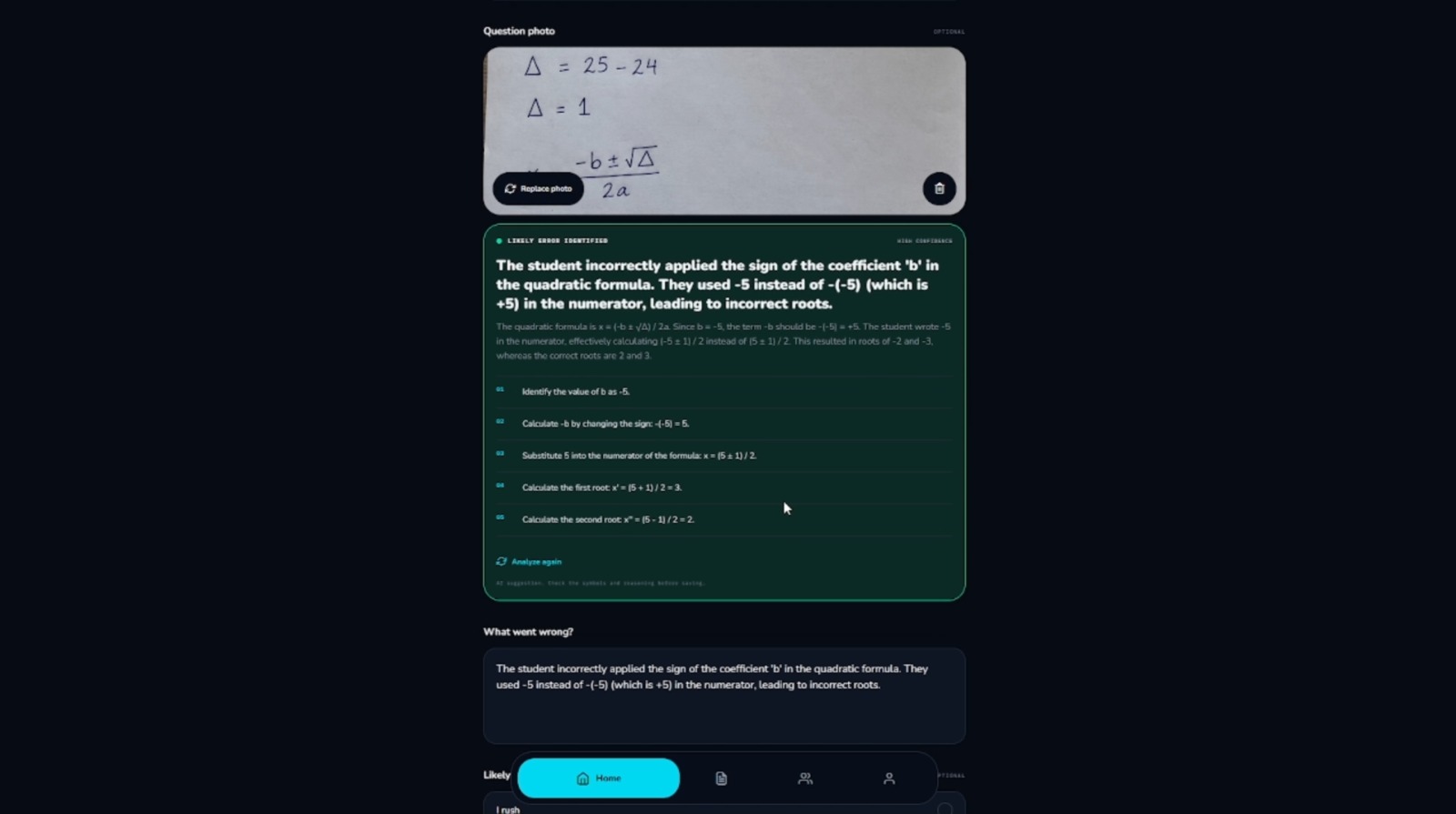
AI-powered mistake analysis explaining what went wrong and identifying the underlying skill.
-
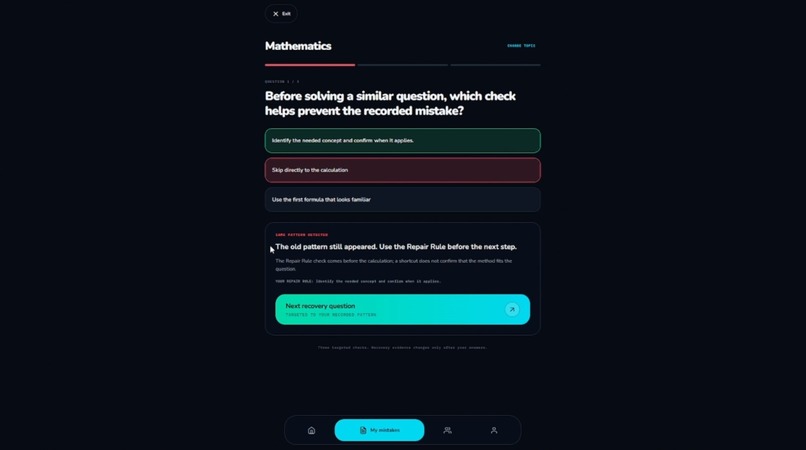
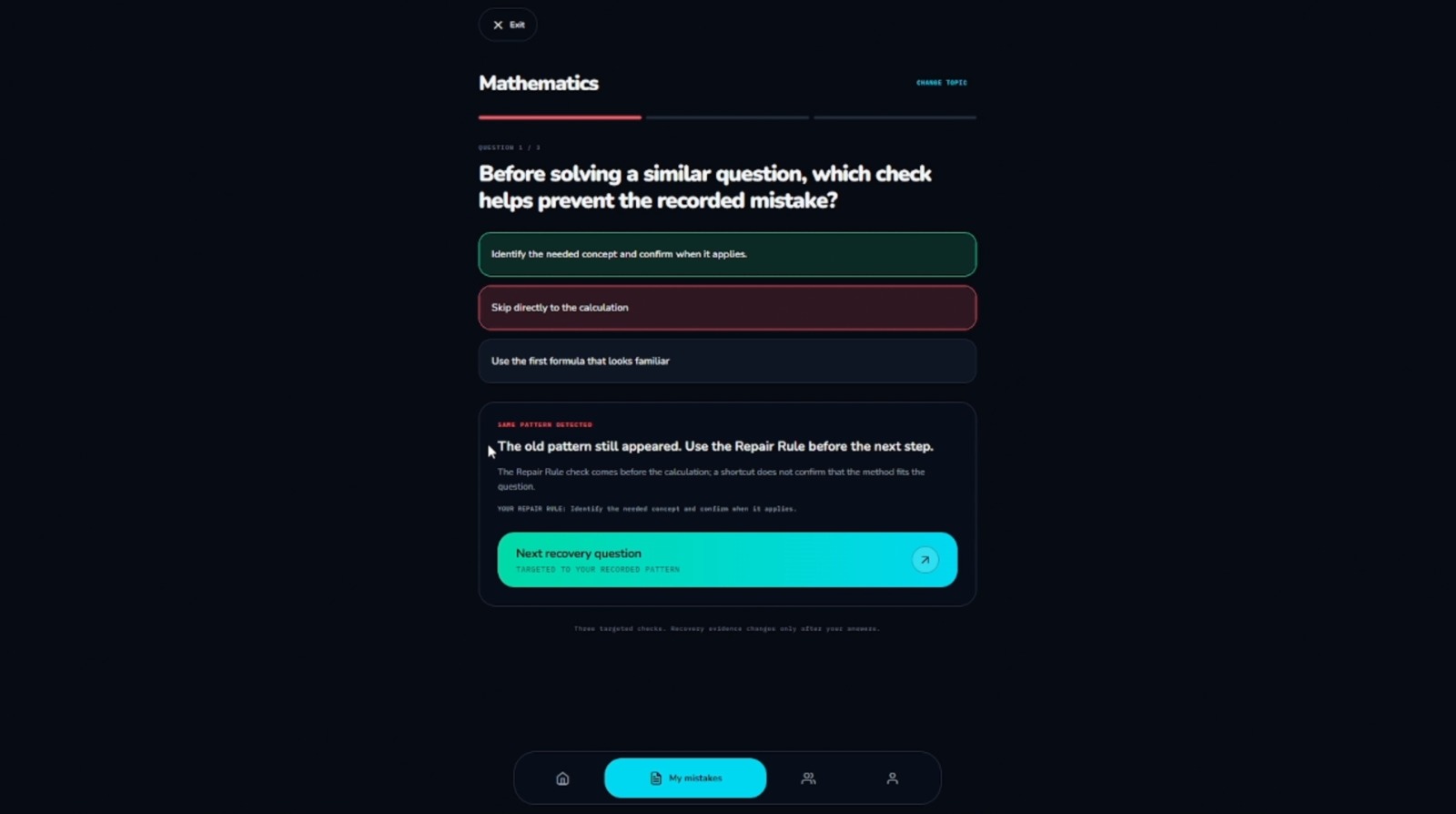
Targeted recovery practice generated from the student's mistakes and weak skills.
-
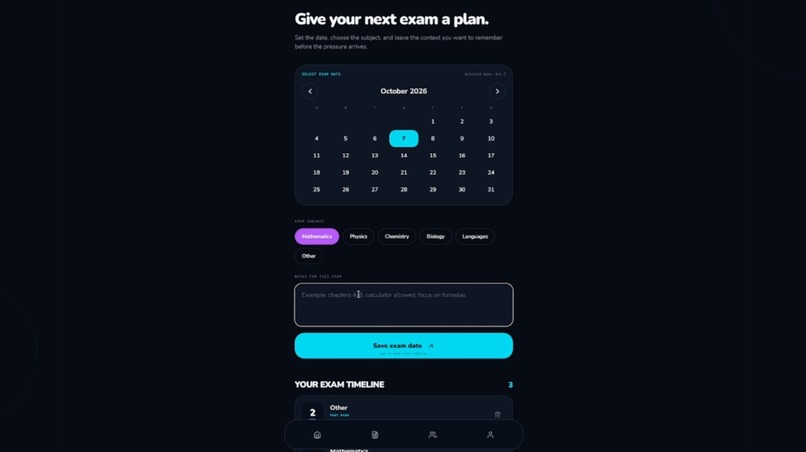
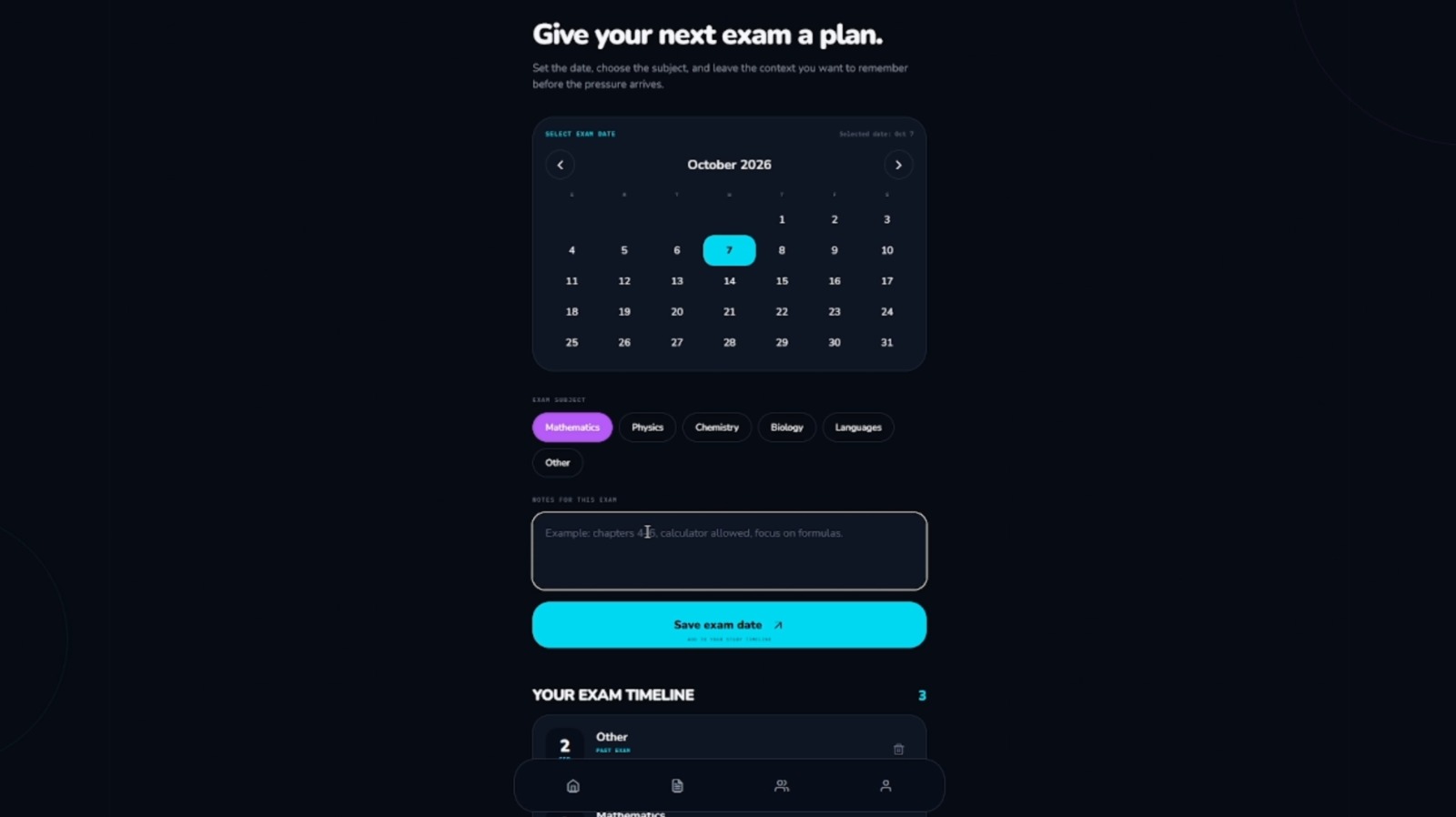
Exam preparation with target dates and skill-based study planning
-
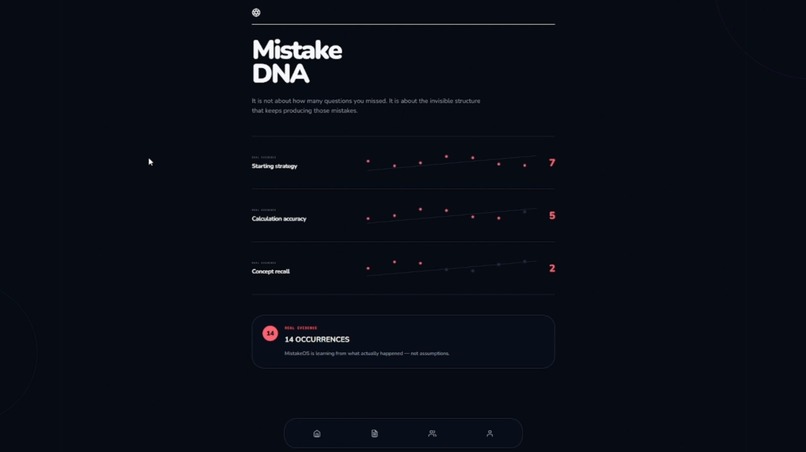
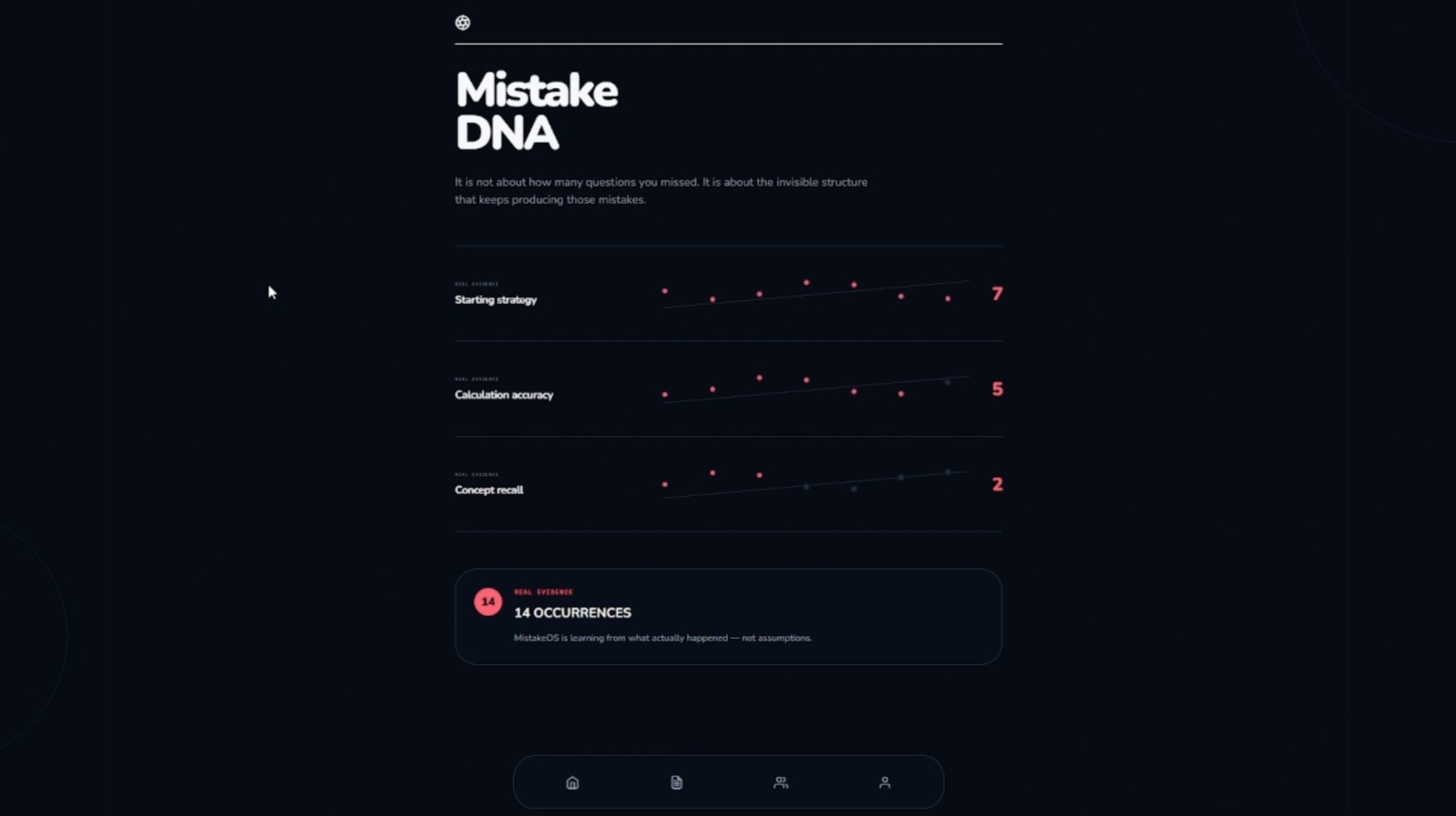
Mistake DNA reveals recurring error patterns across the student's learning history.
Inspiration
MistakeOS started from a simple problem I kept noticing as a student: getting a question wrong usually ends with checking the correct answer and moving on.
But the real problem is often not the answer itself. It is the reason behind the mistake.
Students can repeatedly make the same type of mistake without realizing there is a pattern. I wanted to build something that would remember those mistakes over time and turn them into useful learning data.
That became the core idea behind MistakeOS:
MistakeOS doesn't just correct your mistakes. It remembers them.
What it does
MistakeOS is a learning platform focused on understanding why students make mistakes and helping them stop repeating them.
Students can upload or register a question they got wrong. MistakeOS analyzes the mistake, identifies the likely reason behind it, connects it to the underlying academic skill, and saves it as part of the student's learning history.
Over time, the platform can identify recurring patterns through features such as Mistake DNA and help students understand where they are struggling the most.
Instead of simply recommending more content, MistakeOS creates targeted recovery practice based on the student's weaknesses.
The platform also includes exam preparation. Students can choose an exam they are preparing for, set a target date, and connect their assessed skills and mistakes to their preparation.
MistakeOS also supports classrooms. Authorized teachers can create classes and access aggregate learning insights to better understand where students may need support, while private mistake content remains protected.
MistakeOS Pro is integrated with RevenueCat. Premium access is managed through RevenueCat entitlements, and the application supports subscription-based access to additional capabilities.
How we built it
MistakeOS was built with React Native, Expo, and TypeScript, allowing the project to share a large part of its code across platforms.
Supabase is used for authentication, PostgreSQL data storage, Row Level Security, database functions, and backend services.
AI-powered mistake analysis runs through backend infrastructure rather than exposing provider credentials in the client.
The learning system connects mistakes to canonical academic skills so that features such as recovery practice, exam preparation, mastery, and learning insights can use the same underlying structure.
RevenueCat is used to manage premium entitlements and the MistakeOS Pro purchase flow.
One of the most important architectural decisions was separating private student information from classroom insights. Teachers can see useful aggregate information without automatically receiving access to students' private mistake photos or private analysis.
Challenges we ran into
One of the biggest challenges was turning a wrong answer into something structured enough to remain useful later.
A mistake can belong to a subject, topic, skill, exam requirement, recovery session, and long-term learning pattern. Designing these systems to work together without turning the application into a simple list of incorrect questions required several iterations.
Another challenge was keeping the system private and secure. We had to make sure that data from one account could never appear in another account, including locally cached mistakes on shared devices.
Building reliable AI analysis was also challenging. AI failures, retries, quotas, authentication, and provider errors all had to be handled without losing the student's original question.
Exam preparation created another challenge: distinguishing between skills that were truly assessed and skills for which the system simply did not have enough evidence yet.
Finally, integrating RevenueCat required making sure that premium access was based on the real RevenueCat entitlement rather than simply changing the interface locally.
Accomplishments that we're proud of
I am especially proud that MistakeOS became more than an AI question solver.
A mistake can enter the system once and later influence multiple parts of the learning experience: mistake analysis, Mistake DNA, targeted recovery, skill progress, and exam preparation.
The recovery system is also important to me because reading an explanation is not treated as proof that the student learned the concept. Students can receive new questions and demonstrate that they actually understood it.
I am also proud of the classroom architecture. Teacher access is permission-based, and classroom insights were designed without automatically exposing students' private mistake content.
Another major milestone was completing the RevenueCat integration and successfully validating MistakeOS Pro through RevenueCat's Test Store and entitlement system.
Finally, building MistakeOS as a student made the project very personal. I am building a tool for a problem that I experience myself.
What we learned
Building MistakeOS taught me that educational software is not only about generating answers or content.
The most valuable information can sometimes come from what a student gets wrong.
I also learned how important it is to distinguish between having data and having evidence. If MistakeOS has never assessed a skill, it should not pretend that the student mastered or failed it.
On the technical side, I learned much more about authentication, database design, Row Level Security, API security, AI infrastructure, subscriptions, testing, and building systems that need to remain reliable across different user accounts.
I also learned that AI works better as part of a system than as the entire product. The goal of MistakeOS is not simply to generate an explanation. The goal is to remember what happened and use that information to make the student's next learning decision better.
What's next for MistakeOS
The next step is expanding MistakeOS to support more entrance exams and academic programs.
I also want to create more integrations so that mistakes can become part of MistakeOS without students always needing to register them manually.
Another major direction is a personalized AI tutor that can use a student's mistake history, progress, weak skills, and previous recovery attempts as context.
Instead of starting every conversation from zero, the tutor could understand what the student has struggled with before and help decide what they should study next.
The long-term goal is simple:
Make every mistake useful.
Built With
- education
- expo.io
- ia
- postgresql
- react-native
- revenuecat
- supabase
- typescript


Log in or sign up for Devpost to join the conversation.