Inspiration
We wanted to solve a real-world problem where AI can make a measurable impact: maritime traffic congestion and vessel conflicts. Our vision was to build an autonomous system that can predict, reason, and coordinate before small disruptions become major incidents.
What it does
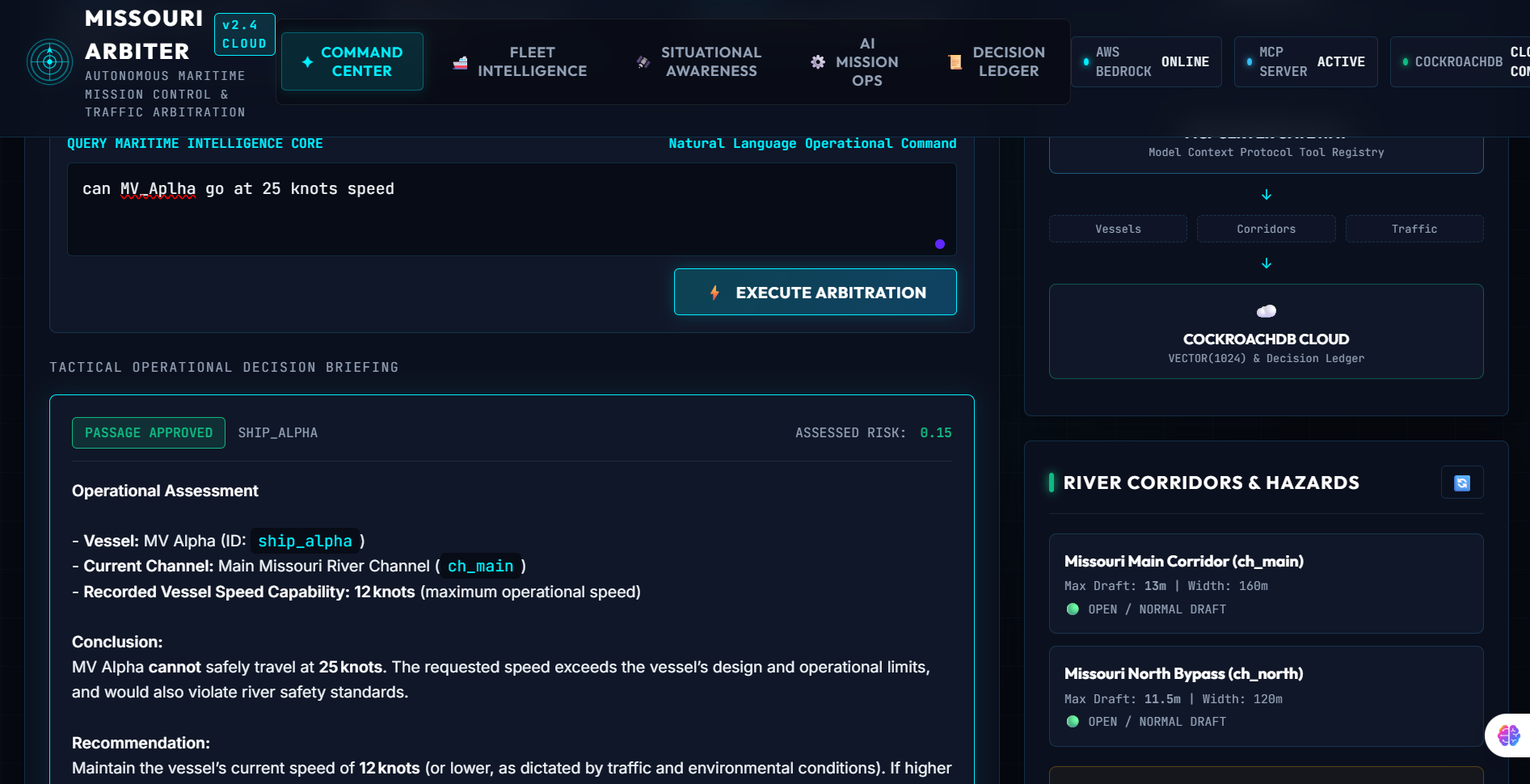
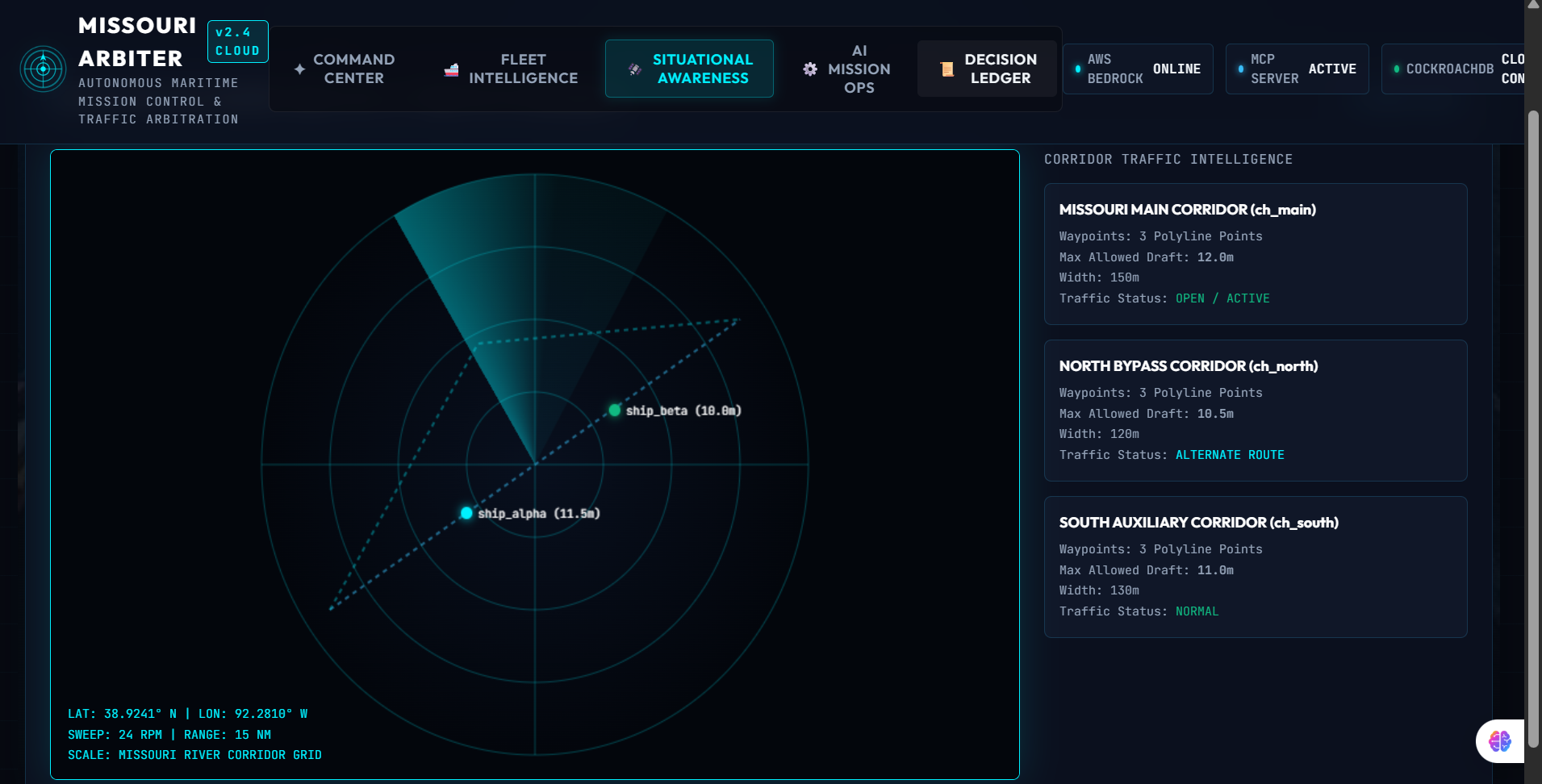
MISSOURI ARBITER is an AI-powered maritime traffic orchestration engine. It detects conflicts, evaluates constraints, simulates outcomes, and coordinates vessels and resources in real time.
How we built it
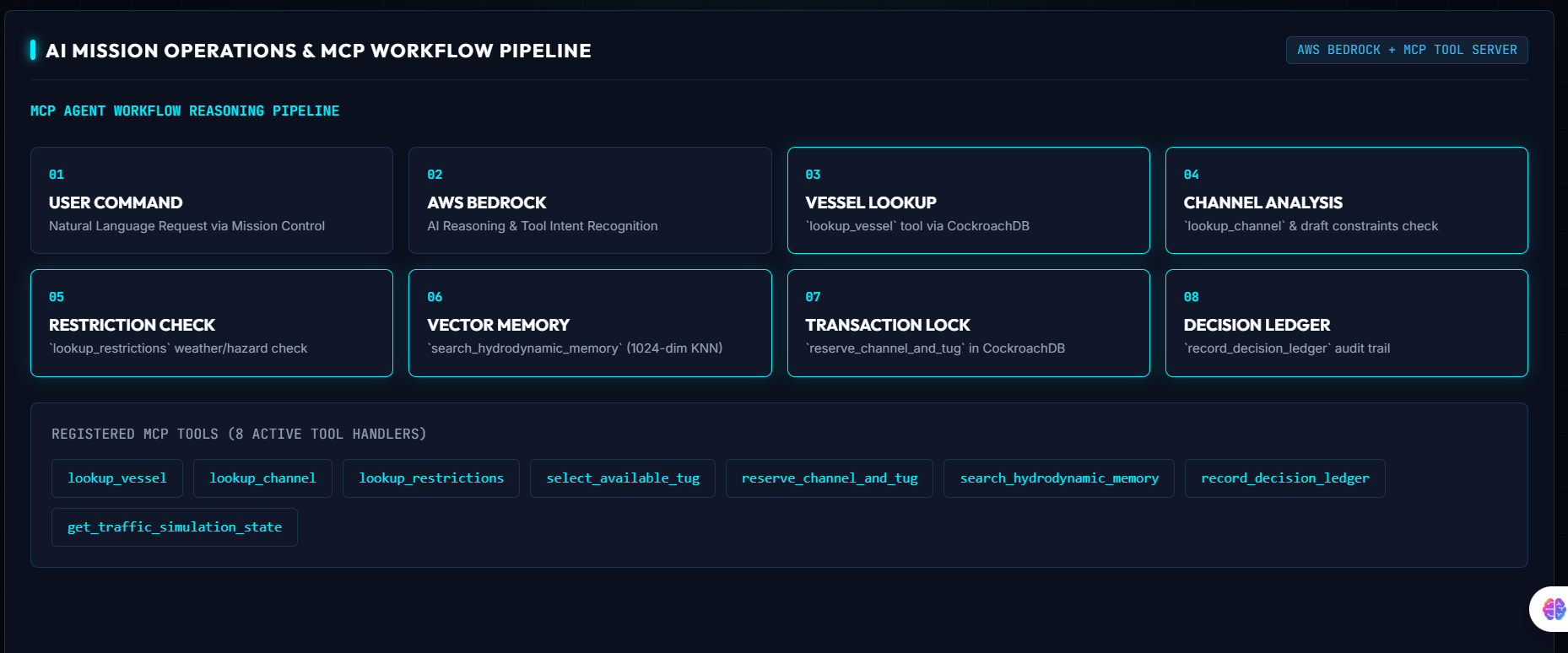
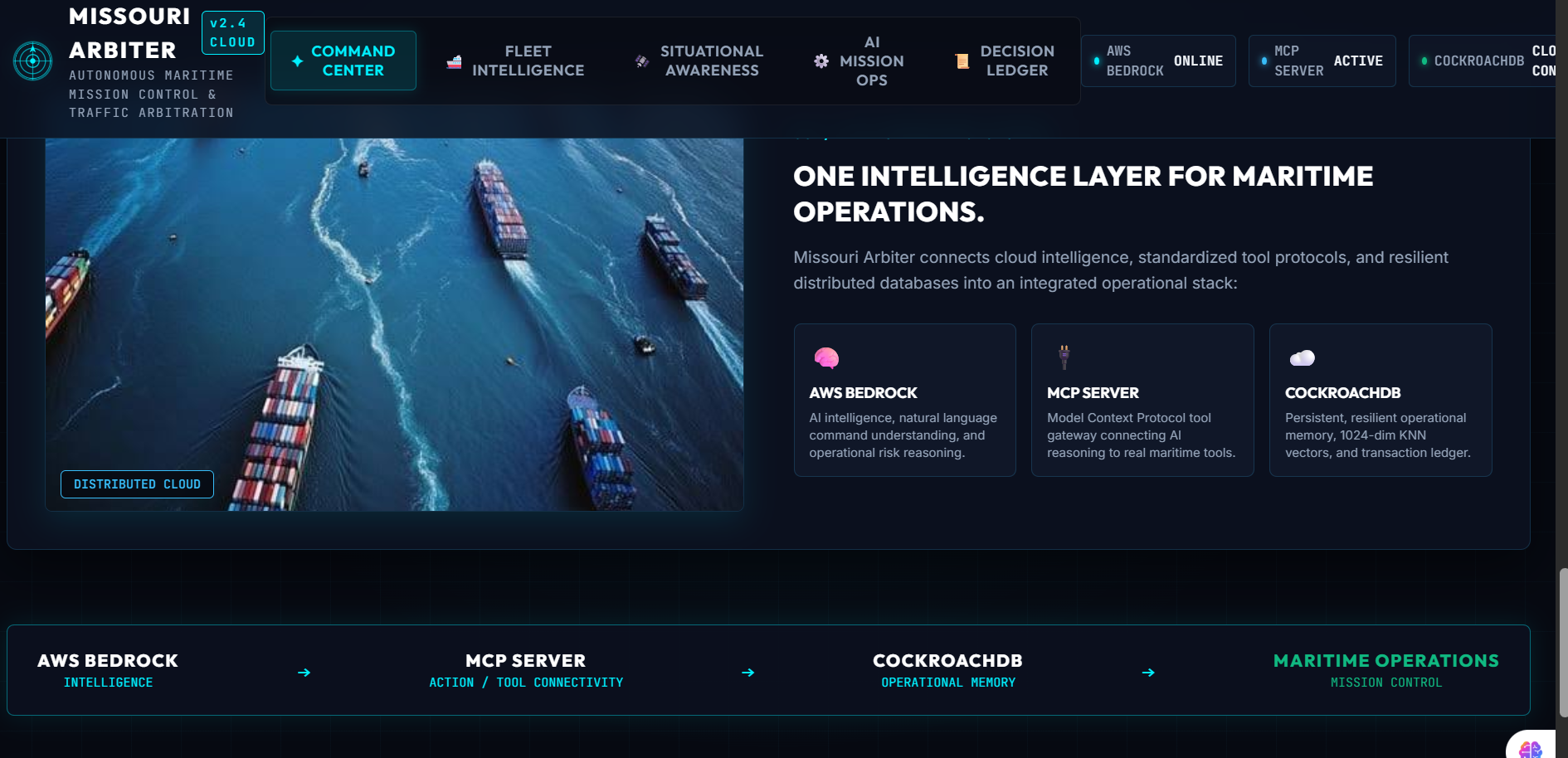
We combined Amazon Bedrock, CockroachDB Cloud, FastAPI, and multi-agent AI orchestration. CockroachDB provides distributed operational + vector memory, while AI agents handle reasoning, simulation, and decision-making.
Challenges we ran into
The biggest challenge was making AI decisions reliable under changing weather, vessel priorities, channel constraints, and cascading conflicts. Integrating multiple AI agents, real-time state, database memory, and tool execution into one reliable system was also challenging.
Accomplishments that we're proud of
We built a working end-to-end system that can detect conflicts, make decisions, execute actions, and maintain an explainable decision ledger. We successfully integrated cloud infrastructure, AI reasoning, distributed memory, and autonomous tool execution.
What we learned
We learned that effective agentic AI requires more than an LLM—it needs structured memory, reliable tools, constraints, and observability. We also learned how distributed databases can give AI agents persistent operational memory.
What's next for MISSOURI ARBITER
Next, we aim to integrate live AIS, weather, port, and ocean data and expand the simulation capabilities. Our long-term vision is an autonomous coordination layer for global maritime corridors and mega-ports.
Built With
- amazon-web-services
- cockroachdb
- fast-api
- multi-agent-ai
- python
- vector-memory


Log in or sign up for Devpost to join the conversation.