-
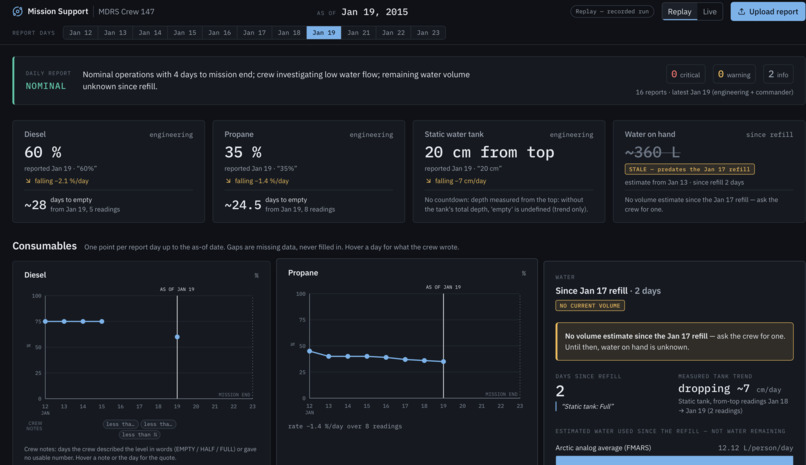
Image of UI
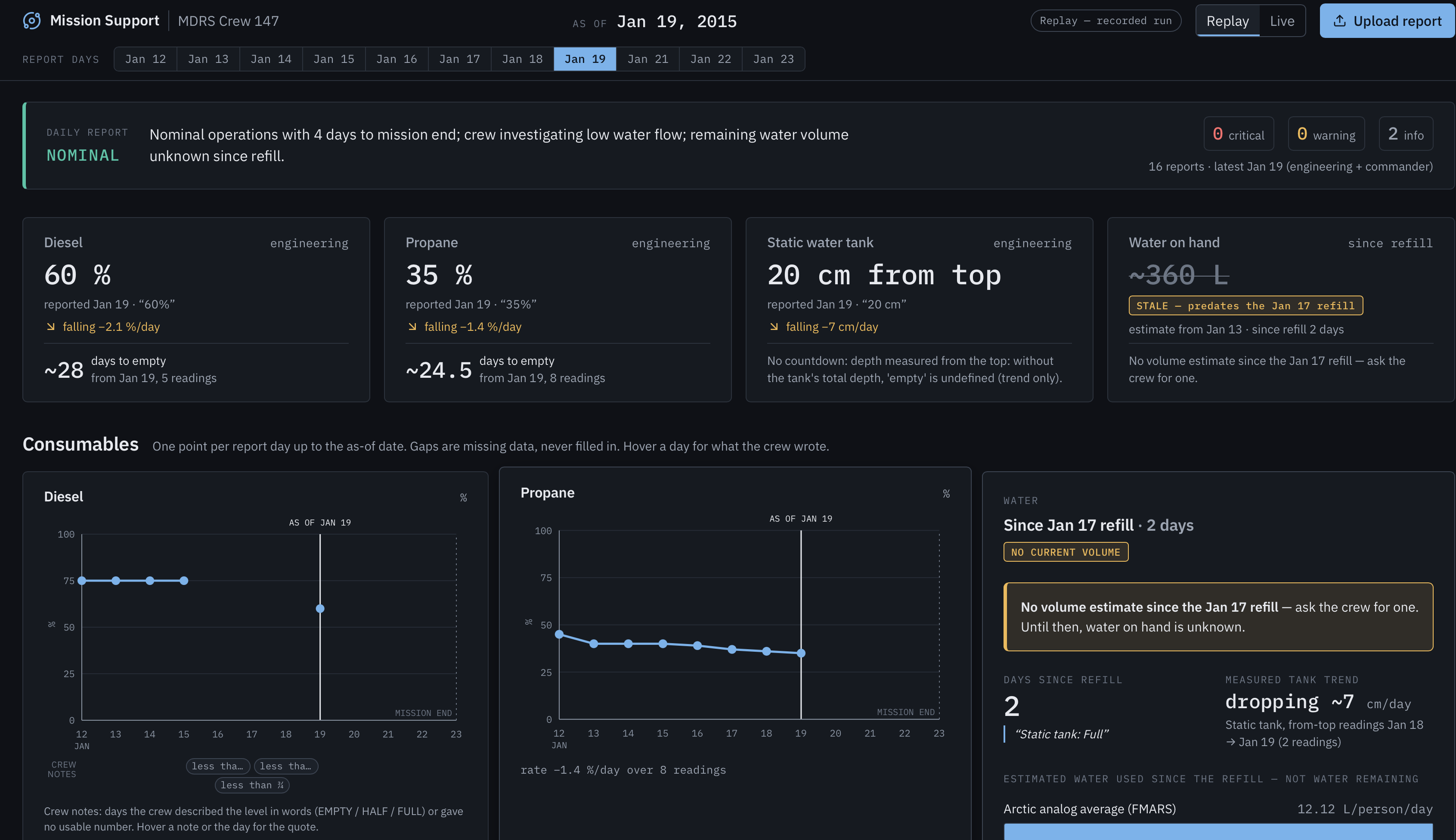
Inspiration
The MDRS provided real data and problems to solve.
What it does
Takes in daily reports from mission engineer and commander to create an AI powered dashboard analyzing resource use, potential flags, and drafting messages to Earth.
How we built it
Using the real data from the MDRS we decided what information would be most useful for the crew. We took into account how the data would be best presented and what would be most useful for them to know. We uploaded the data as .txt files and worked with the Gemini API to pull information and analyze through an agentic process. Claude Code was used to develop most of the code.
Challenges we ran into
Difficulty with data as not every report included all the information necessary and we focused on not fabricating any inputs. Every input is real from the source. We ran into issues developing the UI in a way that seemed user friendly and accounted for the data we had.
Accomplishments that we're proud of
Proud of the finished product's ability to include all of the information from inputted data accurately and display it in a way that can be easily interpreted.
What we learned
We learned about the dangers/risks in space missions and how the process works to communicate with Earth. We also learned how to use live agents for automating production features.
What's next for Mission Support
Read tank sensors directly, so no one types readings Take it beyond Mars: polar research stations, ships at sea, disaster relief camps, off-grid communities

Log in or sign up for Devpost to join the conversation.