-
-
Mission Control OS CJ Moneyway Media
-
The Founder Problem
-
Mission Control Workflow
-
Pubishable Intelligence
-
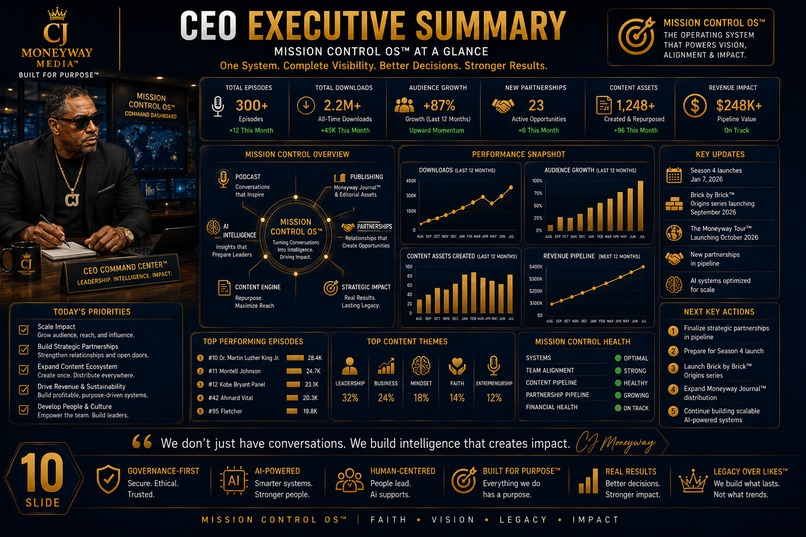
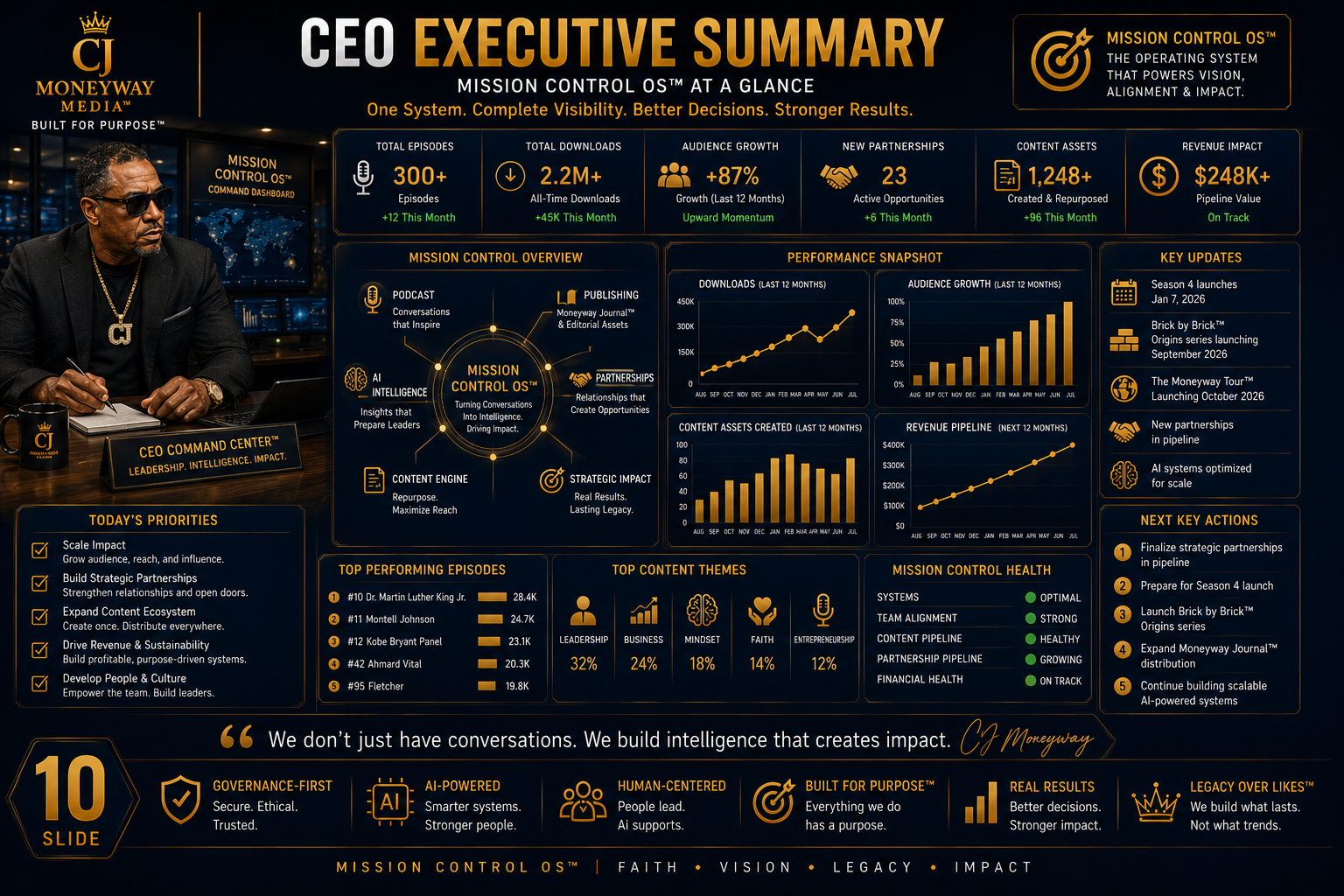
CEO Executive Summary
-
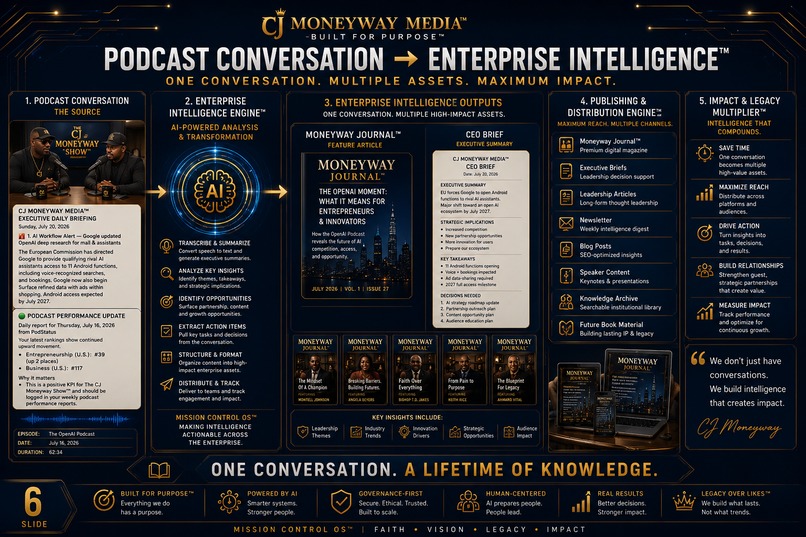
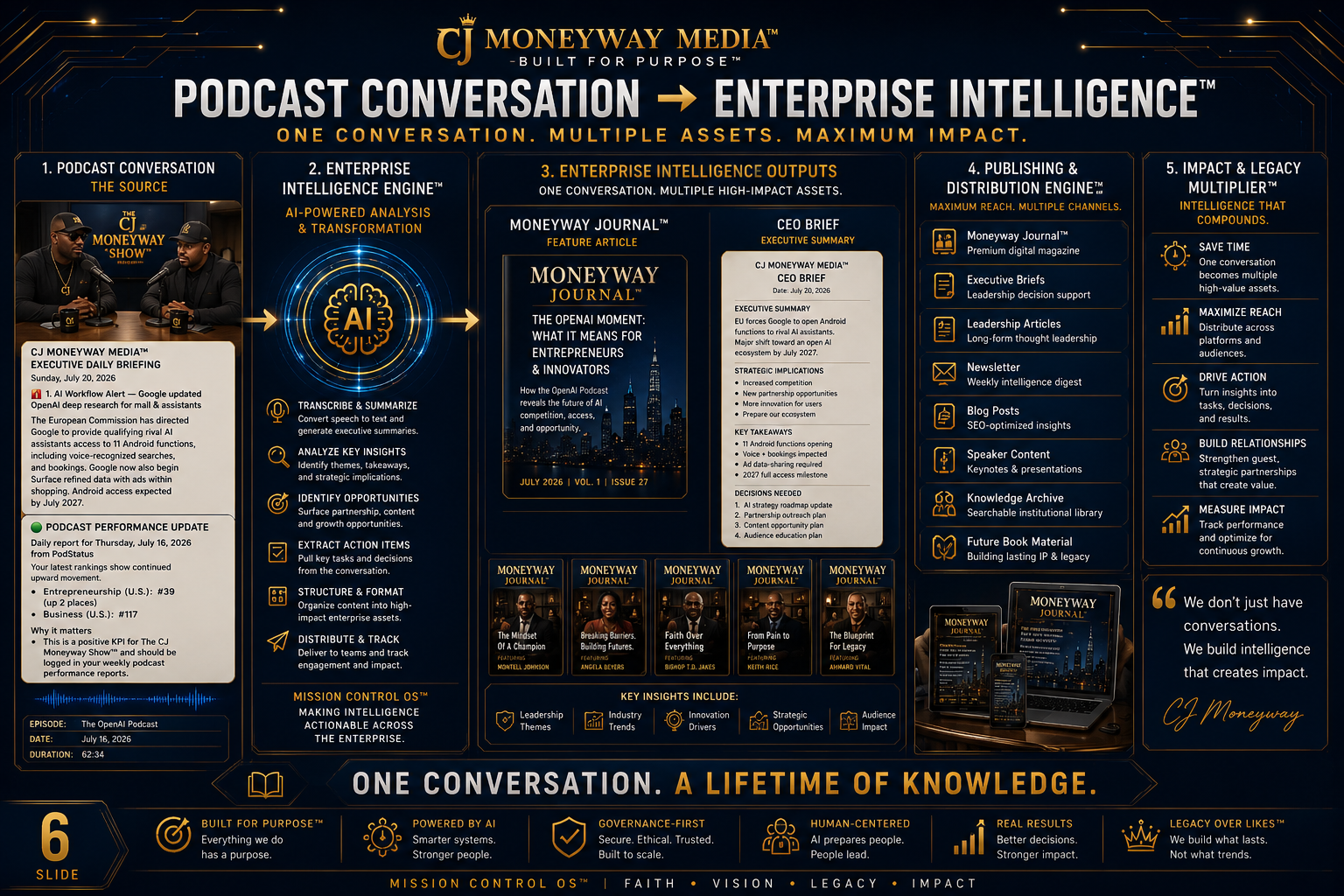
Podcast Conversation-Enterprise Intelligence
-
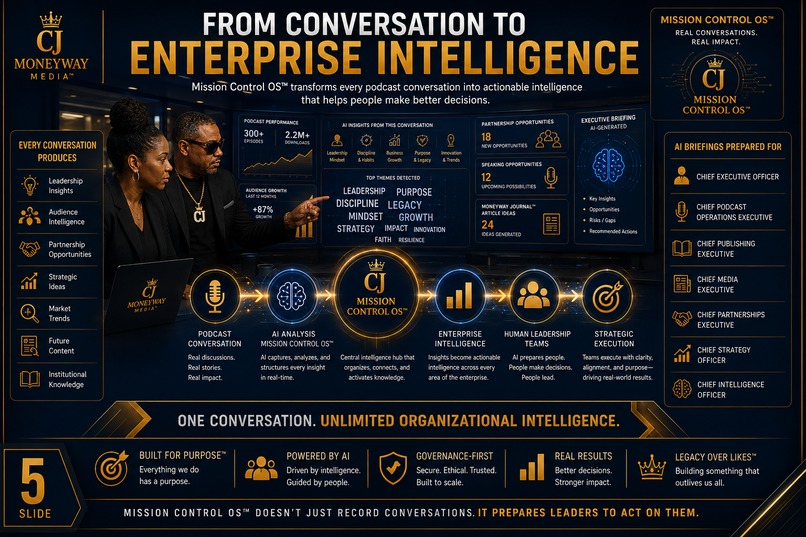
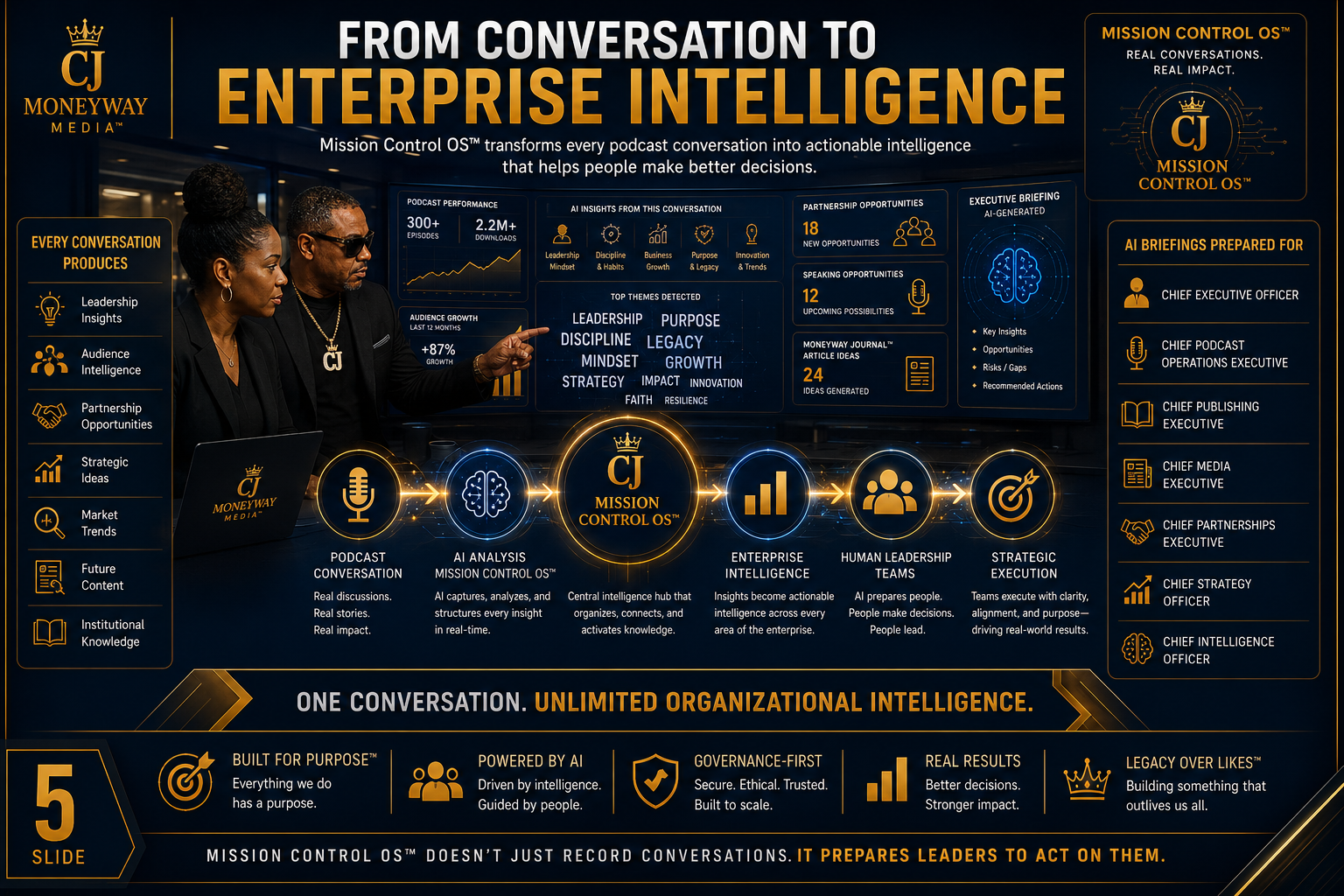
Enterprise Intelligence
-
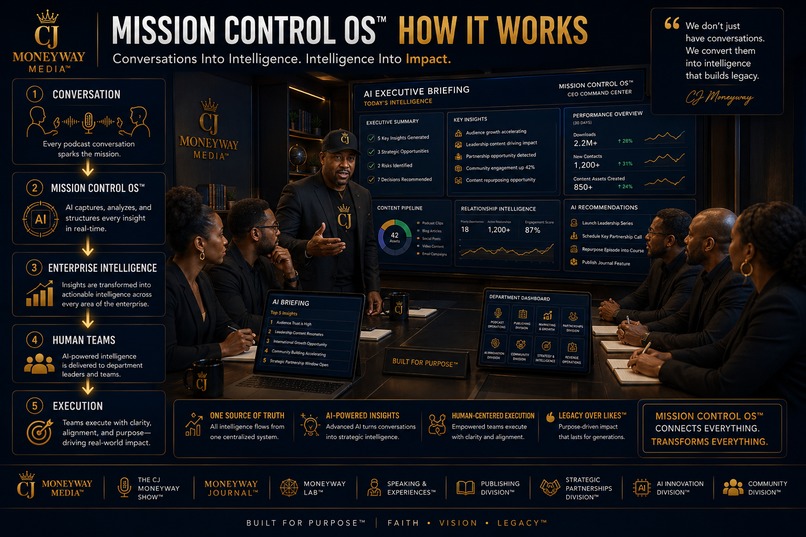
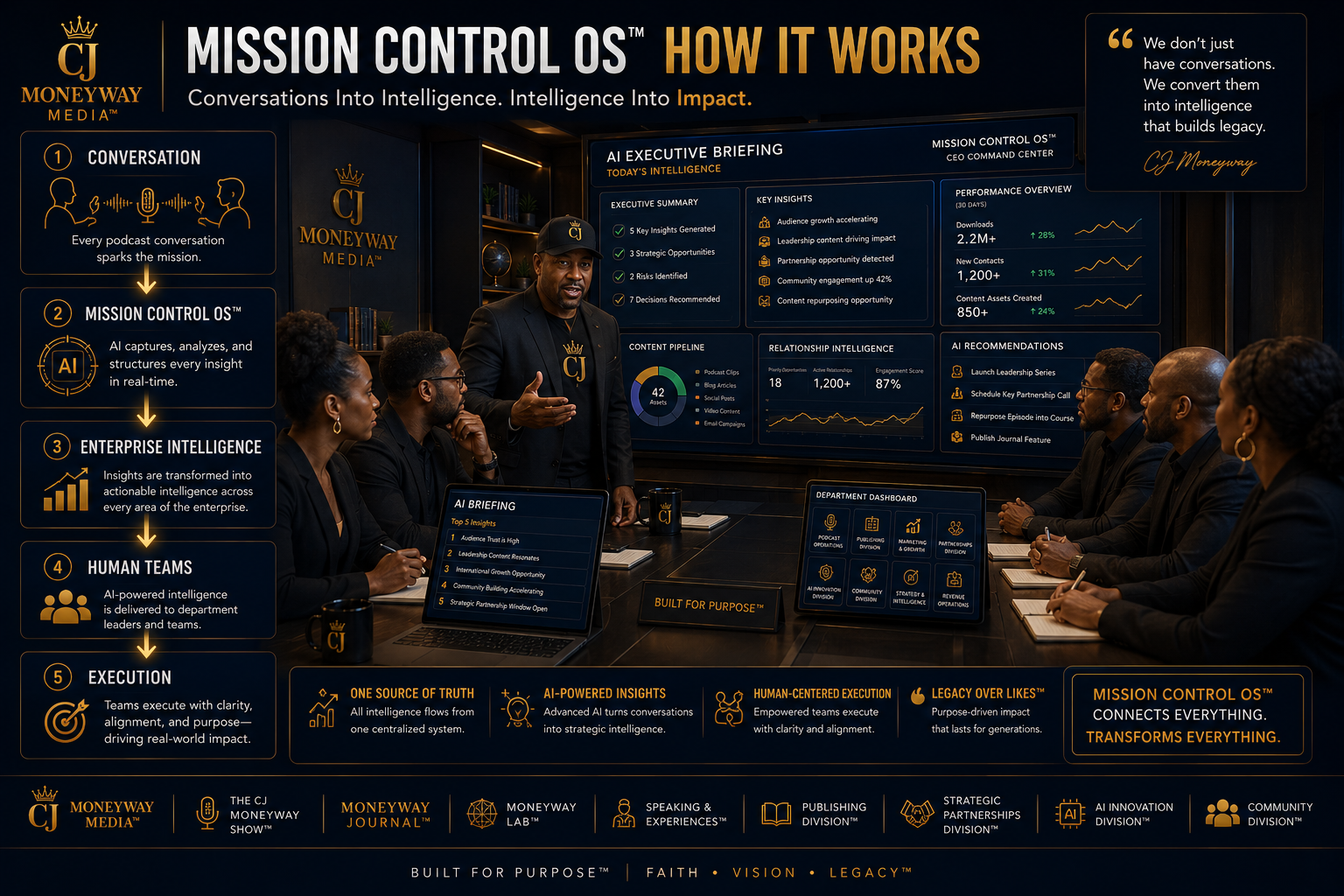
Mission Control OS How It Works
-
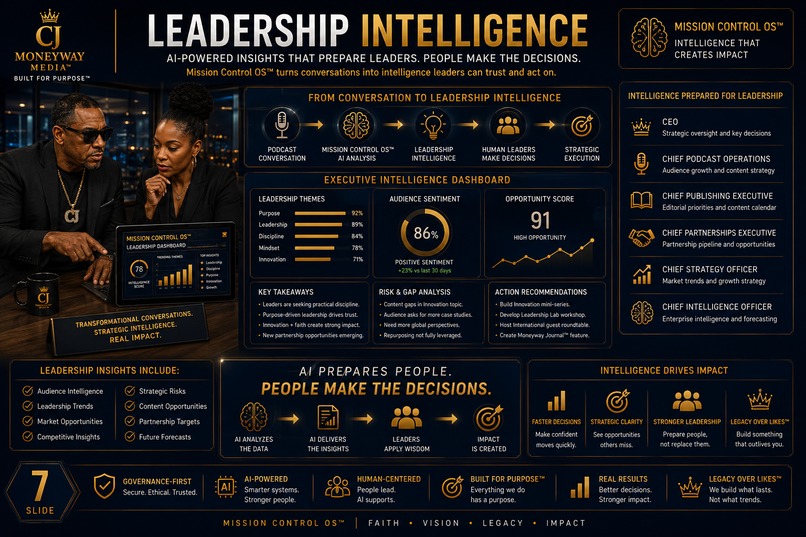
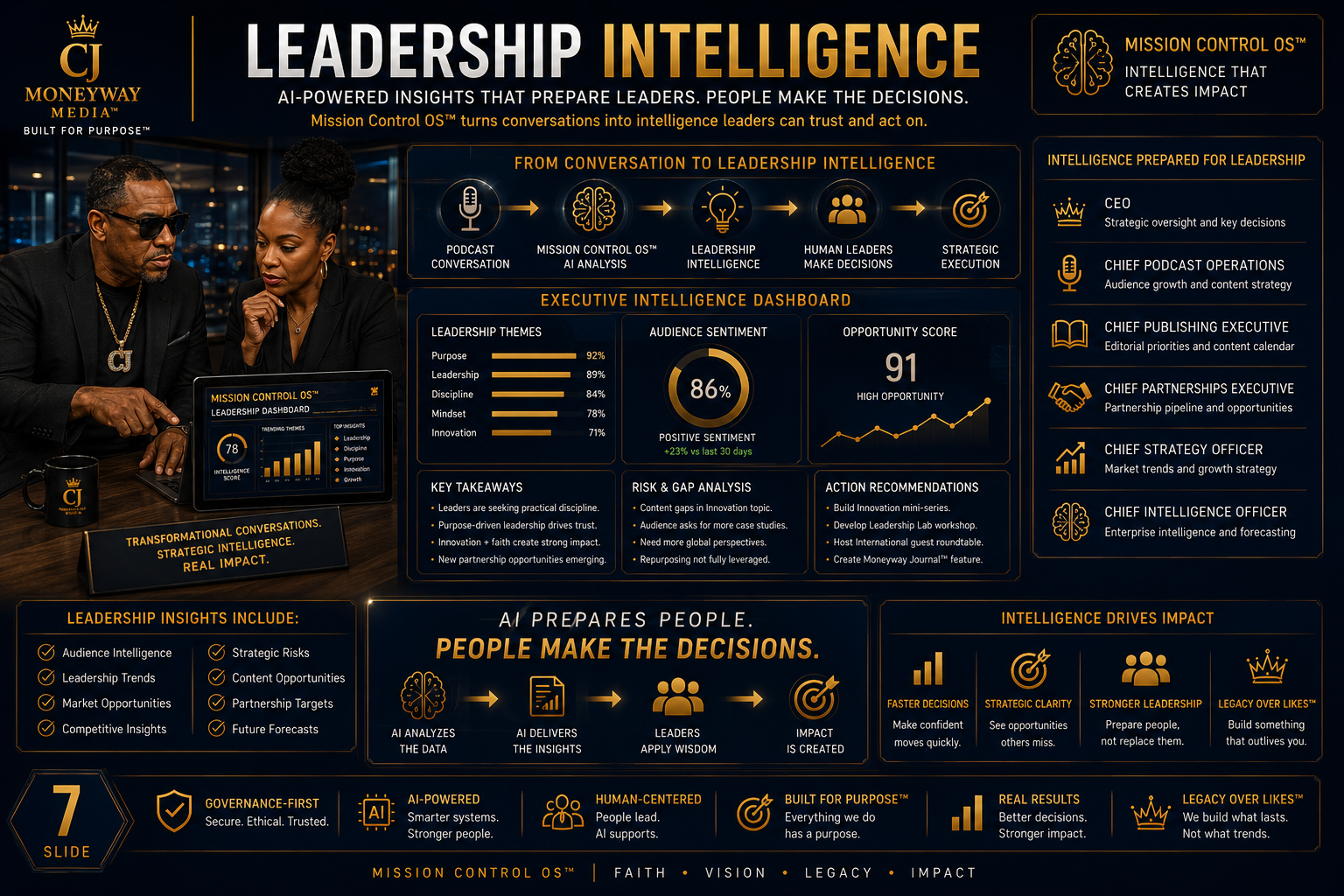
Leadership Intelligence
-
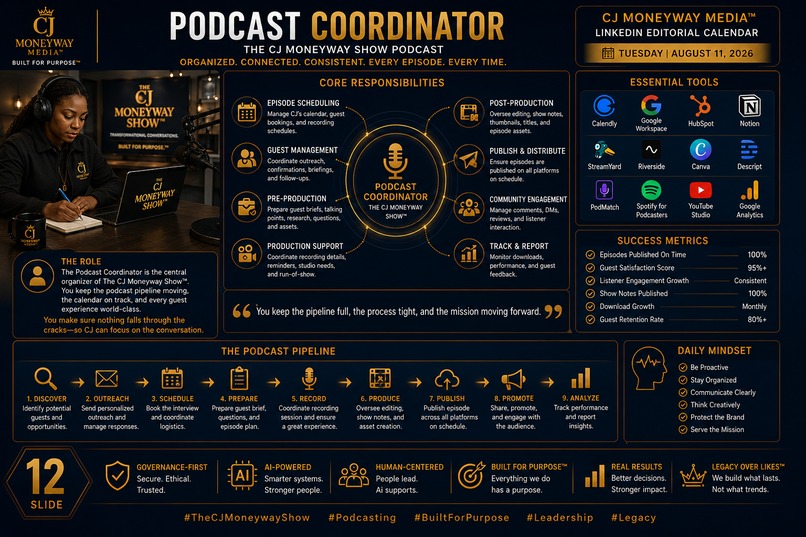
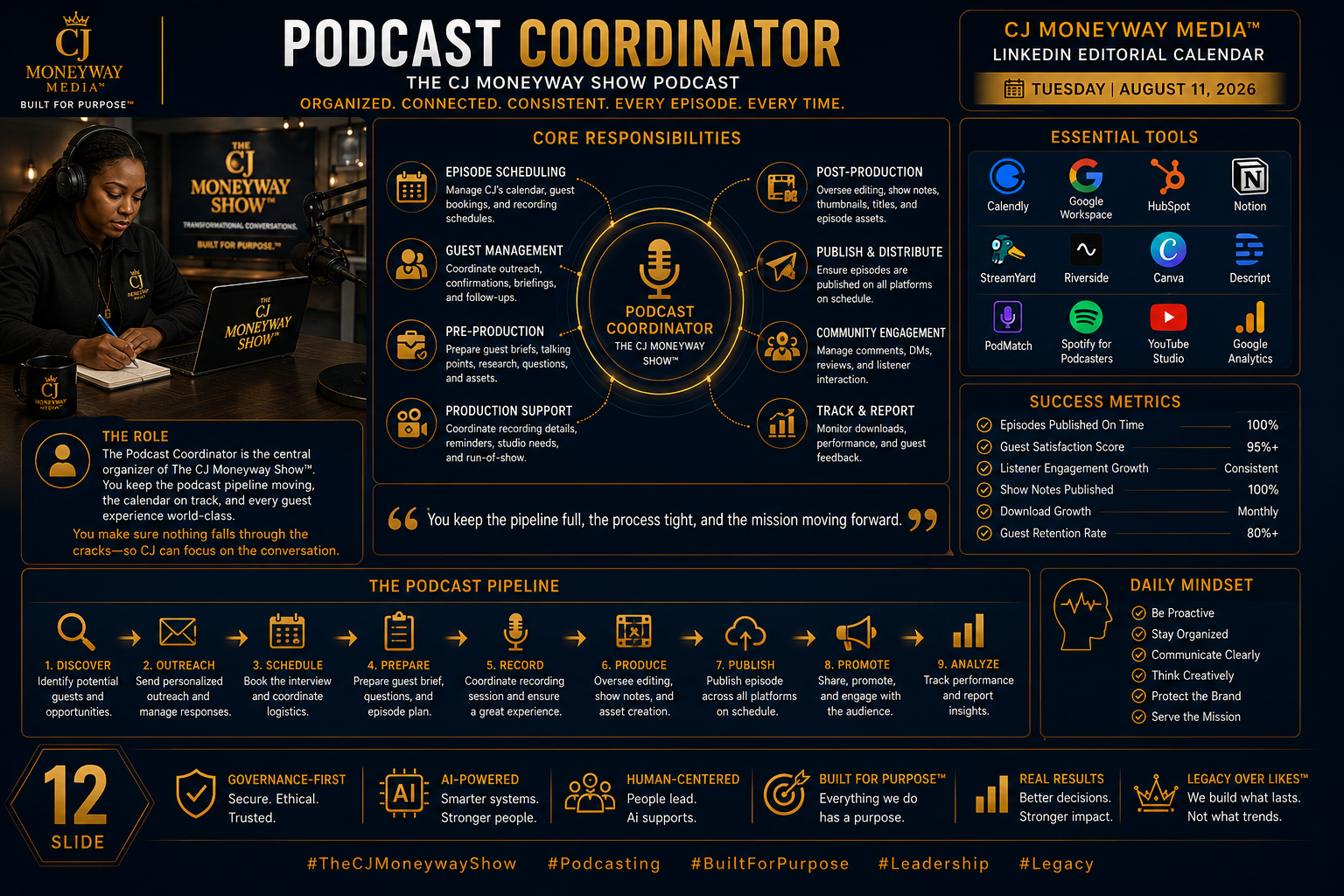
Podcast Coordinator
-
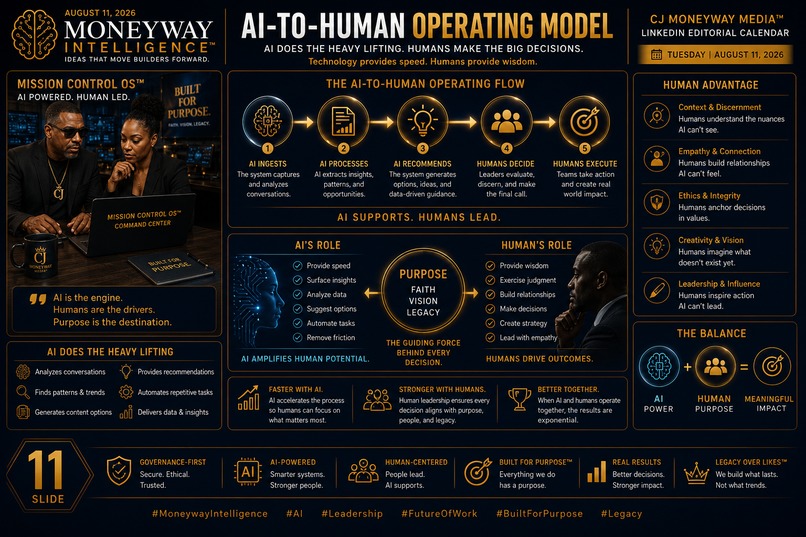
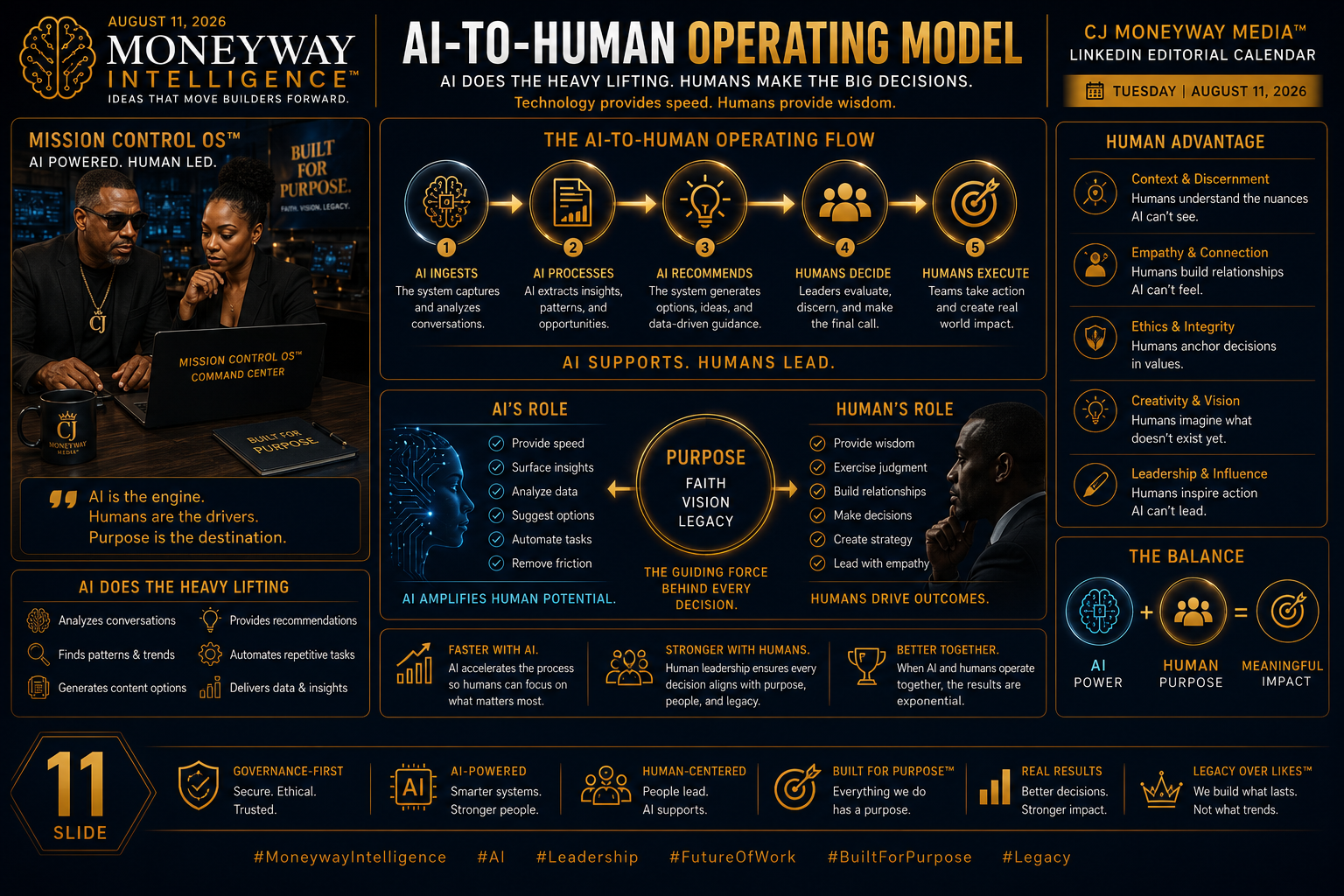
AI-To-Human Operating Mode
-
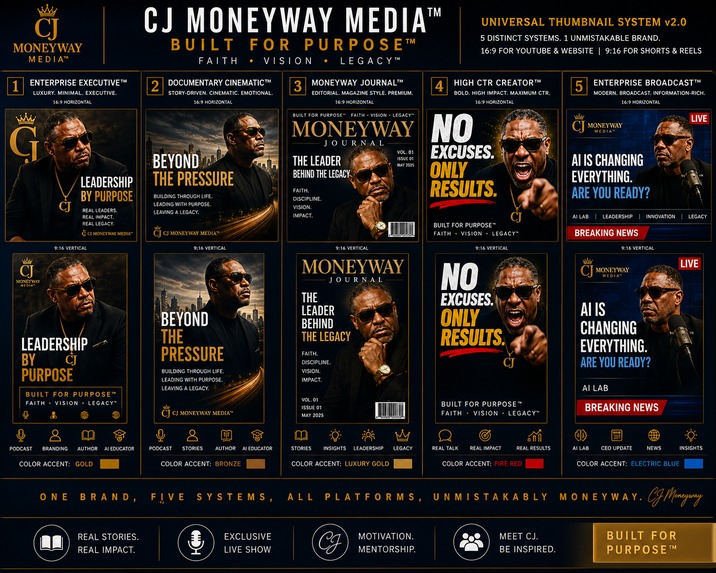
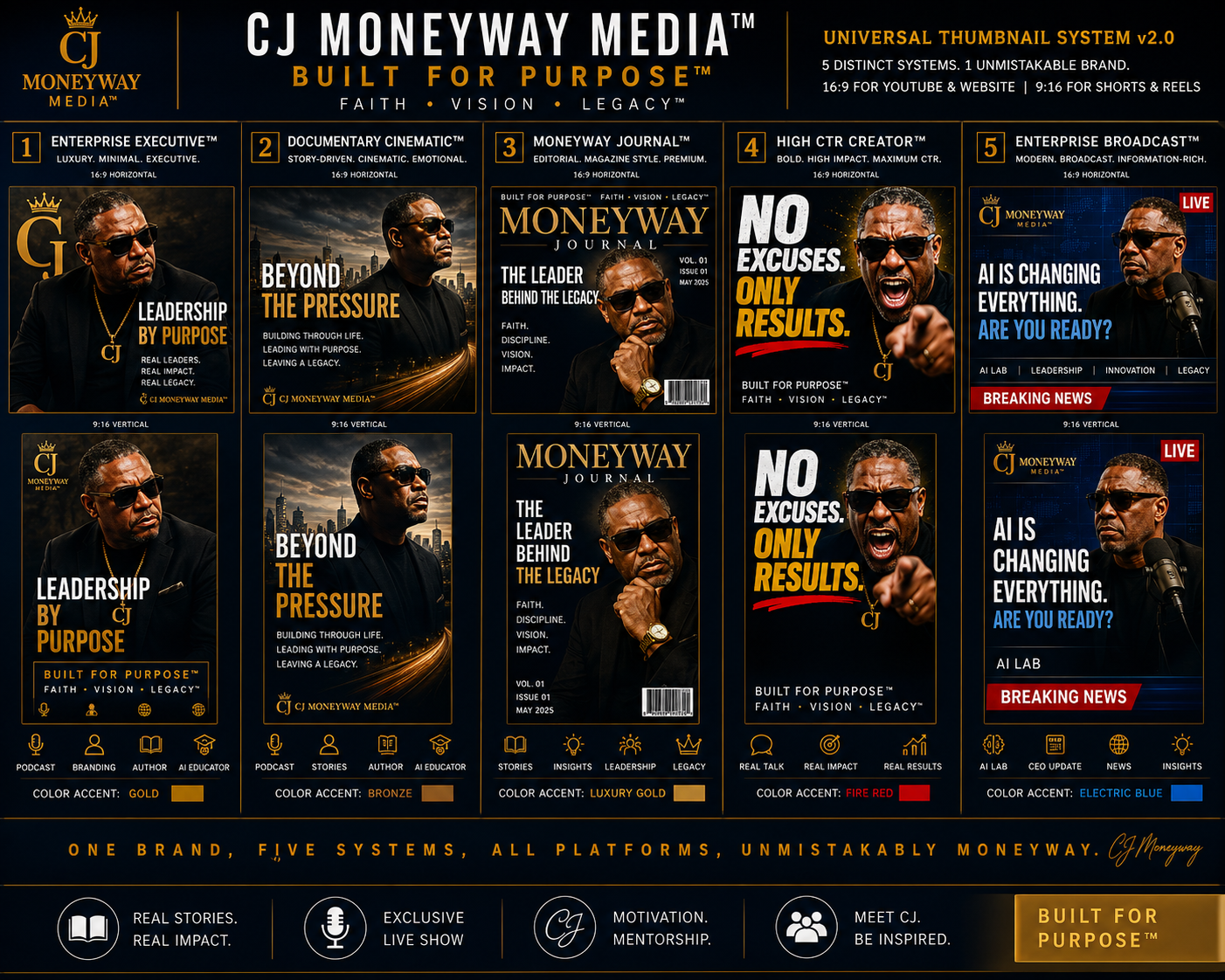
CJ Moneyway Media "Build For Purpose"
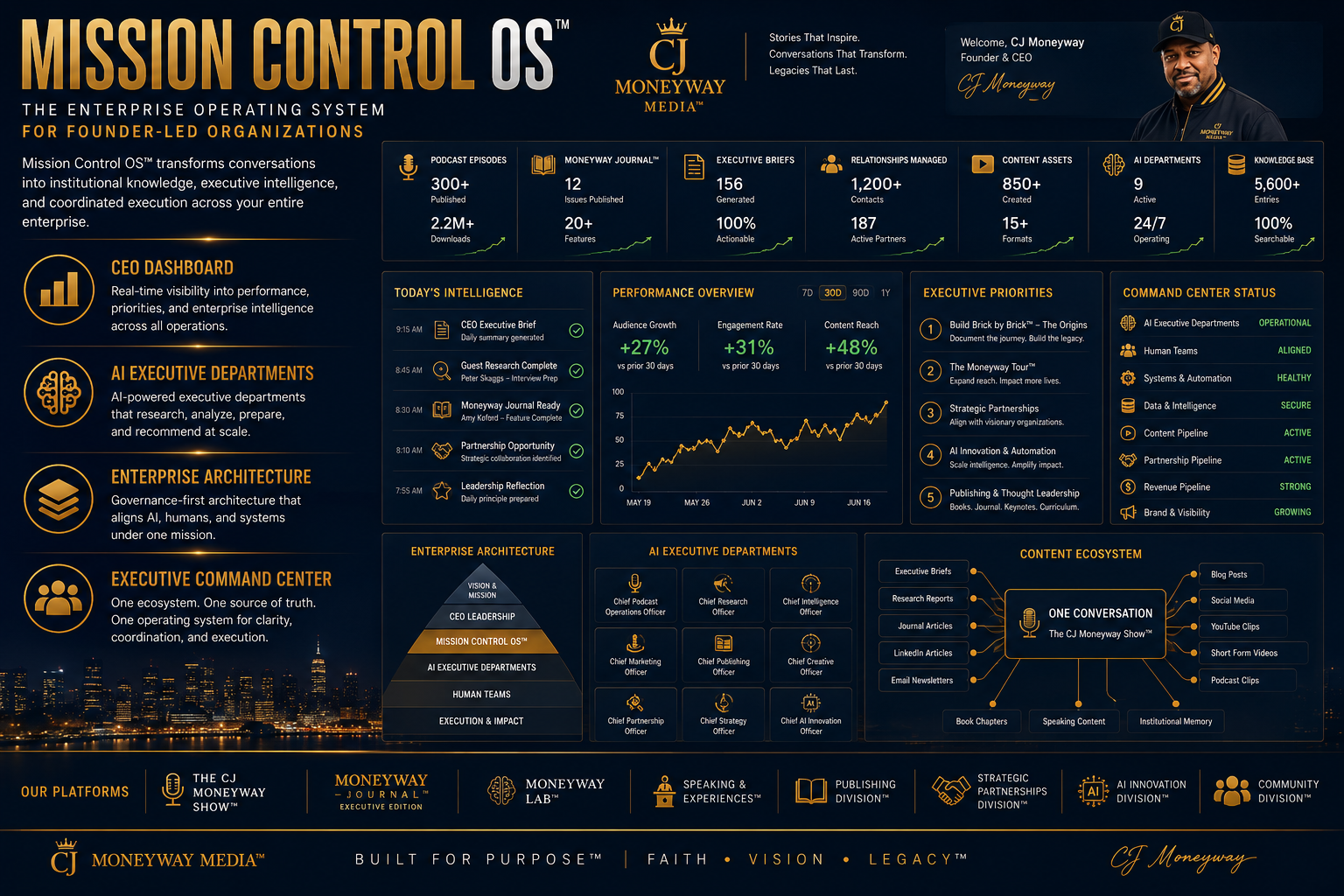
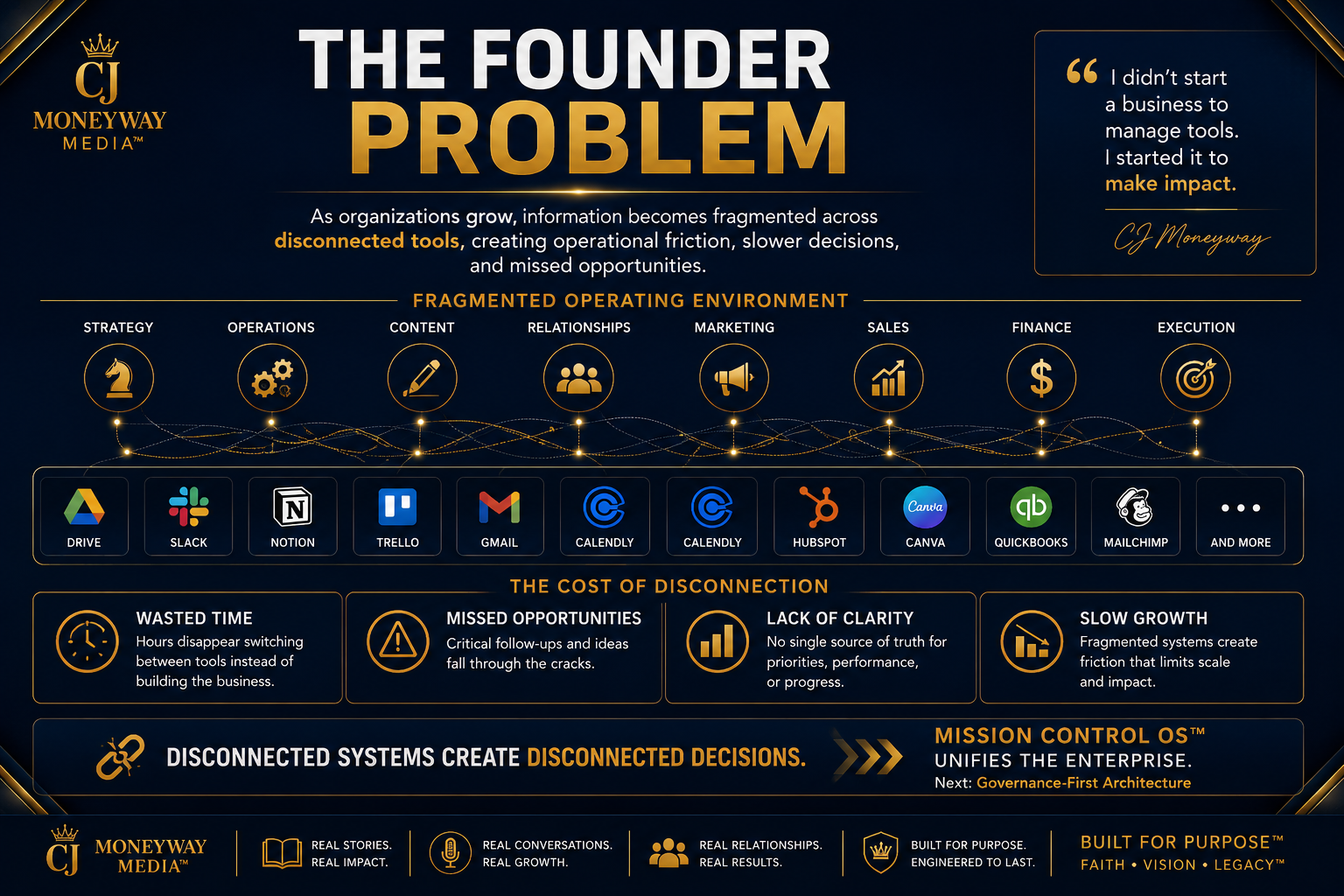
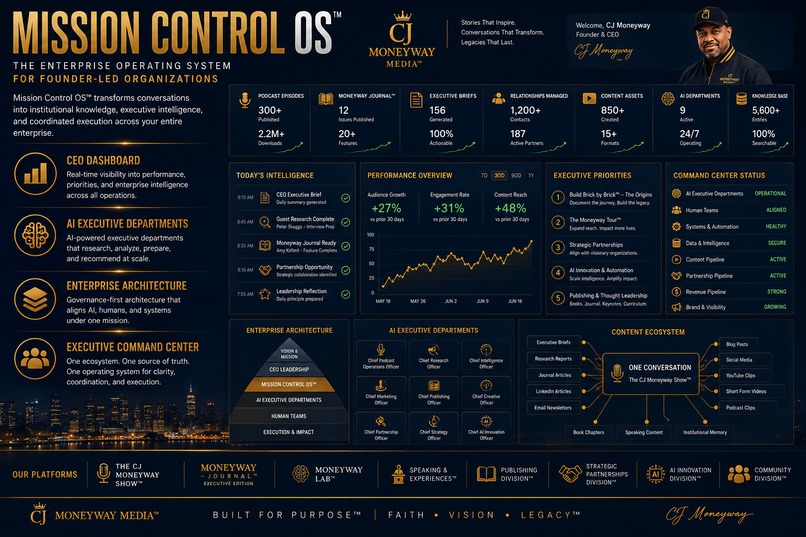
Inspiration: Mission Control OS™ grew from a challenge I experience every day as founder and CEO of CJ Moneyway Media™.
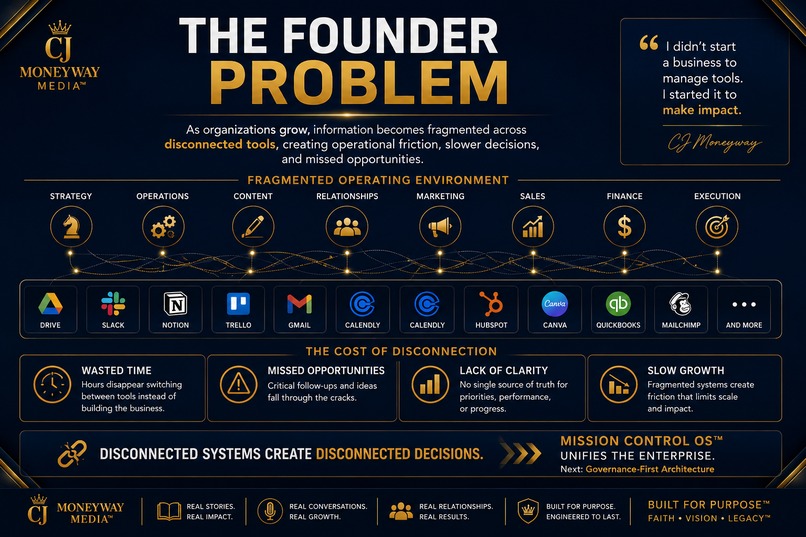
Founders and small organizations constantly move between strategy, operations, marketing, research, relationships, publishing, and execution. Important decisions become scattered across conversations, documents, emails, meeting notes, and disconnected AI tools.
AI has become increasingly capable, but most systems still operate as isolated assistants. They may complete individual tasks, but they do not understand how departments work together, how leadership decisions should be governed, or how organizational knowledge should be preserved.
I wanted to answer a different question:
What if AI could prepare an organization for its people instead of replacing them?
That question became the foundation of Mission Control OS™.
The idea became even more tangible when I hired a Podcast Coordinator during the project. Instead of entering an undefined role, she could enter a department with established responsibilities, workflows, standards, and onboarding instructions—and potentially grow from Podcast Coordinator to Vice President of Podcasting as the organization expands.
Mission Control OS™ is designed to help make that kind of organizational growth possible.
What it does: Mission Control OS™ is an AI-powered executive command center that transforms conversations, meetings, documents, and organizational knowledge into coordinated enterprise intelligence.
Built for leverage—not busywork—the system organizes work through specialized executive and departmental roles rather than relying on one general-purpose assistant.
Depending on the directive and available information, Mission Control OS™ can help produce:
CEO Executive Summaries Leadership insights Moneyway Journal™ executive articles Content-repurposing opportunities Relationship intelligence Follow-up recommendations Partnership opportunities Operational action plans Department-specific work products Searchable organizational knowledge Decision and execution records
The goal is not simply to generate more content. It is to help leadership route work, preserve context, identify tradeoffs, and prepare human teams to execute.
A governance-first operating model
Most AI systems begin with agents.
Mission Control OS™ began with governance.
Before developing the prototype, I documented the organizational principles the system would need to follow:
Mission and philosophy Executive decision filters Department mandates Escalation rules Reporting standards Brand governance Knowledge-preservation requirements Human review responsibilities CEO approval structures
The software exists to operationalize those standards.
Mission Control OS™ follows a four-layer architecture:
Philosophy — Mission, values, identity, and fixed organizational principles. Governance — Decision filters, escalation rules, reporting requirements, brand alignment, and executive review. Intelligence — Directive classification, departmental routing, specialist execution, review, and executive summarization. Execution — Articles, reports, recommendations, follow-ups, logs, and other organizational work products.
How we built it: Mission Control OS™ was developed through a combination of executive governance, ChatGPT, Codex, the OpenAI API, Python, structured prompt files, and JSONL-based execution records.
ChatGPT served as the organizational intelligence and governance-development environment. Codex helped formalize that intelligence into technical structures, documentation, Python logic, prompts, workflows, and implementation assets. The OpenAI API powers the prototype’s classification and specialist-execution capabilities. Python provides the prototype runtime. JSONL supports structured audit and execution records.
Each executive or specialist role has a defined responsibility covering areas such as research, operations, publishing, relationships, strategy, marketing, and executive leadership.
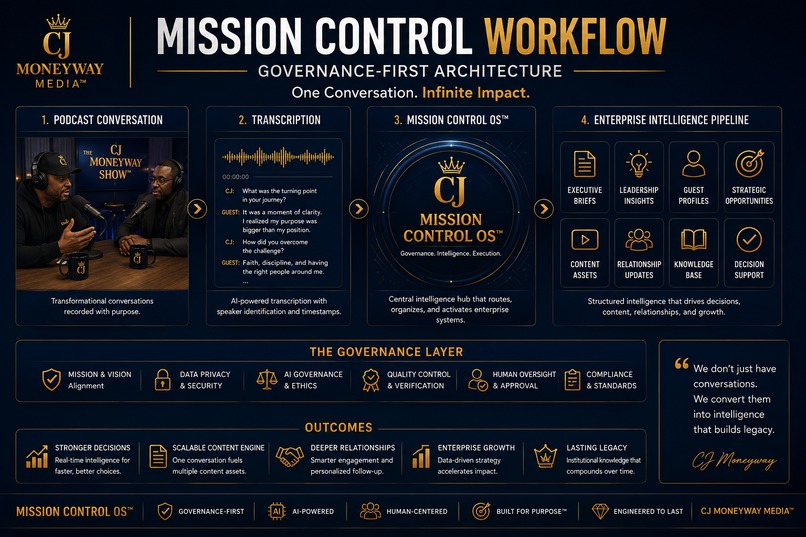
The prototype explores how a CEO directive can be classified, routed to the appropriate specialist context, transformed into a departmental work product, summarized for executive review, and recorded as part of the organization’s decision trail.
Features not supported by a verified execution remain classified as validation requirements or future roadmap items. Demonstrated use case
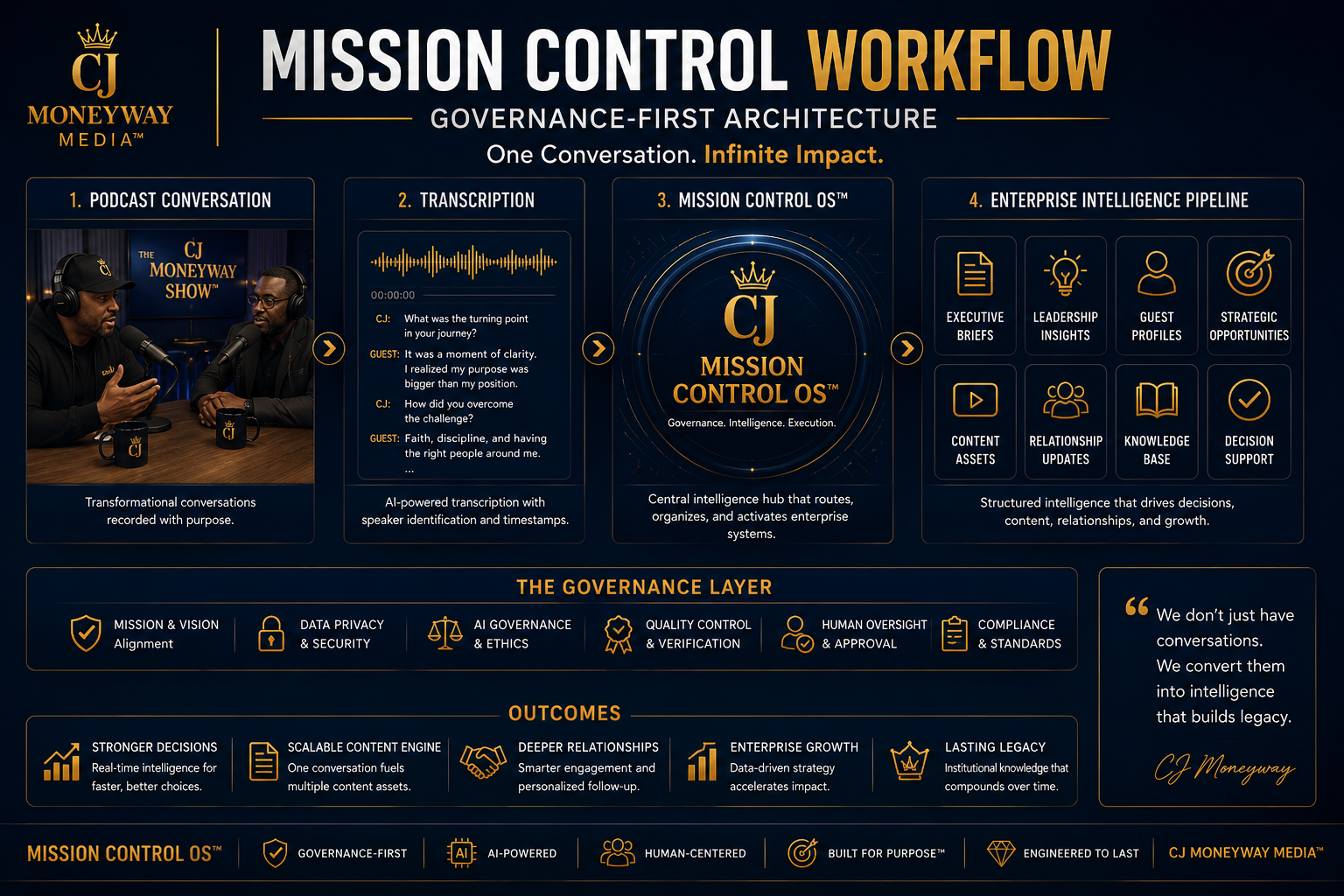
The primary demonstration begins with a podcast conversation.
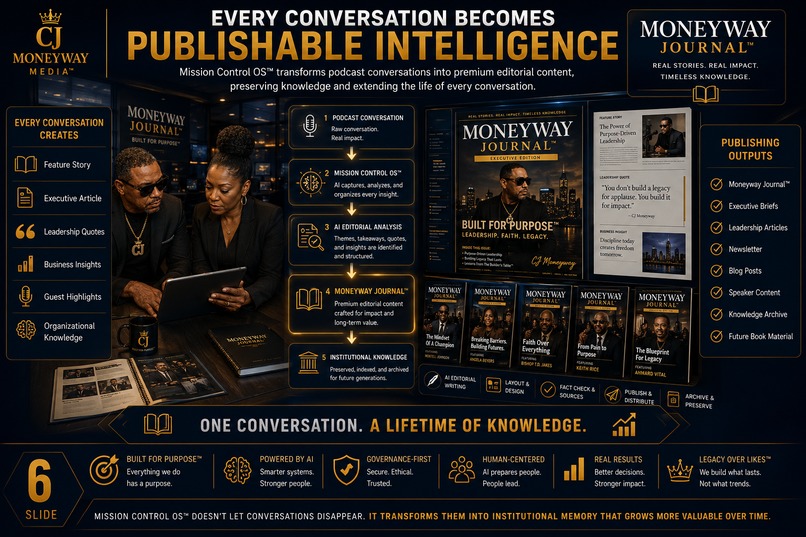
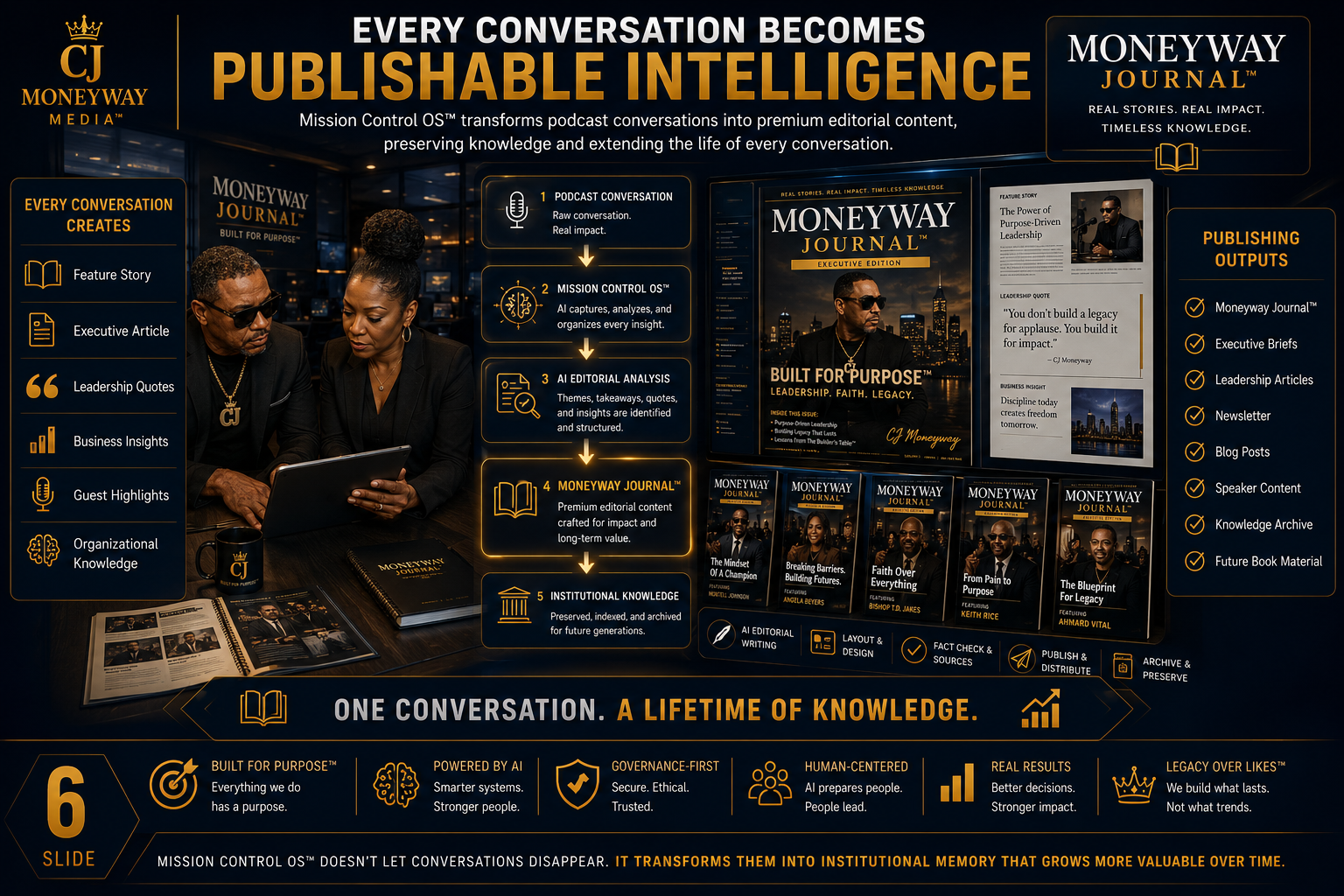
Mission Control OS™ processes the source material and coordinates the creation of organizational assets such as:
An executive summary A Moneyway Journal™ article Podcast release copy Social-content opportunities Leadership lessons Relationship intelligence Partnership opportunities Operational recommendations A principle for the Moneyway Principle Archive™
Instead of allowing the value of the conversation to disappear after publication, the system helps transform it into reusable enterprise knowledge.
This supports the CJ Moneyway Media™ philosophy:
Create Once. Publish Everywhere. Build Forever.™
Challenges we ran into: The greatest challenge was not writing AI prompts.
It was designing an operating structure that reflects how leadership teams actually collaborate.
A useful executive system must do more than generate convincing answers. It must know which department owns a request, preserve the right context, respect organizational standards, identify when human judgment is required, and avoid presenting planned capabilities as operational.
Another major challenge was balancing automation with leadership. We wanted AI to organize information and prepare intelligence without replacing the creativity, accountability, relationships, and judgment that people bring to an organization.
That required treating governance, evidence, status classification, and human review as core system components—not afterthoughts.
Accomplishments that we're proud of: During Build Week, we:
Designed a governance-first AI operating model. Created a four-layer architecture connecting philosophy, governance, intelligence, and execution. Developed coordinated executive and departmental AI roles instead of isolated assistants. Built a prototype for transforming leadership directives and conversations into structured organizational intelligence. Created reusable prompt structures, workflows, technical documentation, and implementation assets. Established evidence-conscious classifications separating verified, validation-required, and roadmap capabilities. Developed a podcast-to-enterprise workflow that turns one conversation into multiple operational, editorial, and relationship assets. Designed onboarding structures that can help human employees enter organized departments with established mandates and workflows. Created a public Mission Control OS™ project experience. Established an AI-to-human philosophy centered on strengthening people rather than replacing them.
Visit the project: Mission Control OS™
What we learned: The most important lesson is that a multi-agent system needs more than multiple agents.
It needs shared principles, clear departmental responsibilities, evidence standards, escalation rules, organizational memory, and human accountability.
We also learned that AI becomes more valuable when it prepares work for people instead of trying to remove people from the process.
Mission Control OS™ follows one guiding principle:
Mission Control OS™ does not use AI to remove people from the organization. It uses AI to prepare the organization for its people.
AI prepares.
People lead.
Organizations grow.
Honest limitations
Mission Control OS™ is currently a Build Week prototype, not a completed enterprise platform.
Some proposed capabilities—such as expanded governance review, deeper integrations, automated revision handling, advanced decision-trail interfaces, and production-scale organizational memory—require additional development and validation.
The current submission separates demonstrated capabilities from planned functionality. Future integrations and interfaces should not be interpreted as operational until supported by verified executions, tests, or demonstrations.
What's next for:The next stage is to expand Mission Control OS™ into a more complete executive operating system for founders, creators, media companies, nonprofits, ministries, and growing businesses.
Planned development includes:
Deeper workflow automation Richer organizational memory Additional executive and departmental roles CRM and relationship-management integration Human onboarding and department-development tools Stronger governance and review workflows Expanded audit and decision-trail capabilities Collaboration tools supporting AI-to-human teamwork
Our long-term vision is simple:
Transform AI from an isolated chatbot into a governed executive operating system that helps organizations think better, lead better, and grow together.
Mission Control OS™ does not replace executive judgment. It creates a governed structure for routing work, applying departmental intelligence, preserving institutional memory, and preparing decision-ready information for human leadership.
Proceed Brick by Brick™. Built For Purpose™. Faith • Vision • Legacy™.Mission Control OS™
Built With
- agentic-ai
- ai
- ai-agents
- business-intelligence
- chatgpt
- content-intelligence
- crm
- decision-support
- enterprise-ai
- enterprise-software
- executive-intelligence
- founder-tools
- gpt-5
- json
- knowledge-management
- multi-agent-systems
- openai
- openai-api
- organizational-knowledge
- productivity
- project-management
- python
- relationship-intelligence
- saas
- workflow-automation


Log in or sign up for Devpost to join the conversation.