-
-
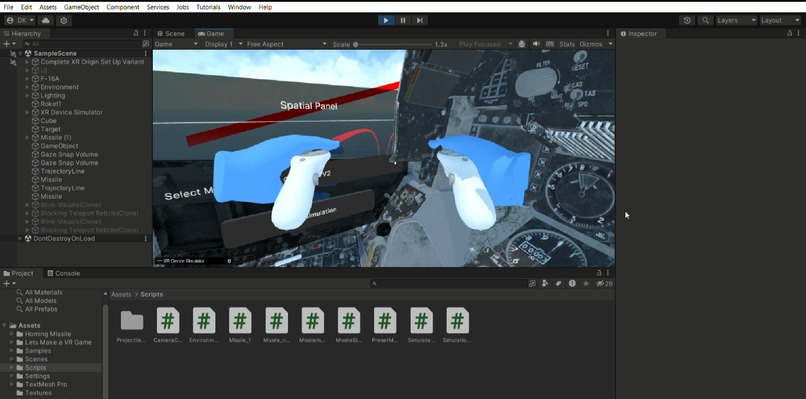
Simulation
-
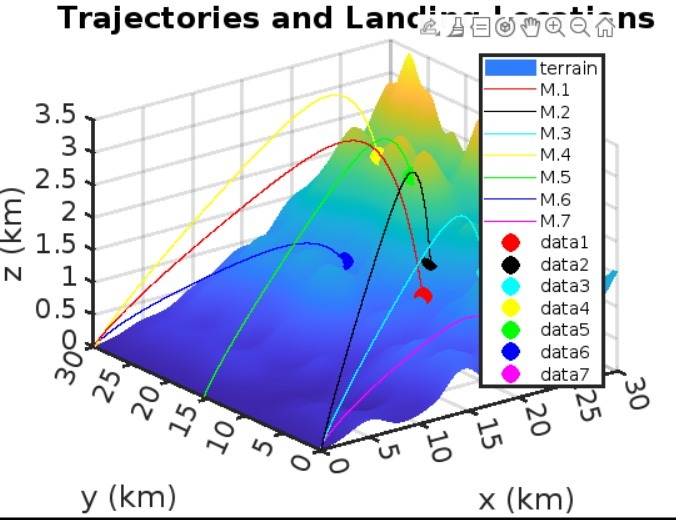
Trajectory
Inspiration
Our inspiration for this project comes from a fascination with aerospace dynamics and the desire to make learning about missile trajectory and impact dynamics engaging and accessible. By combining virtual reality (VR) technology with advanced simulation techniques, we aimed to create an immersive game that not only entertains but also educates players about the intricacies of missile behavior.
What it does
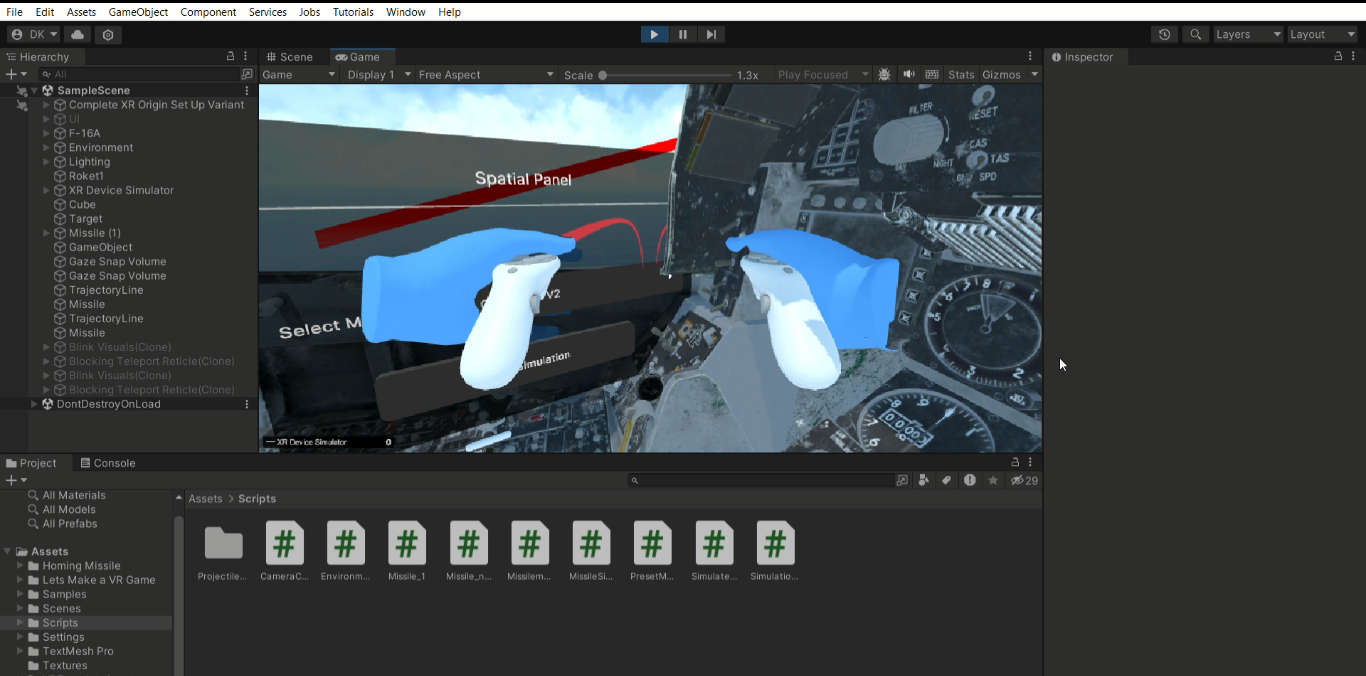
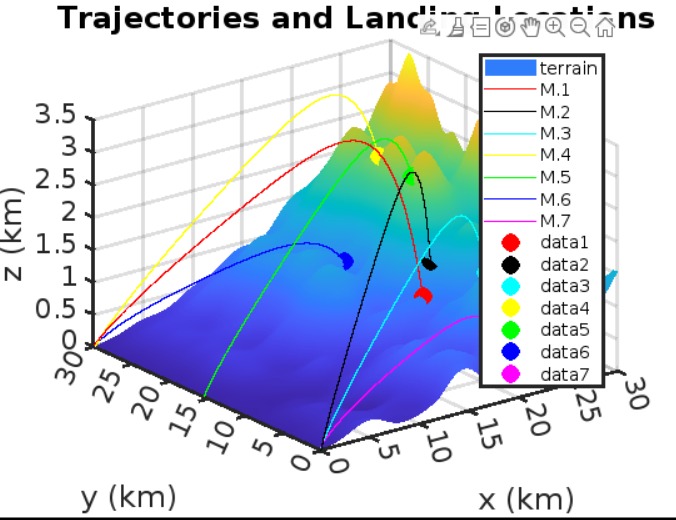
The Missile Trajectory and Impact Simulation Game allows players to experience the complexities of missile dynamics through an interactive and immersive VR environment. Players can launch missiles, adjust parameters, and observe real-time simulations of missile trajectories and impacts. The game provides detailed visualizations and feedback, helping players understand the principles of 6DOF motion and the factors affecting missile flight.
How we built it
- Initial Planning: We defined the scope, objectives, and key features of the game, focusing on both educational and entertainment aspects.
- Development:
- Unity: We used Unity to create the 3D game environment, visual effects, and user interactions. The game's interface allows players to set missile parameters and launch simulations.
- MATLAB: MATLAB was used for simulating the missile trajectory and impact dynamics. We implemented the 6DOF equations of motion to ensure accurate and realistic simulations.
- Integration: We integrated MATLAB simulations with Unity to provide real-time feedback and immersive visualizations within the game environment.
- Testing and Iteration: We conducted extensive testing to ensure the accuracy of the simulations and the overall user experience. Feedback from testers was used to make iterative improvements.
Challenges we ran into
- Mathematical Complexity: Implementing and validating the 6DOF equations of motion to accurately simulate missile behavior was a major challenge.
- Integration: Synchronizing MATLAB simulations with Unity's game environment required careful data handling and real-time processing.
- User Experience: Ensuring that the game was both educational and engaging required balancing complex scientific content with intuitive gameplay.
Accomplishments that we're proud of
- Successfully integrating advanced mathematical simulations with a VR game environment.
- Creating an educational tool that makes learning about missile dynamics engaging and accessible.
- Receiving positive feedback from initial testers on both the educational value and entertainment aspects of the game.
What we learned
- The importance of interdisciplinary collaboration, combining expertise in game development, VR technology, and aerospace engineering.
- Techniques for optimizing real-time simulations and visualizations in a VR environment.
- Strategies for balancing educational content with engaging gameplay to maintain user interest and satisfaction.
What's next for Missile Trajectory and Impact Simulation Game
- Enhanced Features: Adding more detailed scenarios, including different types of missiles and varying environmental conditions.
- AI Integration: Incorporating AI-driven targets and dynamic scenarios to increase the challenge and educational value.
- Extended Platforms: Expanding compatibility to more VR platforms and possibly developing a non-VR version for broader accessibility.
- User Feedback: Continuously gathering user feedback to make improvements and add features that enhance both learning and gameplay experiences.

Log in or sign up for Devpost to join the conversation.