-
-
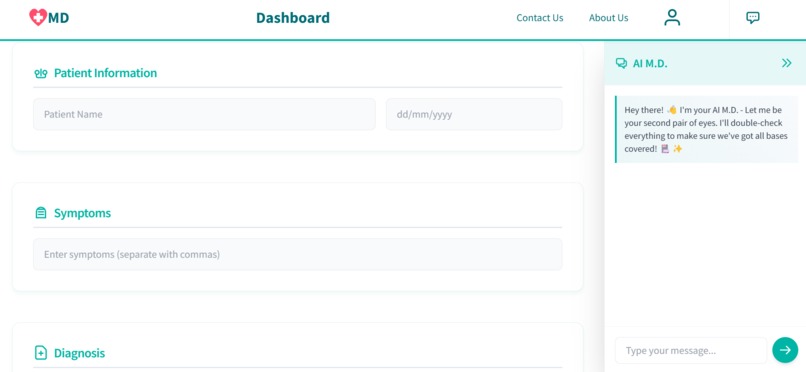
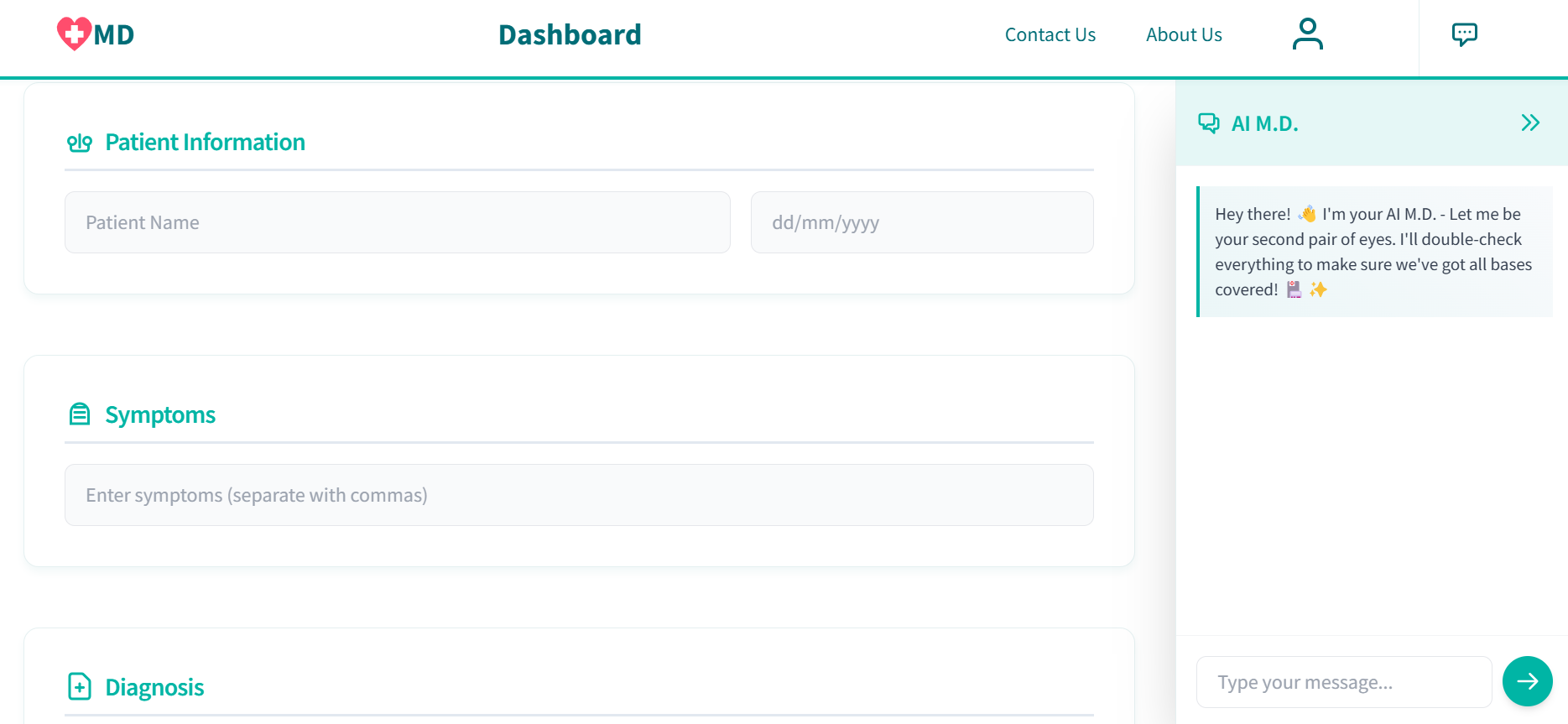
Dashboard
-
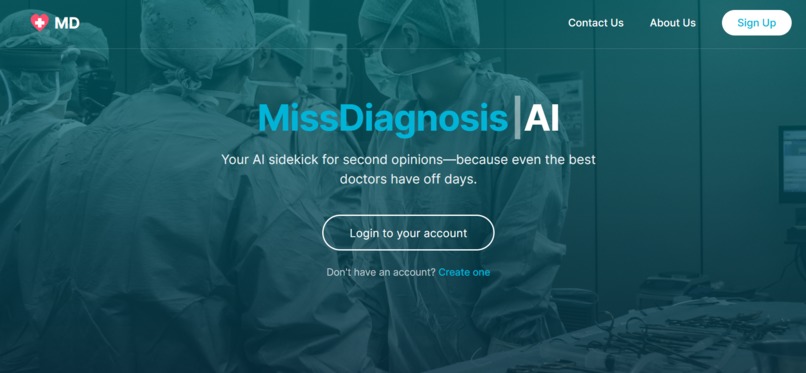
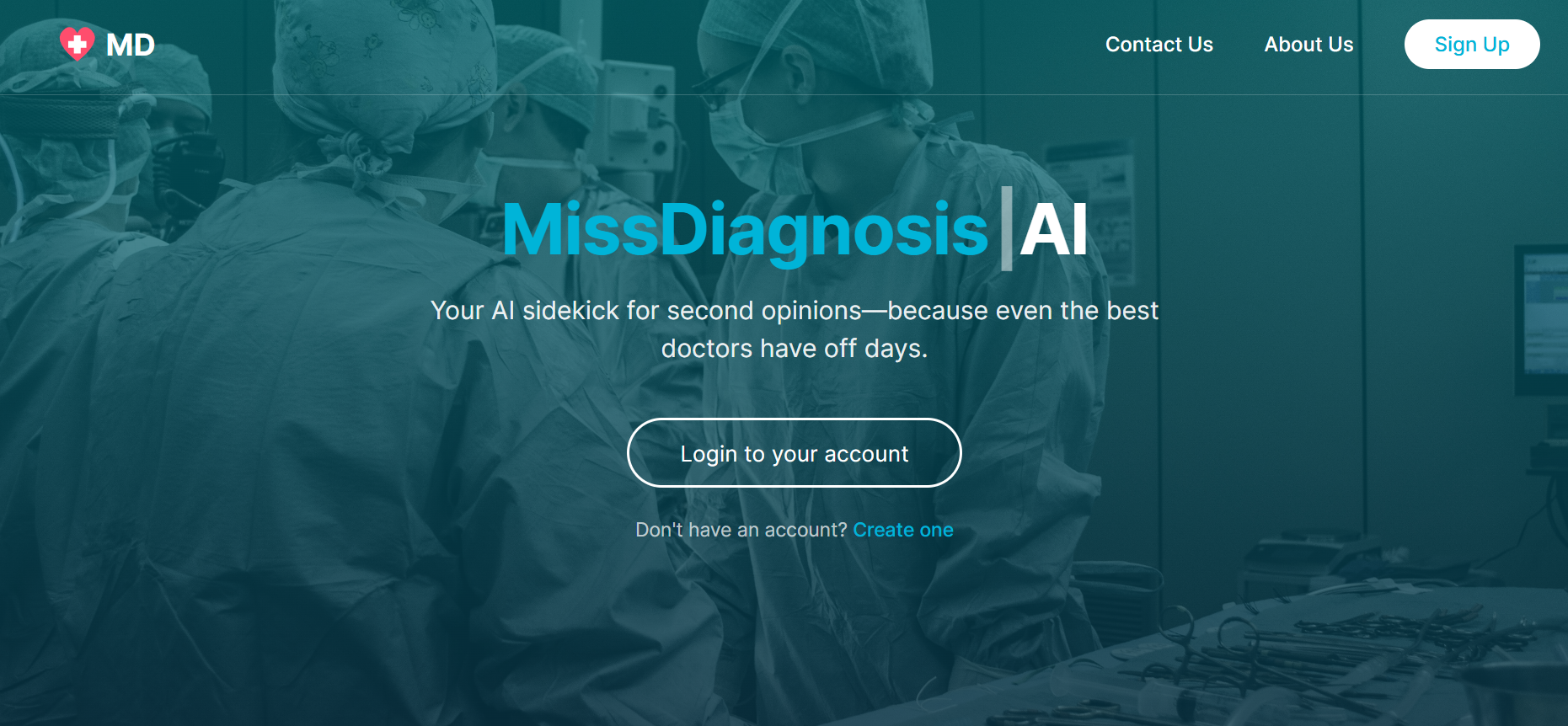
Landing Page
## **About the Project**

### **🚀 Inspiration**
Imagine walking into a clinic with a mild fever, only to be sent home with malaria pills; when in reality, you have Ebola. This terrifying scenario wasn’t just hypothetical; it happened during the Ebola outbreak and again during COVID-19 in West Africa. Misdiagnosis cost lives, delayed treatments, and fueled outbreaks. We saw an urgent need for a smarter, faster, and AI-driven solution to prevent history from repeating itself.

### **🩺 What It Does**
MissDiagnosisAI is an intelligent Electronic Health Record (EHR) system designed to act as a safety net for doctors. When physicians input patient data, diagnoses, prescriptions, and test results, our AI double-checks it against real-time health trends, emerging disease alerts, and an extensive medical knowledge base. But we didn’t stop there! A TensorFlow-powered AI also analyzes malaria blood samples with high precision, ensuring that one of the most commonly misdiagnosed diseases is detected accurately.

With an automated background process that continuously scans recent diagnoses for anomalies, our system flags potential errors before they turn into tragedies. MissDiagnosisAI isn’t just an app; it’s a frontline defense against medical mistakes.

### **🛠️ How We Built It**
Building MissDiagnosisAI was no small feat! We combined:
- **AI-driven misdiagnosis detection** trained on vast datasets of medical records and emerging disease reports.
- **TensorFlow-powered malaria detection**, analyzing blood samples with high accuracy.
- **A robust Electronic Health Record system**, allowing doctors to input and retrieve patient data effortlessly.
- **Real-time anomaly detection**, constantly reviewing patient data to flag inconsistencies before they escalate.

We used **Python, TensorFlow, and a dynamic backend architecture** to ensure seamless integration and rapid AI processing.

### **💡 Challenges We Ran Into**
- **Data Scarcity:** Getting access to reliable and diverse medical datasets was a hurdle.
- **Model Optimization:** Ensuring that the AI was both accurate and fast required extensive fine-tuning.
- **Balancing Usability & Complexity:** Doctors needed an intuitive system that wouldn’t slow them down, so we worked hard to keep the interface seamless.
- **Real-time Disease Trend Monitoring:** Incorporating live health trend data was challenging but essential for identifying emerging outbreaks.

### **🏆 Accomplishments That We're Proud Of**
- Successfully trained a **high-accuracy malaria detection model**.
- Built an **AI-driven diagnostic safety net** that could prevent life-threatening misdiagnoses.
- Designed an **intuitive EHR system** that integrates AI without disrupting a doctor’s workflow.
- Created a **background anomaly detection system** that continuously improves over time.

### **🎓 What We Learned**
- **MissDiagnosisAI isn’t just about accuracy, it’s about trust.** Doctors need AI they can rely on, and that means ensuring transparency in our predictions.
- **Healthcare data is messy.** We learned how to clean, structure, and optimize it for AI training.
- **Small mistakes can have huge consequences.** Testing and refining our model was a painstaking but necessary process.

### **🔮 What’s Next for MissDiagnosisAI?**
- **Expanding to more diseases!** We plan to train additional models to detect TB, dengue fever, and other commonly misdiagnosed conditions.
- **Partnering with hospitals.** We want real-world testing and adoption in medical centers.
- **Mobile integration.** A lightweight mobile version for remote clinics with limited infrastructure.
- **Even smarter AI.** Our next iteration will include a feedback loop where doctors can confirm or correct AI predictions, continuously improving accuracy over time.

We believe AI can *save lives*—and MissDiagnosisAI is just the beginning. 🚀

Log in or sign up for Devpost to join the conversation.