-
-
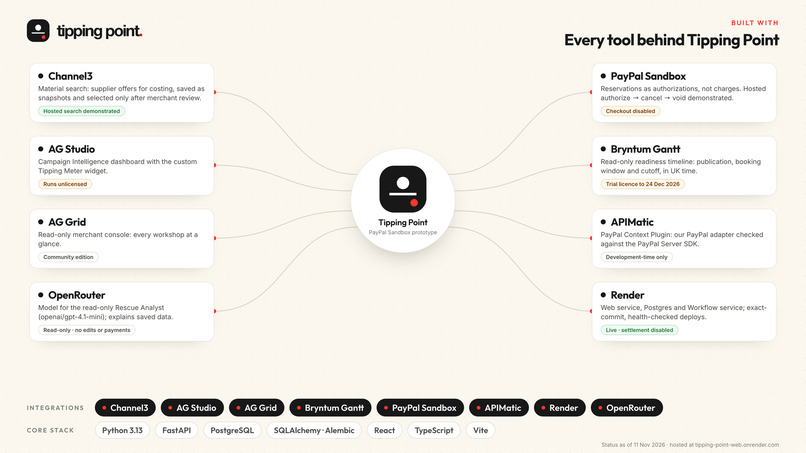
Tipping-point- summary
-
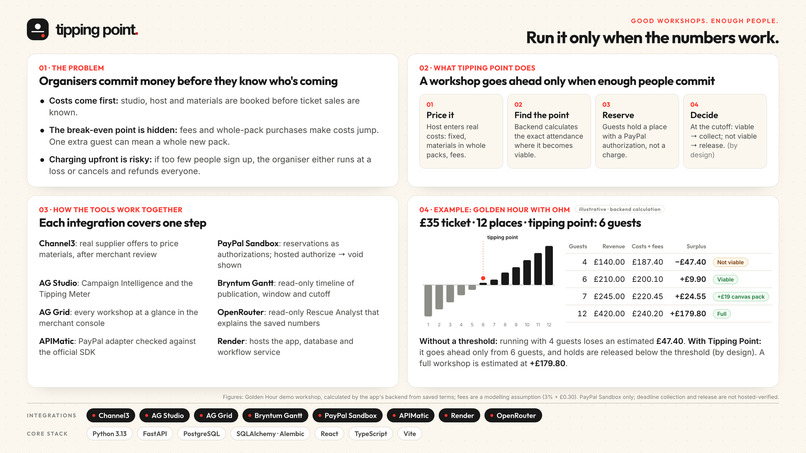
Tipping-point-features
-
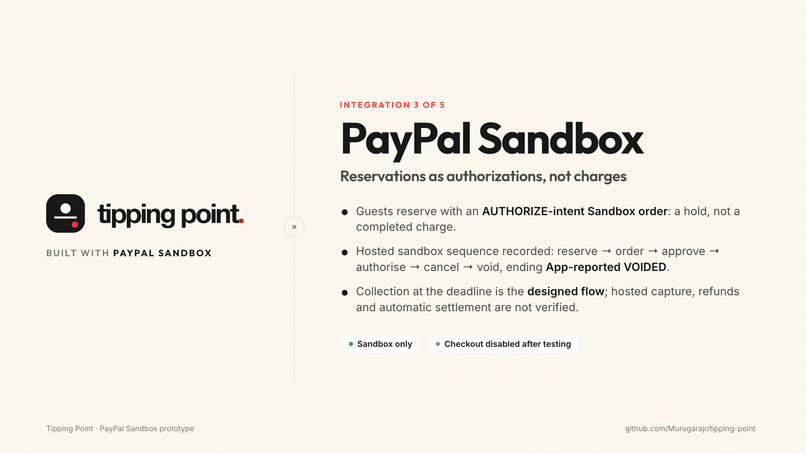
Tipping-point-PayPal sandbox
-
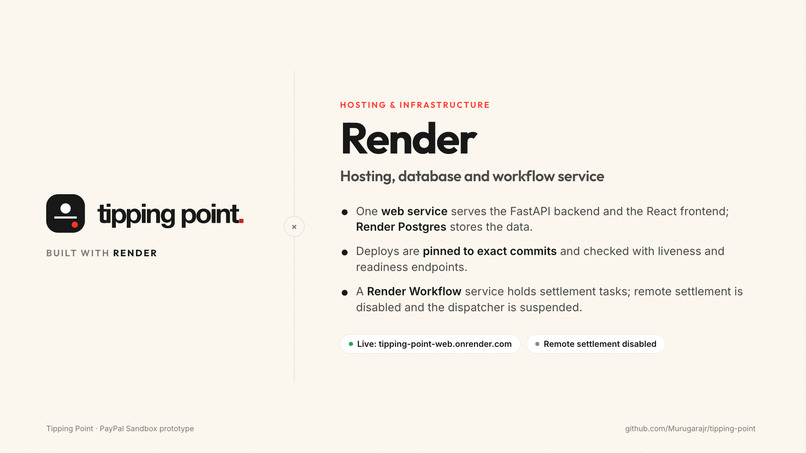
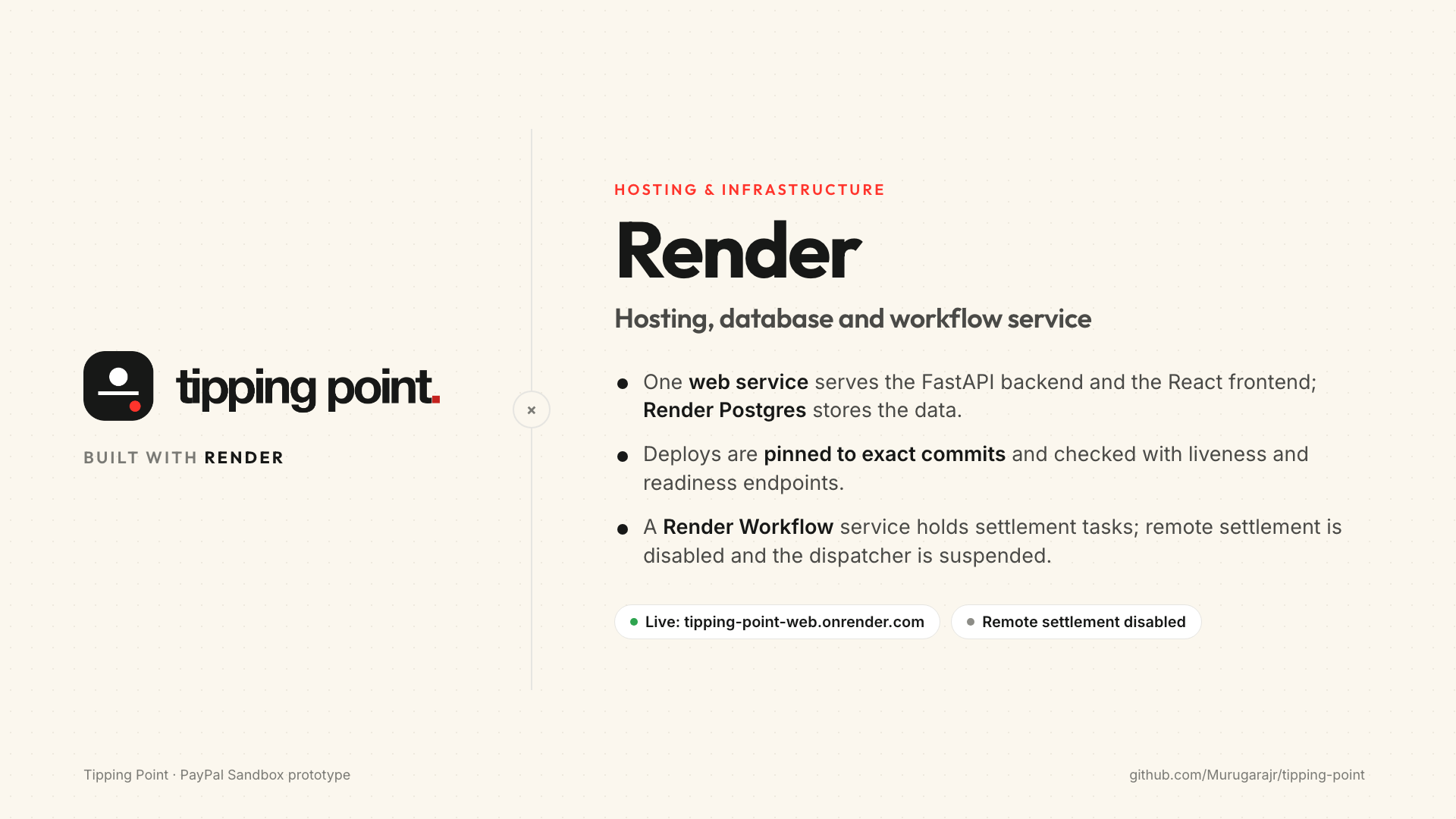
Tipping-point-Render usage
-
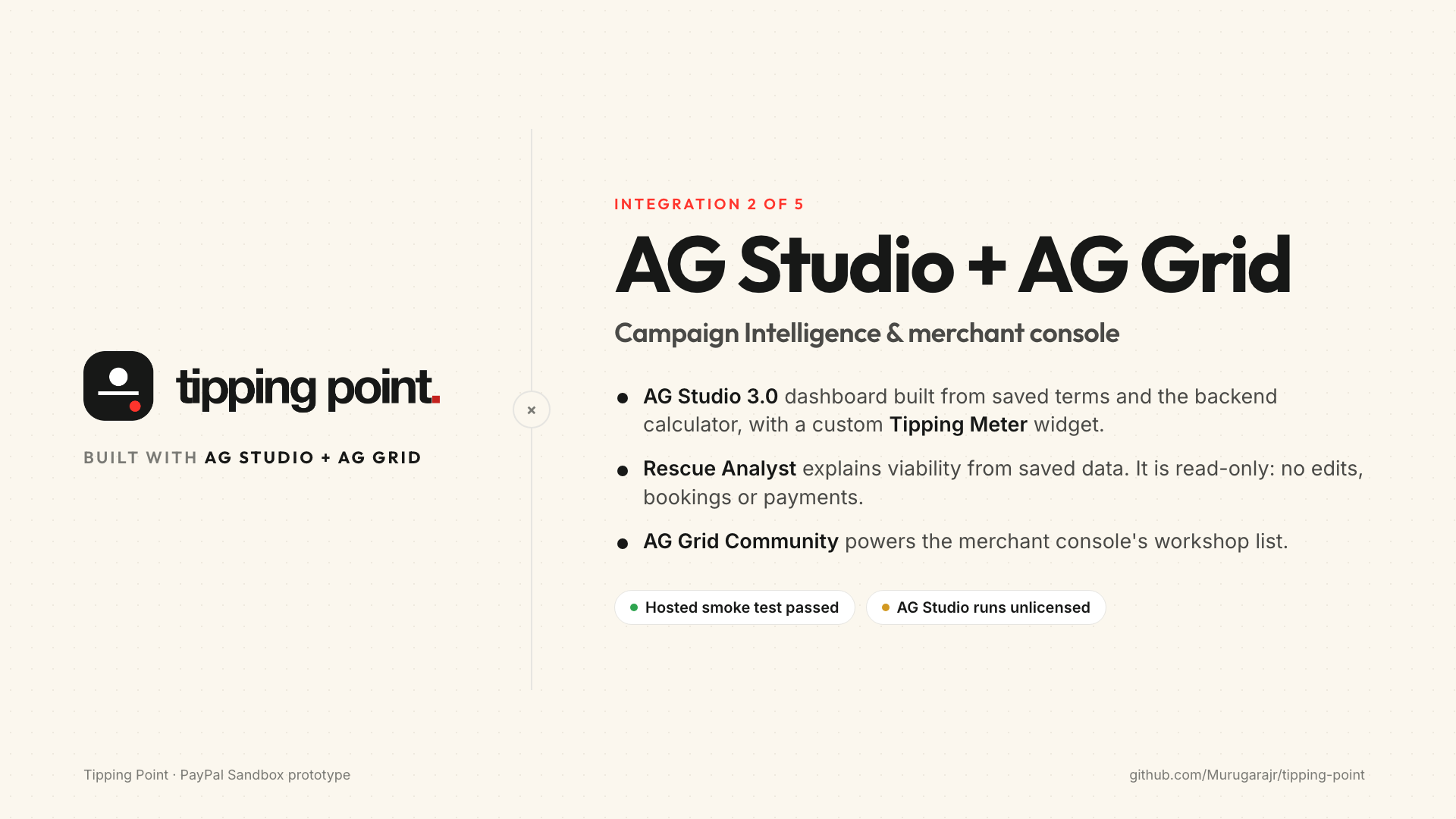
Tipping-point-AG studio implementation
-
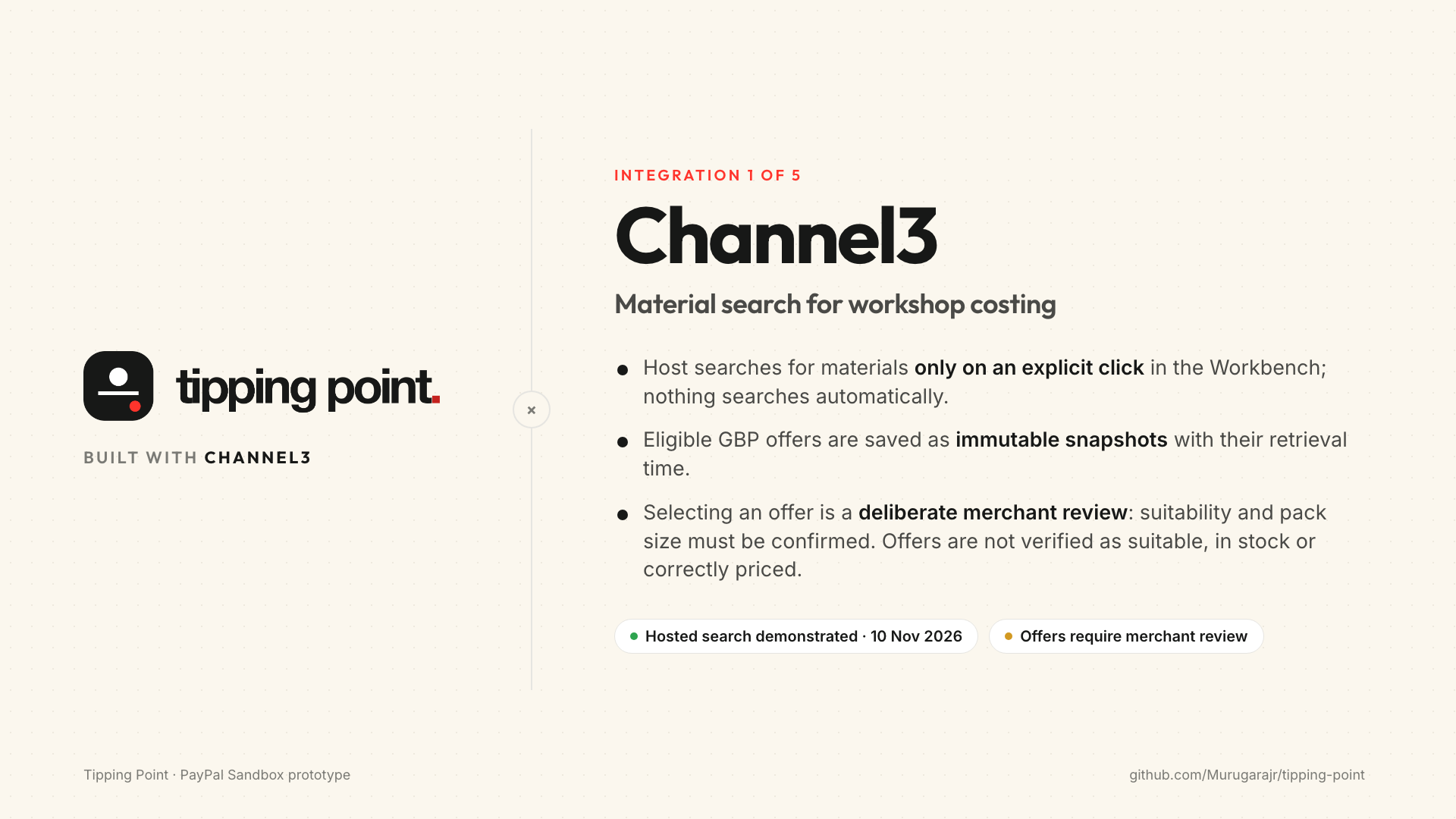
Tipping-point-Channel3 implementation
-
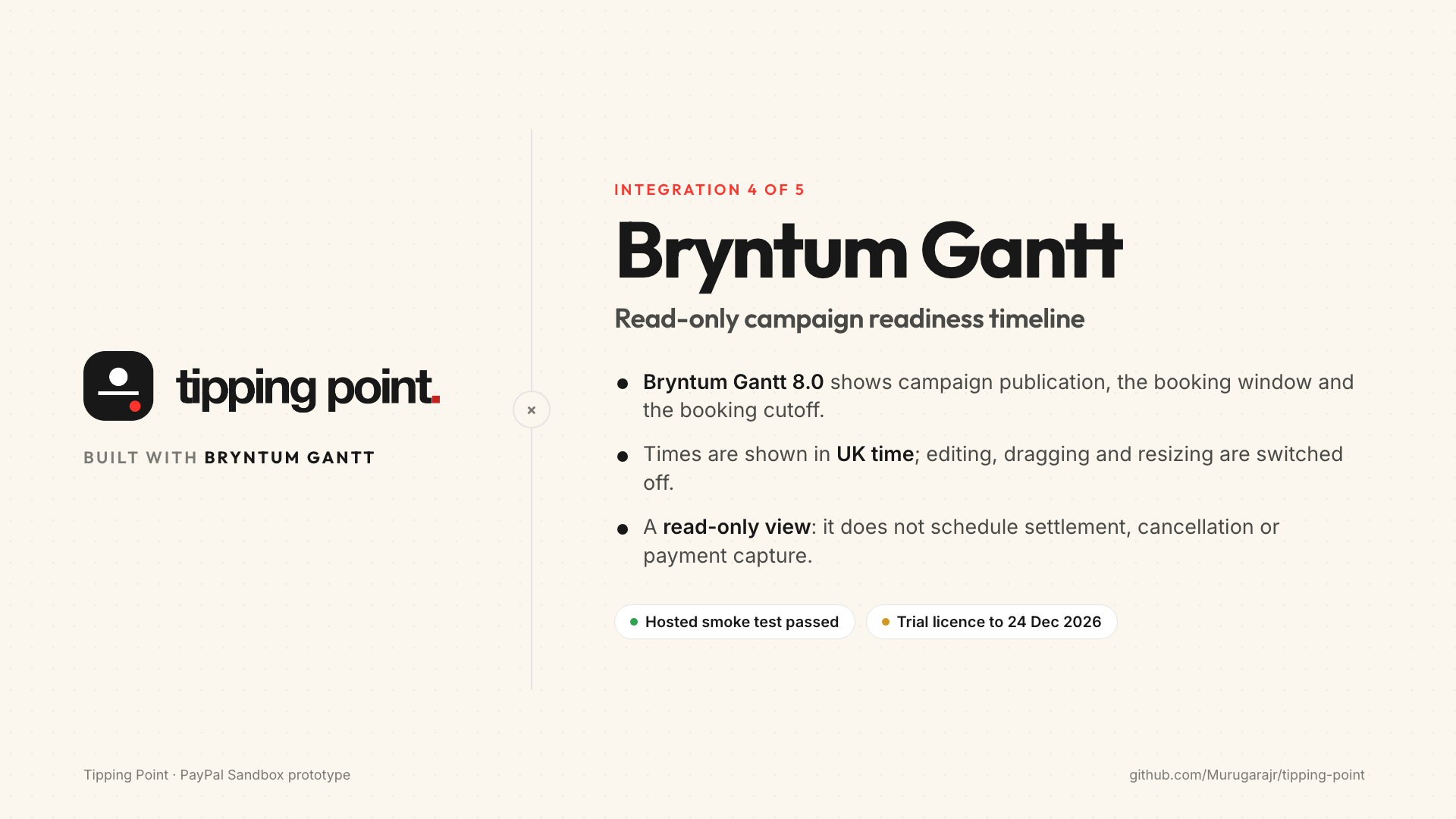
Tipping-point-Bryntum Gantt implementation
-
Tipping-point-APIMatic implementation
-
Tipping-point-Demo-Summary
Inspiration
I built Tipping Point around a question that comes before selling a workshop ticket: “How many people need to attend for this to be worth running?”
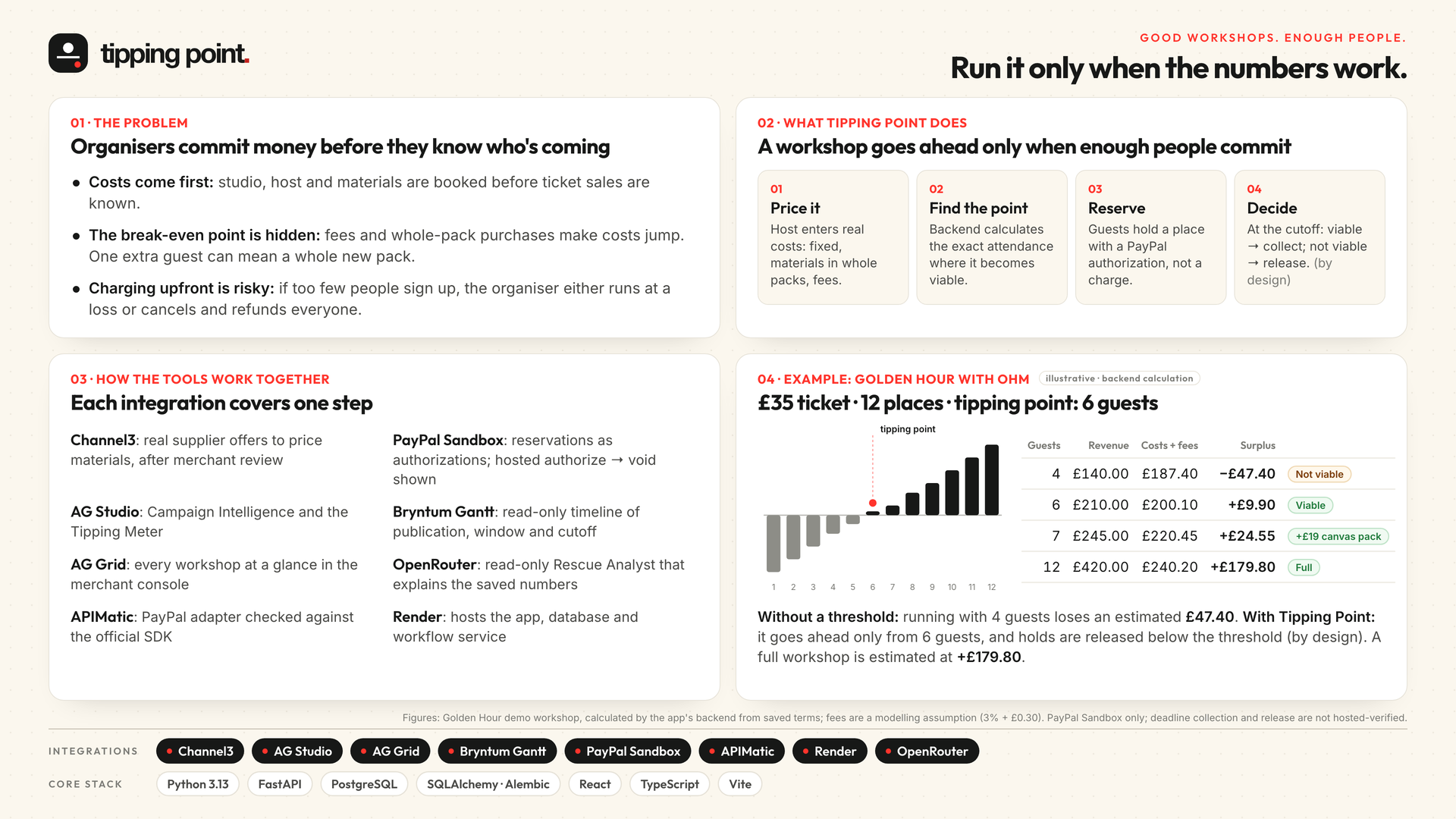
A booking count alone does not answer that. Materials may need to be bought in whole packs, some costs are shared, and payment fees affect what is left. A workshop can look promising while still being too expensive to deliver.
I wanted to bring those decisions into one place: understand the costs, find the first viable attendance, review material offers, and see the booking window and deadline clearly.
What it does
Tipping Point helps workshop organisers turn an idea into a costed, reviewable campaign.
An organiser can:
- Enter ticket price, capacity, minimum attendance, fixed costs, shipping, contingency and explicit fee assumptions.
- Add materials with pack sizes and per-attendee or shared quantities.
- Calculate attendance scenarios using the backend viability calculator.
- Search Channel3 for material offers, review their suitability and pack assumptions, and explicitly select an offer into draft costing.
- Explore saved workshop data through a Campaign Intelligence dashboard and a custom Tipping Meter.
- Ask a read-only Rescue Analyst to explain viability and identify concerns.
- View publication, booking-window and cutoff milestones on a readiness timeline.
- Publish frozen terms so the campaign has a defined set of financial assumptions.
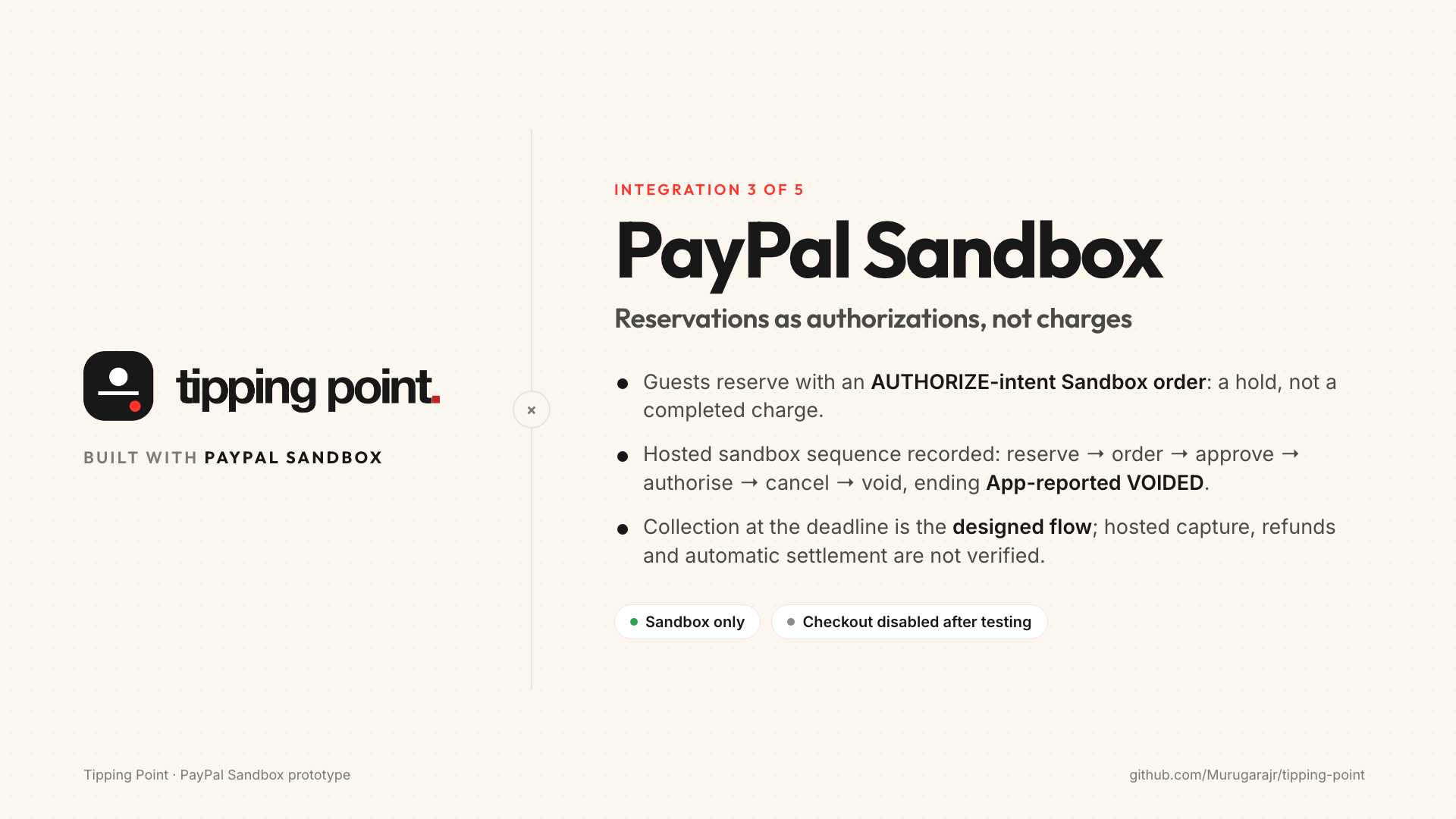
I also implemented and tested a PayPal sandbox reservation flow: reserve a place, create an order, approve it as a sandbox buyer, authorise, request cancellation and void the authorisation.
How I built it
I built the application around a Python backend, PostgreSQL storage and a React frontend.
The backend owns the financial calculations. Instead of asking an AI model to invent or estimate the tipping point, the application calculates attendance scenarios from saved inputs. This matters when materials are purchased in whole packs: an additional attendee can trigger another pack purchase rather than a smooth increase in cost.
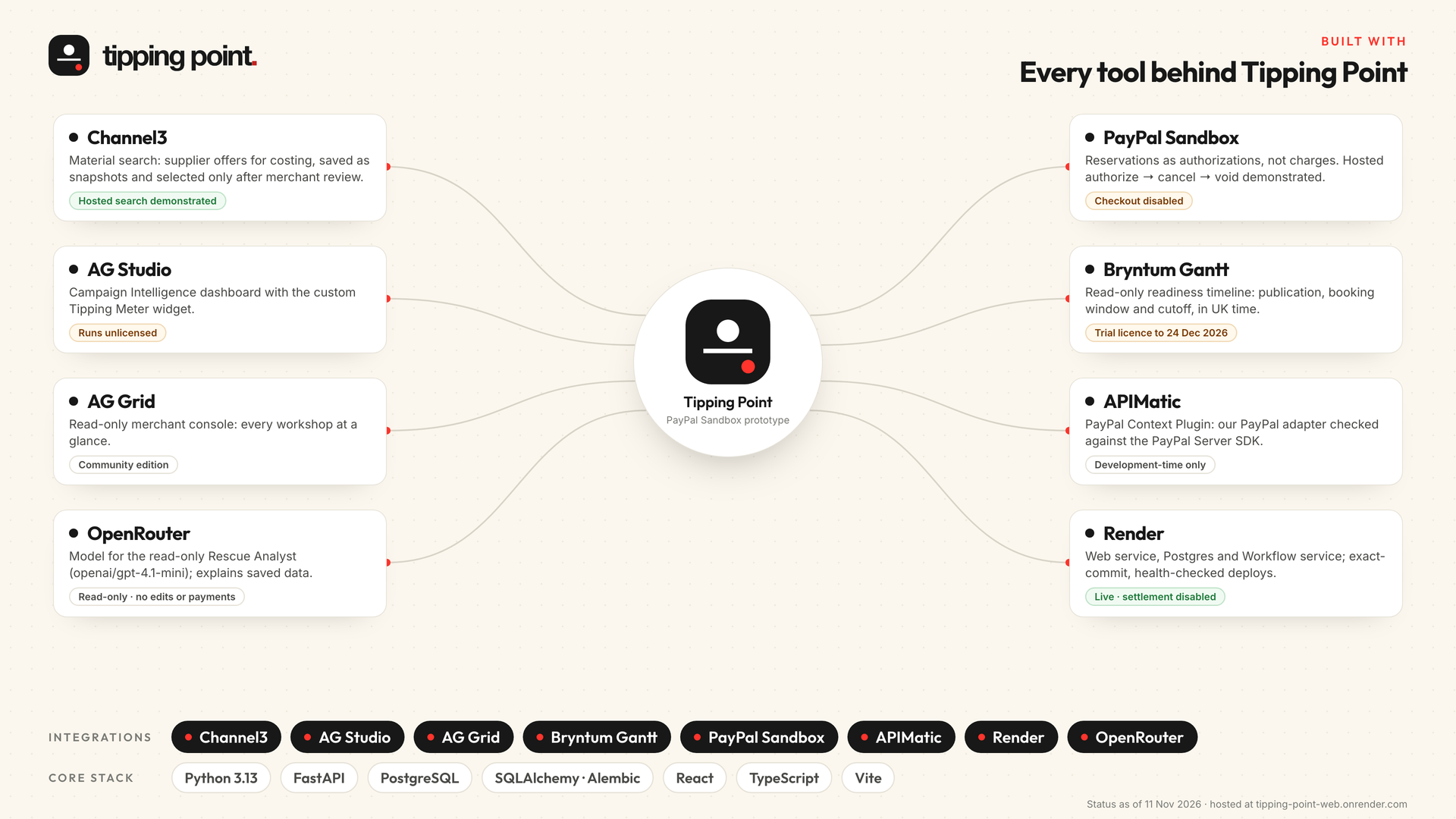
I integrated five tools for distinct purposes:
Channel3: material discovery
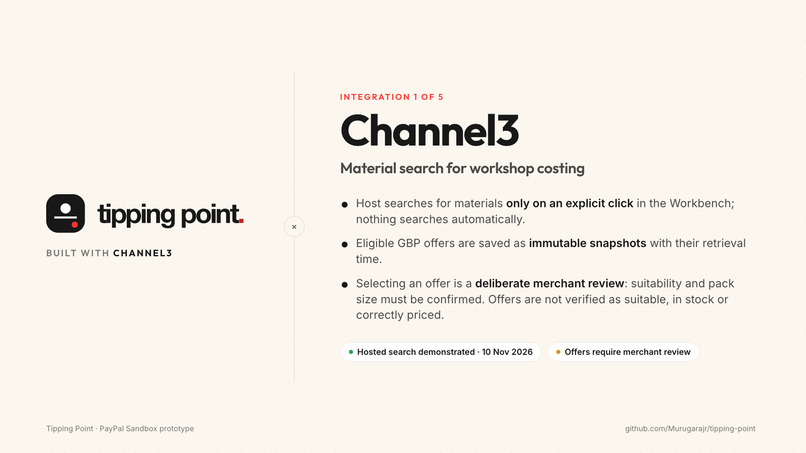
Channel3 supplies external product offers for an explicit material search. I keep provider facts separate from merchant assumptions: an offer price does not prove the product is suitable or that its pack size meets the workshop's needs.
Search results are saved as snapshots. Selecting one is an explicit action that updates draft costing; it is not a purchase, stock reservation or delivery guarantee.
AG Studio: Campaign Intelligence
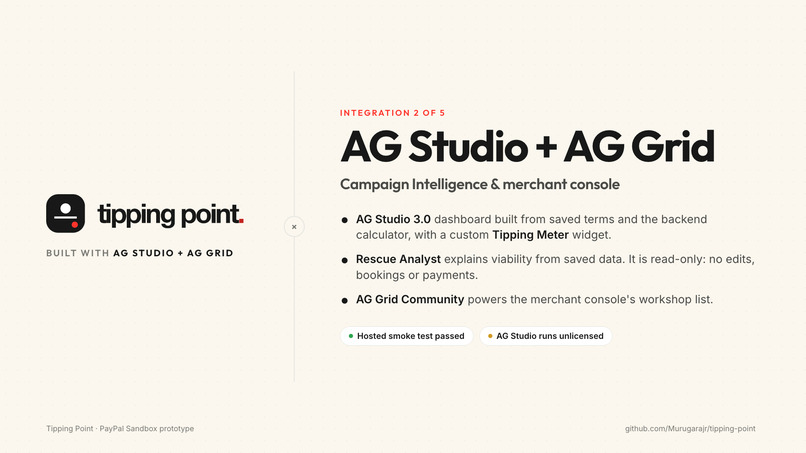
AG Studio powers the interactive dashboard. I registered a custom Tipping Meter and mapped data sources from saved terms and backend calculations.
The Rescue Analyst uses OpenRouter with openai/gpt-4.1-mini. It reads approved workshop data and explains it, but cannot edit terms, search suppliers, create bookings or take payments. Its output is informational, not financial advice.
Bryntum: readiness timeline
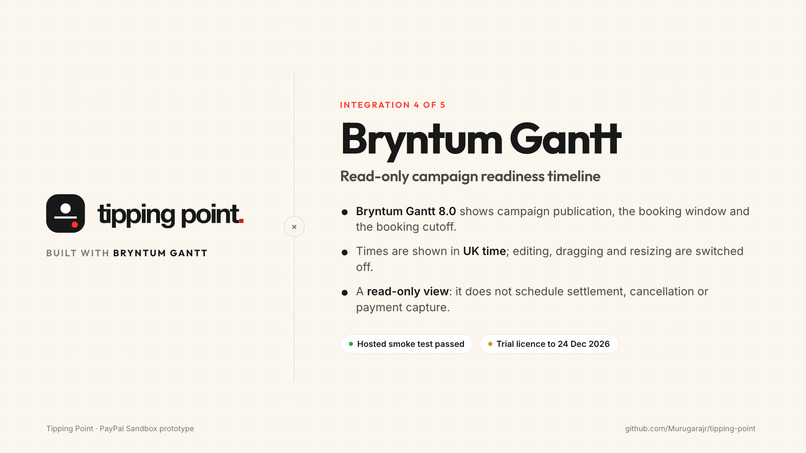
Bryntum provides a read-only Gantt timeline showing publication, the booking window and the cutoff. This makes the time-dependent parts of a campaign visible alongside its financial decisions.
PayPal: sandbox reservations
I integrated PayPal's sandbox order and authorisation flow, keeping authorisation distinct from capture. I verified the hosted authorise → cancel → void path and checked that the booking released its seat after voiding.
APIMatic: development-time API review
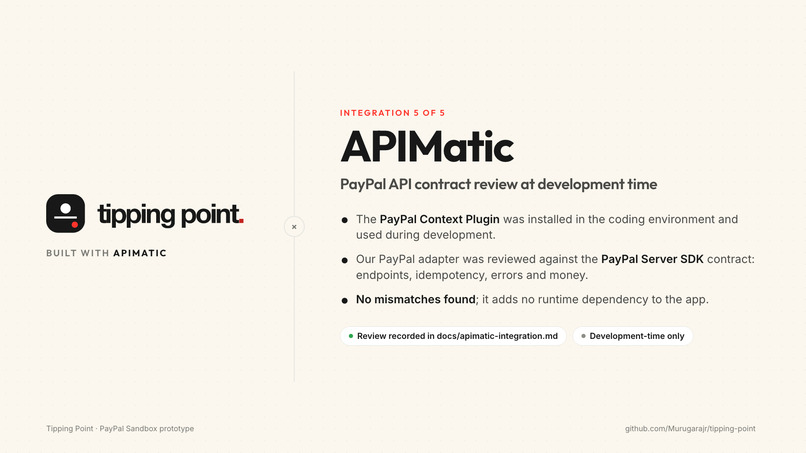
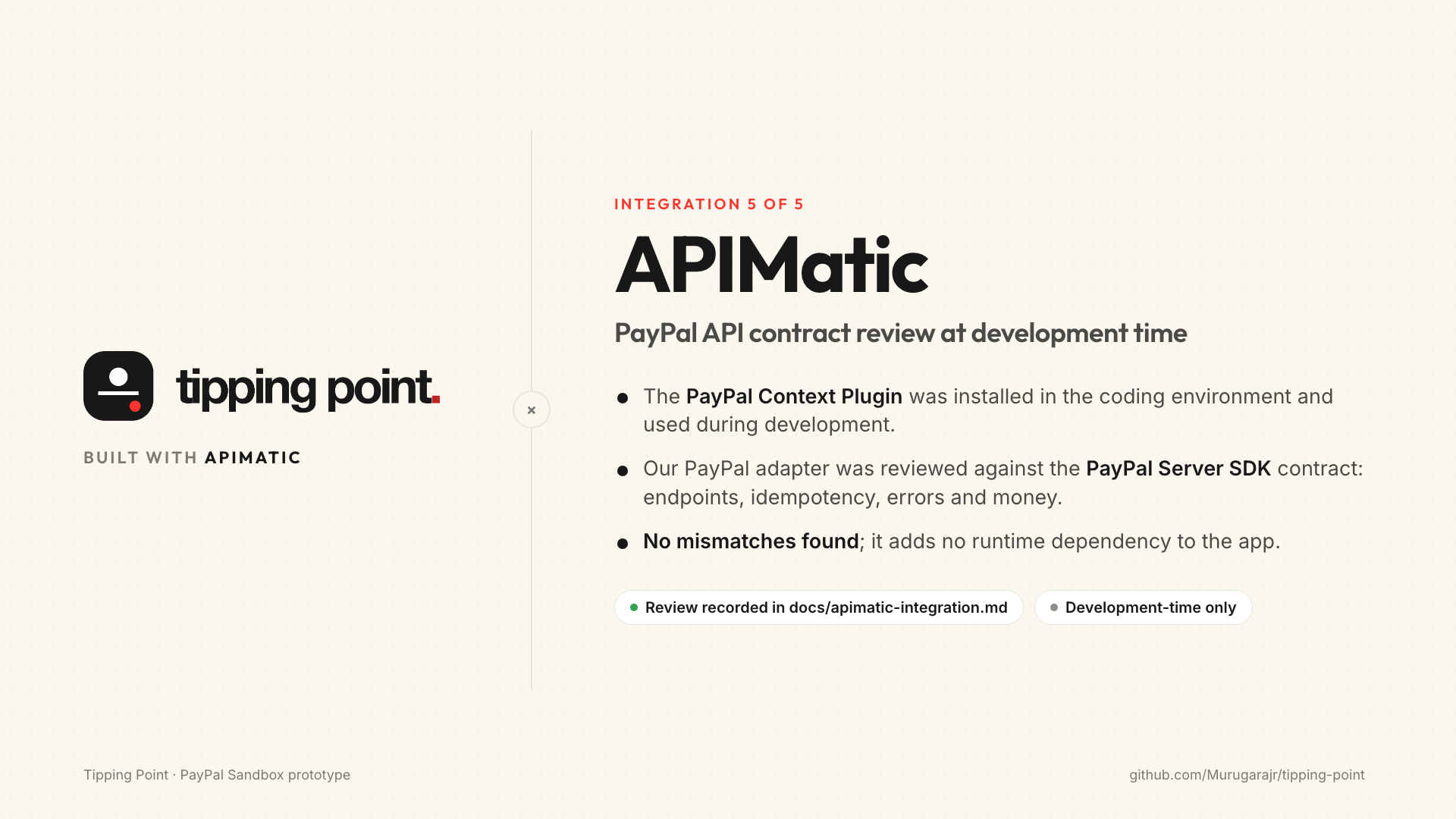
I used the PayPal Context Plugin and documented a contract review of the integration. APIMatic supported development and validation; it is not an extra runtime service in the application.
Challenges I faced
Making the financial model honest
The hardest part was not drawing a break-even line. It was deciding which inputs were facts, which were assumptions, and how whole-pack material purchases change costs at different attendance levels.
I kept saved terms, provider snapshots and reviewed assumptions distinct so the interface could explain where a number came from.
Keeping AI useful without giving it control
I wanted the Analyst to explain the workshop, not operate it. I restricted its tools to read-only analysis and kept its calculations grounded in the backend.
That separation lets the assistant discuss viability without implying that a booking has been made or money has been collected.
Testing payment states safely
A successful browser return is not the same as a successful authorisation. A cancellation request is not the same as a completed void.
I tested the payment flow through explicit states, checked request counts, and verified that the app reported the authorisation voided with zero captured and refunded amounts. I then removed the web payment credentials and redeployed so reservations were disabled outside the controlled test.
Getting hosted configuration right
One integration initially reported that Channel3 was not configured even though its key had been saved. The running process had not loaded the new setting. A same-commit redeploy resolved it.
That reinforced an important lesson: saved configuration, running configuration and verified behaviour are three different things.
Accomplishments I am proud of
- A hosted application with passing public and signed-in smoke tests.
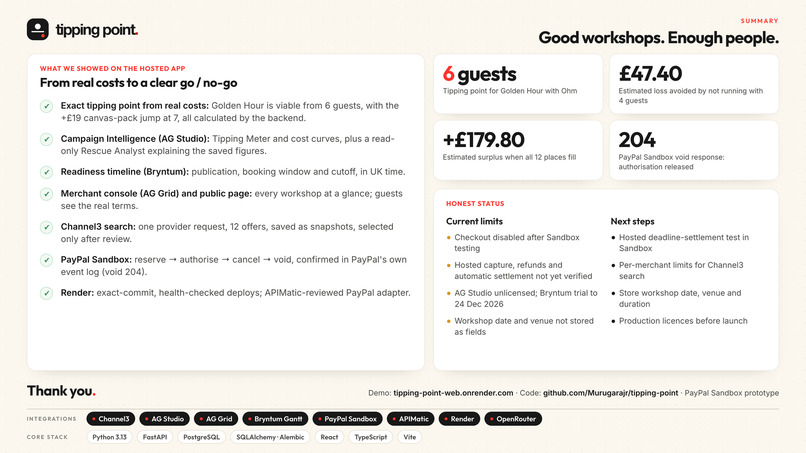
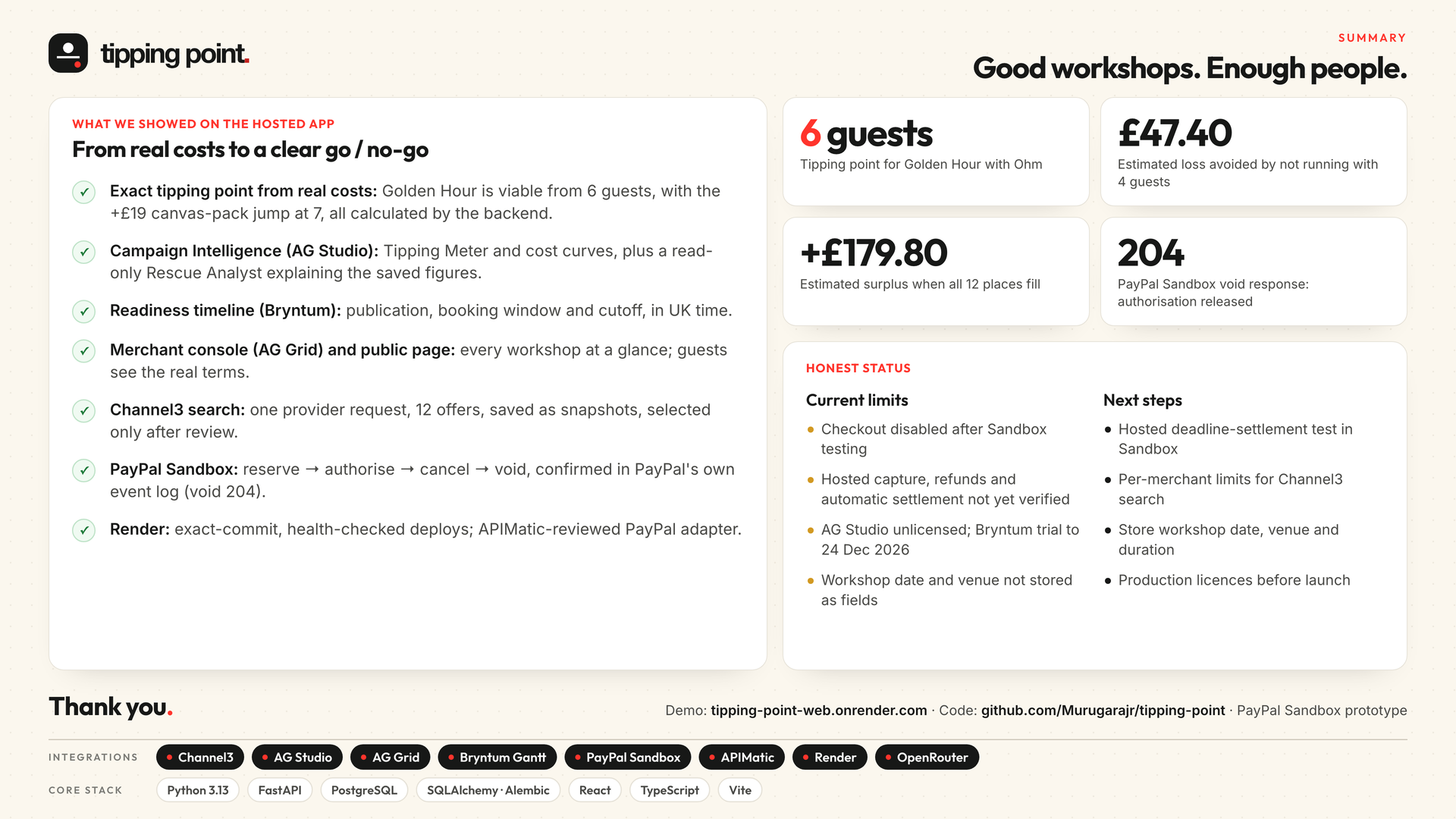
- A working Channel3 search that returned 12 offer cards from one provider request.
- A provider offer successfully saved into draft material costing.
- A custom Tipping Meter and a working read-only Analyst.
- A readiness timeline that makes campaign deadlines visible.
- A hosted PayPal sandbox authorisation, cancellation and void flow.
- A clear record of what was tested, what remains disabled and what is not yet verified.
What I learned
I learned that integration work is as much about boundaries and evidence as it is about API calls.
A supplier result is not a suitable material until someone reviews it. An authorisation is not collected revenue. A dashboard estimate is not a booking. A locally passing payment test is not proof that hosted settlement works.
I also learned to reuse working components and finish small end-to-end milestones rather than repeatedly expanding the scope.
Current limitations
This submission is a working prototype, not a production-ready payment platform.
- PayPal checkout is currently disabled after controlled testing. A fresh interactive payment demo requires sandbox reactivation and an open booking window.
- Hosted capture, refunds, below-threshold release and automatic deadline settlement are not verified. Those paths have only been tested locally; hosted settlement remains disabled.
- The app reports the test authorisation as voided; separate PayPal-dashboard confirmation remains pending.
- Channel3 search relevance and material suitability still need review, and the current Workbench search has no per-merchant rate limit.
- AG Studio is running without a licence in the hosted build, and dashboard edits do not persist across reloads.
- The Bryntum timeline uses a trial licence ending 24 December 2026.
What's next
My next priorities are to improve material-search relevance, add durable search-spend controls, persist dashboard reports and validate the remaining payment lifecycle in a tightly controlled sandbox environment.
The goal remains the same: help an organiser understand when a workshop becomes viable, what assumptions that depends on, and what still needs attention before committing.
Built With
- ag-grid
- ag-studio
- alembic
- apimatic
- bryntum
- channel3
- cluade
- openrouter
- paypal
- postgresql
- python
- react
- render
- sqlalchemy
- typescript
- vite

