-
-
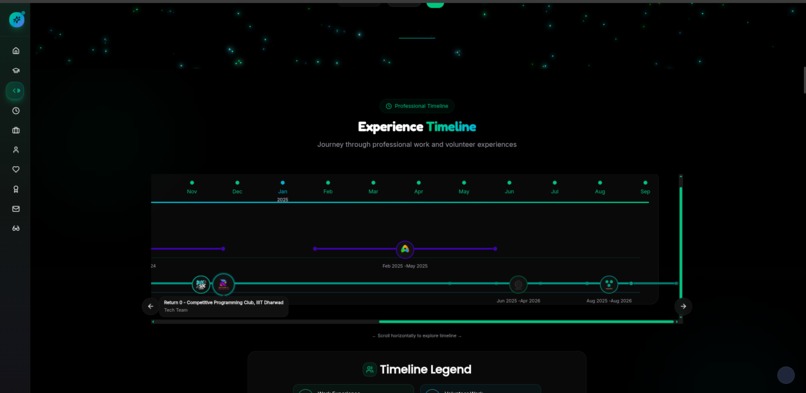
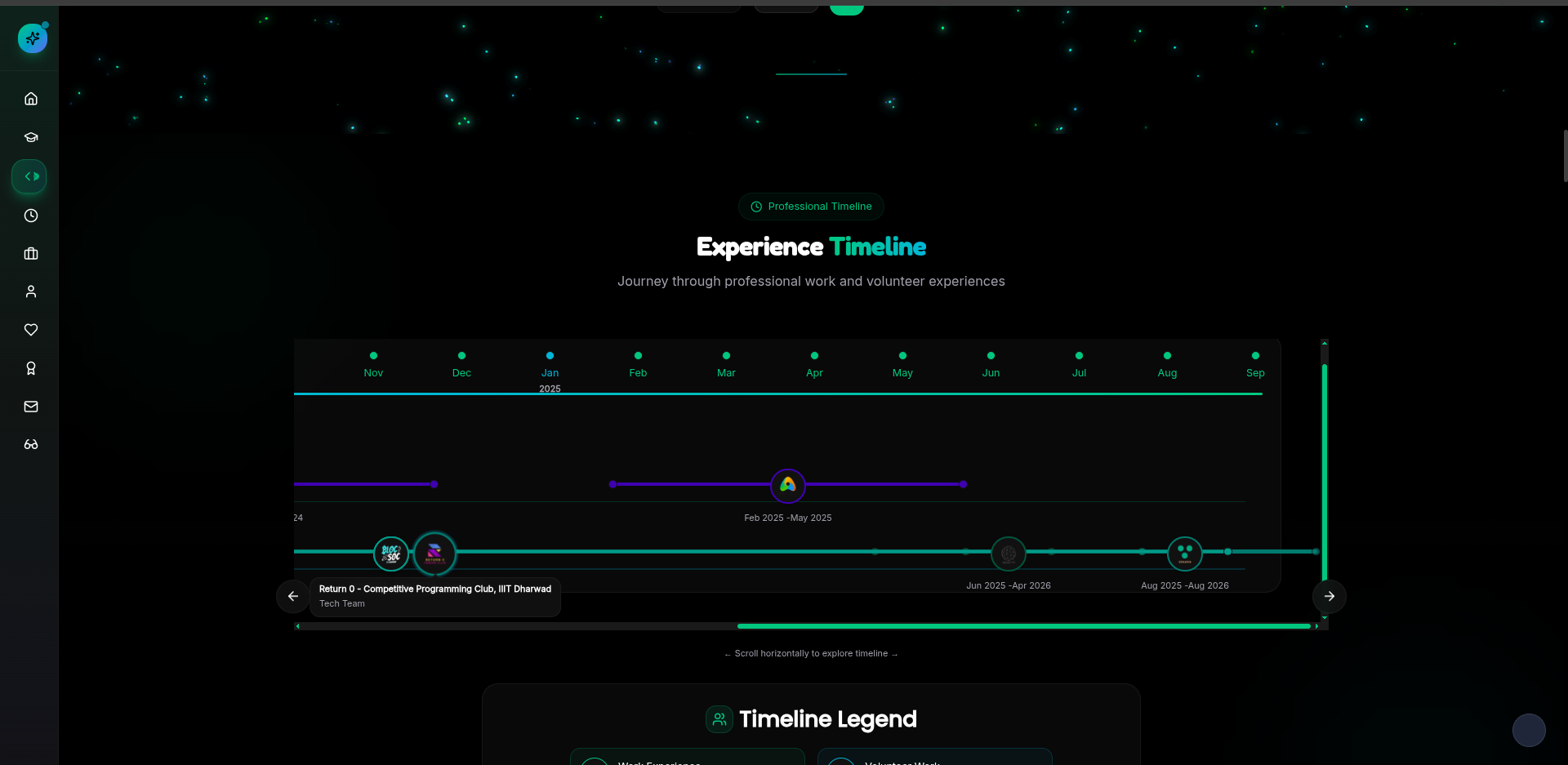
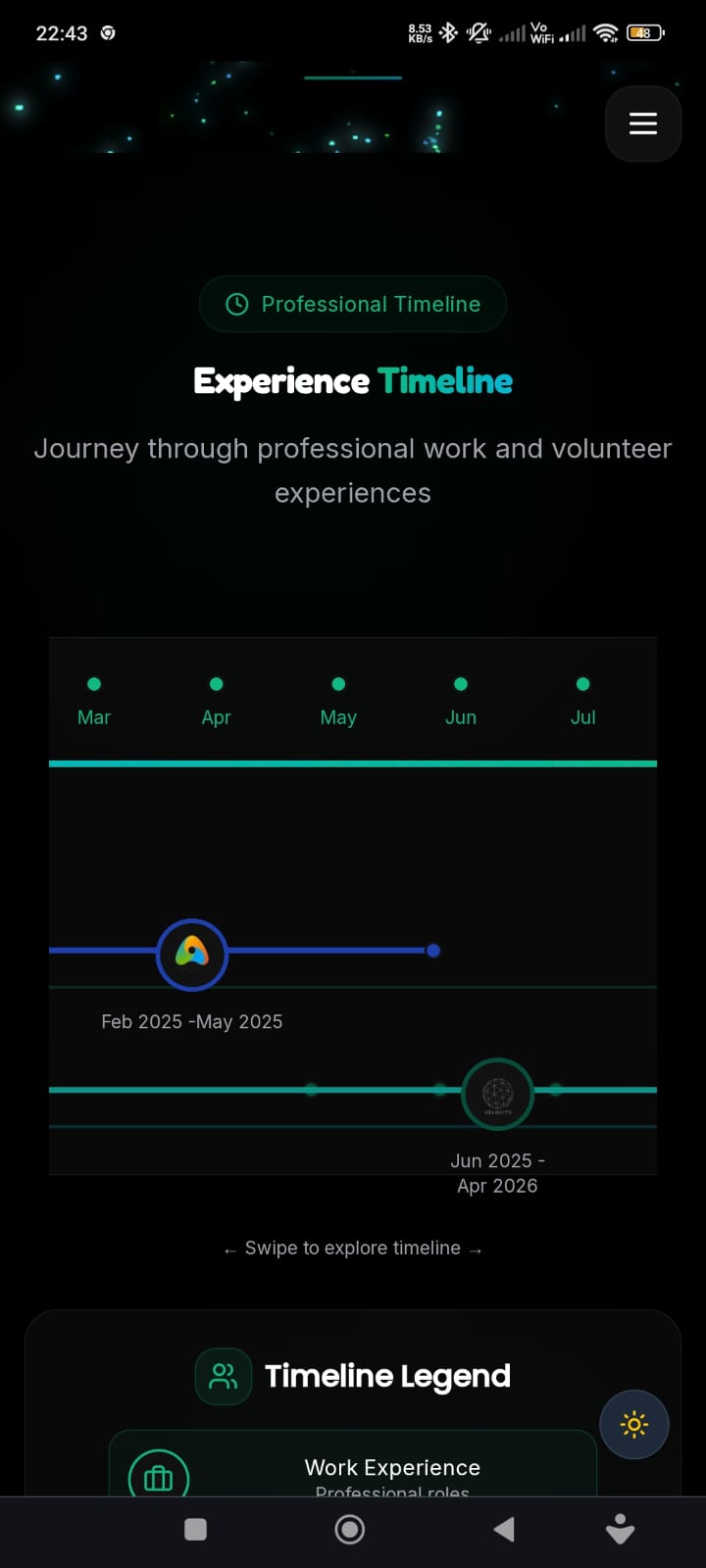
Timeline Section
-
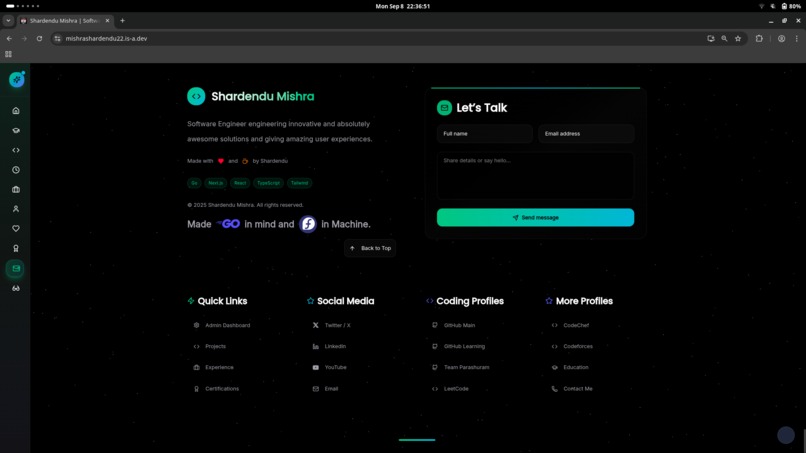
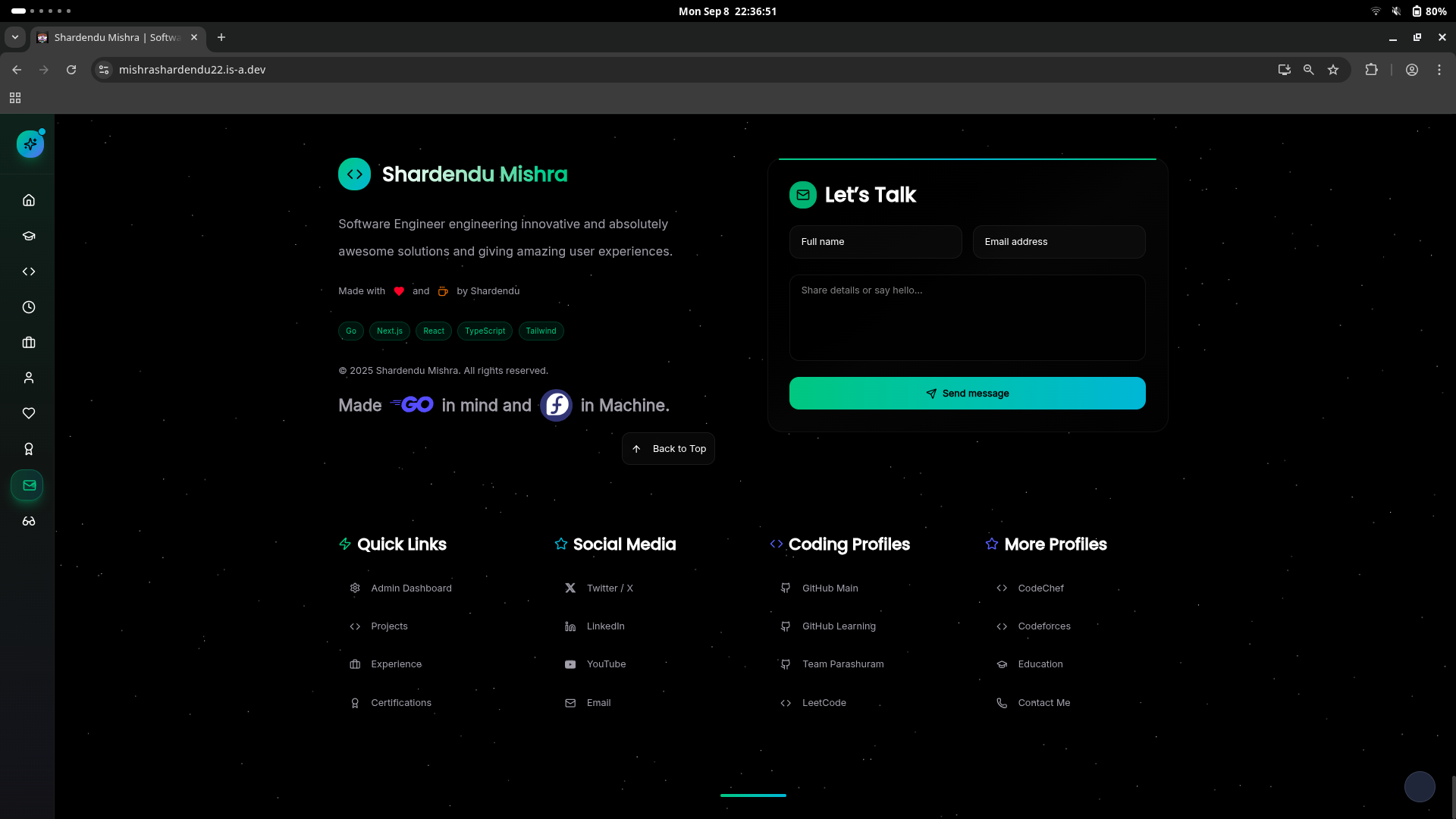
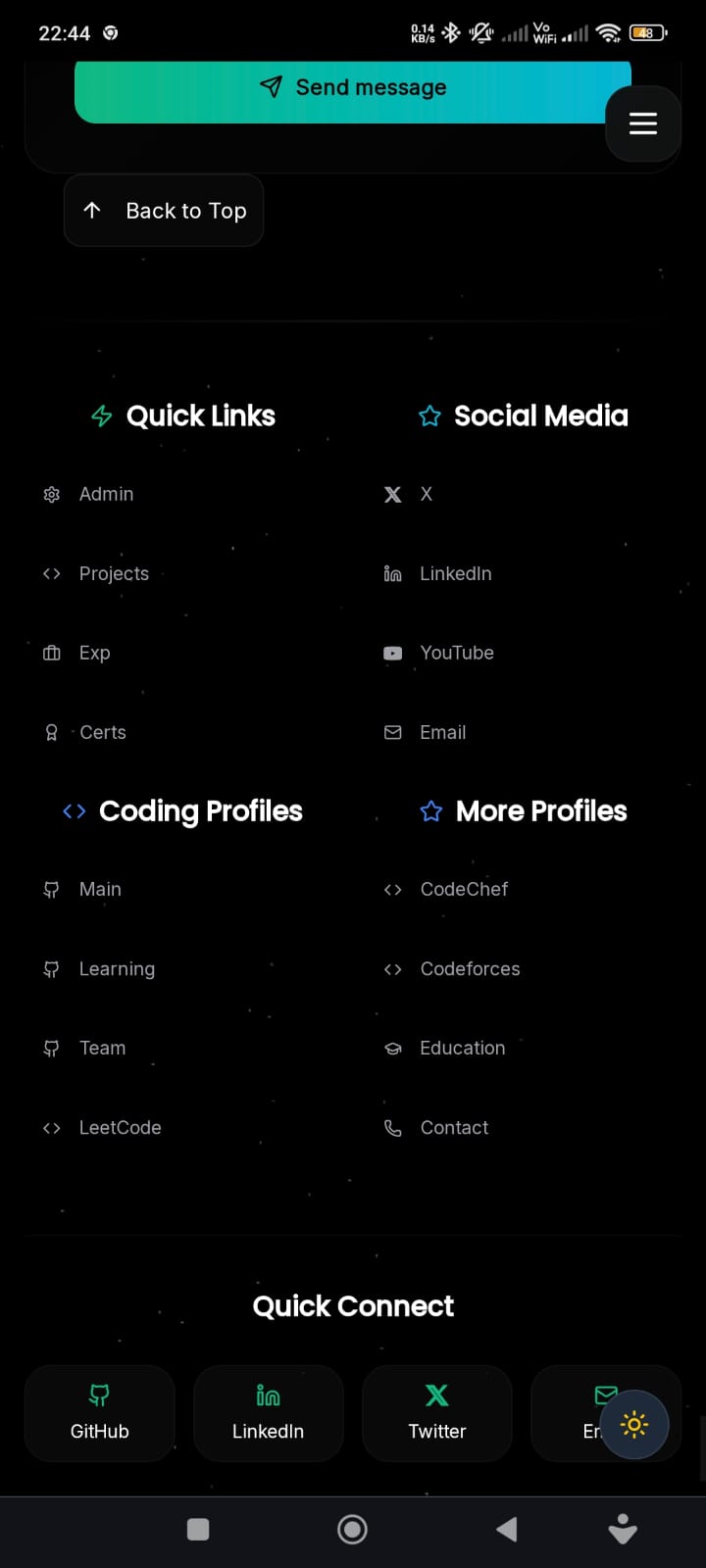
Contact and Footer section
-
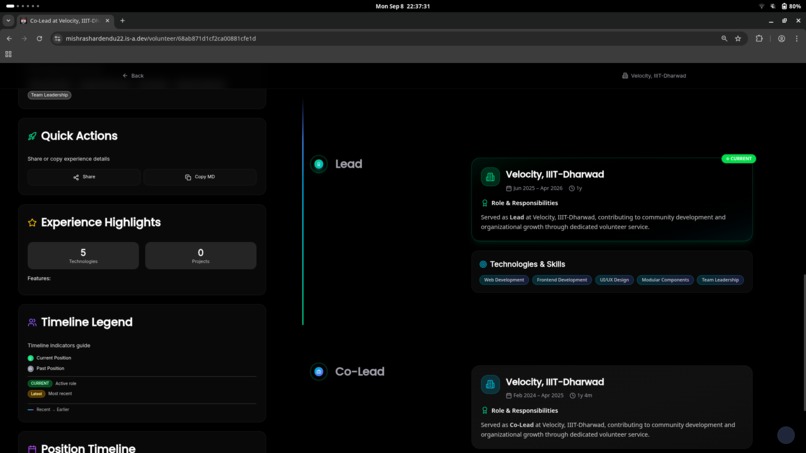
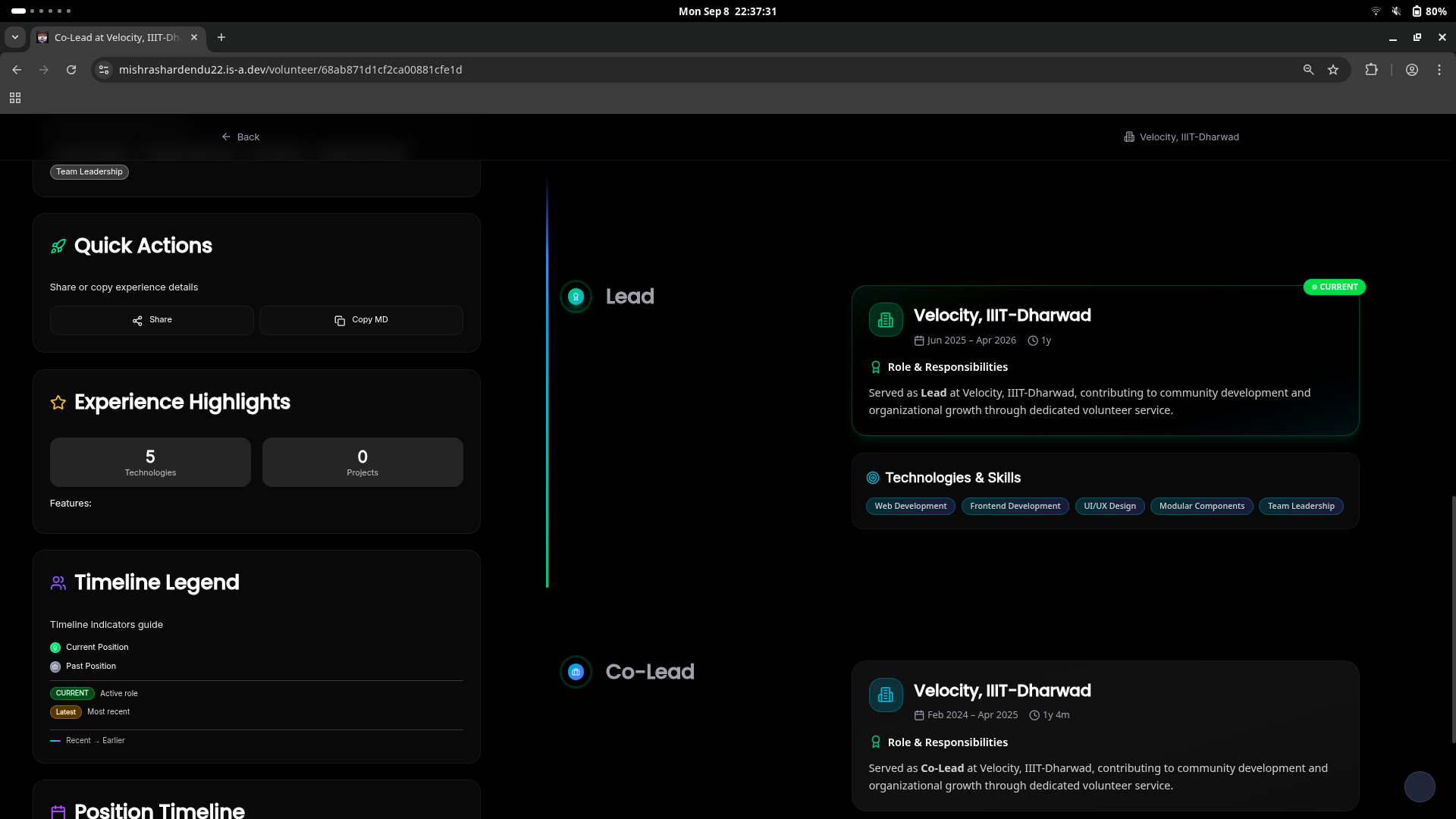
Page to show Experiecne and Volunteer Experiece
-
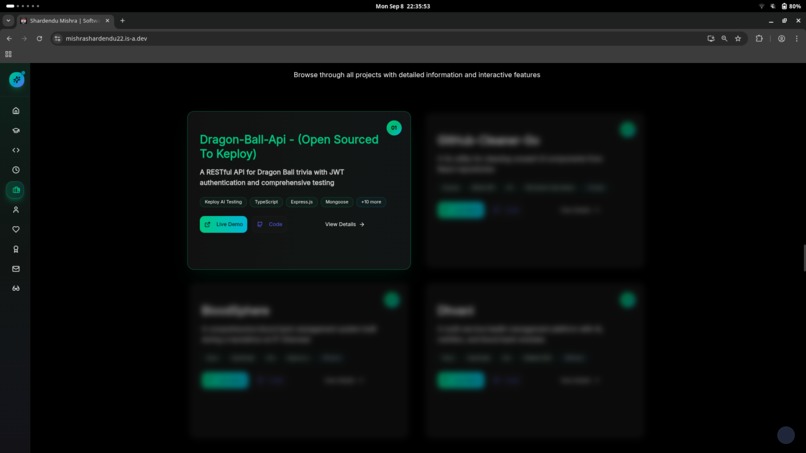
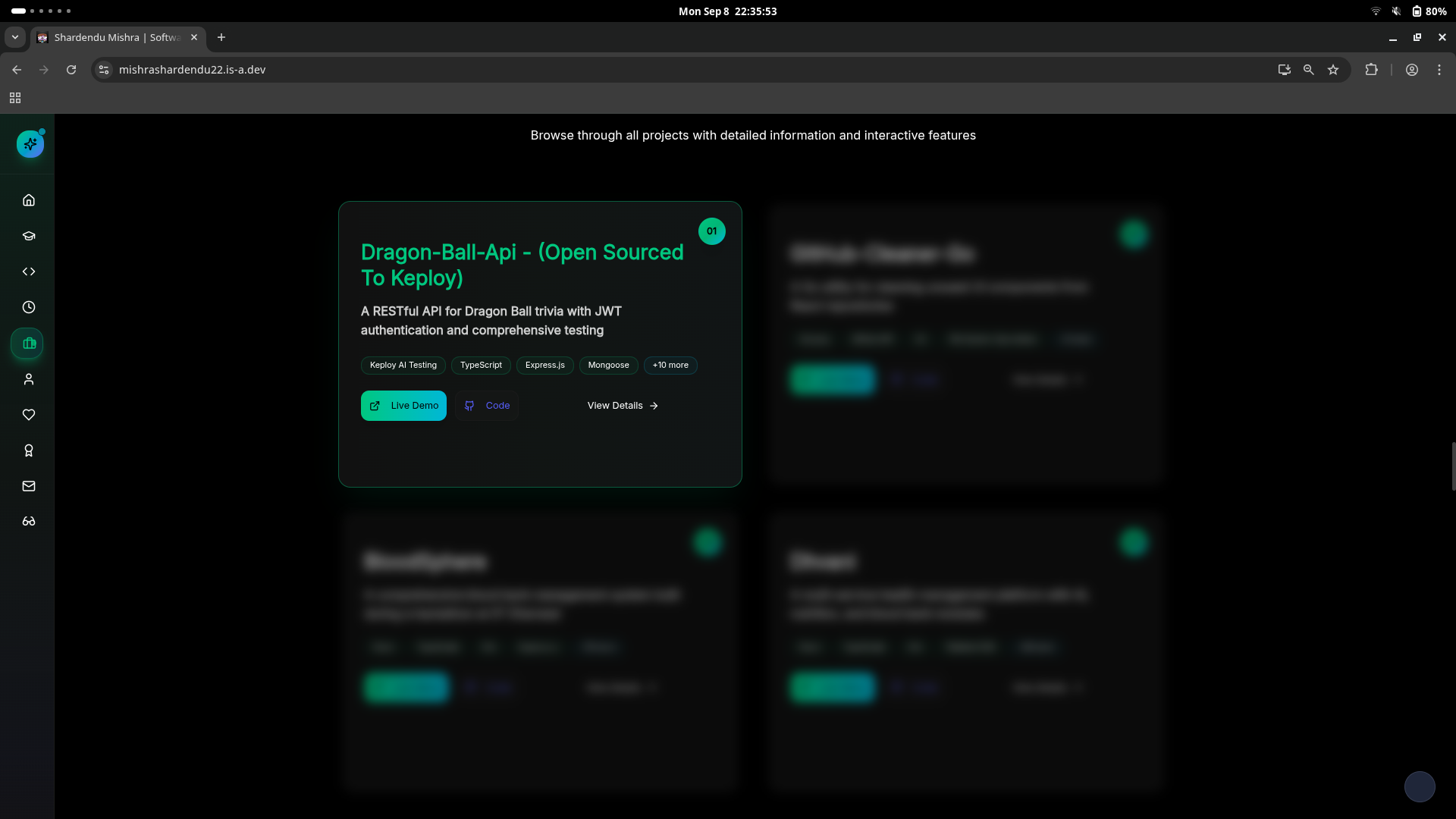
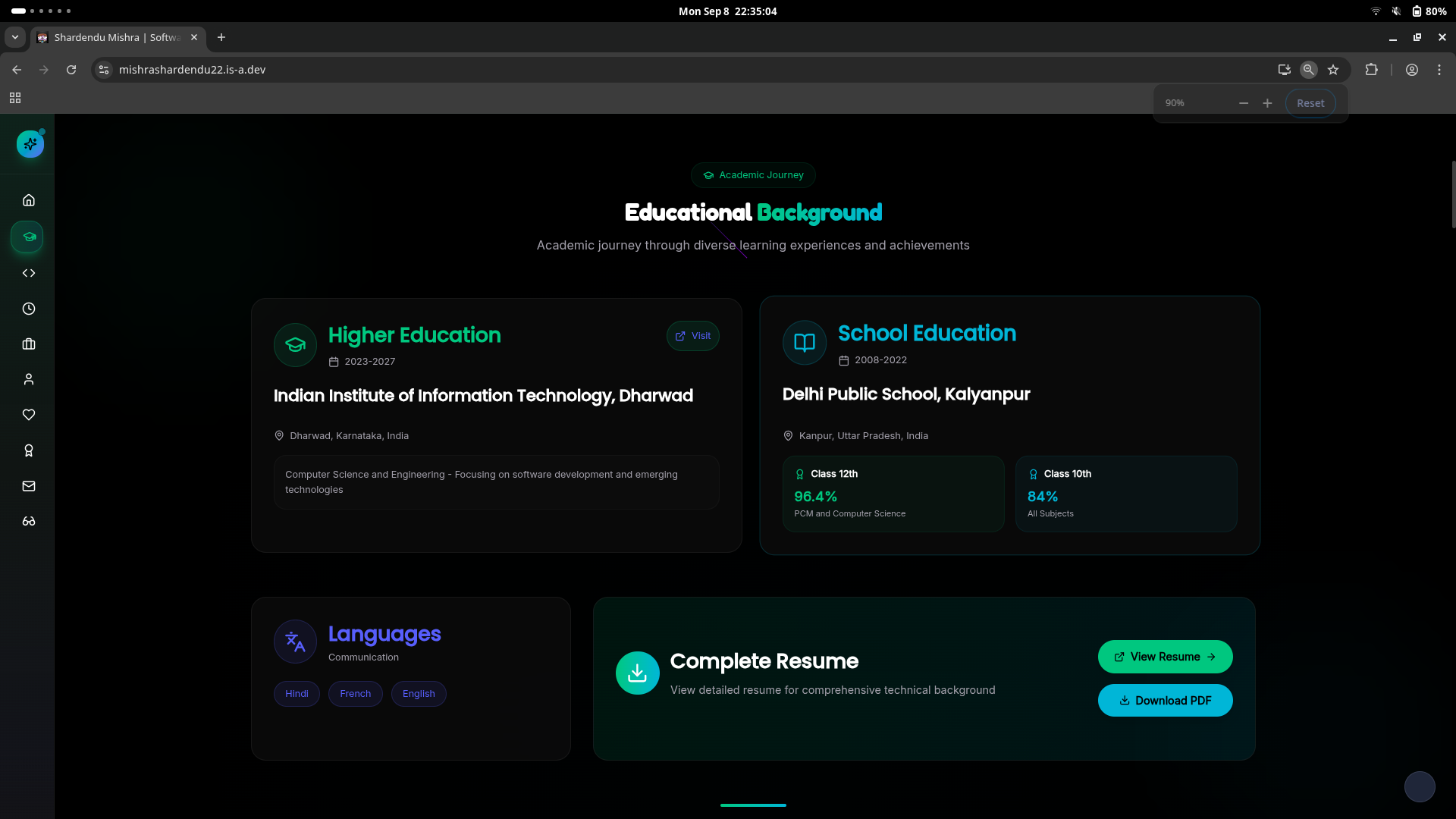
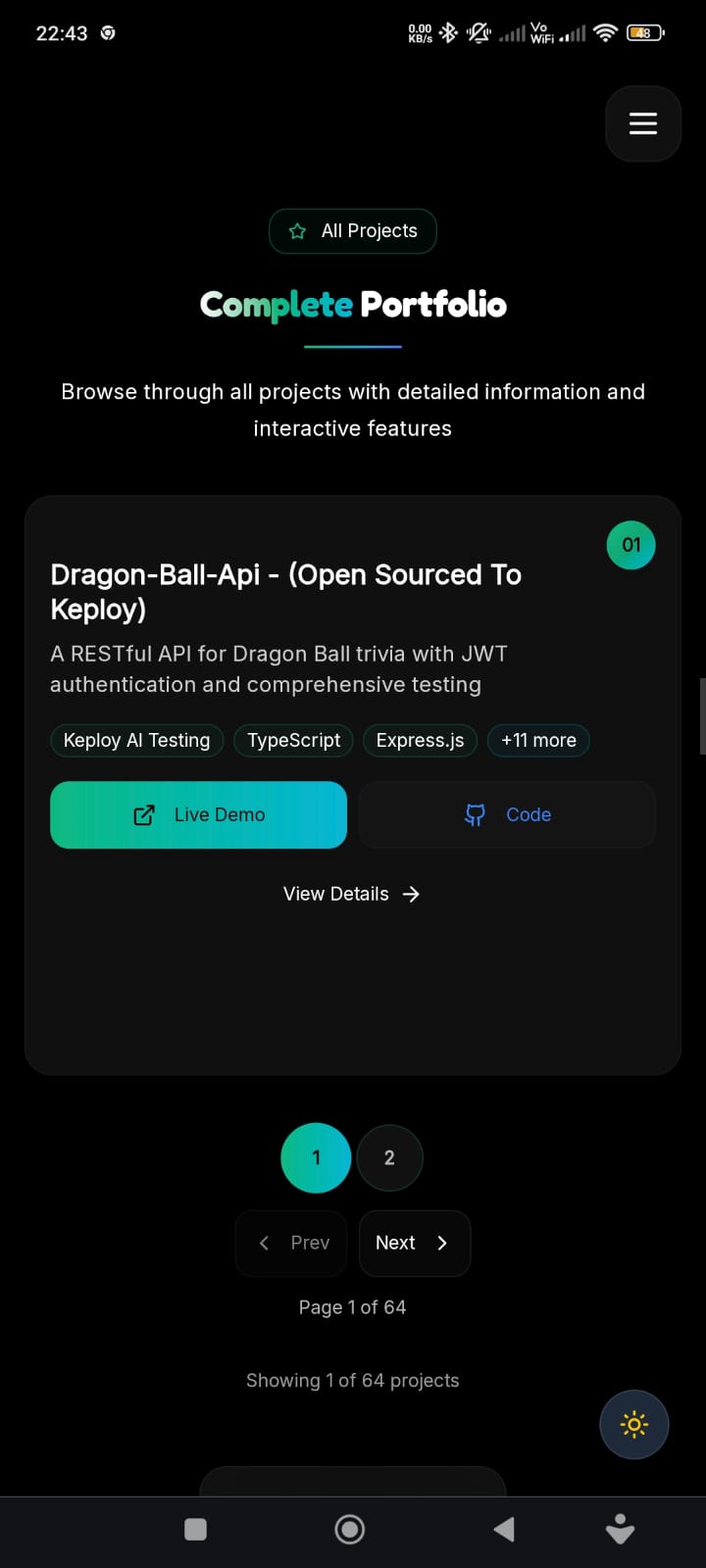
Projects
-
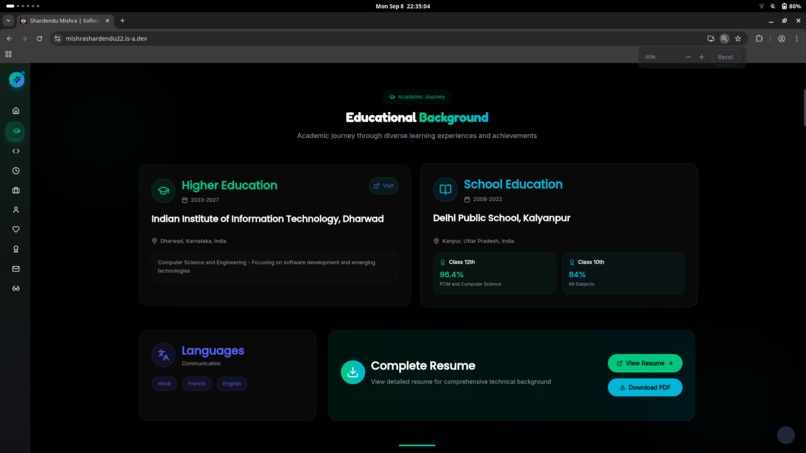
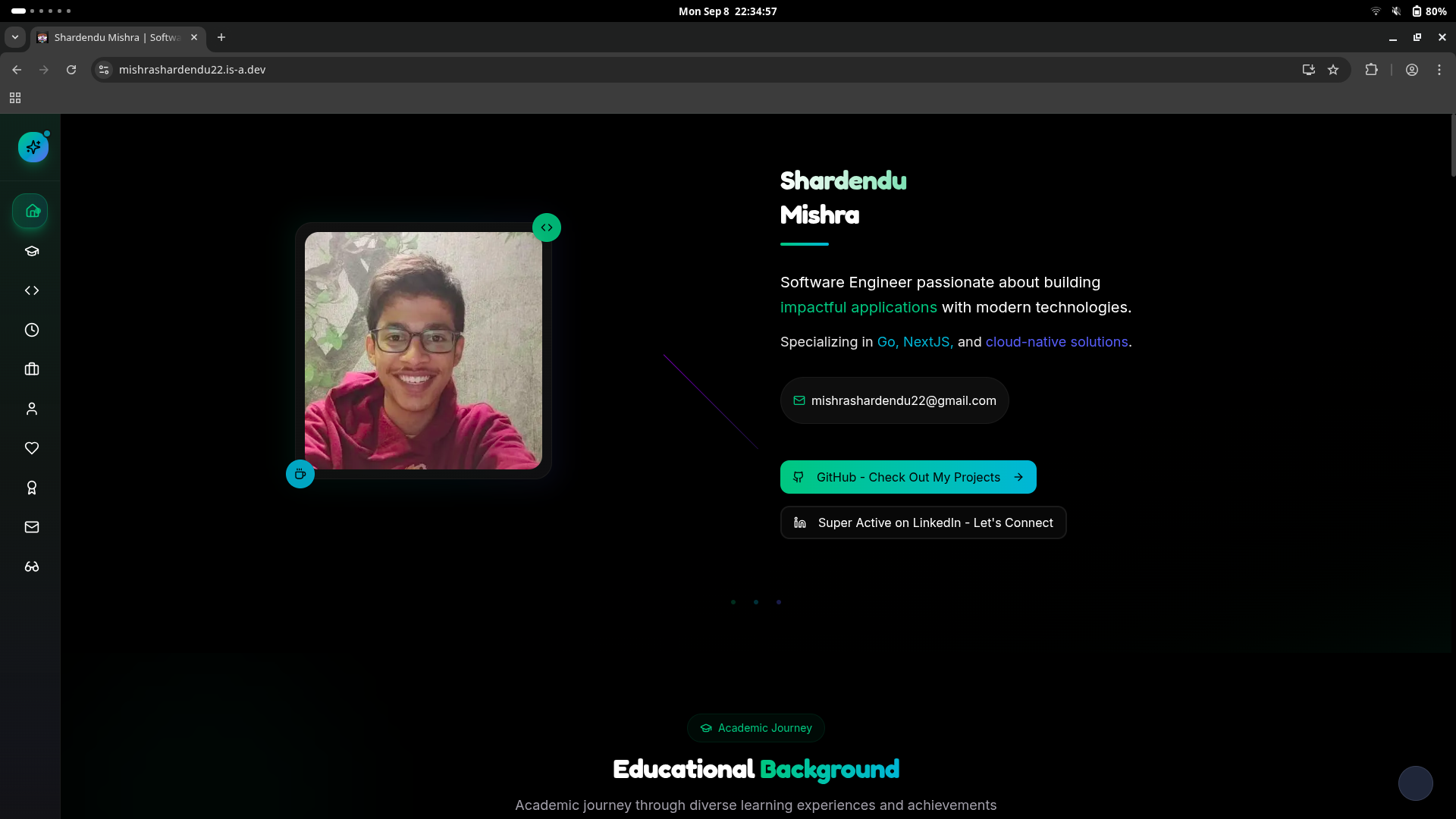
Hero section
-
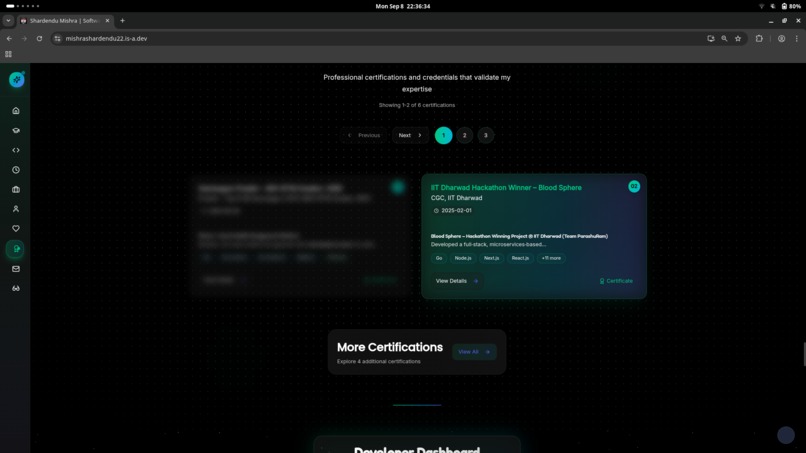
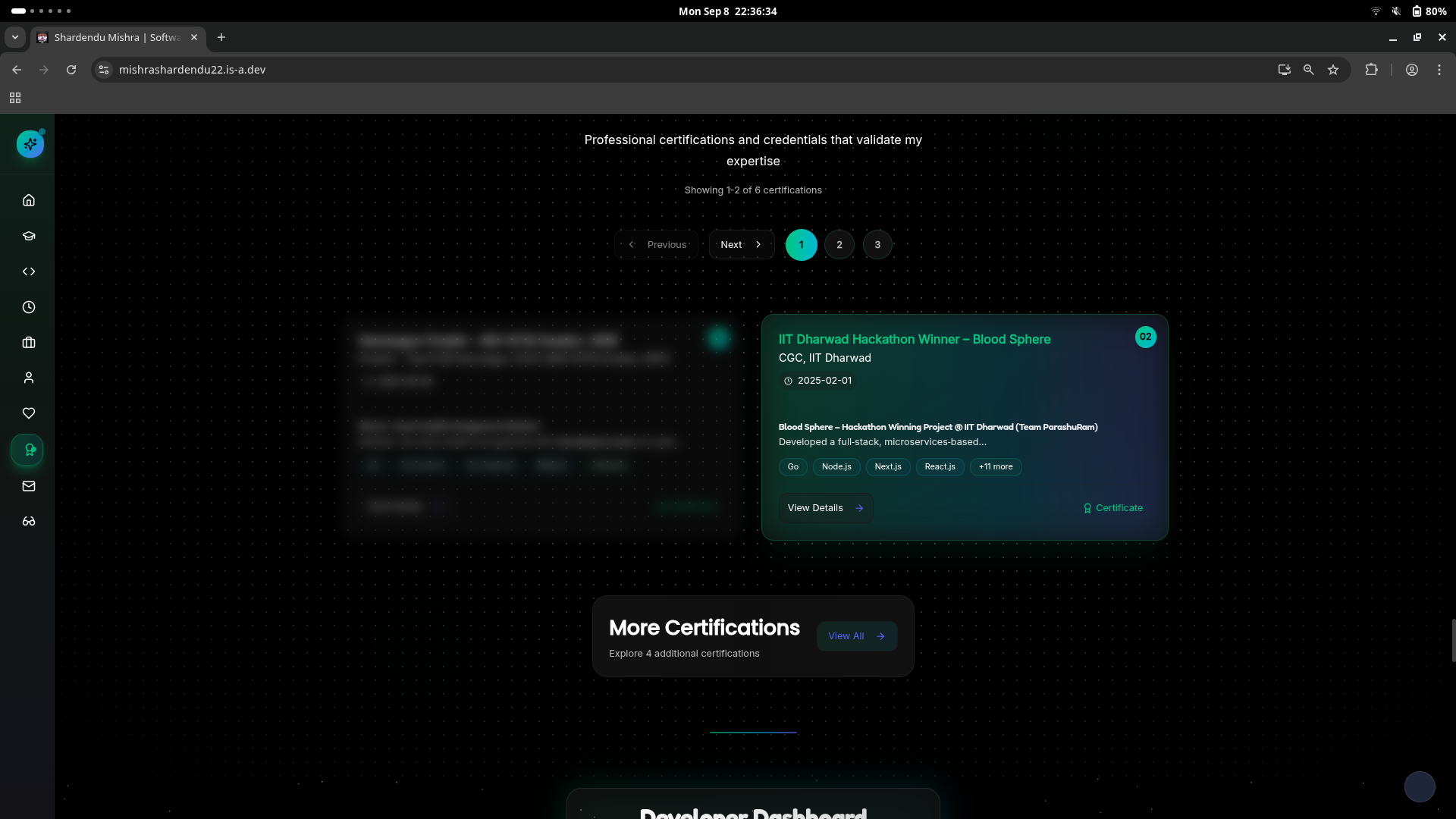
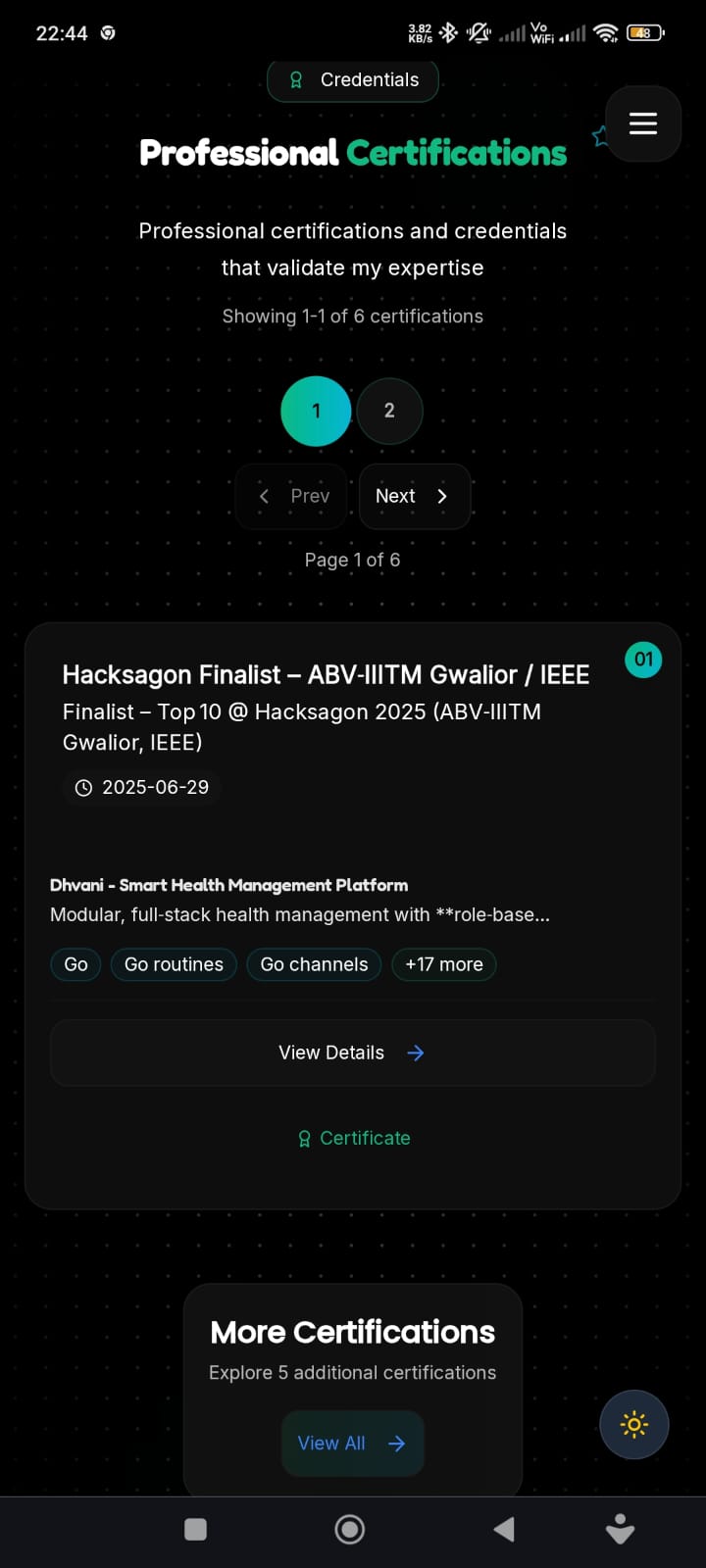
Certificates
-
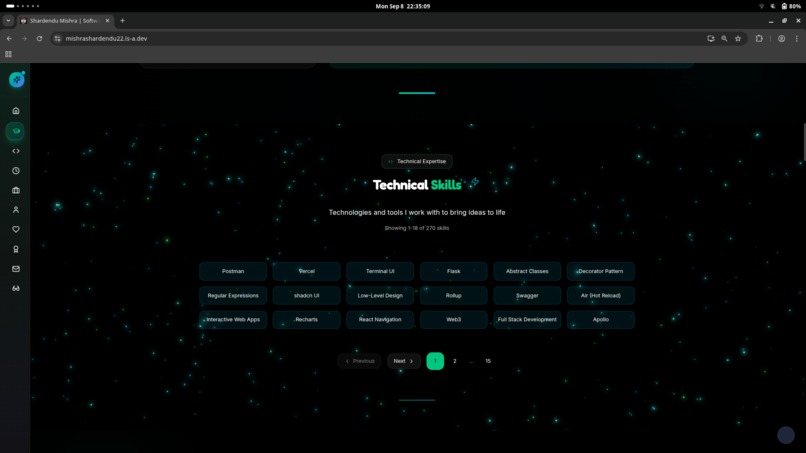
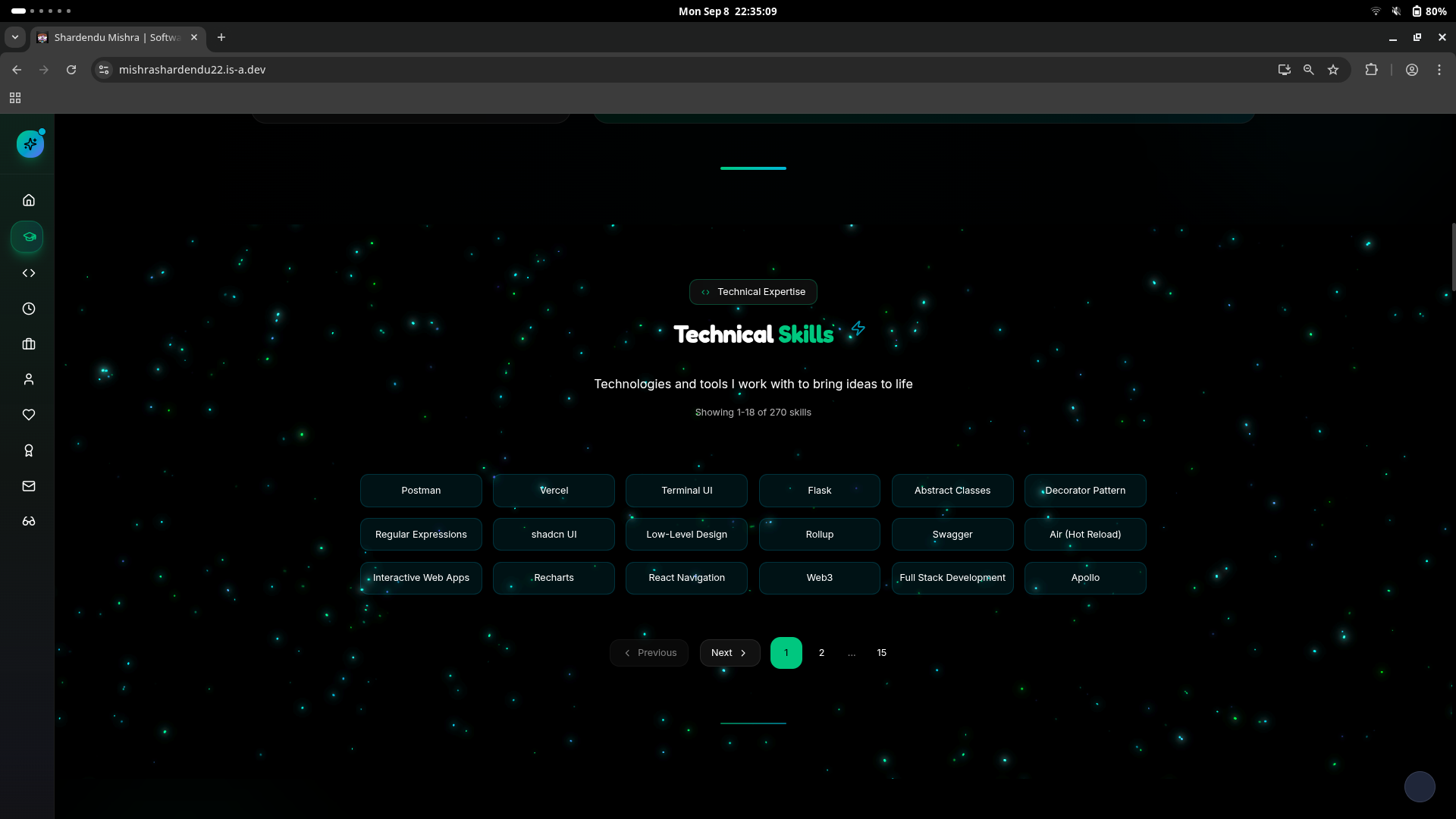
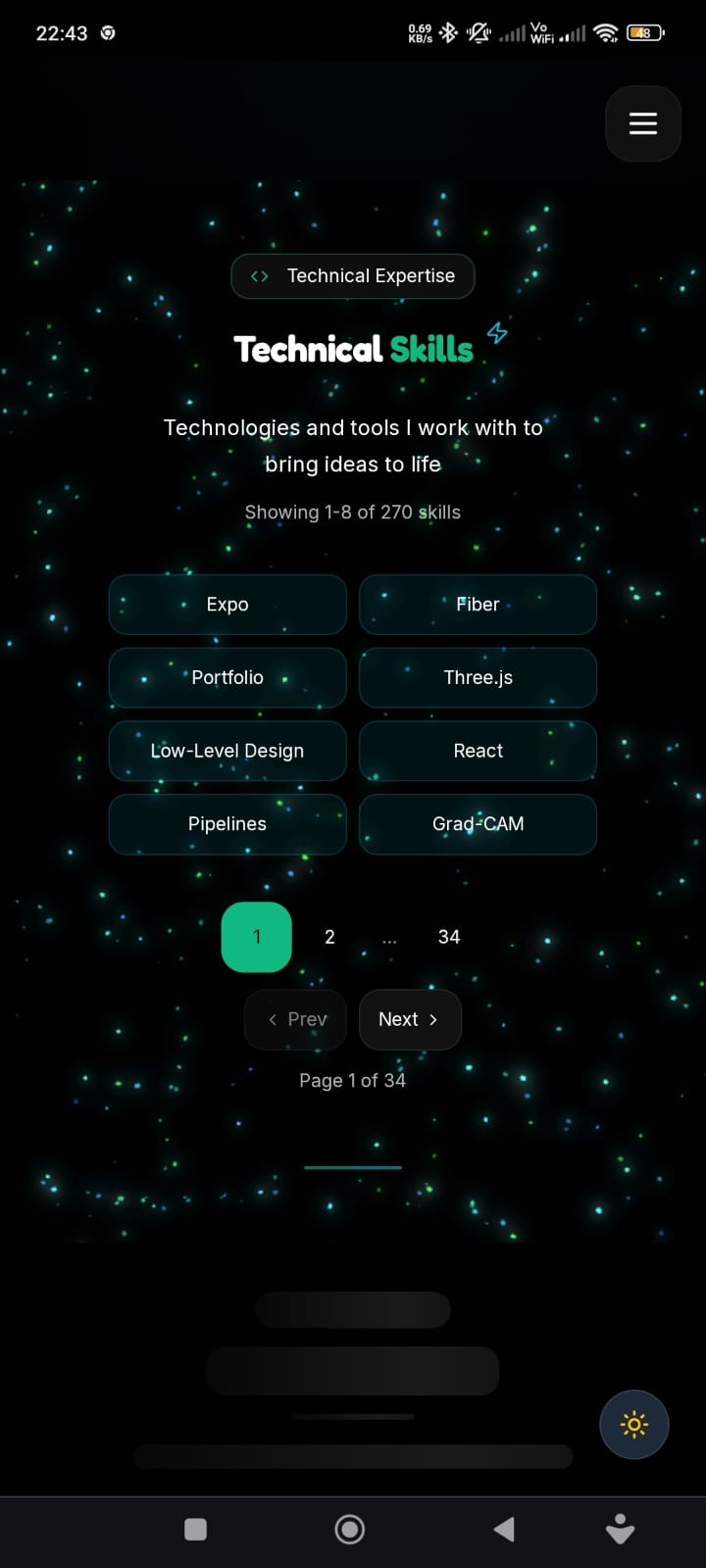
Skill Section
-
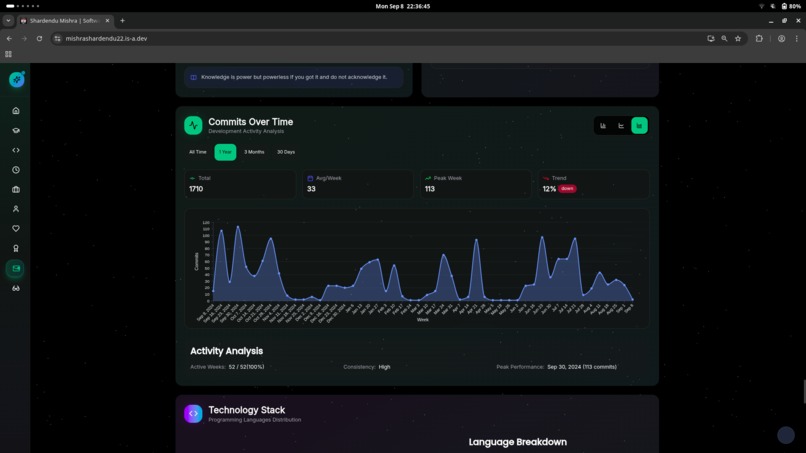
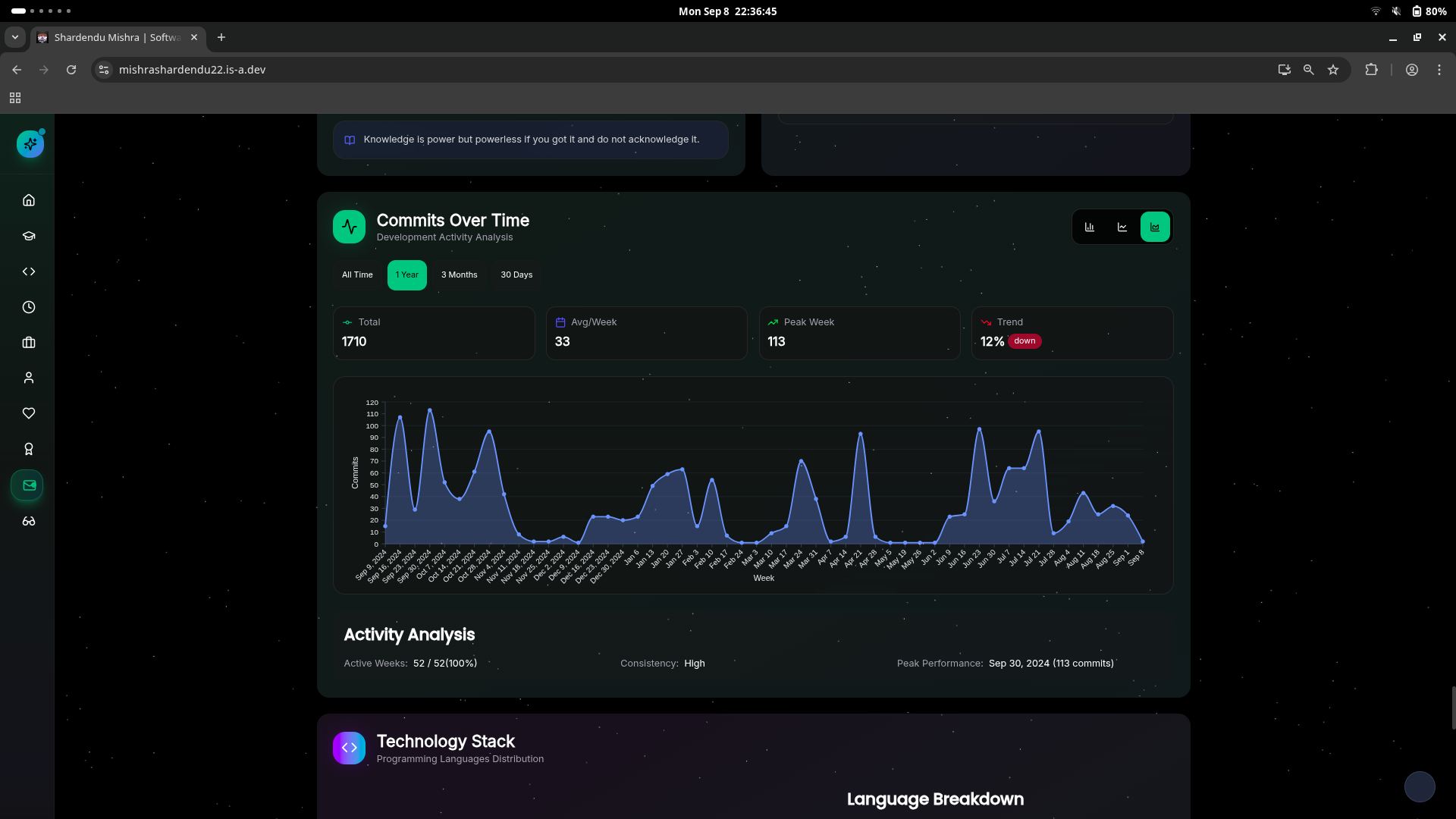
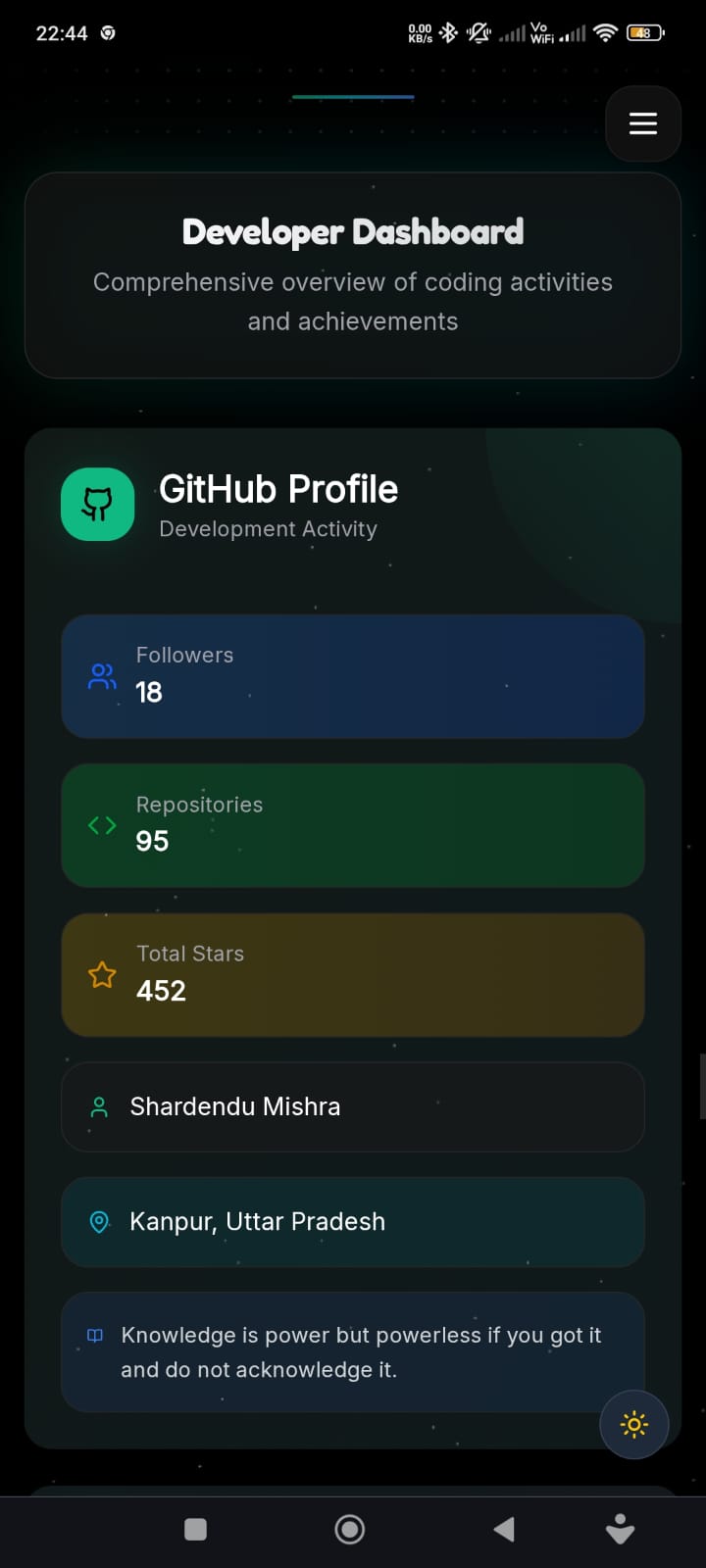
Stats for Commits
-
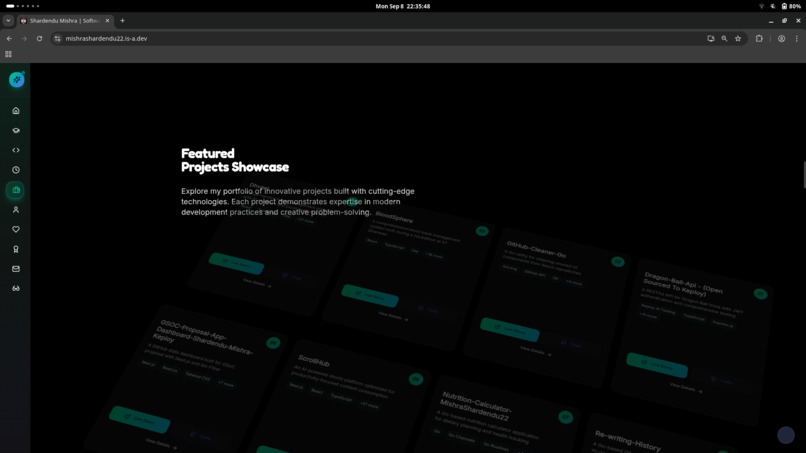
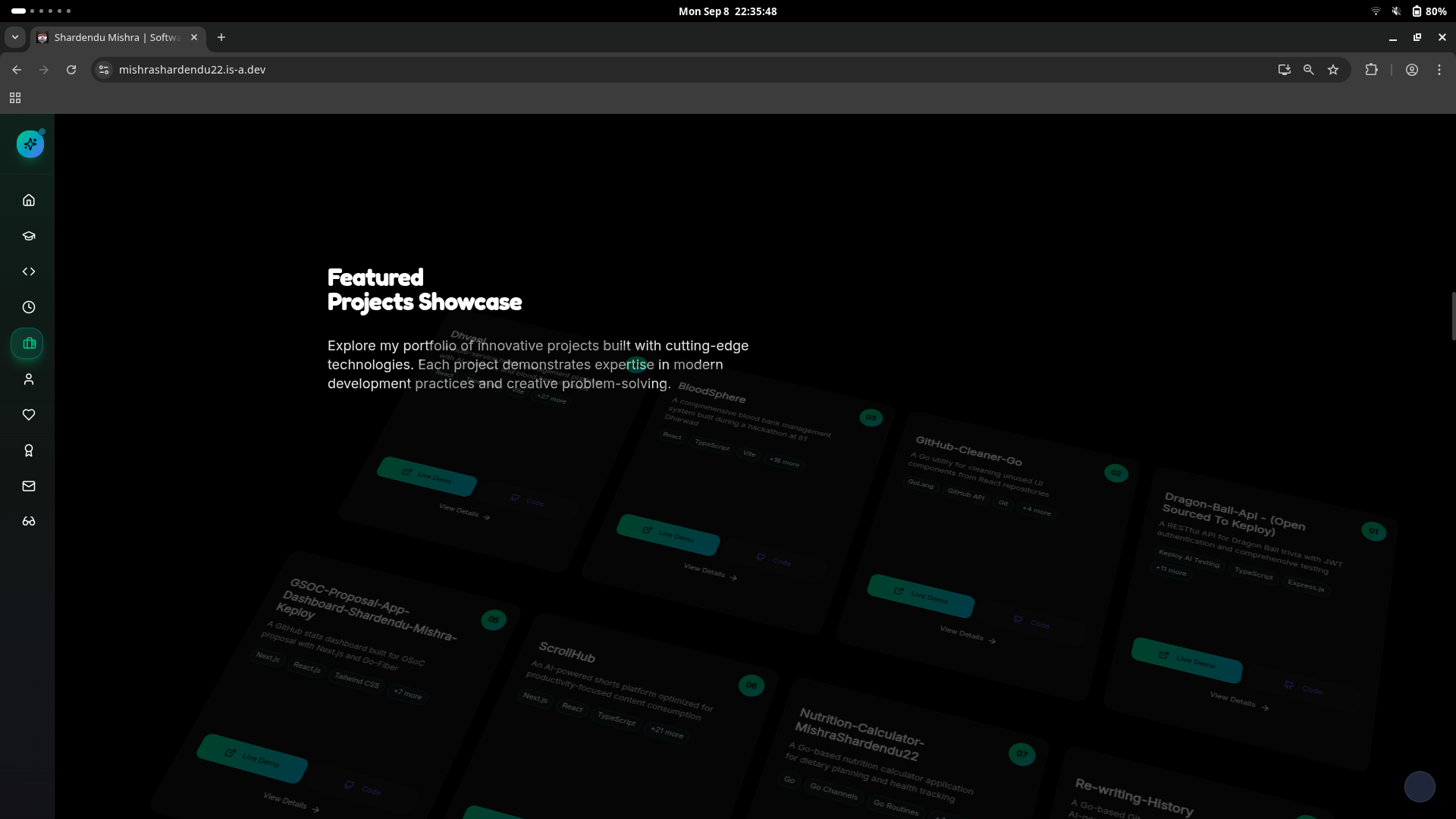
Project Section
-
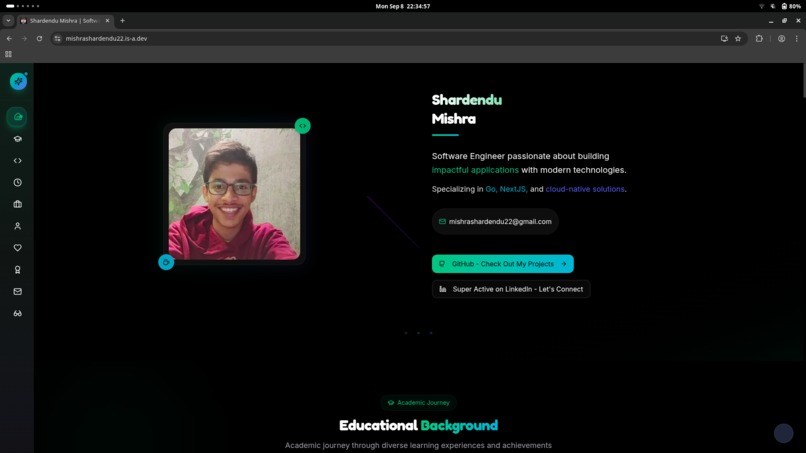
Intro Section
-
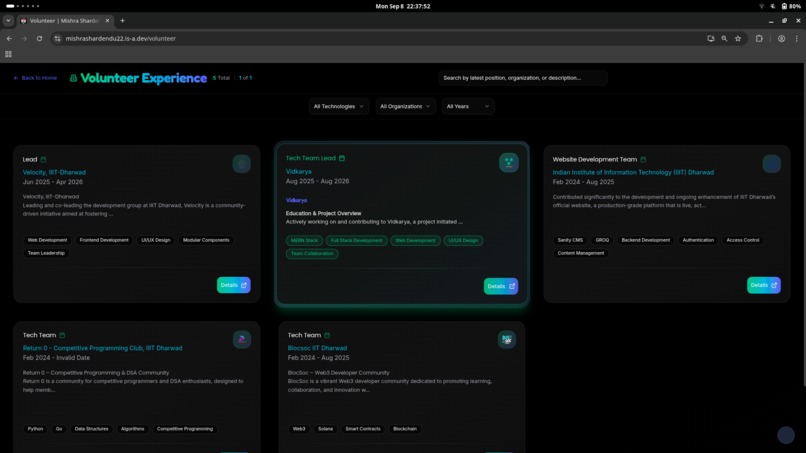
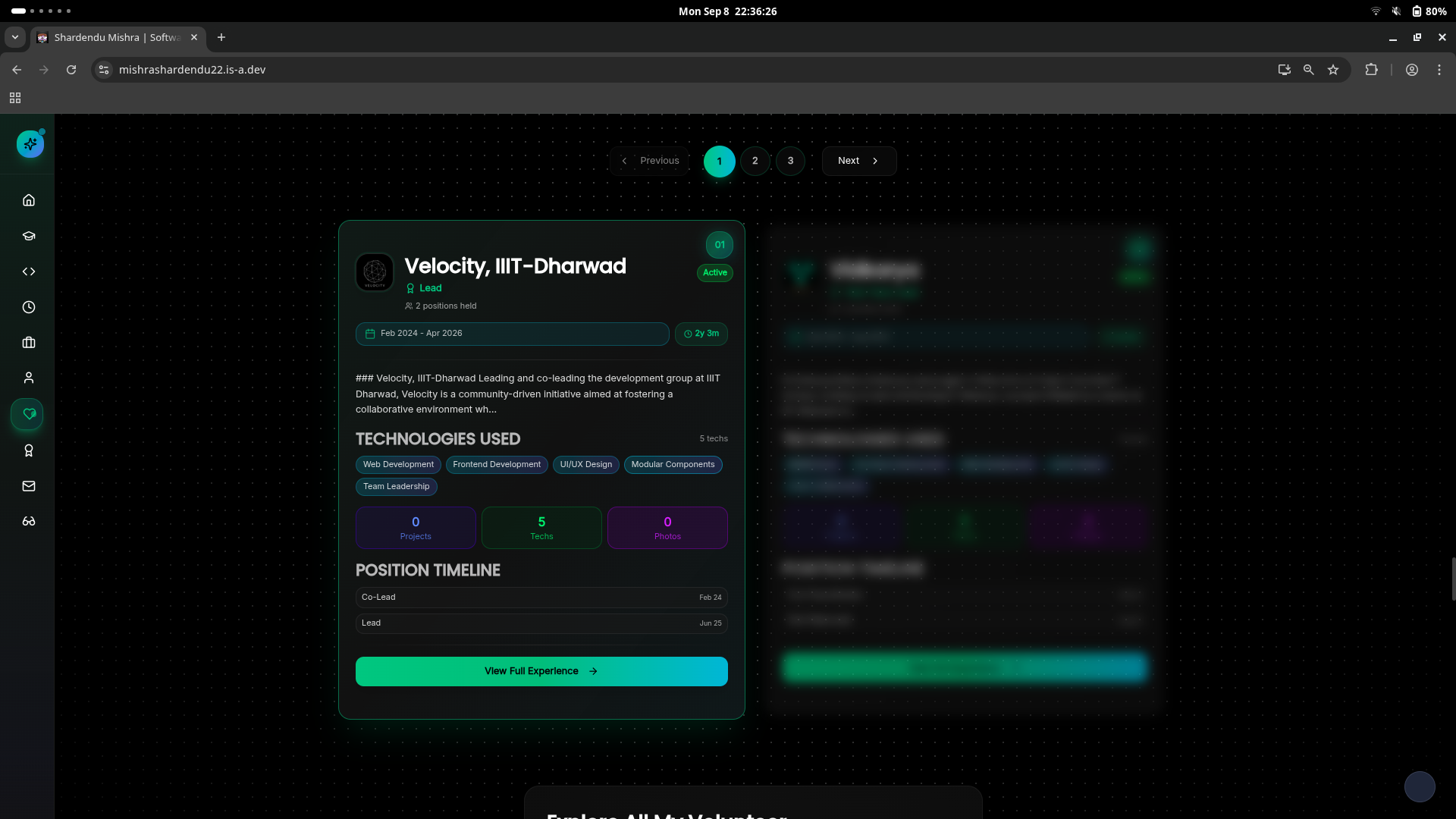
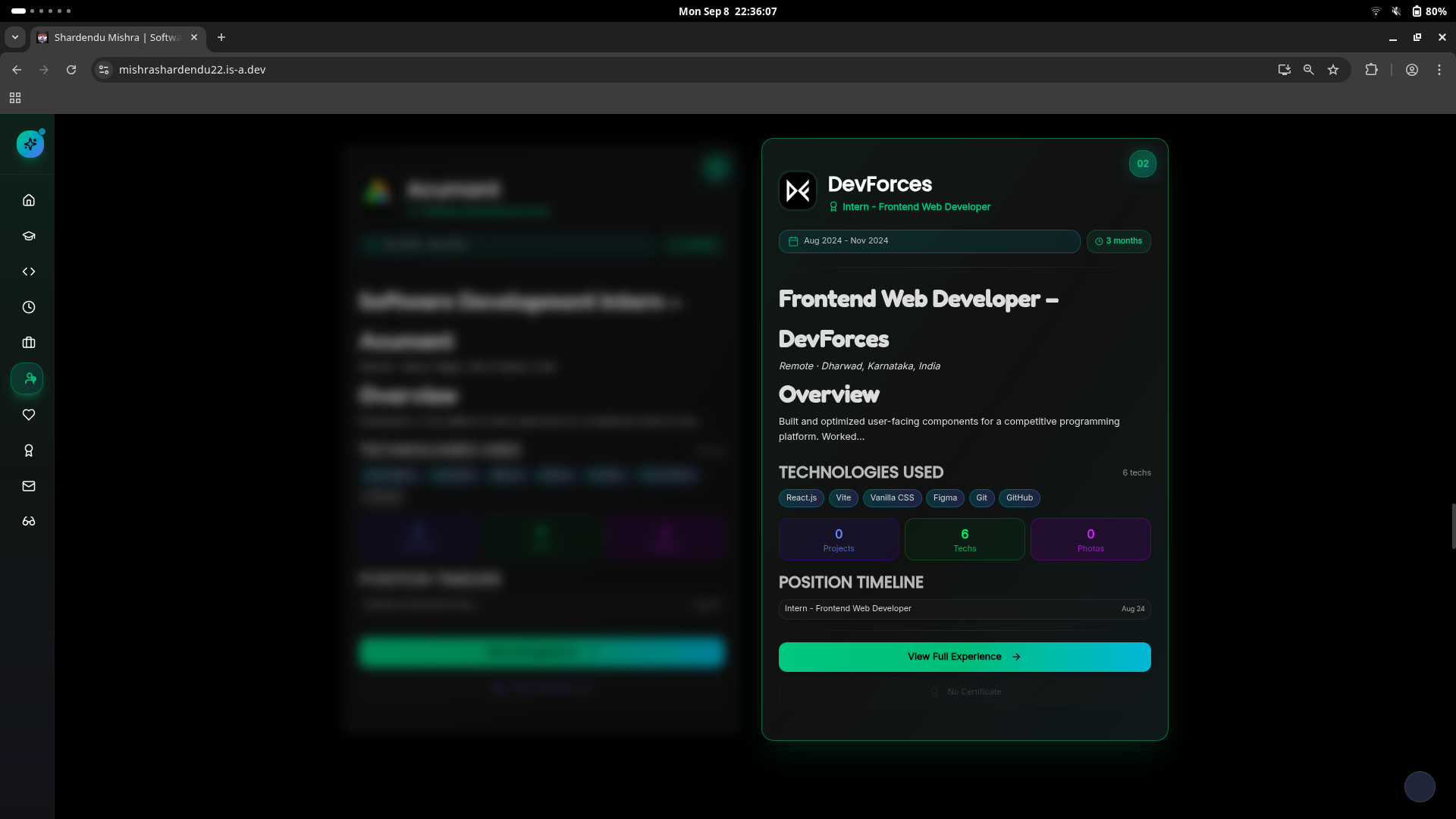
UI to show all experience, ,Project and Volunteer experience.
-
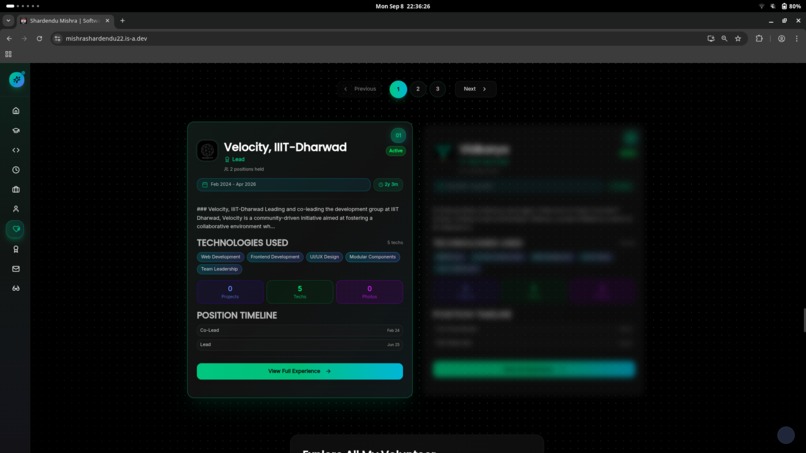
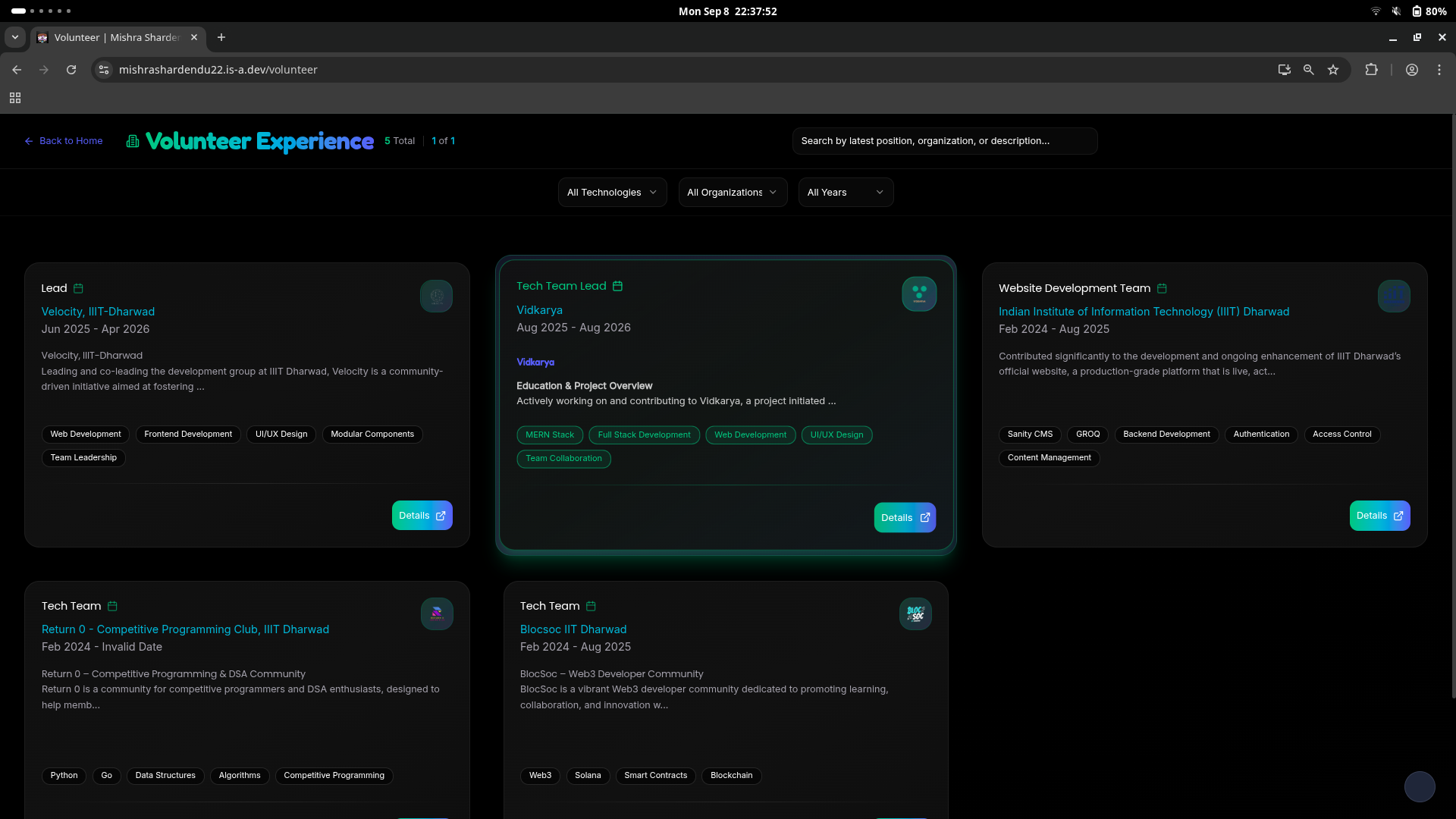
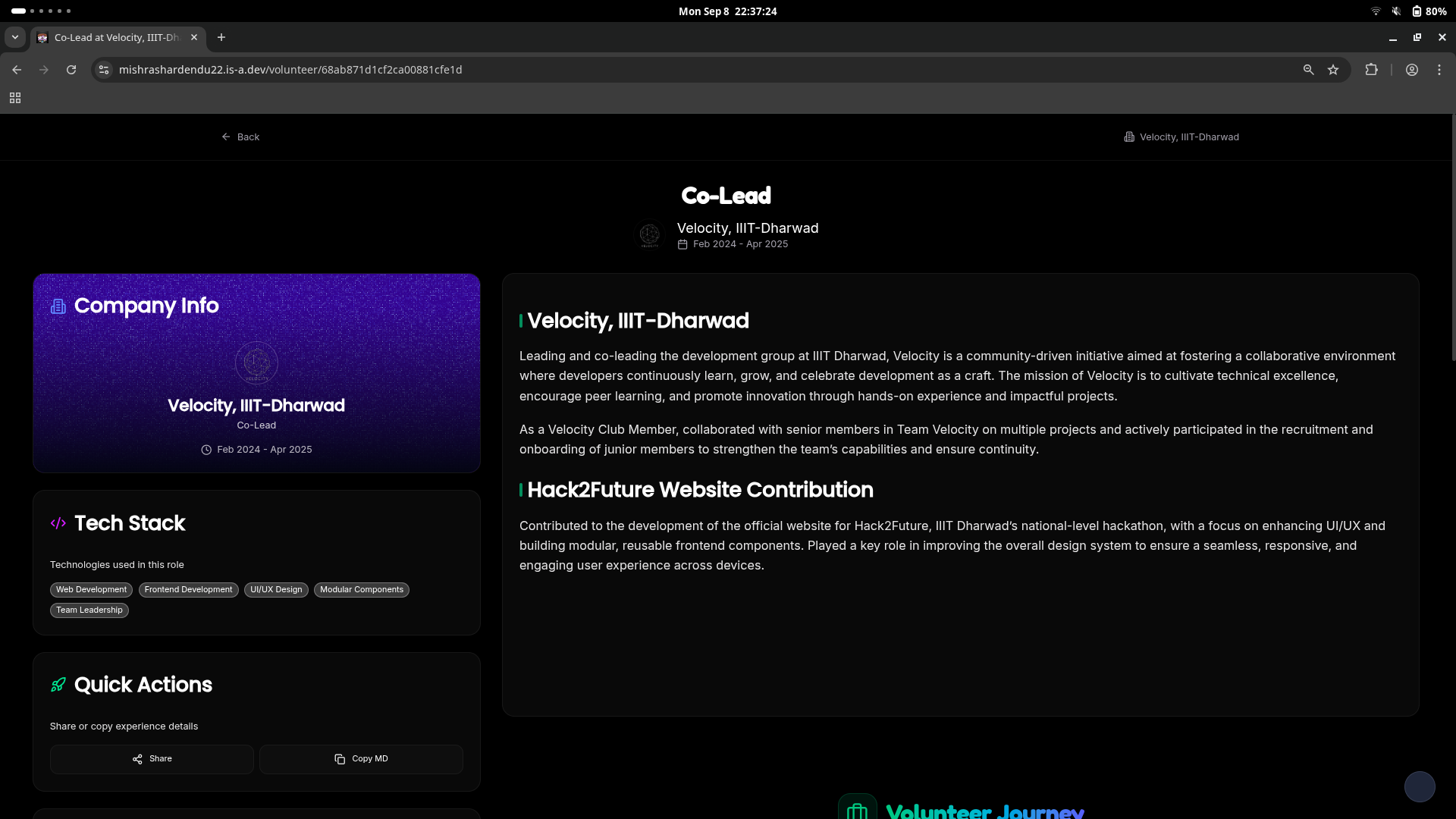
Volunteer Work
-
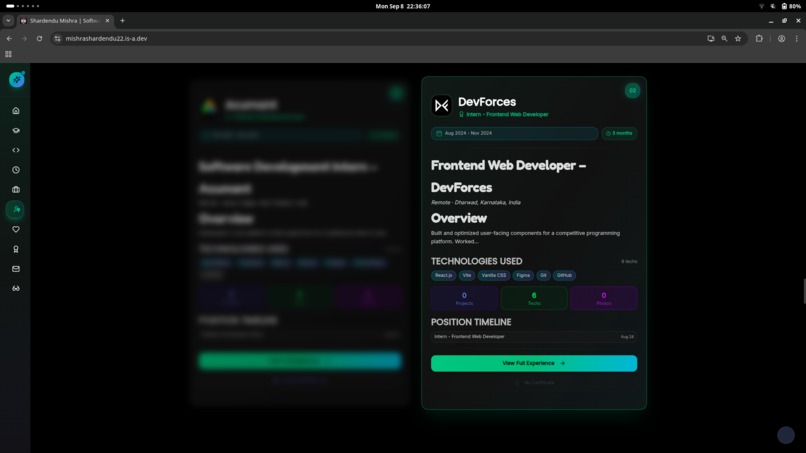
Experience in Industry
-
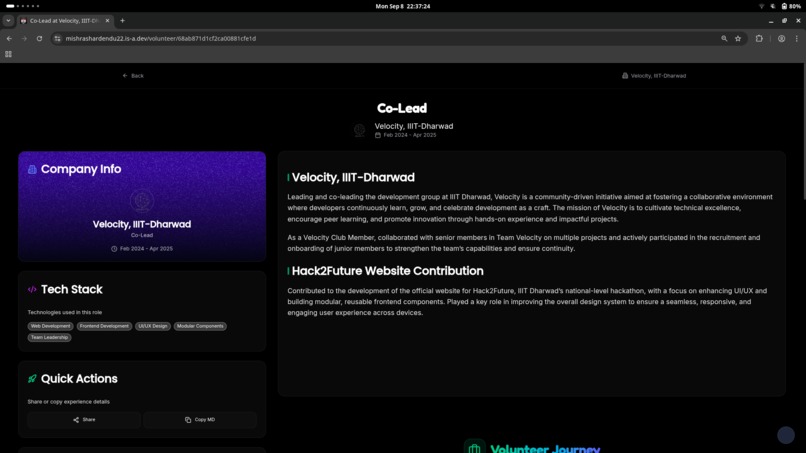
Page to show Experiecne and Volunteer Experiece
-
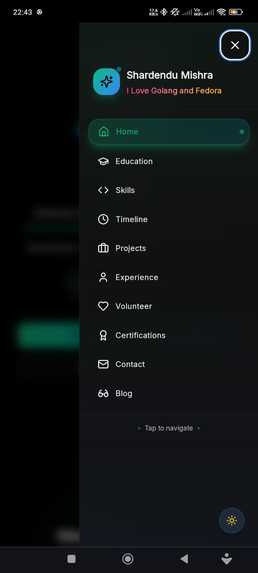
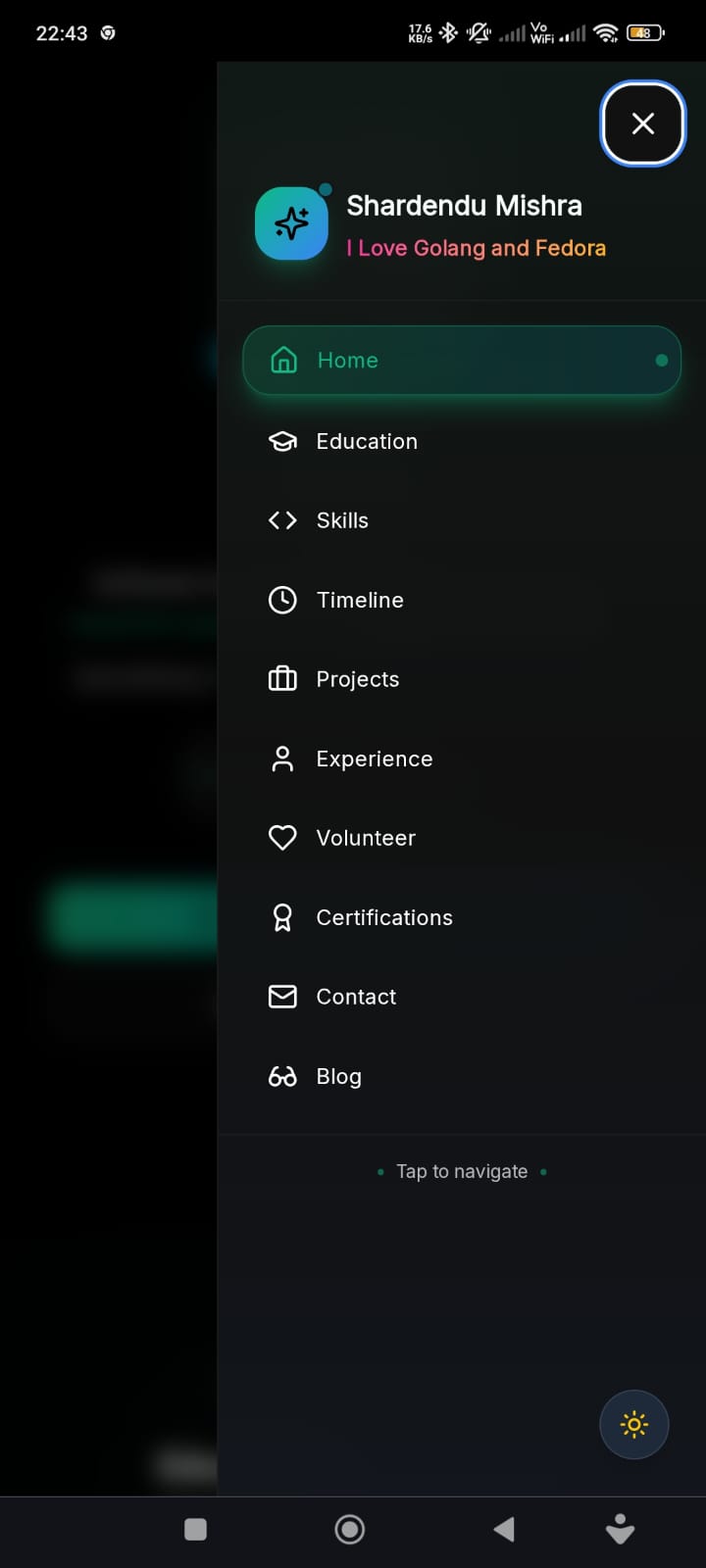
Mobile Application - Burger Menu
-
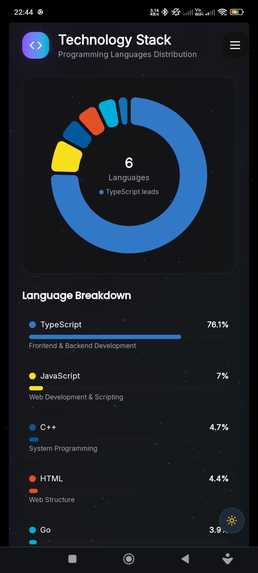
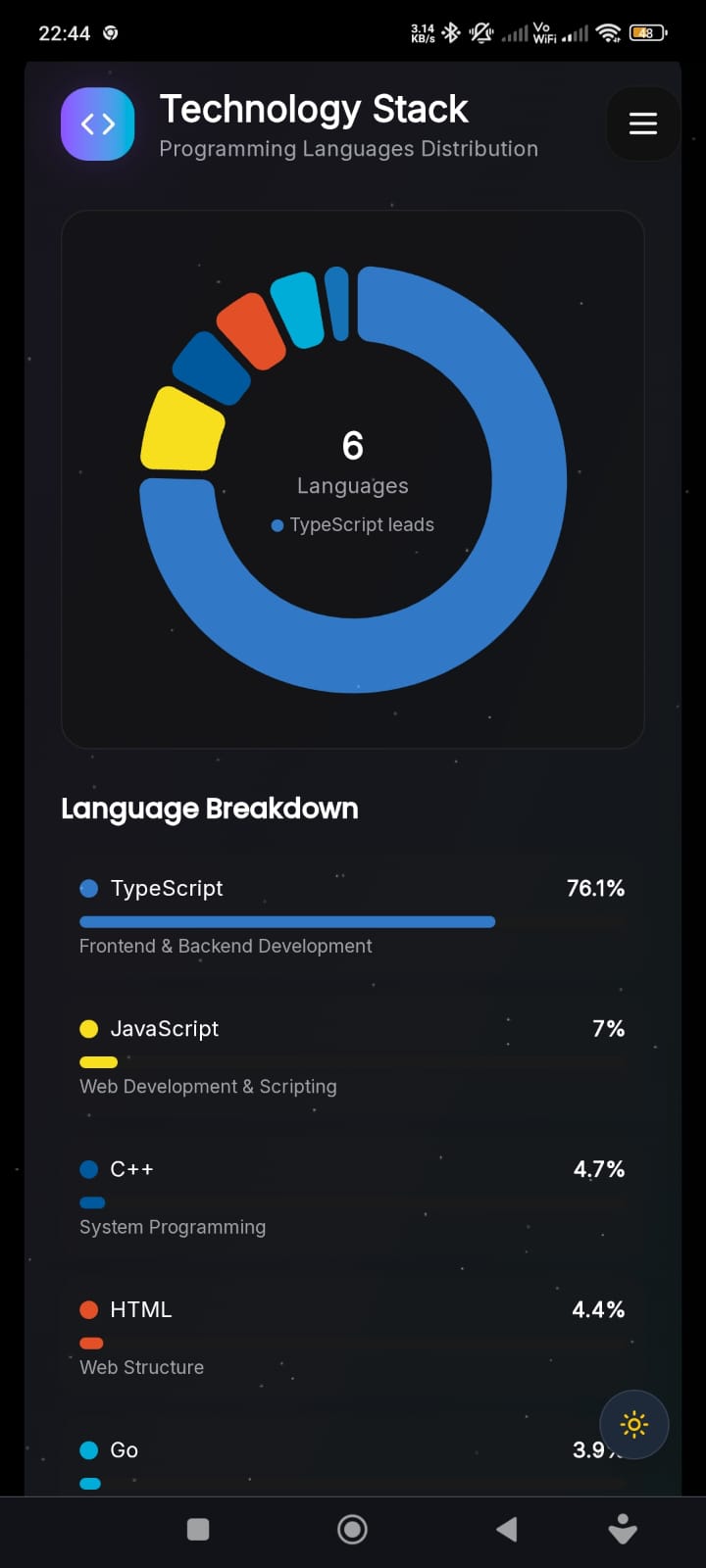
Mobile Application - Languages
-
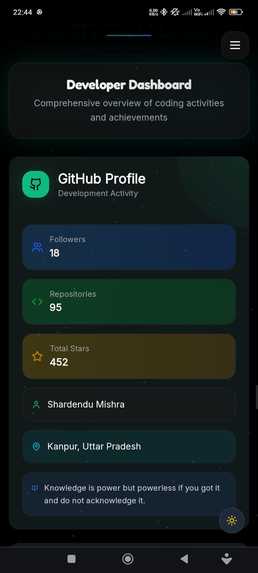
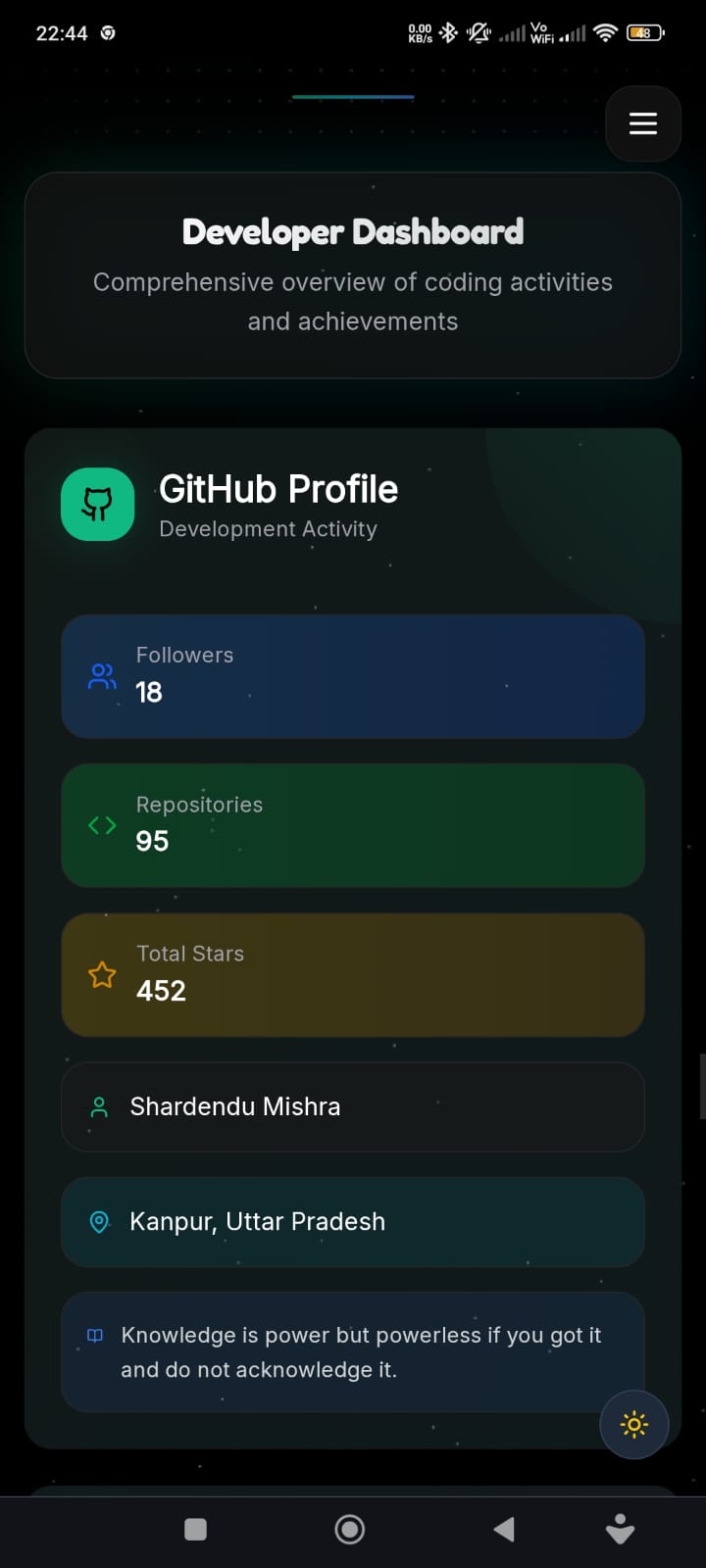
Mobile Application - Repo
-
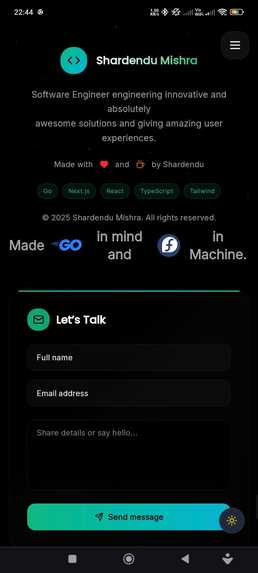
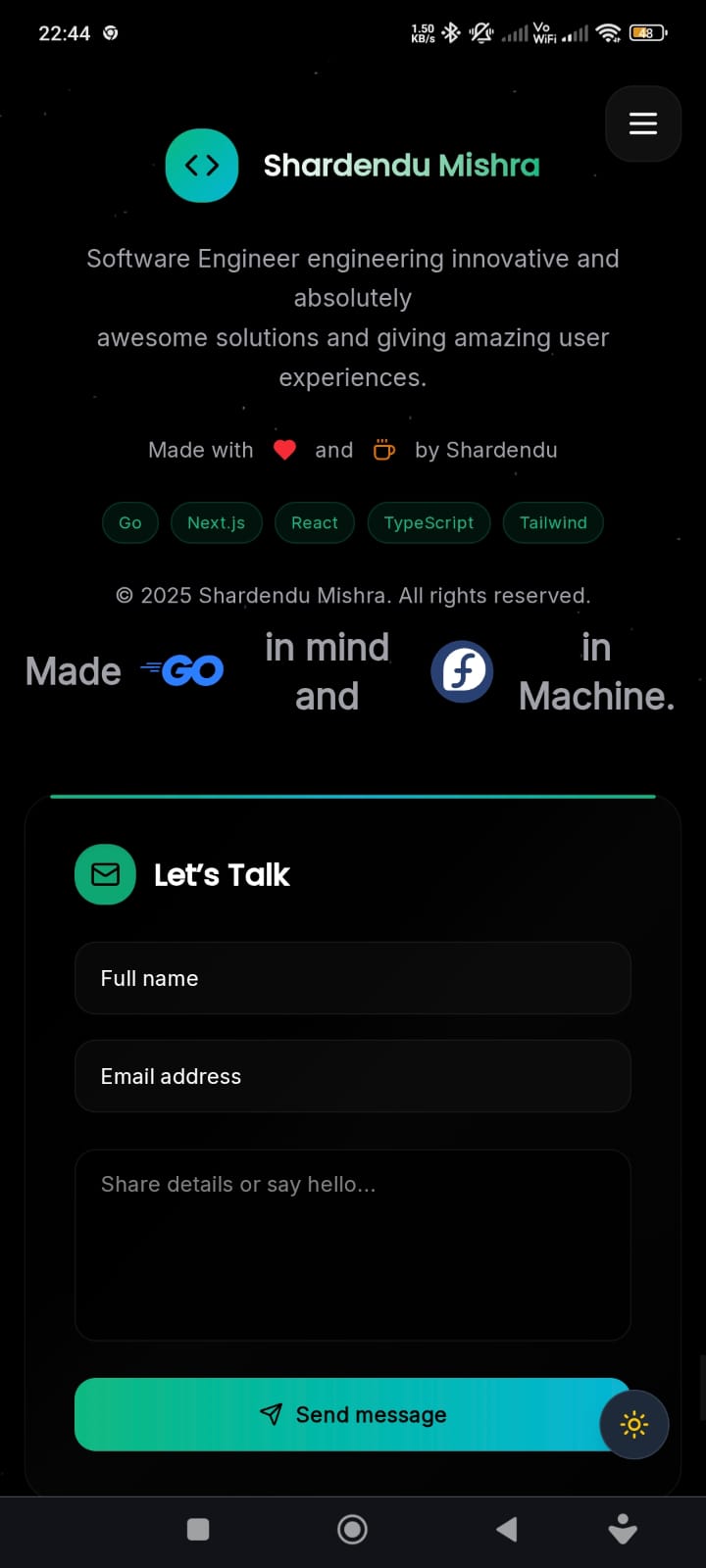
Mobile Application - Contact 1
-
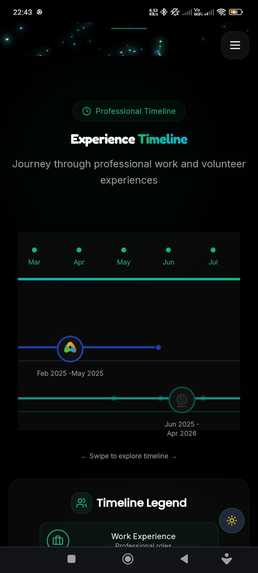
Mobile Application - Timeline
-
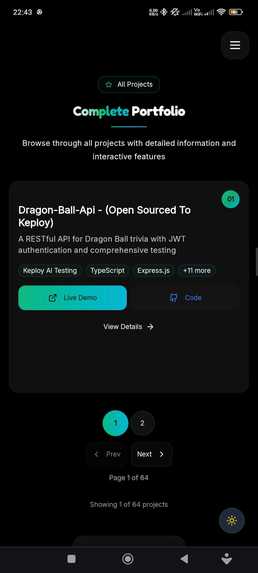
Mobile Application - Project
-
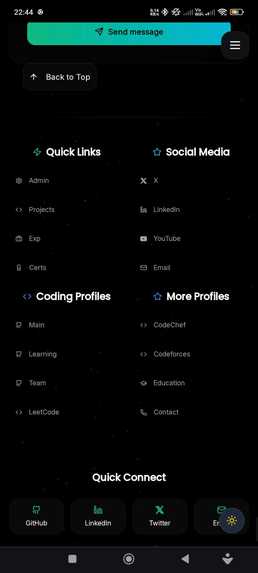
Mobile Application - Contact 2
-
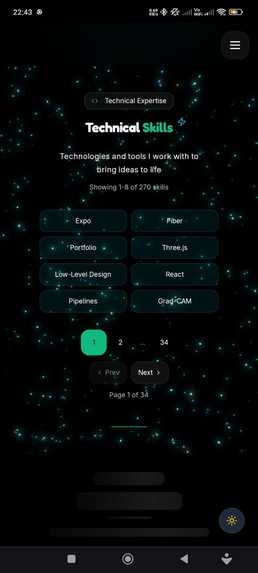
Mobile Application - Skill
-
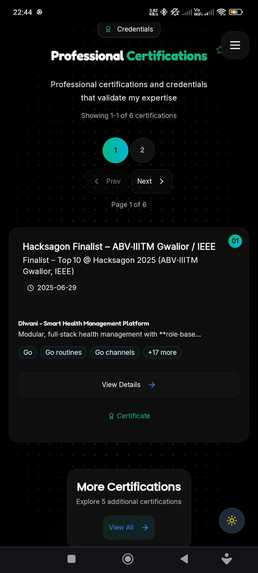
Mobile Application - Certificate
-
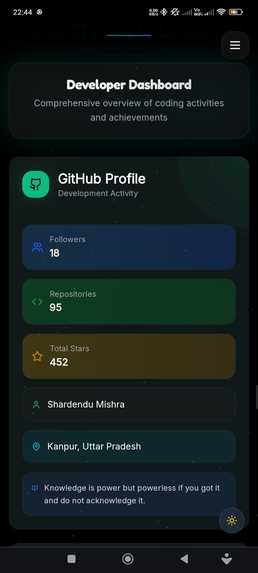
Mobile Application - Stats
-
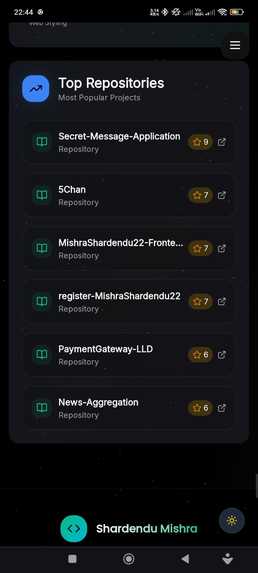
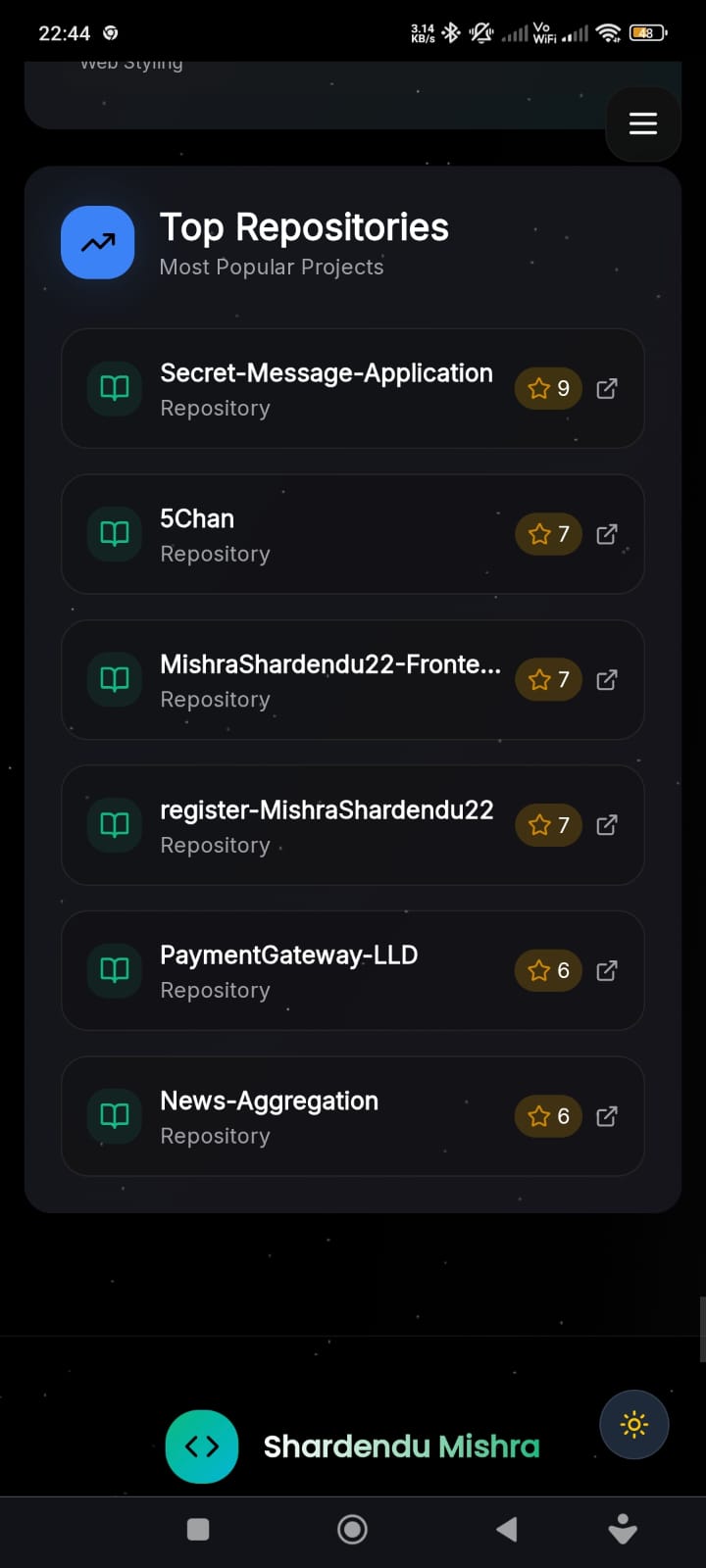
Mobile Application - Top Repos
-
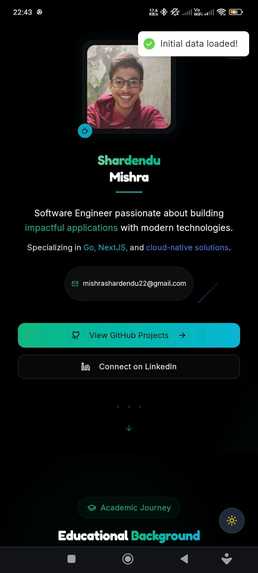
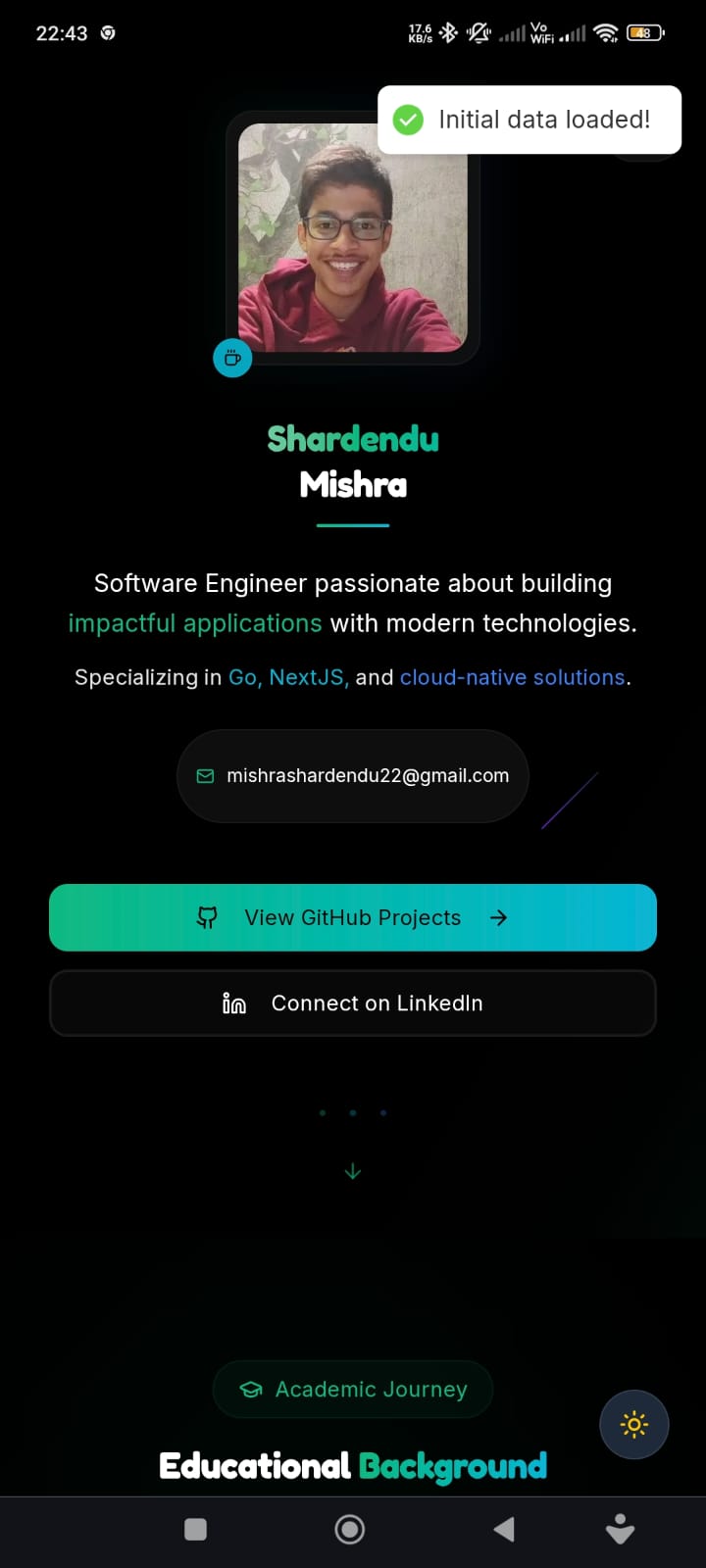
Mobile Application - Intro
-
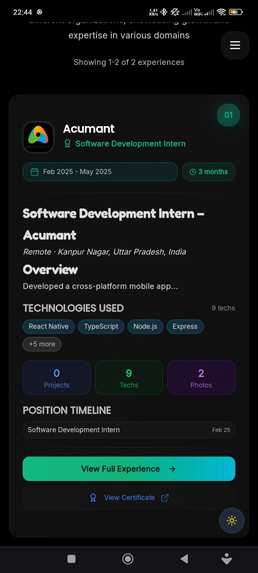
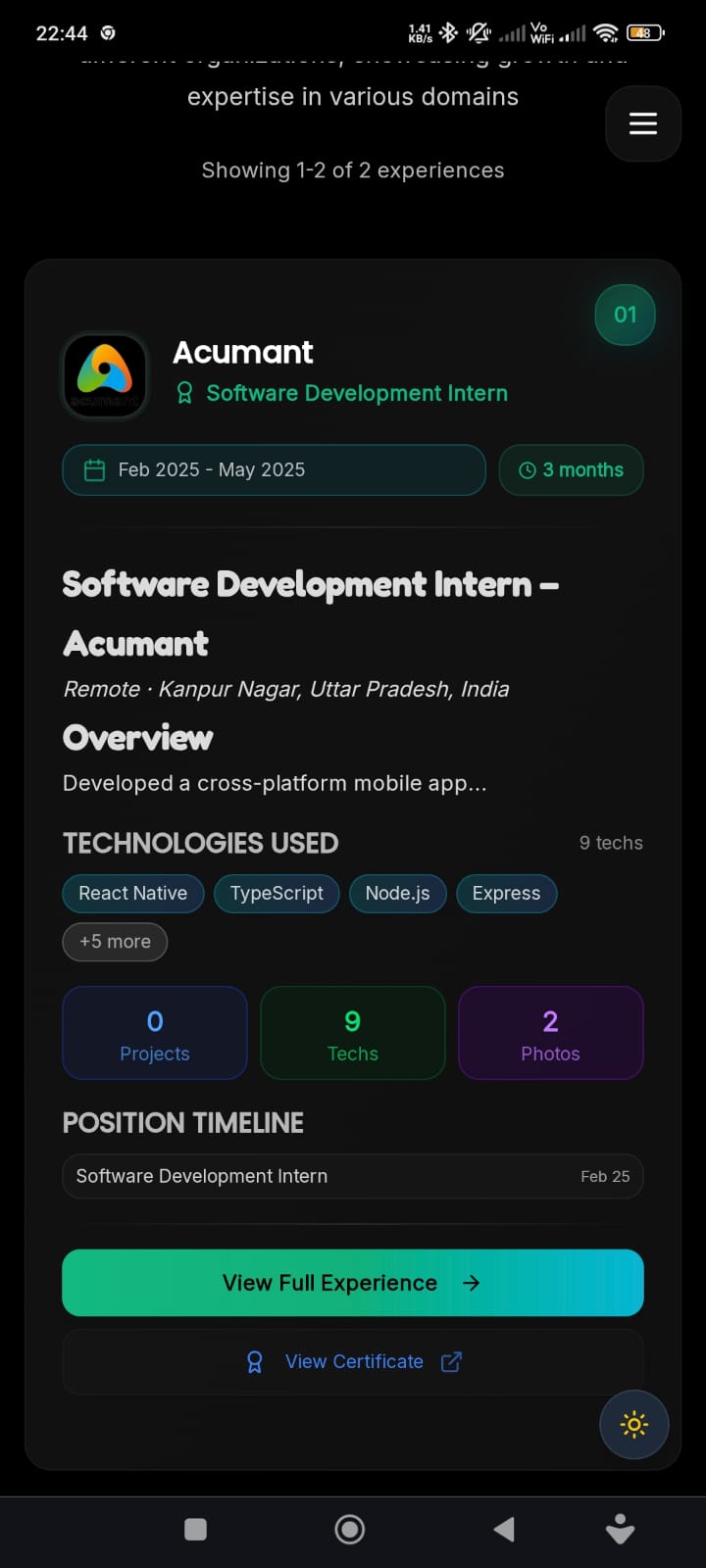
Mobile Application - Experience
-
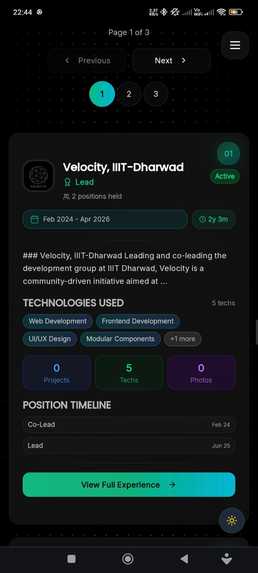
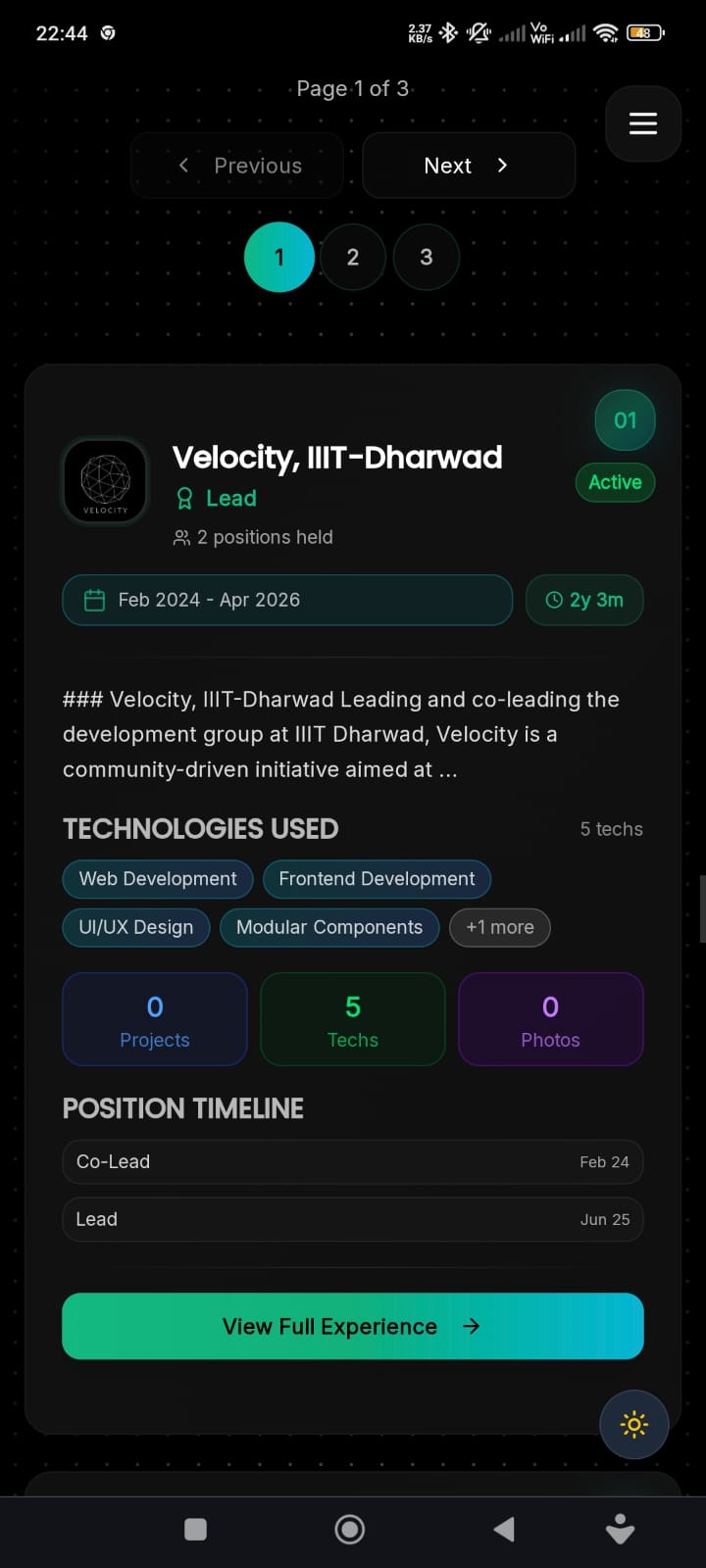
Mobile Application - Volunteer Experience
Project Story
Inspiration
This project began with a simple need: a centralized, developer-centric way to showcase my work. As a developer focused on backend systems, I wanted a portfolio that reflected my skills in system design. The domain itself, mishrashardendu22.is-a.dev, is a nod to this—a boolean returning true. I was also motivated by the limitations of platforms like LinkedIn, which couldn't accurately represent overlapping projects and work experiences. This led me to build a custom timeline feature from scratch.
How It Was Built
I started by using AI tools like Cursor to build the CMS, but performance was poor, leading me to rewrite the backend myself. The initial deployment on Render's free tier hit limitations, which created an opportunity to apply my knowledge of High-Level Design (HLD). The architecture now includes a load balancer distributing traffic across three servers to ensure high availability.
A series of Go scripts were originally used to fetch and process project data from YouTube (for demos) and GitHub (for repos), with AI handling the final data cleaning and formatting. Although a commit history accident consolidated these into a single JavaScript file, the automated pipeline remains effective. The blog is a separate, minimal Next.js setup, also rewritten after a failed attempt with AI-assisted tools. For authentication, I experimented with BetterAuth, Drizzle ORM, and PostgreSQL to test their real-world viability.
Challenges We Ran Into
The primary challenge was the unreliability of AI in development. LLMs consistently produced flawed backend logic, struggled with third-party API integrations even with up-to-date documentation, and created broken project setups with hallucinated configurations. This led to a "manual-first" approach for critical logic, using AI only for well-defined, repetitive tasks like formatting.
Accomplishments That We're Proud Of
The final deployment achieved 100% scores in Google Lighthouse audits for Performance, Best Practices, SEO, and Accessibility. A major accomplishment was architecting and implementing a scalable, load-balanced infrastructure that solved real-world performance issues. This project served as a successful "warm-up" for a larger, upcoming project that will reuse these architectural patterns and learnings.
What We Learned
This project was a deep dive into practical system design, reinforcing my understanding of both High-Level (HLD) and Low-Level Design (LLD). The key takeaway was a clear understanding of the current limitations of AI in software development—it excels at formatting, not logic. I also learned that for internal tools and personal projects, a focus on usability over a flashy UI is more efficient.
Built With
- betterauth
- drizzle
- go
- google-gmail-oauth
- javascript
- nextjs
- postgresql
- typescript
- vercel


Log in or sign up for Devpost to join the conversation.