Mise: Smart Kitchen Island
Inspiration
My grandmother used to host family potlucks, and some of my fondest memories are of cooking alongside her. As she grew older, however, tasks like chopping ingredients or cooking for long periods became physically draining.
This sparked the idea for Mise—a solution designed not only for older adults or occupational therapy patients but also for anyone who wants to make cooking easier and more accessible. Whether it’s individuals with visual impairments, beginner chefs, college students, or busy parents and professionals, Mise supports people at all levels of cooking ability.
What It Does
Mise is a smart kitchen island that streamlines the cooking process. Its features include:
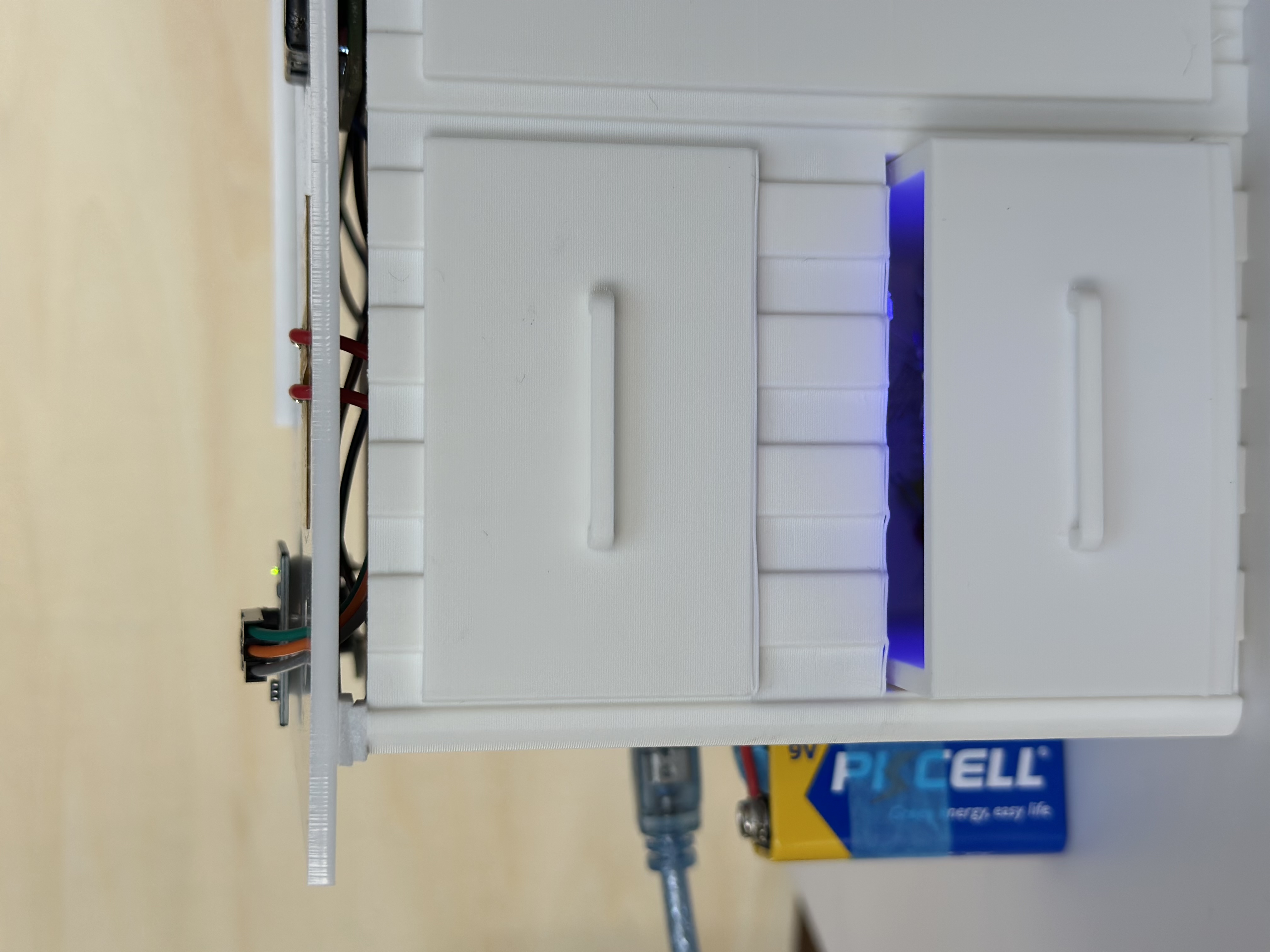
- Digital inventory drawers that highlight items with LEDs
- An integrated spice rack, stovetop, and mini fridge
- Touch sensors and vibration feedback for accessibility
- A smart countertop display that assists with every step of cooking—showing:
- Recipes
- Ingredient lists
- Measurements
- Prep/cook times
- Tutorials
- An AI-powered meal prep tracker
- Recipes
How We Built It
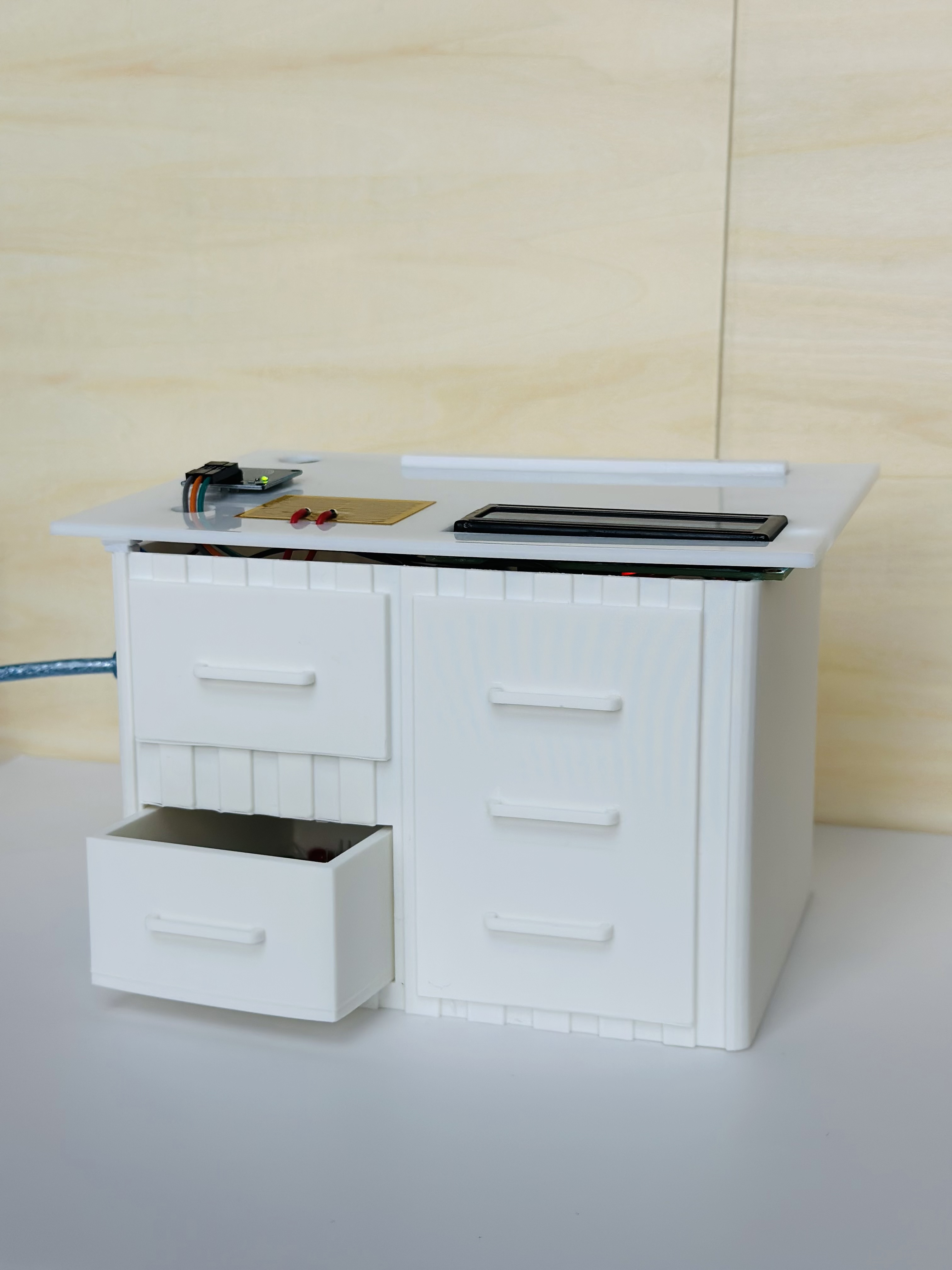
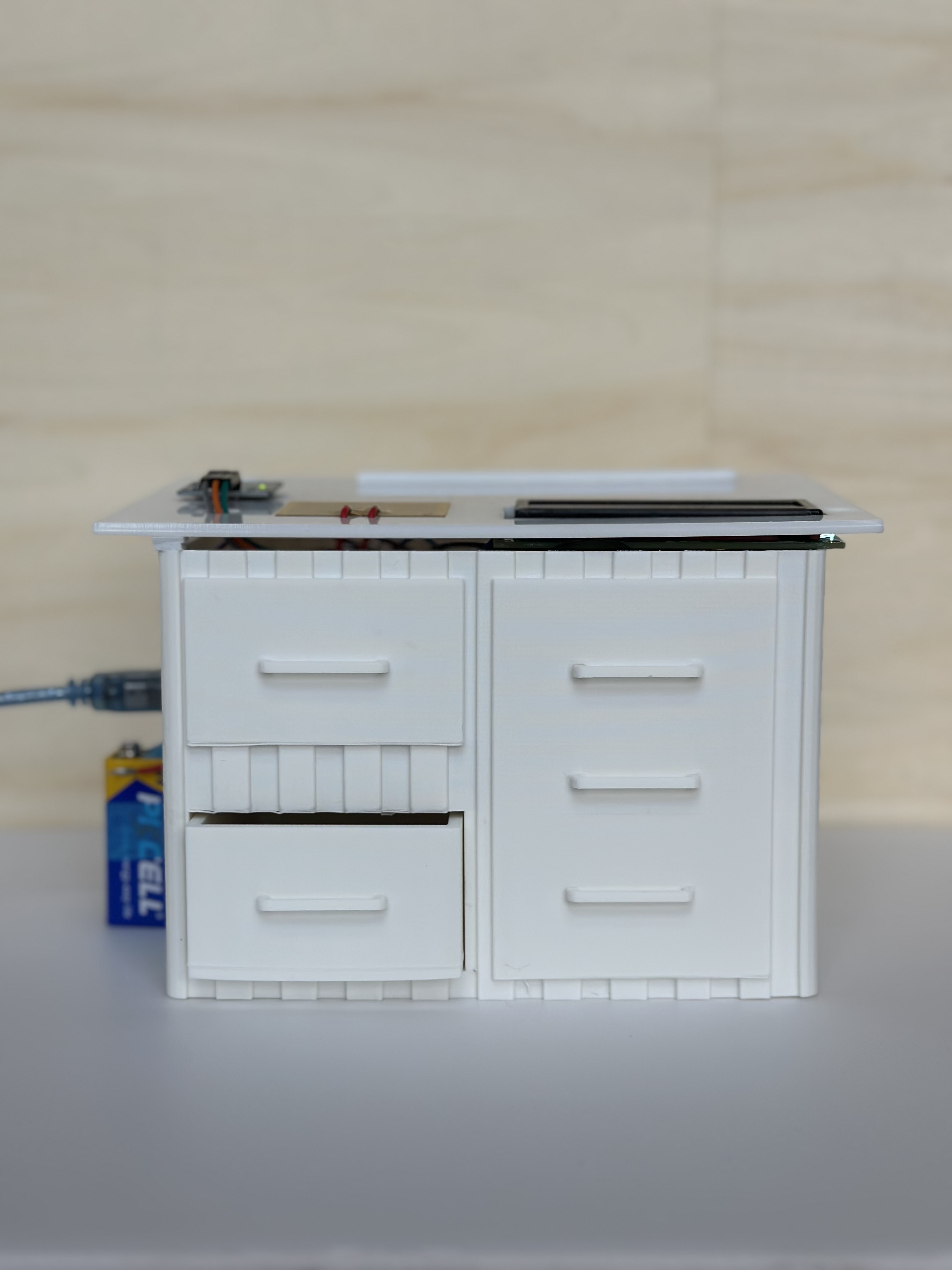
We designed and 3D-modeled the island base with drawers in Shapr3D, then 3D printed it using white PLA plastic. The countertop was laser-cut from acrylic.
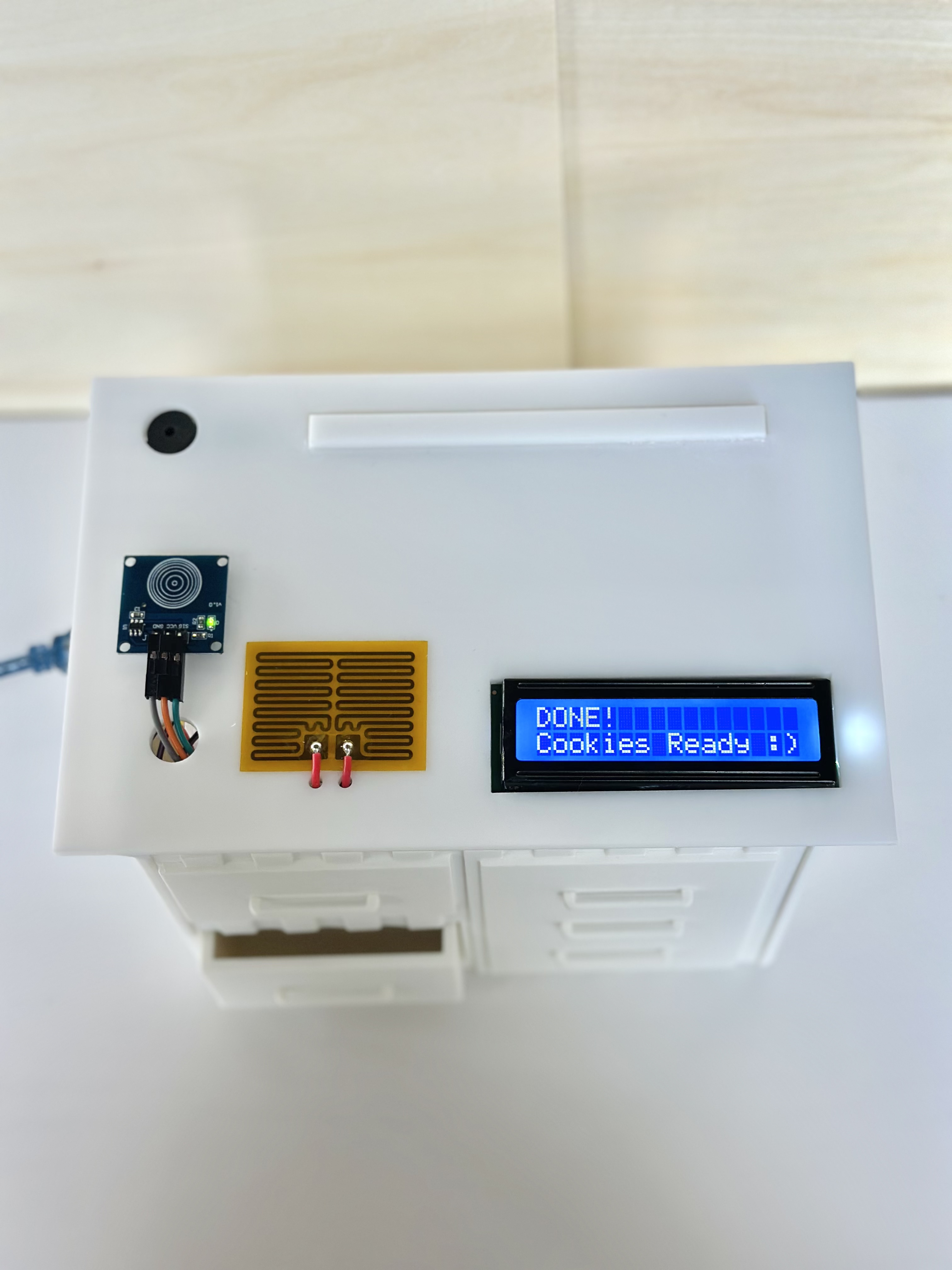
The prototype includes:
- An LCD display for recipe instructions
- A servo motor–driven drawer with integrated LEDs for illumination
- A heater module functioning as a stovetop
- A buzzer to signal when food (like cookies) is ready
- A touch sensor to reset the recipe process
Challenges We Faced
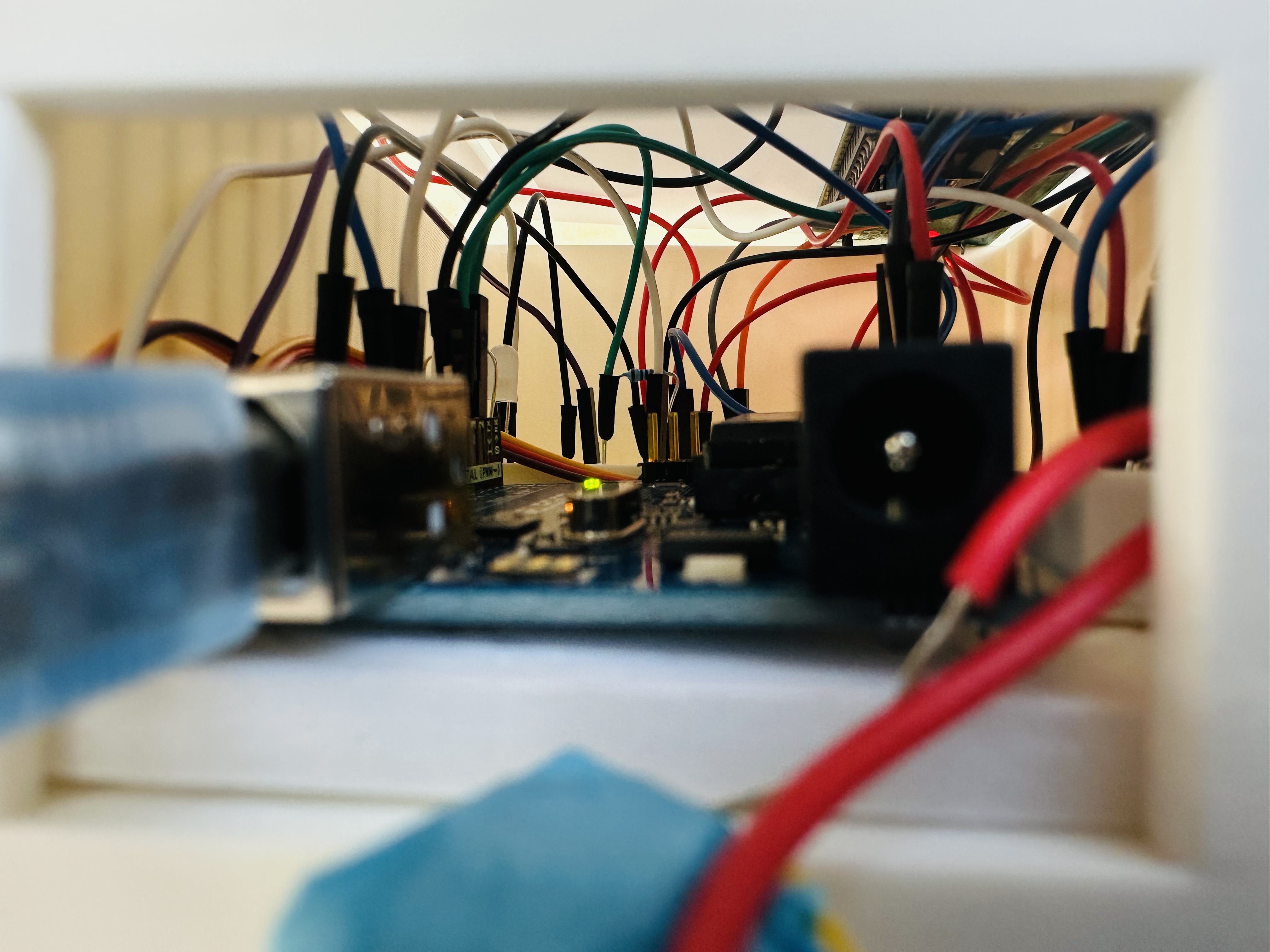
- The heater module was finicky and required a dedicated Arduino board, rather than integrating with our main system.
- We struggled with LCD display navigation, especially advancing through recipe steps smoothly.
Accomplishments We’re Proud Of
- Developed a medium-fidelity prototype that demonstrates proof of concept
- Successfully showcased how different sensors and mechanisms work together
- Built a functional push-to-open drawer system
- Integrated most of the components within the base
What We Learned
We gained hands-on experience in:
- Rapid prototyping
- Hardware integration
- Arduino programming
- Working with LCDs, sensors, and input/output systems
- Problem-solving with limited access to the creator studio
What’s Next for Mise
- Building a full-scale model
- Improving hardware integration into the compartments
- Refining the user experience and accessibility features
Built With
- arduino
- shapr3d

Log in or sign up for Devpost to join the conversation.