-
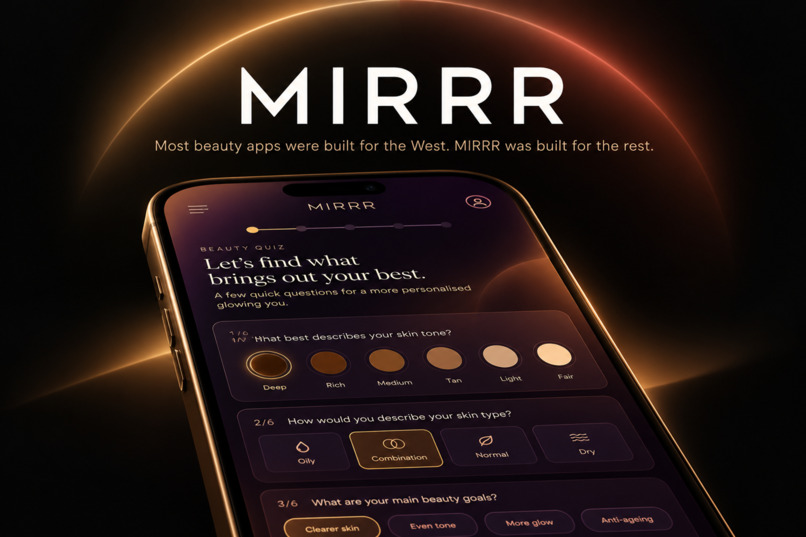
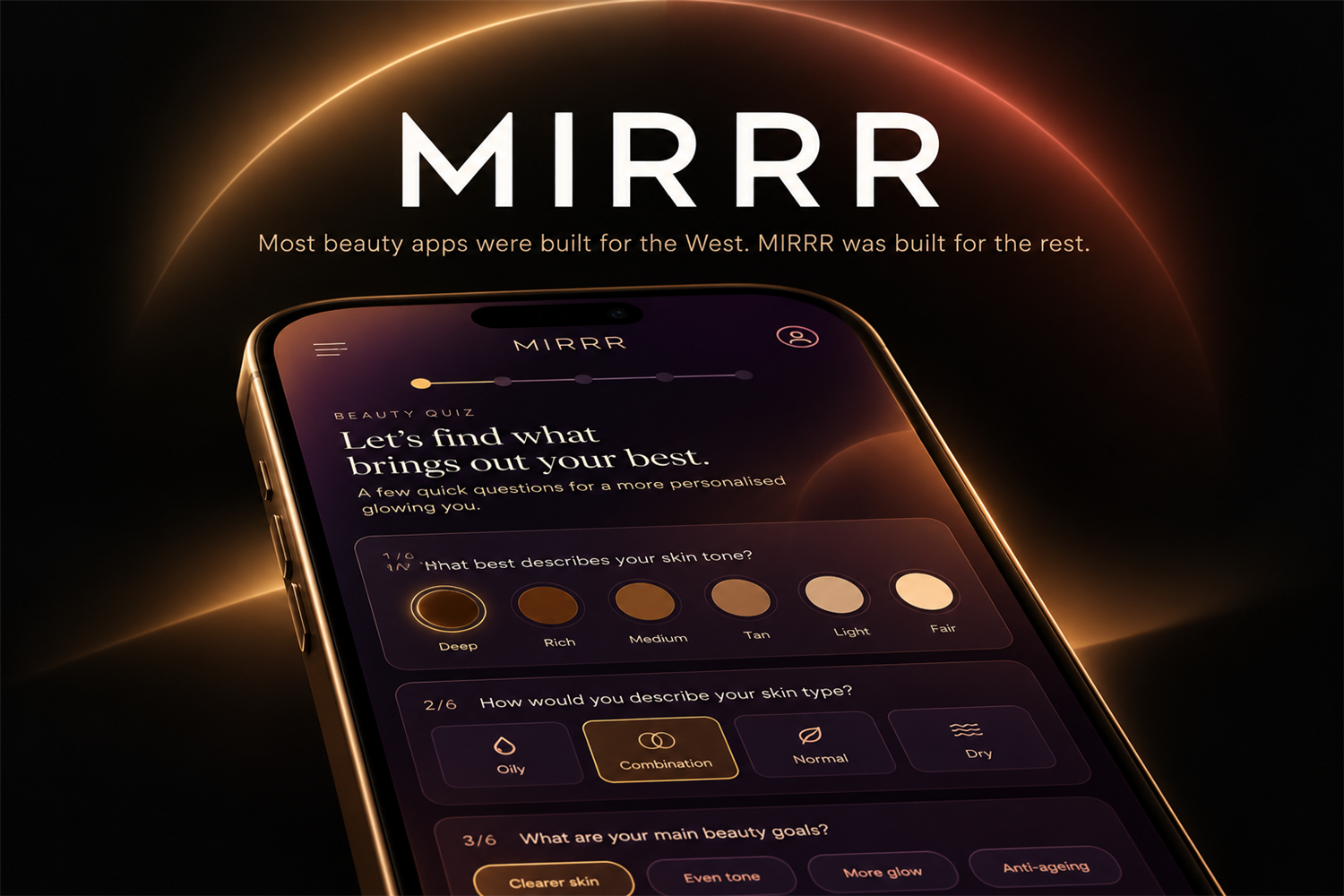
"MIRRR / Most beauty apps were built for the West"
-
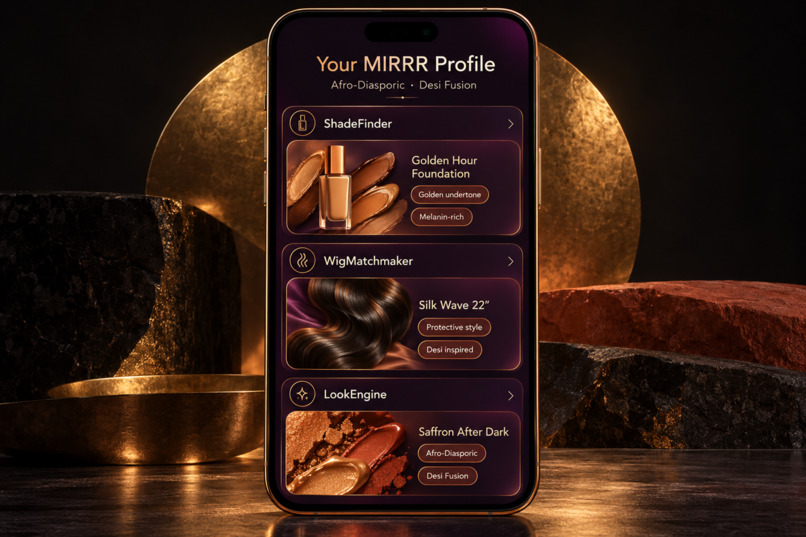
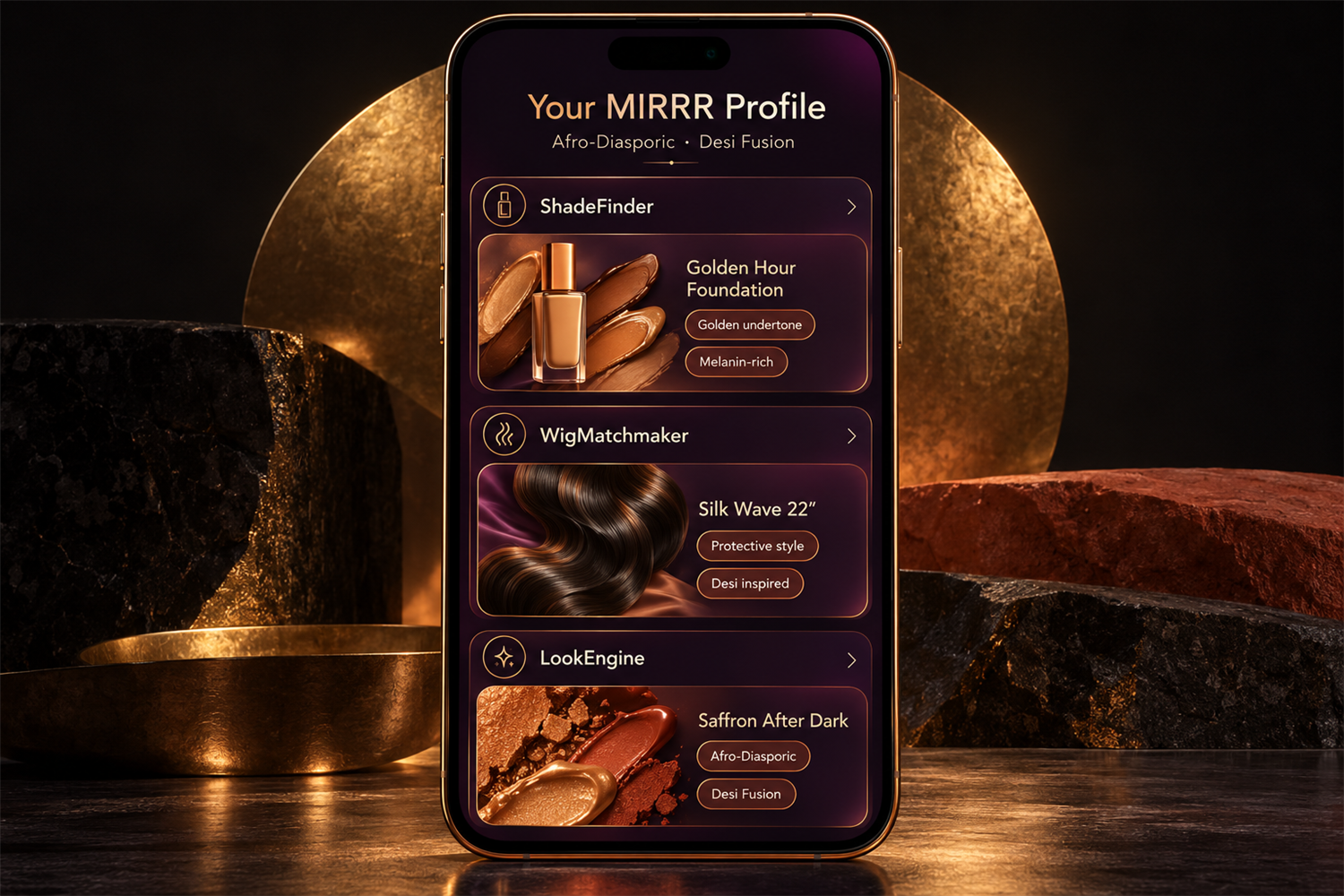
ShadeFinder / WigMatchmaker / LookEngine
-
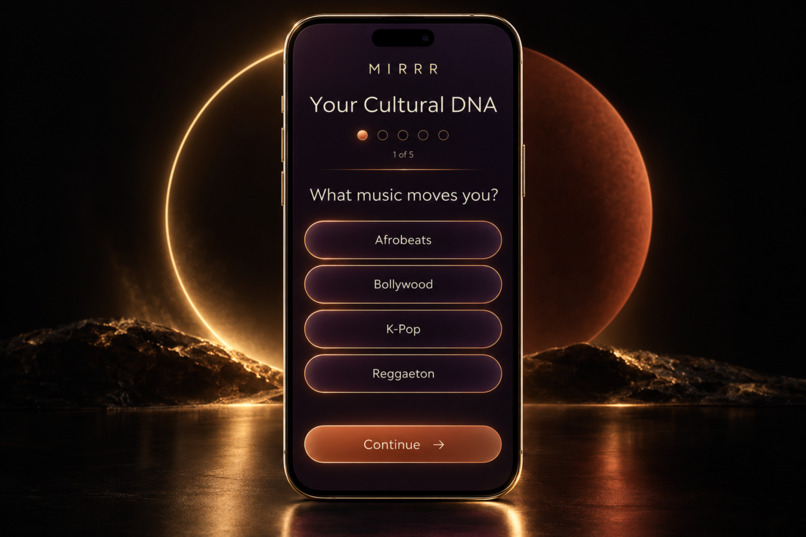
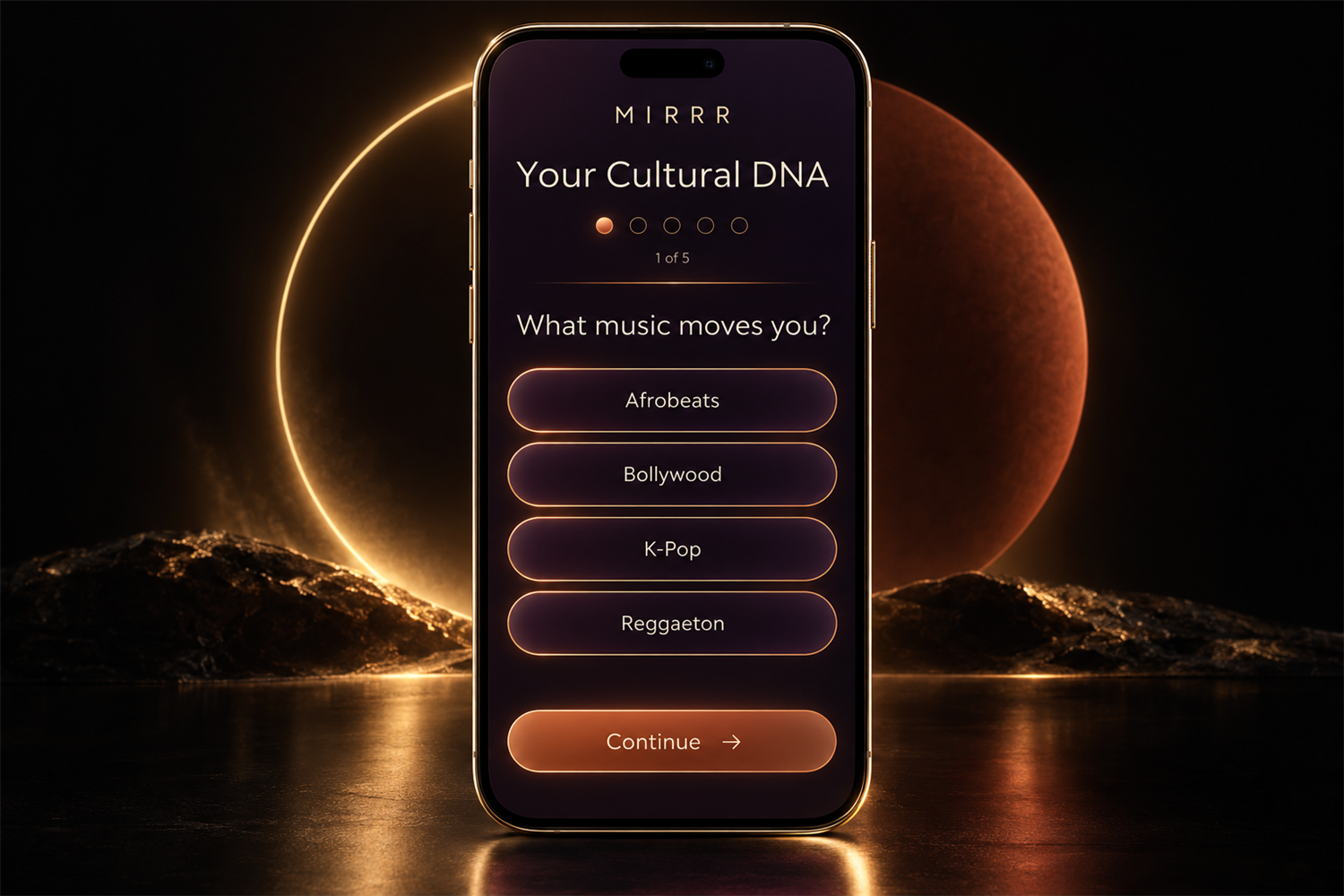
“What music moves you?”
Inspiration
Beauty apps keep telling women of colour to "find your closest match." For a lot of Black, South Asian, Arab, Latina, Caribbean and East Asian women there is no close match: the shade ranges stop too early, the looks come from one culture, and the "personalisation" is a skin-tone checkbox.
I wanted to start somewhere else: taste. The music, shows and artists a woman loves say a lot about the look she actually wants. Qloo has a taste graph built for exactly that kind of signal, so MIRRR asks Qloo first and lets the answer pick the makeup and hair.
Most beauty apps were built for the West. MIRRR was built for the rest.
What it does
MIRRR is a beauty agent for women of colour. She names one song, artist or show she loves; MIRRR asks Qloo what that taste means, turns the answer into ranked makeup and hair looks from her own and neighbouring cultures, and finishes on a named foundation shade, a step-by-step plan and a before-and-after on a face.
The 60-Second Transformation (the main path, 6 steps, nothing pre-selected, Back works at every step):
- Pick a community.
- Type an artist, e.g.
Burna Boy. The reply says what Qloo resolved and how many taste tags picked the looks. - Pick one of the top looks.
- Tap a depth and undertone. MIRRR names a shade (e.g. Garnet (D40)) and says plainly it is a ranking, not a skin scan.
- Read a 3-stage plan: today, this week, the full look.
- See the before and after, then Save.
Transform: pick a look you love and MIRRR turns it into steps in your shades. My Face lets her add an optional selfie to suggest a shade; the photo stays in the browser tab and is never uploaded.
Studios beyond the main path:
- Shades: a 60-shade foundation range from very light to very deep (CIELAB L* 14.6 to 93.9), checked against the Monk Skin Tone scale, with 14 shades in the deep tiers. Photo matches report CIEDE2000 distance in bands and say "outside our honest range" instead of faking a match.
- Look Book: 60 multicultural looks across 9 archetypes (Afro-Glam Editorial, Gulf Glam, K-Beauty Glass Skin, Caribbean Carnival, Bollywood Bridal and more).
- Wig Match: 42 styles, filtered by the length and texture she picks.
- Brow & Kohl, Colour & Lip, Nails & Scent: pick options and see them painted on photographic plates. Hair Colour Lab for colour ideas in her shades.
- Skin Clinic: routines for dark marks, melasma, breakouts, a damaged barrier, eczema and rosacea, with what to expect at now, weeks and months, and a clear "see a dermatologist" line. Not a diagnosis.
- Ingredient Checker and Power Ingredients (shea, Jamaican black castor, argan, rice water, ubtan, black seed and more).
- Taste Leap: "Leap this look" re-reads any look in three other cultures.
- Occasions planner, Bridal Countdown, Stylist (multi-turn: "make it bolder", "what about for a wedding?"), Routine Builder, Night Routine, Ageing Studio, Pregnancy & Postpartum, Eco Beauty, Calm & Self-Image, and a Cultural DNA Quiz.
- Shop this look: 64 named products from 14 brands' own stores, with the price as shown and the date checked (Oct 30, 2026), covering 50 of the 60 looks. Ownership labels (Black-owned, Latina-owned, South Asian-founded, Indigenous-owned and others) appear only where a source says so, and link that source.
Proof, reproducible live: entering Burna Boy makes 4 Qloo calls (~700 ms) and returns 50 taste tags. MIRRR uses 14 and filters 36 in the open (9 unsafe, 26 not about beauty, 1 repeat), ranking Afrobeats Concert, Afro-Glam Editorial and Amapiano Beat. Add Tems and Qloo resolves 2 artists (5 calls, ~530 ms), and the third look changes to HBCU Homecoming. Open "Watch MIRRR Think" after any run to see every step from that run's real data. The full table is in JUDGES.md.
How Qloo powers it
All Qloo calls go through the server (src/qloo.js); the key never reaches the browser.
| Qloo call | What it does in MIRRR |
|---|---|
GET /v2/search |
Resolves what she typed to a Qloo entity (artist, person, film, TV show, brand, place, book, podcast) |
GET /v2/insights with urn:tag:genre:music |
Music-genre tags with affinity for her taste |
GET /v2/insights with urn:tag:genre:media,urn:tag:keyword:media |
Media themes and keywords with affinity |
GET /v2/insights with urn:entity:music:artist |
Trending artists per region, merged with a curated regional list |
Each taste input makes 3 Qloo calls and gets back up to 50 tags. A beauty-vocabulary allowlist and a safety blocklist keep only tags that can mean something for a look. Each look is scored as
$$\text{score} = 0.5 \times \text{taste-vector fit} + 0.5 \times \text{Qloo evidence share}$$
and the agent trace prints the arithmetic. Change the artist and the whole ranking changes. On our live runs on Oct 30, 2026: Burna Boy → Afrobeats Concert, BLACKPINK → K-Beauty Glass Skin, Bad Bunny → Latina Glam, Rihanna → Y2K Revival, Nancy Ajram → Turkish Glam.
When Qloo is unreachable the app shows a red DEMO DATA, not from Qloo banner instead of pretending.
How I built it
- MirrrAgent (
POST /api/agent/run): a traced, multi-step loop: perceive the inputs → resolve them with Qloo → build a taste vector → reason over 60 looks → recommend looks, shades and products → narrate.POST /api/agent/refinekeeps the conversation going. - Pure Node.js with ES modules and no runtime npm packages; Jest and the Node test runner for tests. Hosted on Render's free tier.
- Narration is written from templates and is labelled that way (
narration_source: "template"). No language model writes it. - People in the app are AI-generated photos, not real people. Product photos use blank, unbranded packaging.
Challenges I ran into
- Making Qloo do real work. Qloo returns music and media tags, not makeup. The hard part was the bridge: an allowlist of tags that can honestly inform a look, a safety blocklist, and a scoring formula where Qloo is half the score and visible on screen.
- A shade range that actually reaches deep skin, checked against a published skin-tone scale, and a matcher that admits when nothing fits.
- Being culturally specific without stereotyping, and letting her leap a look into other cultures instead of locking her into one.
- Honesty everywhere: no fake match percentages, no "AI" label on templates, prices dated, no affiliate deal claimed.
Accomplishments I'm proud of
- One song to a named shade, a plan and a before-and-after in about a minute.
- Qloo is the engine: swap one artist and the top looks change completely.
- Named products from brands owned by the communities MIRRR serves, with sources.
- Privacy by default: selfies stay in the browser, no cookies or visitor IDs, anonymous totals only.
What I learned
What someone listens to is a strong, under-used signal for how they want to look. And people trust a tool more when it shows its working and says when it has no honest answer.
Business model
Live today: tagged outbound product links (UTM) so brands can see the traffic MIRRR sends; a consent-first MIRRR Plus founding-member list (box unticked, nothing to buy); referral codes on share links; totals-only stats. The app says plainly that MIRRR earns nothing from the links today.
Planned, not built: affiliate or brand-partner deals with the linked brands, and MIRRR Plus as a paid tier.
What's next for MIRRR
Brand partnerships with the linked brands, more communities and looks, more real product and nail photos, and a paid Plus tier once the free product has proven itself.
Live app: https://mirrr-upbn.onrender.com (the free host sleeps; the first load can take 30–60 seconds)
Code: https://github.com/ALENZACODES/mirrr (MIT) · Judges' guide: JUDGES.md in the repo