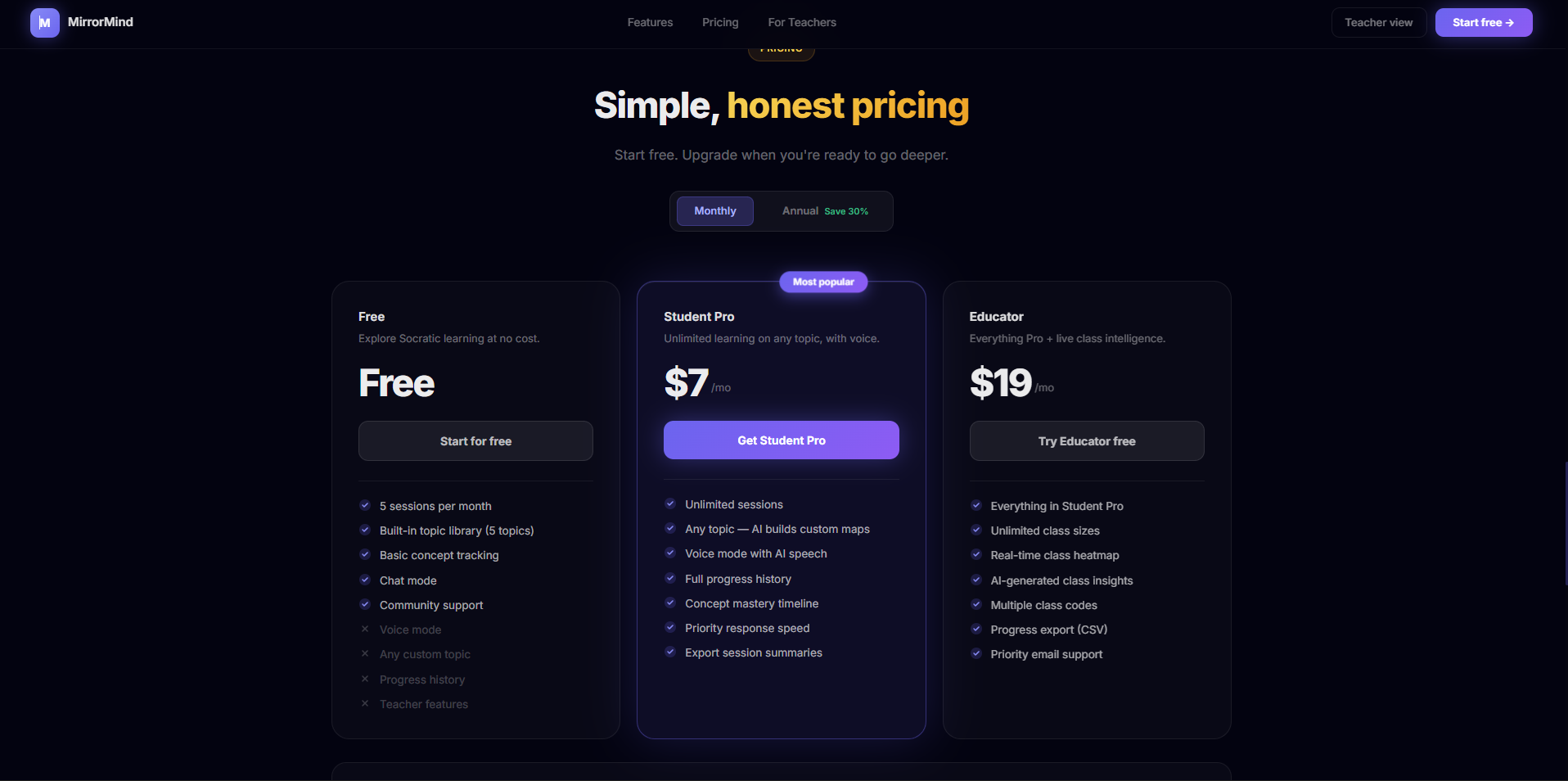
MirrorMind
Inspiration
We have all been that student. Four hours of studying, every page highlighted, and then the exam starts and the mind goes blank. That is not a discipline problem. That is a method problem.
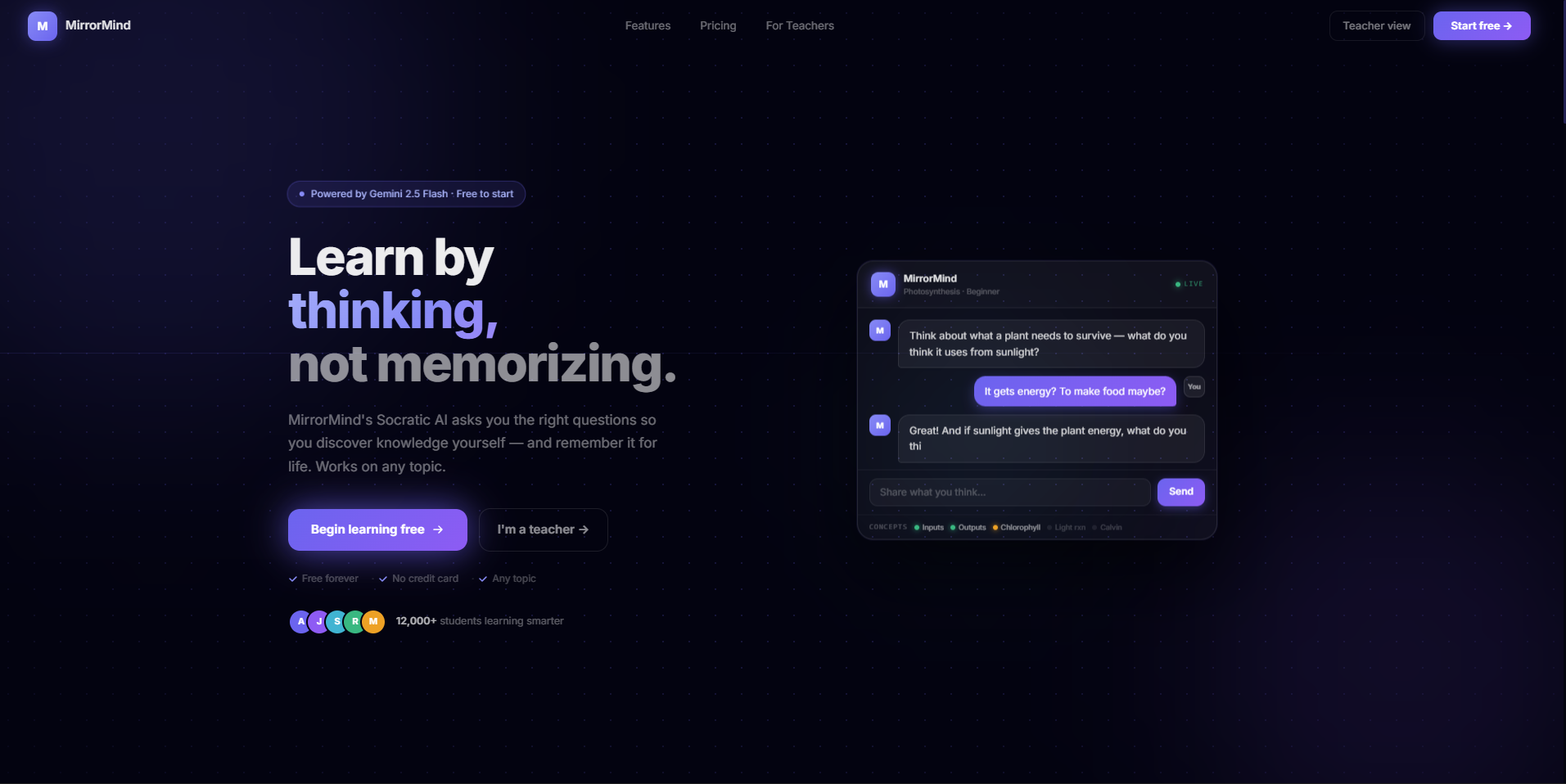
Passive learning creates the feeling of understanding without the substance of it. The only method proven to build durable memory is being forced to retrieve knowledge yourself. Socrates figured this out 2,400 years ago. We rebuilt it with AI.
What We Built
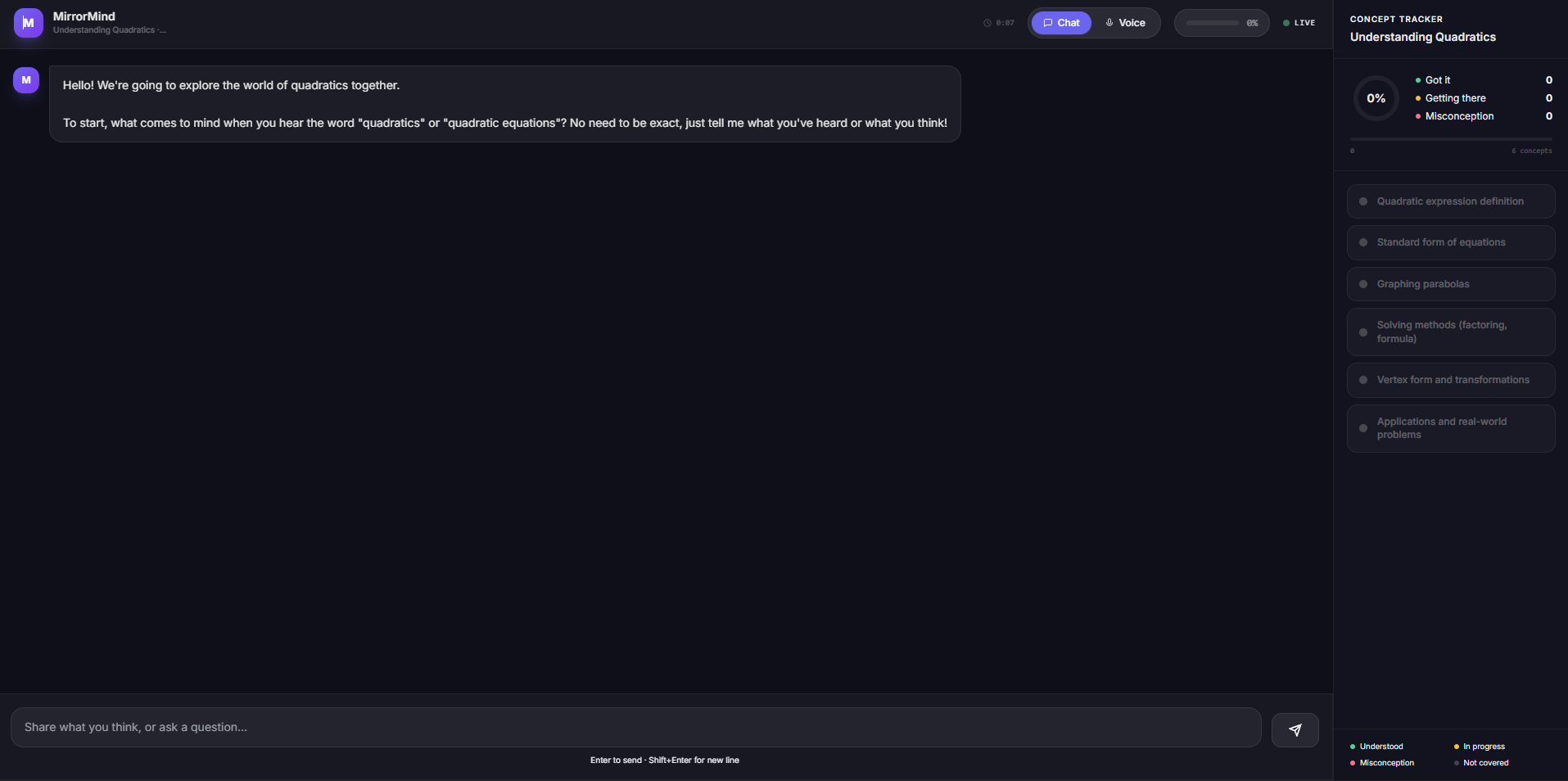
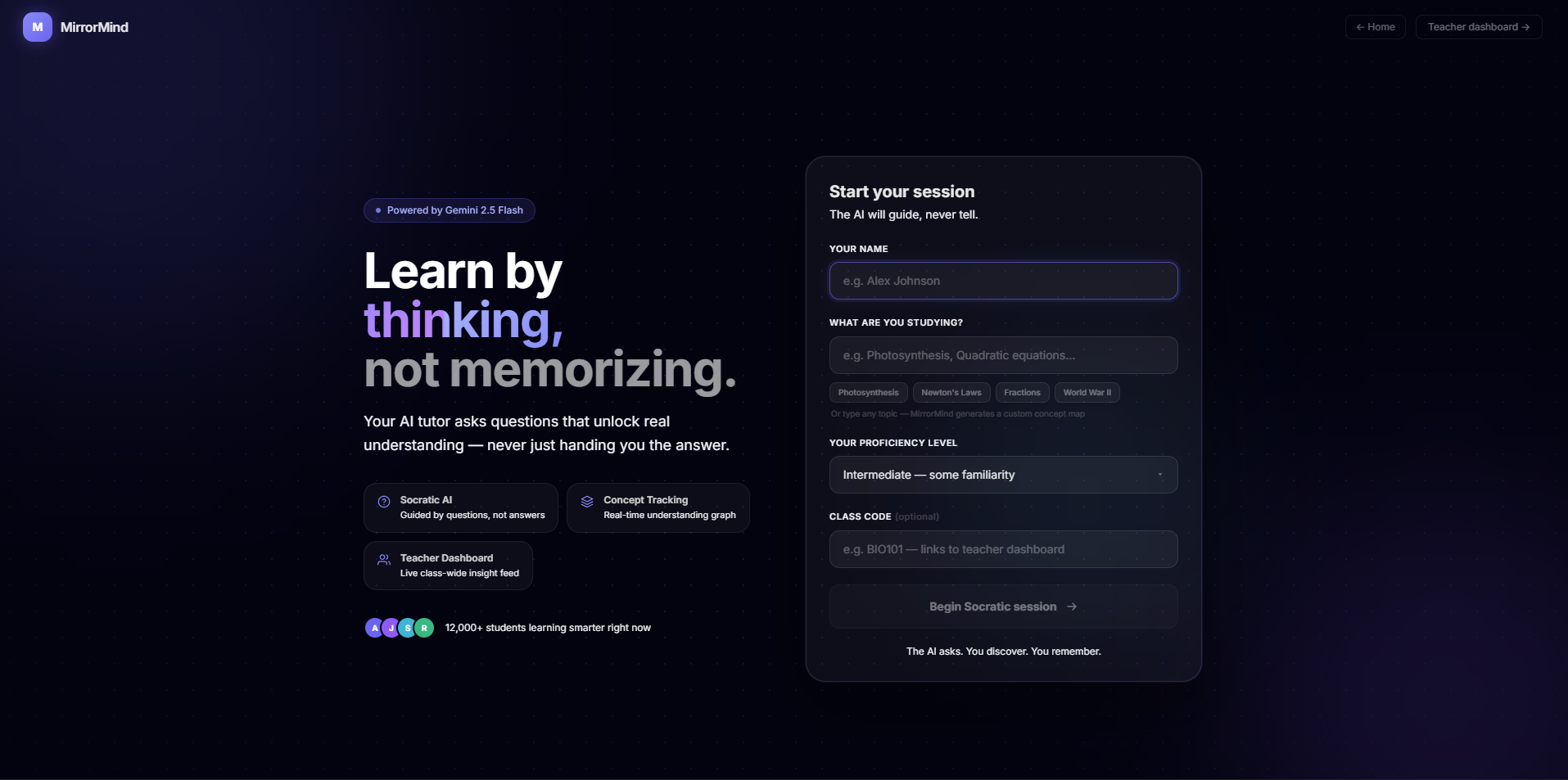
MirrorMind is a Socratic AI tutor with one absolute rule: never give the answer directly. Every response is a question designed to make the student find the answer themselves.
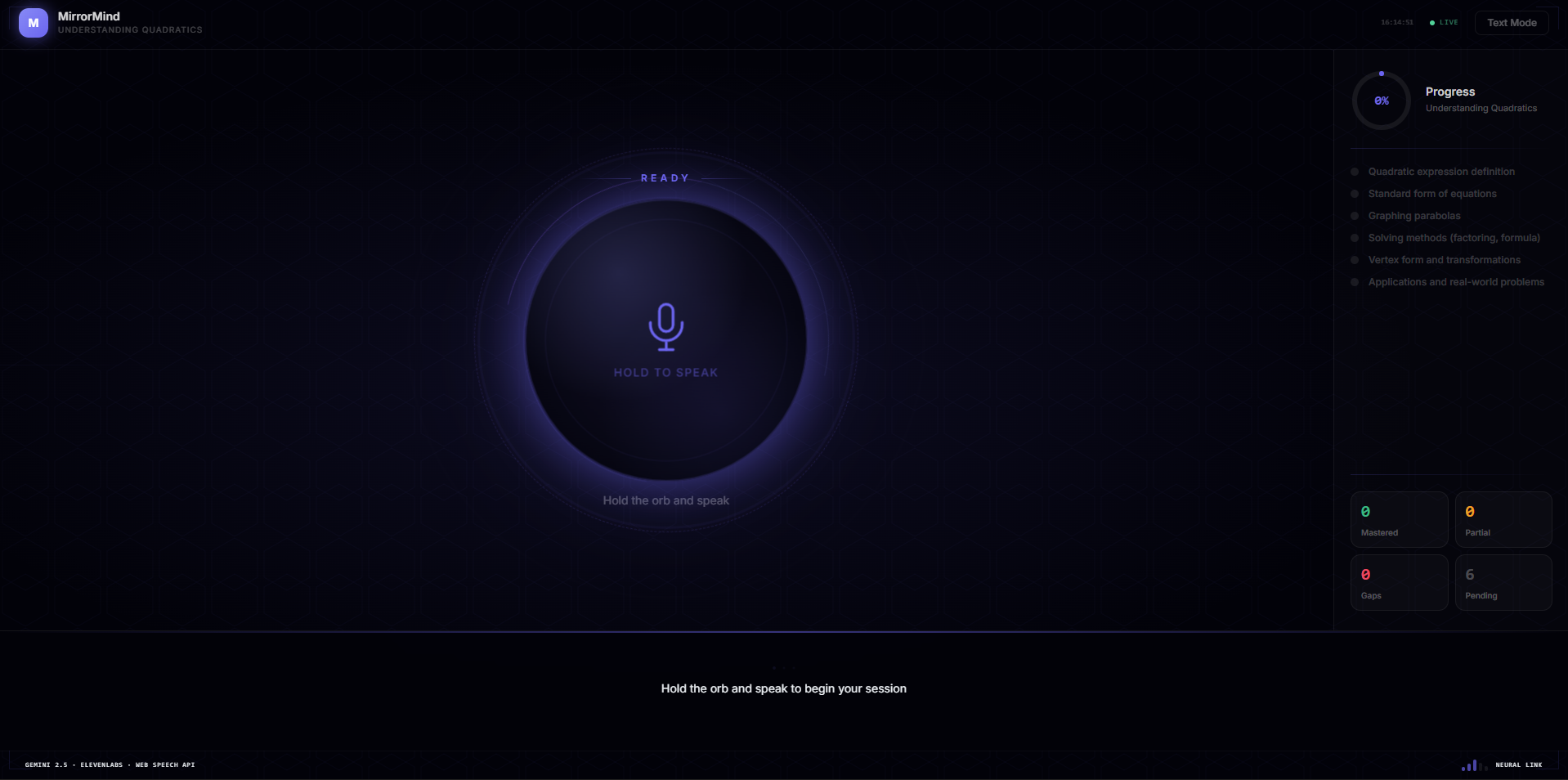
A second AI model runs silently in the background, analyzing every exchange and mapping each concept to one of four states:
level∈{understood, partial, misconception, unknown}
The sidebar updates live. Not a score. A diagnosis.
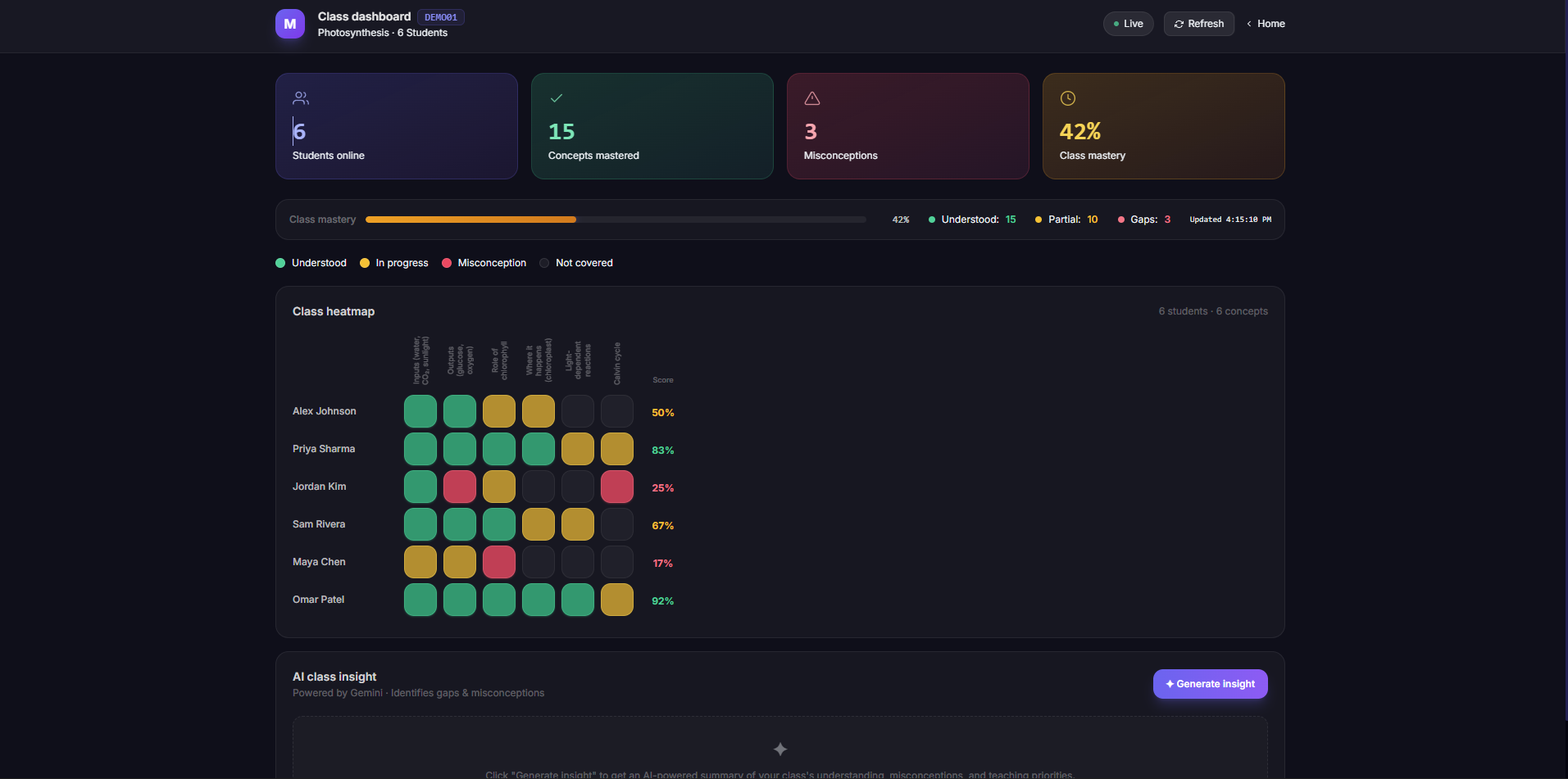
For teachers, a live class dashboard shows every student against every concept in a heatmap, color-coded by understanding state. Misconceptions surface before any test is graded. One click generates an AI summary of exactly what to re-teach and who needs help.
How We Built It
Gemini 2.5 Flash powers both the tutor and the silent assessment model. The teacher dashboard syncs through Supabase Realtime. Voice input uses the Web Speech API and spoken responses use ElevenLabs. The frontend is React, Vite, and Tailwind. The entire stack is serverless.
Challenges
Language models are trained to be helpful, which usually means answering the question. Prompting Gemini to withhold answers while staying warm and pedagogically useful required many iterations before the tutor stopped leaking answers through implication.
What We Learned
The hardest constraint to design around was also the most important one. A tutor that says "I cannot tell you that" is useless. A tutor that asks the perfect follow-up question is invaluable. Finding that line taught us more about pedagogy than about engineering.

Log in or sign up for Devpost to join the conversation.