-
-
-
-
-
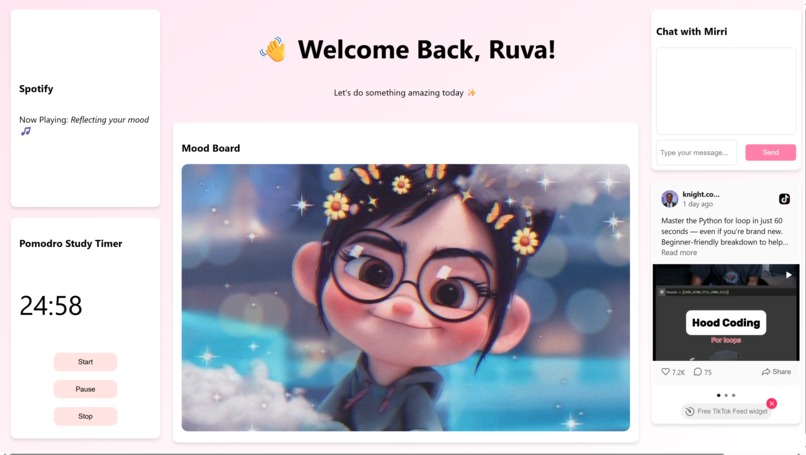
The dashboard on study mode
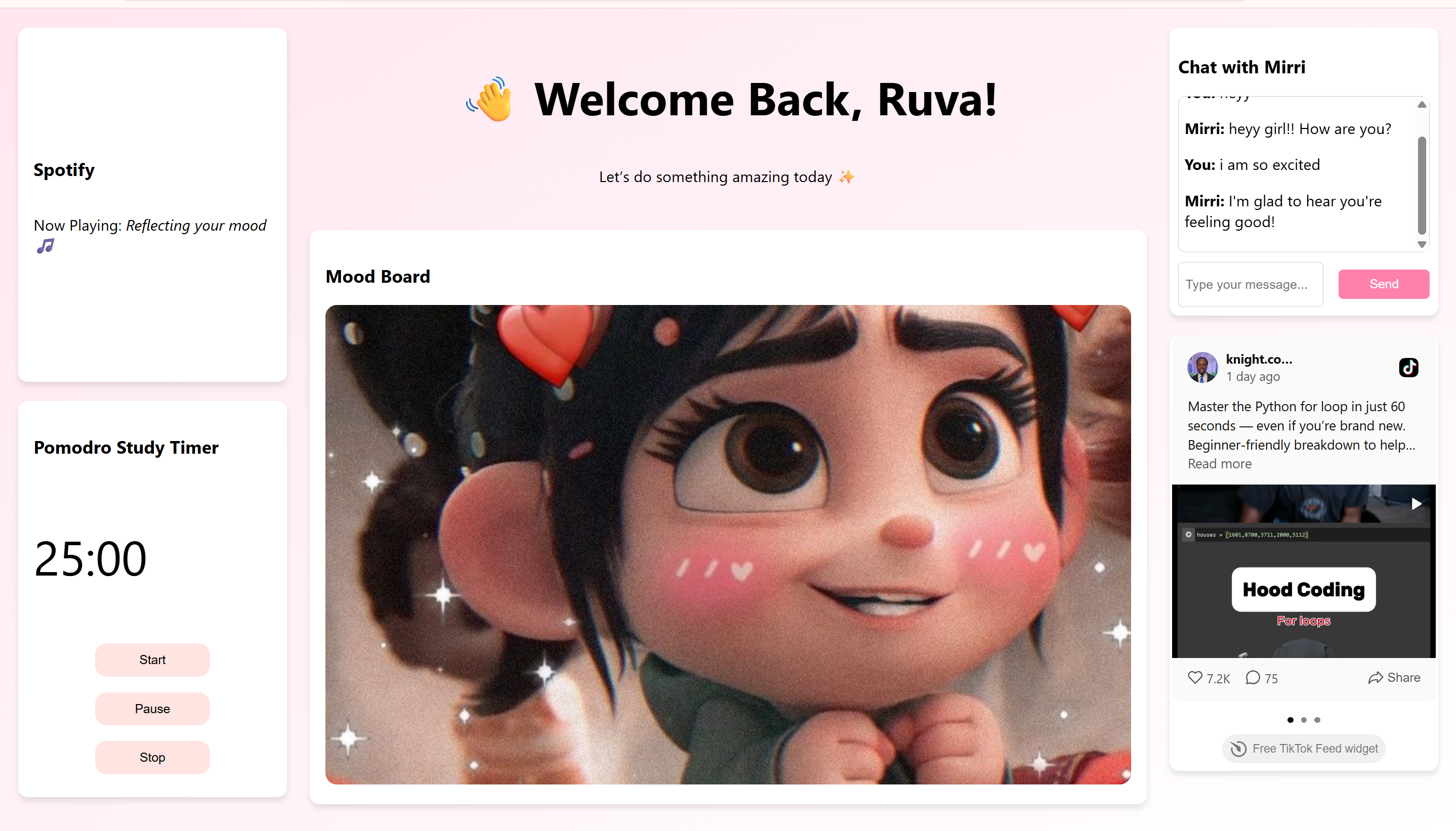
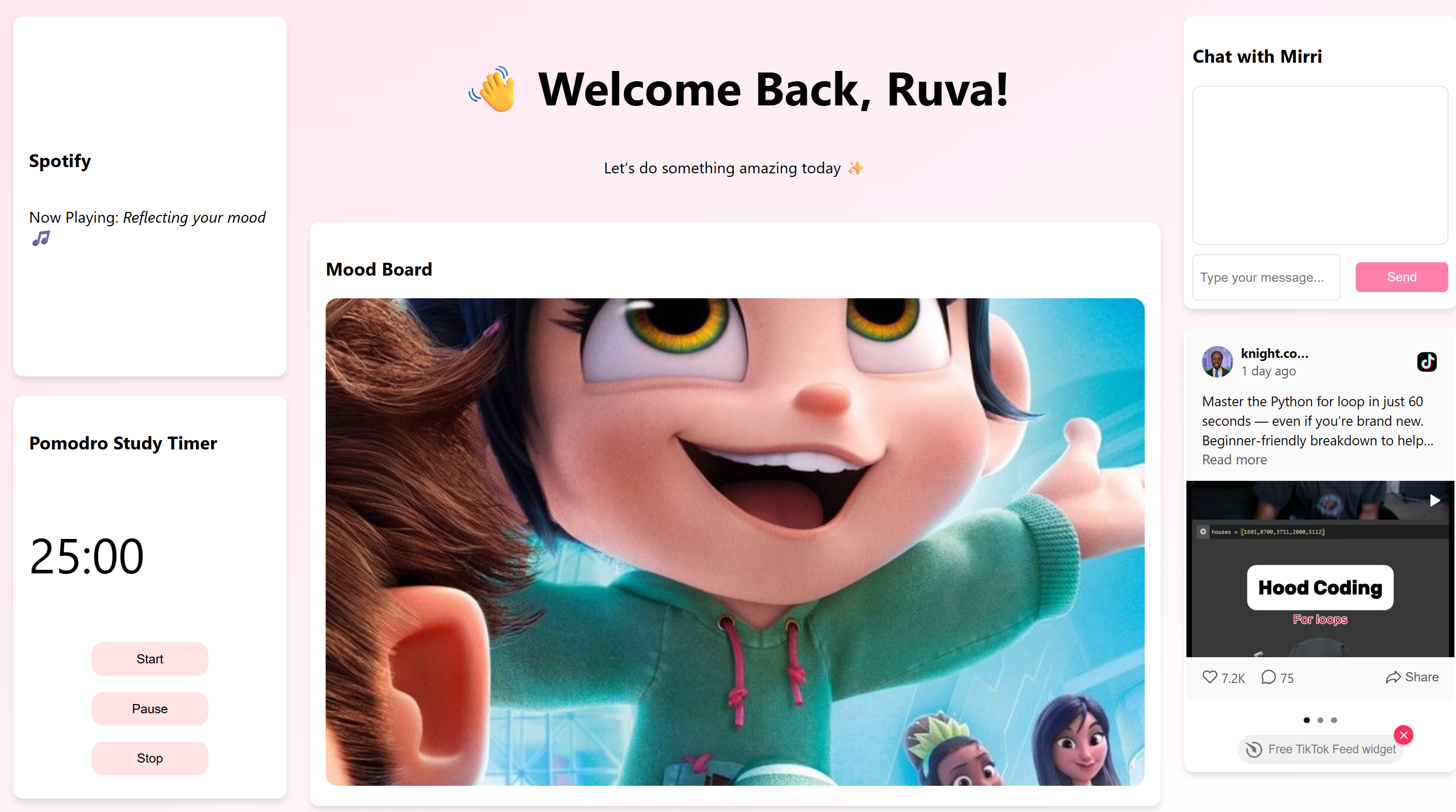
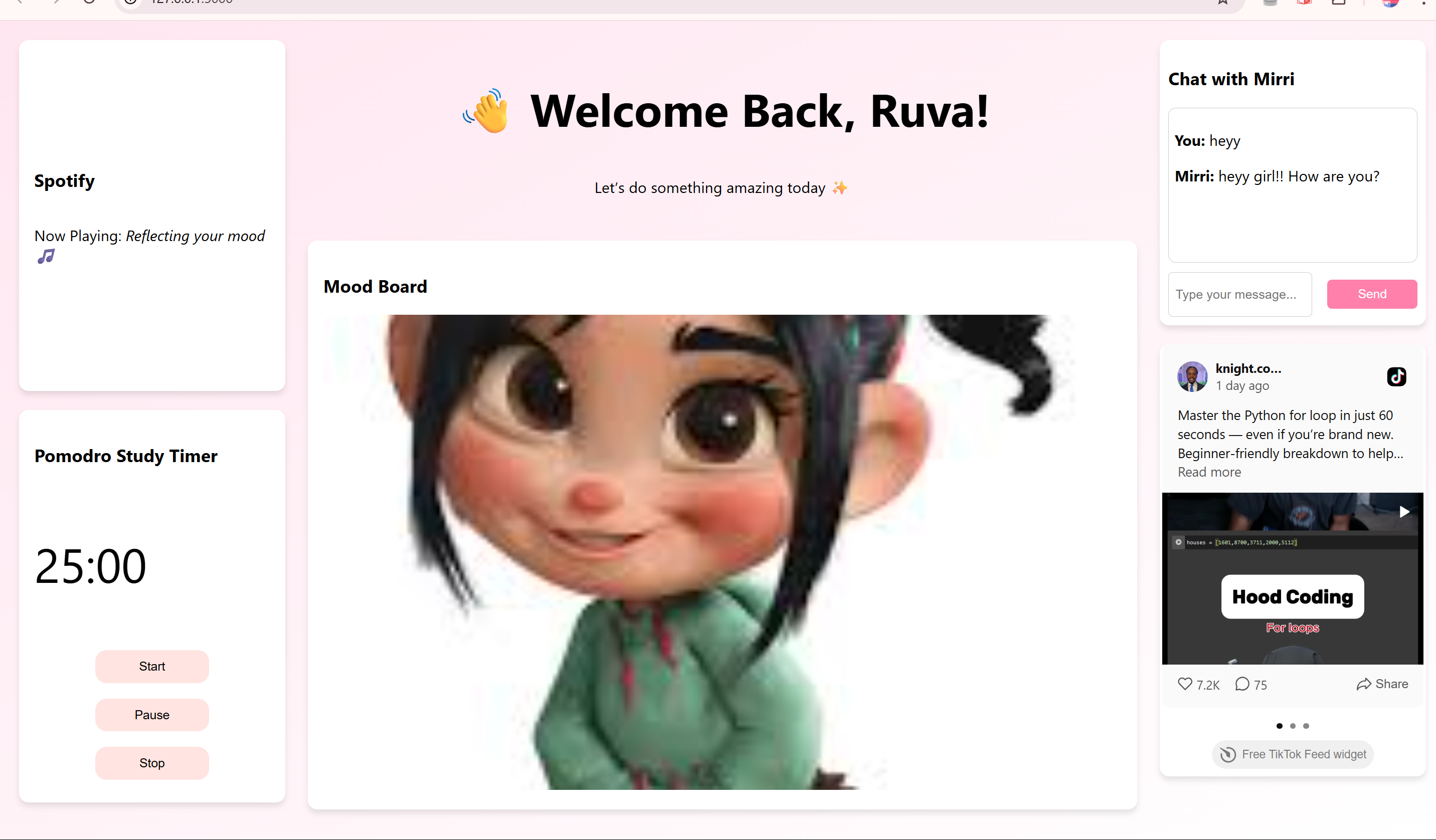
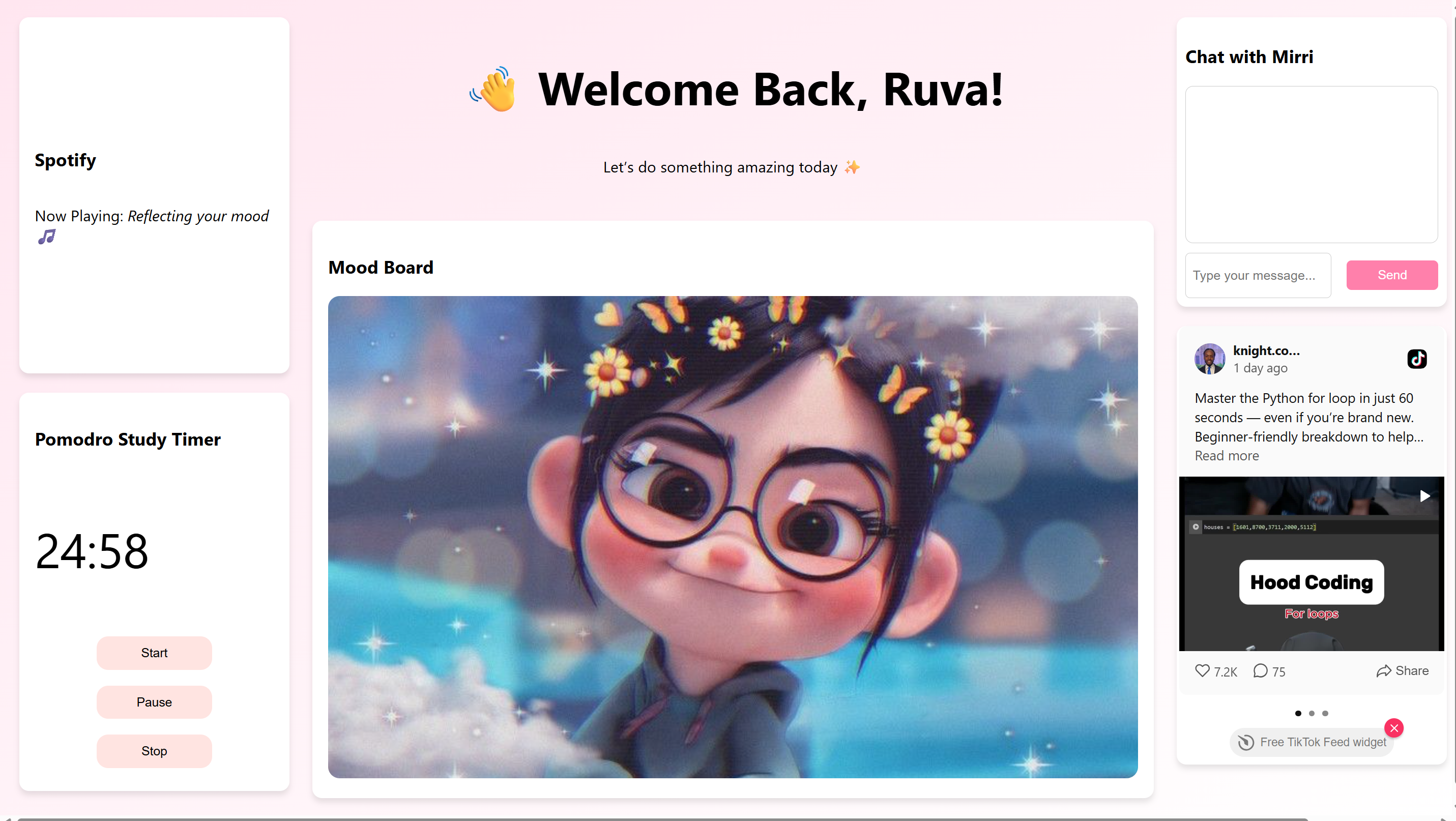
Inspiration
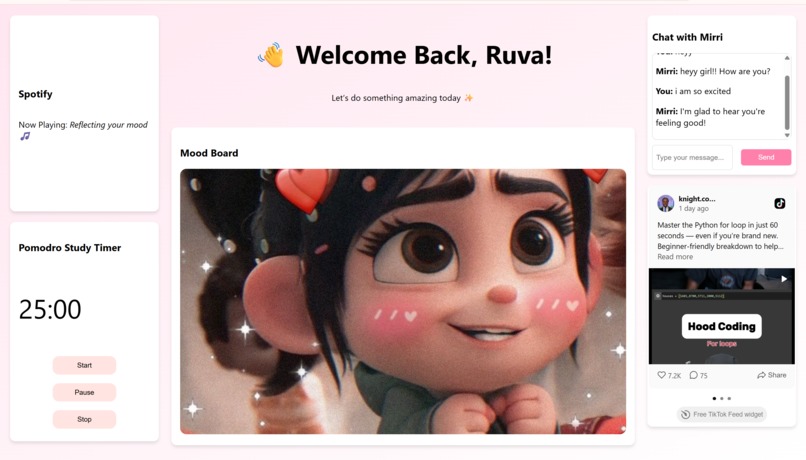
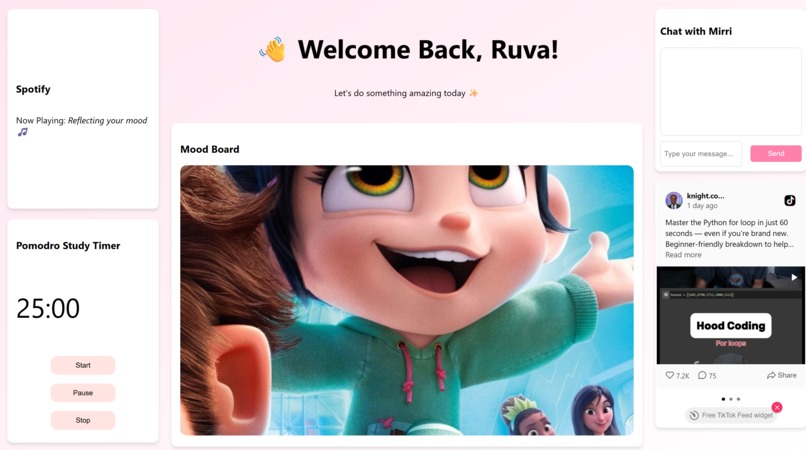
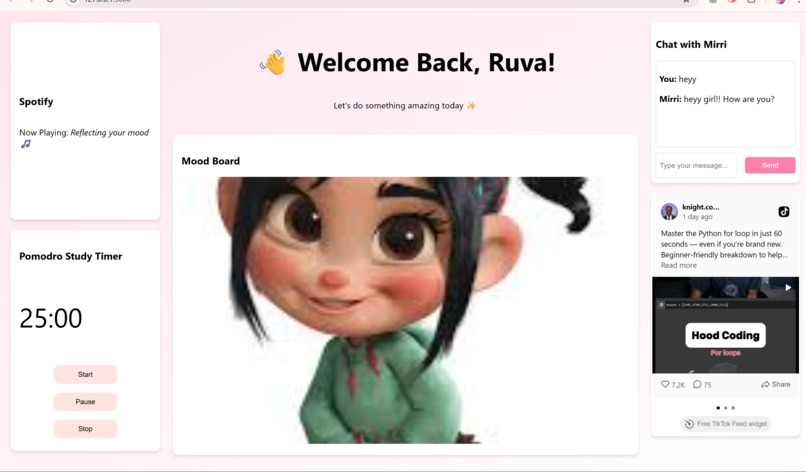
Life gets to us sometimes as students, and its not all the time when we fully feel comfortable and connected with our tech. Imagine, having 5 tabs open, one for tiktok breaks, 1 for a study timer, another for music, a chatbot on another, and having to switch between these tabs is exhausting. Then having your hcatbot, not really connecting to anything but giving you simple, emotionless replies. What if we had a mirror of ourselves, knows what to play, has our timer, a chatbot, tiktok videos, even gym schedules (later) and even a mood board to show you how you feel, and make you feel connected. A mood board that shows any character you want. That was the inspiration for MirrorMe
What it does
MirrorMe is You in tech form, your music, your schedule, your mood, and everything else. It is an all in one productivity dashboard that combines emotional awareness with practical tools to help users stay grounded and motivted. It includes, Mirri, the chatbot, a pomodro style study timer, a customizable mood board, and an embedded TikTok widget for short breaks. It can detect your emotions and can show different pictures on the mood board based off of your mood. The spotify integration that will come later, will also allow you to be able to play music suggested based off of your mood, that you like. The tracks for this project were the second and 3rd one, which are Make it YOU, and the Creative Strand. MirrorMe reflects what I like, and shows creativity through the moodboard. And everyone can make it theirs, and reflect their creativity through it.
How we built it
I built it will Python, HTML, CSS and Javascript for the fron-end and interactivity, and used a flask framework. SpaCy NLP was used for the emotion detection. Custom scriprt were used for the timer and TikTok widget integration.
Challenges we ran into
Integrating third party APIs such as Spotify was difficult because of time management. Using models for text generation and emotion detection was also very difficult, so the user decided to use a large JSON dictionary, with upwards of 2000 conversations, and a simple for loop for the smotion detection. Keeping the interface fun and clean was difficult because of the different elements.
Accomplishments that we're proud of
A working chatbot that adjusts based on how you feel A clean and aesthetic dashboard easy and soft switching of pictures
What we learned
How to combine NLP, dAPI integration and fron-end UX in a single app. Emotion detection, even in its simplest form makes a huge difference to thr user
What's next for MirrorMe
Adding a voice based mood detection Storing user data locally Allow users to add custom widgets Package it as a desktop app Develop models for text generation and emotion detection Adding spotify

Log in or sign up for Devpost to join the conversation.