-
-
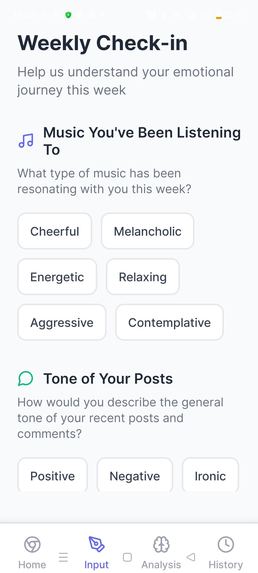
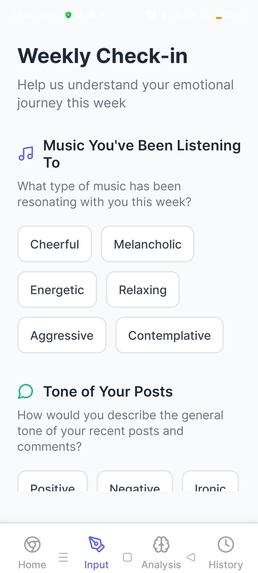
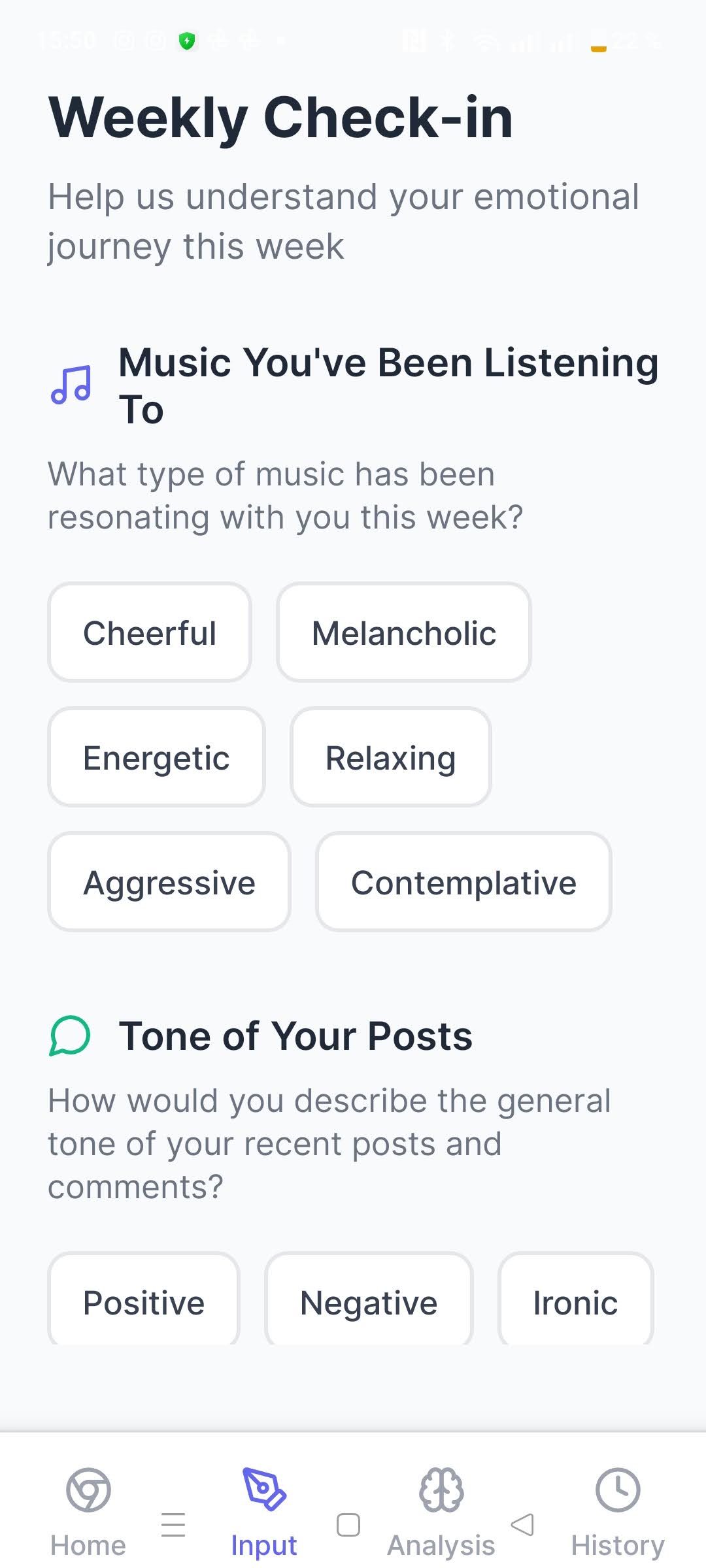
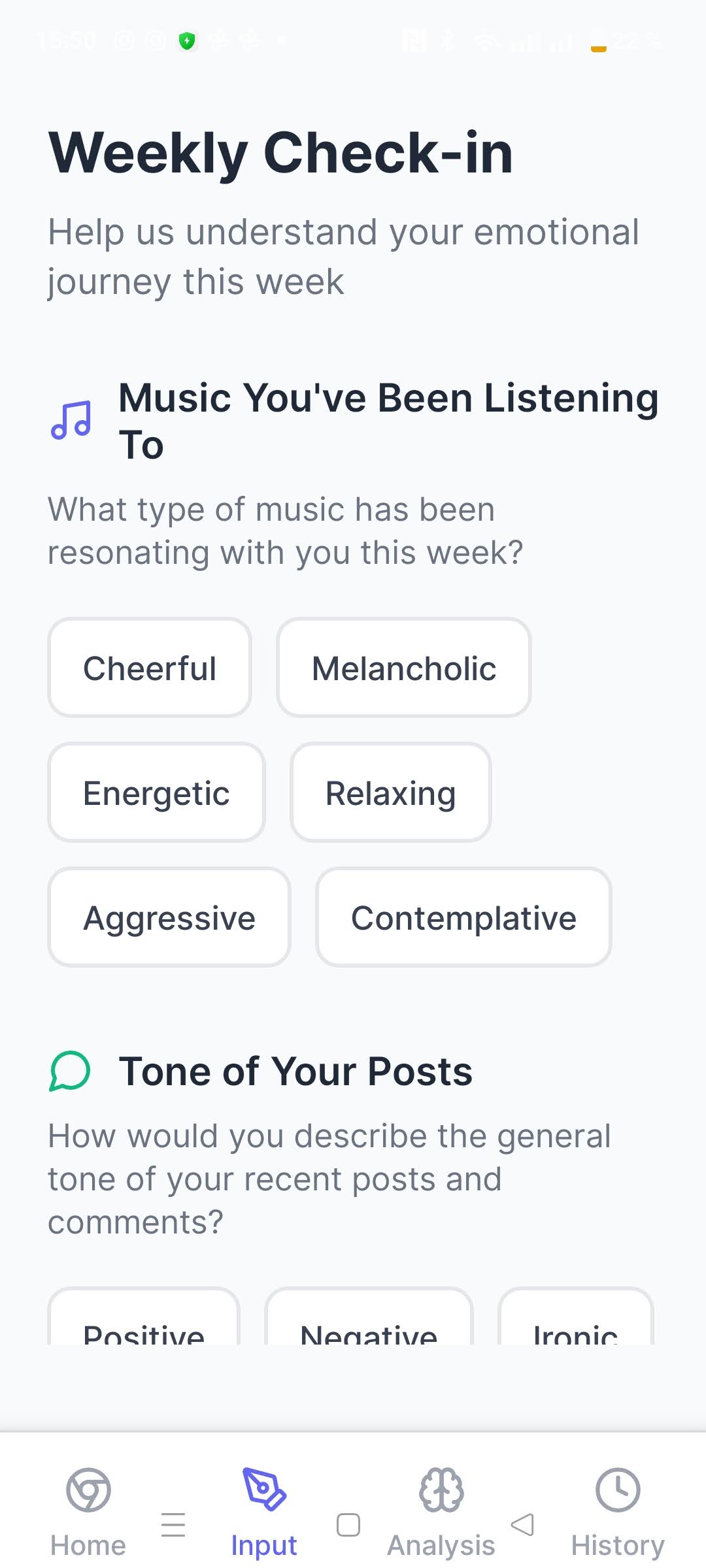
3. Input – Post Tone Describe the tone of your recent posts or comments. A key to how you express and process emotions.
-
2. Input – Music Mood Select the type of music that resonated with you this week. Music reveals emotional undercurrents.
-
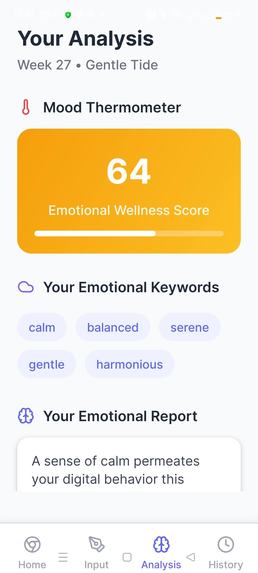
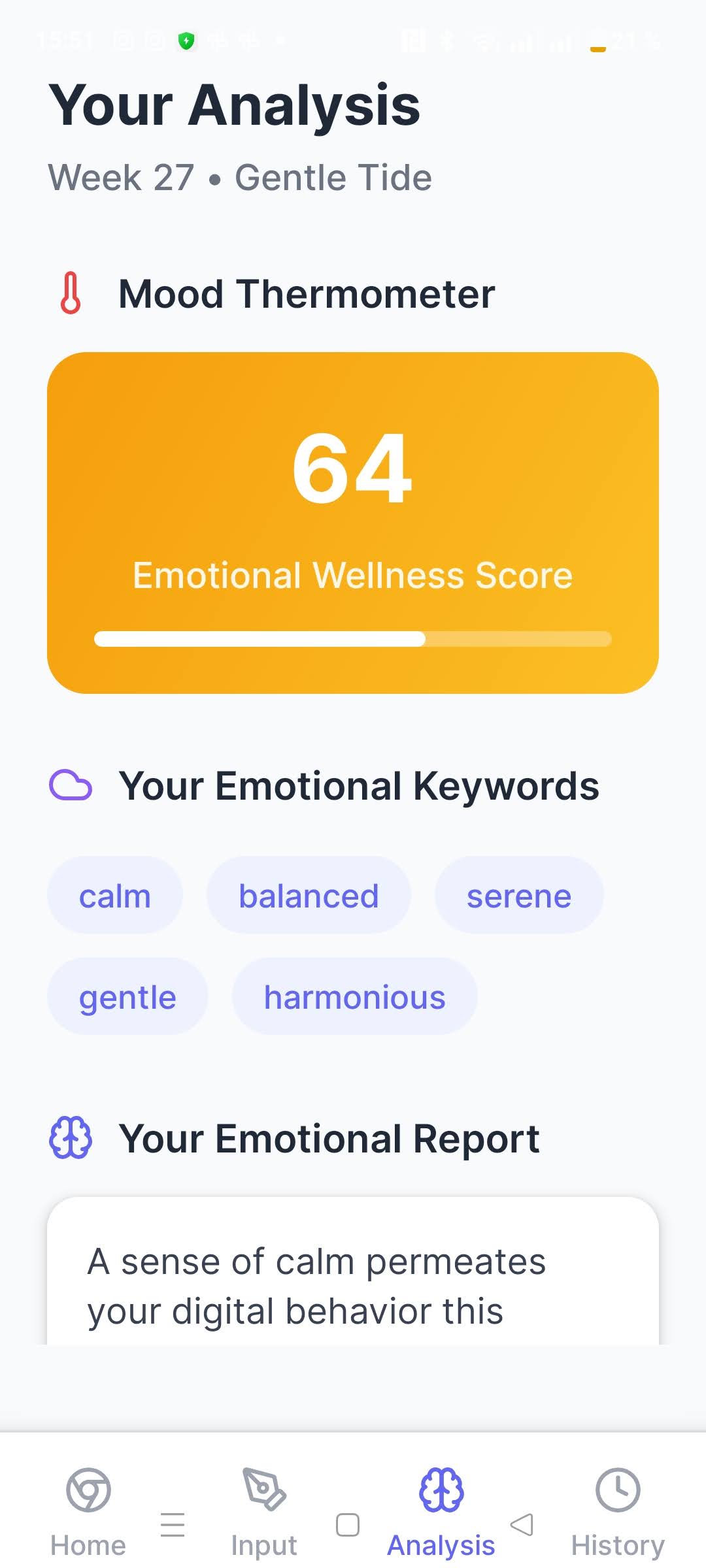
4. Analysis – Mood Thermometer See your emotional score, mood thermometer, and weekly keywords in a clean, visual summary.
-
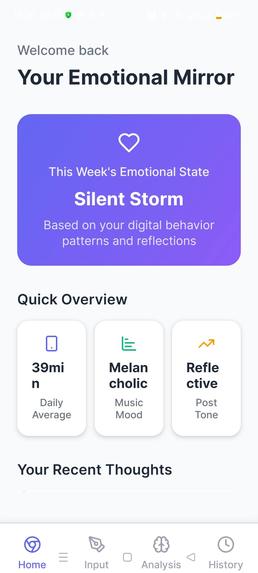
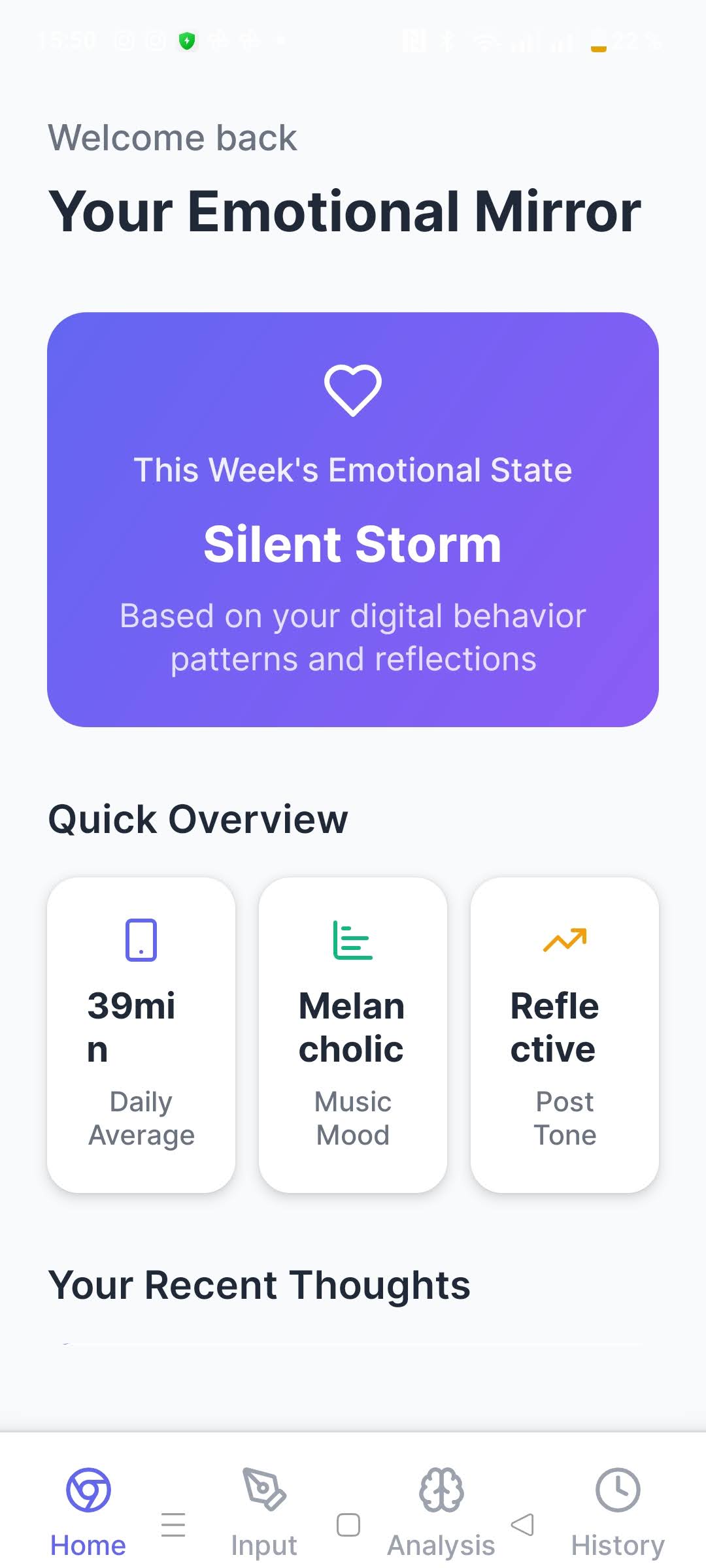
1. Home – Emotional Overview Your weekly emotional state, based on digital behavior: Silent Storm. A calm but intense inner experience.
-
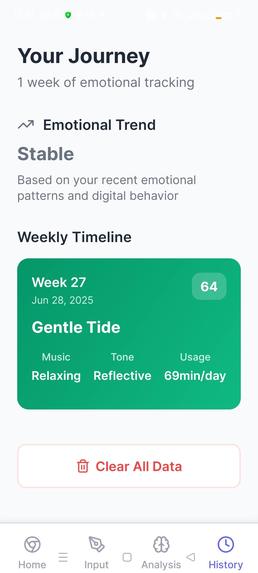
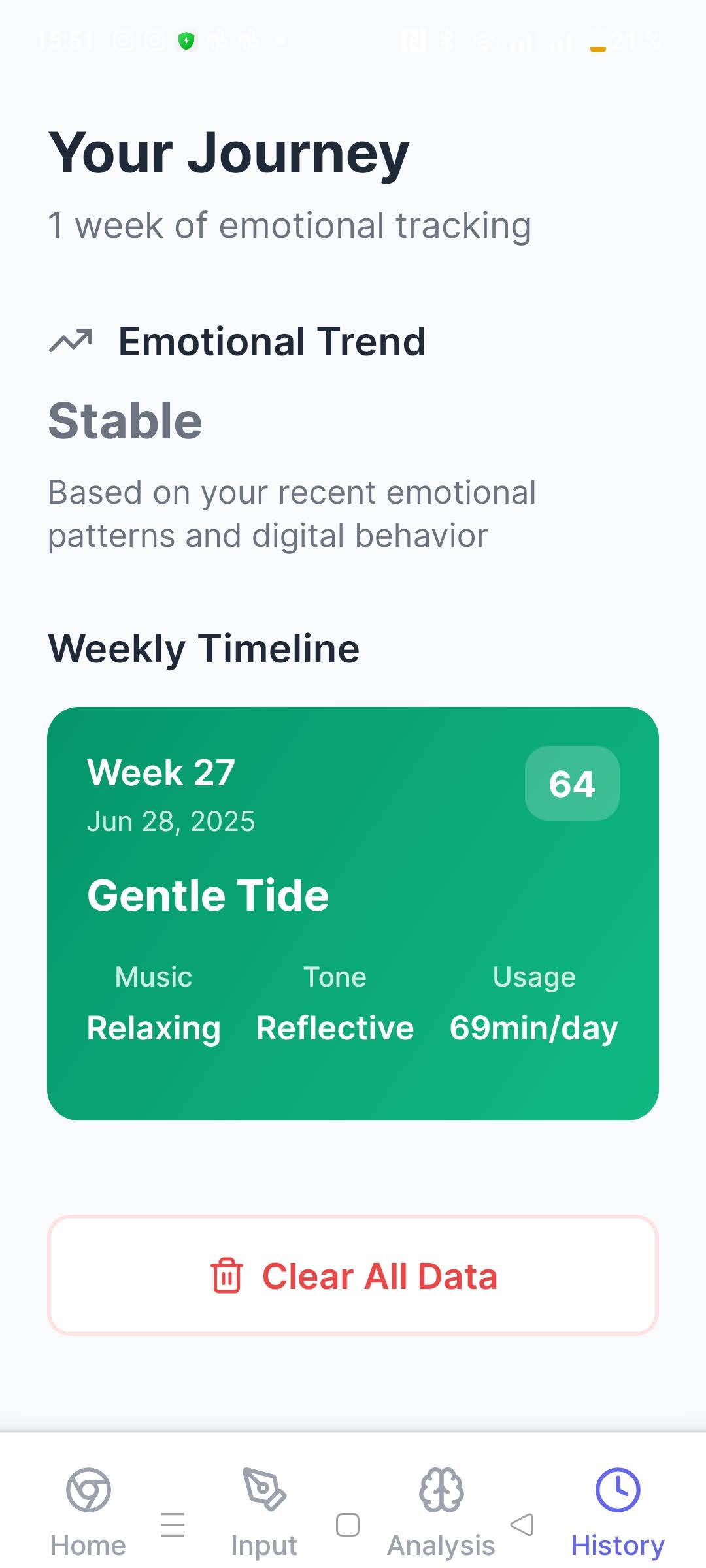
5. History – Emotional Timeline Review your emotional journey over time. Weekly reports show mood trends and screen habits.
Inspiration
Social media is deeply integrated into our daily lives, yet many users feel emotionally drained, anxious, or frustrated after spending hours online. We’re constantly connected — but rarely aware of how our digital habits shape our emotional well-being. MirrorMe was born from this paradox: we wanted to build a tool that reflects how our weekly online behavior affects our mental state, and empower users to take small steps toward a healthier digital life.
What it does
MirrorMe is an app that acts as an emotional mirror based on your weekly digital behavior. It tracks your screen time and app usage for platforms like TikTok, Instagram, and X (formerly Twitter) using Android's Usage Access permissions. Combined with light user input (e.g., music moods, post tone, phrases used), MirrorMe generates a personalized emotional report, assigns a weekly emotional state, and suggests small, actionable steps to improve digital well-being.
How we built it
We used a single-prompt architecture to generate the full app logic in a no-code environment (Bolt). The app is built as a native Android application with:
UsageStatsManagerto track app usage- Local storage for saving emotional history
- A form for minimal manual input (mood, tone, phrases)
- An AI-simulated emotional analysis engine that provides:
- A weekly emotional label
- A mood thermometer
- A keyword cloud
- Three personalized wellness recommendations
We focused on creating a self-contained, privacy-friendly experience without relying on external APIs or backend services.
Challenges we ran into
- Accessing real user behavior without external APIs while respecting privacy and platform restrictions.
- Simulating emotional analysis in a way that feels authentic using only local data.
- Designing a compelling and emotionally sensitive interface with a single prompt structure.
- Balancing technical realism with the limitations of one-shot development.
Accomplishments that we're proud of
- Created a fully functional native Android app from a single prompt.
- Achieved realistic emotional analysis without relying on social media APIs.
- Designed an intuitive user experience with strong emotional narrative and visual clarity.
- Proved that meaningful digital wellness tools can be created without sacrificing simplicity, privacy, or creativity.
What we learned
- Digital well-being is not just about screen time — it’s about emotional patterns, context, and awareness.
- Even with limited access to user data, thoughtful design and simulated intelligence can create a sense of reflection and self-awareness.
- One-shot development forces clarity and intentionality, which can lead to surprisingly polished and focused outcomes.
What's next for MirrorMe: Digital Wellness Tracker
- Expand to iOS and integrate with HealthKit for deeper cross-platform insights.
- Explore browser extensions for content sentiment detection on social media feeds.
- Add optional GPT-powered journaling based on weekly reports.
- Partner with digital wellness initiatives, therapists, or schools to promote intentional screen habits.
- Incorporate voice notes or passive ambient data (like music type, movement) for richer emotional modeling.
We believe MirrorMe can become a valuable ally in the ongoing effort to live well — not just online, but offline too.
Built With
- bolt
- localstorage
- reactnative
- usagestats

Log in or sign up for Devpost to join the conversation.