-
-
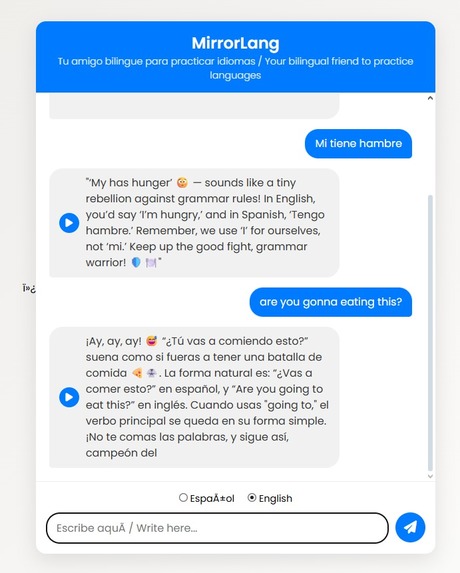
MirroLang in Action, Spanish and English examples
-
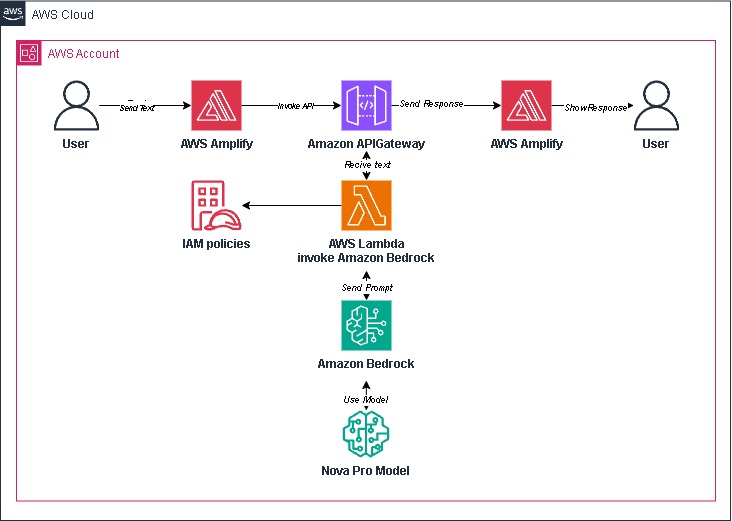
Architecture
🪞 MirrorLang
Inspiration
MirrorLang was inspired by personal experience. I’ve helped several friends and family members improve their English through a “mirroring” technique — where the learner listens to their own mistakes and sees them reflected back in a fun, slightly teasing way. This unconventional approach turned out to be far more effective than traditional, rigid methods.
From that success came the idea to build a digital version: an app that uses voice and humor to make users aware of their mistakes while keeping the learning process fun and memorable.
What it does
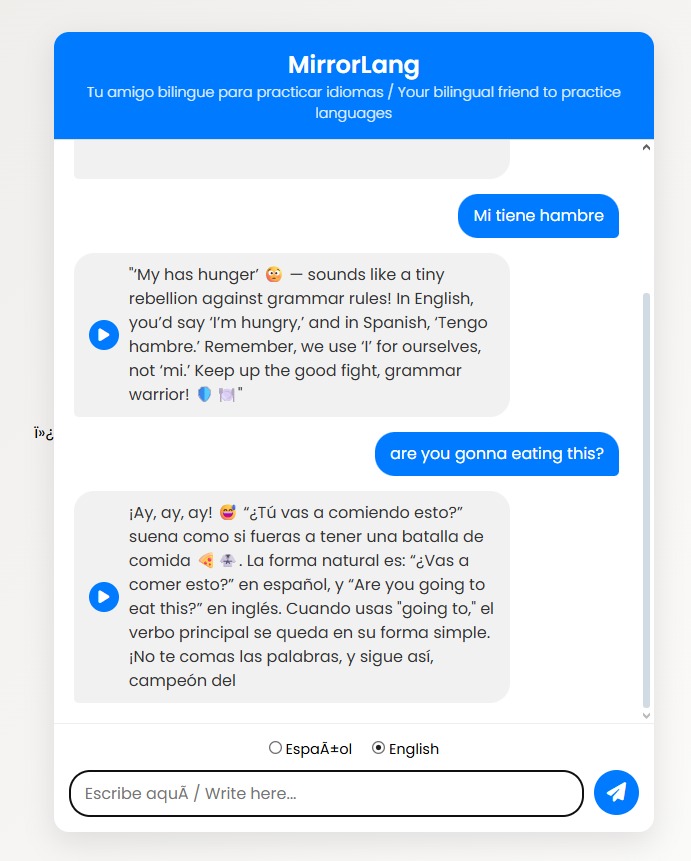
MirrorLang reads to what the user says in English, detects grammar mistakes, and mirrors them back — both visually and verbally — as if a digital mirror were playfully teasing the user.
The main goal isn’t just correction, but awareness: helping learners recognize their patterns and feel more confident through humor and repetition.
How we built it
We built the MVP using:
- Amazon Polly for natural voice synthesis
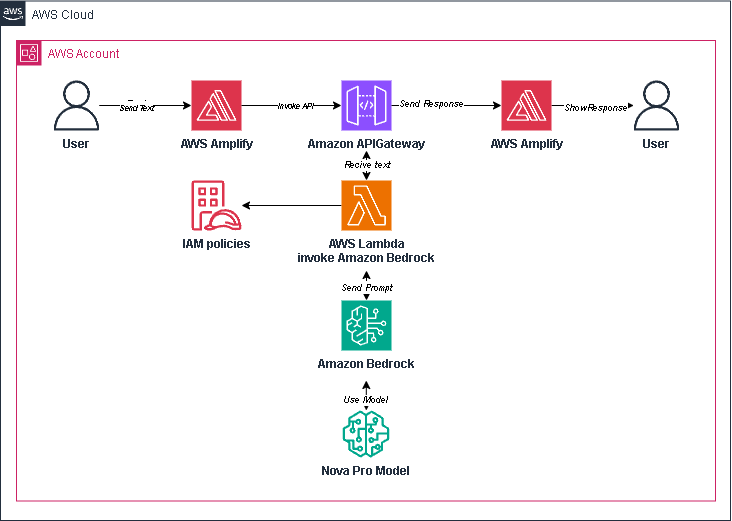
- A lightweight HTML/JavaScript front-end that interacts with AWS Lambda and API Gateway
- Amazon Bedrock to use Nova pro model in his model catalog
The app flow is simple:
- The user writes a sentence to be corrected 🎙️
- The text is sent to AWS
- The text is analyzed looking for errors through Nova Pro model
- The “mirror” responds with feedback and corrected versions, sometimes playfully mocking the mistake
Challenges we ran into
We attempted to use AWS Transcribe so that users could interact with the assistant via voice. However, we were unable to activate the voice service, so we decided to skip it for now and keep text input only as the user interaction method.
Connecting voice and text services was both fun and frustrating.
We encountered CORS restrictions, microphone permission issues, and unexpected encoding problems when sending audio from the browser to AWS.
At one point, the browser threw errors like:
Access-Control-Allow-Origin: null
But after debugging and understanding how AWS handles preflight requests and API Gateway permissions, everything clicked.
Accomplishments that we're proud of
We built a working MVP that actually reads, understands, and mirrors the user in real time.
Despite the technical hurdles, the system successfully combines translation, and personality — delivering feedback that’s both useful and funny.
And more importantly, early users (Family) reported real improvement and less fear of learning.
What we learned
- Figuring out the differences between the NOVA Micro, Lite, and Pro models turned out to be a surprisingly memorable part of the process.
- How to integrate Polly in real-time contexts.
- How browsers handle audio streams and CORS policies.
- That humor and empathy can be powerful accelerators for language learning.
Learning is emotional — and when you remove the fear of mistakes, you unlock confidence.
What’s next for MirrorLang
- Add voice recognition
- Add mobile support for Android and iOS
- Integrate emotion recognition to adapt tone and feedback
- Add multiple languages beyond English
- Refine the “Mirror Personality” — part teacher, part comedian — that gives the app its unique charm
MirrorLang isn’t just about learning English.
It’s about learning to laugh at your mistakes — and growing from them.
Built With
- amazon-bedrock-(nova-pro)
- amazon-polly
- amazon-web-services
- amplify
- and-exposed-it-via-api-gateway.-for-ai-capabilities
- api-gateway
- aws-lambda
- html
- i-integrated-amazon-bedrock-with-nova-pro.-for-text-to-speech-functionality
- i-used-amazon-polly.-the-solution-is-deployed-on-aws-cloud.-no-traditional-databases-were-used
- python
- python-in-aws-lambda-for-backend-logic


Log in or sign up for Devpost to join the conversation.