-
-

MirrorIQ's Pick: a transparent Match Score with a clear "why it won" — not a YouCam metric.
-

MirrorIQ landing — stop guessing, see what works. One photo, three looks, one decision.
-

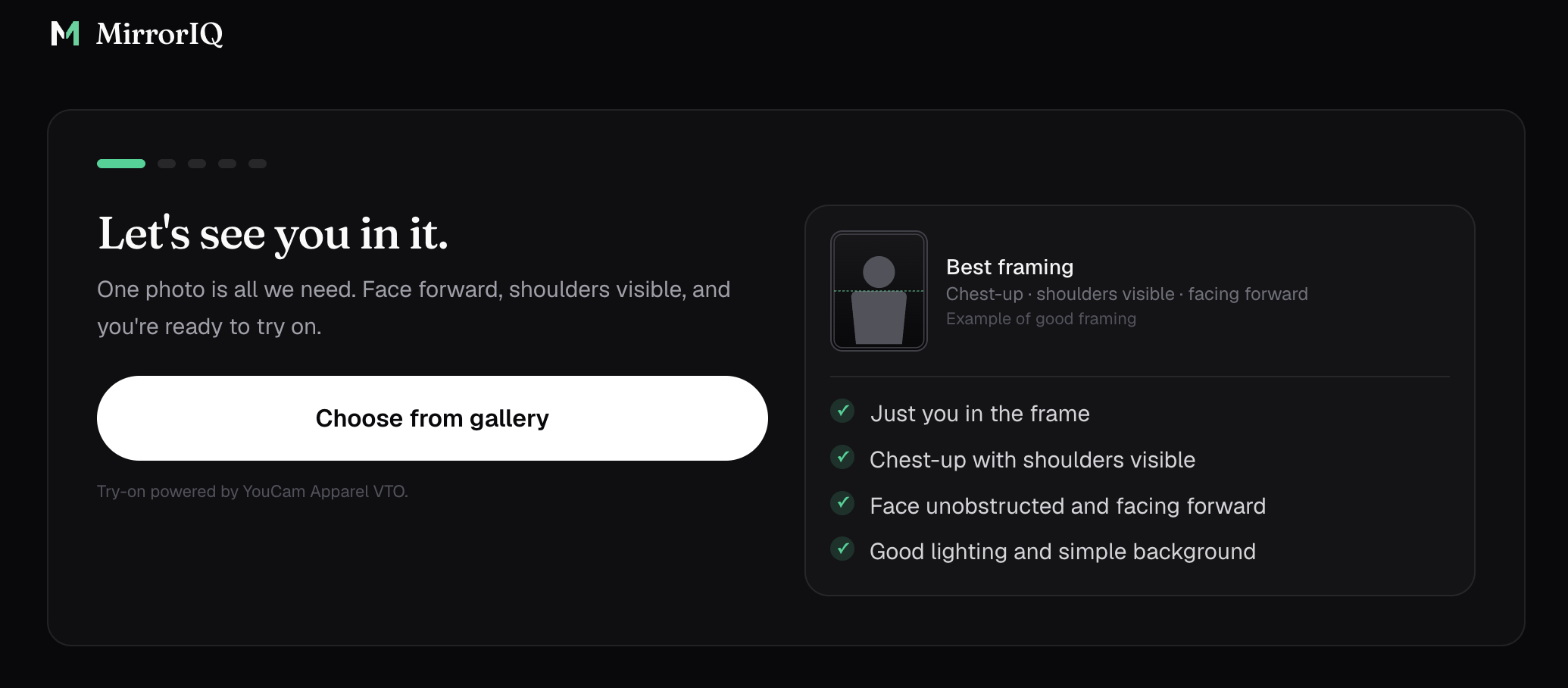
One photo is all it takes — clear framing guidance, plus native camera capture on mobile.
-
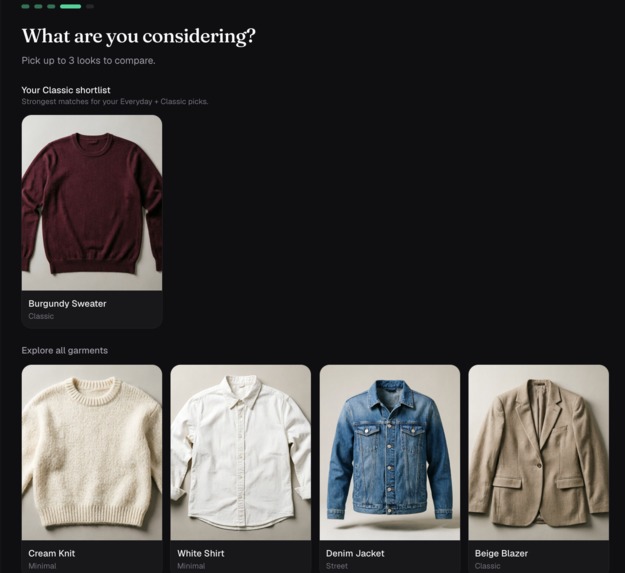
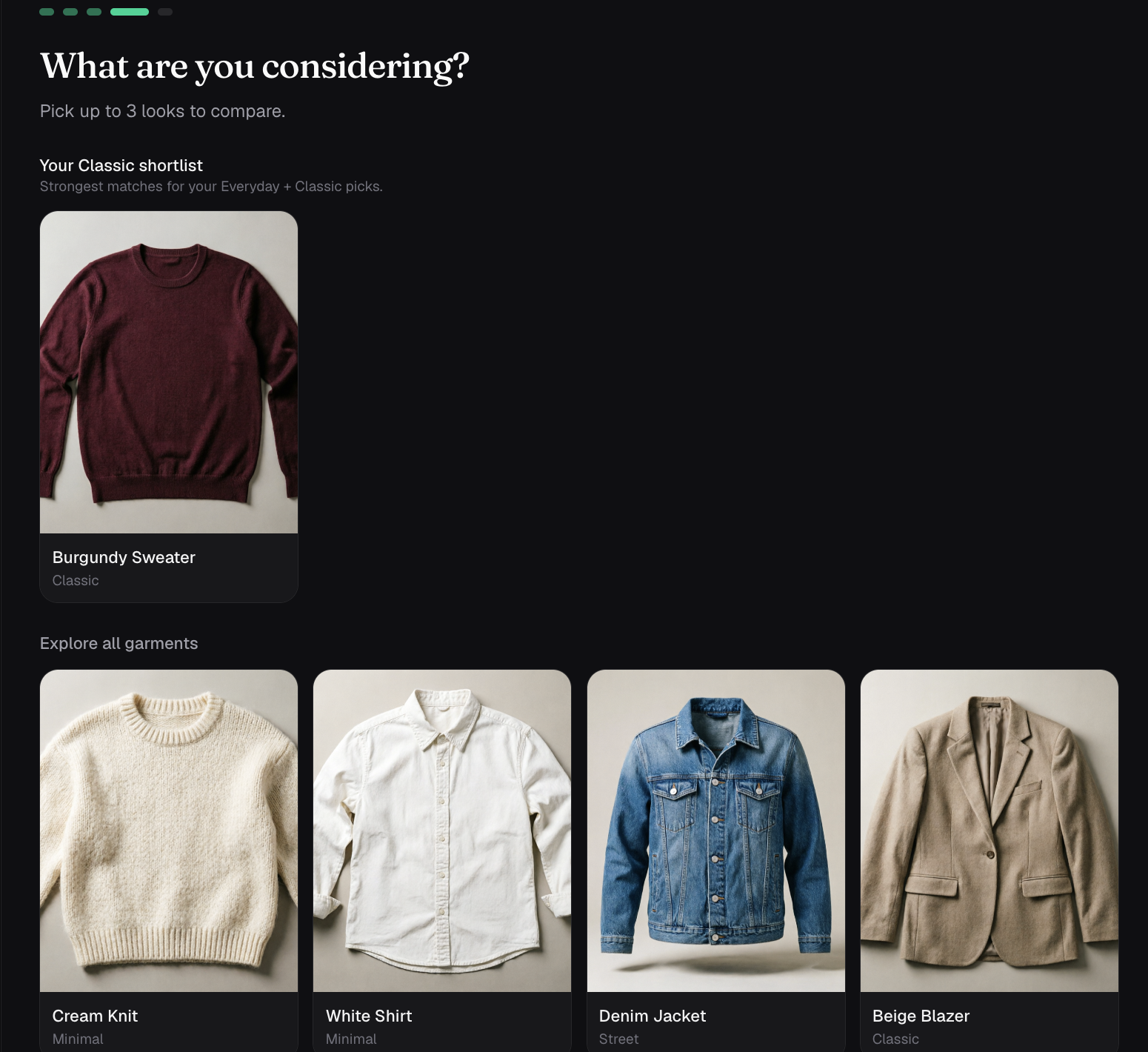
MirrorIQ prioritizes your best-fitting garments first as a shortlist — the full catalog stays one scroll away.
-
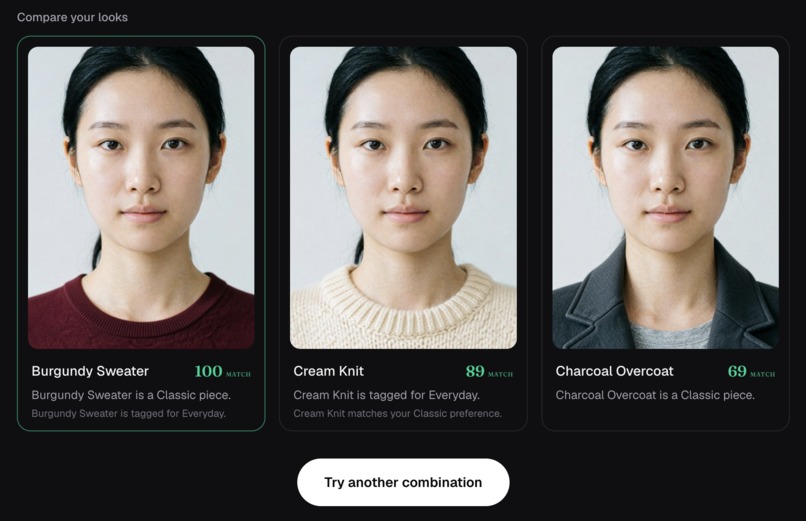
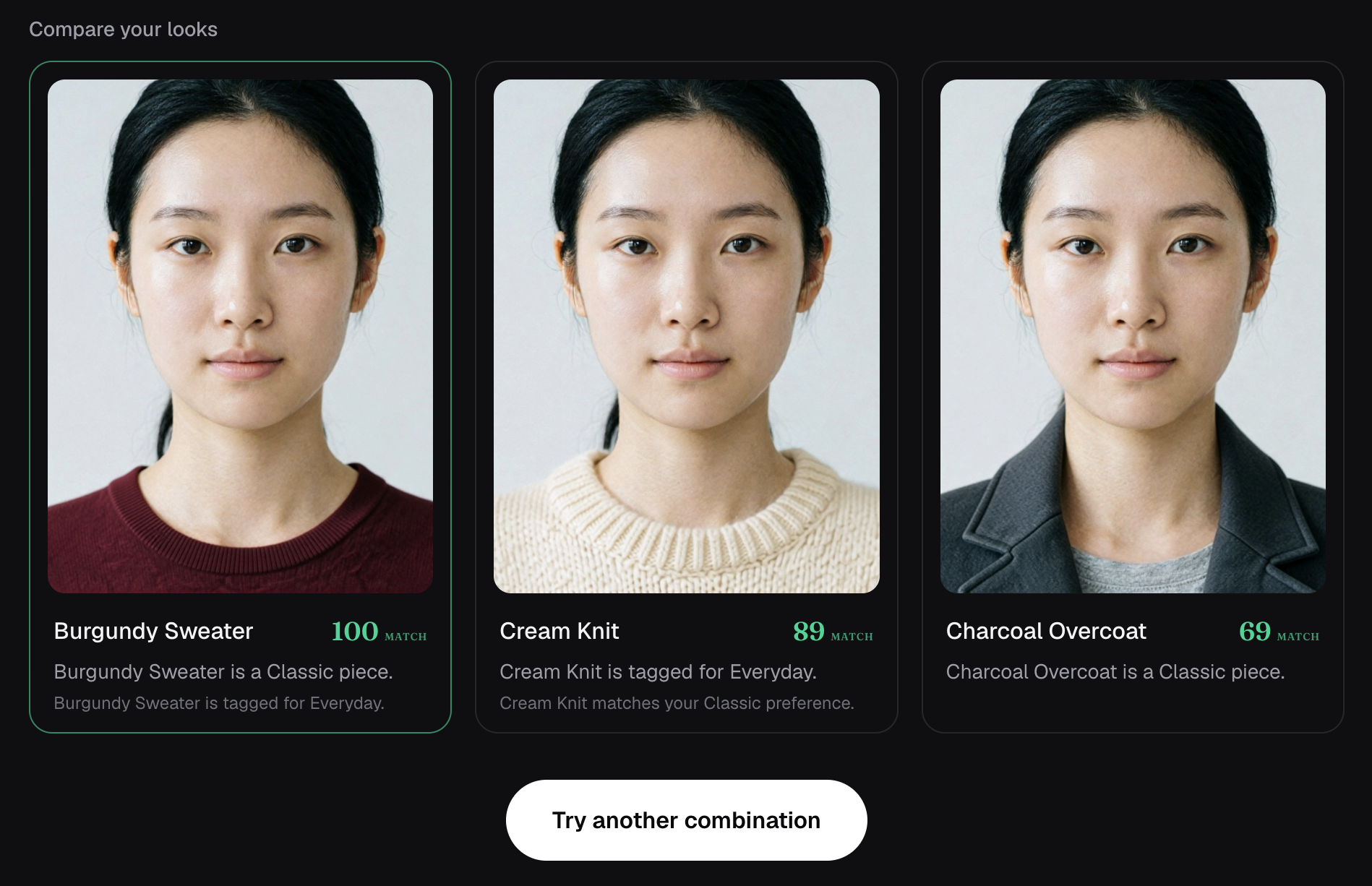
Look Lab: real YouCam Apparel VTO renders compared side by side, each with its own Match Score.


Inspiration
Online shopping has a trust gap: you find a garment you like, but you have no real way to know whether it'll actually look right on you until it arrives. Existing virtual try-on tools only make this partially better — they render one image at a time and leave the actual comparing and deciding entirely up to you. We wanted to see what happens if the try-on step becomes the middle of the experience instead of the end of it.
What it does
MirrorIQ is a visual fashion decision engine, not just a try-on viewer.
- Upload one photo.
- Tell it your occasion (Everyday, Work, Date Night, Party) and style (Minimal, Street, Classic).
- Pick up to 3 garments you're actually considering — MirrorIQ surfaces your best-matching options first as a shortlist, while the full 10-piece catalog stays one scroll away.
- YouCam Apparel VTO (Perfect Corp) generates a real try-on render for each garment on your own photo, revealing into Look Lab as each one finishes.
- Every look gets a transparent, deterministic MirrorIQ Match Score based on occasion/style compatibility — computed entirely by MirrorIQ, never by YouCam, with no claim about physical fit or attractiveness.
- MirrorIQ highlights its strongest pick and explains exactly why, using only the real scored dimensions — never invented copy.
How we built it
- Next.js 16 (App Router, Turbopack) + React 19 + TypeScript + Tailwind CSS v4, deployed on Vercel.
- All YouCam calls are server-side only (
/api/vto,/api/vto/status) — the API key never reaches the browser. - We use YouCam's presigned S3 upload flow (
file_id→PUTto S3 →src_file_id) rather thansrc_file_url, since YouCam's servers can't reliably fetch from arbitrary public URLs (hotlink/CDN protection causeserror_download_image). - VTO generation is asynchronous, so we poll
/api/vto/statusand surface each garment's real stage — "Preparing garment," "Submitting try-on," "Generating your look" — never a fabricated percentage or ETA. - A
DEMO_MODEflag runs the entire UI with canned responses and zero YouCam network calls, so the product can be reviewed without spending API units. - The Match Score is a small, fully deterministic scoring function — no LLM, no external model — so every recommendation is explainable and reproducible.
Challenges we ran into
- YouCam's face/framing requirements are strict and specific.
error_src_face_too_smallturned out to mean the face must be >60% of image width — not just "a big face in frame" — anderror_posemeant our test photos (great for a tight face crop) didn't show shoulders in a standing pose, which Apparel VTO actually needs. We ended up building a dedicated framing-guidance UI and a soft client-side heuristic to catch likely-bad photos before they ever reach the API. capture="user"on file inputs doesn't work everywhere. It only triggers a real camera on mobile OSes — desktop browsers silently ignore it. We added device detection so "Take a photo" only appears where it actually does something, including handling the fact that modern iPadOS disguises itself as "Macintosh" in its user-agent string.- Progressive results without jank. We wanted Look Lab to reveal each YouCam render as it completed rather than making users wait through a separate loading screen — but re-sorting cards by score as results trickled in made them visually jump around. Cards now hold a stable order until every result is final, then arrange by score.
Accomplishments that we're proud of
- A fully verified, live, end-to-end YouCam Apparel VTO integration (presigned upload → task submission → polling → rendered result).
- A genuinely deterministic, explainable recommendation layer with zero fabricated reasoning — every "why it won" line is a real computed fact.
- A mobile-first UI that stays polished from 375px up through desktop,
with real accessibility work (focus states,
prefers-reduced-motion, semantic controls) rather than an afterthought.
What we learned
That the real product opportunity in Apparel VTO isn't the rendering itself — it's what you build on top of it. YouCam is genuinely excellent at the visualization; the gap in the market is turning that visualization into an actual decision.
What's next for MirrorIQ
Expanding the garment catalog, refining the shortlist ranking, and exploring how a real retailer's own catalog could plug into the same decision layer.
Built With
- css
- html5
- javascript
- next.js
- node.js
- perfect-corp
- react
- tailwind-css
- turbopack
- typescript
- vercel
- youcam-api


Log in or sign up for Devpost to join the conversation.