Inspiration
Cross-border business is often slowed down not by a lack of information, but by the difficulty of turning a vague request into a clear next step.
A buyer may want to source from China, an African company may want to enter the Chinese market, or a business may need local support. Finding information is easy. Finding the right local path is much harder.
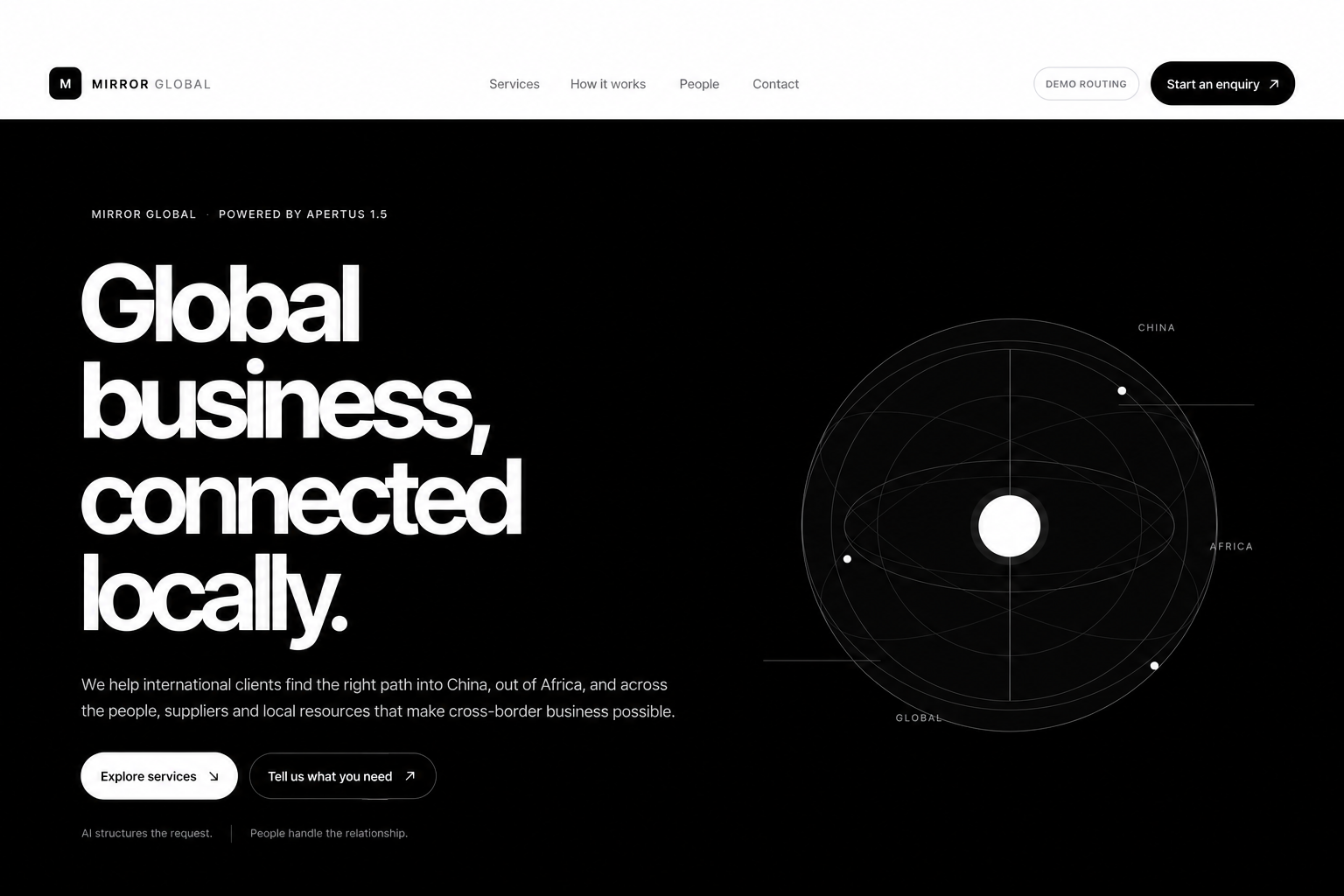
This inspired us to build Mirror AI — an AI-assisted platform that connects global demand with local resources.
What We Built
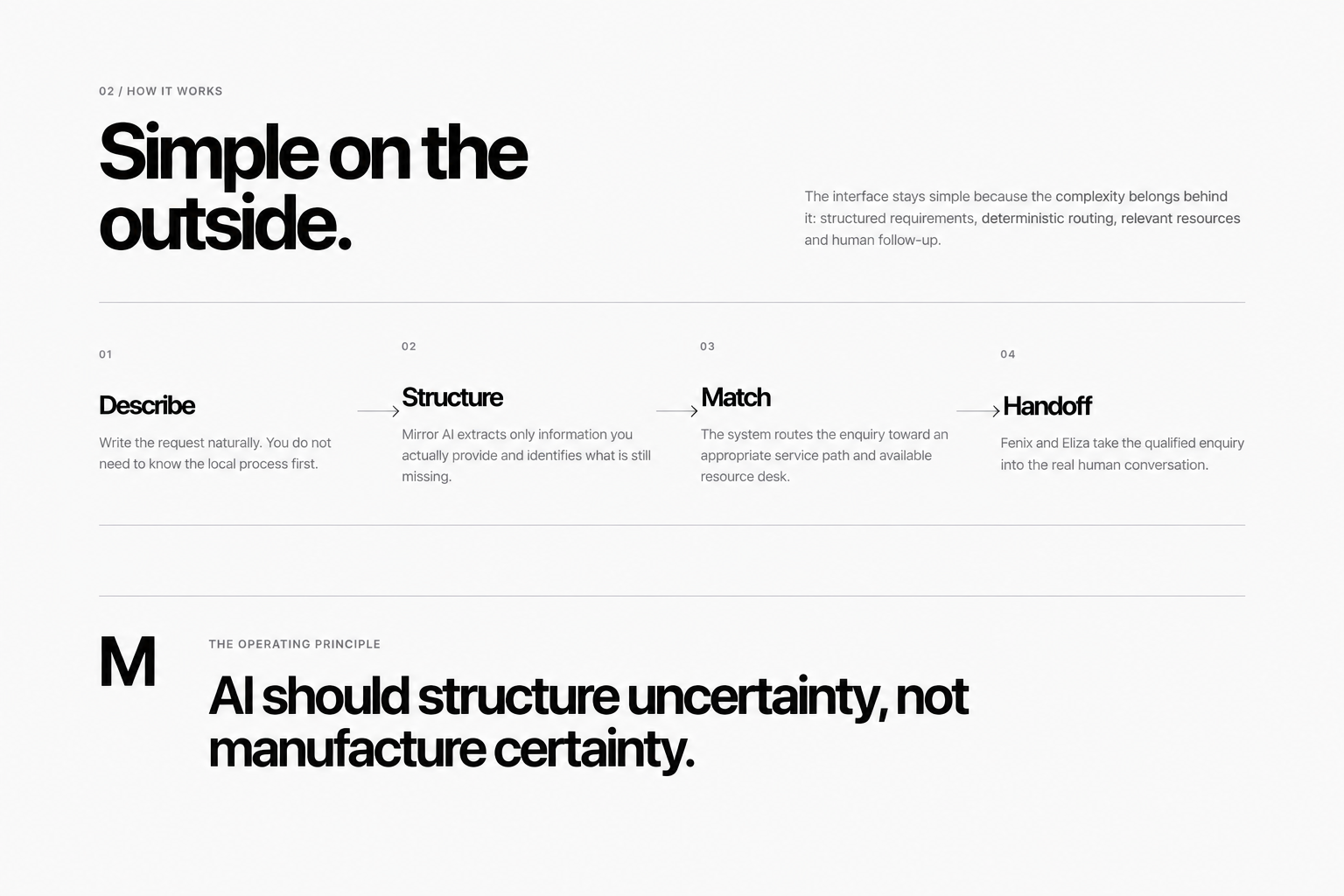
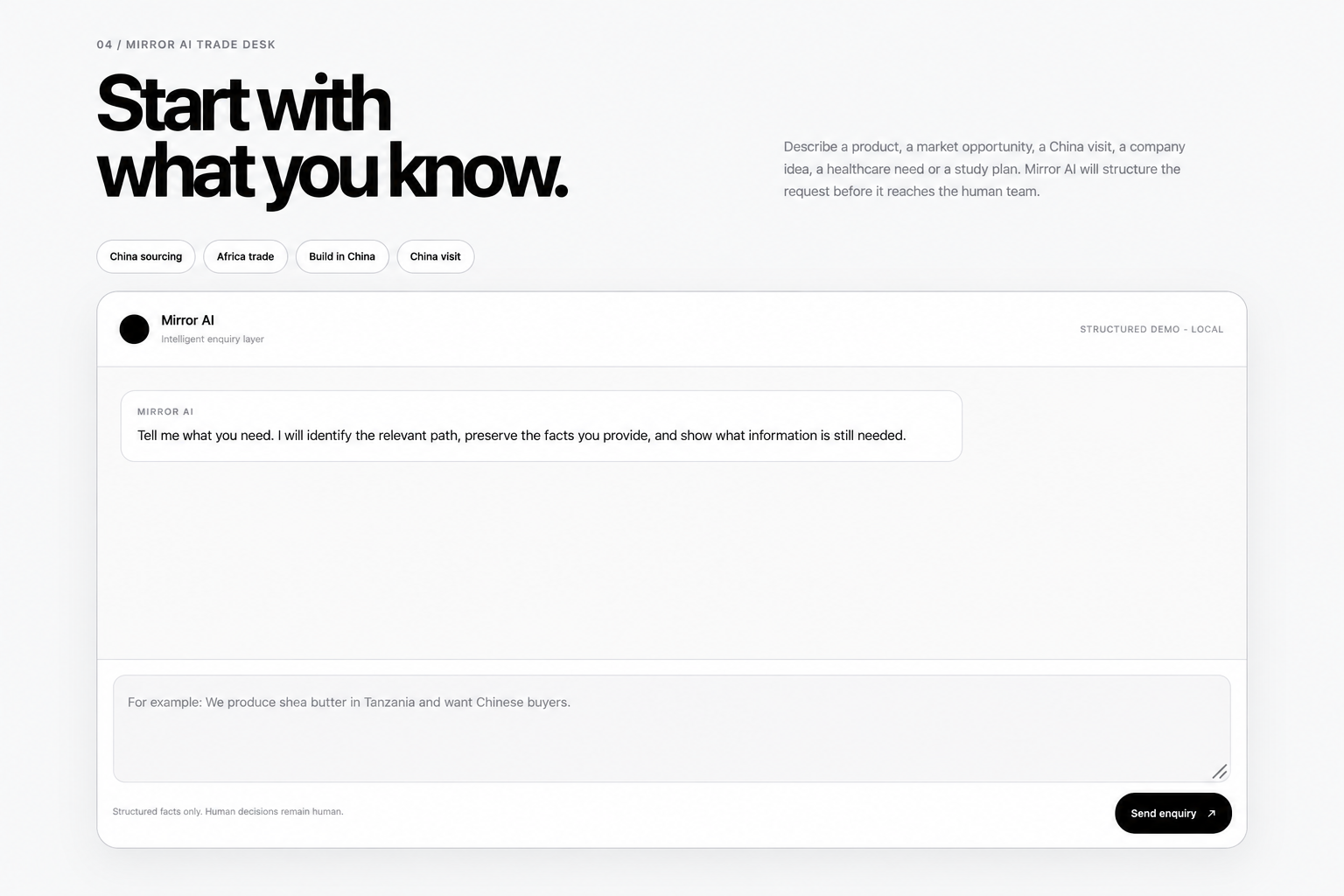
Mirror AI helps users turn natural-language requests into structured business enquiries.
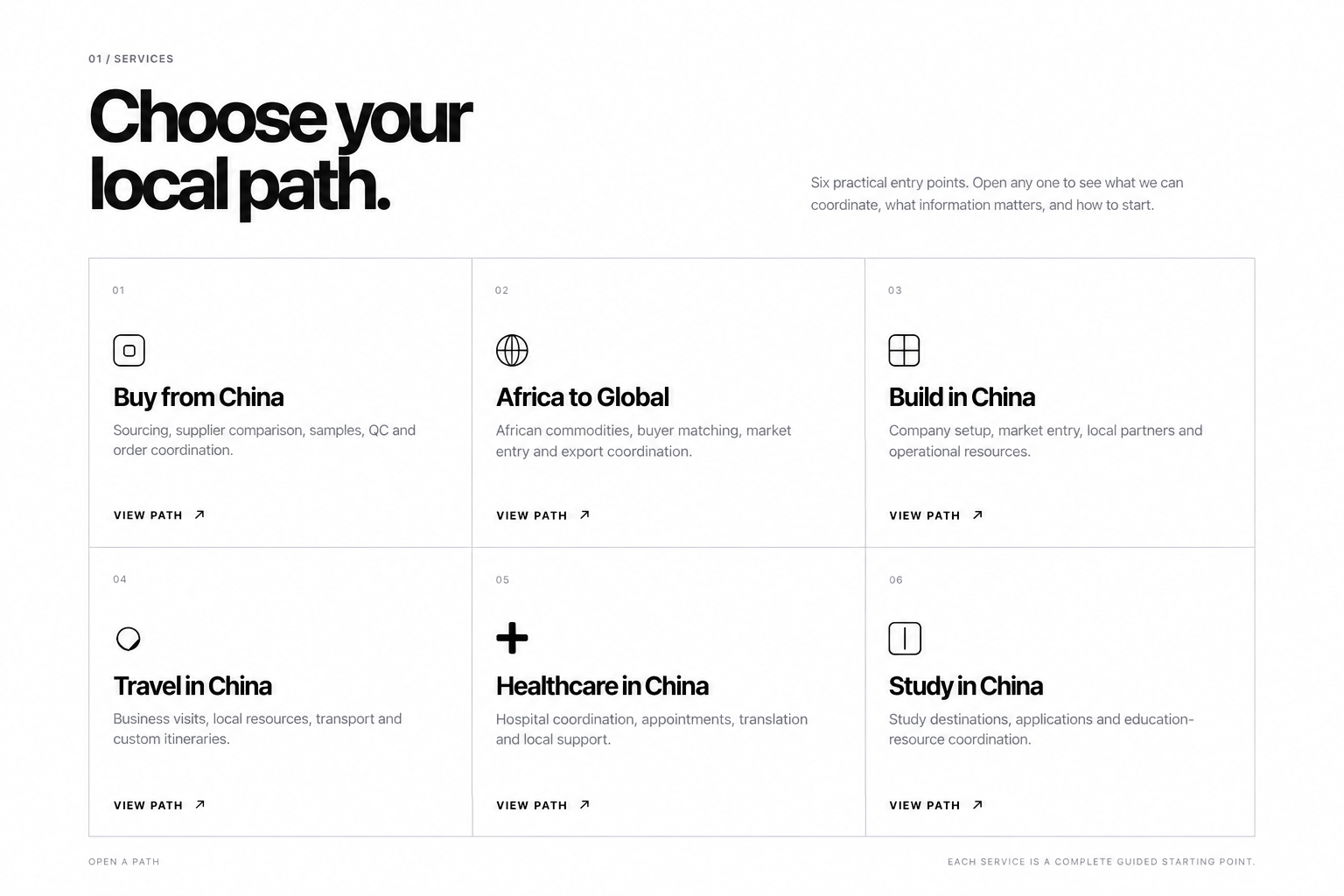
The platform covers six areas:
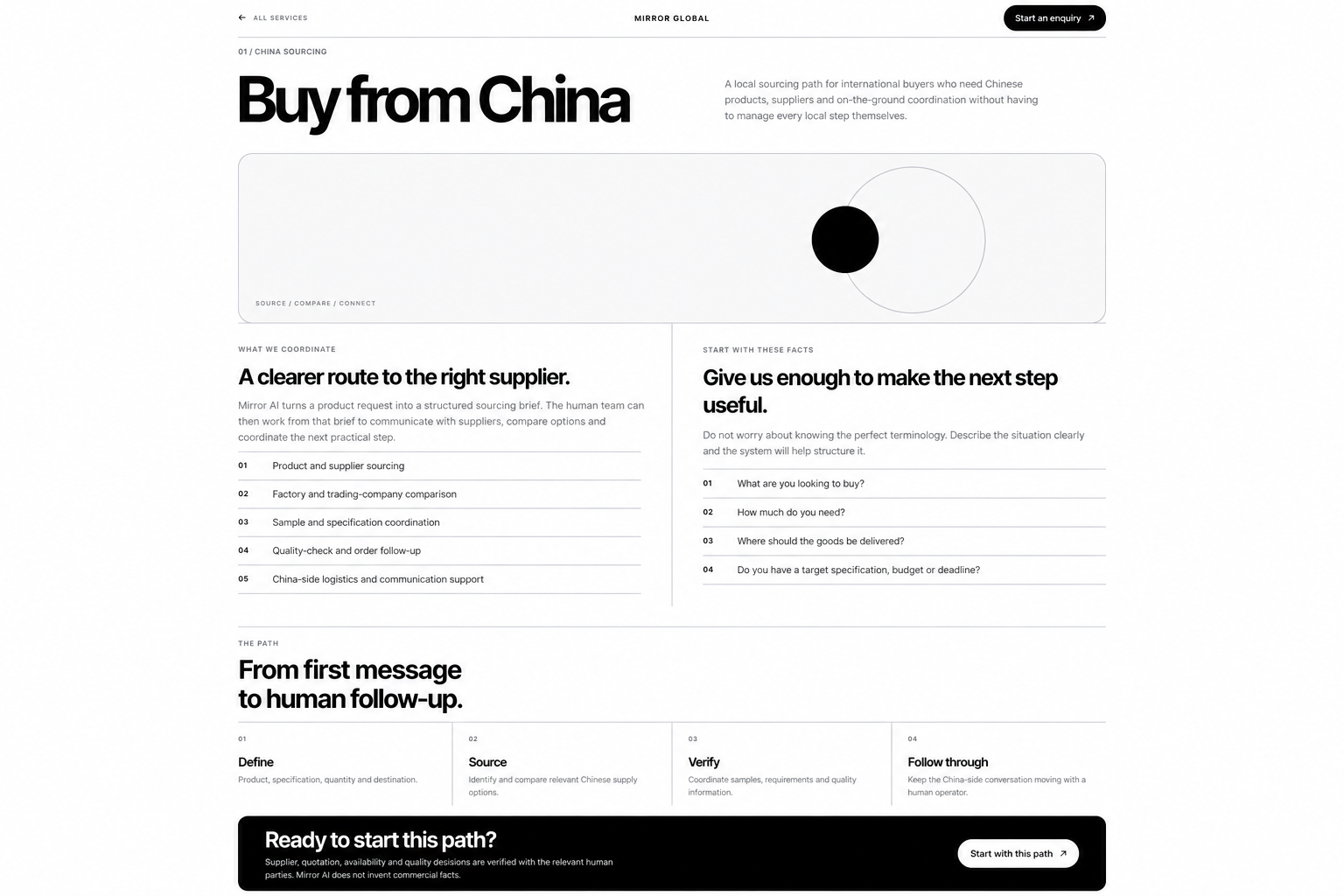
- Buy from China
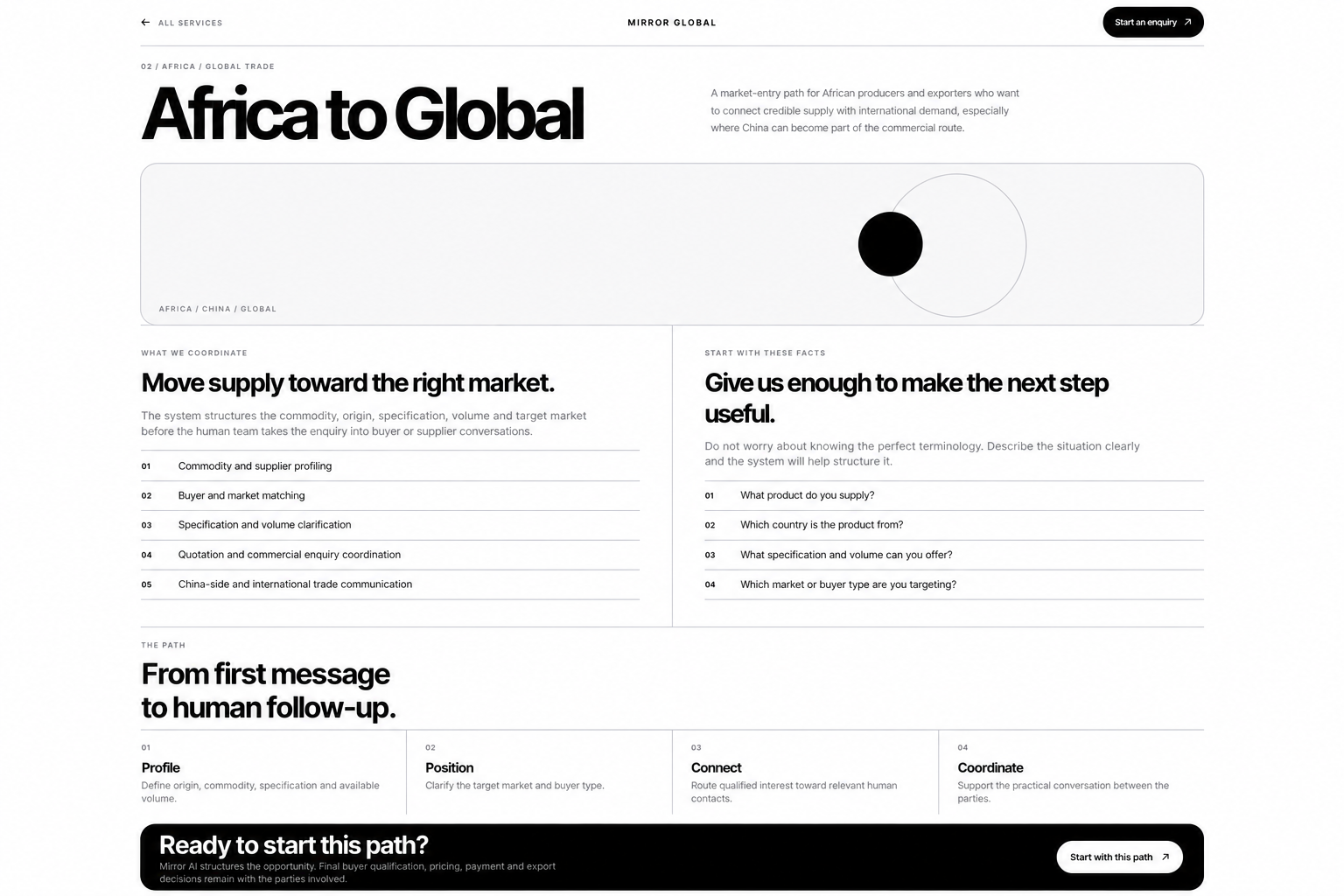
- Africa to Global
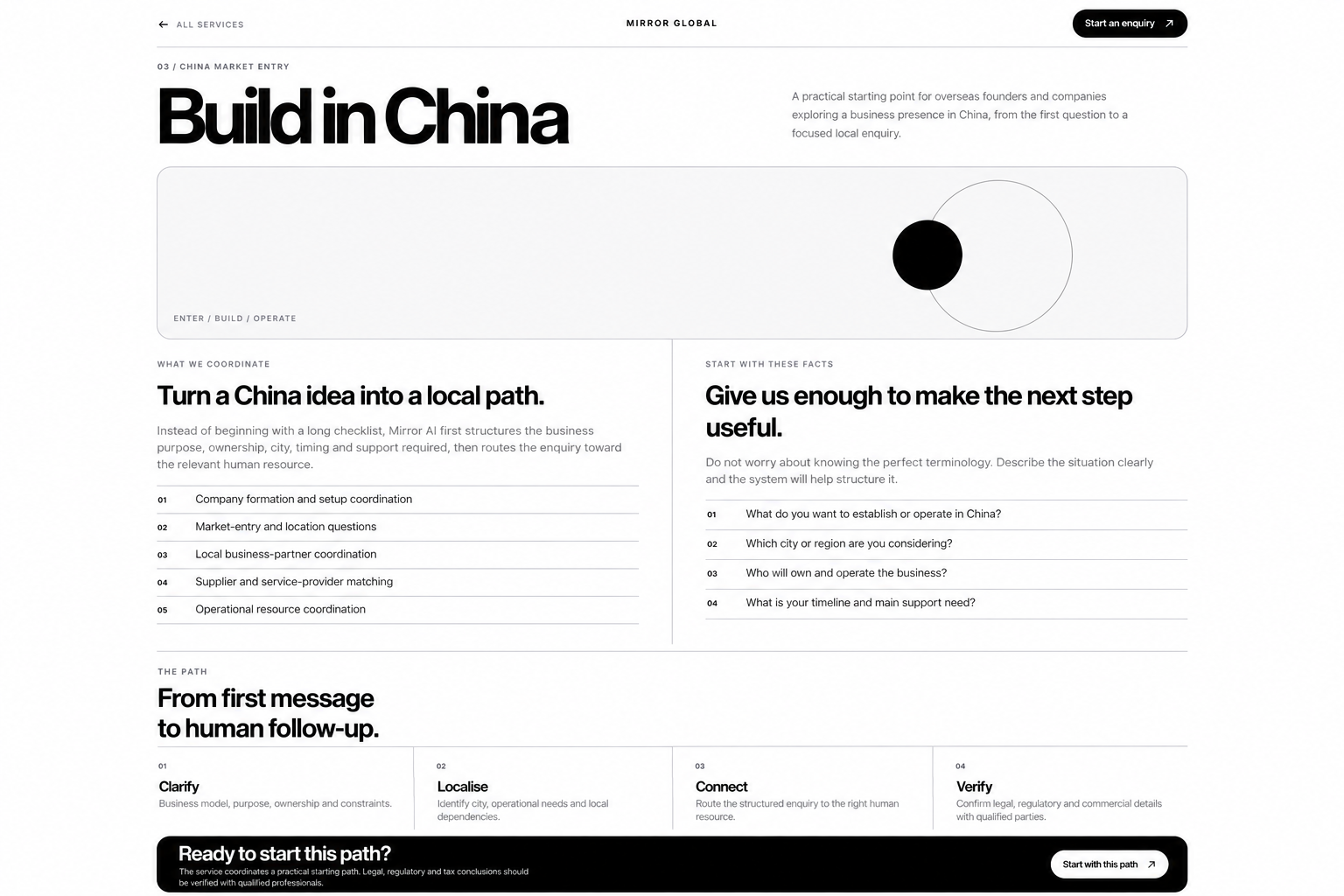
- Build in China
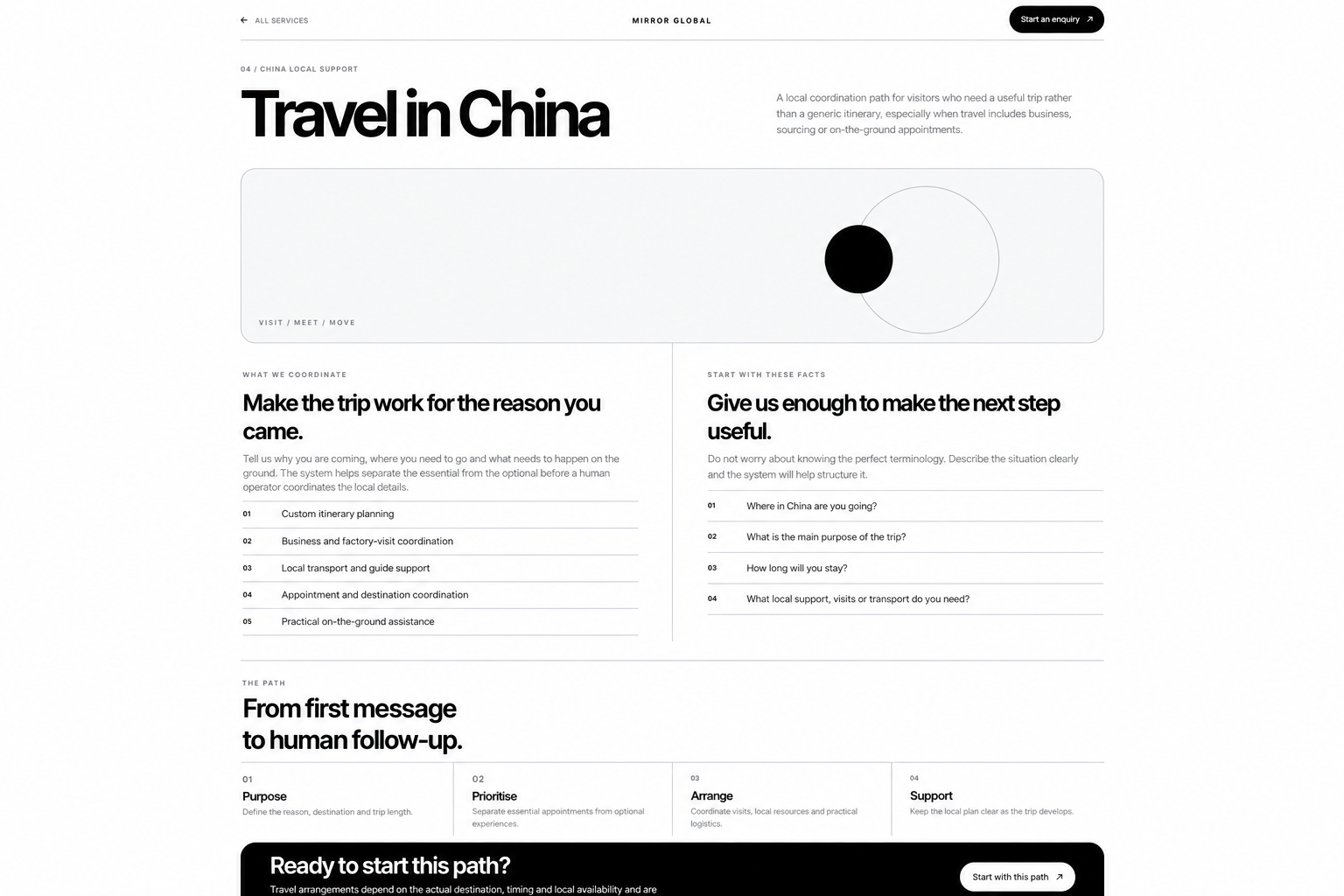
- Travel in China
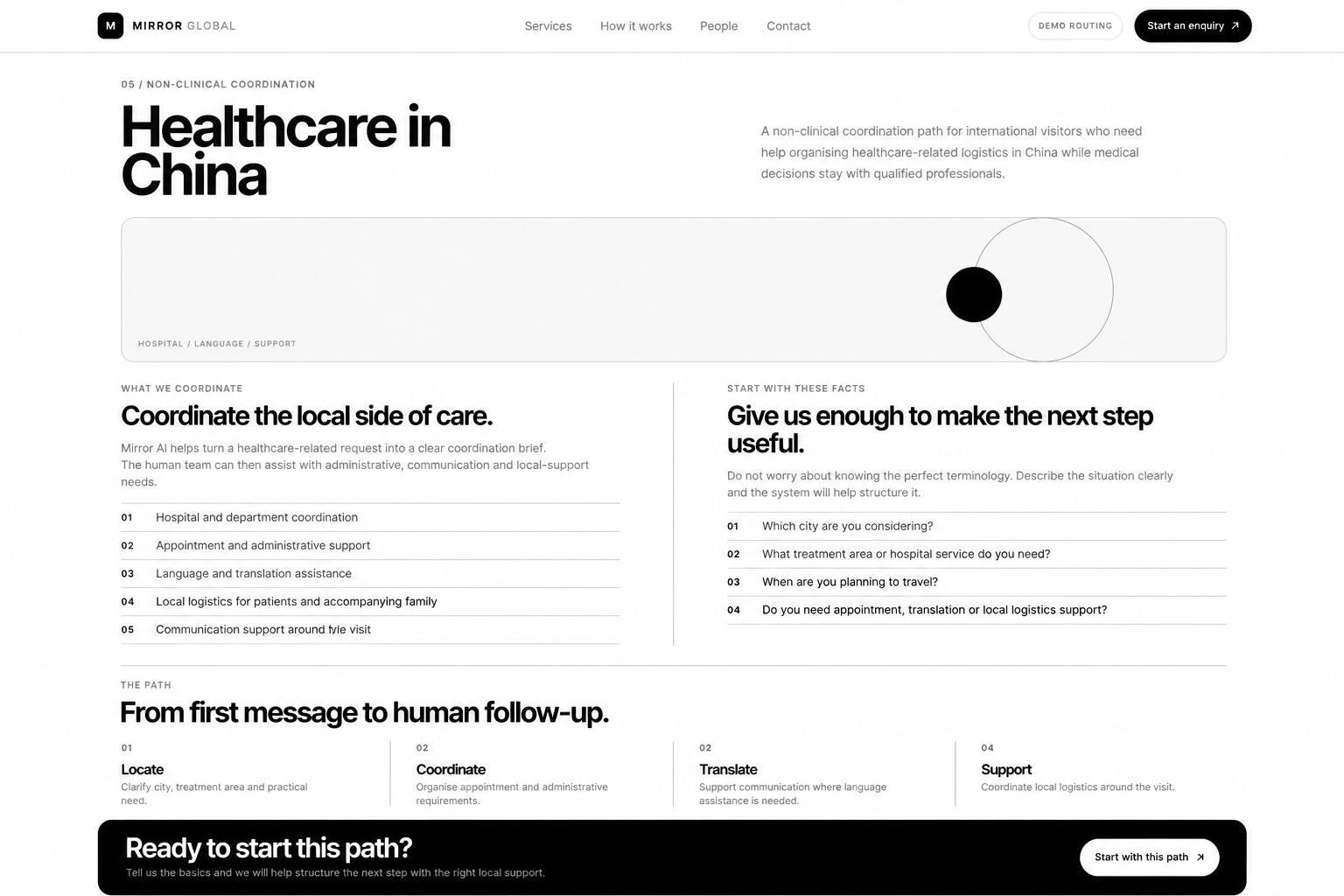
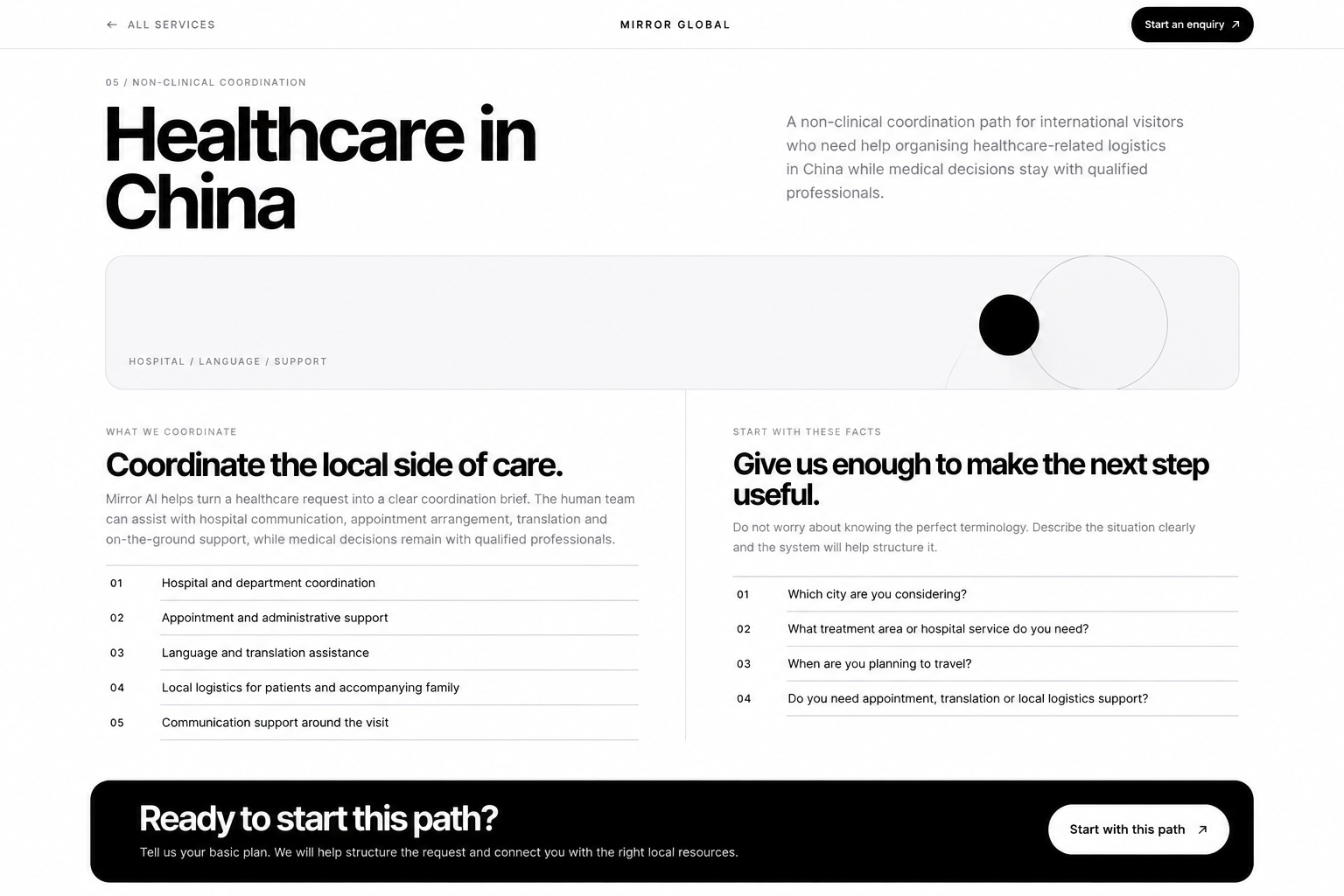
- Healthcare in China
- Study in China
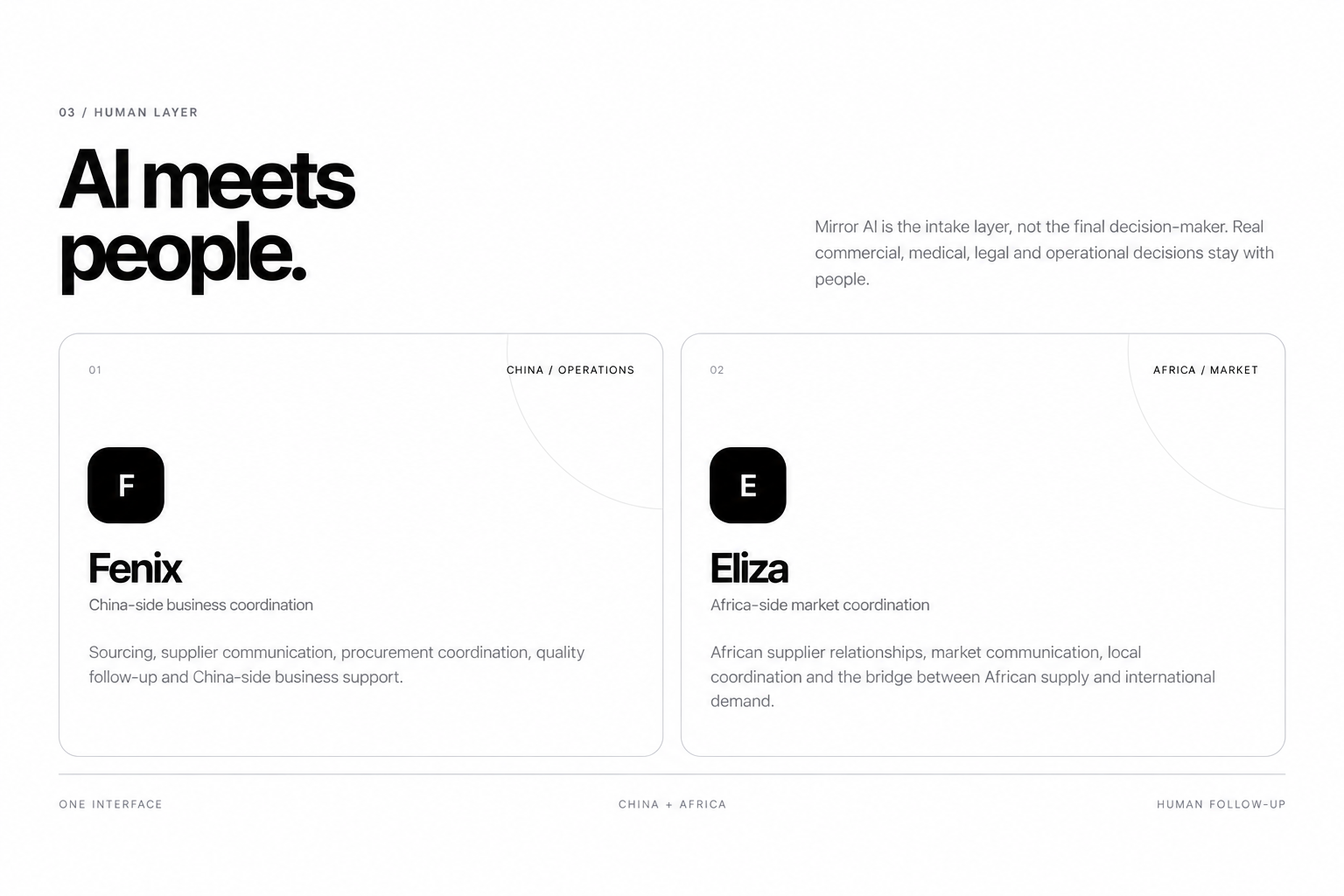
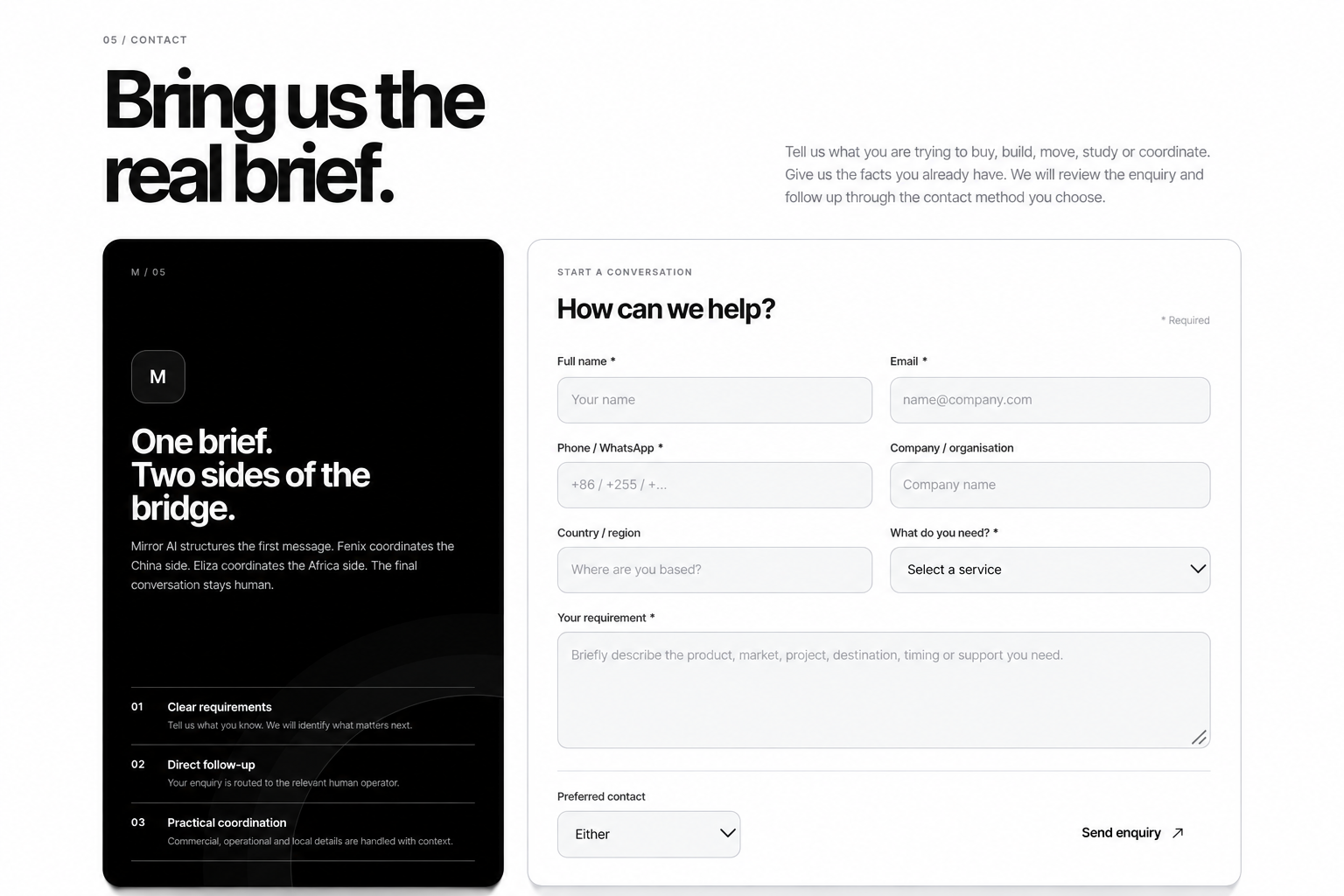
Users can explore a service, describe what they need, and submit their contact information and requirements. Mirror AI then helps structure the request before it is handed to a human operator for real-world follow-up.
The principle is simple:
AI understands the request. Humans make the connection and execute.
How Apertus Fits In
Mirror AI is designed to use (Apertus 1.5) as its language intelligence layer.
Apertus can help interpret natural-language enquiries, identify important requirements and prepare them for the appropriate workflow.
The application keeps the AI layer separate from the business logic, allowing the system to connect to an authorized Apertus inference endpoint while maintaining the rest of the workflow independently.
How We Built It
The prototype is a lightweight web application built with a containerized backend and a responsive frontend.
We focused on three things:
- Simple and professional user experience
- Structured enquiry workflows
- Clear separation between AI assistance and human execution
Docker provides a consistent environment, while the application architecture allows the LLM configuration to be changed without rebuilding the entire product.
Challenges & Lessons
The biggest challenge was deciding how AI should be used responsibly in real business scenarios.
International trade involves prices, suppliers, certifications, logistics and other information that should not be invented by an AI system.
We therefore designed Mirror AI as a (human-in-the-loop system) rather than an autonomous decision maker.
We also faced infrastructure and network challenges while connecting the prototype to external AI services. This taught us that a practical AI product needs not only a capable model, but also reliable infrastructure, clear workflows and appropriate fallback behaviour.
What's Next
We plan to expand Mirror AI into a broader China–Africa and global business platform, with capabilities such as multilingual enquiry processing, supplier matching, document analysis, quote comparison and CRM integration.
Our goal is straightforward:
Turn global demand into the right local action.

Log in or sign up for Devpost to join the conversation.