-
-
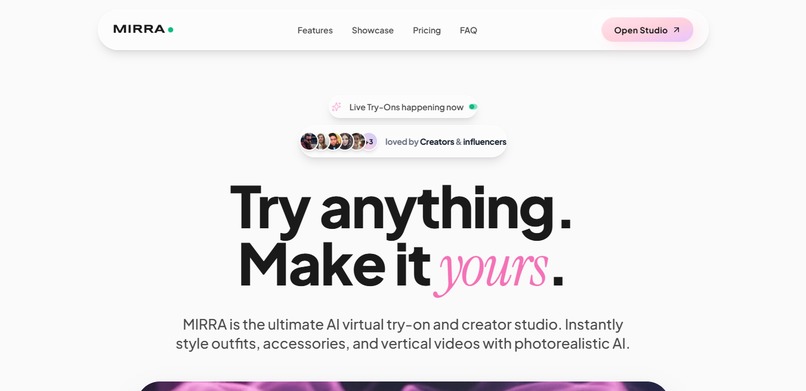
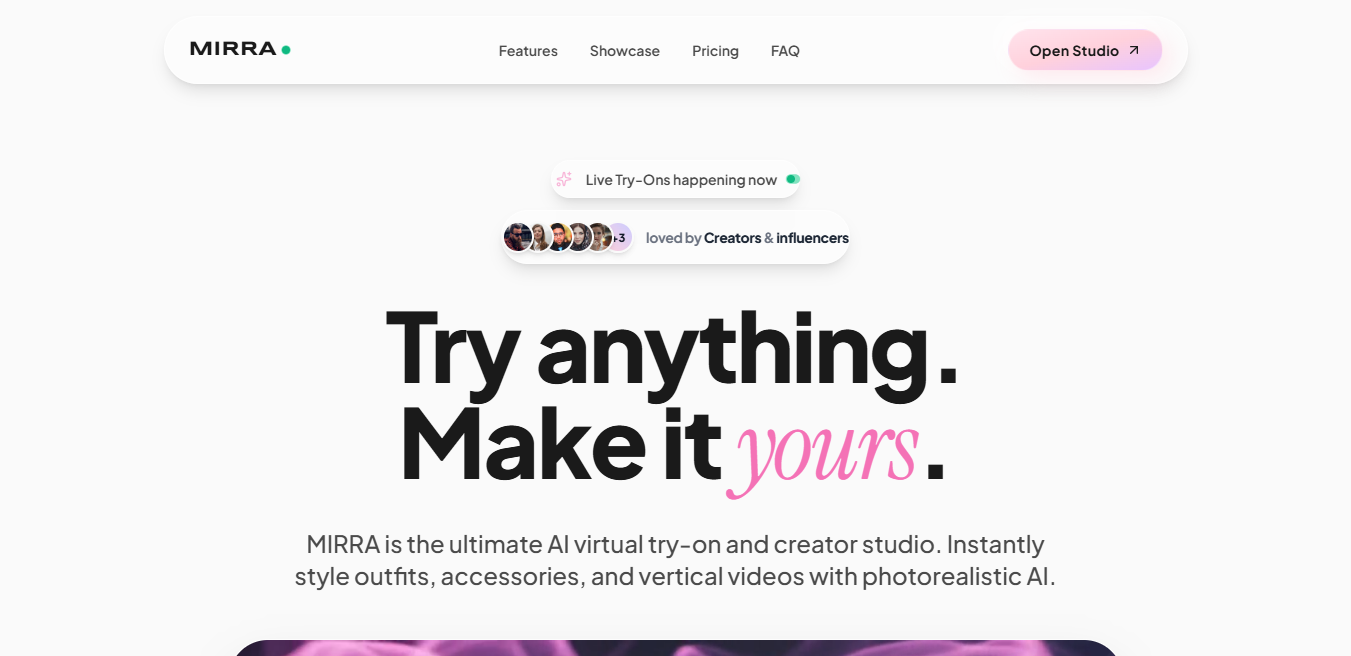
Landing Page Hero Section
-
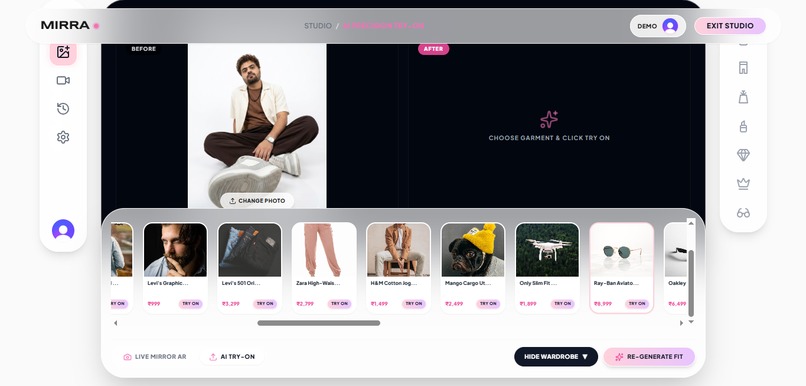
Studio
-
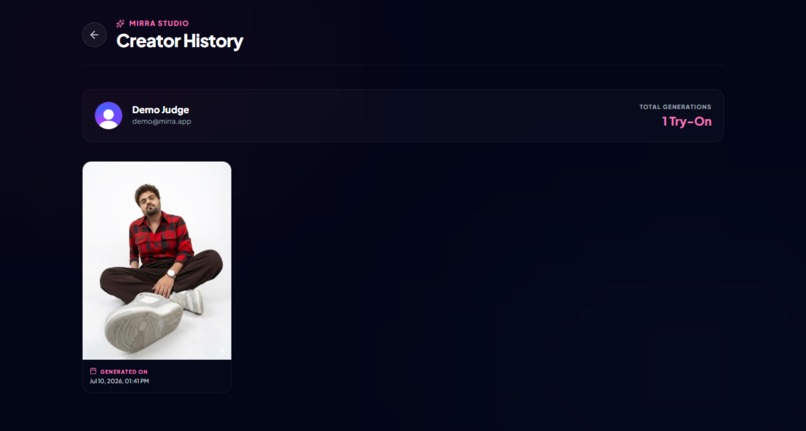
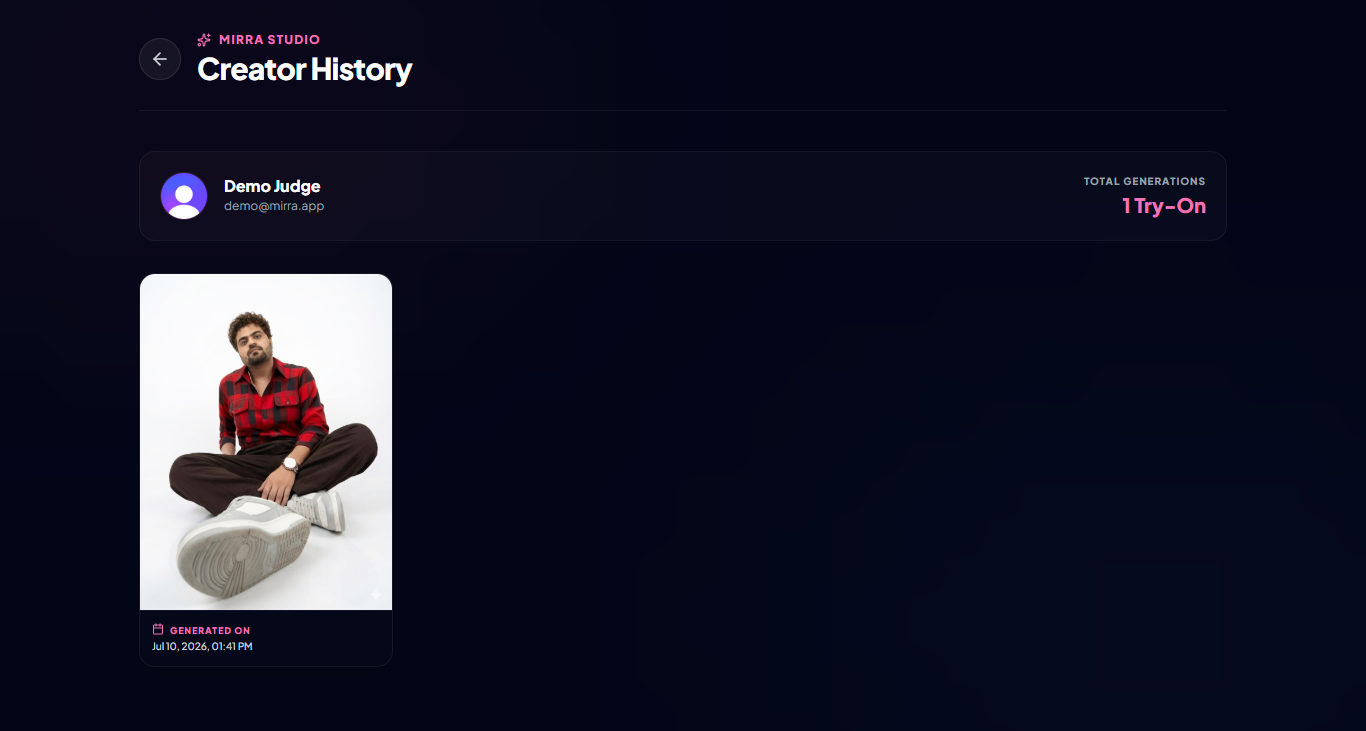
Creators history - Shown using Aurora DSQL
-
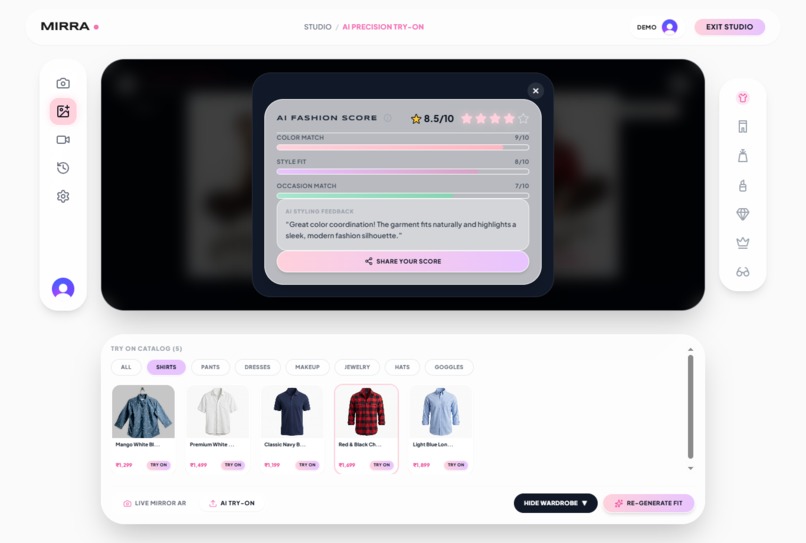
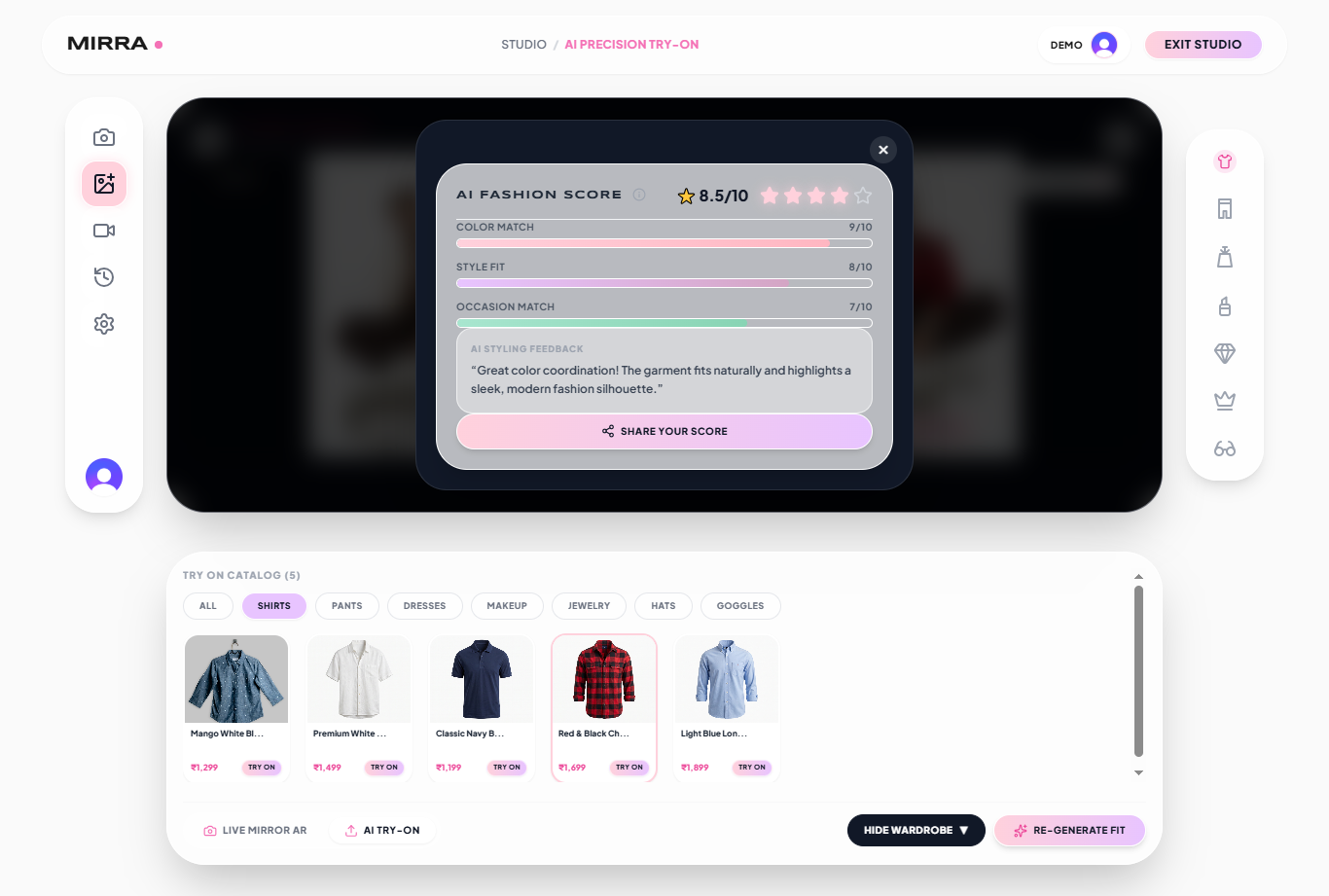
AI Review on your Fashion
-
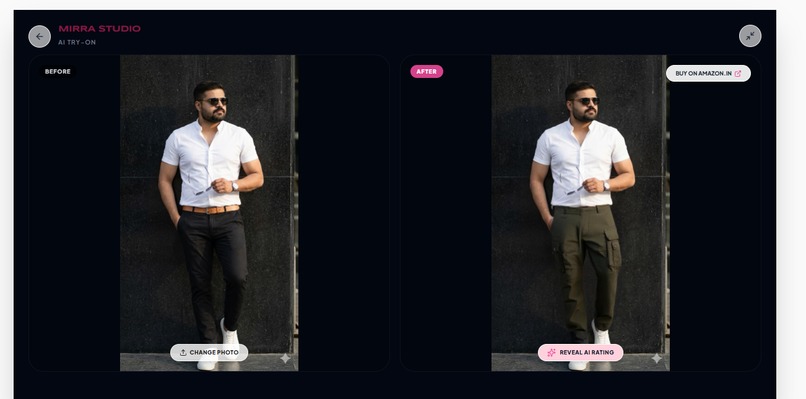
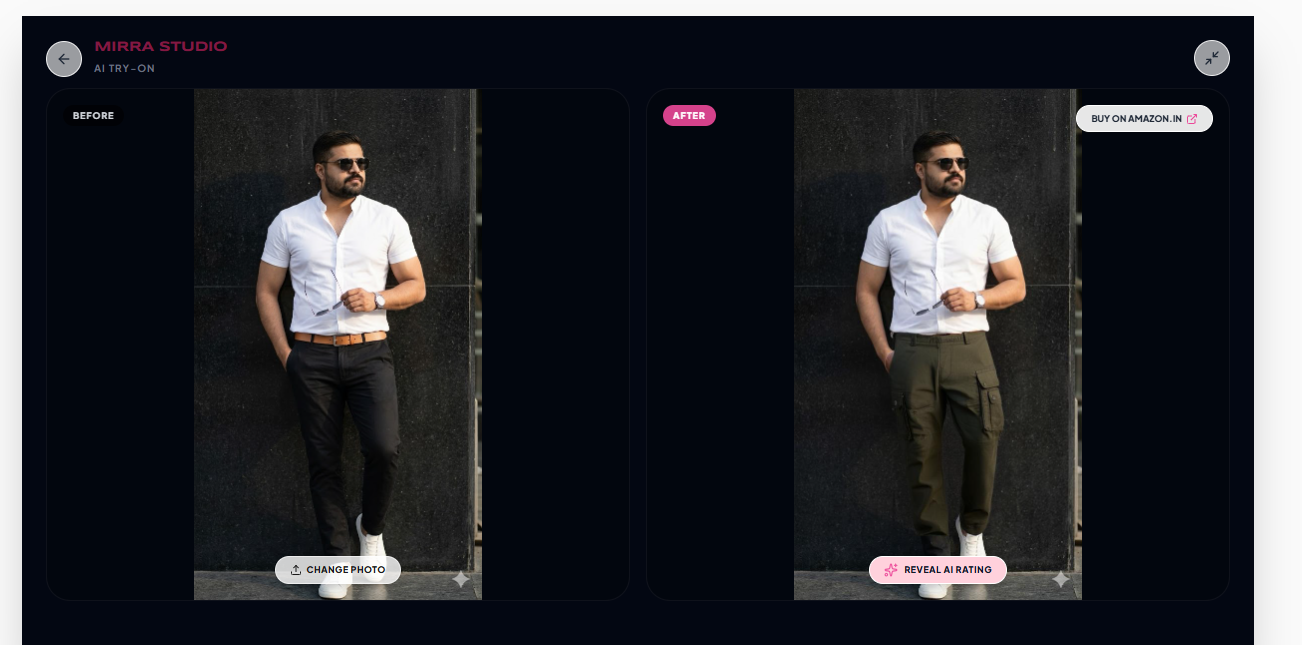
New Try on Full Screen Preview
-
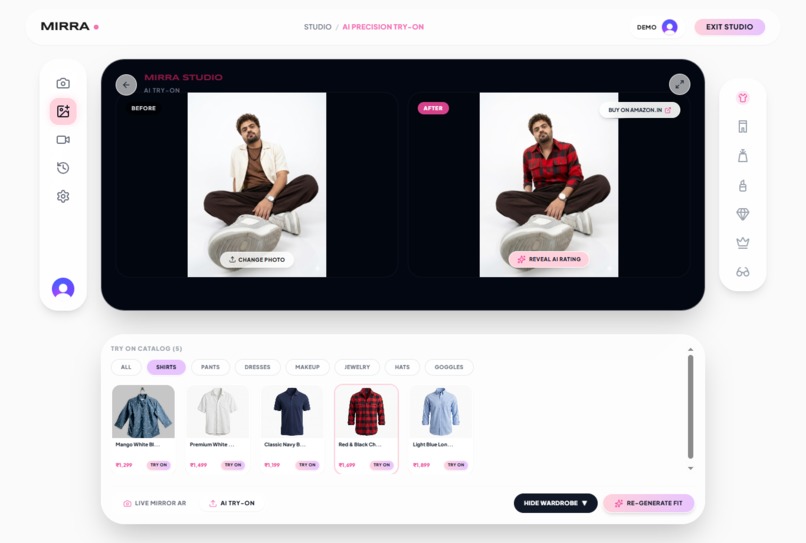
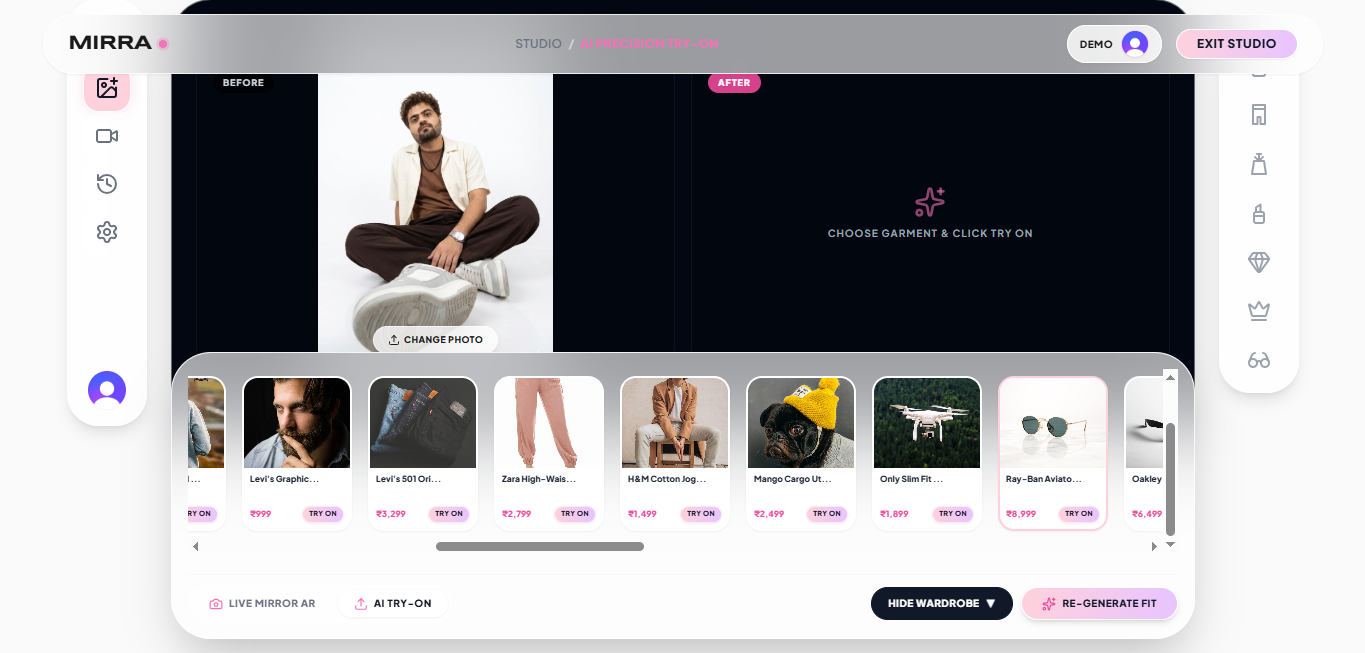
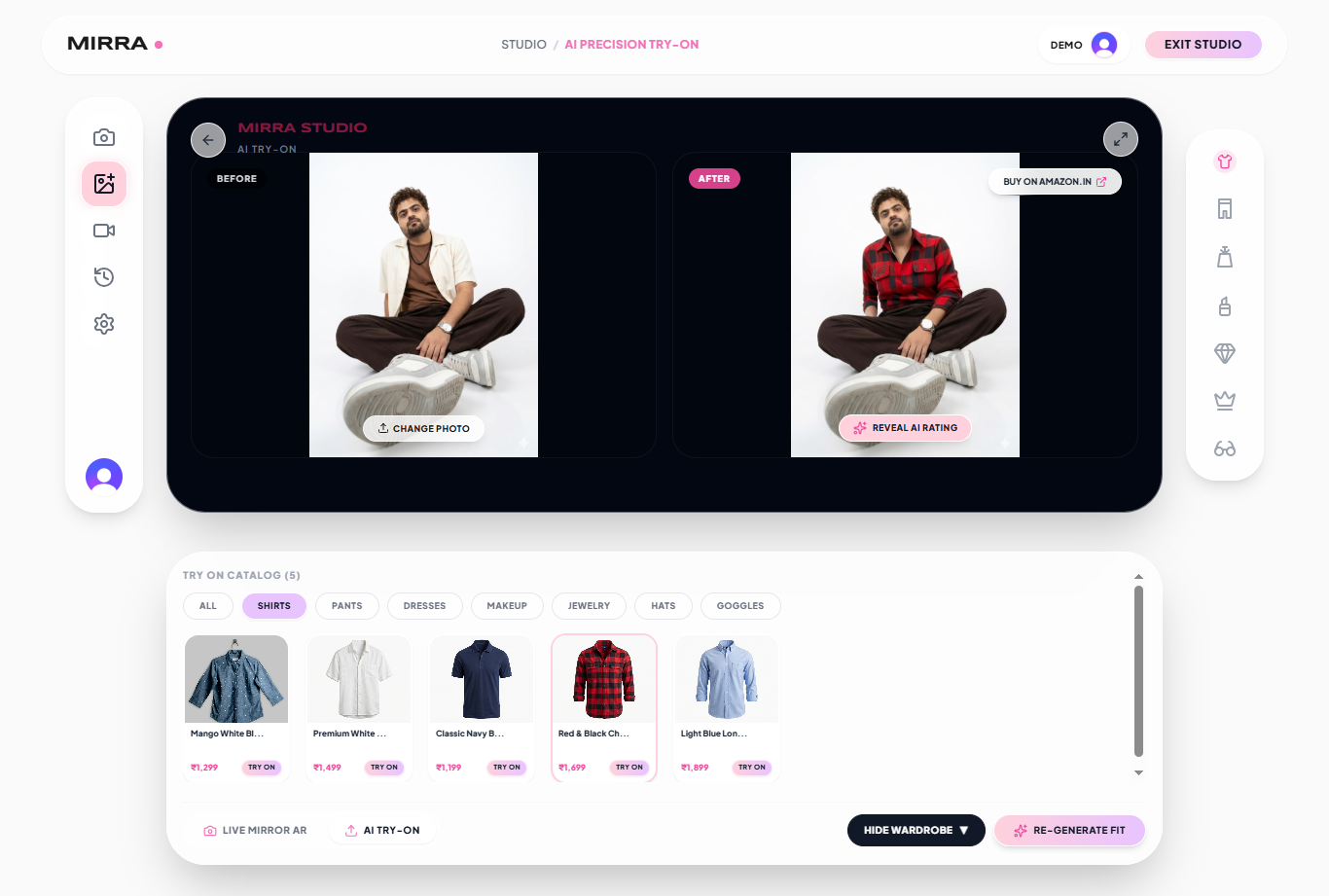
AI Try on Section with live preview
-
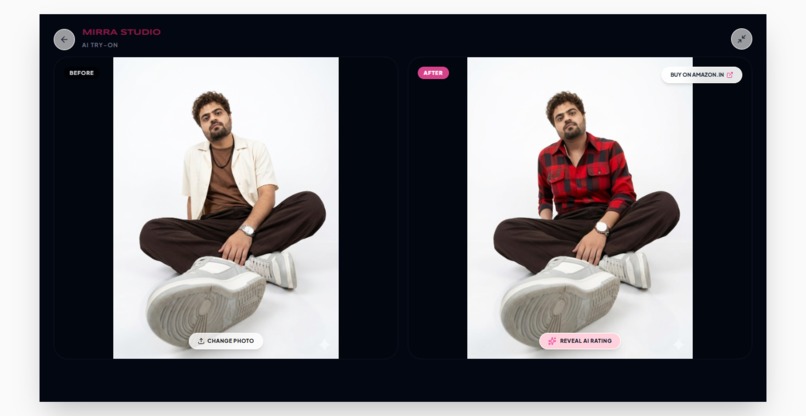
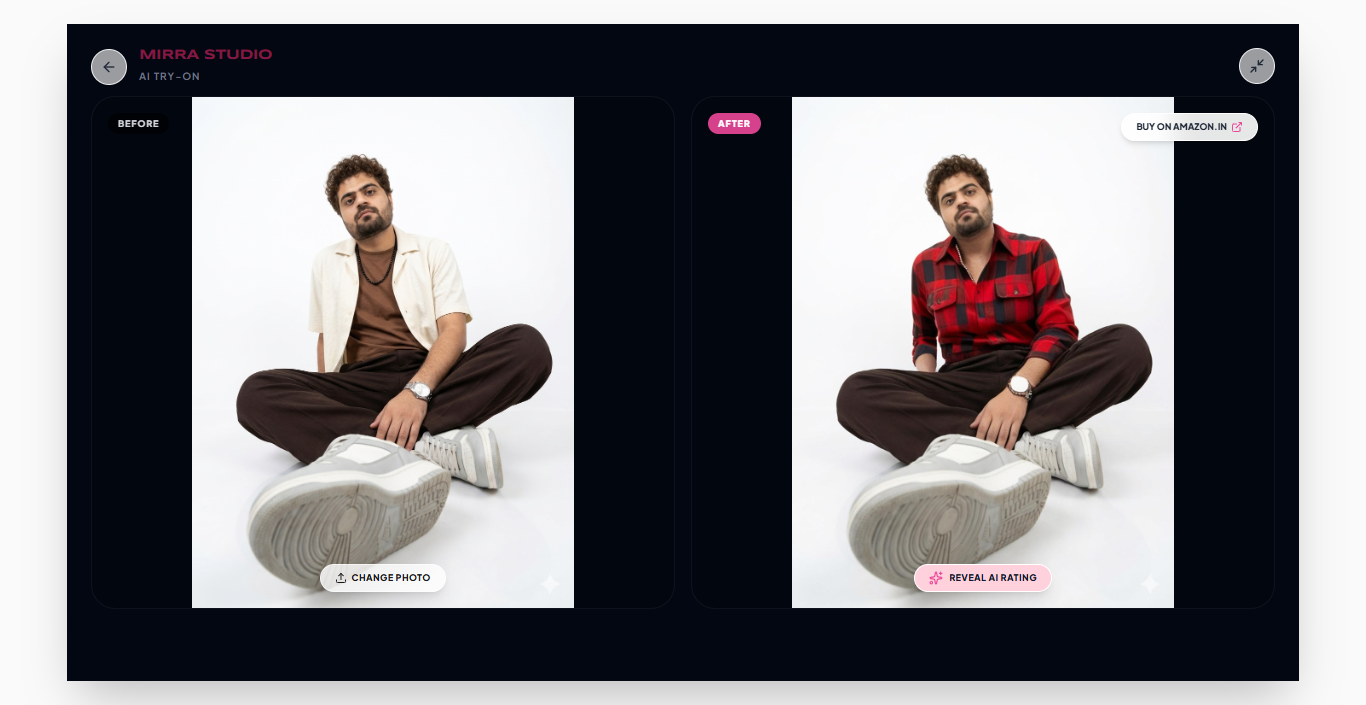
AI Try on Section with live preview Full Screen
Inspiration
The online fashion industry faces a massive trust gap: users can't visualize how clothes or accessories will actually look on them before buying. Existing solutions are either expensive enterprise APIs or low-quality filters that don't preserve body pose. We wanted to build a platform that combines instant, free real-time AR for accessories with high-fidelity, pose-preserving AI for clothing—making professional-grade virtual try-on accessible to everyone while creating a sustainable affiliate revenue model.
What it does
MIRRA is a hybrid AI fashion studio with two core experiences:
- Live Mirror AR: A zero-cost, client-side real-time webcam experience using MediaPipe Face Mesh. Users can instantly try on sunglasses, jewelry, and makeup with pixel-perfect tracking that runs entirely in the browser at 60 FPS.
- AI Precision Try-On: For full garments, users upload a photo and our backend uses cuuupid Vton via Replicate to generate photorealistic try-ons that strictly preserve the user's original pose, lighting, and background.
- Smart Commerce: Every generated look includes seamless Amazon, allowing users to shop directly while trying on their Favourite clothes and accessories.
- AWS-Powered History: All user sessions and try-on results are securely persisted in Amazon Aurora DSQL, providing a personalized "Creator History" dashboard.
How we built it
We architected MIRRA as a secure, serverless hybrid stack optimized for the AWS + Vercel ecosystem:
- Frontend: Next.js hosted on Vercel with Clerk Authentication for secure user management and route protection.
- Real-Time AR: Custom MediaPipe Face Mesh implementation with Canvas API rendering. We engineered a "Multiply" blend mode for realistic makeup and parallax scaling for jewelry to create a premium 3D feel without heavy WebGL libraries.
- AI Backend: Python FastAPI deployed on AWS Lambda. We integrated Replicate’s
cuuupid/idm-vtonmodel with strict negative prompting (DO NOT alter pose/background) to achieve superior garment alignment compared to standard VTON models. - Database: Amazon Aurora DSQL for serverless PostgreSQL storage. We bypassed traditional ORMs like Prisma due to IAM authentication requirements, instead building a custom
boto3token generator and raw SQL client for secure, credential-free database access. - Commerce: Amazon Product Advertising API integration with hardcoded fallback seed data to ensure demo reliability during PA-API approval pending periods.
Challenges we ran into
- Aurora DSQL & ORM Incompatibility: Aurora DSQL’s IAM-only authentication broke standard Prisma workflows. We had to architect a custom Python connection client that generates temporary auth tokens via
boto3for every query, ensuring security without sacrificing performance. - Real-Time AR Realism: Initial 2D PNG overlays looked cartoonish and flat. We solved this by implementing canvas-level blend modes (
multiply/overlay) for makeup and calculating MediaPipe Z-depth coordinates to create dynamic parallax scaling for accessories, tricking the eye into perceiving 3D depth. - VTON Pose Drift: Most open-source try-on models altered the user's body position. We engineered a strict prompt-constrained instruction-following capabilities to enforce pixel-perfect pose preservation, with CatVTON as a commercial-safe fallback.
- Camera Lifecycle Management: Preventing battery drain and privacy concerns required precise React
useEffectcleanup logic to completely kill the webcam stream when users navigated away from the Live Mirror tab.
Accomplishments that we're proud of
- Building a zero-latency, client-side AR engine that runs smoothly on any device without API costs.
- Successfully integrating Amazon Aurora DSQL in a hackathon timeline, proving its viability for modern serverless architectures.
- Achieving superior pose preservation in AI try-ons through advanced prompt engineering rather than expensive fine-tuning.
- Delivering a flawless end-to-end demo flow despite complex hybrid infrastructure dependencies.
What I learned
- Serverless SQL is viable but requires custom tooling: Aurora DSQL offers incredible scalability, but developers must be comfortable with raw SQL and IAM patterns when ORMs fall short.
- Prompt engineering > Model training: For niche tasks like pose-preserving VTON, carefully crafted negative constraints in foundation models often outperform specialized but rigid open-source alternatives.
- Client-side compute is underrated: Offloading AR processing to the browser not only eliminates API costs but also provides better privacy and latency than cloud-streamed alternatives.
- Hackathon scoping is an art: Knowing when to pivot from "perfect real-time video VTON" to "snap-and-apply precision mode" was critical to delivering a polished demo under time pressure.
What's next for MIRRA
- Stripe Integration: Activating the PRO subscription tier for power users who want unlimited AI generations and priority processing.
- Amazon PA-API Live Sync: Replacing seed data with real-time product inventory and pricing once API approval is granted.
- Video Try-On: Expanding from static images to short-form video generation using temporal consistency models.
- Social Sharing: Enabling users to export their try-on looks as shareable cards with embedded affiliate links.
- Mobile Native App: Porting the MediaPipe AR engine to React Native for offline-capable mobile experiences.
Built With
- amazon-aurora-dsql
- amazon-product-advertising-api-(pa-api)
- aws-app-runner
- aws-iam
- boto3
- catvton
- clerk-authentication
- fastapi
- framer-motion
- google-nano-banana-(gemini-2.5)
- lucide
- mediapipe-face-mesh
- next.js
- psycopg2
- python
- react
- replicate
- tailwind-css
- typescript
- uvicorn
- vercel

Log in or sign up for Devpost to join the conversation.