-
-

App logo
-
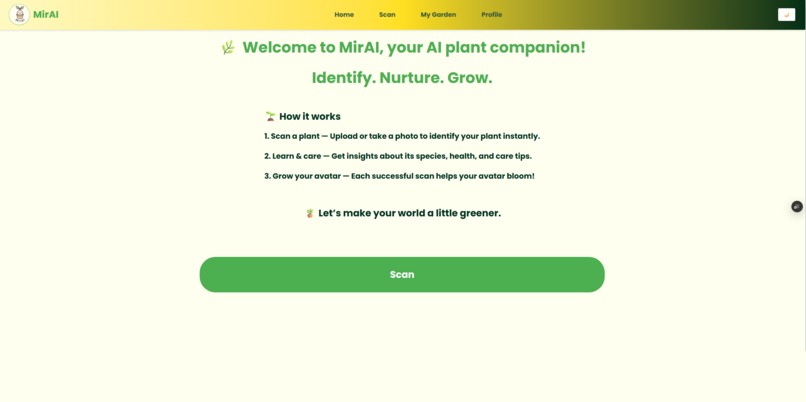
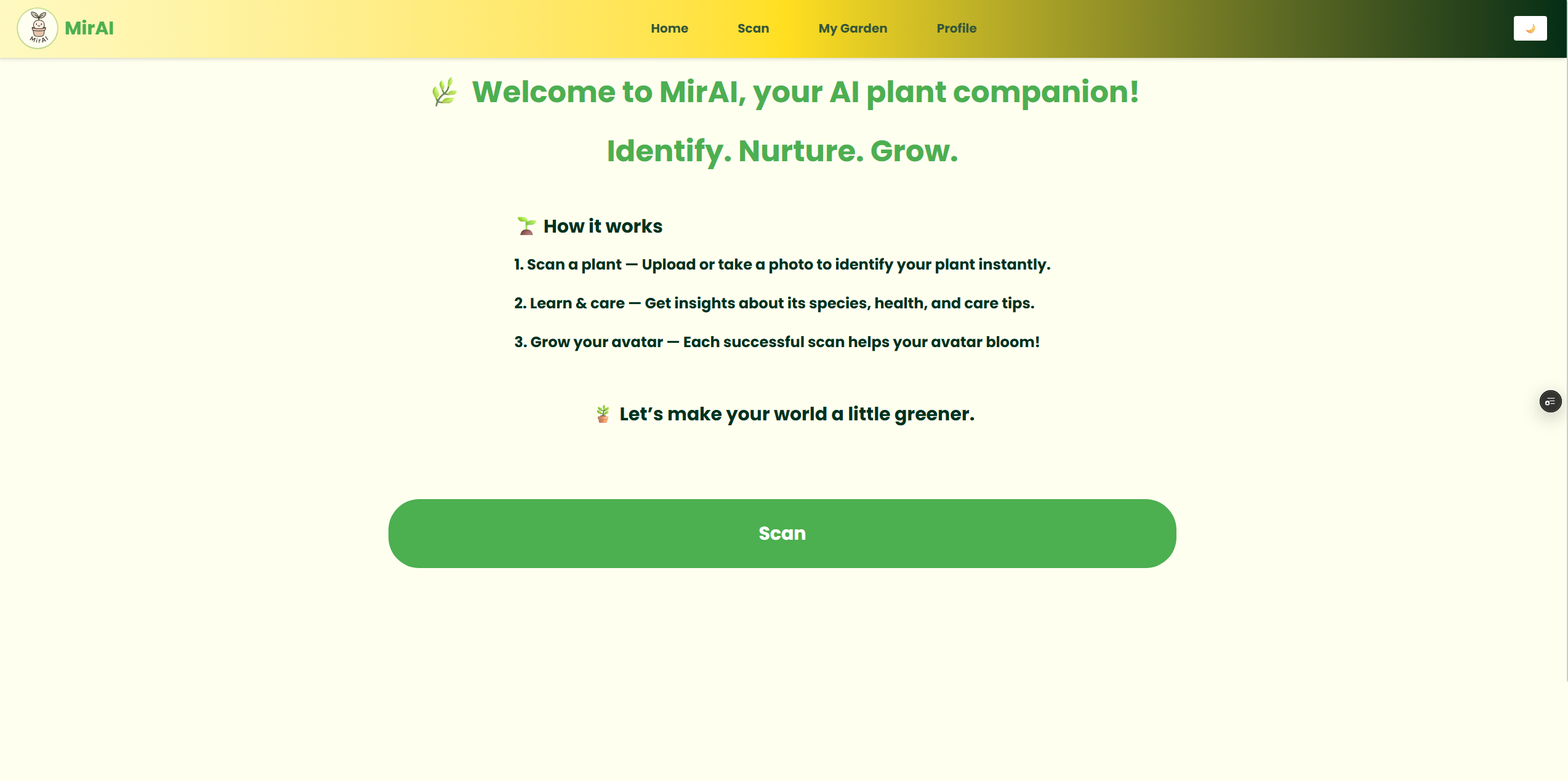
Home Page
-
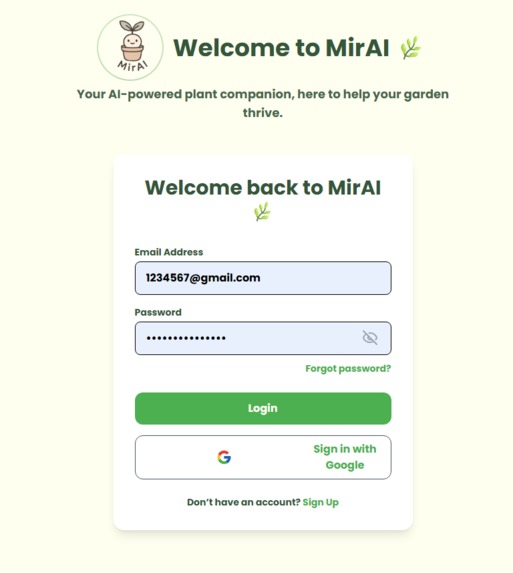
Login page
-
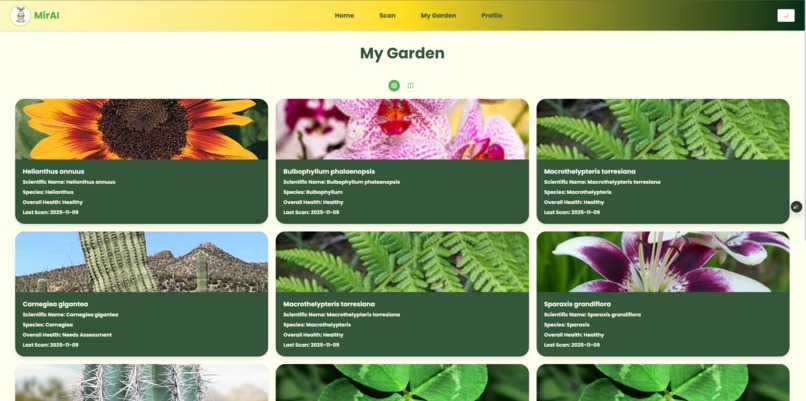
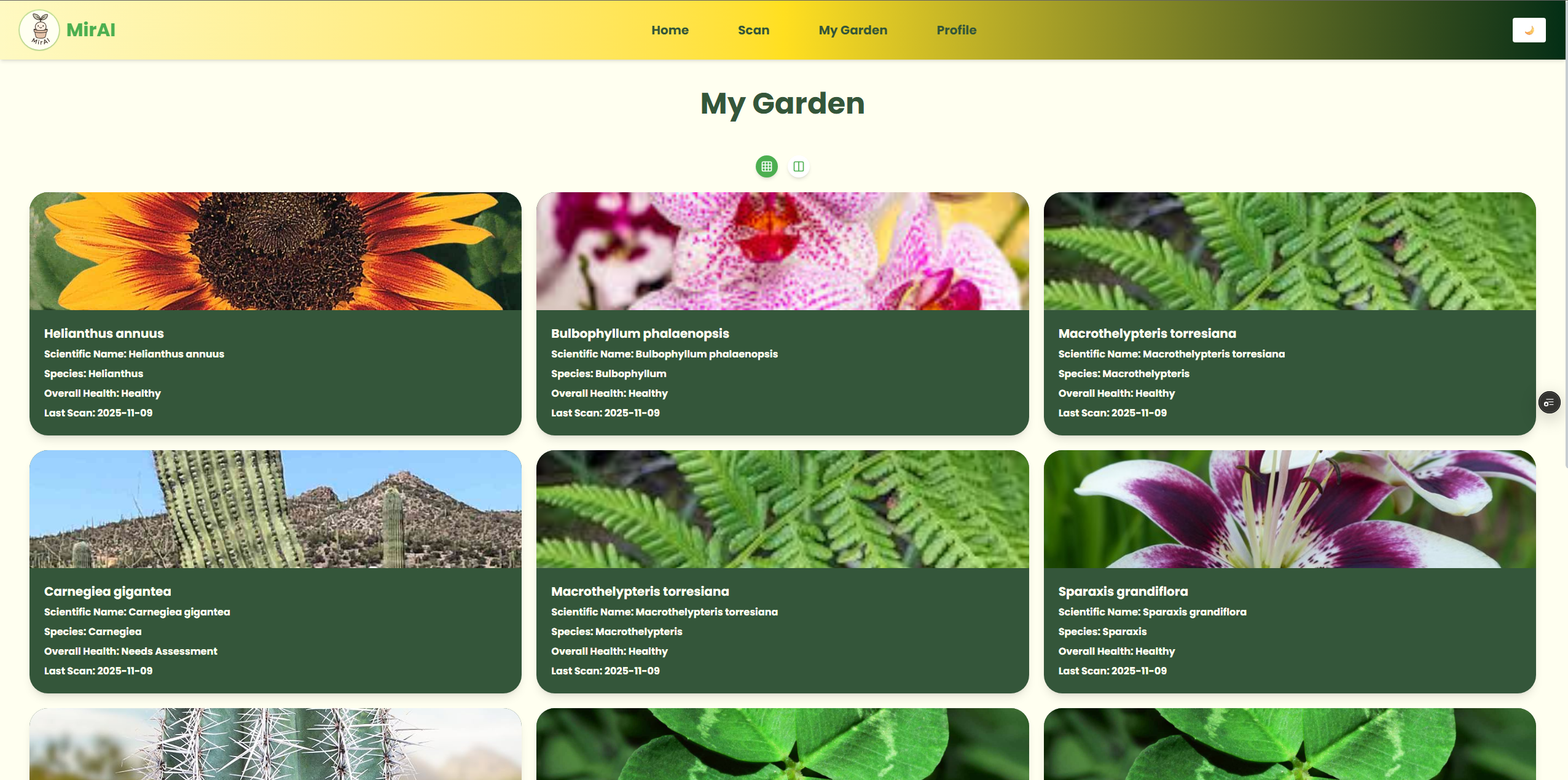
Garden Page
-
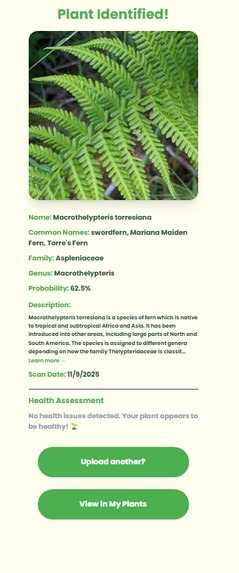
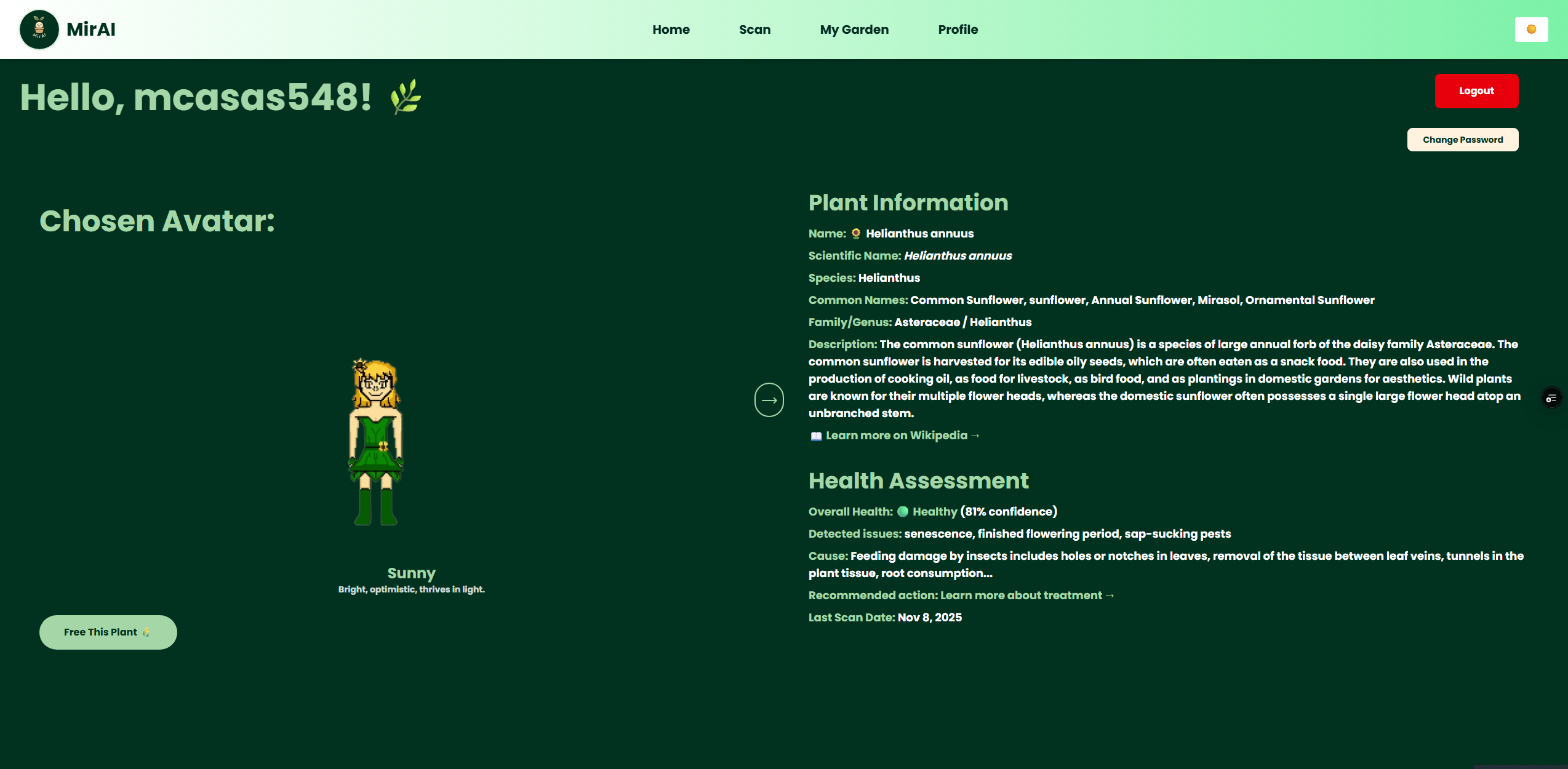
Detailed view
-
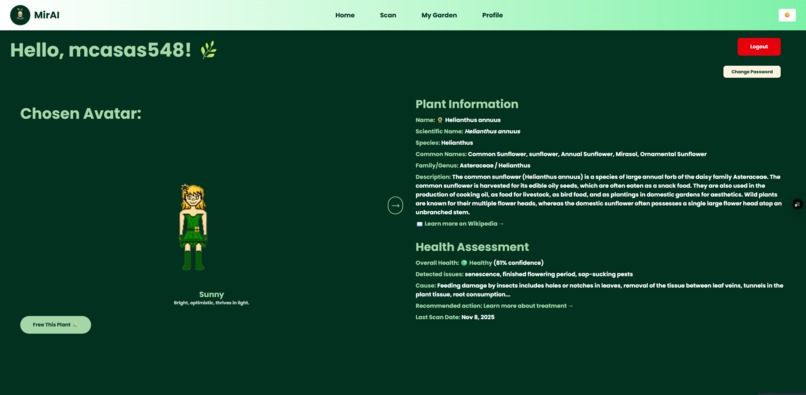
Profile Page (Dark Mode)
-
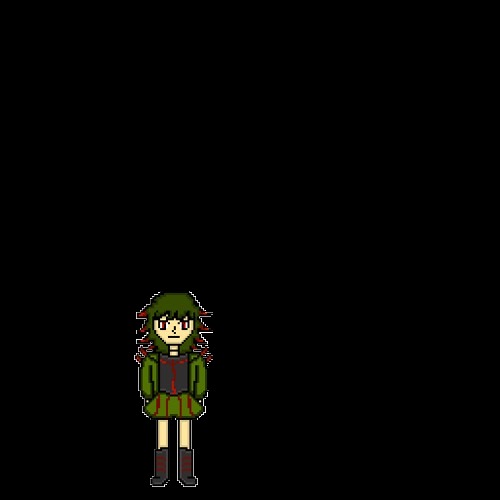
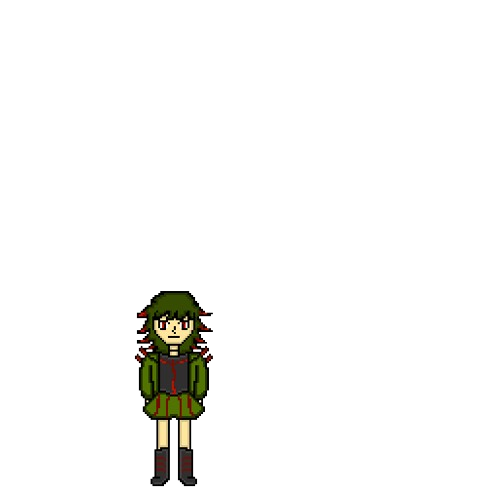
Sage - Cactus Avatar
-

Willow - Fern Avatar (Default)
-

Opal - Orchid Avatar
-

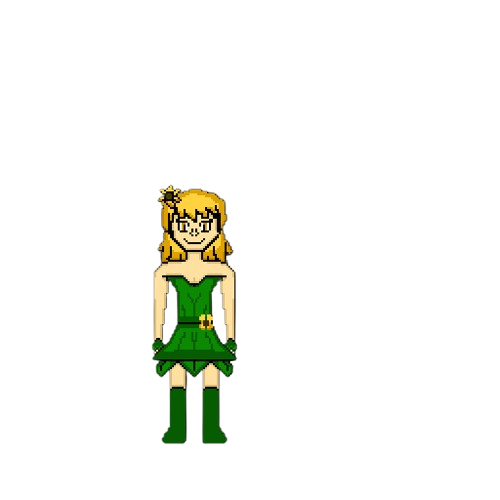
Sunny - Sunflower Avatar





🌿 MirAI
Inspiration
As plant lovers and tech enthusiasts, we wanted to make plant care simpler, smarter, and more personal.
Many people struggle to keep their plants healthy because they can’t easily identify what’s wrong or what type of care is needed.
MirAI was born from the idea of creating a friendly AI companion that helps you understand your plants better — blending machine learning, gamification, and thoughtful design to turn everyday care into an engaging experience.
What It Does
MirAI is an AI-powered plant companion that allows users to:
- 🌱 Identify plants in real time using the Plant.id API
- 🌤️ Assess plant health and receive personalized care recommendations
- 🪴 Track and manage plants in a personal garden dashboard
- 🌸 Grow an evolving plant avatar that levels up as users care for their real plants
- 🔒 Securely log in and store data through Supabase authentication and database integration
The result is a friendly, intelligent app that helps users form better habits and deeper connections with their plants.
How We Built It
We developed MirAI using a modern, full-stack architecture focused on reliability, usability, and visual appeal.
Frontend
- React + TypeScript + TailwindCSS for a responsive, theme-aware UI
- Framer Motion for smooth animations and transitions
Backend & Database
- Supabase for authentication, schema design, and data persistence
AI Integration
- Plant.id API for image-based species recognition and health analysis
Deployment
- Vite build for frontend optimization and cross-platform readiness
Our workflow emphasized component reusability, clean state management, and user-centered design — allowing us to iterate quickly and deliver a polished MVP within three days.
Challenges We Ran Into
- ⚙️ Auth & Reset Flows: Integrating Supabase authentication with TypeScript required precise type definitions and secure redirect handling.
- 🌿 API Integration: Parsing and presenting Plant.id’s detailed JSON output in a friendly way took several iterations.
- ⏰ Time Constraints: Balancing AI integration, UI polish, and database setup within a 3-day hackathon was a true sprint.
- 💬 Team Coordination: Merging live frontend and backend changes while maintaining code consistency across multiple contributors.
Accomplishments That We're Proud Of
- 🎯 Delivered a fully functional end-to-end MVP in under 72 hours
- 🌸 Built a friendly visual identity — from logo to avatar system — that embodies MirAI’s personality
- 🌱 Integrated real AI functionality that accurately identifies and assesses plant health
- 🧠 Designed a secure, scalable Supabase backend ready for future features
- 💚 Created a delightful user experience that bridges technology and nature
What We Learned
- The importance of type safety in handling complex asynchronous API responses in TypeScript
- How to structure Supabase authentication flows for login, signup, and password recovery
- That AI is most impactful when it’s humanized — simplicity and empathy make it approachable
- The power of collaboration and clear design thinking when working under tight deadlines
What's Next for MirAI
We’re excited to grow MirAI beyond its MVP! Our roadmap includes:
- 🌎 Geolocation-based plant care recommendations tailored to each user’s environment
- 📈 Expanded health analytics powered by more advanced AI models
- 🎮 Gamified progression — unlock avatar evolutions and care streak achievements
- 🌼 Community features, where users can share their gardens and tips
- 📱 Mobile app release with notifications and offline scan support
Our mission is simple — to make plant care accessible, educational, and joyful for everyone.
This is just the beginning. 🌱
Built with 💚 by Mario Casas (Project Lead), Marcos Arrazola (Frontend Developer), and Cristian Mantilla (Backend Developer).
Built With
- node.js
- react
- supabase
- tailwind
- typescript
- vite


Log in or sign up for Devpost to join the conversation.