-
-
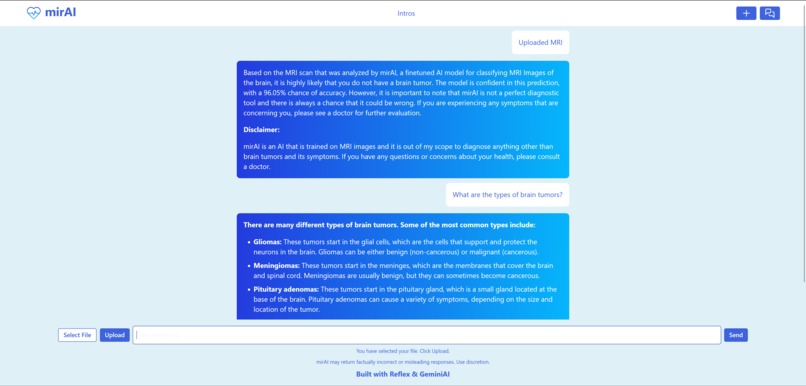
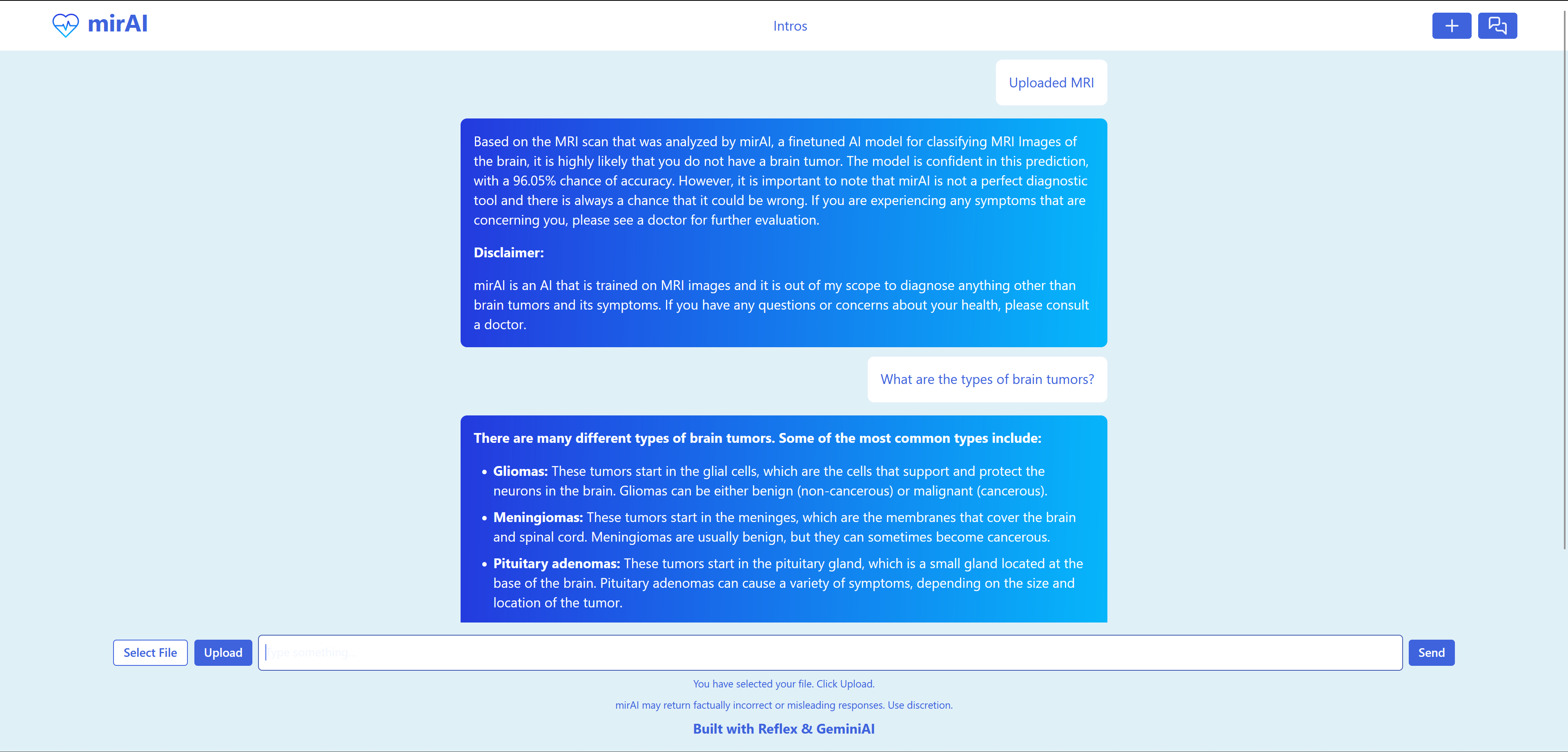
MIRAI convo 1
-
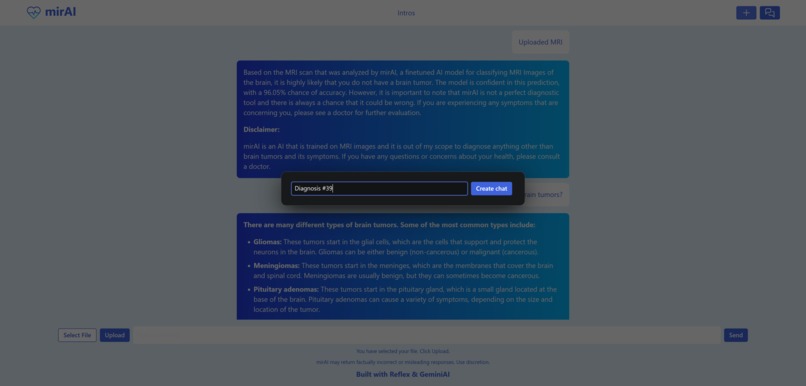
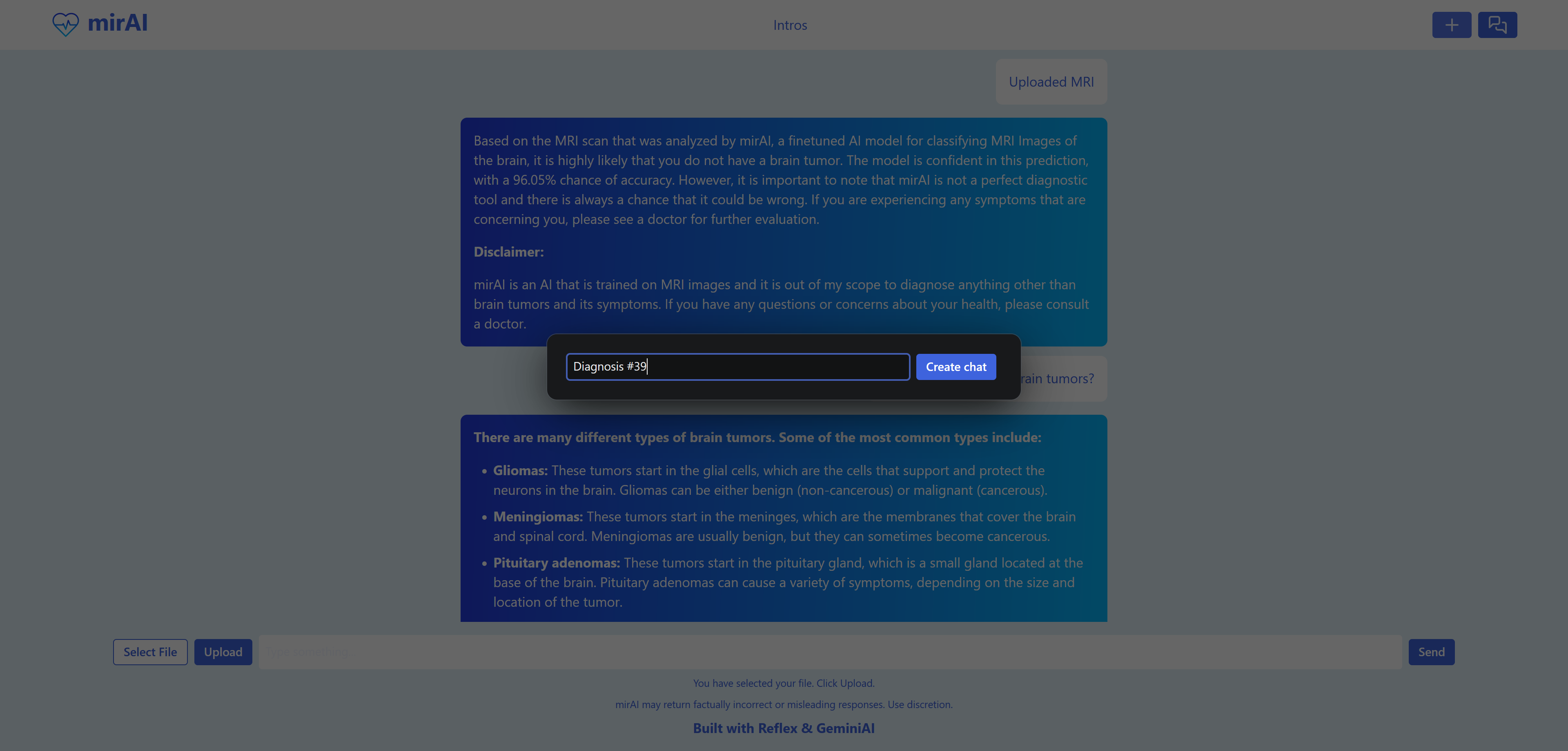
MIRAI convo 2
-
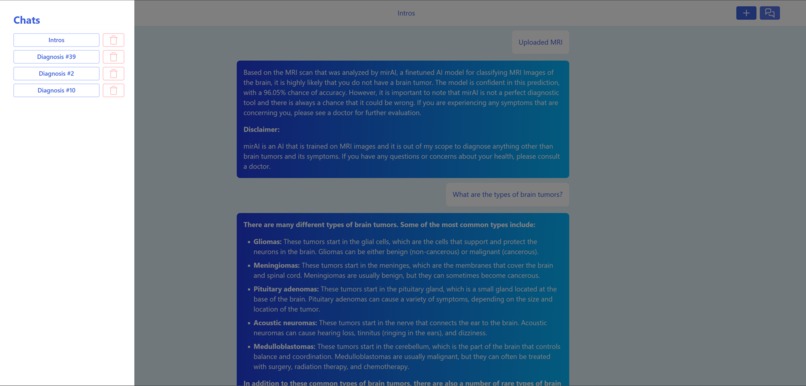
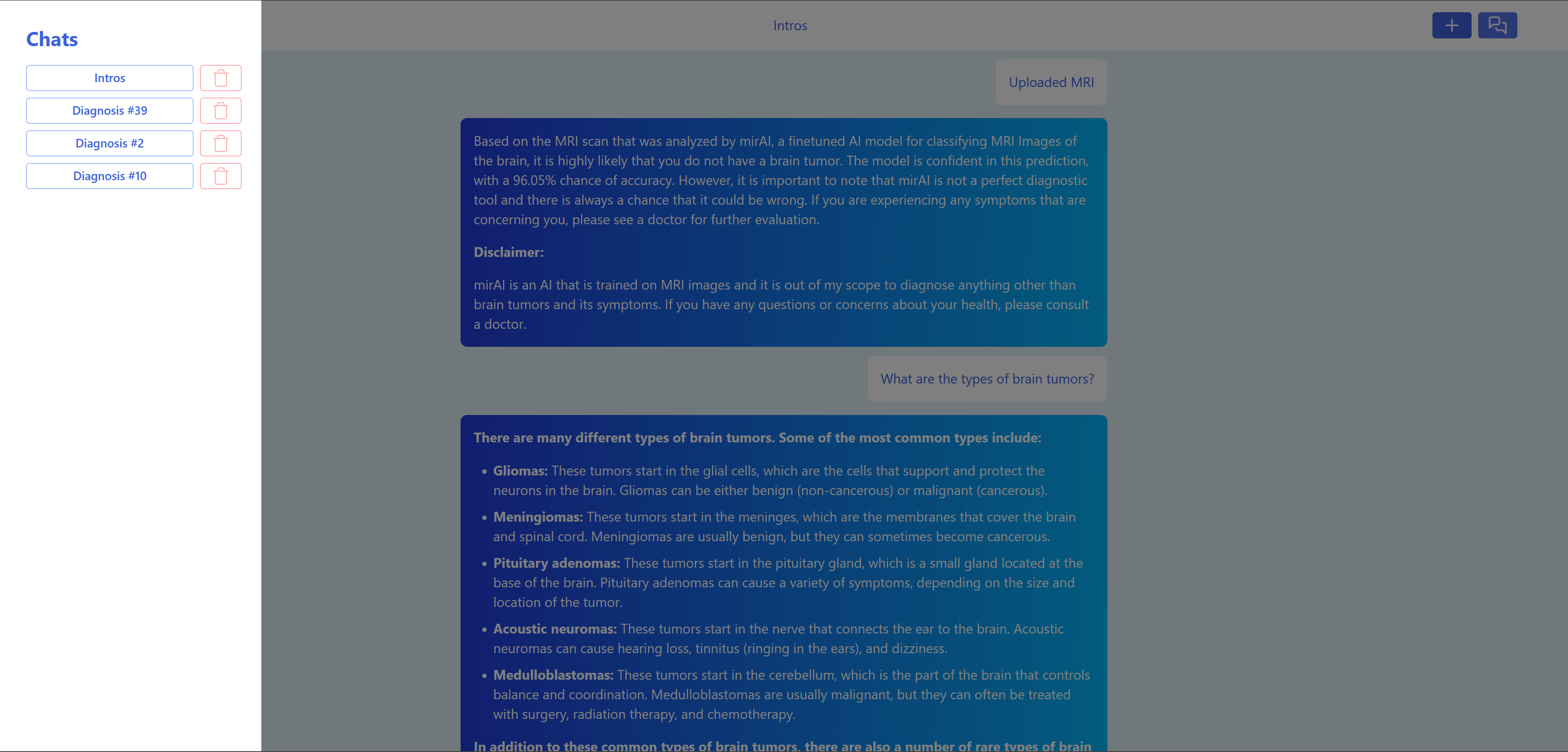
MIRAI convo 3
-
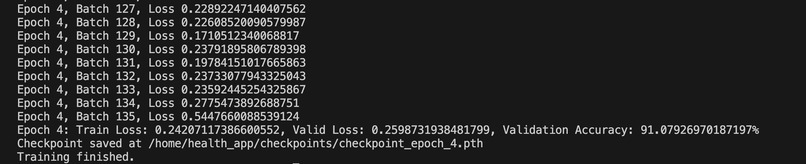
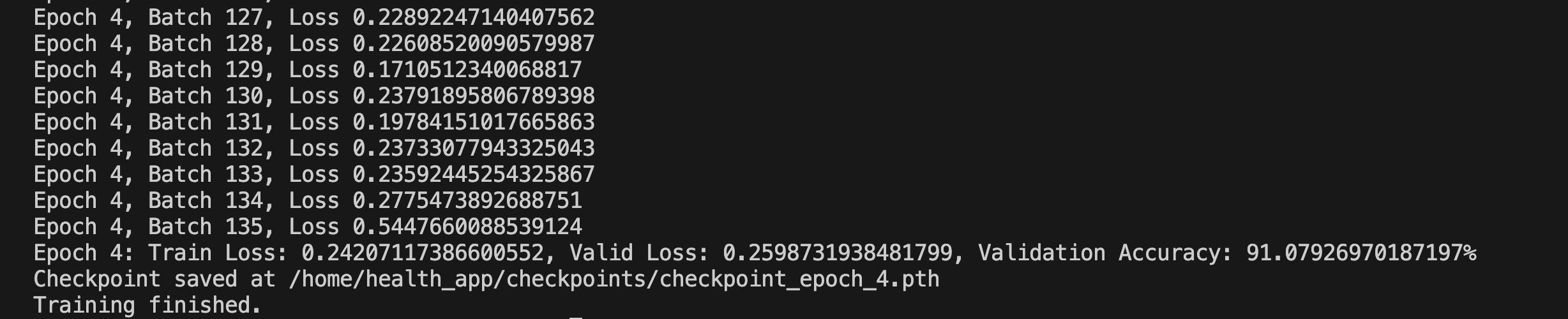
Trained up to 5 epochs for maximum accuracy
-
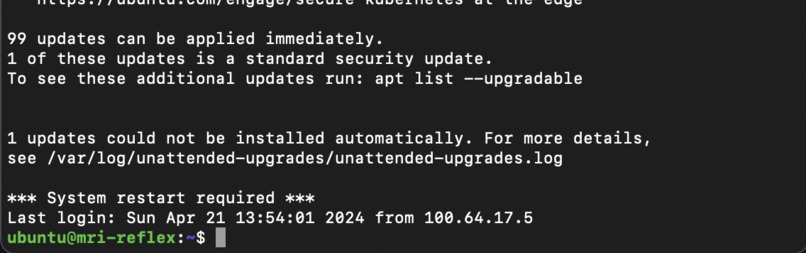
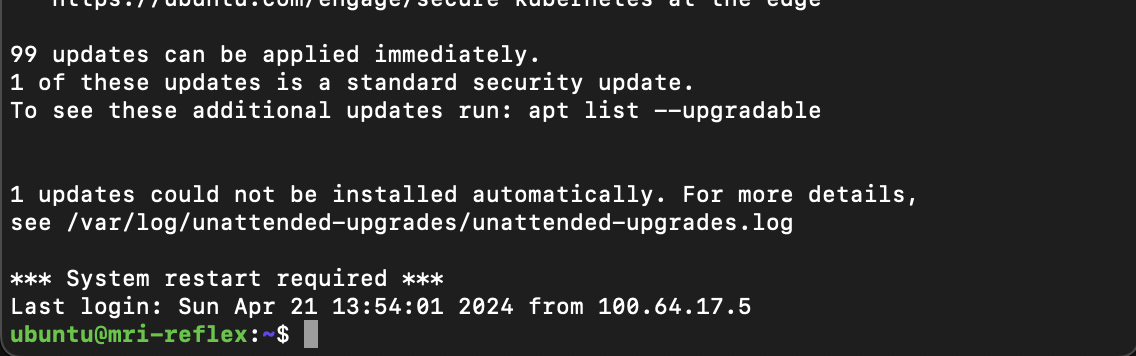
Running Intel Developer Cloud ssh instance
Inspiration 🩺
The inspiration for creating MIRAI comes from recognizing the need for accessible and accurate information about brain tumors. This project aims to utilize AI to develop a tool that can respond to user inquiries with reliability and ease. It's designed to support healthcare professionals by handling routine questions, allowing them to dedicate more time to direct patient care. The chatbot also serves as an educational platform for medical students and researchers. Through this initiative, we aspire to make a meaningful impact on global healthcare education and efficiency.
What it does 🩻
MIRAI can assist users with the following:
Brain Tumor Information:
- Provide details on types, symptoms, and causes of brain tumors
- Explain the different grades and stages of brain tumors
- Discuss potential risk factors and genetic predispositions
Symptom Management:
- Identify and describe common symptoms of brain tumors
- Recommend effective strategies for pain management, nausea, and seizures
Treatment Options:
- Explore various surgical techniques for tumor removal
- Explain radiation therapy, including targeted and stereotactic approaches
- Provide insights into chemotherapy and targeted drug therapies
- Discuss promising new treatments, such as immunotherapy and gene therapy
Diagnosis and Monitoring:
- Interpret brain imaging results (e.g., MRI, CT scans)
- Monitor tumor progression and response to treatment
- Help understand the implications of biopsy and other diagnostic procedures
Psychoemotional Support:
- Provide guidance on coping mechanisms for patients and caregivers
- Connect with support groups and resources
- Assist in finding medical professionals and treatment centers specializing in brain tumors
How we built it 💻
- UI Design: The design of the UI was developed in Figma, enabling a visually appealing and user-friendly experience.
- Framework and API Usage: For backend development, we utilized the Reflex framework along with GeminiAPI. This combination supports the chatbot's ability to interact effectively with users by processing and responding to inquiries in real-time.
- Machine Learning Model: Our AI model, based on the ResNet-18 architecture, was trained and fine-tuned on the Intel Developer Cloud. This ensures that our chatbot operates with high accuracy and efficiency in interpreting medical data.
- Programming: The entire application is coded in Python, leveraging its libraries and frameworks to enhance the functionality and scalability of our chatbot.
Challenges we ran into 💪
- Creating the UI
- Training the model
- Using Intel Developer Cloud
- Reflex is relatively new; not that much support/documentation
Accomplishments that we're proud of 🙌
- Developing of the entire project in a short amount of time, including learning new frameworks, APIs, and technology
- Creating of a user-friendly and visually appealing interface for ease of use to enhance user engagement.
- Quickly learneing and effectively using Reflex in building the application, with no prior experience with the framework
- Utilizing of Intel Developer Cloud as powerful computing resources to train our model, ensuring high performance and reliability
What we learned 📚
- Fine-tuning models using Intel's PyTorch extension
- Connecting to Intel instances via command line
- Integrating a new full-stack framework like Reflex
- Collaborating on diverse technologies
What's next for MIRAI 🌟
We aspire to keep developing this app or release it in the future to eventually be used in practical scenarios such as in a healthcare setting. Some potential features include:
- Advanced Imaging Analysis: We hope to enhance our algorithms for more detailed imaging analysis. This will include the ability to distinguish between different stages of tumor development and identify subtle changes over time. This will help in the continuous monitoring of tumor progression and the assessment of treatment effectiveness.
- Predictive Analytics: We aspire to implement more advanced machine learning models that will predict tumor behavior based on historical data and trends. This feature aims to provide forecasts of tumor growth rates, potential complications, and the efficacy of various treatment options.
- Integration with Telemedicine Platforms: Our goal is to integrate MIRAI within telemedicine platforms. This integration will enable radiologists and oncologists to utilize the chatbot's analytical capabilities during patient consultations, enhancing the dialogue about diagnosis, prognosis, and treatment strategies with the most up-to-date insights.
Built With
- genesisai
- intel
- intel-developer-services-beta
- python
- reflex


Log in or sign up for Devpost to join the conversation.