-
-
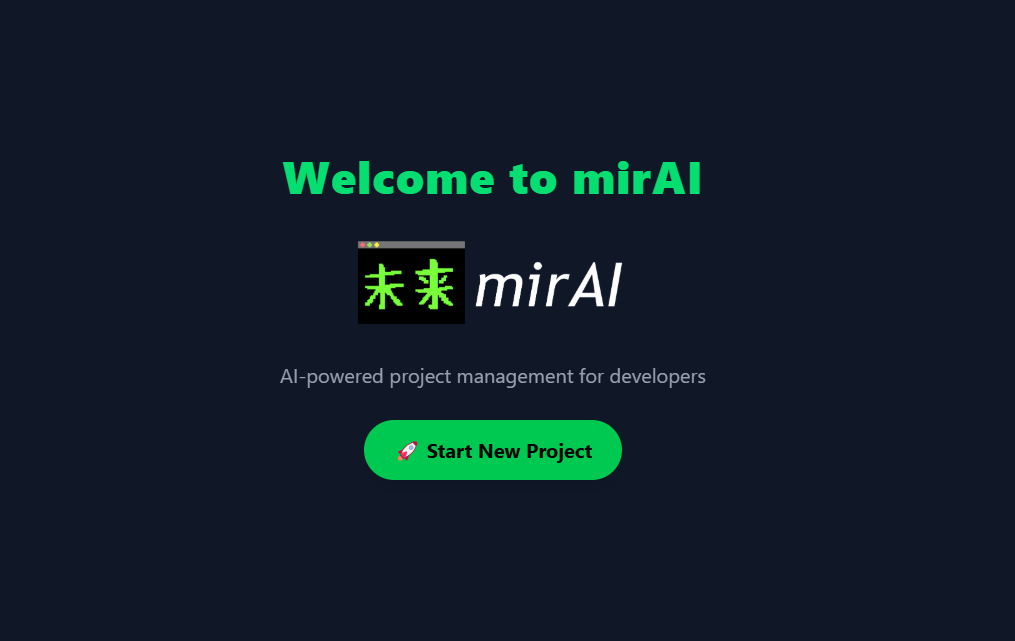
Our Logo
-
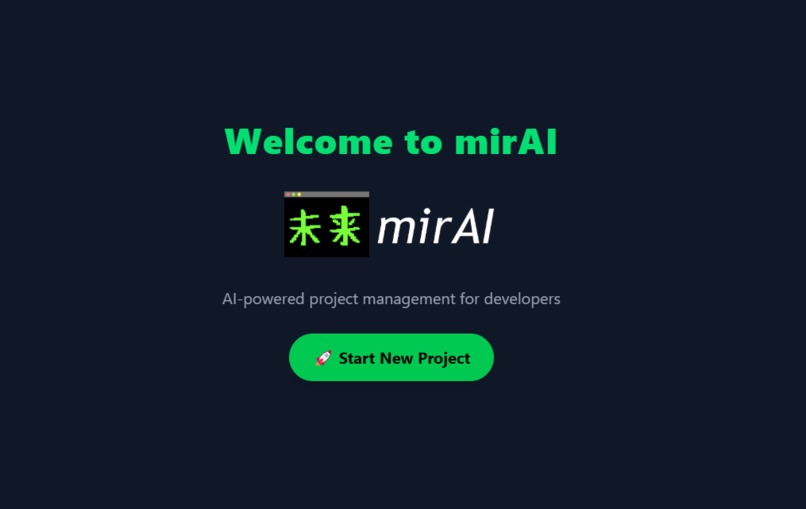
The Title screen
-
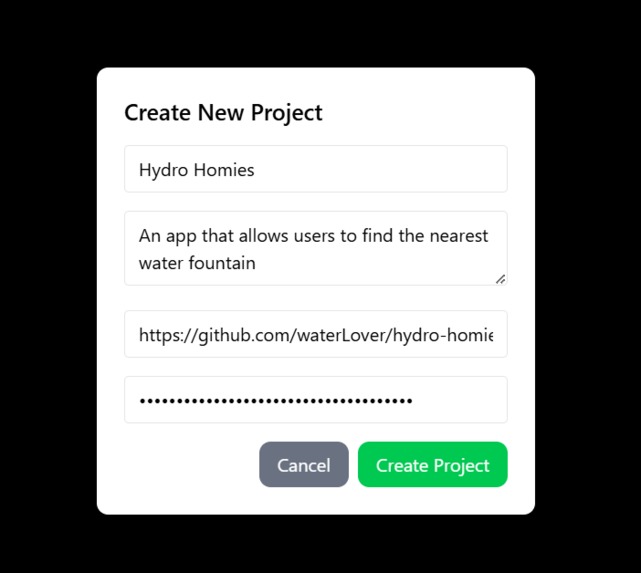
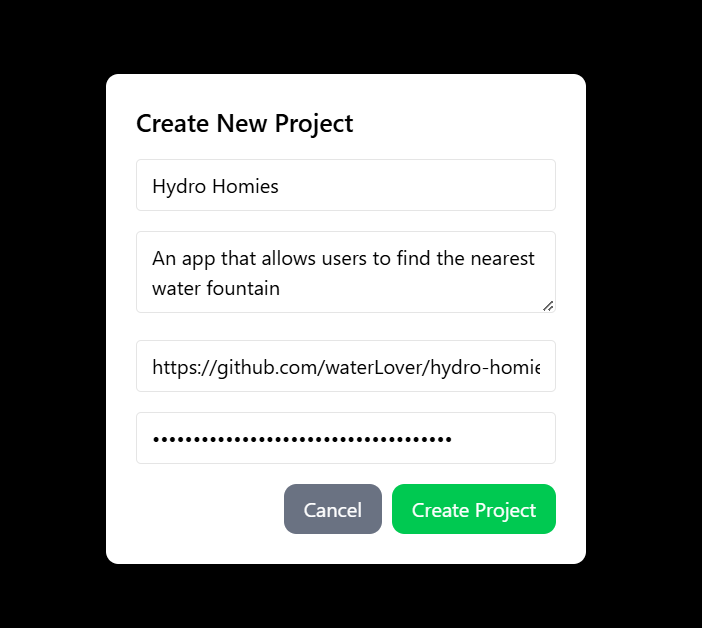
Project Creation
-
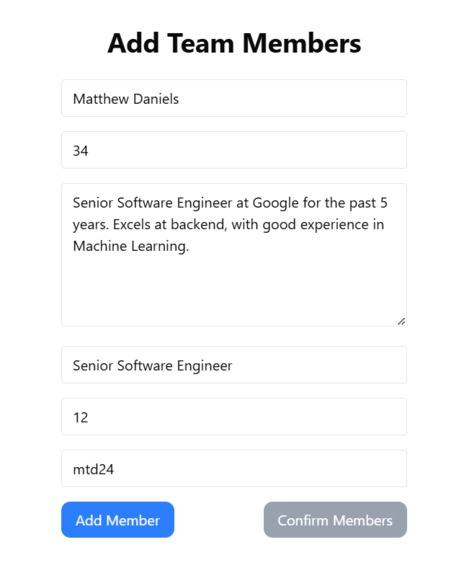
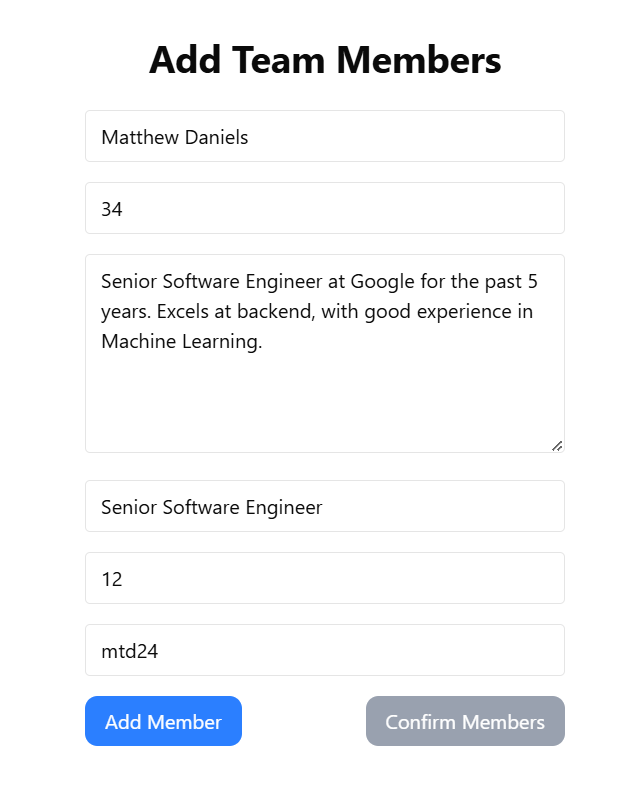
Team Member Form
-
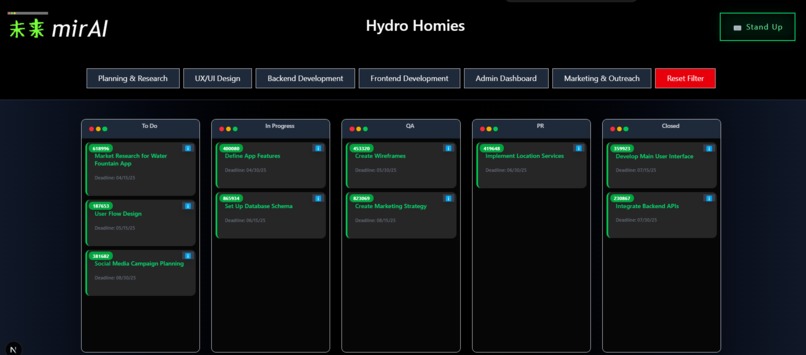
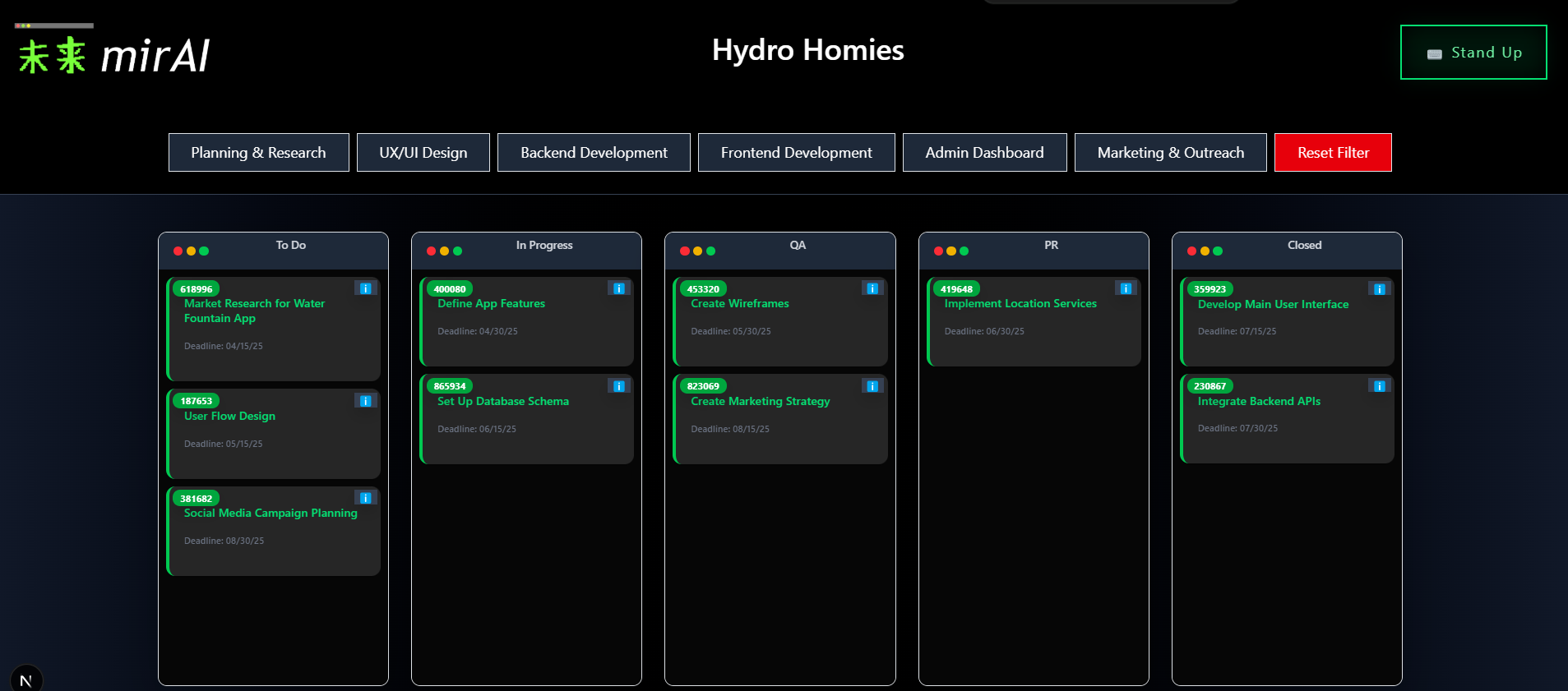
The MirAI board
-
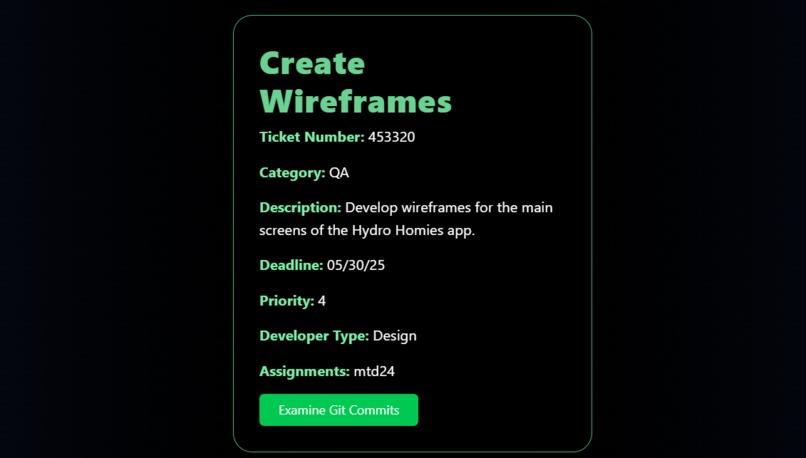
Ticket Example
-
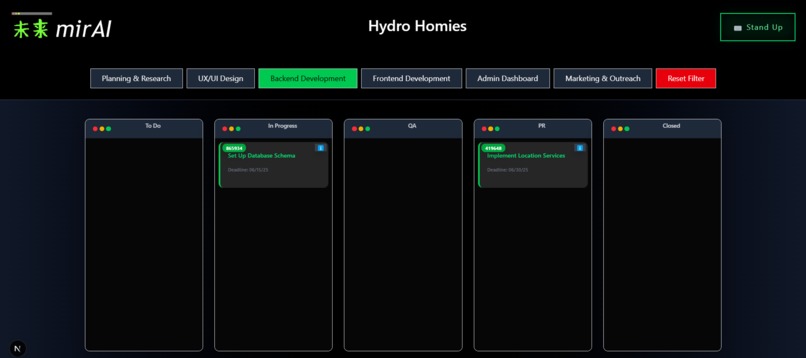
Filtering


Inspiration
As future software engineers, we strive to be efficient and effective in our development process. MirAI was founded on the belief that AI can power software development by providing real-time feedback on workflows-- allowing engineers to focus on building features rather than exhaustive management. Additionally, we aimed to integrate our product seamlessly with other developer tools, recognizing that the best solutions work even better when they complement each other. Inspired by JIRA, we aimed to automate key aspects of the scrum process.
What it does
MirAI reimagines the JIRA-board by allowing users to submit a project form containing details about the title, summary, GitHub credentials, and the members of the team. Details for the members of the team can also be provided, including their name, age, prior experience, title, and years of experience.
MirAI will take all of those details and generate tickets for the project into different buckets (To-Do, In Progress, Quality & Assurance, Pull Request, & Closed). Each ticket has a deadline, members assigned to it, details, and a priority level. Developers can then start working on these tickets, moving them into different categories similar to a regular JIRA board.
One of our core features is called standup, which simulates a normal standup that happens in a sprint at most tech companies. In our version of standup (which can happen once a week, twice a week, every day, or just whenever!), developers will talk to MirAI and explain their progress over the past work cycle including any challenges that could result in necessary extensions or additional generated tickets.
MirAI will take all of the team's feedback into account and reorganizes the JIRA workflow, modifying ticket data, potentially generating new ones, and more. Additionally, MirAI is very dynamic-- if a team member leaves, or if one joins, MirAI will redistribute or modify tickets to deal with the team changes.
Finally, MirAI is connected to Github. When a user submits a push, they should include their current working ticket number in their commit message. MirAI tracks the project's GitHub repository, listing out all commits that belong to a certain ticket on request. In addition, MirAI will analyze committed code and comment on its quality-- simulating a pull request review!
Challenges we ran into
Getting our LLMs to act consistent was one of the hardest parts of the project. It was difficult to get the LLMs to produce the data in the format we wanted (JSON) and to follow directions. However, with prompt engineering and code that prevents our LLMs from acting out, we were able to build a consistent product. Another challenge we faced was getting the information from our backend to display properly on the website. We were working with a large amount of JSON inputs, and had to make sure data was efficiently being relayed to the frontend.
Accomplishments that we're proud of
We had a large scope for this project, and we are so proud to have a fully complete MVP. We managed to efficiently use LLMs to increase our workflow as well as power our product. We also gained a lot of experience using frontend technologies like Next.js, implementing frontend components we've never explored before. We hand designed and drew our logo with both the aesthetic vision of our project and its functional purpose in mind, which challenged us creatively.
What we learned
We learned how to deal with LLMs and ensure their consistency, as well as a lot about front-end technologies--which most of us had never worked with. We also learned how to organize our backend in a functionally comprehensive manner that accounts for edge-case user inputs from the frontend.
What's next for MirAI
One of our values is that great products should work with other great products. We want to integrate MirAI with tools like Google Calendar--sending out team meeting invites from time to time. Or maybe Slack--where tickets can link to slack channels that with help developers accomplish their targets. We would also want to create a more appealing website that works on all platforms. We also want to give more control back to the users, like giving them the ability to create and modify tickets, under certain restrictions.




Log in or sign up for Devpost to join the conversation.