-
-
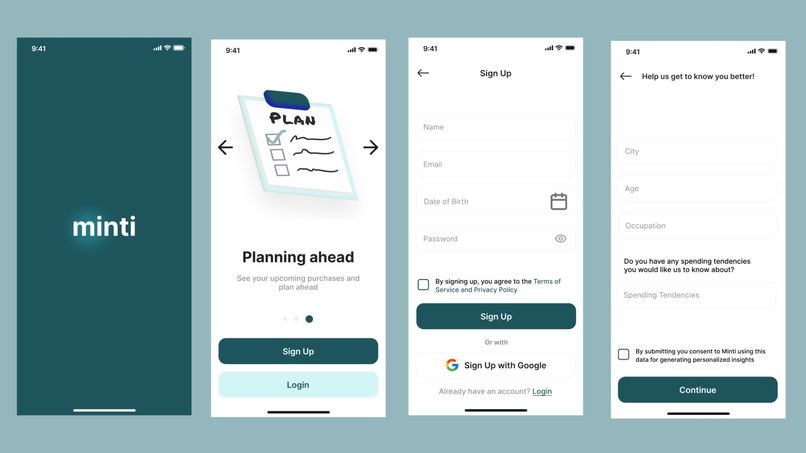
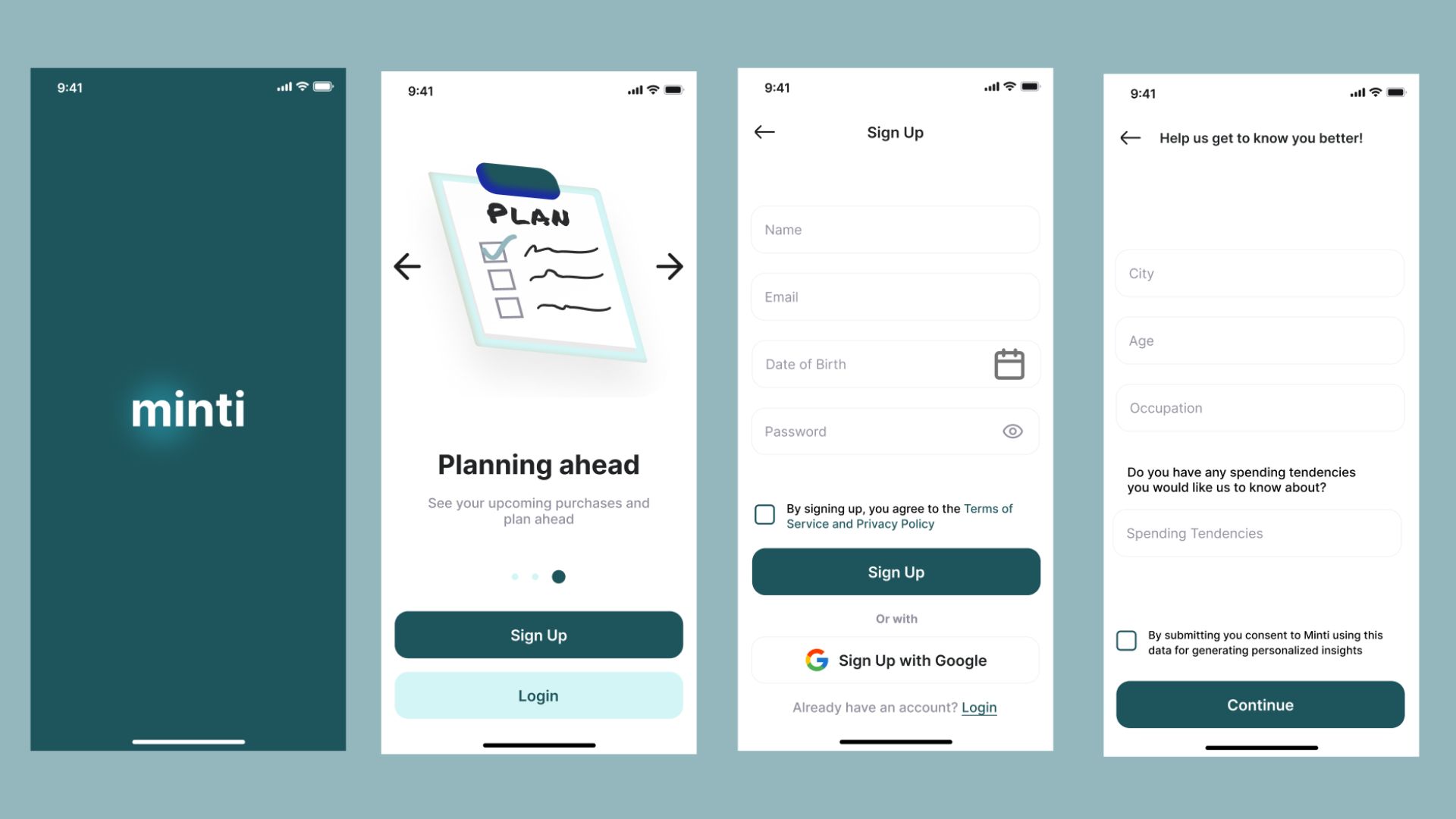
Minti Demo 1 (Onboarding & Sign Up)
-
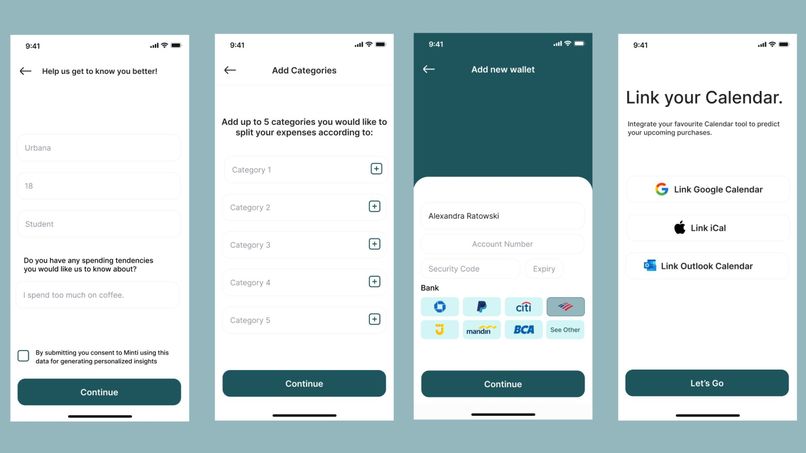
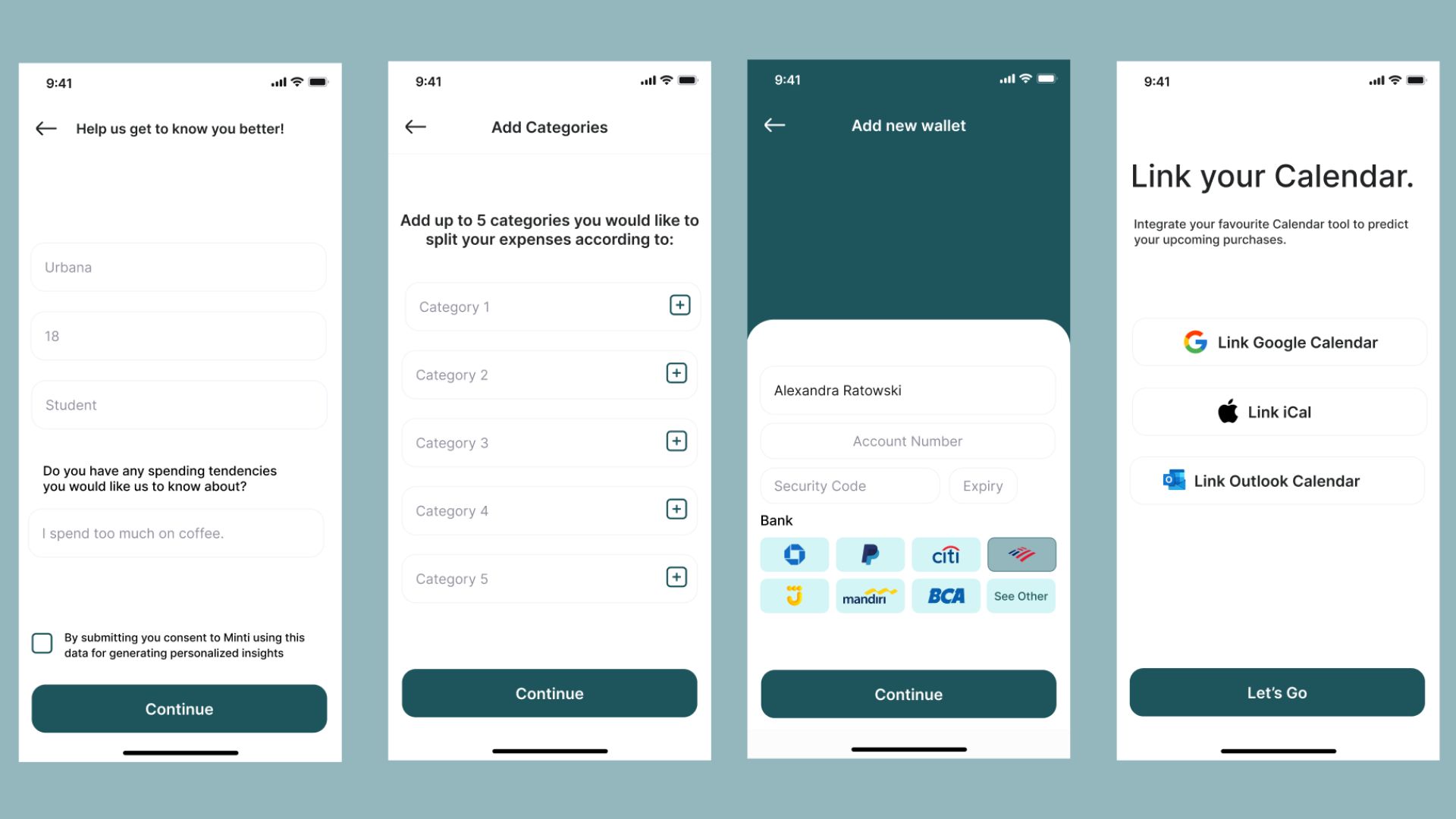
Minti Demo 2 (Sign Up & Calendar Integration)
-
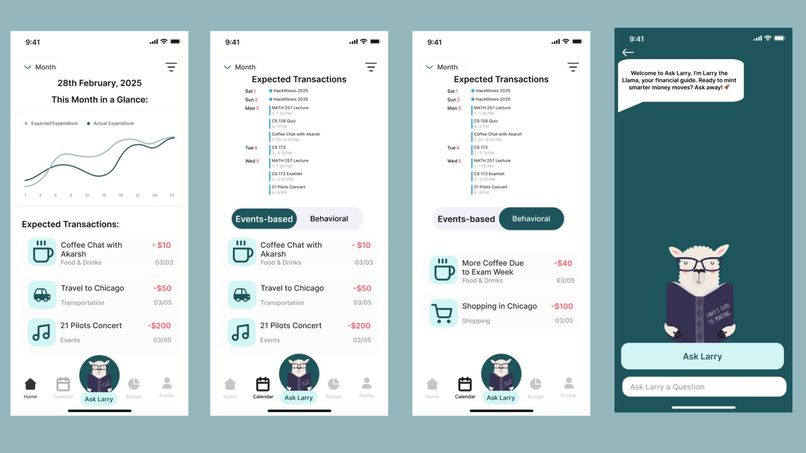
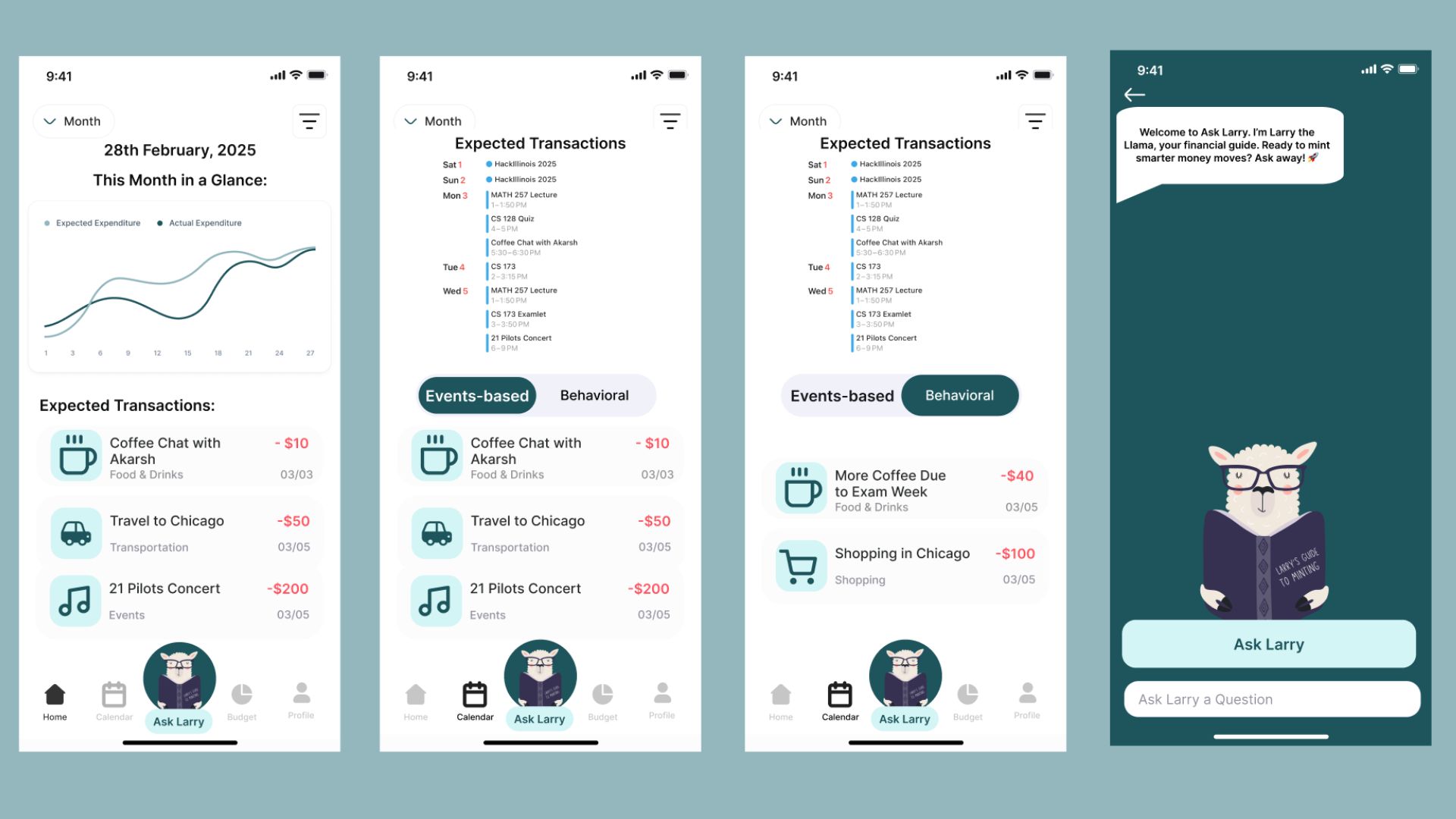
Minti Demo 3 (Home Screen & Larry the Llama Chatbot)
-
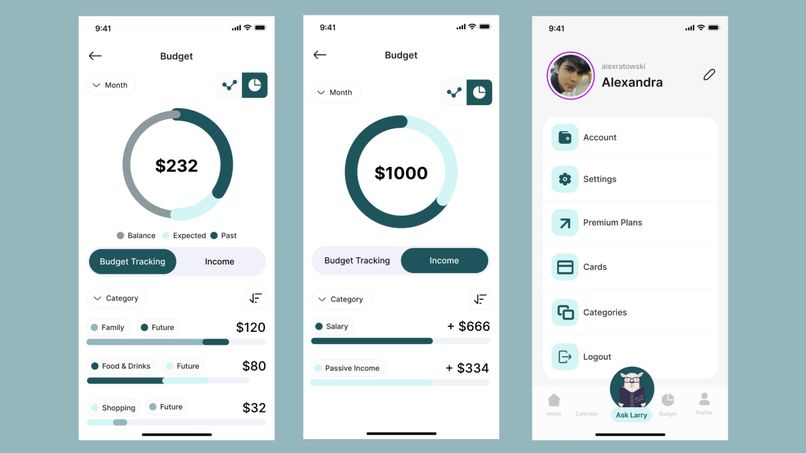
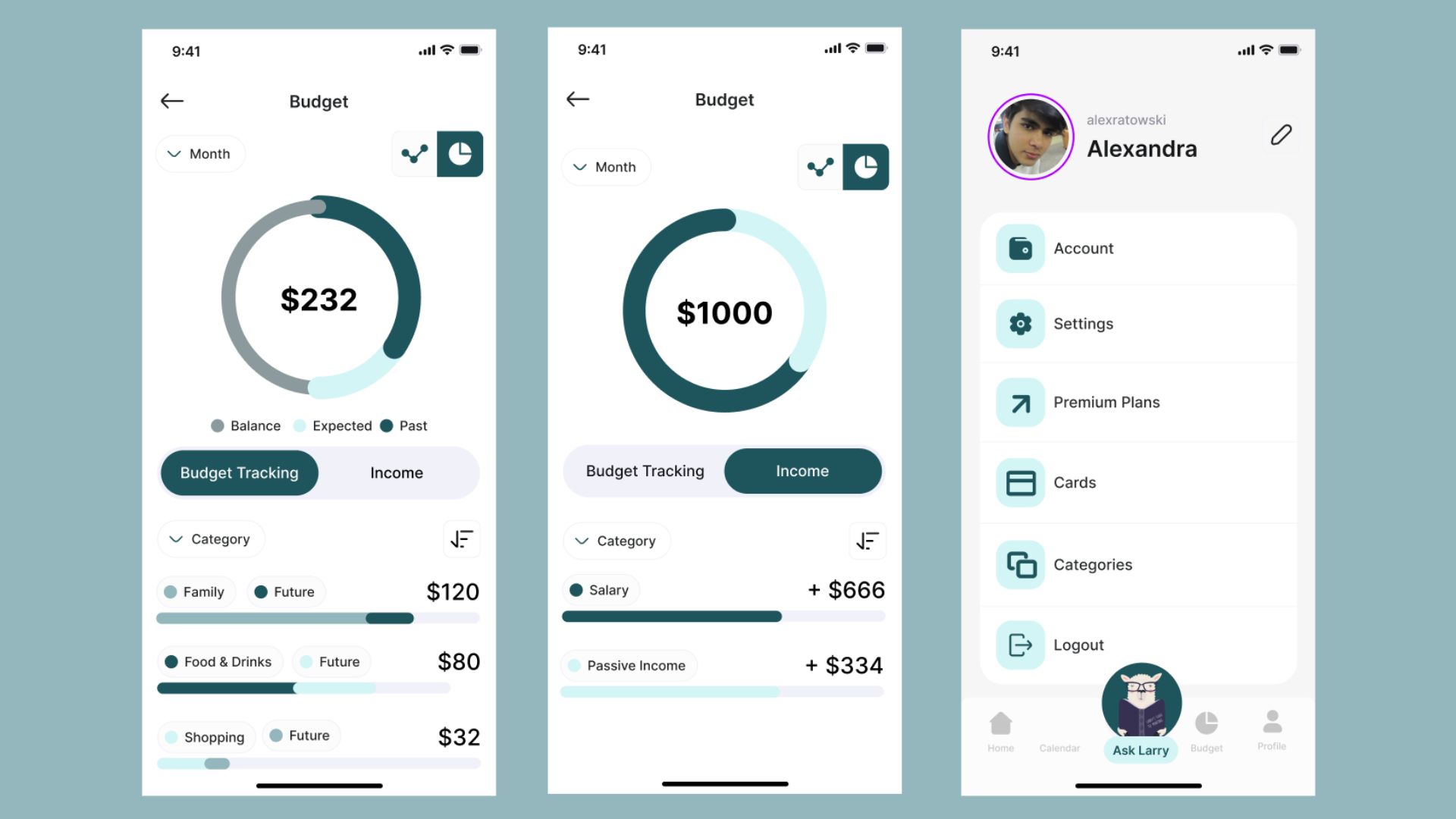
Minti Demo 4 (Budget Tracking & Profile Section)
Inspiration
America lost a staggering $436 billion due to financial illiteracy in 2022 (according to a survey by the National Financial Educators Council), money that could have been saved, invested, or spent more wisely. When we surveyed students and young professionals about their biggest financial struggles, the overwhelming response was failing to account for future expenses while planning their budgets around their schedules, whether it was overestimating discretionary spending early in the month for a college student or not setting aside enough for upcoming bills and commitments for a startup founder.
Through market research, we found that most budgeting tools create barriers to accessible financial planning by requiring manual expense tracking, a tedious process that discourages consistent use. They also fail to consider personal context, treating every user’s financial habits the same despite differences in spending patterns, location, and lifestyle, like variations in coffee prices, housing costs, or inflation impacts across cities, amongst others.
Minti addresses this by integrating AI with your calendar to predict future expenses while tailoring insights unique to YOU and requiring minimal user effort and input to get started.
What it does
Minti helps you manage your finances by:
- Allocating your budget based on predicted expenses from your calendar, helping you visualize how much you've spent, what you’re expected to spend, and what’s left in each budget category.
- Using Events Mode and Behavioral Mode, Minti predicts your future expenses by identifying immediate predicted costs based on calendar events in Events Mode and learning your spending patterns over time in Behavioral Mode to adjust for habits like increased coffee spending during exam week. These predicted expenses are editable in case the user would like to allocate more or less of their budget to a particular event.
- Analyzing your credit, net expenditure, and transaction history to offer personalized financial advice through Larry the Llama -- your AI-powered financial advisor chatbot. By combining accuracy, automation, and personalization, we’ve created a seamless, scalable, and highly tailored financial tool that makes building healthy money habits effortless for a broad audience.
How we built it
We used the following technologies to develop Minti:
- Nessie API: Creates customer profiles & processes transactions to update real-time expenses.
- OpenAI API, FullCalendar API: Powers the LLM-based financial advisor chatbot to give personalized financial insights. Enables seamless calendar integration to extract and analyze upcoming expenses.
- Python: Used to develop the backend and manage user data, transactions, and AI-driven forecasting.
- JavaScript, Tailwind CSS, HTML: Used to develop the front end and come up with a user-friendly and intuitive UI.
- Flask: Used to create an endpoint for profile updates and AI-driven forecasting.
Challenges we ran into
Calendar Parsing Accuracy: Translating natural language events into structured financial data (e.g., recognizing that "Dinner with Sarah" might be a restaurant expense) was a major challenge that we overcame using NLP and AI models. Real-Time Expense Tracking: The Nessie API was new to us, so integrating real-time expense updates with predictive insights required a steep learning curve. However, by thoroughly studying the documentation and collaborating closely with each other, we were able to overcome the challenges and successfully implement it.
Accomplishments that we're proud of
- We made Minti’s AI context-aware and persona-driven. Rather than applying a one-size-fits-all approach, the AI adapts to individual behaviors, preferences, and factors like location and inflation, ensuring financial insights are accurate and tailored to each user.
- We integrated calendar file parsing with OpenAI, enabling Minti to predict future expenses based on events, which distinguishes our app from traditional financial tools.
- We worked with a focus on each team member's strengths—frontend, backend, and AI - while also stepping beyond our comfort zones. This allowed us to grow as a team and learn from each other.
What we learned
- Great financial tools remove friction. The best UX is one where users don’t have to actively manage everything and give minimal input, our AI should do the work.
- Financial planning should be contextual, not generic. The same event can have different financial implications for different users, and budgeting should reflect that.
- The importance of ergonomic & intuitive design. Fintech apps often feel complex, our goal was to make financial management feel effortless and more accessible to the general public.
What's next for Minti
While there are many ways that we could consider taking Minti forward, these are a few ideas we are currently considering:
- Tying up with Capital One to use their platform for deeper banking insights, making it a powerful personal finance tool at scale.
- Using real-time push notifications that warn users about spending risks before they make a purchase.
- Supporting Plaid & other APIs for automatic financial insights across multiple accounts.
- Gamifying the interface with features like streaks, saving leaderboards, and personalized challenges to boost engagement and motivate users to improve their spending habits. Minti is just getting started. Our vision is to redefine financial planning with seamless, AI-powered insights. Keep minting money, because money saved is money earned.
Built With
- css
- flask
- fullcalendar
- html
- javascript
- nessie
- openai
- python


Log in or sign up for Devpost to join the conversation.