Inspiration
We are a group of web3 and defi enthusiasts who realized that for web3 to get true adoption, it has to integrate with and solve problems in the real world. Our backgrounds are from logistics, IoT, AI, SAAS and blockchain, of course. We came together over solving supply chain visibility and tracking problems, because we realized that the shared infrastructure of blockchain could be a unifying force that solves the data silo-driven inefficiencies in logistics.
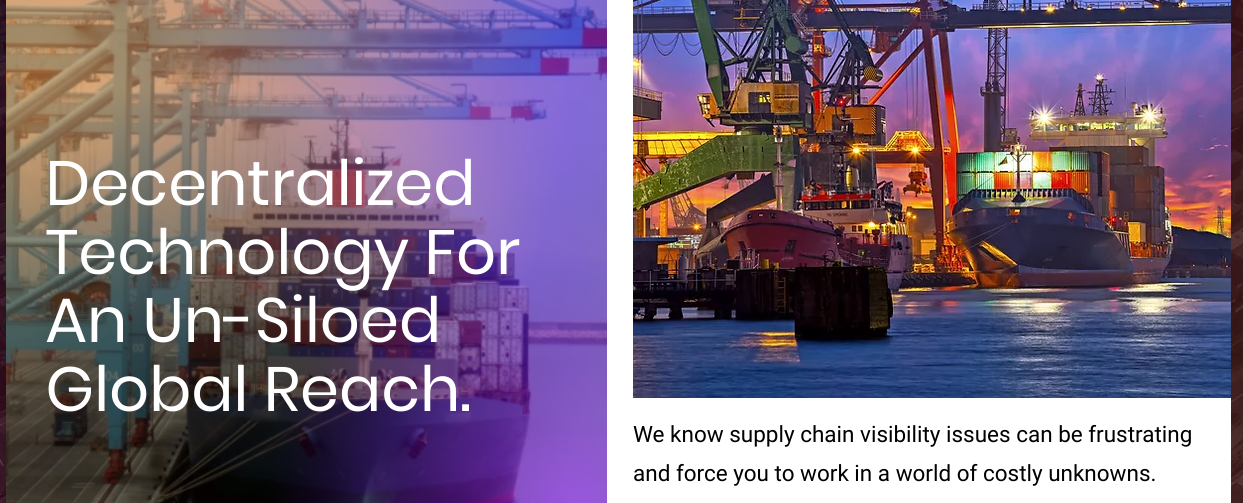
The vast majority (90+%) of the world's international trade of physical goods is shipped via intermodal shipping containers. Each intermodal shipping container is assigned a unique tracking (ISO standardized) number. However, the ships, rail and trucks that transport these containers are fractured across each business that handles the container. It is currently impossible to track a container from departure to destination. This is because every one of these companies that handle these containers this information firewalled - at best - inside of their own business.
We want to allow everyone who participates in the global supply chain to help the supply chain. We decided the easiest was to do this was to make a game of take pictures of intermodal shipping containers, store them as NFTs with their location, which enables tracking the containers anywhere in the world. For this hackathon, we built an (a) Android app using the (b) Web3 gamification platform Stardust for Polygon smart contracts, (c) Amazon AWS S3 buckets for temporary storage and (d) IPFS on nft.storage for permanent storage with each NFT.
What it does
We have created an Android app that lets anyone capture geotagged pictures of shipping containers and mint Proof of Location (PoL) NFTs. These NFTs represent location records on the blockchain, as well as a claim to the stream of future profits when a buyer purchases location data on our future marketplace.
How we built it
We created an Android app that lets anyone snap a photo of a shipping container, and upload it to one of our validators. The validator uses AI to recognize the ISO-standard shipping container unique ID, extracts the location information, and writes it to the blockchain as an NFT and additional metadata.
The Android front-end and the backend leverage the following technologies:
- NFT user and smart contract management - Stardust (https://www.stardust.gg) using Polygon smart Contracts
- Temporary storage - Amazon AWS S3 Bucket (https://aws.amazon.com/s3/)
- Permanent Image Storage - nft.storage on IPFS (https://nft.storage)
Stardust // Polygon NFTs
Stardust was used for the convenience of the user management and creation of our "game" on the Polygon network. They provide direct API calls to create the NFTs for each of our users of the Traxa Android app.
Amazon // AWS S3 Buckets
These Amazon S3 buckets were used to temporarily store what is captured by the Traxa Android app so that we can process the containers in the cloud. Once the container IDs are identified, we then push them back to Stardust to create the NFT along with a link to the permanent storage of the NFT on IPFS.
nft.storage // IPFS
This platform allows us to permanently store the images of the NFTs on IPFS based file sharing services after being processed and paired with the Polygon NFT smart contract created on Stardust.
Challenges we ran into
We needed to make sure it was very simple, foolproof and fun for consumers to use. We knew it had to be as easy to use and rewarding as "Pokemon Go." We also had to make it accurate enough to scan and recognize containers from a moving car. And yes we have tested this! (from the passenger seat). We also had to make sure shipping containers were valid. The validators ensure the picture is of a shipping container and the container number is valid.
Accomplishments that we're proud of
We're really happy this works in the real world. Through initial testing, users have found it fun and have had their dopamine spikes from capturing containers and seeing them appear in the app.
What we learned
Gamification is very important for consumers - just because you can take a picture of a shipping container, it doesn't mean you will. We combine both gamification in-app (see your collection of containers) with economics (eventual token incentives powered by ownership of the PoL NFT) to ensure we can crowdsource the supply side of the marketplace.
What's next for Mint NFTs of Shipping Containers on Polygon
Currently the app is only available on Android. We are considering different ways of making it cross platform, including implementing on iOS, or implementing it as a progressive web app. Beyond that, we are looking to build automated capture devices in a Helium-like model, build out the marketplace, and secure additional supply of location information by establishing commercial relationships with third party logistics (3PL) companies. We will then build out the marketplace, which will also be NFT-enabled and function on the blockchain.
Try out the Traxa MVP
Want to try out the app on your own? Just go to https://mvp.traxa.io on your favorite Android device and try it out today!
Built With
- amazon-web-services
- aws-sns
- django
- filecoin
- kotlin
- nft.storage
- polygon
- python
- stardust


Log in or sign up for Devpost to join the conversation.